


Key Takeaways
- The cost of insurance software development ranges from $20,000-$90,000 for simple platforms, $90,000-$180,000 for mid-level solutions, and $180,000-$500,000 for enterprise platforms.
- Several factors affect insurance software development cost, including project complexity, software type, required modules, UI/UX design, third-party integrations, and the location of development partners.
- The total insurance software budget should also include ongoing expenses such as maintenance, cloud hosting, third-party services, licensing fees, and future upgrades.
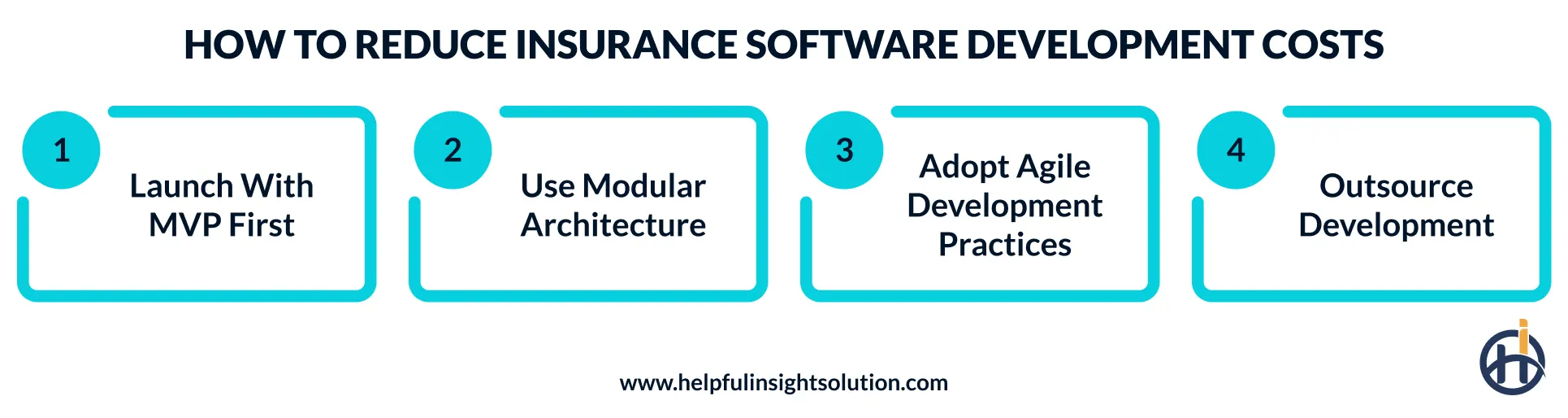
- Insurers can reduce development expenses by starting with essential features, choosing a modular structure, following an agile approach, and outsourcing to an experienced team.
Keeping track of policies, claims, and customer information is not always easy when an insurance company uses different systems for each task. As these processes become harder to manage, many insurers consider investing in custom software. But before moving ahead, they need to understand the budget involved.
Insurance software development costs can range from $20,000 to $90,000 for a basic solution, $90,000 to $180,000 for a mid-level system, and $180,000 to $400,000 or more for an enterprise-grade platform. A few types, such as agency management systems, can go above $400,000 depending on scope.
The price to build insurance software will also vary depending on what the software is required to do. A policy management system will have very different requirements than a claims system or a risk assessment system. Moreover, the final cost will be driven by the number of features, the number of integrations, and security requirements.
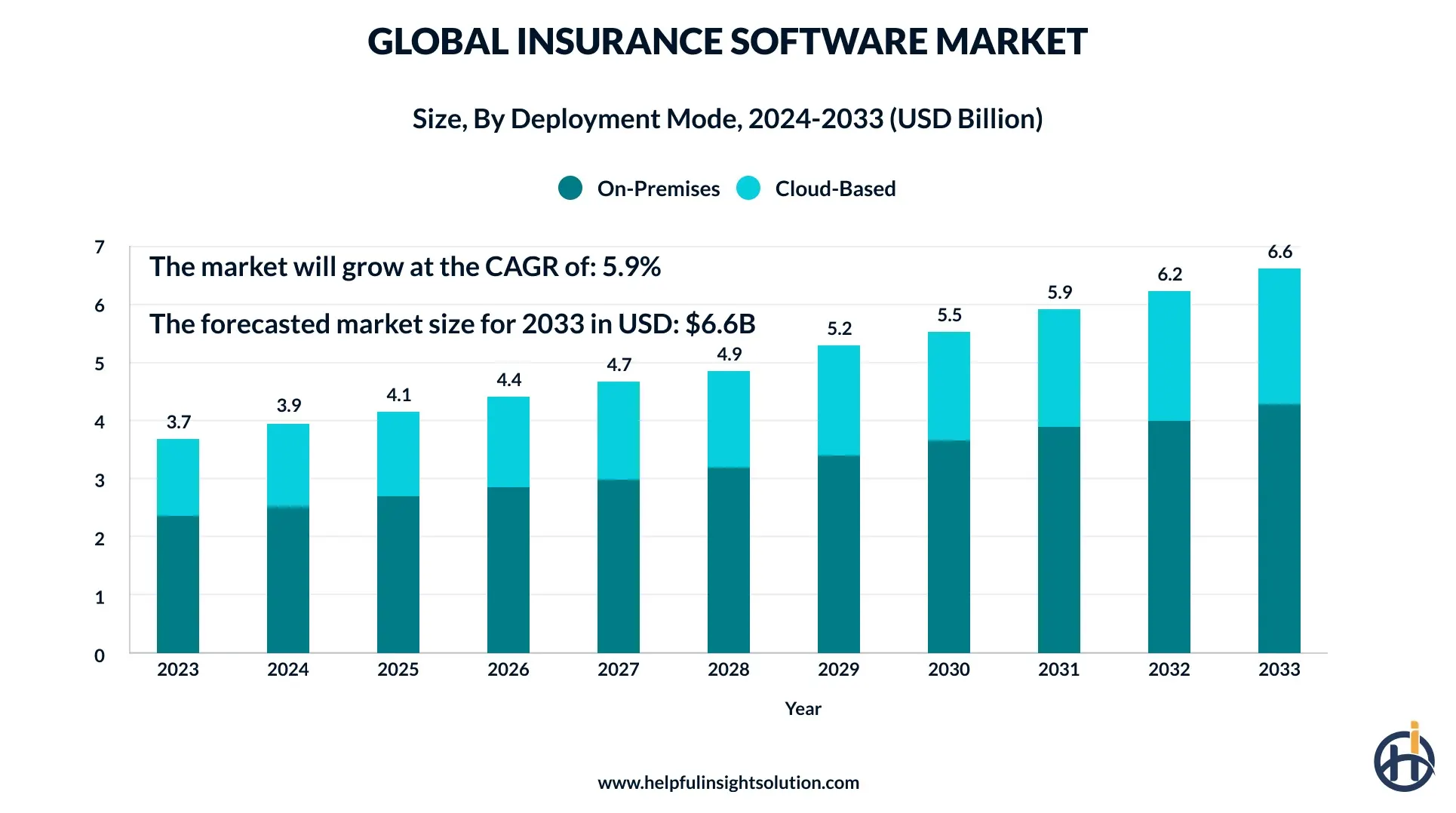
Market.us projects that the global insurance software market will reach approximately $6.6 billion by 2033, up from $3.7 billion in 2023. This growing market is one reason businesses are exploring ways to create software to manage insurance operations.
In this blog, we’ll cover the costs of different types of insurance software, the factors that affect pricing, hidden expenses, and ways to manage the development budget.
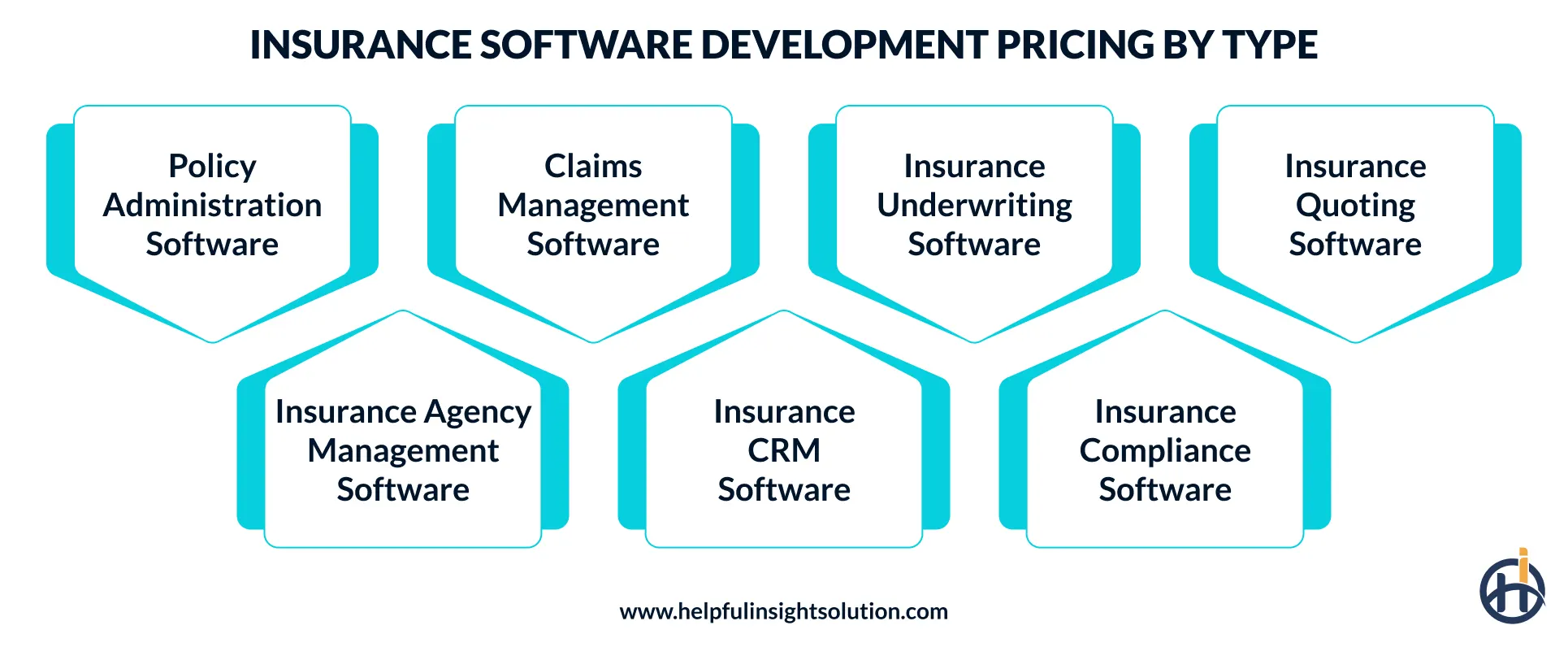
Insurance software development cost by type
There are several types of insurance software, but they do not all serve the same purpose. Knowing what you want the software to manage can help you understand the development budget. In this section, we will look at different types of insurance software and their cost.
Policy administration software
A policy administration system is used to manage and handle insurance policies. It is the system used to issue policies, update customer and coverage details, and track renewals and cancellations. The more tasks the platform handles, the higher the policy administration software development cost.
Estimated development cost: $30,000 to $300,000+
Key features
- Policy creation and issuance
- Premium management
- Policy renewals and cancellations
Claims management software
Handling a claim involves several steps, from the initial request through to settlement. Claims management software keeps the whole process under control by enabling staff to view claim details, gather the necessary documentation, assign the claim, and update the status.
The cost of claims management software development will vary depending on the degree of automation and the number of tasks the system is required to perform.
Estimated development cost: $30,000- $400,000+
Key features
- Claim registration
- Claim status tracking
- Approval and settlement
Insurance underwriting software
Insurance companies assess each applicant before deciding whether to provide coverage and at what price. Underwriting software is used to process the application, assess the risk, and set the price. The cost of insurance underwriting software mainly depends on how the system handles risk checks, data analysis, and approval rules.
Estimated development cost: $20,000- $250,000
Key features
- Application review
- Risk assessment
- Premium calculation
Insurance quoting software
This software is used by insurance agents to calculate premiums and prepare quotes for customers. It takes into account the type of coverage, customer details and various policy options selected to arrive at a price. The cost of developing the insurance quoting software depends on the number of products, pricing rules and features that the system is required to support.
Estimated development cost: $30,000 to $300,000+
Key features
- Premium calculation
- Coverage comparison
- Digital quote generation
Insurance agency management software
The insurance agency management system (AMS) helps agents manage clients and the work that goes with selling insurance policies. It’s designed to hold all the policy information, client records, renewal dates, and commission details.
Estimated development cost: $40,000- $500,000+
Key features
- Client record management
- Policy tracking
- Commission tracking
Insurance CRM software
Managing customer relationships is an important part of running an insurance business. Insurance CRM software helps agents keep a record of customer details, previous conversations, inquiries, and upcoming renewals. They can also use it to follow up with potential customers and keep track of sales opportunities.
Estimated development cost: $35,000- $350,000+
Key features
- Customer record management
- Lead tracking
- Renewal reminders
Insurance compliance software
Insurance companies need to follow various regulations while managing policies and daily operations. Building an insurance compliance system helps them keep track of these requirements, check license validity, manage important documents, and maintain records for audits.
Estimated development cost: $30,000 to $300,000+
Key features
- Regulatory tracking
- license management
- Audit trail management

Cost of adding AI features to insurance software
Not every insurance business requires the same AI features. Some may only need a chatbot, others may want automated claims processing or fraud detection. Each of those features can have a direct impact on the cost of insurance software development. Consulting an AI development company can help insurers decide which features are worth investing in.
Here are some top AI features worth adding and their cost.
| Features | Description | Estimated cost |
| AI chatbot | Answers policy questions and handles common customer inquiries | $8,000-$30,000 |
| Automated claims processing | Reviews claim details, checks documents, and routes requests | $30,000- $70,000 |
| AI-powered fraud detection | Flags unusual claim patterns and potentially suspicious activities | $20,000-$120,000+ |
| Personalized policy recommendations | Suggests suitable insurance plans based on customer needs and profiles | $15,000-$80,000 |
| Document processing (OCR) | Extracts information from scanned forms, policies, and claim documents | $12,000-$75,000 |
| Claims triage automation | Sorts incoming claims by urgency, type, and complexity | $10,000-$40,000 |
| Image-based damage assessment | Analyzes vehicle or property images to estimate visible damage | $25,000-$90,000+ |
Factors that influence insurance software development cost
A basic insurance system may not take the same effort to build as a platform with multiple modules and advanced features. The requirements of each project play a part in the overall development budget. Below are the key factors that drive the insurance software cost.
Software scope and complexity
A project with a few core functions is generally easier to build than one that’s designed to handle a range of insurance operations. Adding multiple insurance lines, complex approval workflows and a variety of user roles will all add to the development time. This is why defining the project scope early is important when estimating insurance software development pricing.
Feature and module requirements
The number of features is one thing, but how the features work is another. A simple quote calculator takes far less work than one that compares several policies using complex pricing rules.
Similarly, adding an automated insurance underwriting function involves setting up risk checks and decision rules. Each additional module will need to be developed and tested, which can greatly affect an insurance software cost estimate.
UI/UX design requirements
Designing a basic insurance software interface with standard forms and menus may cost around $3,000 to $8,000. A platform with separate dashboards for the agent, the policyholder, and the internal staff takes significantly more design work.
Custom workflows and complex user journeys can easily push the UI/UX design budget to $8,000 to $30,000 or more, depending on the project scope.
Core system integrations
An insurance platform may need to connect with several systems that insurers already use. These could include payment services, document verification tools, accounting software, or legacy systems. Making these systems work together requires API development, data mapping, and testing.
The work can get significantly more complicated when there is a need to modernize a legacy insurance system. Depending on the number and complexity of the connections, integrations can easily take up 10% to 20% of the insurance software budget.
Data security and compliance
Security requirements can add a significant amount of development work and raise the cost to build insurance software. Building protected data storage, role-based user access, and secure backups requires substantial engineering time.
An independent penetration test can cost anywhere from $8,000 to $35,000, depending on the number of user roles and integrations the platform has. A pre-audit or formal audit to check whether the system meets applicable standards, such as SOC 2 or requirements based on NAIC model laws, can add $10,000 to $40,000 or more. Most of these checks need to be repeated annually, so businesses should include them in their post-launch budget as well.
Development team location and hiring model
The location of the software development company can make a noticeable difference to the project budget. Developers in the US and Western Europe generally charge higher hourly rates than teams in Asian countries.
The hiring model also matters, as a dedicated team and a fixed-price model have very different pricing structures. This will impact the overall insurance software cost. The hourly rates of insurance software developers across various regions are shown in the table below.
| Location | Hourly rates |
| North America | $90 to $250+ |
| Eastern Europe | $40 to $85 |
| Western Europe | $50 to $150 |
| Africa | $20 to $60 |
| Asia | $25 to $75 |
Hidden and ongoing costs to develop insurance software
There are a few expenses that insurance agencies may not include when first planning their insurance software project. However, these costs can come up during development or after launch and add to the budget.
Support and maintenance
Once the software is live, it still needs ongoing attention. Bugs need fixing, security updates need installing, and user-reported issues need attention. These tasks usually continue throughout the year.
Insurers should set aside around 15% to 25% of the initial development amount annually for maintenance. Keep this recurring expense in mind when preparing an insurance software development cost breakdown.
Cloud hosting and infrastructure
Once insurance software is hosted on the cloud, businesses will be charged for the resources it consumes. That will be server capacity, storage and data traffic. As the platform grows, the amount of resources required may increase as well. Insurers should also factor in backup and recovery as part of their long-term software budget.
Third-party API and licensing fees
Using third-party services is not always a one-time expense. A payment gateway, for instance, could be charged monthly or per request. The same applies to customer verification services. These fees add to the insurance platform development cost and need to be planned for separately.
Future upgrades and feature enhancements
Insurance businesses may need to add new features as their services change. Adding policy options, improving existing workflows, or adopting new technology requires further development work. These updates add to the long-term insurance software expenses after launch.
Smart ways to reduce insurance software development costs
A limited budget doesn’t mean you have to compromise on software quality. There are practical ways to make better use of your available funds and control the cost of insurance software development.
Launch with an MVP first
Consider building a smaller version of your insurance software prior to building the full platform. Pick the features that are going to solve the most pressing business problems and build the MVP around those. That way, insurers can test it out and make changes before taking on more development work.
Use a modular architecture
Avoid unnecessary rework by choosing a modular structure from the start. It allows individual features to be added or improved without affecting other parts of the platform. This makes the software easier to maintain and keeps insurance software development pricing manageable.
Adopt agile development practices
Ask your dedicated development team to break the project down into short development cycles. An agile approach lets you review the work as it’s completed, give feedback, and change priorities as you go. It also helps teams spot problems early, which reduces the likelihood of expensive changes later.
Outsource development
If hiring an in-house team seems expensive, consider outsourcing insurance software projects. Developers in regions like Asia and Africa often charge lower hourly rates while offering the right skills needed for the work. This is one way to reduce custom insurance software costs without settling for lower-quality development.
Conclusion
There is no single price for developing insurance software because every project has different requirements. What matters is knowing which features are worth investing in and which expenses need to be planned for. A realistic budget can help avoid unnecessary spending and make better decisions throughout the project.
With 10+ years of experience, Helpful Insight is a trusted insurance software development company that builds secure, feature-rich, and user-friendly solutions for insurance agencies, carriers, brokers, and MGAs. Our team has experience developing various types of insurance software, from claims management and policy administration to underwriting systems. We can handle projects of different levels of complexity while keeping your budget and quality expectations in mind.
Our pricing is clear from the beginning, so you know what to expect without worrying about hidden charges. Our consultants assess your project requirements and provide a custom quote that gives a clear picture of the investment involved.
Get in touch with our team today and share your project details to receive a personalized quote.
Frequently Asked Questions
An insurance software MVP may take around 3 to 6 months to develop. More advanced platforms can require 6 to 12+ months, depending on the features, UI/UX design, integrations, and overall project complexity.
The yearly maintenance budget for insurance software is usually 15% to 25% of its total development cost. Actual expenses vary based on the system and support needs.
Buying off-the-shelf insurance software is generally cheaper to buy initially. Custom software is more expensive upfront but comes with features that are specifically designed for your business.
Integrating AI into insurance software can cost around $12,000 to $80,000 for focused features, while enterprise-level solutions may cost $80,000 to $250,000 or more. There are various factors that impact the final cost, such as project scope, integration complexity, data preparation and training.