


Key takeaways
- Insurance policy administration software development is the process of creating a centralized system to manage the entire policy lifecycle and help insurers modernize policy operations.
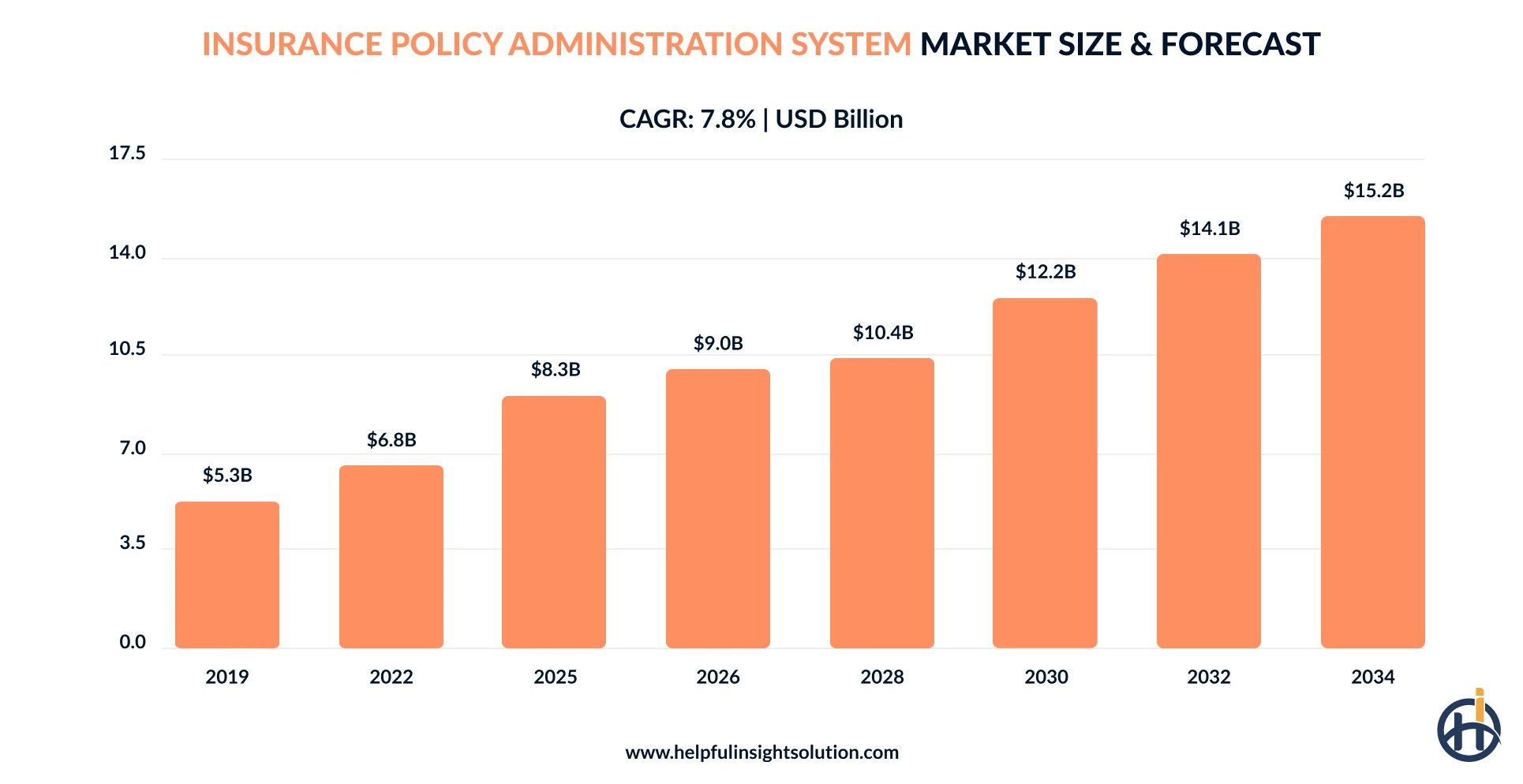
- The global insurance policy administration system market is projected to reach $15.2 billion by 2034, driven largely by insurers’ replacement of legacy platforms.
- Policy quoting, automated underwriting, policy endorsements, renewals, and self-service customer portals are key features of an insurance policy management platform.
- Insurance policy administration software development costs range from $30,000 to $70,000 for basic software and $150,000 to $300,000+ for enterprise platforms, depending on the project scope.
- AI and automation in PAS can support document processing, underwriting, fraud detection, claims assessment, personalized recommendations, and repetitive administrative work.
Insurance policy administration software development becomes relevant when traditional systems start making everyday policy work unnecessarily difficult.
Insurers often manage renewals, endorsements, cancellations and customer details across several platforms.
This can leave teams switching between systems and checking information manually. A modern policy administration system (PAS) brings these activities together, making policy data easier to access, update, and manage.
The role of policy administration is also changing as insurers move more services online. Policyholders expect to view policy details, submit requests, and receive updates through digital channels.
This puts greater importance on APIs, workflow automation, system integrations, and consistent data exchange.
These capabilities also provide a stronger foundation for connected digital services, including insurance mobile app development without requiring policy data to be maintained separately across channels.
The growing focus on modernization is reflected in the market, which is projected to reach $15.2 billion by 2034, according to a DataIntelo report. As insurance companies evaluate new systems, the focus is on creating a PAS that fits existing processes and can adapt as requirements change.
At Helpful Insight, we design and develop insurance PAS solutions around each insurer’s workflows, integration needs, security requirements, and long-term goals.
This guide explains the development process, core features, costs, and other factors to consider when building an insurance policy administration platform.
What is insurance policy administration software?
An insurance policy administration system (PAS) is the core digital platform used to manage an insurance policy from quoting through cancellation or expiry. It brings policy records, business rules, documents, transactions, and related processes into a central system of record.
The software helps move policy administration away from fragmented workflows and provides a consistent way to manage policy information throughout its lifecycle. A PAS is also usually the first system to plan when building insurance software, because claims, billing, and customer portals all depend on its policy data.
For insurance carriers with complex products or older policy systems, a tailored solution can offer more flexibility than a fixed platform. We provide custom software development services to build policy management solutions around existing workflows and technology environments.
This approach can make it easier to introduce new products, connect supporting systems, and adjust policy processes as business requirements change.
How does insurance policy management software work?
An insurance policy administration platform follows a structured flow from risk assessment and quoting to policy issuance, servicing, renewal, and closure.
Behind each stage, rules, data, documents, and transactions work together to keep policy information consistent.
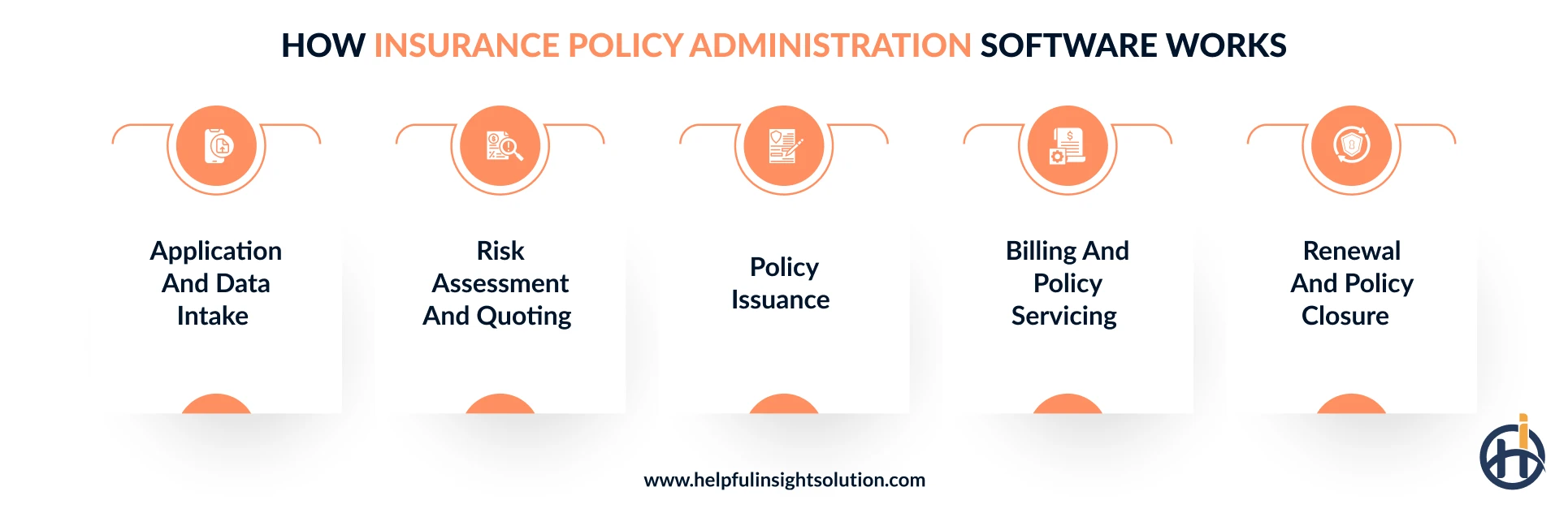
The main stages of this workflow are outlined below.
Application and data intake
The first stage gathers applicant details, coverage requirements, and supporting documents from agents or digital channels.
Automated validation checks the submitted information before passing the policy data into the underwriting workflow.
Risk assessment and quoting
The system evaluates applicant data against underwriting rules and risk factors, using predictive analytics services to assess exposure and generate appropriate coverage and premium quotes.
Policy issuance
Once coverage is approved and the customer accepts the terms, the system issues the policy by assigning a policy number, recording coverage dates and premium details, and generating the required documents.
Billing and policy servicing
Billing continues alongside policy servicing throughout the coverage period. The software records premium payments, follows unpaid invoices, and supports changes such as updated coverage or customer details while keeping the policy history intact.
Renewal and policy closure
As the policy term ends, the system reviews renewal details, recalculates premiums, and sends notices. If the policy ends, closure is recorded and relevant records retained.
Key features to include in custom policy administration software
Policy administration needs vary with product types, business rules, and existing workflows. As an insurance policy administration software development services provider, we create solutions around these practical requirements rather than relying on a fixed feature set.
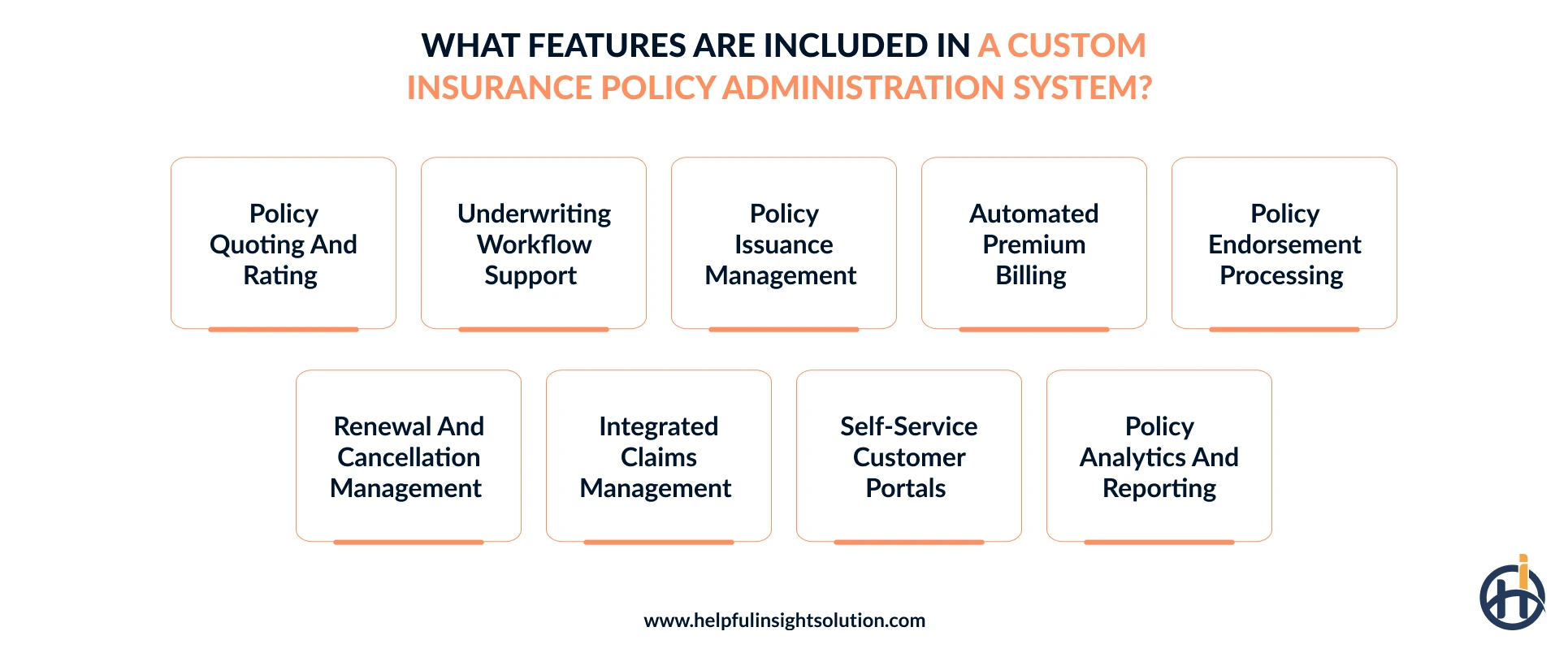
Below are the key policy administration system features to consider.
Policy quoting and rating
Policy quoting brings applicant details into a structured workflow and applies configured pricing rules to estimate premiums for selected coverage.
It gives agents and customers a clear quote to review before the application moves into underwriting.
- Multi-channel quote intake
- Instant quote generation
- Coverage comparison tools
Underwriting workflow support
This feature organizes applications for underwriting review, applies eligibility rules, and identifies cases needing closer assessment. It allows insurance underwriting software to support consistent decisions across different policy types.
- Applicant risk scoring
- Underwriter task assignment
- Decision history tracking
Policy issuance management
With this functionality, the insurance policy administration system converts application details into an official policy, supports document preparation, and keeps issued records available for future servicing.
- Custom policy templates
- Digital policy signing
- Policy record archiving
Automated premium billing
The billing module keeps premium collection organized by generating scheduled invoices, recording incoming payments, and updating account balances.
It can also accommodate different payment arrangements based on policy terms.
- Digital payment processing
- Overdue payment alerts
- Billing history records
Policy endorsement processing
Manages mid-term policy changes, updating coverage, insured details, and related records while reflecting revised terms throughout the policy administration workflow.
- Insured detail updates
- Modifying policy terms
- Endorsement document generation
Renewal and cancellation management
Tracks upcoming policy expirations and supports renewal or cancellation based on customer decisions, payment status, and configured rules. The workflow keeps coverage changes properly recorded.
- Expiry date monitoring
- AI-powered renewal offers
- Cancellation refund calculations
Integrated claims management
Connects claim records with the relevant policy so an insurance company can verify coverage, retrieve policy details, and keep claim activity connected to existing records.
With insurance policy administration system integration, claims information can move between connected applications while keeping relevant records synchronized.
- Claim status tracking
- FNOL intake
- Adjuster collaboration tools
Self-service customer portals
Allows customers, agents, and other approved users to manage policy-related tasks through a digital portal. Connected policy data keeps information current, while an AI chatbot can assist with common requests and navigation.
- Role-based portal access
- Personal detail updates
- Online payment options
Read Also: Insurance Portal Development: A Complete Guide
Policy analytics and reporting
Enables a policy administration system to bring policy metrics into one view, so insurers can see how the portfolio is performing.
Reports and dashboards can then be used to review policy volumes, underwriting activity, and operational trends.
- Agent performance metrics
- AI-Based demand forecasting for policy coverage
- Regulatory report preparation
Essential integrations for insurance policy administration system
Policy data often needs to move between the core administration platform and other systems used across insurance operations.
Our insurance policy management software development company accounts for these connections during development, using APIs and custom integrations where standard connectors are not enough
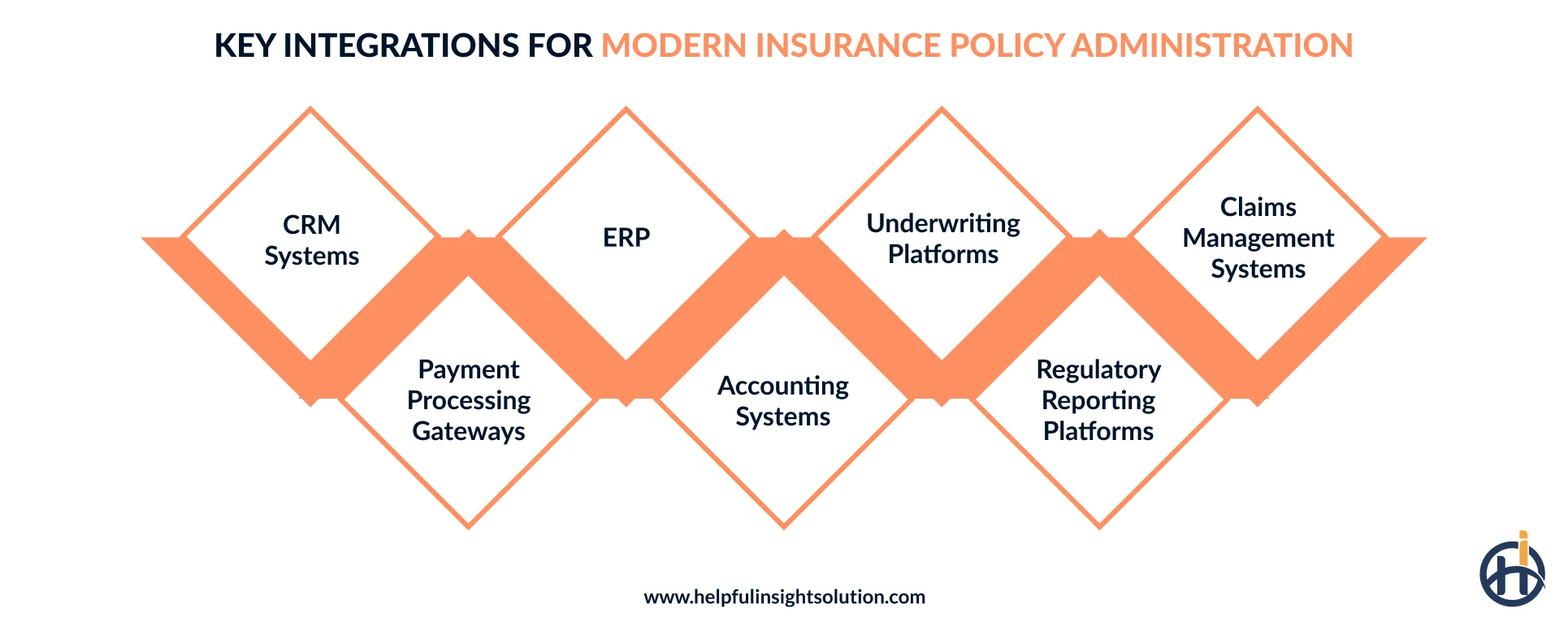
CRM systems
CRM integration keeps customer conversations and policy activity connected.
For example, a service team can see previous interactions alongside current coverage or pending requests instead of checking separate records.
Platforms such as HubSpot or Zoho CRM can exchange relevant information with the policy system.
ERP
Connecting the policy platform with an ERP system gives access to relevant policy information without relying on manual transfers.
This is an important consideration in insurance policy management software development, particularly when policy transactions affect commissions, accounting, resources, or internal reporting.
Underwriting platforms
Integrating the underwriting system with PAS in insurance keeps application details moving between quoting, risk review, and policy processing.
Underwriters can work with the same information used by policy teams, while external data sources can be brought into the assessment when required.
This reduces repeated data entry and helps move approved applications forward without breaking the existing workflow.
Claims management systems
With claims management software integrated with the policy system, claims teams can check coverage, deductibles, limits, and policy status during assessment.
Settlement details can then be reflected in the policy record, so claim adjudication and later servicing actions are based on current information.
Payment processing gateways
When payment gateways work with the insurance policy management solutions, premium payments can flow directly into policy and billing records.
Services such as Stripe and PayPal support this exchange, reducing manual payment updates and keeping account balances current.
Accounting systems
An accounting system connected to the PAS keeps financial records aligned with policy activity, helping track premium income, commissions, refunds, and outstanding amounts as transactions occur.
Regulatory reporting platforms
The integration between insurance policy administration software for startups/MGAs and regulatory reporting tools helps move required policy and transaction data into the formats used for compliance filings.
This can simplify reporting across jurisdictions and keep submission records available for audits and compliance reviews.
Build vs. buy: Should you build custom policy administration software?
A ready-made PAS solution can be practical when its features and workflows match existing requirements. Custom insurance PAS development services become more relevant when standard platforms cannot accommodate unique products, complex processes, or specific integration needs.
In such cases, our team assesses the existing setup and business requirements to help determine which approach is more suitable for the operation and its future needs.
When to build a custom policy administration system
Highly specialized policy workflows
A custom PAS can be useful when existing software does not fit the way policies are actually handled. This is often the case with specialized products, unusual business rules, or multi-step workflows.
Building around those requirements gives more control over how policy administration operates.
Full product configuration control
Choose bespoke insurance software solutions when product rules, coverage structures, or pricing models need frequent changes. Internal teams can adjust configurations without depending entirely on a software vendor.
Long-term scalability needs
Custom insurtech solutions are the best option when policy volumes, product lines, or integration requirements are expected to grow over time.
A scalable policy administration system architecture can accommodate additional transactions and connected systems without requiring major changes to the underlying environment.
When to choose off-the-shelf policy administration system
Speed to market is the priority
Choose an off-the-shelf insurance policy administration software when faster product launches matter more than extensive platform changes.
Preconfigured workflows, standard modules, and existing integrations can reduce implementation time, allowing policy operations to begin sooner without building the core system from scratch.
Lower initial investment
A SaaS-based PAS usually cuts the upfront cost of policy administration significantly compared to custom development.
Instead of paying for a full build, insurers pay a subscription that covers the software itself, while the provider handles hosting, maintenance, and updates on their end.
Limited in-house IT resources
Buying a commercial policy administration platform can be practical when maintaining the technology in-house is beyond the available IT capacity.
The provider takes care of routine upgrades, hosting, and security maintenance, leaving a dedicated development team to work on integrations and other priorities.
Why should insurers build a custom policy administration system (PAS)?
Standard policy administration platforms come with predefined capabilities, while a custom system can be shaped around specific business needs. That flexibility makes it easier to support new products, connect different systems, and introduce automation over time.
For growing insurance operations, choosing to develop insurance policy management software often turns out to be the more practical long-term route.
Greater operational efficiency
A policy administration system reduces repetitive work by automating data entry, routine checks, document handling, and workflow tasks. AI agents can assist with routine policy requests and internal processes, while rules engines handle predefined decisions.
In simplified products, automation can cover up to 70% to 80% of standard risk decisions, reducing manual effort and processing time.
Flexible insurance product configuration
Creating insurance policy administration software makes it easier to update coverage, pricing, eligibility criteria, and policy terms as requirements change. New offerings can be introduced without rebuilding the entire system each time.
This is particularly useful when product structures evolve, as changes can follow established workflows without affecting the underlying application.
Simplified policy management
An insurance policy administration software for startups/MGAs can bring policy details, documents, transactions, and servicing history into one accessible workspace.
This makes it easier to review coverage, process endorsements, check policy status, and handle renewals without searching across separate records or applications.
Improved regulatory compliance
Compliance work often involves checking whether policy records, approvals, and changes can be properly traced. Modern policy management software has built-in compliance tools that help catch missing details, while activity logs show what was changed and when.
With this information available in one place, insurance companies can spend less time reconstructing records when handling audits or regulatory reviews.
How to develop custom insurance policy management software?
The insurance policy administration system development process starts with understanding policy operations, business rules, and integration needs.
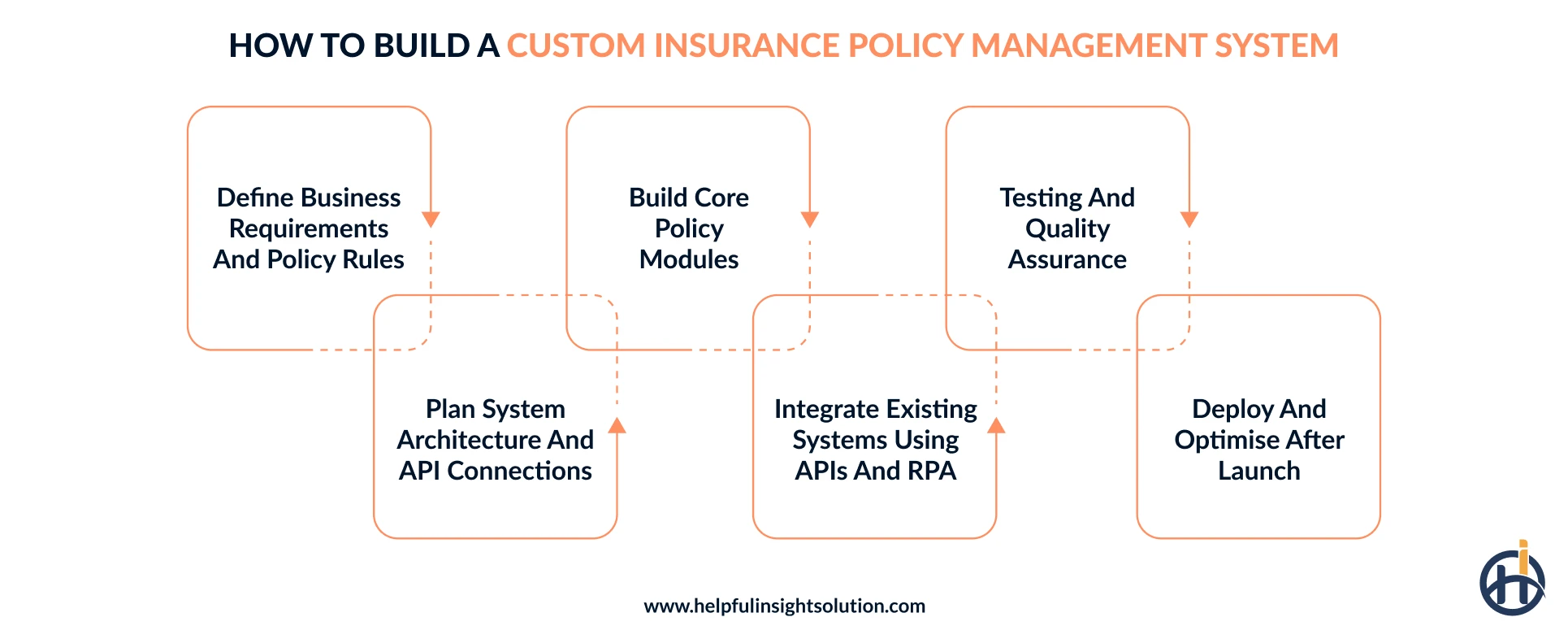
From planning to development and deployment, each stage should reflect how policies are actually handled across underwriting, billing, and claims operations.
Define business requirements
The first step is to clarify what the policy management platform needs to support across different insurance products and users.
This includes documenting product rules, approval points, data inputs, reporting needs, and user permissions.
Clear requirements give developers a practical scope to work from and help prevent important policy operations from being missed later.
Plan system architecture
With the scope defined, the technical team can work out how the software should be put together. They determine database structure, API connections, security controls, and how individual services exchange information.
UI/UX design decisions can be shaped at the same time around actual user workflows. These choices provide a practical foundation that can support growing transaction volumes and changing business requirements.
Build core policy modules
The core modules are developed from the requirements defined earlier, covering premium calculation, policy transactions, servicing, and lifecycle changes.
Building these functions together ensures each part works properly within the wider policy administration workflow.
Integrate existing systems
The policy administration platform is then connected with the systems already used across the business. APIs can link CRM, ERP, billing, claims, and underwriting applications, while RPA can handle data exchange with older software.
This keeps policy information moving between applications, reduces duplicate entry, and lets existing records remain usable during the transition.
Testing and quality assurance
Before launch, each major workflow is tested to check calculations, data handling, integrations, and expected system behavior.
Security testing looks for weaknesses around sensitive information, while user acceptance testing lets agents and underwriters work through real scenarios.
QA engineers also check whether the application performs reliably under expected loads.
Deploy and optimize
Once testing is complete, the policy administration system is prepared for live use. This includes configuring the production environment, moving approved data, enabling required modules, and checking integrations after launch.
After launch, performance is monitored regularly. Feedback, system issues, and changing business requirements can then guide future fixes and improvements.
Read Also: How to Develop an Insurance App
Technology considerations for insurance policy management software development
The technology choices behind insurance policy administration software should support reliable policy processing without making future changes difficult.
Architecture and technologies should be selected around factors such as policy volume, product complexity and existing systems.
| Development Area | Tools and Technologies |
| Frontend | React, Angular, Next.js, Vue.js, TypeScript |
| Backend | Java, .NET 8, Node.js, TypeScript, Python, Go |
| Database | PostgreSQL, MongoDB, Redis |
| Cloud platforms | AWS, Microsoft Azure, Google Cloud |
| DevOps and Monitoring | Docker, Kubernetes, Terraform, GitHub Actions |
| Event and Workflow | Apache Kafka, RabbitMQ, Temporal, Camunda |
| APIs and Integration | REST, GraphQL, OpenAPI, gRPC |
How much does insurance policy administration software development cost?
The cost to develop insurance policy administration software typically starts around $30,000-$70,000 for basic software, ranges from $70,000-$150,000 for a mid-level platform, and can reach $150,000-$300,000 or more for enterprise-grade solutions.
The final software development cost depends on several factors, including:
- Number and complexity of policy modules
- Product and pricing rule complexity
- AI and automation requirements
- UI/UX design
- Security and compliance needs
- Technology stack and architecture
- Location of software development team
A focused PAS with standard workflows will generally cost less than a platform supporting multiple insurance products, extensive integrations, and advanced automation.
For a more accurate estimate, share the project requirements with our team.
What is the role of AI and automation in insurance policy administration systems?
Artificial intelligence can bring a different level of intelligence to policy administration, from extracting information in documents to supporting underwriting and responding to policyholder requests.
Automation handles predefined tasks in the background, while AI works with more variable inputs. Our experienced AI development company can help insurers introduce these capabilities where they add value.
Automated document processing
AI-powered document processing can read applications, forms, emails, and scanned records, then extract relevant policy information.
OCR helps convert printed text into usable data, while document classification sends each file to the appropriate workflow for further processing or review.
AI-assisted underwriting and risk assessment
Using machine learning services, underwriters can examine historical data alongside applicant information to support faster risk assessment. ML models can identify patterns, assign risk indicators, and highlight cases needing closer review.
This gives additional context during evaluation, while allowing complex or unusual applications to move through an appropriate review process.
RPA-powered workflow automation
Robotic process automation can take care of routine tasks that follow clear rules within a PAS in insurance. RPA bots can transfer information between legacy applications, update policy records, prepare reports, and trigger emails.
This keeps routine workflows moving while staff focus on cases that need judgment or attention.
Intelligent claims processing
Insurance policy administration software can use AI to read claim forms, images, and supporting documents, then pull relevant details into the claims workflow.
NLP can interpret written information, while computer vision can assess images. Straightforward claims may follow automated processing, while complex cases can be routed to the appropriate claims professional.
AI-driven fraud detection
Fraud checks become harder as claim volumes grow. AI in insurance policy administration can look across policy details, claim history, and other records to find unusual activity.
Cases that don’t match expected patterns can then be sent for further investigation instead of moving straight through the claims process.
Personalized policy recommendations
AI in insurance can help identify coverage that may fit a policyholder’s changing circumstances.
By looking at policy history, selected coverages, and relevant customer information, the system can highlight useful add-ons or suggest adjustments.
Agents can use these recommendations during servicing conversations, making coverage discussions more relevant.
Common challenges in policy administration software development and how to overcome them
Developing a policy administration system is not always straightforward. Insurance companies can run into issues with older software, complicated policy rules, data migration, security, or changing regulations.
Addressing these areas early can keep the insurance policy administration system development process on track.
In this section, we’ll look at the common challenges and practical ways to overcome them.
Legacy system integration
Older insurance systems often run on outdated technology and limited interfaces. Bringing them into a newer policy platform can make data exchange difficult and disrupt existing workflows.
The solution
Use middleware or APIs to create a bridge between older applications and the new platform, allowing both to work together during modernization.
Complex regulatory compliance
An insurance platform may need to follow several compliance requirements. IT compliance regulations like GDPR and NAIC can affect how policyholder data is stored, accessed, reported, and shared.
Managing all of these requirements within everyday policy operations can be difficult.
The solution
Build compliance checks into the relevant workflows from the start. Automated validations and detailed activity logs can help identify missing information and provide a clear record of policy-related actions.
Security and data protection
An insurance policy administration platform pulls customer identity details, payment information, policy records, and sometimes health or property data.
This is what makes a data breach so costly. One compromised account or exposed API can expose far more than it would in a system holding less.
The solution
Security needs to be built into the development work from the beginning. Set clear access rules, protect system connections, encrypt sensitive records, and run regular security checks.
Scalability and performance issues
Performance can become a concern as the number of policies, users, and transactions grows. Software that handles current volumes comfortably may start responding slowly during busy renewal periods or increased claim activity.
Without enough capacity, delays can affect everyday insurance operations.
The solution
Use a cloud-based architecture that can add resources when demand rises. Load balancing, caching, and independent services help keep important policy functions responsive during busy periods.
Why choose Helpful Insight for insurance policy administration software development?
For insurers, policy management software development is about more than moving policy records into a digital system.
It connects the processes involved in issuing, servicing, updating, and renewing policies while working alongside the systems already used by the business. The right approach should support current workflows without making future changes difficult or expensive.
That requires a clear understanding of both insurance operations and the technology behind them. As an insurance software development company, we bring 10+ years of experience building secure and scalable policy management solutions for insurers across different lines of business.
We work with insurers globally to understand their requirements, define a suitable technology approach, and develop software around their operational needs. When you choose us, you get:
- Certified software developers
- Insurance domain expertise
- Secure software architecture
- AI and automation expertise
- Ongoing technical support
Planning to build or modernize an insurance policy administration platform? Share your project requirements with us, and let’s discuss the right approach for your business.
Frequently Asked Questions
An insurance policy administration system handles the day-to-day work around insurance policies. It can support quoting, issuance, renewals and related billing activities. Insurers use it to keep track of policy details and manage the different stages a policy goes through.
A basic insurance policy administration software project can take around 3 to 6 months, while an enterprise-grade platform may need 6 to 12 months or longer. Development time varies with the number of policy modules, integrations, data migration needs, security measures, testing scope, and business requirements.
Yes, insurance policy administration software can integrate with existing systems like CRM, billing, claims, underwriting, and accounting systems through APIs and middleware.
To choose the best insurance policy administration software development partner, consider the following:
- Proven experience developing insurance policy administration platforms for insurers.
- Strong understanding of insurance workflows, products, and regulatory requirements.
- Skilled developers with relevant technical and security expertise.
- Clear communication and post-launch support.
- Proven ability to scale software as business requirements grow.