

Key takeaways
- Claims management software development cost may fall between $30,000 and $70,000 for a simple system. If the platform needs more features and workflows, the cost can rise to $70,000 to $180,000, while large enterprise systems may cost $180,000 to $400,000+.
- Software complexity, feature requirements, automation, third-party integrations, and the location of the development team all play a role in determining the cost to develop a claims management system.
- Off-the-shelf software usually has a lower starting cost, but monthly user fees and customization charges can add up over time. Custom software requires a bigger initial investment, but no recurring license fees, hosting, and maintenance costs continue.
- Insurers can keep claims software costs down by launching with an MVP, outsourcing development, and reusing existing tools and systems instead of building everything from scratch.
A delay in document verification or claim assessment can hold up the entire settlement process. This is a common challenge when insurance teams depend on manual checks and different systems to handle claims. Dedicated claims management software can help organize these activities, from the first notice of loss to the final settlement. But developing a system that fits the company’s operations takes careful planning.
The budget can vary quite a bit depending on what the platform needs to do. Claims management software development cost for a simple system generally falls between $30,000 and $70,000. For an enterprise-grade platform, it can run from $180,000 to $400,000 or more.
As more insurers adopt technology to improve their operations, digital transformation in the insurance industry is gaining attention. According to Market Research Intellect, the global claims processing software market is projected to reach $10.1 billion by 2033.
What goes into the development budget? This guide breaks down what affects the cost to build claims management software, which hidden expenses to plan for, and how to keep the spend under control.
Claims management software development cost by project scope
A claims management platform built for a small adjusting firm won’t necessarily work for a large insurance company. The former may handle only a few hundred claims a year, while the latter could process hundreds of thousands across several insurance lines.
The cost to build claims management software is better understood in tiers, where scope, timeline, and feature depth set the price.
Here is the cost by project scope and complexity:
Simple claims management software (MVP)
Estimated cost: $30,000 to $70,000
Development timeline: 3 to 5 months
Features included:
- Claim registration and intake
- Policy verification
- Document uploads
- Claim status tracking
- Basic reporting
Mid-size claims management software
Estimated cost: $70,000 to $180,000
Development timeline: 5 to 8 months
Features included:
- Automated claim assignment
- Configurable workflows
- Document management with OCR
- Payment processing
- Third-party integrations
Enterprise-grade claims management software
Estimated cost: $180,000 to $400,000+
Development timeline: 8-12 months or more
Features included:
- AI-powered fraud detection
- Advanced claims assessment
- Complex workflow automation
- Multi-system integrations
How much does each claims management system module cost?
The features included in your system play a major role in the overall development budget. A document management module, for example, has different requirements from an automated insurance underwriting or claims processing module. These choices affect the price of developing claims management software.
The table below breaks down the estimated cost of each module.
| Module | Estimated cost range |
| FNOL and claim intake | $4,000 – $12,000 |
| Claims tracking and status updates | $3,000 – $10,000 |
| Workflow and rules engine | $8,000 – $30,000 |
| Document management and OCR | $8,000 – $25,000 |
| Fraud detection and risk assessment | $15,000 – $50,000+ |
| Customer and adjuster portals | $8,000 – $25,000 |
| Reporting and analytics | $4,000 – $15,000 |
What factors affect claims management software development costs?
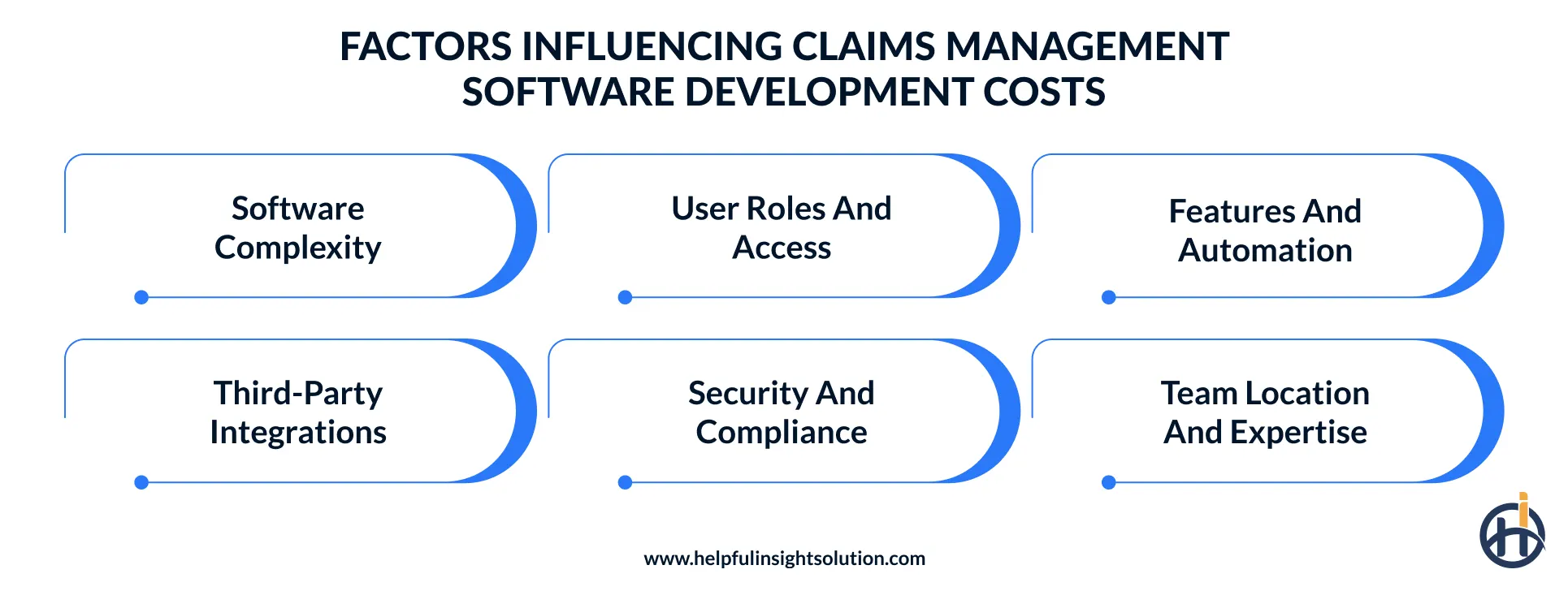
Building a claims management system involves several decisions, from choosing the features to deciding which existing systems it needs to connect with. Each choice can add to the development work and overall expense. Below, we’ll look at the factors that affect the cost to develop software for claims management.
Software complexity and scope
The cost of building claims management software mostly comes down to what you want it to handle. A tool that only records claims and updates their status is fairly simple to build. But if you need claim assignment, approval steps, and adjuster workflow management, developers have more work to do.
Each added function takes time to build and test, which increases the total cost. The wider the project scope, the higher the development cost is likely to be.
Number of user roles and access levels
Who will use the claims management software is another thing to consider when estimating the cost. For example, a system made for an internal claims team needs fewer access settings, but if policyholders, adjusters, and auditors also need to log in, things get a little more involved. Each group needs access to different information and tasks. Setting up these user roles and access controls takes extra development time and adds to the overall cost.
Features and automation requirements
The features you choose also affect the pricing. Basic functionalities like claim submission and status updates are easier to develop but features such as automatic claim approvals and AI-based intelligent document processing need more complex development.
Developers must make sure these functions work accurately with insurance data. As you add more advanced features, the insurance claims software cost is likely to increase.
Third-party integrations
Connecting claims processing software with other systems such as CRM and policy administration systems adds to the development cost. Each integration needs to be built and tested so information is shared without errors. If several external platforms are involved, the integration work takes longer and adds to the claims management software development cost.
Data security and regulatory compliance
Handling customer and claims information safely takes extra work during development. The software needs proper login controls so that only approved people can view or update records. The system must also meet rules such as the NAIC Insurance Data Security Model Law (as adopted by each state), GLBA, HIPAA for health claims, and GDPR when EU data is involved. It should also track state deadlines for acknowledging and settling claims. These requirements add development time and cost.
Development team location and experience
The geographical location and experience of the development team also influence the cost to build claims management software. Teams in North America may charge $80-$180+ per hour, while rates in Western Europe range from $45 to $125+ and Asian regions from $20 to $50 or more.
The development model chosen also affects the budget. An insurance company may choose to hire developers in-house, but this comes with ongoing costs. Apart from monthly salaries, there are expenses for training, employee benefits, and the tools the team needs to do its work. With outsourcing or hiring dedicated developers, the team size can be based on the work required, which can change the overall development budget.
Hidden costs in claims management software development to budget for
Beyond the main development expenses, a few other costs can come up during the project. These expenses are easy to miss during initial planning but can affect the final claims management system price. Let’s look at some hidden costs worth keeping in the budget.
Data migration from legacy systems
Moving old claim records into a new platform can add an expense that may not appear in the initial budget. Data from a legacy insurance system may need cleaning or changes before it can be transferred. This extra work takes time and can increase the final claims software cost estimate, especially when records are poorly organized.
Post-launch maintenance and support
Once the software is in use, there may be issues that need attention. Some features may need fixing, while others may need updates as the insurance company’s work changes. Keeping the platform secure and making sure it runs without problems also requires regular spending after launch. These software maintenance costs are an important part of the overall claims processing software development budget.
Third-party licenses and API fees
Some tools connected to claims management software come with charges that aren’t always included in the initial development estimate. Digital signatures, payment processing, and third-party data services may charge monthly fees or a per-transaction fee.
As the number of claims grows, these charges can increase. Keeping these expenses in mind gives a more realistic idea of the cost to develop claims management software.
Cloud hosting and scaling costs
The cost of running claims software does not end after development. The platform needs cloud space to store claim documents, medical records, and accident photos. As the amount of data increases, storage requirements also grow.
More computing power may be needed when claim volumes rise, particularly during busy periods. Expenses for backups and data transfers can add to the monthly cloud hosting costs, increasing the overall price of a claims management solution over time.
Custom claims management software vs. off-the-shelf solutions: Cost comparison
Ready-made software may seem easier on the budget at first because the product is already built. Custom software development requires more spending, but its features can be planned around the insurer’s needs. The following comparison looks at the claims management system price for both options.
| Cost factor | Custom claims management software | Off-the-shelf claims management system |
| Initial upfront cost | $30,000- $4,00,000+ ( UI/UX design, development, testing, and deployment) | $2,000 to $60,000+ for setup and implementation |
| Licensing and subscription fees | No standard software license fee; third-party licenses may add costs | $50- $200+ per user/month; enterprise pricing varies by vendor |
| Customization and integration costs | Included in the development scope or charged separately for additional requirements | $5,000 to $30,000 or more per integration; customization costs vary |
| Scalability costs | Depends on added infrastructure, storage, and development requirements | Additional charges may apply for more users, claims, or storage |
| Annual maintenance costs | Around 15-20% of the initial development cost per year | Included in the subscription or charged separately, depending on the vendor |
How to reduce claims management software cost without sacrificing quality
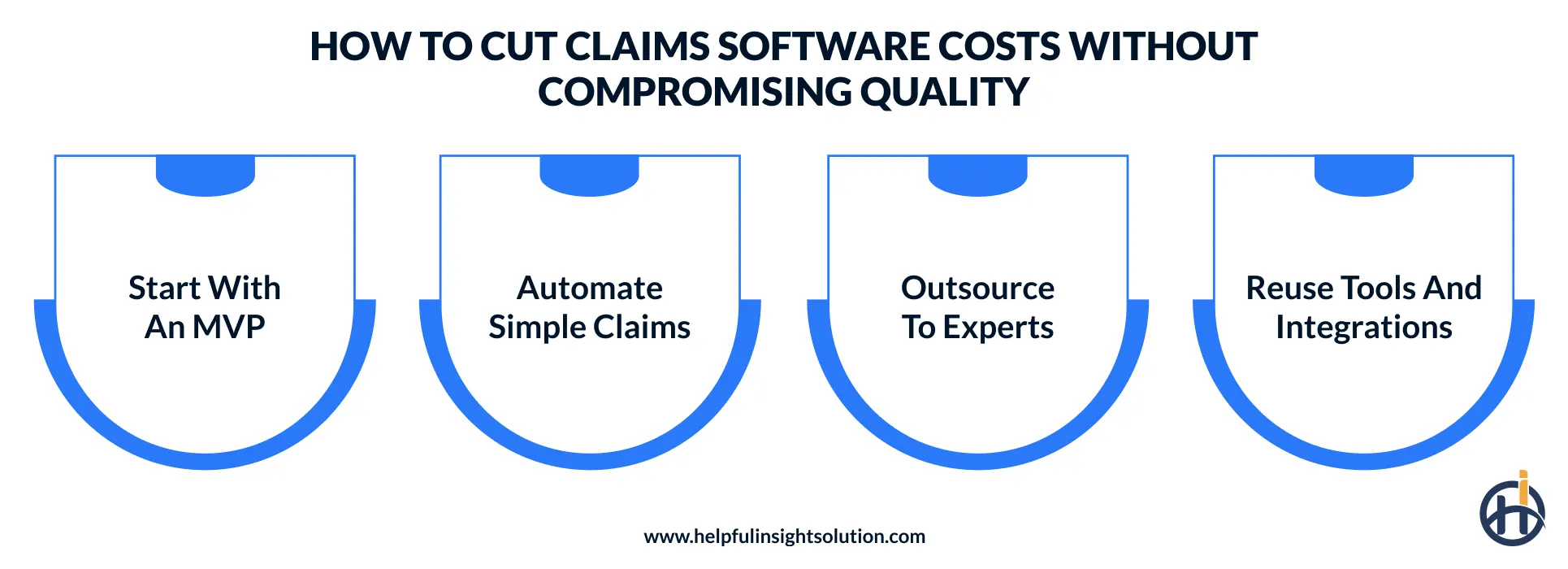
A limited budget does not mean important software requirements need to be dropped. There are ways to reduce development expenses through better planning, careful feature selection, and the right use of resources. Here are some tips to lower the cost without lowering quality.
Choose an MVP development approach
Adding too many features to the first version can increase development time and cost. Many teams choose to build an MVP first with just the basic features like claim registration, document uploads, and claim tracking. Once these functions are in use, additional features can be planned around actual requirements. This also gives better control over the claims management software development price.
Automate low-complexity claims first
Simple claims are the best place to start automating. They don’t need many checks, so software can verify information, flag missing documents, and route everyday cases to an adjuster. Staff can continue handling more complex cases.
This keeps the first development phase smaller and helps control the cost of developing claims management software.
Outsource to an experienced team
Building an in-house team takes time and money. Finding developers with the right skills, training them, and paying regular salaries can increase the project budget. Outsourcing software development offers another way to get the required development work done. It allows an insurance business to work with an external insurance software development company without taking on the full expense of permanent employees.
Reuse existing tools and integrations
Replacing every existing tool can add unnecessary expenses to a claims software project. Some systems, such as customer databases or payment services, may work perfectly well with the new platform.
Keeping them and connecting them through APIs can reduce extra development work. This is a simple way to manage the project budget without paying to rebuild features that already exist.

Conclusion
Developing claims management software is a significant investment, so understanding the development cost before starting the project matters. A realistic budget depends on what the software needs to do, how complex the workflows are, and which features are required. Planning well early cuts out work that isn’t needed and keeps spending on track without lowering quality.
Working with the right development partner makes this process easier. As an insurance claims management software development company, we help insurance companies build secure, scalable solutions that fit their requirements and budget. We are upfront about pricing, with no hidden fees, and we will suggest practical ways to get quality software within the budget you have, such as starting with a focused first release and adding features as claim volumes grow.
Share your requirements with our team, and we will provide you with a custom quote.
Frequently Asked Questions
The development timeline usually ranges from 3 to 5 months for a basic MVP to 8 to 12+ months for an enterprise-grade claims platform. Projects with complex workflows, multiple integrations, detailed UI/UX requirements, and extensive testing may take longer to complete.
A targeted change to a legacy claims system can cost around $25,000, while a full enterprise replacement, including data migration and integrations, can reach $1,000,000 or more. The budget will vary based on how much of the old system needs to be changed or rebuilt.
Some vendors and case studies report returns of 2:1 or higher, mainly from fewer incorrect payments and less manual work. Results depend on claim volume and how much of the process is automated.
Yes, outsourcing is often the cheaper option. An in-house team brings regular costs like salaries and other benefits. With outsourcing, the business pays for the development work and the expertise it needs, and not much beyond that.