


Key takeaways
- Insurance compliance software is a digital solution that assists insurance businesses in managing regulatory requirements, compliance activities, risk oversight, and supporting documentation.
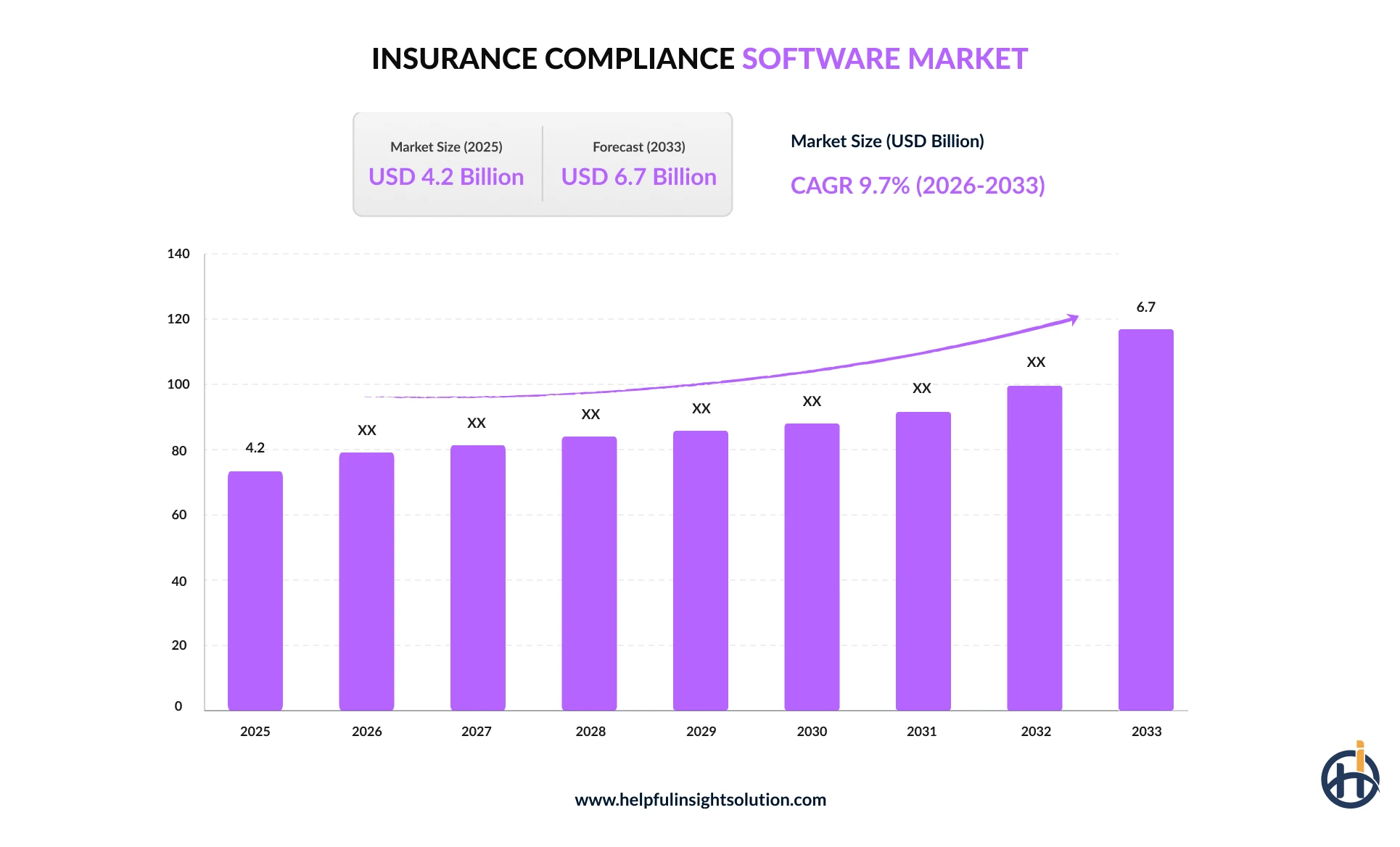
- Market research forecasts suggest the global insurance compliance software market could reach around $3.2 billion by 2033, reflecting growing demand for compliance management solutions.
- When evaluating insurance compliance management software, look for core features such as license management, compliance monitoring, regulatory intelligence, audit trails, and incident reporting.
- Developing an insurance compliance system can bring several benefits, including continuous compliance monitoring, less operational workload, proactive risk management, and earlier risk mitigation.
Insurance compliance software becomes relevant when regulatory work starts taking more manual effort than teams can reasonably manage. An insurer may have licensing information in one system, audit records somewhere else, and regulatory updates being followed by different system. That arrangement may work for a smaller operation, but becomes harder to maintain as the business enters new states or adds more insurance products.
This is also where the need for a more tailored system becomes clear. Not all insurance companies follow the same compliance processes, and the software they use has to fit around existing systems and responsibilities. Custom software development makes it possible to build those requirements into the platform rather than asking teams to work around a fixed setup.
The market reflects growing demand for these solutions. Verified market reports estimate that the global insurance compliance software market will reach $3.2 billion by 2033. For insurers evaluating a purpose-built platform, the focus is not only on meeting regulatory requirements but also on making the software work with existing processes and systems.
Choosing the right platform requires looking beyond basic features and considering what it can actually support. This blog covers the key features, benefits, and factors to consider when choosing insurance compliance management software.
What is insurance compliance software?
Insurance compliance software is a digital system that helps insurers, agencies, and brokerages follow the legal and regulatory requirements applicable to their operations.
The regulatory side of an insurance business involves a steady stream of information, tasks, and deadlines. The system keeps these activities organized, from licensing and regulatory filings to compliance documentation and audit records.
It automates compliance reviews, giving insurers a more consistent way to check requirements without relying on manual reviews across different sources. When regulations change, the software can identify affected requirements and update relevant compliance processes, reducing the ongoing effort needed to keep compliance work current.
What are the key features of insurance compliance software?
A compliance system usually includes several modules, with each one covering a particular area of regulatory work. Depending on the insurance business and its requirements, these can include license management, regulatory tracking, reporting, document control, and audit support.
The following insurance compliance software features are commonly considered when defining the platform:
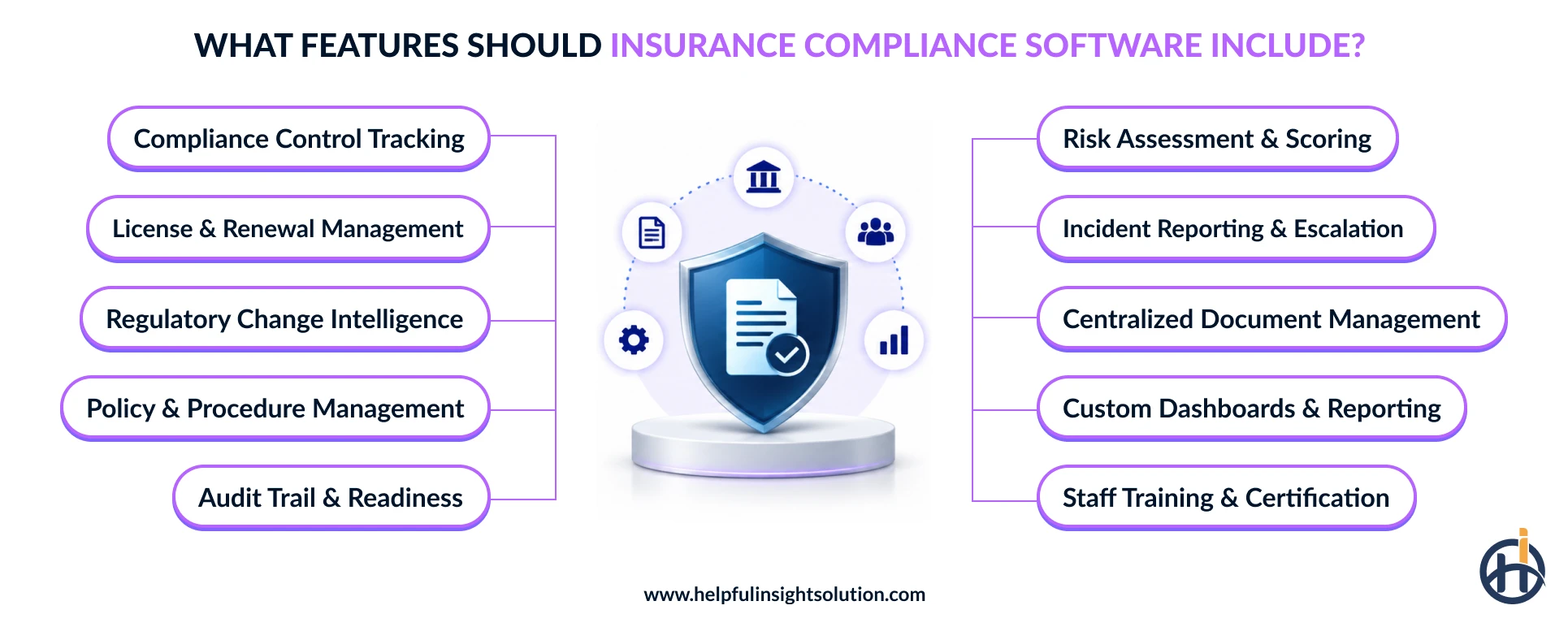
Compliance control tracking
It helps monitor whether required controls are being followed across daily operations. The system can track control activities, identify exceptions, and direct issues to the appropriate team members, giving better visibility into gaps that may require corrective action.
- Mapping controls to regulatory requirements
- Assigning control owners and reviewers
- Maintaining records of control assessments
License and renewal management
Manage license details and renewal dates when insurance operations span multiple states. It keeps credentials organized, checks their status, and follows renewal requirements without relying on separate records.
- Multi-state license tracking
- Agent and broker credentials
- License expiration alerts
Regulatory change intelligence
Allows compliance teams to keep up with regulatory changes from different sources and understand what those changes may mean for the business. It can highlight relevant updates, identify affected areas, and help decide where existing compliance procedures need attention.
- Monitoring regulatory sources
- Assessing regulatory impact
- Assigning follow-up actions
Policy and procedure management
Enable insurers to keep internal policies and procedures aligned with regulatory requirements over time. When connected with policy administration software, they can support policy reviews, document changes, approval workflows, and checks for gaps in existing procedures.
- Centralized policy document repository
- Automated policy review notifications
- Capturing stakeholder attestations
Audit trail and readiness
This functionality records system activities, user changes, and document access, giving insurance companies a clear history for audits, reviews, and regulatory checks.
- Logging all important system activities
- Tracking changes made by users
- Providing evidence during compliance checks
Risk assessment and scoring
It reviews customer, business, and operational risk factors, then assigns scores based on defined rules. Insurers can use these scores to spot higher-risk cases and decide where review is needed.
- Evaluating customer and business risk profiles
- Assigning risk scores using defined criteria
- AI-powered risk classification and prioritization
Incident reporting and escalation
A centralized reporting workflow captures incident details, assigns cases for review, and records subsequent actions. Insurance risk management software can flag unresolved matters and support timely escalation when a case needs further attention.
- Tracking investigation actions and outcomes
- Flagging cases requiring further escalation
- Recording follow-ups and resolution updates
Centralized document management
This feature of insurance compliance software solution brings policy files, compliance records, and reports together instead of leaving them across separate locations. Search, version tracking, permissions, and retention controls keep documentation manageable.
- Secure cloud-based storage
- Role-based access permissions
- Audit-ready file organization by category
Custom dashboards and reporting
Custom dashboards bring compliance data into clear visual views, showing key metrics, trends, and performance indicators. During legacy insurance system modernization, they can provide a clearer view of operational data.
- Viewing compliance metrics in real time
- Creating reports for different user roles
- Comparing trends across policy operations
Staff training and certification
The goal of this feature is to keep employees up to date with changing regulations, while making training easier to complete and certification records simpler to maintain.
- Letting employees complete courses at their pace
- Checking knowledge through short assessments
- Sending reminders before certifications expire
Benefits of insurance compliance management software for insurers
Managing regulatory requirements across policies, departments, and jurisdictions can create compliance risk and unnecessary administrative work.
Insurance risk management software brings greater structure to monitoring, reporting, and control activities while helping teams respond faster to regulatory changes.
Below are the key benefits of insurance compliance software that can strengthen compliance operations.
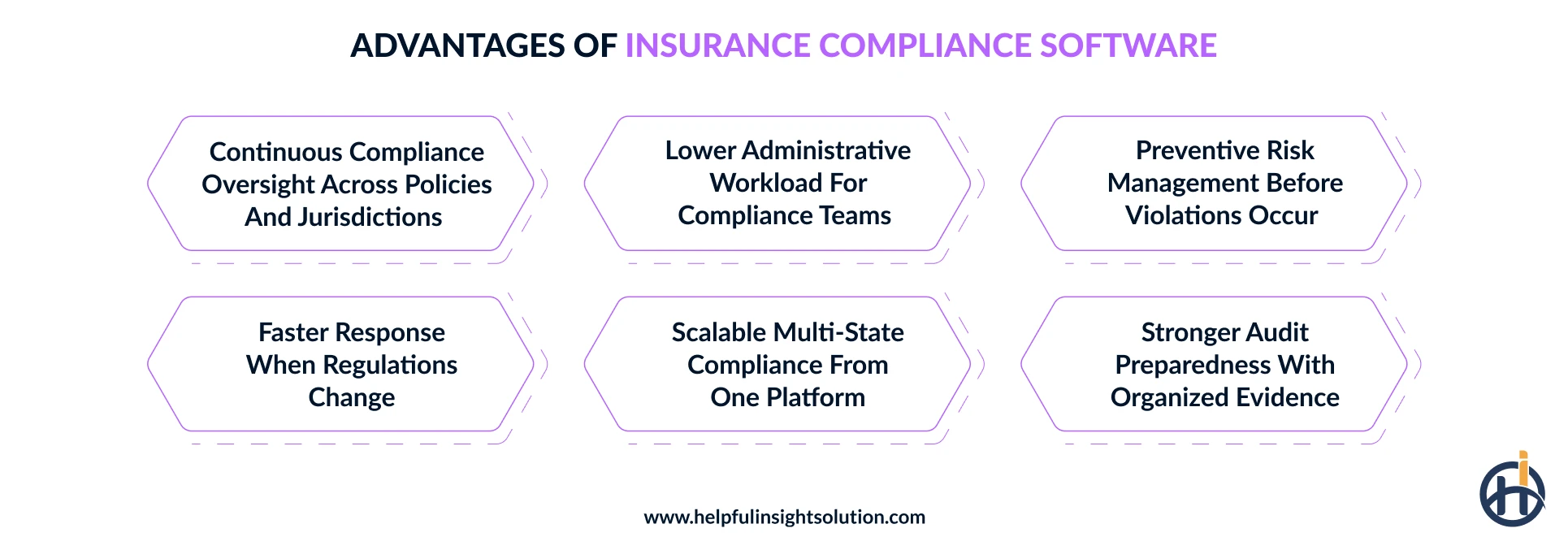
Continuous compliance oversight
Insurers can’t treat compliance as something to verify once and forget. Regulations shift, reporting requirements get updated, and internal practices change alongside them. Keeping watch over these on an ongoing basis helps respond before small issues turn into real problems.
It also makes prioritization easier as knowing which gaps matter most becomes clearer, particularly as AI in insurance adoption continues to grow.
Lower administrative workload
By handling routine compliance activities through structured workflows, insurance compliance software services can reduce the coordination required from compliance teams.
Staff spend less time chasing information, updating records, or checking completed tasks. This leaves more capacity for unusual cases and process improvements.
Preventive risk management
Compliance risks are easier to deal with when they are noticed early. Instead of waiting for a violation or regulatory finding, an insurer can review where its controls may be falling short and take corrective action.
Insurance regulatory compliance platforms can make this review part of regular compliance work, rather than an occasional exercise.
Faster regulatory response
When a regulation changes, knowing about it is only the first step. Insurance agencies also need to determine which products, processes, or obligations are affected and decide what needs to change.
One of the key benefits of insurance compliance software is that it brings structure to regulatory change management. Impact assessment can help identify where a new requirement may affect existing operations, allowing insurers to make informed changes before they are put into practice.
Scalable multi-state compliance
State requirements can differ from one jurisdiction to another, which can make expansion harder to manage through a single standard process. Insurance compliance management software can accommodate those differences without requiring a separate system for every jurisdiction.
A common framework can make compliance governance easier as operations grow, while an insurance portal can give authorized users a consistent way to access and submit regulatory information across different locations.
Stronger audit preparedness
Developing insurance regulatory compliance monitoring software can make audit preparation much more orderly. Instead of searching through scattered records, the platform can keep review history, supporting documents, and approval details together.
A clear record of who reviewed what and when gives auditors stronger evidence of accountability when questions arise.
What capabilities should insurance compliance software have?
Choosing an insurance compliance software solution requires looking beyond basic regulatory tracking. The right capabilities should fit existing compliance processes, support different lines of business, and remain practical as requirements evolve.
Here are the core capabilities insurers should evaluate before selecting a platform.
Data security and access controls
When comparing security features, do not stop at asking whether the system uses encryption. Look at how access is actually managed. Role-based permissions and multi-factor authentication should give insurers control over who can see particular records.
It is also worth checking whether access can be removed quickly when someone changes roles or leaves.
Seamless core system integrations
An insurance compliance platform should fit into the technology already used across the business. When reviewing integration capabilities, consider connections with policy administration, billing, and claims management software.
Pay particular attention to how the system handles data mismatches and failed transfers, because a connection that works technically but produces inconsistent records can create compliance issues of its own.
Automated compliance workflows
Not every compliance process follows the same sequence, so rigid automation can become a problem. Look for rule-based workflows that can be adjusted to match different requirements.
Being able to change who receives an action or when it is escalated gives insurers more control as internal processes change.
Flexible customization options
Insurance compliance management software should have flexible configuration options that fit different lines of business and internal policies. Look for custom compliance rules and adjustable fields rather than fixed settings.
The ability to adapt the platform without rebuilding existing processes can be especially valuable after a merger, product launch, or change in organizational structure.
Regulatory coverage across states
Managing compliance across states becomes complicated when each jurisdiction has its own requirements and filing expectations.
Developing insurance mobile apps and compliance software with real multi-state coverage keeps these differences organized in one place, so insurers aren’t cross-referencing separate state guides for every decision.
Top examples of insurance compliance software in 2026
Compliance software for insurance companies, startups, and carriers can focus on licensing, regulatory monitoring, certificates, or broader risk management. Since each platform takes a different approach, there is no single solution for every business.
Here’s a closer look at the insurance compliance platforms worth evaluating.
AgentSync
AgentSync is a compliance management platform for insurance distribution, with its focus centered on producer licensing, appointments, and related regulatory requirements. The platform connects directly with NIPR data and can feed producer information into existing infrastructure through its APIs.
For organizations comparing options, its reported 99% licensing and appointment transaction success rate and 302 regulatory changes tracked and implemented are useful indicators of its operational scope.
Key features
- Producer licensing status visibility
- Carrier appointment management
- Just-in-time appointment support
- Salesforce-native platform architecture
Best for
Insurers that need centralized producer compliance oversight, with current licensing and appointment information available across carriers, agencies, and MGAs.
myCOI
myCOI is an established third-party risk management platform focused on helping businesses manage proof of insurance and related compliance requirements. Its coverage extends across external relationships such as contractors, vendors, tenants, and subcontractors.
Alongside its core platform, myCOI offers illumend, an AI-powered solution that streamlines insurance compliance processes. Its focus on making complex insurance information easier for non-specialists to understand brings a more accessible approach to compliance management.
This also reflects the wider investment in AI development services for InsurTech, as insurance businesses look for practical ways to apply AI beyond traditional workflows.
Key features
- Third-party insurance compliance
- Certificate request automation
- Compliance resolution workflows
- Centralized compliance repository
Best for
Businesses that manage insurance compliance across many vendors, tenants, or subcontractors; particularly construction, real estate, and property management companies needing constant COI oversight.
TrustLayer
TrustLayer takes a broader approach to risk management, covering insurance verification, licenses, and compliance documents in one place. This can be useful when vendor relationships are numerous and requirements change from one partner to another.
Instead of waiting for a scheduled review to uncover an issue, risk managers can see emerging gaps sooner and decide where follow-up is actually needed.
Key features
- Automated COI tracking
- Direct vendor document uploads
- Pre-issue risk alerts
- Workflow automation
Best for
Businesses handling sizeable vendor networks where insurance, licensing, and compliance requirements need regular oversight.
Riskonnect
Riskonnect combines risk, claims, policy, and billing information within one cloud-based insurance management system. It is designed for insurers and brokers that have several risk-related functions to oversee rather than a single compliance requirement.
Bringing these areas together gives a more connected view of an account, which can be useful when reviewing claims patterns, financial information, and overall exposure.
Key features
- Integrated claims management
- Policy administration capabilities
- Insurance billing management
- Portfolio risk visibility
Best for
Insurance organizations managing complex portfolios where claims, policies, billing, and risk information need to be considered together.
Future trends in insurance compliance software
The way insurers manage compliance is likely to change as new rules and technologies become part of day-to-day operations. Digital transformation in insurance is bringing more data, automation, and artificial intelligence into this area.
The following trends offer a look at what could become more common in insurance regulatory technology, from smarter monitoring to more connected compliance processes.
Agentic AI for compliance management
Agentic AI is likely to take a larger role in compliance automation, with AI agents handling defined tasks rather than simply flagging issues. Future platforms could monitor regulatory updates, compare them with internal requirements, and prepare recommended changes automatically.
The bigger shift will be from AI identifying a compliance task to initiating the next step, while keeping human approval for sensitive decisions.
Embedded regulatory intelligence
Regulatory intelligence is likely to become a built-in capability across insurance compliance tools, rather than something handled through separate databases or manual research. They could interpret new regulations, identify the products or processes they affect, and surface those changes within relevant workflows.
This could make regulatory updates more actionable, reducing the gap between a rule changing and operational teams responding.
Blockchain-verified audit trails
Blockchain could eventually give insurance regulatory compliance platforms another way to preserve the history behind important compliance decisions.
Using blockchain technology, insurers may record approvals, policy changes, and other events in a way that is difficult to alter later. This could strengthen the credibility of audit records when information passes between multiple parties.
Predictive risk scoring
With predictive analytics, insurance compliance systems could begin assigning risk scores based on patterns across policies, regulatory changes, and operational data.
This could give insurers a more practical way to prioritize compliance reviews, rather than applying the same level of scrutiny to every account.
Conclusion
For insurers, compliance becomes harder to manage as operations expand across products, states, and distribution channels. Insurance compliance software brings these requirements into a more connected environment.
This gives insurers a stronger foundation for managing regulatory responsibilities today while preparing for changes that may come later.
That foundation becomes more valuable when the software is built around an insurer’s actual operating environment. As an insurance software development company, we bring 10+ years of experience creating mobile applications and software solutions for the insurance industry.
We develop insurance compliance management platforms from the ground up, modernize existing systems, and connect new software with your current infrastructure.
Our certified developers also focus on the practical side of development, from selecting the right features to ensuring the solution fits your existing technology setup.
Planning to build or modernize an insurance compliance platform? Share your project requirements with us to explore the right technology and development approach.
Frequently Asked Questions
Insurance compliance software manages regulatory obligations throughout an insurer’s operations. It can organize requirements, track licenses and filings, monitor compliance activities, and maintain supporting records. It gives insurers better visibility into whether applicable rules and internal standards are being followed.
The cost to develop insurance compliance software can be around $30,000 to $75,000 for an MVP, while an enterprise-level compliance solution can cost $150,000 to $300,000 or more. The final estimate depends on platform complexity, required compliance capabilities, third-party integrations, custom versus off-the-shelf solutions, customization requirements, and the development team’s location.
Yes, insurance compliance software supports multi-state license management. It can organize producer and entity licenses by jurisdiction, track important requirements, and provide a clearer view of licensing status across states.
Yes, modern insurance compliance software can integrate with NIPR, policy administration platforms, CRM systems, and other business applications through APIs and connectors.