

Running a business or a startup means making many decisions every day. Sometimes those choices are based on guessing, which can cause losses. It becomes hard to know what customers want or predicting market trends.
But what if we told you there is a solution that can eliminate guesswork and help you make the right decisions? That solution is AI in demand forecasting.
AI demand forecasting solutions have proven to be a boon for businesses across different industries and have become a valuable asset for them. And why not? They help businesses make data-driven decisions and give confidence in planning for future demand and growth.
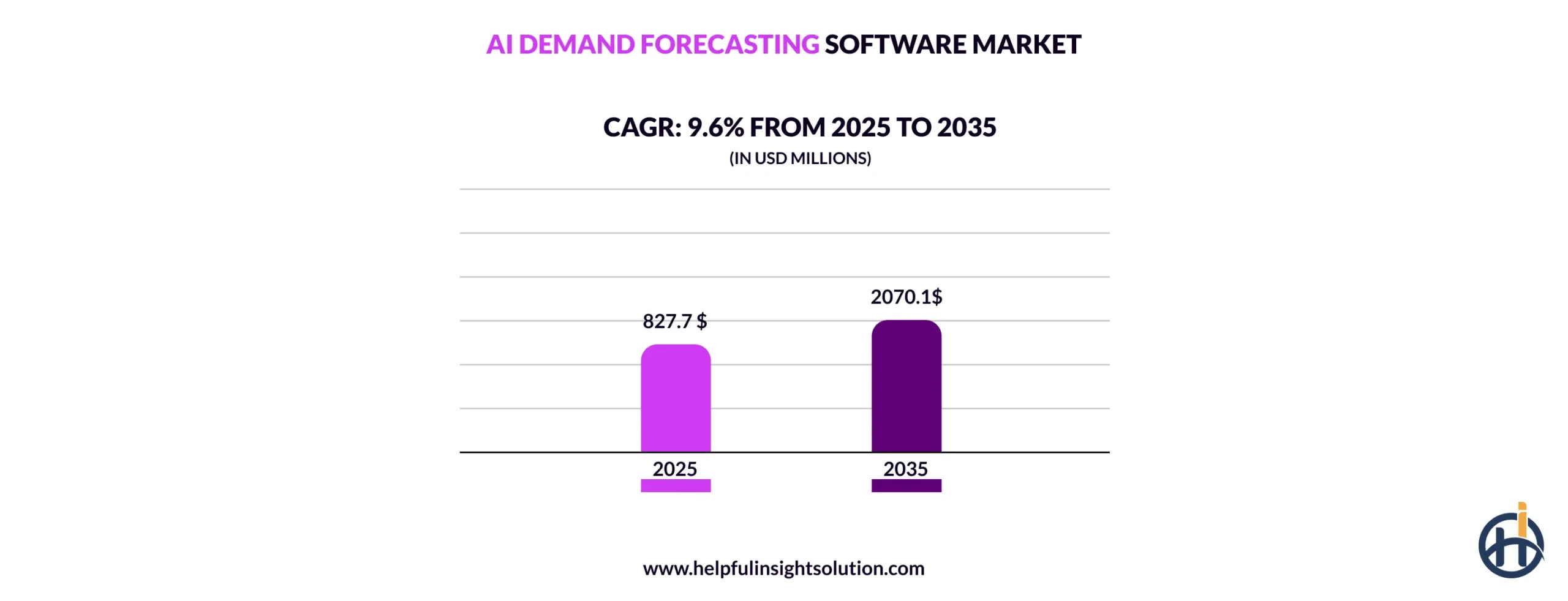
In fact, the global AI demand forecasting software market is projected to reach $2,070.1 million by 2035. These numbers clearly show the enormous growth potential and the increasing reliance of modern businesses on artificial intelligence for strategic planning and demand forecasting to survive in today’s competitive business world.
If you are thinking about implementing AI for demand forecasting, you are moving in the right direction. However, we understand it is not simple. You may have many questions-
Will it really help?
How can it be implemented?
where can it be applied?
This blog will answer all your questions, so keep reading until the end.
What is AI Demand Forecasting?
AI in demand forecasting simply means using artificial intelligence to predict future demands quickly and accurately. Unlike traditional methods, AI can analyze large datasets, both past and present, along with external factors to generate precise predictions. It identifies patterns and connections that older systems often miss, helping businesses make smarter decisions.
With demand forecasting AI, companies can better align inventory and products with actual demand while reducing manual work and guesswork. It also helps businesses respond faster to market changes, prevent stockouts, minimize excess inventory, and stay ahead of competitors.
How Does AI for Demand Forecasting Work?
Before we get into implementing AI in demand forecasting, it’s important to first understand how it works and generates predictions. Let’s take a look at the steps involved in AI based demand forecasting.
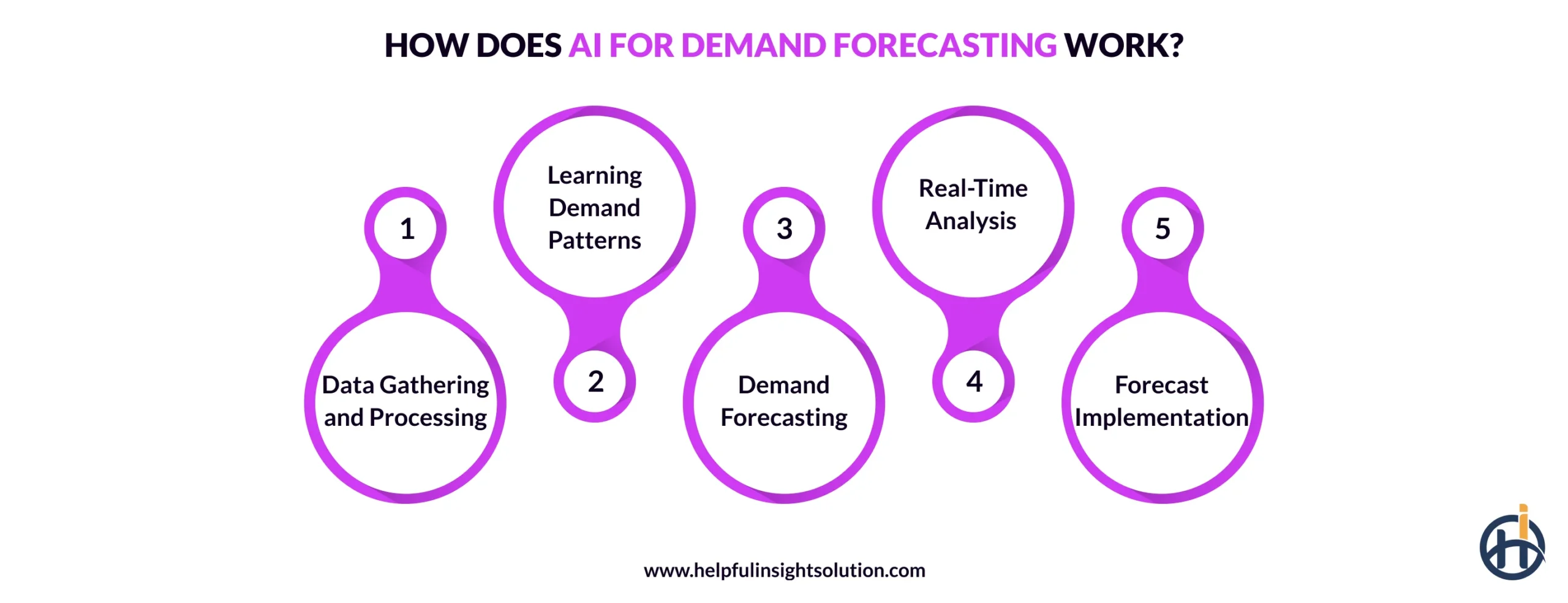
1. Data Gathering and Processing
AI collects lots of data from different sources, like sales and inventory reports of the company. This data is cleaned and organized so the system has reliable, accurate information to learn from and make predictions
2. Learning Demand Patterns
Once the high-quality data is ready, machine learning algorithms study it to find patterns. It learns how factors like seasons, promotions, or prices affect demand. This helps the system understand how customers are likely to buy in the future
3. Demand Forecasting
Using these patterns, AI demand forecasting tools predict future demands for different timelines. It also tests situations where supply problems occur, helping businesses plan ahead. Forecasts are shared with all teams for consistent planning.
4. Real-Time Analysis
The AI system constantly checks new data, such as sales or website activity. If customer demand changes suddenly, it quickly updates the predictions so businesses can respond immediately without waiting for manual updates.
5. Forecast Implementation
The final predictions are implemented by the businesses to adjust their production and stock levels. Plans change automatically as new data comes in, keeping operations aligned with actual demand without human intervention.
Benefits of Using AI in Demand Forecasting for Businesses
AI-driven demand forecasting has brought a major shift in how businesses approach demand planning and sales prediction. Businesses who have adopted AI models for demand forecasting are already reaping its numerous benefits, which are:
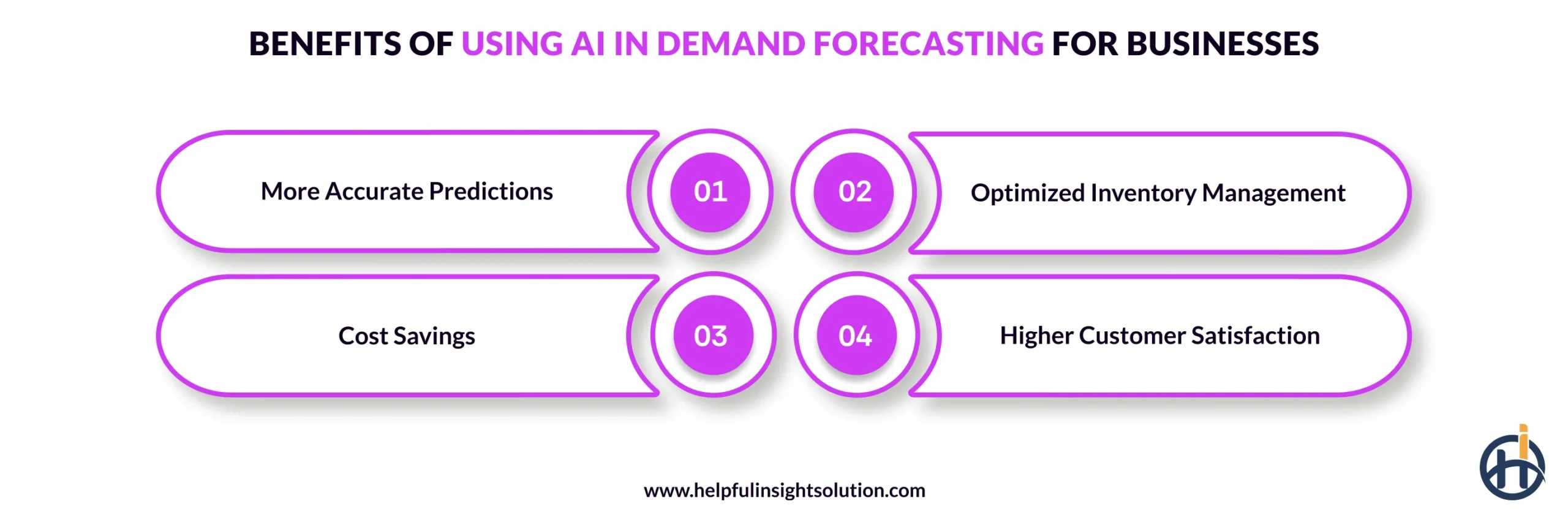
1. More Accurate Predictions
With AI-powered demand forecasting, it becomes easier to identify patterns that humans might miss. This allows businesses to make more accurate predictions, resulting in fewer mistakes, reduced lost sales, and up to 65% better product availability when customers need them.
2. Optimized Inventory Management
Keeping right quantity of inventory is a big task for an inventory manager until the introduction of AI. It helps keep just the right amount of stock, prevents having too much inventory, which wastes money, or too little, which disappoints customers.
By predicting demand better, businesses make products available on time, and can respond faster to changes in the market.
3. Cost Savings
AI technologies for demand forecasting greatly helps in reducing cost related with logistics and inventory management. How? Well, you don’t need to over stock the products in the warehouse when their is less demand and vice-versa.
4. Higher Customer Satisfaction
Every business wants their customers never to leave without making a purchase, especially because of stock unavailability. Generative AI in demand forecasting ensures products are readily available when customers demand them. This will enhance their experience and satisfaction level with the brand.
How to Implement Artificial Intelligence in Demand Forecasting
Implementing AI in demand forecasting is a process that involves multiple steps and proper planning to achieve the best results. Therefore, it is best to hire AI developers, as they are experts in this field.
Let’s take a look at the steps required to implement AI for demand forecasting:
1. Assess Business Requirements
First you have to decide why you want to implement AI and what problem it will solve, such as too much stock, slow deliveries, or missed sales. Knowing your goals helps ensure AI solves the right problems and gives you clarity on which area you want to implement it.
2. Collect and Prepare Data
Gather reliable, high-quality data from diverse sources, such as past sales records, customer feedback, market trends, and external factors like weather conditions. Clean the data by fixing errors and organizing it so AI has accurate information to learn from.
3. AI Model Development and Training
Next, choose the right AI algorithms, like neural networks, and begin developing an AI model to manage and analyze your valuable data. Then, train it using the prepared data, which helps it learn patterns and relationships, so it can make predictions accurately.
4. Integrate Models with Existing Systems
To get maximum benefit from AI in forecasting, connect AI model to your current systems like supply chain software. This allows real-time data to flow automatically and helps teams act quickly on AI predictions.
5. Test and Validate AI Models
After integration, check how well the demand forecasting using AI is working by testing it with separate data. Make sure forecasts are accurate and useful in real-life situations before using the model fully. This avoids mistakes and ensures reliable results.
6. Monitor and Improve Performance
Keep monitoring the AI-powered demand forecasting tools to see how well they are performing and whether they are giving the right results. Demand and market trends change over time, so update and retrain the model regularly.
Use Cases of AI in Demand Forecasting in Different Industries
The applications of AI in demand forecasting are not restricted to one or two industries but can be found across a wide range of sectors. In this section, we will explore the key use cases of AI demand forecasting services.
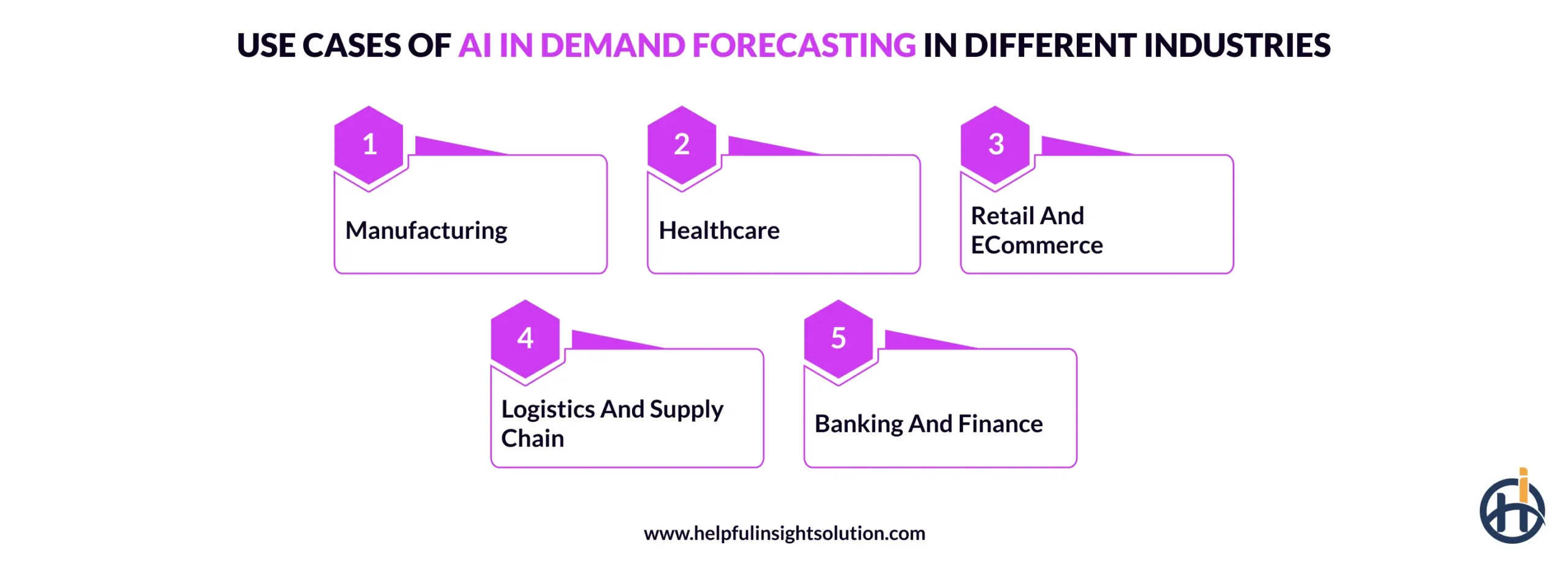
1. Manufacturing
Businesses in the manufacturing industry are using AI to plan production and manage warehouse spaces. It assists them in ensuring that products are available at all times according to market demand without fail.
Below are the use cases of AI demand forecasting in the manufacturing sector:
a. Production Scheduling and Planning
AI in manufacturing helps studies past sales, current orders, and trends to decide how much to produce. If demand increases or drops, through intelligent demand forecasting AI updates plans quickly. This helps factories avoid making too many products or too few.
b. Supply Chain Optimization
Manufacturers can use AI in demand forecasting to optimize supply chain. AI looks at supplier data, delivery history, and demand forecasts to plan material orders. It tells businesses when and how much to buy. This prevents last-minute shortages and overbuying.
c. Market Trend Analysis
Trends keep emerging in the market, which can create increased demand for existing products or predict demand for new products. Artificial intelligence helps brands understand what customers like and what may become popular soon by studying shopping habits and social media activities.
2. Healthcare
Hospitals and clinics give their best to deliver quality care to patients. But sometimes, due to limited beds and low staff, this can become an obstacle. That’s where AI in healthcare can help. It ensures resources are ready and patients are treated efficiently.
Below are some use cases of AI demand forecasting in healthcare:
a. Hospital Resource Planning
By studying data like the number of patients, seasonal illnesses, and health trends, AI assists in managing resources like beds, staff duties, and supplies ahead of time. As a result, hospitals stay prepared, and provide seamless care without overcrowding or wasted resources.
b. Equipment and Medicines Demand Forecasting
Timely administration of medicines and care can save lives, and no hospital wants to experience stockouts or have medicines expire due to overordering. AI predicts which medicines and medical equipment will be needed and when, ensuring that patient treatment is never delayed.
c. Creating Custom Treatment Plans
Generative AI in demand forecasting helps medical professionals understand how patients may recover after treatment. It studies patient history and test results to create personalized care plans for better recovery with fewer complications.
3. Retail and eCommerce
Retailers and online store owners face most of the issues of inventory mismanagement, but not anymore with AI for demand forecasting. It makes it easy to predict what people will buy, when, and how much, helping manage stock better.
Let’s have a look at the use cases of AI in demand forecasting for eCommerce and retail:
a. Better Inventory Management
Using artificial intelligence, retailers can forecast the demand for their products and smartly manage inventories. Just keep the right amount of products, neither too much stock nor empty shelves. Products move faster, and customers find what they want easily.
b. Marketing Plan Impact Prediction
It’s normal for businesses to run different marketing campaigns, but there is no guarantee that every plan succeeds, right? AI models for demand forecasting help understand what marketing plans can yield what results, what can fail, and why. This helps businesses understand what really works.
c. Pricing Strategy Creation
The price of the product can impact how your brand is perceived and its profitability. Artificial intelligence in demand forecasting help suggest better prices by studying sales data and customer behavior. It helps retailers avoid prices that are too high or too low.
4. Logistics and Supply Chain
Logistics and supply chain needs to be effective to ensuring businesses deliver products to their customers right on time. But wrong predictions can hamper the supply chain cycle. AI in supply chain assist in ensuring that the right supplies are available on time, while also avoiding waste.
Let’s explore the key applications of AI for demand forecasting in supply chain:
a. Warehouse Space Optimization
AI demand forecasting can help supply chain companies to understand how much warehouse space they will need. This prevents overcrowded warehouses or unused space. AI also helps reroute goods during delays, keeping shipments on time and operations running smoothly.
b. Reverse Logistics Prediction
You will amazed to know that businesses can use AI systems predicts how many products customers might return. This helps companies prepare space, and systems to handle returns faster. Better planning reduces return costs, and keeps returned items organized and ready for resale.
c. Transportation Planning
To ensure goods are timely reached to the end customer proper logistics planning is crucial. AI in demand forecasting aid in planning vehicles capacities and delivery routes ahead of time. This also helps manage cross-border shipments and ensures raw materials arrive on time for production.
5. Banking and Finance
The banking and finance sector is highly unpredictable. Major market changes, new regulations, or economic crises can happen at any time. AI in banking helps create more accurate predictions, allowing finance leaders to prepare in advance and have clear action plans ready when such situations arise.
Popular use cases of AI in demand forecasting for the banking sector:
a. Credit Risk Assessment
Banks spend a lot of time deciding who should get a loan, AI for demand forecasting makes this easier. It studies a person’s past money habits, income, and payments. Then it predicts how safe it is to lend money, helping banks choose faster and more confidently.
b. Market Trends Forecasting
As we know the finance market is keep undergoing changes, so AI helps banks understand where the market is heading. It studies old data and current trends to guess what may happen next. As new information comes in, AI systems updates its predictions.
Challenges of AI in Demand Forecasting
Demand forecasting with AI brings many advantages to the table, but it also has certain challenges that are important to understand. They are:
| Challenge | Impact | Solution |
| Low Quality Data | Poor data causes wrong forecasts and poor business decisions. | Clean data regularly and collect accurate data from trusted sources. |
| High Setup Costs | Delays demand forecasting AI solution adoption and limit smaller business growth. | Start small with simple tools and grow slowly over time. |
| Legacy System Issues | Old systems slow forecasting and block smooth data sharing. | Upgrade systems step by step and use tools that connect easily. |
| Resistance to Change | Employee fear reduces AI in demand forecasting usage and slows forecasting improvements. | Train employees clearly and show how AI supports their jobs. |
What the Future of AI-Based Demand Forecasting Looks Like
Not long ago, predicting demand relied heavily on guesswork. Today, AI has made accurate forecasting possible. AI in demand forecasting is already delivering impressive results, and leading brands like Amazon and Zara have begun using it to drive success. It’s exciting to imagine what the future holds, so let’s explore what we can expect next:
In the coming years, AI demand forecasting solutions will increasingly generate predictions using real-time data, reducing reliance on historical data alone.
AI models won’t just retrain periodically, they’ll continuously rewrite their own logic based on demand and consumer behavior shifts.
We can see AI to not just give predictions but also suggest best ways to use the prediction for maximum gain.
Partner with Helpful Insight to Develop an Intelligent AI Demand Forecasting Solution
Demand forecasting with AI has solved one of the most common challenges faced by enterprises and startups, making accurate predictions. It has proven to deliver positive results and is transforming how businesses respond to market uncertainties and make confident decisions. This has led to the growing adoption of AI-driven demand forecasting software.
Implementing AI in demand forecasting can be complex, but not with Helpful Insight. We are a leading AI development company with hands-on experience in building scalable, secure, and high-quality AI solutions.
Our expert AI developers understand every aspect of creating and integrating AI demand forecasting systems into existing platforms, helping businesses manage inventory better and make smarter decisions that drive growth.
Choose Helpful Insight because we:
- Have a team of certified AI developers
- Offer end-to-end AI development services
- Deliver high-quality solutions at cost-effective rates
- Maintain a 92% client retention rate
Connect with us today to learn how we can help you successfully implement AI in demand forecasting and strengthen your business strategy.
FAQs
AI systems use ML algorithms to analyze vast amounts of data to find patterns and then make forecasts. Using these predictions, businesses can make decisions that support them in growing and succeeding.
In old times, forecasting used past data and human guesses. But AI forecasting uses real-time data to provide faster and more accurate future predictions.
Yes, you can implement AI in your current demand forecasting system to boost prediction capabilities. At Helpful Insight, we will assist you in that by ensuring smooth implementation without disrupting your business operations.
Some of the popular real-world examples of AI in demand forecasting includes:
- Amazon uses AI to predict product popularity.
- Zara uses AI to predict fashion trends.
- Walmart optimizes inventory with machine learning predictions.