

“Manage tasks for doctors, patients, and hospital staff efficiently with scheduling software.”
Are you fed up with managing various healthcare tasks manually in your hospital or clinic? If you are looking for a digital solution, then investing in online medical scheduling software development is beneficial.
It is the right time for entrepreneurs to build medical software for scheduling, who want to streamline healthcare workflow and handle medical tasks easily. The worldwide healthcare market is heavily supporting this segment, allowing more investors and increased user engagement.
Additionally, technologies like AI are also being used to make patient scheduling software more advanced and capable of doing complex tasks.
According to a report, 67% of hospitals in the USA are using predictive AI for scheduling, and 68% of bookings for doctor consultations are made through mobile phones. This is a huge change in the market, creating more opportunities.
So, you should not waste this chance and focus on developing medical appointment scheduling software. In this blog, you will get all the information regarding the development process, features, cost, and more. Let’s jump into it and find what is there for you.
Current Market of Medical Scheduling Software
In the healthcare industry, medical scheduling software development is a new segment in which businesses are investing heavily. You will understand the growth potential of this sector by studying the revenue and other parameters in this section:
- The global healthcare scheduling software market revenue is $459.6 million in 2026, which is growing at a rate of 13% CAGR between 2026 and 2030.
- At the end of the tenure, the revenue will reach $750 million, where the patient scheduling segment has 41.8% market share.
- Various US healthcare market players saved $20 billion by shifting their manual systems to electronic medical platforms at the start of 2026.
- More than 83% of doctors in different US states have adopted hybrid patient care models, producing a revenue of $112.7 million in 2026.
- Hospital staff experienced a 70% reduction in expenses on administrative tasks by implementing AI-powered voice agents in healthcare.
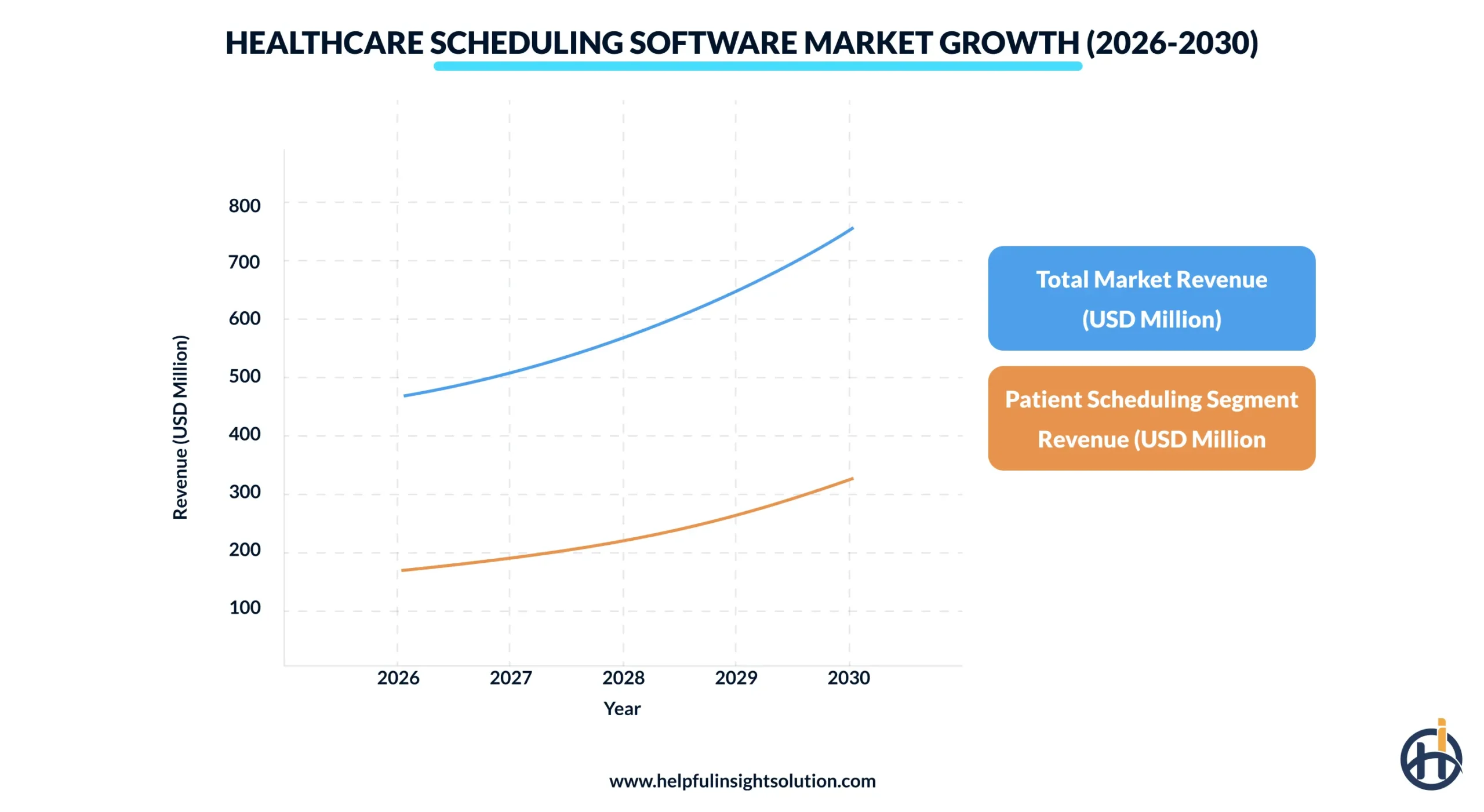
These market figures show that an entrepreneur must create healthcare scheduling software, offering smart patient management and staff scheduling. It will help in increasing ROI for business growth and enhanced healthcare workflow.
Healthcare Scheduling Software Explained
If you don’t know what health care scheduling software is, then this section is for you. Whether you are looking to manage your patients or staff in a hospital, medical task management platforms are the best choice. They easily handle doctor appointments, consultations, and daily activities in real-time.
Additionally, they enable various administrative and healthcare operations, enhancing digital workflow and streamlining patient care. Various apps like Zocdoc provide supportive features like appointment scheduling, task management, and EHR that increase the overall productivity for patients and doctors.
- Automates doctor and patient appointments by operating room schedules to reduce wait times.
- Manages test bookings, equipment availability, and technician schedules for faster reporting.
- Coordinates caregiver shifts, patient visits, and updates for efficient in-home care delivery.
How Medical Scheduling Software Benefits Businesses?
Business investors can experience a lot of benefits by developing appointment medical scheduling software. They reduce downtime, increase patient engagement, and streamline health workflow:
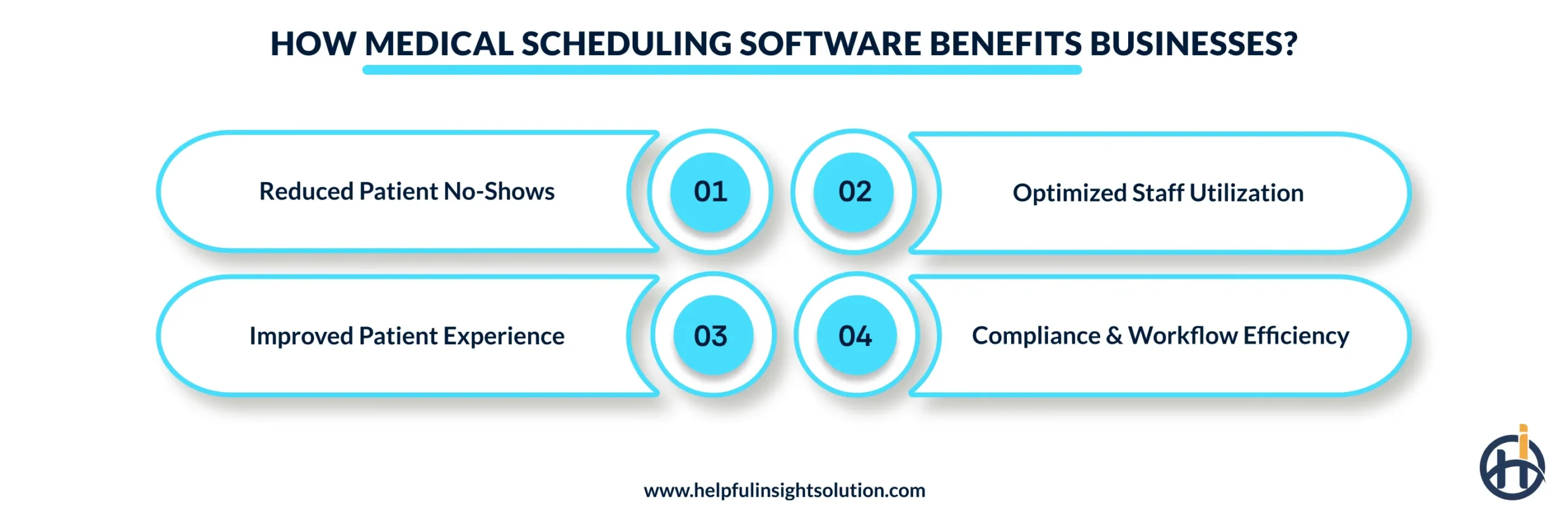
1. Reduced Patient No-Shows
Medical patient scheduling software sends automated reminders and confirmations, significantly lowering missed appointments. This helps healthcare businesses maintain steady revenue and avoid last-minute schedule gaps.
2. Optimized Staff Utilization
A medical appointment booking system balances workloads by aligning staff availability with patient demand. Businesses can reduce overtime, prevent burnout, and ensure the right professionals are available at the right time.
3. Improved Patient Experience
Online booking, real-time availability, and shorter wait times create a smoother and more efficient patient journey. By using medical scheduling software development services, you can increase patient satisfaction and long-term loyalty.
4. Compliance & Workflow Efficiency
The scheduling software for healthcare includes compliance features that meet healthcare regulations to streamline daily operations. Automated workflows reduce manual errors and allow teams to focus more on patient care.
Essential Features of Health Scheduling Software
Do you know what features of medical scheduling software are necessary for your business? If not, then you will explore some of the critical features in this section that improve efficiency and ensure trust:
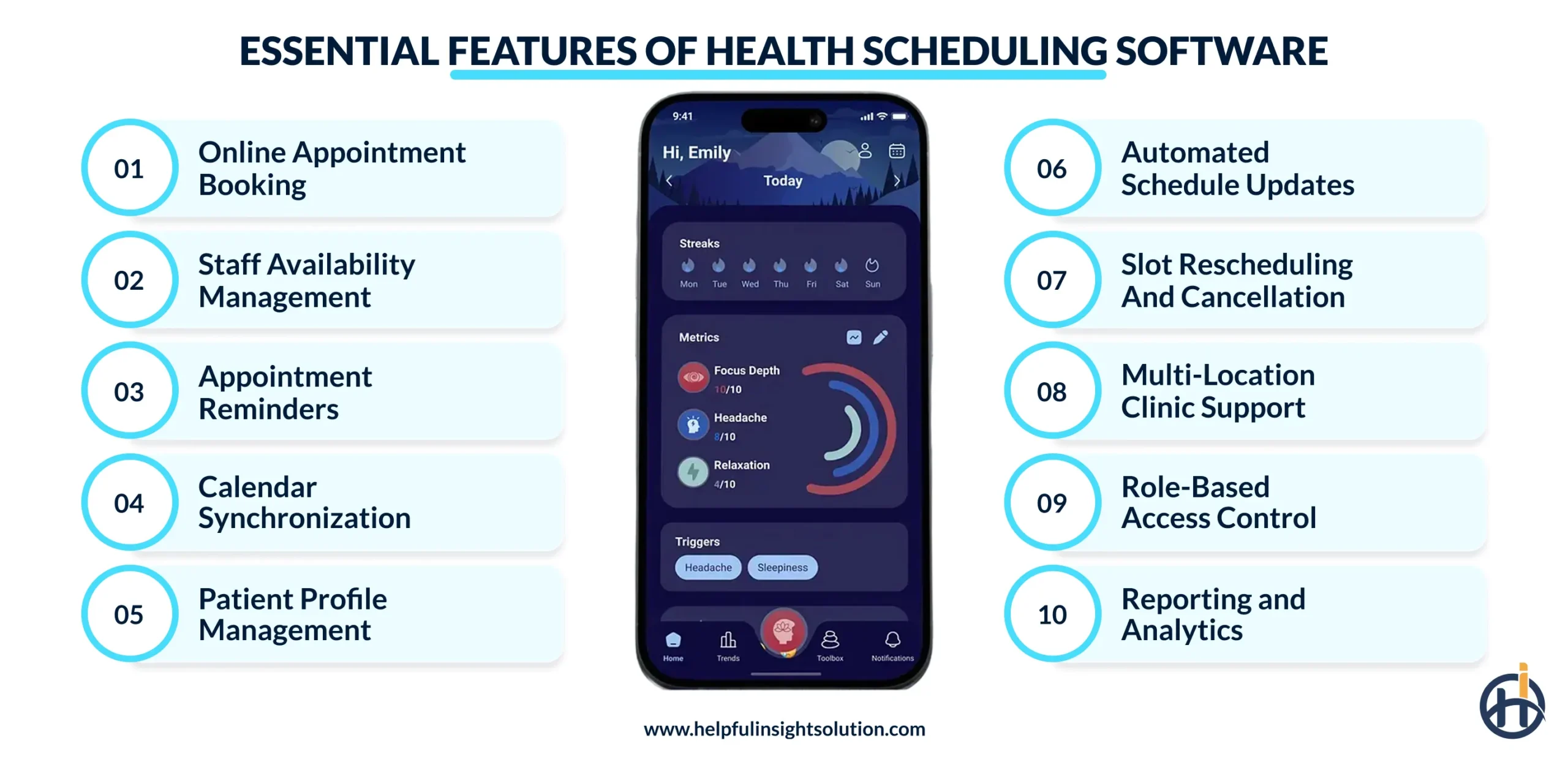
1. Online Appointment Booking
A patient scheduling system allows patients to book, modify, or cancel appointments through a web or mobile interface. This reduces medical workload while improving patient convenience and accessibility.
2. Staff Availability Management
Healthcare staff scheduling software enables clinics to manage doctors’ and staff schedules in real time based on shifts and availability. This prevents overbooking and ensures optimal resource utilization.
3. Appointment Reminders
Automated reminders, like SMS, email, or app notifications, help patients remember upcoming appointments. A medical appointment booking system reduces no-shows and last-minute cancellations.
4. Calendar Synchronization
The employee scheduling software for healthcare syncs appointments with tools like Google or Outlook for both staff and patients. This calendar feature ensures everyone stays updated and avoids conflicts.
5. Patient Profile Management
Appointment medical scheduling software centralizes patient medical history, contact details, and appointment records. This allows healthcare providers to deliver more personalized and efficient care.
6. Automated Schedule Updates
Doctor scheduling software automatically adjusts schedules when changes occur, such as cancellations or delays. Additionally, it keeps the calendar accurate and minimizes manual intervention in real-time.
7. Slot Rescheduling and Cancellation
Medical appointment software gives patients the flexibility to reschedule or cancel appointments within set policies. It helps clinics quickly reassign open slots and maintain workflow continuity.
8. Multi-Location Clinic Support
An online dr appointment app manages scheduling across multiple branches from a single dashboard. This feature ensures consistent operations and better coordination between locations.
9. Role-Based Access Control
Medical staff scheduling software assigns system access based on staff roles, such as admin, doctor, or receptionist. This feature enhances data security and ensures controlled information access.
10. Reporting and Analytics
A medical appointment app provides insights into appointment trends, staff performance, and patient behavior. These analytics help clinics make data-driven decisions to improve efficiency and revenue.
![Your healthcare practice deserves the best management tool. Invest in Medical Scheduling Software Development to enhance patient experience and optimize workflow. [Book a Free Consultation]](https://www.helpfulinsightsolution.com/wp-content/uploads/2026/02/YOURHE1-scaled.webp)
Advanced Features of Patient Scheduling Software
Now, let’s take you one step forward, where we will discuss the advanced features of patient scheduling software. They help to automate healthcare tasks, personalize experiences, and predict accurate results:
1. AI-Based Appointment Optimization
The use of AI in healthcare helps to automate appointments based on availability and patient preferences. Healthcare scheduling software reduces scheduling conflicts and maximizes clinic efficiency.
2. Predictive Healthcare Analysis
Predictive analytics in online medical scheduling software forecast appointment demand, no-show risks, and peak hours. This helps healthcare providers plan resources better and improve patient outcomes.
3. Instant Slot Filling
Instant slot filling in a medical appointment scheduling app assigns vacant slots to waiting patients in real time. It reduces idle time for providers and ensures optimal utilization of available medical slots.
4. Telehealth & Remote Care
This feature enables virtual consultations through secure video or chat integrations within the patient scheduling system. It expands access while allowing patients to book and attend appointments remotely.
5. EHR/EMR Integration
EHR/EMR integration allows data exchange between a dr appointment booking app and patient health records. It ensures accurate patient information by improving coordination and administrative workload.
How to Build Clinic Scheduling Software?
Now, it’s time to study the process of creating a medical appointment booking system with all major stages. It includes planning, design, development, testing, market launch, and support services:
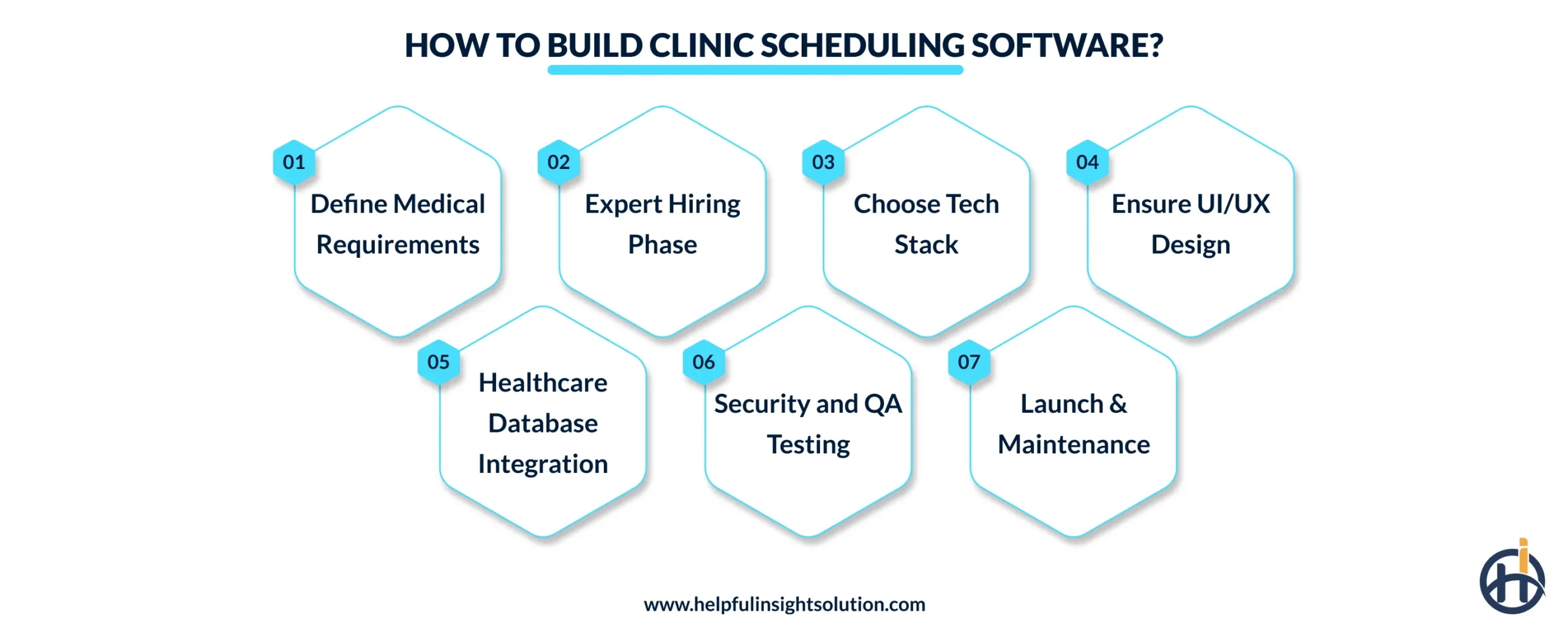
1. Define Medical Requirements
First, you should start by identifying various needs, such as appointment booking, doctor availability, and billing workflows. It is crucial to engage doctors, nurses, and admin staff to understand real-world challenges. You must define compliance needs like HIPAA and local healthcare regulations.
To build medical software for scheduling, you should list functional requirements clearly. This step ensures the software aligns with clinical efficiency and patient care goals.
2. Expert Hiring Phase
Businesses must hire experienced healthcare software developers, UI/UX designers, and compliance consultants. It is important to choose experts with prior knowledge of medical workflows and health regulations. A strong team coordinates development timelines and resources for the clients.
Domain experts reduce technical errors and rework, enhancing the overall efficiency. You should choose the right team to create doctor scheduling software, ensuring security and performance.
3. Choose Tech Stack
The experts must select a reliable tech stack that supports platform scalability and flexibility. Most developers use React or Angular for the frontend and Node.js, Java, or Python for the backend. For healthcare app development, they use cloud platforms like AWS or Azure.
You can integrate APIs and frameworks that support medical clinic scheduling software. The right stack ensures long-term maintenance, growth, and sustainability.
4. Ensure UI/UX Design
Now, the app experts should design an intuitive interface for doctors, staff, and patients that reduces training time. This focuses on quick appointment booking, calendar views, and easy navigation. Mobile responsiveness and accessibility are essential for patient engagement.
A medical scheduling software development company helps businesses to choose themes based on their preferences. A clean UI/UX improves user adoption and reduces scheduling errors for doctors.
5. Healthcare Database Integration
The patient appointment scheduling software can be integrated with EHR, EMR, and practice management databases. This ensures seamless data exchange for patient profiles, appointments, and clinical history. Developers use standardized protocols like HL7 or FHIR for interoperability.
They help to maintain real-time data synchronization across various systems. You must ensure proper integration to improve platform accuracy and operational efficiency.
6. Security and QA Testing
This stage includes implementing security measures such as data encryption, role-based access, and authentication. It’s time to conduct vulnerability assessments and penetration testing based on potential targets. It is mandatory to perform functional, performance, and compliance testing at both usersends.
This ensures the scheduling software for healthcare meets various medical standards like HIPAA. With quality assurance, you can minimize multiple risks before deployment.
7. Launch & Maintenance
Businesses should now deploy the software with advanced tools for performance monitoring and data analytics. It is important to train clinic staff and provide clear onboarding documentation. They must track user traffic and feedback post-launch to make improvements in the model.
Regular feature updates and compliance changes affect the online doctor scheduling app development cost. But ongoing maintenance ensures long-term reliability and user satisfaction.
Top Medical Scheduling Software in the USA
In this section, you will observe the 5 best medical appointment scheduling software available in the USA. Additionally, here we will explore key features and specific uses for each one of them:
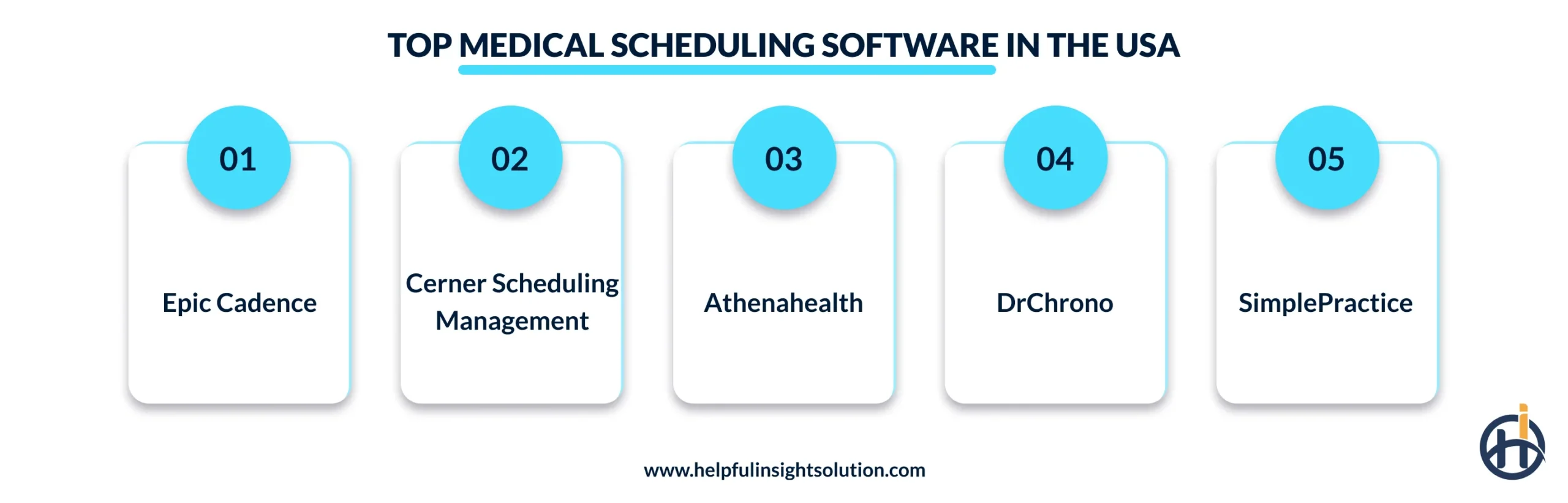
1. Epic Cadence
Epic Cadence is a scheduling software for healthcare designed to streamline appointment management across large healthcare systems. It offers real-time scheduling, automated reminders, and seamless integration with EHR systems to enhance patient flow and reduce administrative workload.
Key Feature: Real-time appointment scheduling with automated reminders.
Industrial Use: Used by large hospitals and health systems to manage high patient volumes efficiently.
2. Cerner Scheduling Management
Cerner Scheduling Management optimizes appointment booking and resource allocation through advanced tools. This medical staff scheduling software supports centralized scheduling and patient self-service options to improve operational efficiency and patient satisfaction.
Key Feature: Integrated scheduling across departments with resource optimization.
Industrial Use: Widely used in multi-specialty clinics and enterprise healthcare organizations.
3. Athenahealth
Athenahealth provides a cloud-based scheduling facility that simplifies appointment booking, patient communication, and workflow automation. This patient appointment scheduling software reduces no-shows while improving practice productivity and patient engagement.
Key Feature: Cloud-based scheduling with insurance eligibility checks.
Industrial Use: Ideal for outpatient practices and physician groups in the USA.
4. DrChrono
DrChrono is a flexible medical office scheduling software that enables healthcare providers to manage appointments, patient records, and billing from a single system. It offers customizable scheduling templates, telehealth integration, and mobile accessibility for better care coordination.
Key Feature: Mobile-friendly scheduling with EHR integration.
Industrial Use: Commonly used by small to mid-sized medical practices and startups.
5. SimplePractice
SimplePractice is an easy-to-use medical software for scheduling designed for small healthcare practices and wellness professionals. It offers online appointment booking, automated reminders, and client management tools to streamline practice operations and enhance patient experience.
Key Feature: Easy online booking with automated client notifications.
Industrial Use: Popular among mental health professionals, therapists, and wellness clinics.
Tech Stack for Medical Scheduling Software Development
A hospital or clinic owner must use the latest tools and technologies for medical scheduling software development. It includes several frontend, backend, database, security, and analytical tools that ensure sync between different medical tasks.
Here is an advanced tech stack table that will help you in the development of healthcare scheduling software:
| Component | Tools/Technologies | Description |
| Frontend Development | React.js, Angular, Vue.js | Builds a responsive and intuitive user interface for patients and healthcare staff. |
| Backend Development | Node.js, Django, Spring Boot | Handles business logic, APIs, and appointment scheduling workflows. |
| Database Management | PostgreSQL, MySQL, MongoDB | Securely stores patient data, schedules, and medical records. |
| Mobile App Development | Flutter, React Native, Swift, Kotlin | Enables cross-platform or native mobile access to scheduling features. |
| Cloud Infrastructure | AWS, Microsoft Azure, Google Cloud | Provides scalable hosting, storage, and high availability. |
| API Integration | REST APIs, GraphQL | Connects third-party services like EHRs, payment gateways, and calendars. |
| Authentication & Security | OAuth 2.0, JWT, HIPAA-compliant protocols | Ensures secure login, data protection, and regulatory compliance. |
| Notification Services | Twilio, Firebase, SendGrid | Sends appointment reminders via SMS, email, or push notifications. |
| Analytics & Reporting | Google Analytics, Power BI, Tableau | Tracks appointment trends, no-shows, and operational performance. |
| DevOps & Deployment | Docker, Kubernetes, CI/CD Pipelines | Automates deployment, updates, and system maintenance efficiently. |
What is the Cost to Develop Healthcare Workflow Management Software?
For a business investor, it is important to know the online medical scheduling software development cost, which is based on several factors. The average cost of developing a healthcare management system ranges from $10,000 and $30,000, if the selected parameters are of less priority.
The overall price may rise to $60,000 or more as the business requirements increase. Let’s focus on the following factors to understand cost estimation in detail:
1. Feature Complexity
The feature complexity of medical appointment booking software is one of the major factors influencing the development cost. If you want to add more features with advanced capabilities like AI, then the price will increase. Businesses with a low budget may have to compromise on the quality of services.
2. Compliance & Security Requirements
For developing a patient scheduling system, you should ensure compliance with healthcare regulations like HIPAA. Additionally, it must be secured through advanced, encrypted algorithms like RSA to prevent threats. These requirements directly affect the health staff scheduling software development cost.
3. Third-Party Integrations
The patient scheduling software development cost is affected by third-party services, such as API integration, cloud solutions, and design tools. You can use a cost calculator to know the estimated price based on these parameters. Proxy-level integrations enhance software functionalities but are expensive.
4. Platform Selection
A native platform is more expensive than a cross-platform one because it uses multiple frameworks for different OSs, such as Windows and Linux. The cost of developing medical office scheduling software is dependent on the platform choice. So, you should select the operating systems according to the budget.
Ways to Generate Revenue From a Medical Scheduling System
Entrepreneurs can make income through medical appointment scheduling software development. Yes, you heard it right. For that, we will explore some key monetization methods, like subscriptions, in this section:
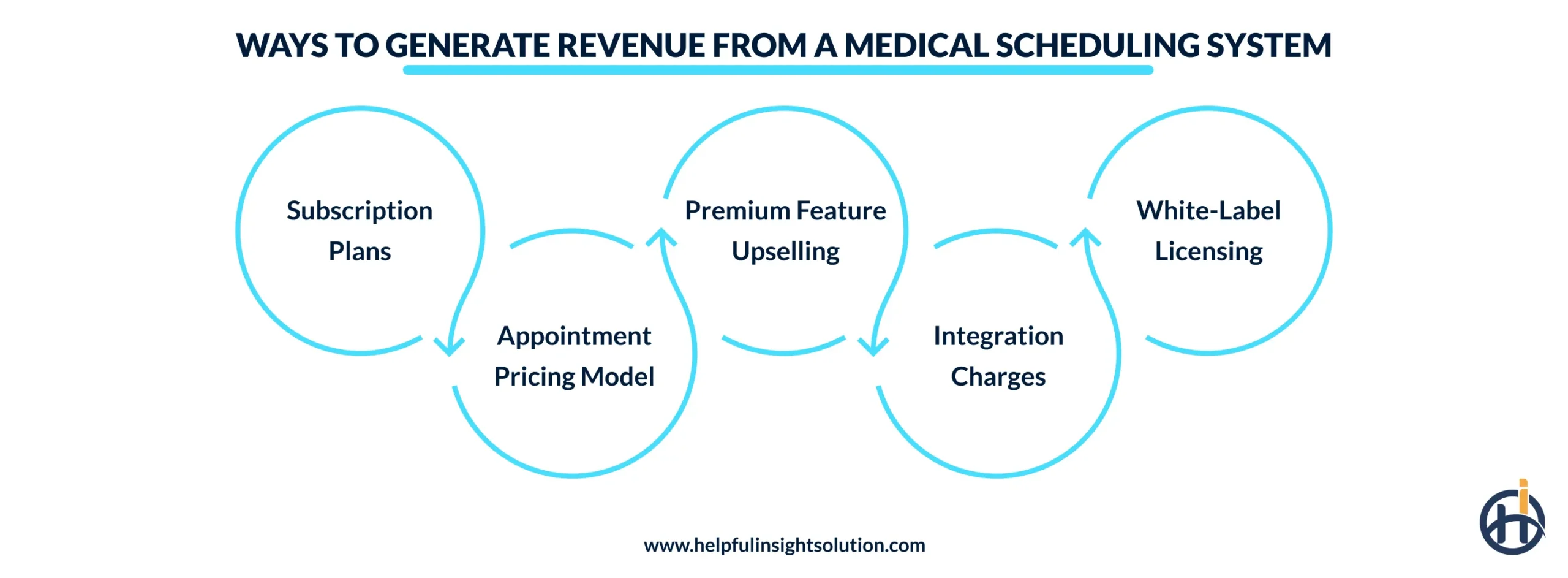
1. Subscription Plans
Healthcare staff scheduling software can generate steady revenue by offering tiered subscription plans based on features, number of users, or appointments. Clinics and hospitals choose plans that scale with their operational needs, ensuring predictable recurring income.
2. Appointment Pricing Model
Businesses can earn revenue by charging providers a fixed percentage of fees for every completed appointment. This pay-per-use model in a medical appointment app is attractive for experienced medical professionals as costs directly align with patient volume.
3. Premium Feature Upselling
You can hire healthcare app developers to build advanced features like automated reminders, telehealth support, or AI-based scheduling and offer them as paid add-ons. Upselling these premium tools increases the overall ARPU, balancing the healthcare scheduling software development cost.
4. Integration Charges
Doctors can be charged for integrating the patient appointment scheduling software with billing systems, CRM platforms, and third-party tools. These one-time or recurring integration fees create an additional high-value revenue stream.
5. White-Label Licensing
A dr appointment app can be licensed as a white-label solution, allowing hospitals, enterprises, or SaaS vendors to rebrand it as their own. This model generates significant revenue through licensing fees and long-term enterprise contracts.

How Helpful Insight Helps Businesses in Developing Hospital Management Software?
Now, you have a little bit of an idea of how to start with medical scheduling software development. But there may be some concerns that you want to clear before investing in the process.
It is highly recommended to approach a full-stack development company for consultation, development, deployment, and maintenance of your healthcare system. We have a good experience in building advanced medical clinic scheduling software, supporting doctors worldwide.
Our experts exhibit excellent skills and knowledge in various tools and technologies, such as AI, API, EHR, and IoT integrations. You must create secure doctor scheduling software to ensure transparency and safety in medical operations.
A patient scheduling system will enable recurring revenue growth, constant user engagement, and increased brand value.
FAQs
A platform for medical scheduling is simple to use, allowing patients and doctors to easily maintain an ecosystem. The working steps are discussed in the following manner:
- Patients book, reschedule, or cancel appointments through mobile portals.
- The system checks doctor availability, specialties, and clinic hours.
- Automated reminders reduce no-shows and missed appointments.
- A staff dashboard manages schedules, waiting lists, and changes.
- Integrated EHRs and billing systems keep patient data in sync.
It is important to know the use of different healthcare management systems for patients and doctors. Some of the major use cases that are crucial to know are discussed as follows:
- Streamlines patient registration, appointments, billing, and EHRs in one unified platform.
- Improves doctor–patient coordination with automated scheduling, reminders, and follow-ups.
- Enables data-driven decisions through reports, analytics, and compliance-ready records.
To build software for medical scheduling with simple features and functionalities, the time ranges from 3 months to 5 months. As the complexity level of features increases due to AI and other technologies, the average development time also rises to 12 months or more. The overall duration is based on various factors like the development process and business requirements.
Maintenance of a patient scheduling system includes bug fixing, feature improvement, and security checks. The cost of software maintenance is calculated as 15% to 20% of the overall development cost, depending on the changes required. For example, if a project’s total cost is $20,000, then the maintenance cost is between $3,000 and $4,000 that can increase further.
A business investor may face some challenges in developing software for medical staff scheduling. A few of the important risks are discussed in the following manner:
- Managing complex shift rules, staff availability, and last-minute changes in real time.
- Ensuring compliance with healthcare regulations, labor laws, and data security standards.
- Integrating seamlessly with existing hospital systems like HR, payroll, and EMR software.