

“Use AI that monitors a patient’s daily progress and guides through modern healthcare excellence.”
Healthcare is now being delivered at your doorstep due to technical innovation and advancement. With AI virtual health assistants in patient care, various hospitals and clinics are offering remote services that reduce physical visits.
The role of AI-powered assistants in healthcare is to automate patient management, personalize treatments, and generate predictive medical outcomes. Additionally, the market of AI-based virtual platforms is huge, covering major regions like the USA, Europe, and Asia.
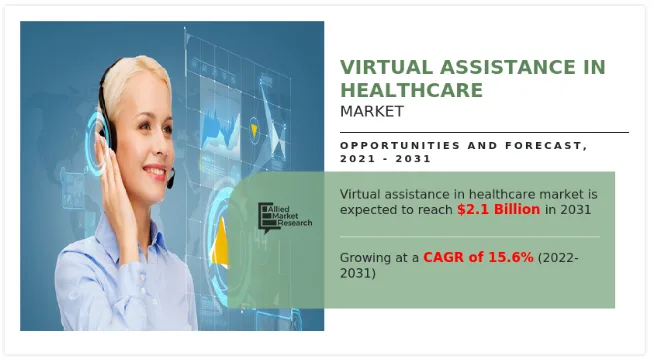
Based on a recent report published by Allied Market Research, the worldwide revenue of virtual assistants in healthcare will reach $2.1 billion in 2031. This is a good sign for market investors looking to start a new business in the medical sector.
The idea of creating or integrating a virtual medical assistant is highly beneficial in the present time.
It is important to know that AI virtual assistants improve healthcare through multiple real-world use cases. This blog will discuss key applications, top examples, benefits, and challenges with digital health assistants. So, let’s dive into the content.
What is a Virtual Medical Assistant?
To get better medical services at home with highly advanced remote features like doctor consultation and online prescriptions, AI virtual health assistants are the best option. They have a specific target audience, such as older citizens or physically challenged patients who cannot visit hospitals.
Various AI healthcare assistants help people to manage their medical records, track daily progress, and get personalized recommendations. For your business growth, it is beneficial to create an AI personal assistant in the healthcare industry that provides unique features and predicts treatment time successfully.
- It provides constant patient support by answering queries and offering symptom guidance.
- The platform assists doctors in appointment scheduling, reminders, and patient follow-ups.
- They support remote healthcare through patient data and telemedicine interactions.
Growing Market of AI Healthcare Assistants
We are going to understand the market scenario for AI-based virtual health assistants through the revenue, growth rate, and other figures in this section. This domain has created several opportunities for business investors, allowing more investments and increased ROI:
- According to Precedence Research, the current market revenue of AI virtual medical tools is $799.4 million in 2026, which will rise to $4.7 billion by 2034.
- The growth rate is 24.7% CAGR between 2026 and 2034, with North America having the highest share of 39% in the start.
- The current value of the US market is $233.8 million, which will increase to $1.4 billion by the end of the tenure.
- Business investors will get an ROI between 250% and 400% duing the complete revenue cycle of 8 years.
- The revenue share from hospitals and clinical centers is 56%, which will rise to 63% in the upcoming years.
The integration of AI in mobile apps helped entrepreneurs to generate more income and enhance user experiences. So, to create an advanced virtual medical assistant that gives successful market growth, you must use artificial intelligence technology.
How AI Virtual Health Assistants Improve Patient Care?
You should know the benefits of virtual health assistants for patients that bring constant user engagement. Some of the important advantages of digital health assistants are discussed in this section:
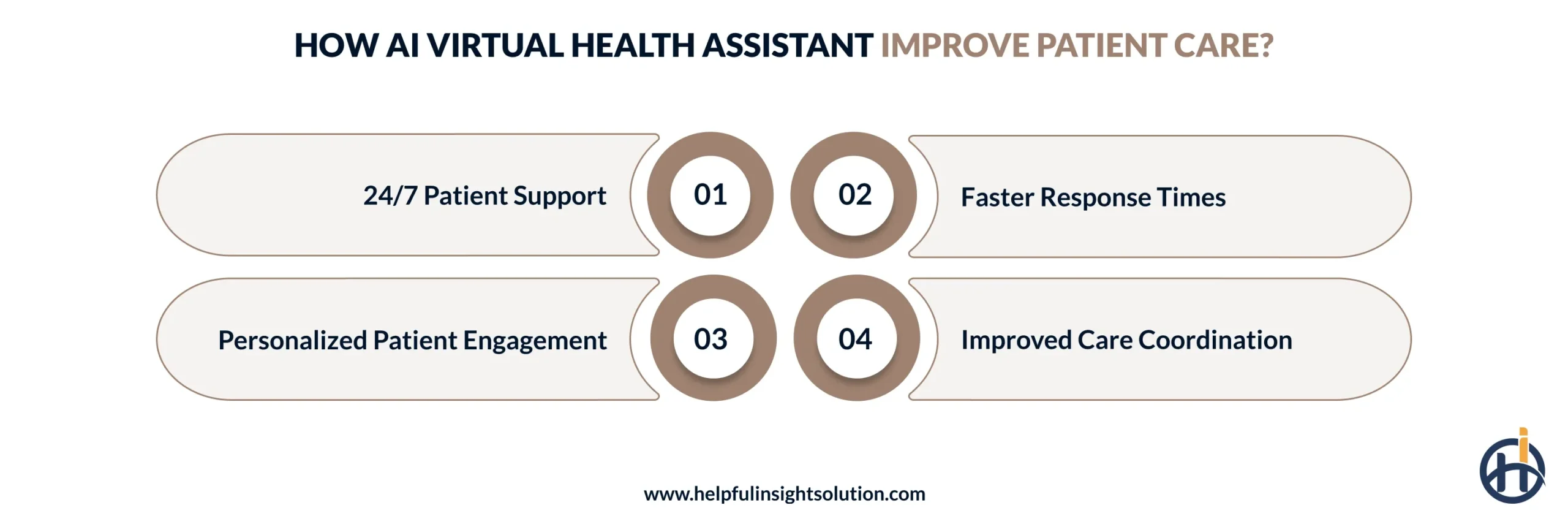
1. 24/7 Patient Support
An AI virtual assistant in healthcare provides access to medical information, symptom guidance, and appointments. This ensures patients receive continuous support without waiting for long clinic hours.
2. Faster Response Times
By instantly analyzing patient queries, an AI virtual medical assistant delivers immediate responses to health concerns. This reduces delays, improves efficiency, and enhances the overall patient experience.
3. Personalized Patient Engagement
AI virtual health assistant services track patient medical data to deliver health recommendations. With UI/UX design solutions, personalized interaction boosts patient trust, adherence, and satisfaction.
4. Improved Care Coordination
Virtual medical assistants streamline communication between patients, doctors, and healthcare systems. They manage appointments, reminders, and follow-ups, ensuring seamless and coordinated care delivery.
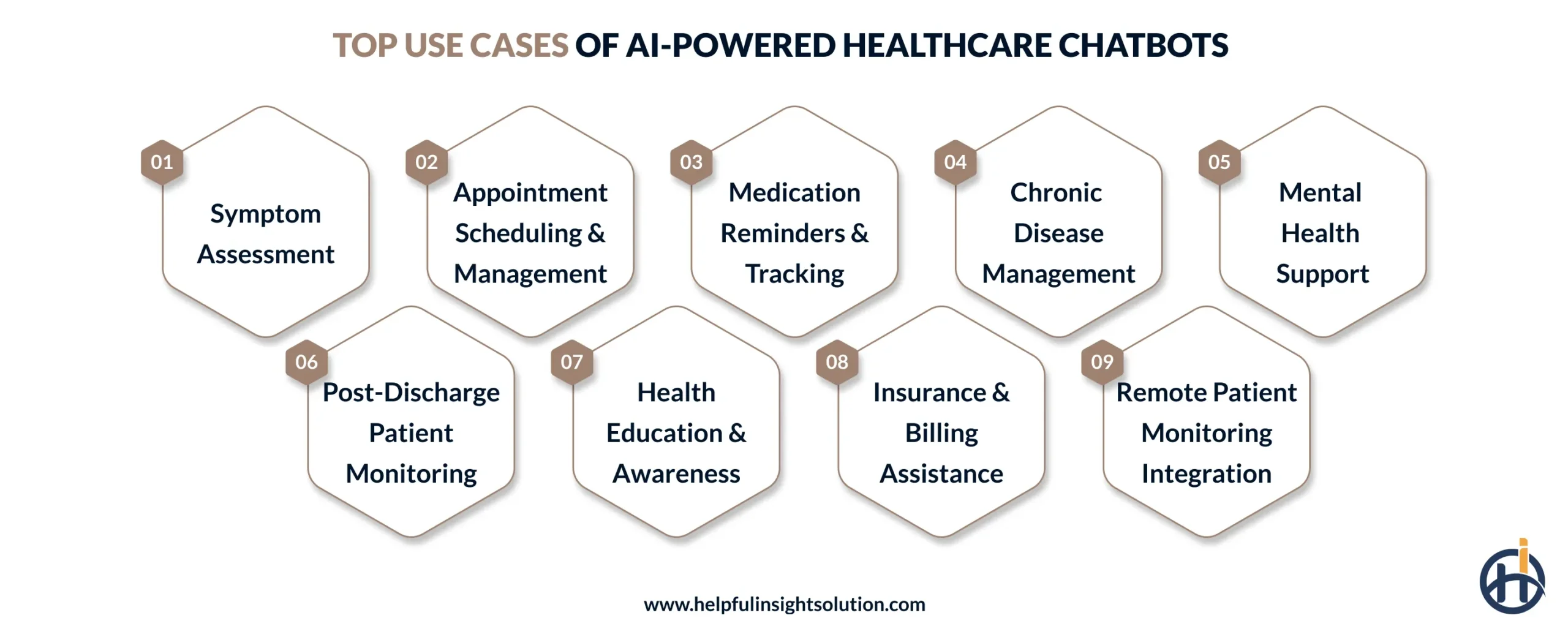
Top Use Cases of AI-Powered Healthcare Chatbots
Here, we will study crucial use cases of virtual health assistants, helping patients to improve medical standards. They provide accuracy and transparency with automated healthcare services in real-time:
1. Symptom Assessment
AI-powered healthcare chatbots analyze patient-reported symptoms in real time using medical databases and clinical logic. They ask guided follow-up questions to narrow down possible healthcare conditions.
AI-powered virtual health assistants help users understand urgency levels and next steps. This reduces unnecessary clinic visits and improves early user intervention.
Advantage: It reduces unnecessary hospital visits by enabling faster, AI-driven preliminary diagnosis and triage.
2. Appointment Scheduling & Management
A virtual health care assistant automates appointment booking, rescheduling, and cancellations. They sync with hospital systems or clinic centers to show real-time availability of doctors.
Businesses must target AI physiotherapy app development services, allowing patients receive instant confirmations. AI for healthcare virtual assistants minimizes administrative workload and increases user satisfaction.
Advantage: They improve operational efficiency by automating bookings, rescheduling, and reducing no-show rates.
3. Medication Reminders & Tracking
An AI chatbot sends timely reminders for medication intake based on medical prescriptions. They automatically track missed doses through a patient interaction model.
A virtual assistant for healthcare can alert caregivers or doctors if there is a deviation in the pattern. This improves treatment outcomes for users and enhances patient safety with advanced AI models.
Advantage: It increases treatment adherence, leading to better patient outcomes and lower readmission costs.
4. Chronic Disease Management
Various smart chatbots support patients with chronic conditions like diabetes or hypertension. They regularly monitor daily inputs such as symptoms, vitals, and lifestyle habits of patients.
The custom AI virtual health assistants for healthcare providers provide personalized guidance and alerts. This AI application enables proactive patient care and long-term condition control.
Advantage: The chatbots enable continuous patient engagement, helping healthcare providers manage long-term conditions at scale.
5. Mental Health Support
Different AI-powered chatbots offer 24/7 mental health assistance and emotional support for users. These AI health assistants use conversational AI models to guide patients through stress-relief techniques.
Additionally, they can identify risk signals and suggest professional help in less time. This use of AI in healthcare improves accessibility to mental health care with more effectiveness.
Advantage: Assistants expand access to care by offering 24/7, stigma-free mental health assistance and early intervention.
6. Post-Discharge Patient Monitoring
A virtual medical assistant take follow ups with patients at regular intervals after hospital discharge. They constantly monitor recovery progress, health symptoms, and medication compliance.
Artificial intelligence alerts healthcare providers through automated warning signs at early stages. It helps in reducing readmissions and improving recovery outcomes with limited efforts.
Advantage: An AI health chatbot reduces readmission rates by proactively tracking recovery and identifying risks early.
7. Health Education & Awareness
Top healthcare chatbots or assistants deliver accurate and personalized medical information to users. They explain various conditions, treatments, and preventive care in simple language.
Additionally, different features of healthcare virtual assistants ensure quality content based on user history and preferences. With this AI application of medical assistants, patients can make informed health decisions.
Advantage: They empower patients with personalized, reliable health information, improving preventive care adoption.
8. Insurance & Billing Assistance
AI-driven virtual healthcare assistants help patients understand insurance coverage, claim settlement, and medical bills. It is among the best use cases of Generative AI that assists in answering FAQs about payment options.
This reduces confusion and administrative delays, improving the overall efficiency. It is the future of AI virtual health assistants that enhances transparency and patient satisfaction.
Advantage: It lowers administrative workload by automating claims support, eligibility checks, and billing queries.
9. Remote Patient Monitoring Integration
The use of AI virtual health assistants for remote patient monitoring with integrated wearable devices has increased rapidly. These platforms collect real-time healthcare data such as heart rate, glucose levels, and fat storage.
Advanced AI chatbots analyze various medical trends and raise queries according to the user’s needs. So to enable continuous and data-driven remote patient care, you must implement this use case.
Advantage: This enhances data-driven care decisions by seamlessly integrating real-time patient health data into clinical workflows.
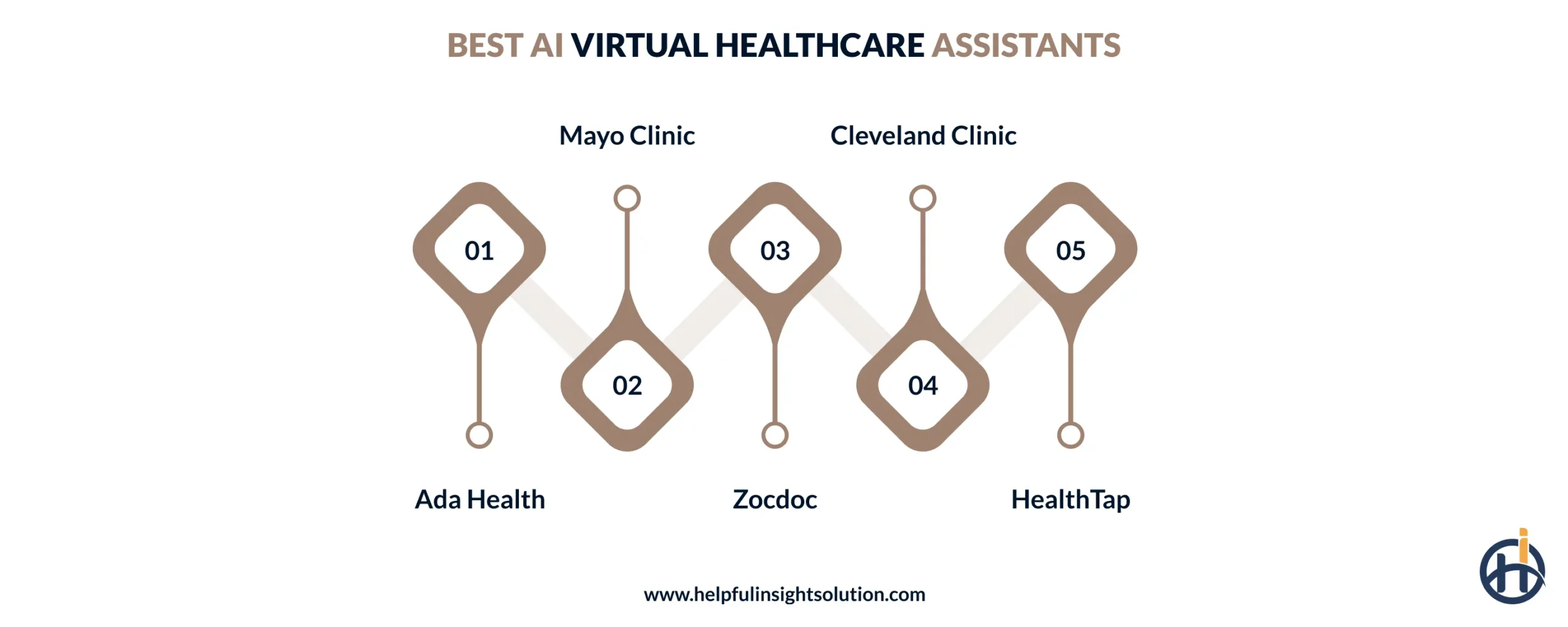
Best AI Virtual Healthcare Assistants
Let’s discuss the best AI virtual health assistants for patient care in this section, offering advanced features. Investors must observe them thoroughly to create similar clone assistants for their businesses:
1. Ada Health
Ada Health is an AI-powered symptom checker that analyzes user inputs to provide personalized health assessments and possible conditions. It is among the best tools like the AI virtual assistant in healthcare, that helps users make informed care decisions and know when to consult a doctor.
Main Feature: An AI-powered symptom checker that provides personalized health assessments based on user inputs.
2. Mayo Clinic
Mayo Clinic is a virtual assistant in healthcare that uses AI-driven patterns and delivers reliable medical information, symptom guidance, and health education. This medical tool is highly supported by trusted clinical research and expert-reviewed user data.
Main Feature: It delivers clinically verified health information and AI-supported self-care guidance from trusted medical sources.
3. Zocdoc
Zocdoc is the best medical virtual assistant that leverages AI, helping users find doctors and book appointments. Businesses can hire a healthcare app development company to build similar clones that offer smart recommendations and enhance healthcare accessibility.
Main Feature: It uses AI-driven scheduling methods to help patients find doctors easily and book appointments instantly.
4. Cleveland Clinic
Another AI virtual health assistant software is the Cleveland Clinic, that support symptom analysis, patient engagement, and remote care services. These medical assistant tools enhance patient care coordination using data-driven clinical information in real time.
Main Feature: This platform offers AI-enabled virtual care tools for remote patient monitoring and digital health consultations.
5. HealthTap
HealthTap is a highly advanced virtual medical assistant that can easily connect users with doctors for instant medical advice and diagnosis support. Additionally, it combines machine learning technology with physician expertise for accurate patient care guidance.
Main Feature: The software provides AI-assisted medical answers with access to licensed doctors for follow-up care.
Major Challenges with AI Health Assistants
A healthcare virtual assistant comes with several challenges that affect the overall experiences of users. In this section, we will explore a few of the major risks with effective healthcare solutions:
1. Data Security Risks
Various AI-powered health assistants lack data security standards, which leads to privacy threats and affects quality. This is because low-grade chatbots are not able to verify unidentified links or sources.
Solution: With encrypted AI-powered security methods, you can build a stable infrastructure.
2. Limited Clinical Understanding
It is possible that AI health assistants may not understand different medical terms and respond in emergencies. This is because chatbot developers do not have advanced healthcare knowledge.
Solution: It is crucial to hire dedicated developers who know different medical concepts.
3. Integration & Compatibility Issues
Some healthcare platforms are not capable of delivering integrated features for tracking treatment progress. Additionally, they have compatibility issues due to low-grade algorithms and models.
Solution: Make a virtual assistant for healthcare that can be integrated with any healthcare system.

Integrate AI Healthcare Bots in Medical Business with Helpful Insight
Now, you know the demand for AI virtual health assistant solutions is increasing rapidly due to a rise in the number of patients and health issues. So, it is highly recommended to approach a reliable AI development services provider who has experience in creating a healthcare virtual assistant.
Additionally, it must deliver a collaborative business environment, affordable resources, and a pool of talented AI developers, ensuring post-development support.
Before everything, you must understand how AI virtual health assistants work in real-time. This will help you to identify the necessary features according to user needs and market requirements.
You will experience more innovations in AI virtual health assistant development that may increase brand value, user engagement, and overall revenue growth.
FAQs
Most AI-enabled health assistants have an easy working mechanism that engages users in the long term. The key steps are discussed in the following manner:
- These platforms collect user inputs to understand health-related queries.
- NLP interprets symptoms, questions, and intent in real time.
- Machine learning models analyze data to generate insights.
- They integrate with EHRs and wearables to provide personalized responses.
- Continuous learning improves accuracy and user experience over time.
The AI medical assistant development cost is dependent on several factors, such as healthcare standards, security, and feature complexity. The average price ranges from $8,000 to $20,000, considering all the low-grade parameters. As the level of factors increases, the overall cost also rises to $25,000 or more based on various healthcare demands.
Several types of virtual assistants for healthcare are available worldwide and used in multiple mobile applications. Some of the major categories are described as follows:
- Clinical Decision Support Assistants: Help doctors with regular diagnosis and treatment planning.
- Patient Engagement Assistants: Manages scheduling, reminders, and symptom checking.
- Administrative AI Assistants: Automate billing, documentation, and healthcare workflows.
AI-powered healthcare assistants deliver automated solutions that are generic in nature. They differ from the traditional chatbots in the following manner:
- AI uses machine learning to understand context, while chatbots follow rule-based scripts.
- Virtual assistants earn from data, whereas traditional chatbots provide fixed responses.
- Digital bots handle complex healthcare queries, unlike basic chatbots with limited capabilities.
Yes, various digitally advanced solutions for healthcare assistance ensure complete data security and accuracy through effective algorithms. AI uses machine learning methods to develop different models based on the type of data and requirements. Additionally, it can be integrated with cybersecurity to ensure the privacy of healthcare networks.