

“Give your audience a treatment to recover from pain & injury with AI physiotherapy apps.”
As you know, the healthcare and fitness industry is a vast domain, covering weight management, calorie tracking, patient care, and physiotherapy apps. So, it is important to choose one or all domains to take your business online. For example,
if you want to create health training apps, then you need a complete guide to AI physiotherapy app development. Additionally, it becomes important for you to understand the key stages of building an AI physiotherapy app in the present time.
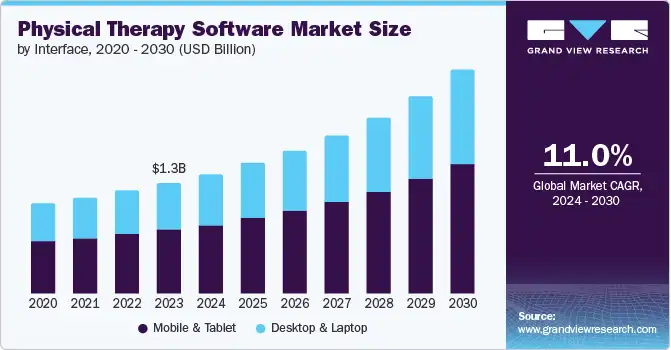
The first question that arises in your mind is why there is a need to invest money in the development of advanced physiotherapy apps. According to a renowned fitness journal, the current revenue of the physical therapy market is $1.55 billion, which will increase to $2.5 billion by 2030. So, you must know how to build an AI physiotherapy app for future growth.
In this blog, you will learn how much does AI physiotherapy app development cost in 2026, with other topics, like features, use cases, monetization, and tech stack. So, let’s move forward and dive into the content to understand each section in detail.
Expanding Global Market of AI Physical Therapies
In the fitness industry, multiple domains, such as the physical therapy sector, target specific user needs. Businesses must use reliable mobile app development services to develop such platforms and capture the market to get user attention and increase overall profits:
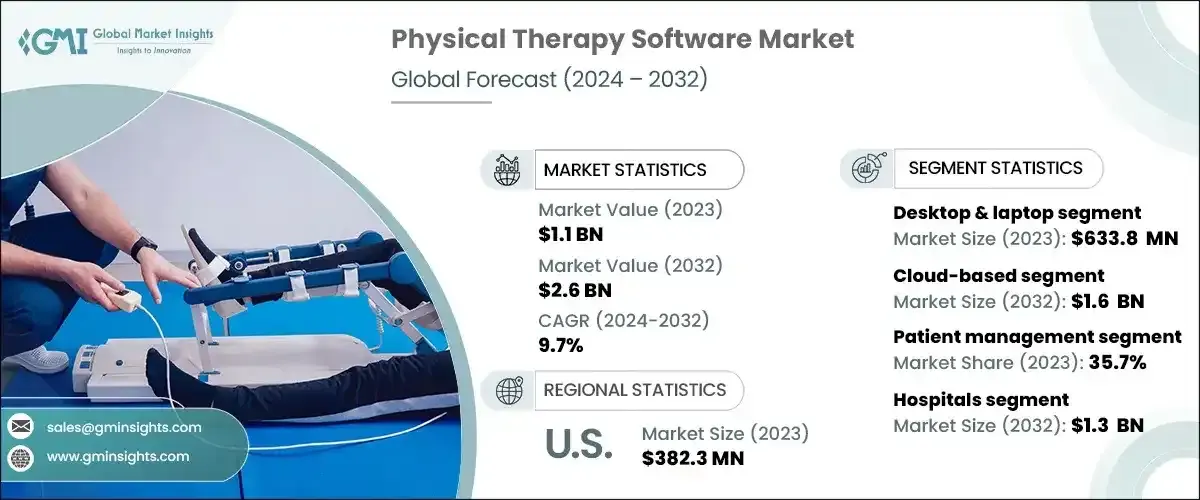
- In 2025, the current revenue of the physical therapy software market is $1.4 billion, which is growing at a rate of 9.7% CAGR between 2025 and 2030.
- By the end of 2032, the overall revenue will increase to $2.6 billion due to increased investment from healthcare entrepreneurs.
- The revenue of hospitals will increase from $741.3 million in 2025 to $1.3 billion in 2032, with increased medical equipment.
- With a total market share of 35.7%, patient management software will have the largest volume in 2025, which is followed by billing and insurance platforms.
- In the USA, the revenue from online physical therapies will reach $1.02 billion in 2032 from $429.7 million in 2025.
You need to hire the best company for developing AI physiotherapy apps, helping users in body posture correction, joint pain relief, and medical recovery. This would help you to increase the overall brand value and business revenue with consistent growth.
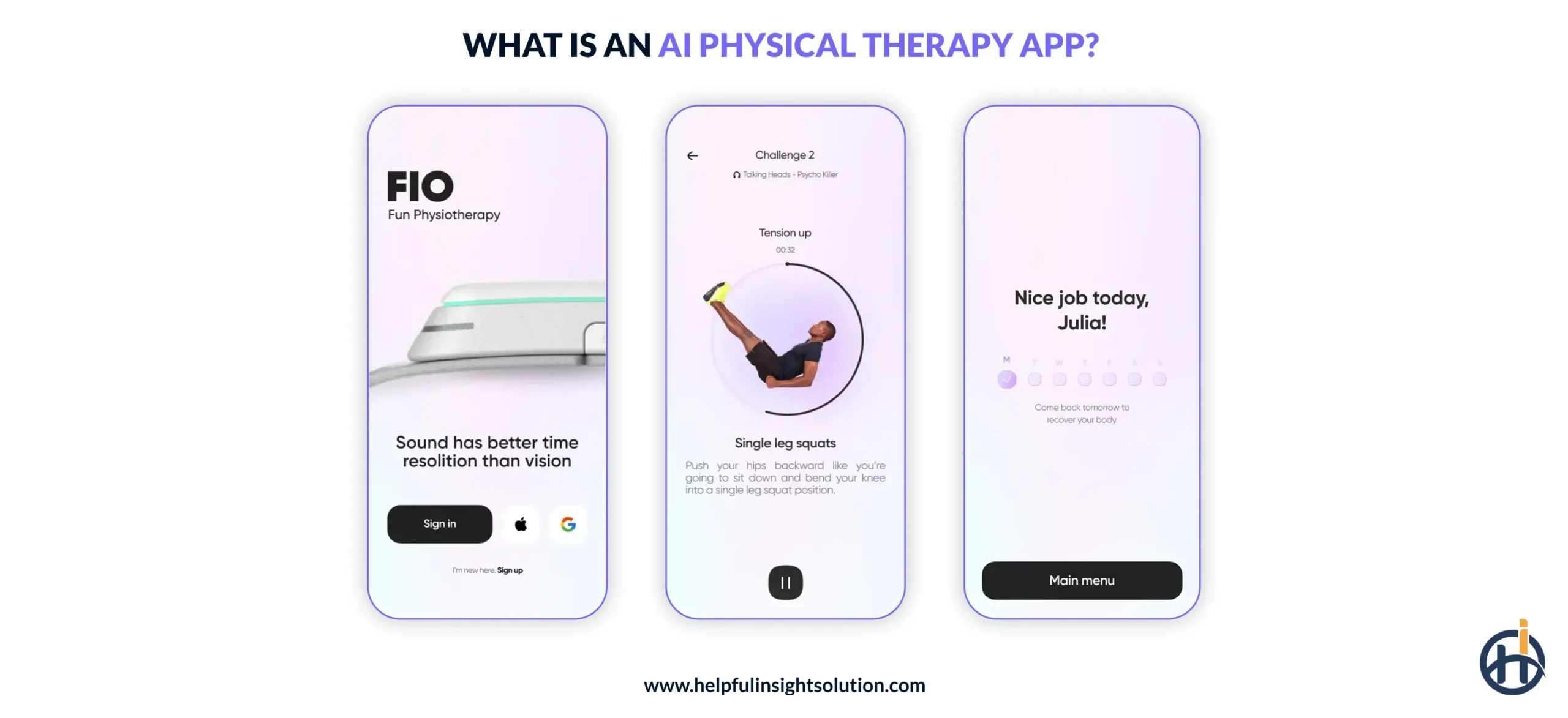
What is an AI Physical Therapy App?
Suppose a person has gone through surgery or met with an accident. Then the recovery process involves visiting healthcare centers, multiple painful training sessions, and ineffective physical therapists or experts. To resolve all these issues, investors came up with AI-powered physiotherapy apps that provide health comfort online services at affordable rates.
Some of the best weight loss apps also deliver advanced features for injury recovery and health improvement, allowing users to monitor progress regularly. It prevents patients from going to hospitals for treatment and appoints several health experts for home-based exercises.
- Remote patient monitoring to track recovery progress and adjust therapy plans in real time.
- Automated movement analysis to detect posture errors and provide instant corrective feedback.
- Predictive rehabilitation insights to forecast recovery timelines and optimize therapist workloads.
Key Benefits of Developing AI-Powered Physiotherapy Apps
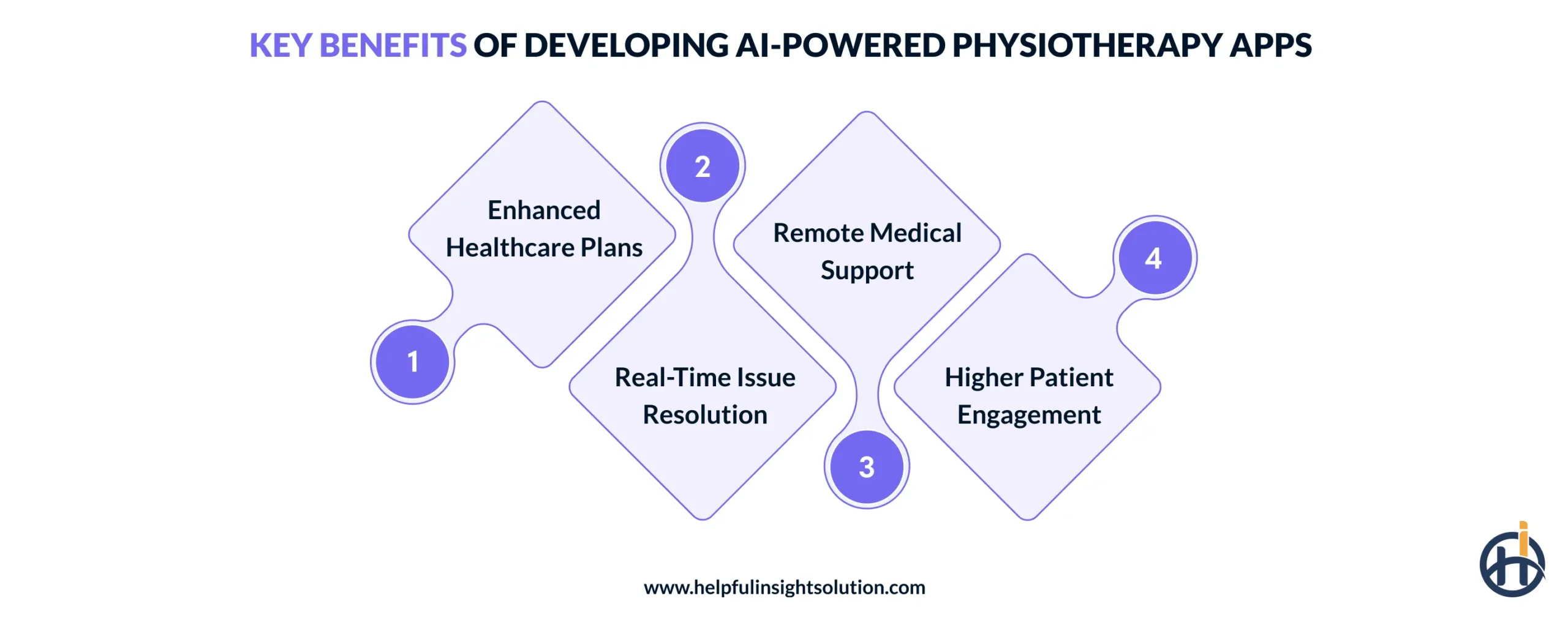
There are a lot of benefits for business investors to invest in custom AI physiotherapy app development. Here, we will observe those advantages that attract entrepreneurs to this fitness domain:
-
Enhanced Healthcare Plans
You must know a step-by-step roadmap to build AI physiotherapy apps with enhanced healthcare treatments. It must deliver accurate fitness plans to recover from injuries and relieve consistent pain.
-
Real-Time Issue Resolution
These apps regularly track patient issues to deliver instant solutions based on different parameters and analysis. Additionally, different exercises are suggested according to the problem, such as surgery.
-
Remote Medical Support
Various healthcare experts and wellness coaches are available online to deliver remote medical services. You can develop a fitness tracker app that provides high-quality live consultations to patients.
-
Higher Patient Engagement
It is beneficial to develop an AI-powered physical therapy app, as it helps to attract a large number of people. This increases overall user engagement and retention rate with an improved revenue approach.
Role & Working of AI in Physiotherapy Apps
For developing advanced platforms that can streamline user experiences and improve efficiency, you need to implement the latest technologies, such as Artificial Intelligence. The use of AI in the fitness industry has increased over the past few years to automate fitness sessions, predict health issues, and recommend personalized solutions. In physiotherapy apps,
AI can identify the root cause of an injury, deliver accurate treatment, and manage healthcare records securely. Additionally, this technology helps hospitals and clinics manage inventories, medical equipment, and staff scheduling. This may affect the overall development cost, but it is important for future recommendations.
- Real-time posture correction by detecting wrong movements through AI-driven motion analysis.
- Personalized exercise plans are generated automatically based on user progress and recovery speed.
- Injury risk prediction using AI models that analyze patterns in user activity and biomechanics.
- Virtual physiotherapy assistance offering step-by-step guidance and feedback without needing in-person supervision.
- Progress tracking & outcome forecasting through AI-enabled insights, charts, and recovery predictions.
It is necessary to understand how AI works in various physical therapy mobile applications. So, you will understand its working mechanism for advanced body treatment apps in this section:
-
Collect User Data
The app initially collects user data, such as name, email, contact number, and medical issues. The information is stored in a database that can be easily accessed by users, admins, and doctors.
-
Analyze Body Motion
Through integrated IoT devices, AI-powered physical therapy apps can track and analyze human movements. This includes body posture, bone alignment, and synchronization of steps.
-
Generate Therapy Plans
An AI-powered fitness app like Fitbod provides personalized therapy plans based on the injury level. Additionally, users can connect with healthcare experts to get precise treatments and remedies.
-
Provide Exercise Feedback
The app regularly tracks training sessions to provide suggestions on exercises and physical activities. This helps to improve patients’ fitness levels and increase recovery rate through feedback analysis.
-
Track Health Progress
Users can easily monitor their progress regularly through an integrated dashboard that includes all activities and exercises. People can review their reports that ensure personal improvement.
Types of AI Physiotherapy Apps
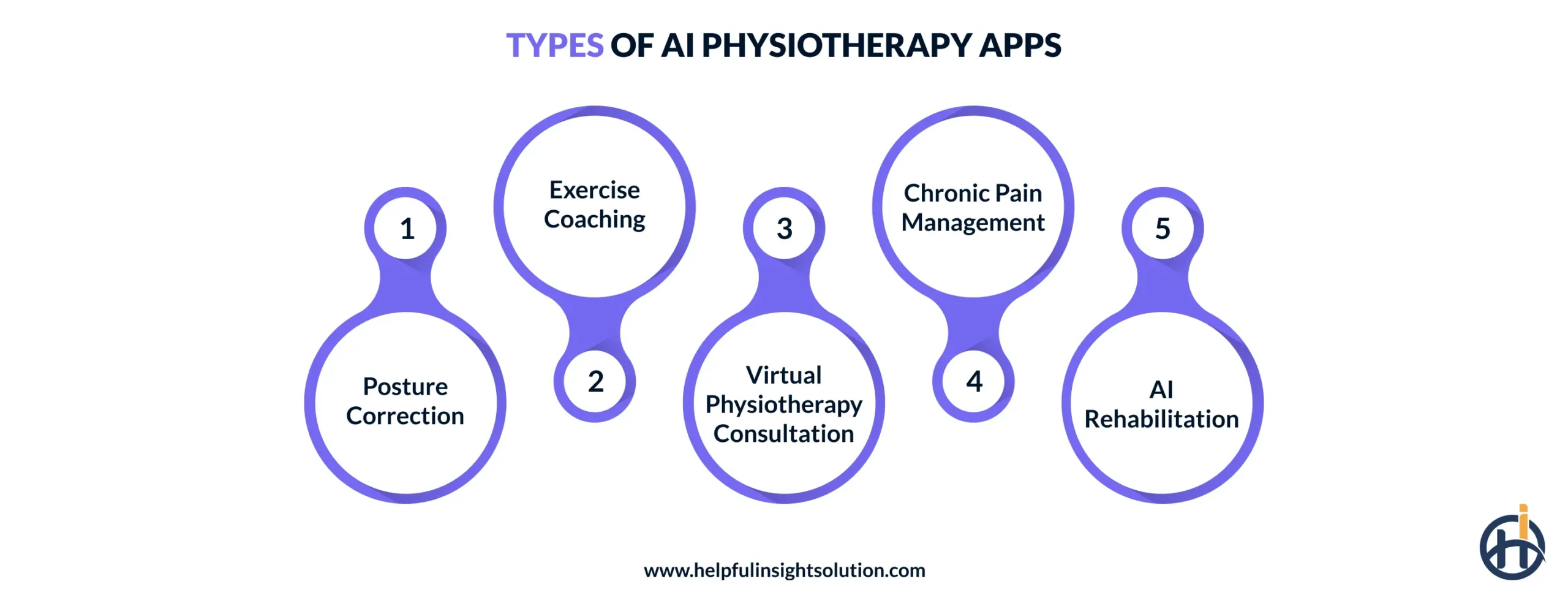
You can make an AI physiotherapy app by going through the different categories that are available in the market. In this section, we will look at each one of them to give you a better idea:
-
Posture Correction
AI-powered posture correction apps analyze your body alignment in real time using your camera or sensors. They provide instant alerts and personalized recommendations to maintain a healthy posture.
-
Exercise Coaching
You can develop an AI therapy app with physiotherapy exercises, precise form detection, and video feedback. They ensure correct movement, reduce the risk of injury, and improve recovery speed.
-
Virtual Physiotherapy Consultation
AI-enabled virtual consultation apps allow users to connect with physiotherapists through videos or chats. These are the best workout apps for women that simplify diagnosis, follow-ups, and treatment planning.
-
Chronic Pain Management
AI chronic pain management apps track symptoms and triggers to deliver personalized relief strategies. They use predictive analytics to recommend exercises, lifestyle habits, and alerts for pain conditions.
-
AI Rehabilitation
AI rehabilitation apps support patients recovering from injuries and surgeries by monitoring progress. You can build a custom AI physiotherapy app with therapies based on performance, ensuring faster recovery.
Innovative Use Cases of AI-Enabled Physical Therapy Apps
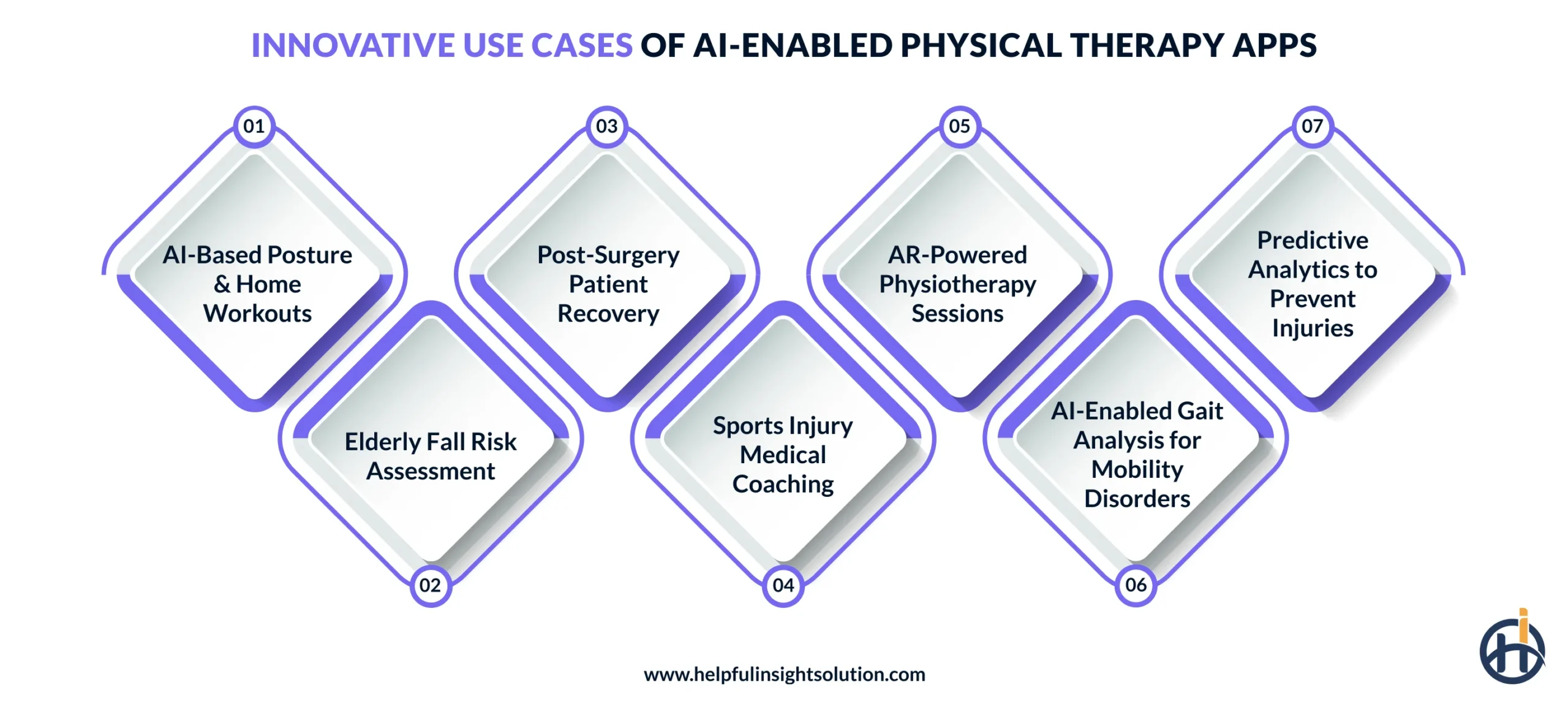
Businesses can target multiple user issues by investing in the AI physiotherapy app development. We are discussing the top use cases of such platforms with their examples in this section:
-
AI-Based Posture & Home Workouts
AI-driven physical therapy apps use computer vision to detect incorrect posture and provide real-time correction. Users receive personalized home workout recommendations based on their movement patterns. This improves exercise accuracy, prevents strain, and supports consistent rehabilitation.
-
Elderly Fall Risk Assessment
AI models analyze balance, mobility speed, and body stability to detect early signs of fall risk in elderly people. With healthcare app development, you can monitor changes that may indicate muscle weakness or instability. This enables preventive care, timely alerts, and safer independence for seniors.
-
Post-Surgery Patient Recovery
AI tools track a patient’s post-surgery movements, pain levels, and rehab progress to create adaptive recovery plans. Virtual sessions guide patients through exercises with precise feedback. This accelerates healing, reduces complications, and minimizes hospital visits.
-
Sports Injury Medical Coaching
AI-enabled physiotherapy apps evaluate athletes’ form, joint load, and muscle stress to prevent sports injuries. Personalized coaching programs help athletes recover faster with guided exercise routines. By using AI physiotherapy app development services, you can track improvements and adjust fitness plans.
Read Also: AI in Healthcare: Benefits and Real World Use Cases
-
AR-Powered Physiotherapy Sessions
Augmented Reality overlays step-by-step exercise visuals to help patients perform physiotherapy routines accurately. The immersive environment boosts engagement and reduces the risk of performing movements incorrectly. This makes therapy more interactive, motivating, and result-driven.
-
AI-Enabled Gait Analysis for Mobility Disorders
You can hire fitness app developers to build AI systems that analyze stride length, foot pressure, symmetry, and walking patterns. The app helps diagnose conditions like Parkinson’s, cerebral palsy, and post-stroke mobility issues. It also provides targeted exercises to improve balance and coordination.
-
Predictive Analytics to Prevent Injuries
Using data patterns, AI predicts injuries based on posture, stress levels, and previous medical history. It alerts users before a potential problem occurs and suggests preventive routines. You must reduce the cost to build an AI-powered physical therapy app to prevent injury risks and promote physical well-being.
How to Build an AI Physiotherapy Application?
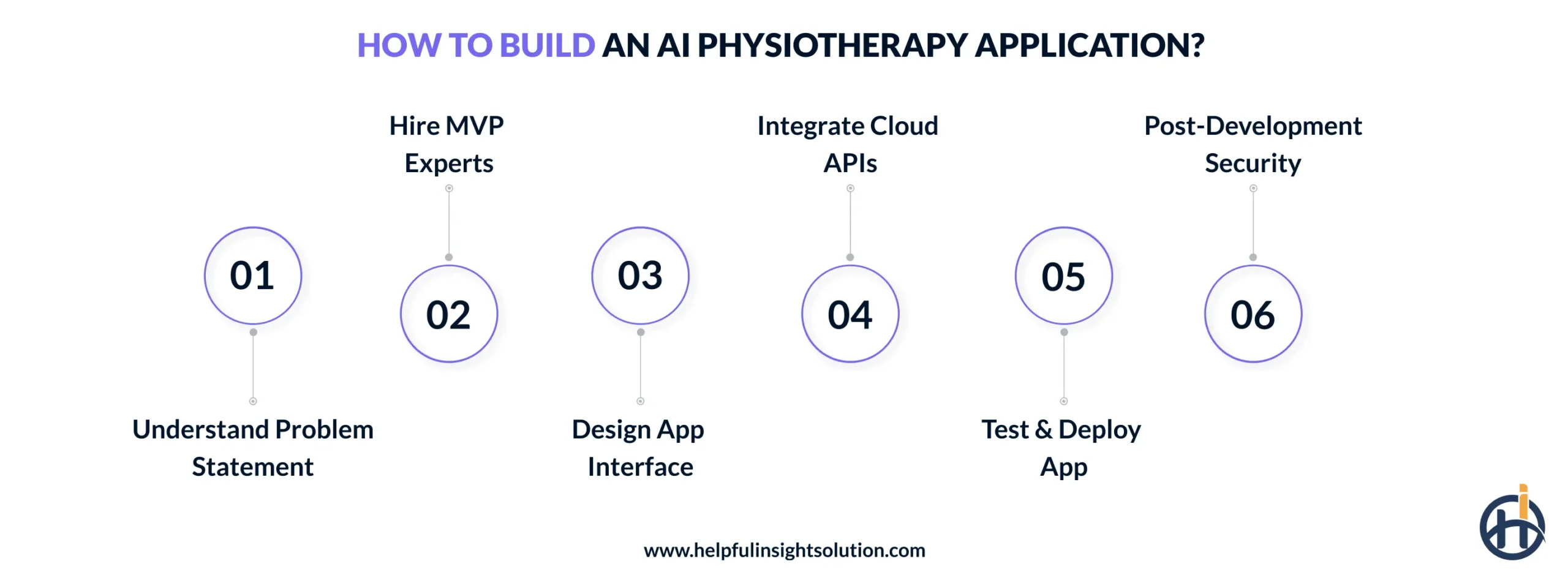
In this section, we will understand the complete AI physiotherapy app development process with detailed information. So, business investors can easily manage the necessary resources and required budget:
-
Understand Problem Statement
Before starting development, clearly define the users’ challenges, such as injury assessment, posture correction, or exercise tracking. This is the first step in the process of developing an AI physiotherapy app. It allows you to analyze patient workflows, physiotherapist expectations, and compliance issues.
Identify AI features, like motion analysis or predictive recovery plans, that can solve these problems. A well-defined problem statement ensures accurate feature planning and resource allocation.
-
Hire MVP Experts
You should hire experienced MVP developers from a fitness app development company to develop an AI physiotherapy app. They must understand healthcare workflows, data handling, and AI model integration. These experts help you validate the idea quickly with essential features and minimal cost.
Their technical insight ensures your product is scalable, secure, and compliant with healthcare standards. With the right MVP team, you reduce risks and speed up time-to-market.
-
Design App Interface
Businesses should create a user-friendly interface that supports both patients and physiotherapists. It is beneficial to build an AI physiotherapy app with smooth navigation. Use clean layouts, instructional animations, and clear visual cues for exercises.
Incorporate accessibility features to support users with limited mobility or physical discomfort. A well-designed interface boosts engagement and ensures accurate exercise follow-through.
-
Integrate Cloud APIs
Developers must connect cloud-based AI APIs to power motion tracking, posture detection, and virtual assistance. It can enhance personalized therapy plans for users who need special care. Cloud integration ensures real-time processing without overloading the device.
An AI physiotherapy app development company provides data synchronization across various devices. You should build scalable cloud APIs for both patients and therapists as user demand increases.
-
Test & Deploy App
Entrepreneurs must hire dedicated developers to conduct rigorous testing across multiple devices. This ensures accurate motion recognition, stable performance, and bug-free navigation. Use real patient scenarios to validate exercise detection and AI feedback reliability.
This is an important stage in the process to develop an AI physiotherapy app, allowing you to deploy the app to stores. Smooth deployment ensures a higher adoption rate and better user satisfaction.
-
Post-Development Security
Implement strong security practices to protect personal health data, including encryption, secure logins, and GDPR/HIPAA compliance. Regularly update the app to patch vulnerabilities and strengthen backend protection. This is the last stage in the step-by-step guide to building an AI-powered physical therapy app.
You should monitor data access patterns to detect suspicious activities early. Continuous security measures build user trust and keep the application safe in the long run.
Necessary & Advanced Features of AI Physical Therapy Apps
Now, we will focus on the key features of an AI-powered physical therapy app, helping users improve their health. You should study them before implementing, as they increase overall user experiences:
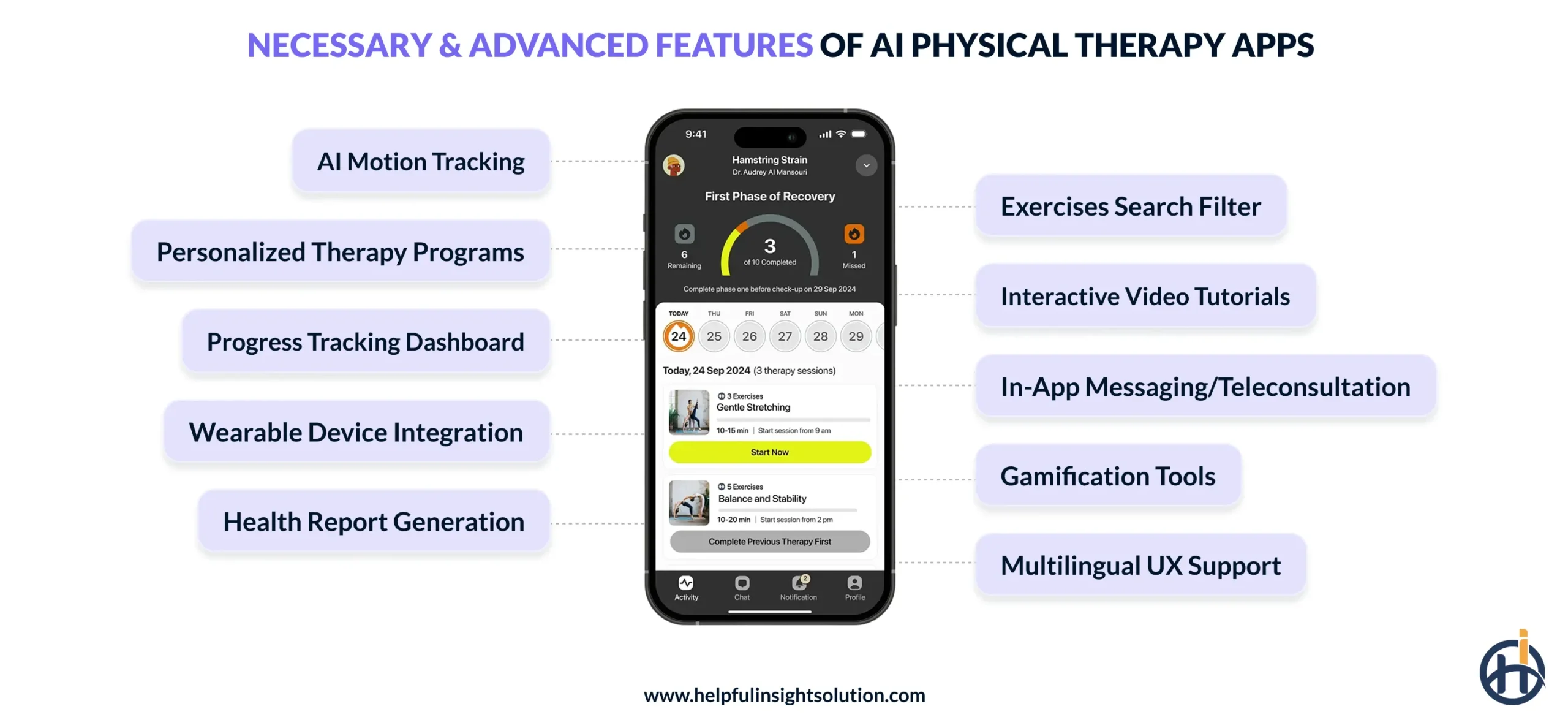
1. AI Motion Tracking
AI motion tracking analyzes user movements in real time to ensure exercises are performed with proper form. It reduces the risk of injury while improving the accuracy and effectiveness of therapy sessions.
2. Exercises Search Filter
An advanced search filter helps users find therapy exercises based on body area, pain type, or difficulty. A fitness app like MyFitnessPal improves navigation and ensures users get relevant exercise options.
3. Personalized Therapy Programs
Personalized programs are created using AI based on the user’s condition, mobility level, progress, and recovery goals. They adapt automatically as the user improves for a tailored rehabilitation experience.
4. Interactive Video Tutorials
A successful AI physiotherapy app provides high-quality interactive video tutorials that guide users through exercises. Visual cues and on-screen instructions help users learn correct posture and technique.
5. Progress Tracking Dashboard
A detailed dashboard displays performance metrics, completed sessions, pain levels, and improvement trends. It motivates users and helps therapists monitor recovery more effectively.
6. In-App Messaging/Teleconsultation
Built-in messaging and live video consultations allow patients to connect directly with therapists. Various AI-powered physical therapy platforms provide remote guidance, quick clarifications, and follow-ups.
7. Wearable Device Integration
The app integrates with smartwatches and fitness trackers to collect real-time biometrics such as heart rate, steps, and activity levels. These insights help refine therapy plans and monitor overall health.
8. Gamification Tools
Gamified elements like rewards and badges keep users motivated throughout their therapy journey. An app like Strava boosts engagement and encourages long-term app usage through virtual fitness games.
9. Health Report Generation
AI-generated health reports summarize user progress, movement accuracy, and therapy outcomes. These reports can be shared with doctors or caregivers for better medical decision-making.
10. Multilingual UX Support
Multilingual support ensures users can access therapy guidance in their preferred language. A reliable AI physiotherapy app enhances accessibility and improves the overall user experience for global audiences.

There are some advanced features of top exercise apps also available for users that help in removing pain and stress. Let’s have a look at them with the help of the table below:
| Advanced Feature | Description |
| Real-Time Posture Correction Alerts | Instant AI alerts to correct body alignment during therapy sessions. |
| Adaptive Exercise Difficulty Engine | Dynamically adjusts exercise intensity based on user performance and recovery. |
| Pain Pattern Prediction Model | Uses historical data to predict upcoming pain spikes and triggers. |
| AI Fall Risk Assessment | Evaluates user balance metrics to identify and prevent potential falls. |
| Voice-Controlled Exercise Guidance | Hands-free voice commands enable seamless control during therapy routines. |
| Virtual Therapist Avatar | 3D AI avatar offering personalized guidance and motivational interactions. |
| Environment-Aware Exercise Safety Check | Detects room obstacles and ensures safe movement space for exercises. |
| Range-of-Motion (ROM) Auto Scoring | Automatically measures joint flexibility and assigns accurate improvement scores. |
| Habit Coaching & Reminder Intelligence | Learns user patterns to send smart reminders and motivational nudges. |
| AI-Powered Sleep & Recovery Insights | Analyzes sleep patterns to optimize therapy effectiveness and daily routines. |
What is the Average AI Physiotherapy App Development Cost?
As a business investor, it is necessary for you to know the cost of creating physiotherapy apps for assured planning and management. The average cost to build an AI physiotherapy app at a lower scale is between $8,000 and $15,000, which can be influenced by several market factors.
The fitness app development cost can increase to $25,000 or more because of app requirements and user demands. Next, we will see the key factors that affect the overall AI physiotherapy app development cost.
App Complexity: Based on the number of features and the complexity level, the cost of making physical training apps is determined.
Demographics: The location of a development team affects the overall development cost because of differences in architecture and regulations.
Experience of Developers: Making costs of AI-powered physiotherapy apps are dependent on the experience and skills of developers.
Team Hiring Model: Businesses can choose a hiring model from various options that should not influence the total development price.
Tech Stack Required for Developing AI Physical Therapy Apps
Do you know how to build an AI-powered physical therapy app with smart fitness features and services? You need to use advanced tools and technologies that help in enhancing productivity and efficiency.
A tech stack for fitness app development includes various frontend, backend, database, and AI tools. You will observe the latest tech stack for AI physiotherapy app development in this section with the help of the table below:
| Component | Tools/Technologies | Description |
| Mobile App Development Framework | Flutter, React Native, Swift, Kotlin | Builds cross-platform or native mobile applications with smooth UI/UX. |
| AI/ML Model Development | TensorFlow, PyTorch, Scikit-Learn | Powers motion tracking, posture analysis, and personalized therapy predictions. |
| Computer Vision (Motion Tracking) | OpenCV, MediaPipe, OpenPose | Enables real-time body movement and joint tracking for therapy accuracy. |
| Backend Server Framework | Node.js, Django, Flask, Ruby on Rails | Handles API logic, authentication, and data management. |
| Cloud Infrastructure | AWS, Google Cloud, Microsoft Azure | Provides scalable compute, storage, and AI processing capabilities. |
| Database Management | PostgreSQL, MongoDB, Firebase Firestore | Stores user profiles, therapy sessions, analytics, and progress data. |
| Video Processing & Streaming | WebRTC, AWS IVS, Agora | Supports real-time video analysis and remote physiotherapy sessions. |
| Wearable & Sensor Integration | Bluetooth LE, Apple HealthKit, Google Fit | Syncs motion sensors and wearable device data for precise tracking. |
| API Integration Layer | REST API, GraphQL | Manages communication between the mobile app, backend, and AI systems. |
| Security & Compliance Tools | JWT, OAuth 2.0, SSL/TLS, HIPAA compliance tools | Ensures user data security and meets healthcare compliance standards. |
Major Challenges in AI Physical Therapy App Development
The process of building an AI physiotherapy app can be a challenge for most entrepreneurs with data security concerns. In this section, you will understand the major challenges and their solutions:
-
Motion Tracking Accuracy
Some physical therapy apps are not able to track human movements and analyze issues accurately. This is because of various technical issues, such as feature updates, security issues, and fitness module failures.
Solution: Integrate affordable IoT devices that can easily track health data and send it to the server.
-
Complex AI Models
Using complex AI models is among the top fitness app development challenges that businesses may face. They are used to create advanced physical therapy apps that are expensive and can be ineffective.
Solution: Use third-party AI tools that can automate app features to deliver smart physiotherapy services.
-
Data Privacy Compliance
There is a possibility of data breaches, as AI provides an open-source platform for users to get information. This can lead to unauthorized data access and can harm sensitive patient records.
Solution: You should create an AI therapy app with a secure database and encrypted algorithms.
How are AI-Powered Physiotherapy Apps Monetized?
By knowing the money-making methods, businesses can easily balance the cost to develop an AI physiotherapy app. Here, we will study some important monetization strategies that help investors:
-
Subscription Plans
Users can become permanent app members through various subscription plans, such as monthly, annual, and lifetime. This helps business investors to increase brand valuation, make profits, and balance the overall development cost.
-
Virtual Consultation Fees
You should create a custom AI physiotherapy app that can provide live video consultations and charge a specific amount of fees from users. The value should be based on the duration and can be included in the subscription plans for existing members.
-
In-App Purchases
This revenue model is among the best fitness app monetization strategies that entrepreneurs implement for income generation. With this, you can allow users to buy various healthcare and fitness products at a specific price, so you can make a commission.
-
Medical Partnerships
Entrepreneurs should invest in AI therapy app development to generate a consistent revenue through medical and healthcare partnerships. It is beneficial to connect with pharmaceuticals, equipment distributors, and supply chain companies.
-
Ad-Based Wellness Content
With the advertising services, like online campaigns and banner postings, you can easily balance the cost to create an AI physiotherapy app. Business investors should allow wellness experts and healthcare centers to post advertisements for profit-making.
Read Also:- Chiropractor App Development: A Complete Guide for Care Clinics and HealthTech Startups
Future Trends of AI Physical Therapy Apps
Along with the steps to build AI physiotherapy apps, you should also know the future trends that will target a large number of users. Some major upcoming trends are discussed briefly in this section:
-
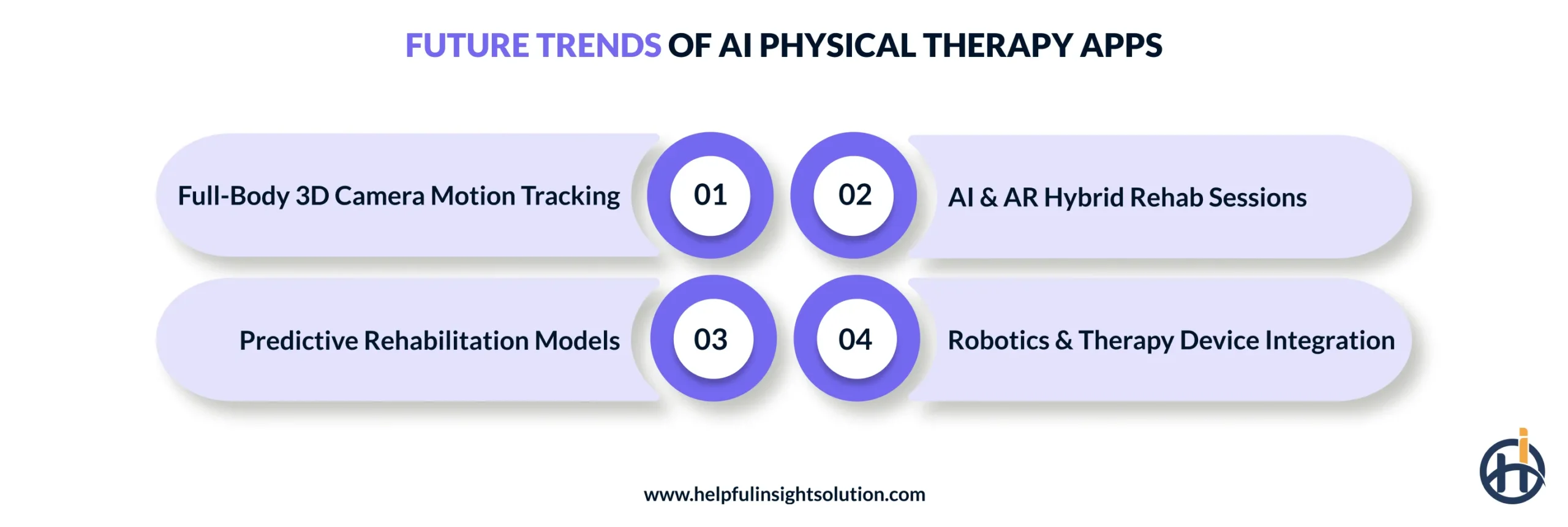
Full-Body 3D Camera Motion Tracking
Full-body 3D motion tracking will allow AI therapy apps to capture detailed joint movements with accuracy. This enables personalized feedback, improved posture correction, and safer at-home therapies.
-
AI & AR Hybrid Rehab Sessions
AR is the new tech stack for AI physiotherapy application development that creates rehab environments and visual guides. This approach boosts engagement and precise adherence to rehabilitation routines.
-
Predictive Rehabilitation Models
Predictive AI models will analyze historical recovery data and patient patterns to forecast healing timelines. You should develop the best meditation app to adjust treatment plans for better outcomes.
-
Robotics & Therapy Device Integration
AI therapy apps can sync with robotic devices to enhance strength training. You must hire developers for AI physiotherapy app development to offer precise movements and accelerate rehabilitation progress.

Why Choose Helpful Insight for the Development of AI-Based Physical Therapy Applications?
We have gone through all the topics that are important to know for a business investor to grow in the future. Now, it’s time to make an effective budget-friendly development plan to create advanced live therapy apps. You must approach the best development partner for AI physiotherapy app development that offers the following benefits:
- Information on successful business models that attract millions of users.
- Affordable services, from app consultation to market deployment and maintenance.
- Tips to balance the cost of AI physiotherapy app development with revenue models.
- Complete support for mobile app launching, branding, and marketing.
We are a leading AI development company that helps businesses to create automated solutions at reasonable prices. You can increase brand value, improve overall visibility, and get full-fledged technical assistance by contacting our experts. So, pull up your socks and gather all your resources to start immediately without wasting much time.
FAQs
The demand for AI-enabled physical therapy apps is increasing due to medical emergencies and fitness-related issues. Some of the major reasons are discussed as follows:
- They provide thousands of exercises and physical training sessions.
- Users can connect with professional therapists and fitness coaches.
- The app regularly tracks health progress and suggests treatments.
The development time of AI physiotherapy apps depends on various parameters, including the development process and the complexity of features. At the lower level, the average time required is between 2 months and 5 months due to fast implications and available resources. But the overall duration may increase to more than one year because of advanced services.
Maintenance of AI-based physiotherapy apps is important to deliver updated exercise features and ensure data security. Based on modern calculations, the maintenance cost is around 15% to 20% of the overall development cost. For example, a project with a development cost of $20,000 requires the cost of maintenance to be between $3,000 and $4,000.
For a business investor, it is important to hire experienced and skilled mobile app developers to create advanced physiotherapy apps. The hiring process is described as follows:
- List hiring requirements with accurate specifications.
- Analyze previous work, client reviews, and experience.
- Conduct a technical interview to judge knowledge.
- Ensure ethical skills through a business contract.
- Discuss project details and development methods.
Artificial Intelligence has a lot of applications in various mobile or web applications, such as physical therapy platforms. It ensures overall security of the app through fraud detection, data protection, and smooth algorithmic flow. AI can be integrated with standard encryption algorithms to automate platform security with predictive threat analysis.
It is mandatory to ensure HIPAA-compliant services for developing AI-enabled physical therapy apps. Business investors should follow the methods below for maintaining compliance:
- Implement strong encryption and secure data storage for all patient health information.
- Integrate role-based access controls and audit trails to monitor data usage and sharing.
- Conduct regular HIPAA training and compliance assessments for your development team.