


Back in the time, no one had ever thought about a concept like autonomous cars where a car runs on its own without a driver. But all of this has become reality all thanks to advancing technology and AI is a big part of it.
As many industries have adopted AI but automotive industry has been a leader in it. AI in the automotive industry is used in so many different ways. It helps design better cars, assists in smart manufacturing, and even improves safety features inside the vehicles.
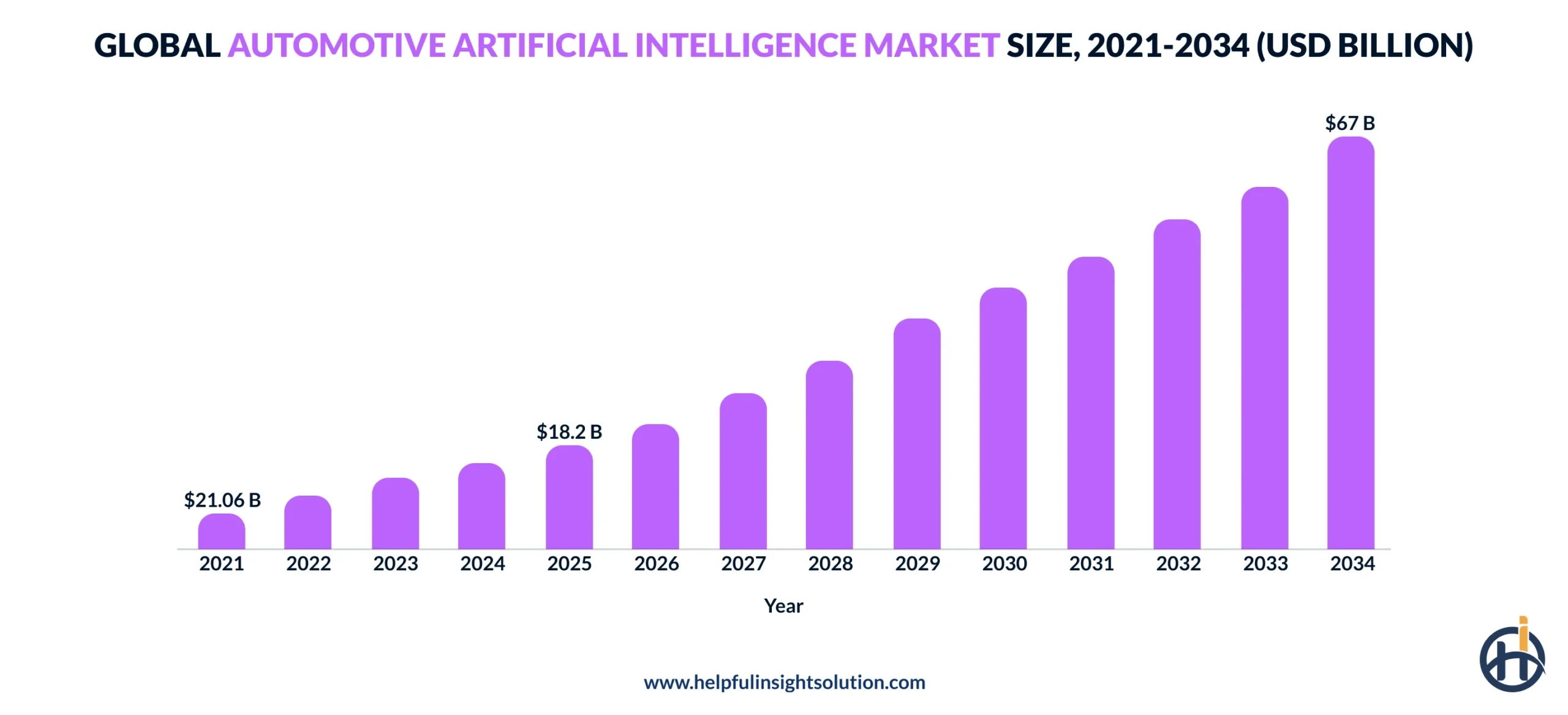
AI has truly changed the way vehicles are made and used. The global automotive AI market is growing fast. It is expected to jump from $21 billion in 2026 to $67 billion by 2034. This shows that AI is not just useful, it is becoming essential for the automotive sector.
Automotive experts also believe AI can increase the value of their products by around 22%. For businesses in the automotive industry, adopting AI is no longer optional, it is essential to innovate, improve their products, and give customers a better experience.
If you are in the automotive business and wondering whether implementing AI is worth it or not, then this guide is just for you. So, keep reading until the end.
What is AI in the Automotive Industry?
AI in automotive industry means using advanced technologies like machine learning, computer vision, and deep learning to transform the way vehicles are designed, manufactured and operated.
Have you seen a car adjust speed automatically in traffic or warn you when a lane is leaving? This became possible because of AI.
AI in automotive uses real-time data to make smart decisions and improve how cars are built and vehicles are delivered. Today, customers want to use smart gadgets and even vehicles they drive.
With AI, automotive companies can make safer, faster, and more reliable vehicles that meet what people want today.
Benefits of Using Artificial Intelligence in Automotive Businesses
AI in automotive industry can bring so many benefits to businesses. Let’s explore them:
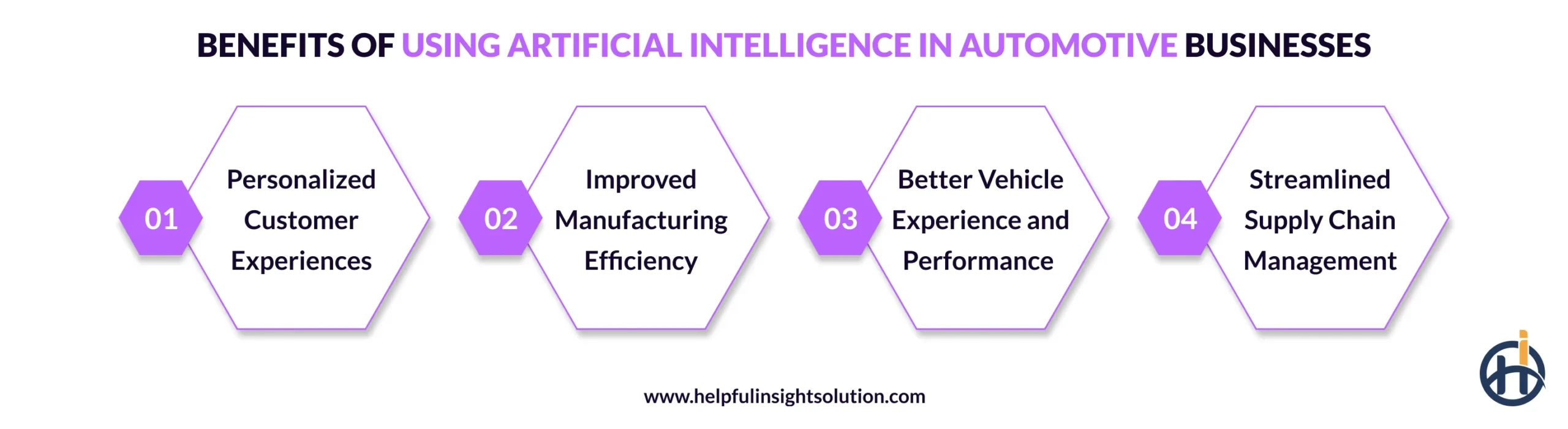
1. Personalized Customer Experiences
The trend of personalization is high and customers are also prefer the same in their vehicles. AI for automotive help businesses give customers a more personalized experience. How? If customers have any questions or need help, AI chatbots can answer them quickly.
AI also learns what customers like and suggests features they may enjoy. Even after purchase, AI remind them about maintenance and suggest updates if there are any, which keeps them happy and satisfied.
2. Improved Manufacturing Efficiency
The use of AI in car manufacturing helps automotive businesses make the process of building the vehicles smarter, more efficient, and error-free. AI automotive solutions like robots, can spot mistakes and fix them before they cause problems.
AI also predicts when machines need maintenance so production doesn’t stop. It helps plan production, manage parts, and reduce waste. By using AI, businesses not only save money in manufacturing but also improve their quality levels.
3. Better Vehicle Experience and Performance
Automotive artificial intelligence solutions make vehicles smarter and offer features that make the driving experience more comfortable. Cars can learn driver habits and provide personalized in-vehicle settings like adjusting seats or temperature.
AI powered vehicles today come with features like voice commands and touchscreens that make it easier to control functions. Moreover, infotainment systems connect to phones and apps so drivers and passengers can enjoy music or access navigation while staying safe on the road.
4. Streamlined Supply Chain Management
Implementing AI in the automotive industry helps automotive companies better manage their supply chain operations. With AI, it becomes easy to predict how many parts will be needed and avoid shortages or extra stock.
It plans deliveries efficiently, which assists supply chain managers in saving time and money. The best part is that AI automotive solutions also help suppliers react quickly to changes in demand. This keeps the supply chain smooth and ensures vehicles are built on time.
Top Use Cases of AI in the Automotive Industry
There are so many applications of AI in automotive industry and it is continue to expand with technological advancement. Some of the most popular use cases of AI for automotive industry are:
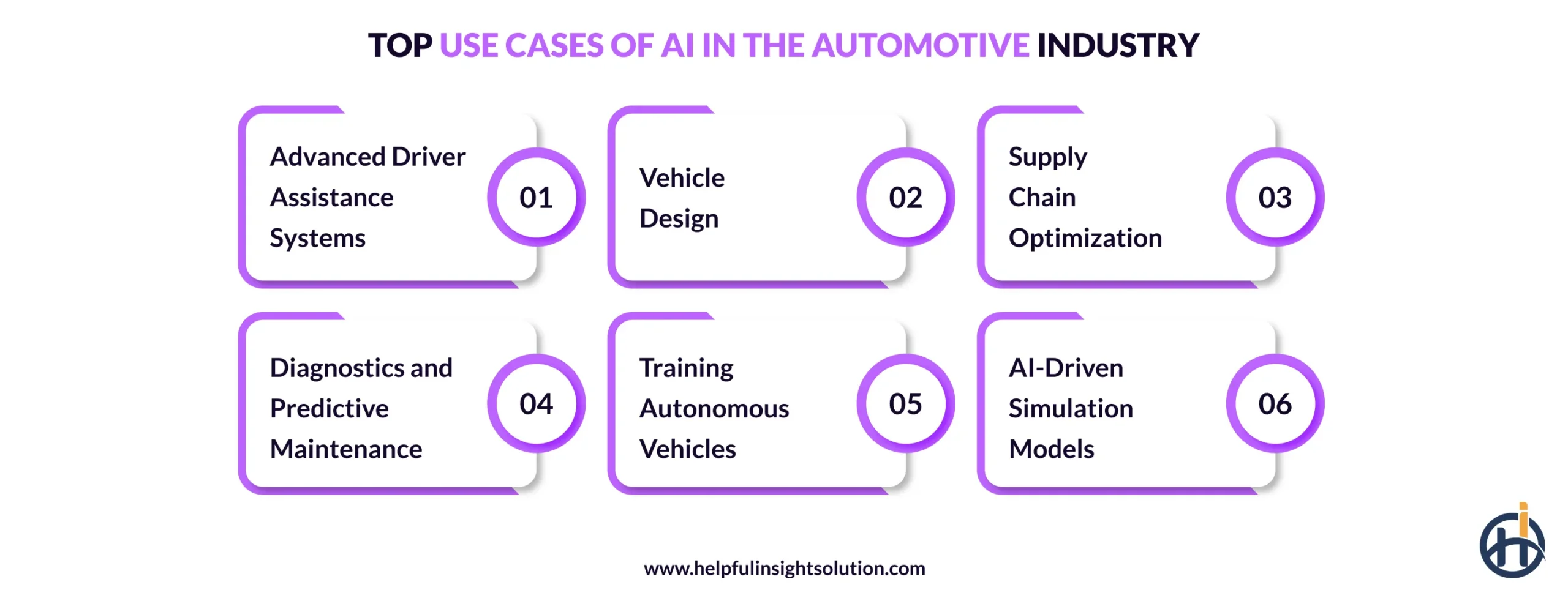
1. Advanced Driver Assistance Systems
One of the top use case of AI in the automotive industry is advanced driver assistance systems which is also known as ADAS. The driver assistance system uses sensors and cameras to collect real-time information about the surroundings while the driver is on the road.The system detects things like other cars or pedestrians, and it can automatically warn the driver if something’s wrong.
BMW’s ADAS system uses cameras and sensors to warn drivers of dangers, like approaching cars. It can even park the car automatically when needed.
2. Vehicle Design
Artificial intelligence can be used to design cars faster and better. It uses algorithms to create new car shapes and designs based on specific needs like speed, safety, and weight. AI also speeds up the prototyping process by making virtual models of cars, cutting down the time it takes to build real ones. This makes designing and testing new cars quicker and cheaper.
Honda is one of the top example of AI in vehicle design. The company uses AI to improve vehicle design, making sure the cars are lightweight and use less fuel.
3. Supply Chain Optimization
AI in the automotive industry helps automakers manage supply chain effectively. Using AI in supply chain help manufacturers keep track of parts and materials. It predicts when parts are running low, so the manufacturing outlet doesn’t run out of equipments and materials needed for creating the vehicle. Using AI has also greatly helped in improving product quality while reducing waste.
Toyota is one the popular automotive brand that uses AI to monitor its supply chain, predicting when materials will be needed and ensuring everything arrives on time.
4. Diagnostics and Predictive Maintenance
Artificial intelligence in cars can help diagnose problems before they happen by analyzing real-time vehicle data. The AI-powered automotive solutions check things like engine performance, tire pressure, and battery life to predict when something might break. This allows vehicle owners to fix issues before they become big problems.
General Motors also known as GM is a reputable automotive company that use artificial intelligence to monitor car systems and predict when a part may need repair. It sends alerts to drivers about potential issues before they happen.
5. Training Autonomous Vehicles
Another popular application of artificial intelligence in automotive industry is to train autonomous vehicles using simulations. Instead of testing on real roads, AI creates safe, virtual environments for cars to learn. These vehicles use sensors like cameras to see things like people, other vehicles, and traffic signs. They learn to make decisions like when to stop or turn, based on the data they get.
Tesla’s Autopilot uses AI to learn from millions of driving miles, helping the car make decisions like stopping for a red light or avoiding obstacles on the road.
4. AI-Driven Simulation Models
Automotive businesses can use AI solutions to create digital models of vehicles called digital twins. These models are like virtual cars that act just like the real ones. These models are used to test how cars perform, like how safe they are or how well they handle different weather conditions. This method is cheaper and faster than testing physical cars.
Ford is one of the best automotive companies that use artificial intelligence to create digital twins of their cars to test safety features and designs virtually.
Challenges of Implementing Artificial Intelligence in the Automotive Industry
There is no doubt that AI in the automotive industry has so many advantages and growth potential for businesses. But we cannot ignore the fact that implementation process is not simple and come with some challenges.
It becomes easier to tackle these obstacles if you know what problems to solve, so you can be ready with their solutions.
In the table below, we will discuss the challenges of adopting AI in automotive sector and their solutions.
| Challenge | The Impact | The Solution |
| Data Management Issues | Managing data across systems can be hard. Low quality and inaccurate data leads to wrong AI results. | AI developers should use strong systems with encryption to manage data well. Regular audits and updates ensure accurate AI outcomes. |
| Privacy and Security Concerns | AI automotive solutions use sensitive driver and vehicle data which is prone to being stolen and cyberattacks. | Encrypt data, follow regulations like GDPR, and use secure systems. Keep users informed about how their data is used to build trust. |
| Legacy System Integration | Old systems are not designed to work with advanced technologies like AI, which makes integration difficult. | Use modern systems with modular designs. This makes it easier for AI automotive solutions to work with legacy systems. |
| Workforce Training | Employees need to learn new skills to use AI solutions. Without the right training, companies struggle to use AI. | Automakers should offer training programs to help their employees understand how to use AI systems effectively. |
Future of AI in the Automotive Industry
AI in automotive industry has 360 degrees changed how vehicles are designed, created, and delivered to the end customer. It has such amazing applications that have taken the customer experience of driving to a whole other level.
For businesses, AI has made what was once just a vision like autonomous cars and smart manufacturing facilities with robots.a reality.
It’s exciting to think about the future of AI in the automotive industry. Let’s explore what we can expect:
- In the future, self-driving cars will become more common, driving safely without human help. AI will ensure the car stays on track, avoids obstacles, and reaches its destination without accidents.
- AI will improve electric vehicles by making motors and batteries more powerful, lighter, and more efficient. This will help cars use less energy and go farther.
- Artificial intelligence systems in cars will create better safety systems that detect dangers on the road, preventing accidents. Features like automatic braking and collision warnings will help keep drivers safe.
- In the coming years, AI will power more advanced car systems. It will help self-driving cars, smart factories, and provide real-time car checks. AI will also predict motor temperatures to help electric cars run smoothly.
- Many automakers are working on flying cars. These flying cars will run on electricity and batteries while AI will help them fly safely, either on their own or with some assistance.

Trust Helpful Insight to Help You Adopt AI in Your Automotive Business
Approximately 60% of vehicles will be AI powered by 2029. This clearly shows that automotive companies are already using AI to design and build next-generation vehicles. AI offers numerous benefits and applications in the automotive industry. Ignoring it now means falling behind as the world moves toward smarter, more efficient transportation.
If you are an automotive startup or an established business and have not started taking advantage of artificial intelligence solutions, then you should immediately implement them, as your competitors already have. We understand that implementing AI can be a challenge, and that’s where Helpful Insight comes in to help.
We are a reputable AI development company with years of experience in creating premium-quality out-of-the-box and custom AI automotive solutions. Our AI developers are the best in the industry and know very well what it takes to build AI solutions that drive efficiency, growth, and solve challenges that traditional methods can’t. You can count on us for:
- End-to-end AI development services
- Expert advice on AI use cases for your business
- Smooth AI solution implementation
Get in touch with our team today to learn how we can help you implement AI in your automotive business.
FAQs
AI is revolutionizing the automotive sector and positively impacting its multiple areas, which are:
- Autonomous Driving and Safety: AI helps cars drive safely and avoid accidents.
- In-Car Personalization: AI remembers driver preferences for a better experience.
- Supply Chain Optimization: AI forecasts demand and improves deliveries.
- Vehicle Design: AI generates smarter and safer vehicle designs.
When we talk about AI in automotive, it is not only about how vehicles are created but also how they are sold and delivered to the customer. AI is truly transforming automotive dealerships by:
- Virtual showrooms let customers view 3D cars from home.
- AI financing approves car loans and paperwork fast.
- Artificial intelligence helps dealerships recommend cars based on preferences
- AI powered chatbots answer customer questions quickly.
- AI solutions analyzes customer data to improve sales strategies.
AI in self-driving cars is still improving. It aims to reduce accidents caused by human mistakes. However, it can face problems like software errors or hacking risks. Safety depends on proper testing, following compliance, and strong security systems.
Yes, AI integration in the automotive industry has certain limitation , such as dependency on high-quality and real-time data, cybersecurity risks, safety concerns, and regulatory hurdles.