

“Provide a secure healthcare environment by creating a HIPAA-compliant application.”
Presently, healthcare is one of the most sensitive industries in the world that deals with patients, doctors, and other medical professionals directly. A large amount of user-centric healthcare data is being shared, accessed, and stored across the globe.
This raises various security concerns, such as data theft issues, unauthorized control, and system malfunction. Here comes the importance of HIPAA compliant app development that ensures standard healthcare regulations with privacy and transparency.
According to a renowned journal, the total number of cases registered in the USA was 697 in 2025 regarding medical data breaches, affecting more than 50 million individuals. Since then, the race to build a HIPAA-compliant app has accelerated, allowing more investments. For secure HIPAA compliant software development, you need proper guidance, support, and skilled partners.
In this HIPAA compliant mobile app solution guide, we will study different topics that are crucial for an entrepreneur. But above all, it is important to know HIPAA in detail before developing a HIPAA-compliant mobile app. So, let’s join us in this journey to get useful insights.
HIPAA Compliance: A Security Partner for Healthcare Solutions
HIPAA is a US healthcare standard that stands for the Health Insurance Portability and Accountability Act, regulated in 1996. It was implemented to ensure the safety, privacy, and transparency of healthcare solutions that store large amounts of user data.
The Protected Health Information (PHI) security measures apply to various covered entities, including healthcare providers and business associates. Additionally, a HIPAA compliance mobile app involves administrative, physical, and technical safeguards for patient data security.
These healthcare data privacy regulations ensure proper digital workflow and sustainability across clinical systems.
- Protected Health Information (PHI): Various healthcare data, like medical records and lab reports, are secured through PHI.
- Breach Notifications: The system regularly notifies government and medical authorities regarding potential breaches.
- Compliance Rules: It describes the usage of PHI with different safeguarding methods.
Statistics on Healthcare Data Breaches
After the introduction of Web 3.0, healthcare data security has become more important than anything else. Over the past few years, businesses in this industry have experienced multiple cyber threats across various systems.
You must look at these figures to understand the need for HIPAA compliance:
- There are more than 700 cases registered through hacking of healthcare systems, resulting in penalties of over $8 million in 2025.
- In 2024, Change Healthcare suffered one of the biggest data breaches, affecting more than 190 million individuals in the USA.
- The protected health information of more than 250 million patients was compromised in the same year in which a damage of $4.6 billion was experienced.
- The average HIPAA penalties are more than $400K that are imposed by the WHO, which may increase to $1.2 million by 2030.
- The Office for Civil Rights (OCR) imposed a penalty of $3 million on Solara Medical Supplies for violating HIPAA regulations.
So, by hiring a dedicated HIPAA compliance application development partner, you can easily know about the standard healthcare regulations. It is important for developing a HIPAA-compliant mobile app, providing secure data management and accessibility features.
Key Benefits of HIPAA Compliant App Development
Business investors should build a HIPAA-compliant app, as there are multiple benefits in this investment. Let’s study some key advantages in this section that an entrepreneur looks for before development:
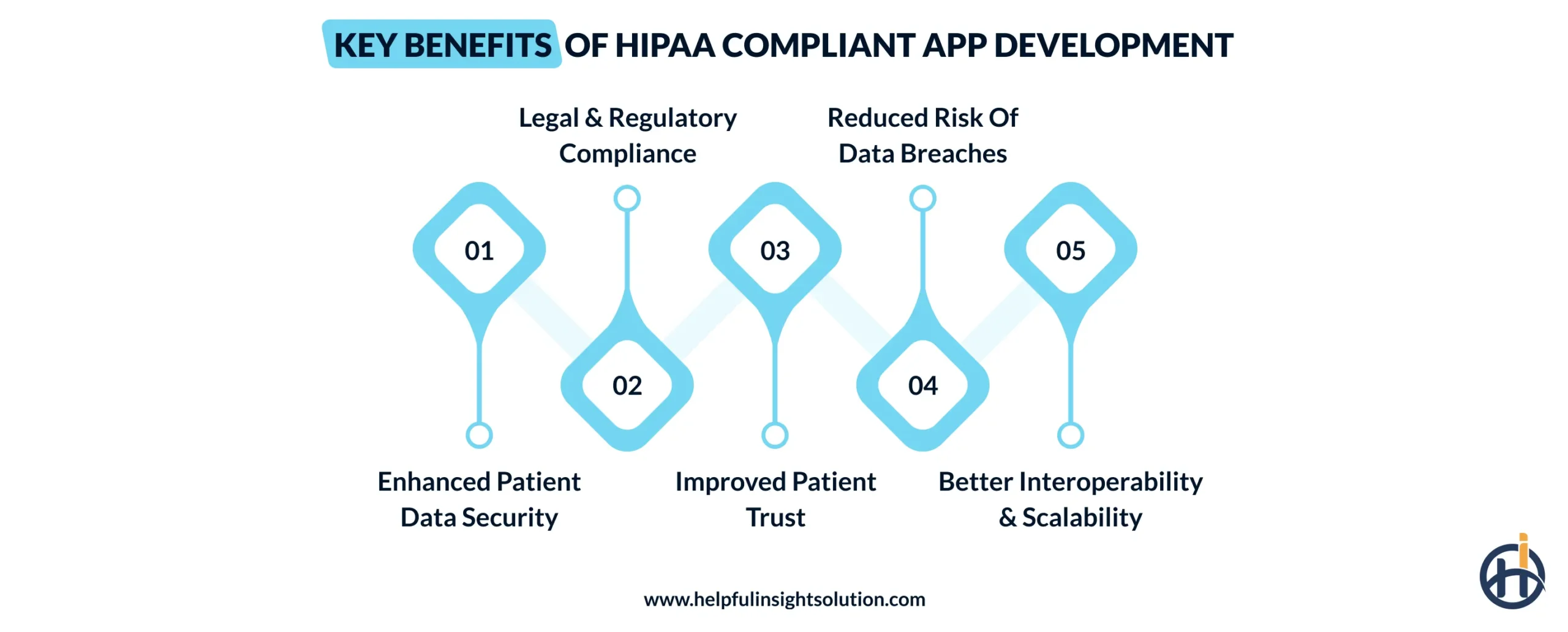
1. Enhanced Patient Data Security
It ensures robust healthcare data security through encryption, secure APIs, access controls, and audit trails. These measures safeguard sensitive health information from unauthorized access, theft, or misuse.
2. Legal & Regulatory Compliance
A HIPAA-compliant application for businesses follows strict federal regulations, avoiding legal actions. It ensures that all processes, like data storage, transmission, and access, follow various privacy standards.
3. Improved Patient Trust
A HIPAA-regulated medical app handles PHI, providing a comfortable sharing experience to users. Through mobile app development, businesses can enhance overall engagement and patient trust.
4. Reduced Risk of Data Breaches
Various security protocols, such as regular risk assessments and MFA, are used with HIPAA compliant app development services. This reduces potential cyberattacks and large-scale healthcare data breaches.
5. Better Interoperability & Scalability
You can develop a HIPAA compliant mobile app with standardized frameworks that support secure data exchange. This enables EHR integration, third-party tools, and system expansions through compliance.
Types of HIPAA Compliant Applications
It is crucial to know the types of HIPAA compliant healthcare apps available for both businesses and users. We are describing some important categories in which standard healthcare regulations are included:
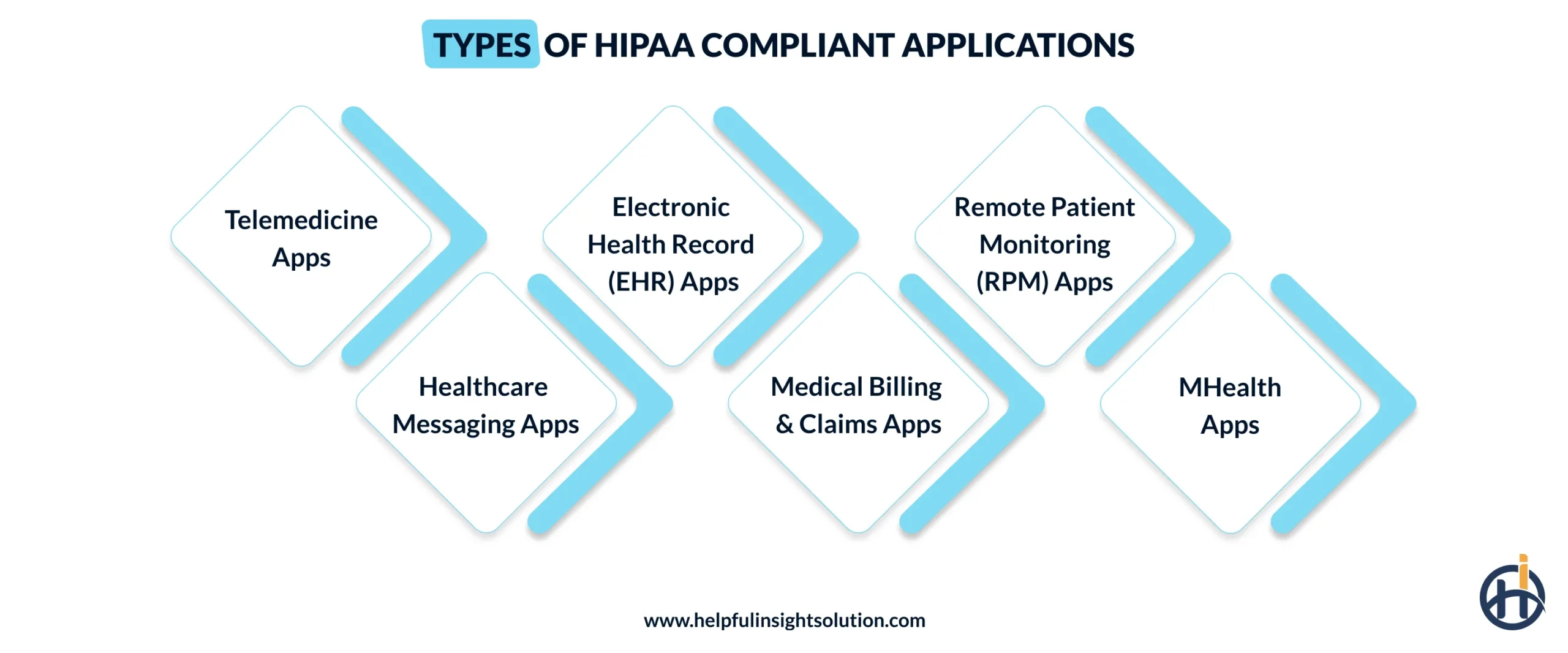
1. Telemedicine Apps
These mobile apps with HIPAA compliance provide virtual consultations between patients and doctors through video calls or voice chats. This ensures secure transmission of patient data, medical records, and prescriptions.
2. Electronic Health Record (EHR) Apps
EHR apps store and manage patients’ medical histories, lab results, prescriptions, and treatment plans in a centralized system. They are compliant with HIPAA regulations for secure access controls, encrypted storage, and safe data sharing.
3. Remote Patient Monitoring (RPM) Apps
Various RPM apps collect health data, such as heart rate, blood pressure, or glucose levels, from devices. This HIPAA-certified healthcare app protects transmitted health data through encryption and secure cloud infrastructure.
4. Healthcare Messaging Apps
They allow secure communication between doctors, nurses, and patients for consultations and medical updates. To meet HIPAA standards, a HIPAA-secure application uses encryption, authentication protocols, and audit trails.
5. Medical Billing & Claims Apps
This platform streamlines insurance claims processing, invoicing, and payment tracking for doctors. The HIPAA compliant software safeguards sensitive patient and insurance information during data processing and transactions.
6. mHealth Apps
Mobile health apps provide health tracking, wellness monitoring, and medication reminder features. The HIPAA-validated medical software easily handles PHI by ensuring data privacy and healthcare integrity.
Essential HIPAA Compliant App Features
A HIPAA compliance mobile app offers secure regulations, data retrieval, user control, and private messaging features. They ensure the privacy of multiple protected healthcare and consumer information:
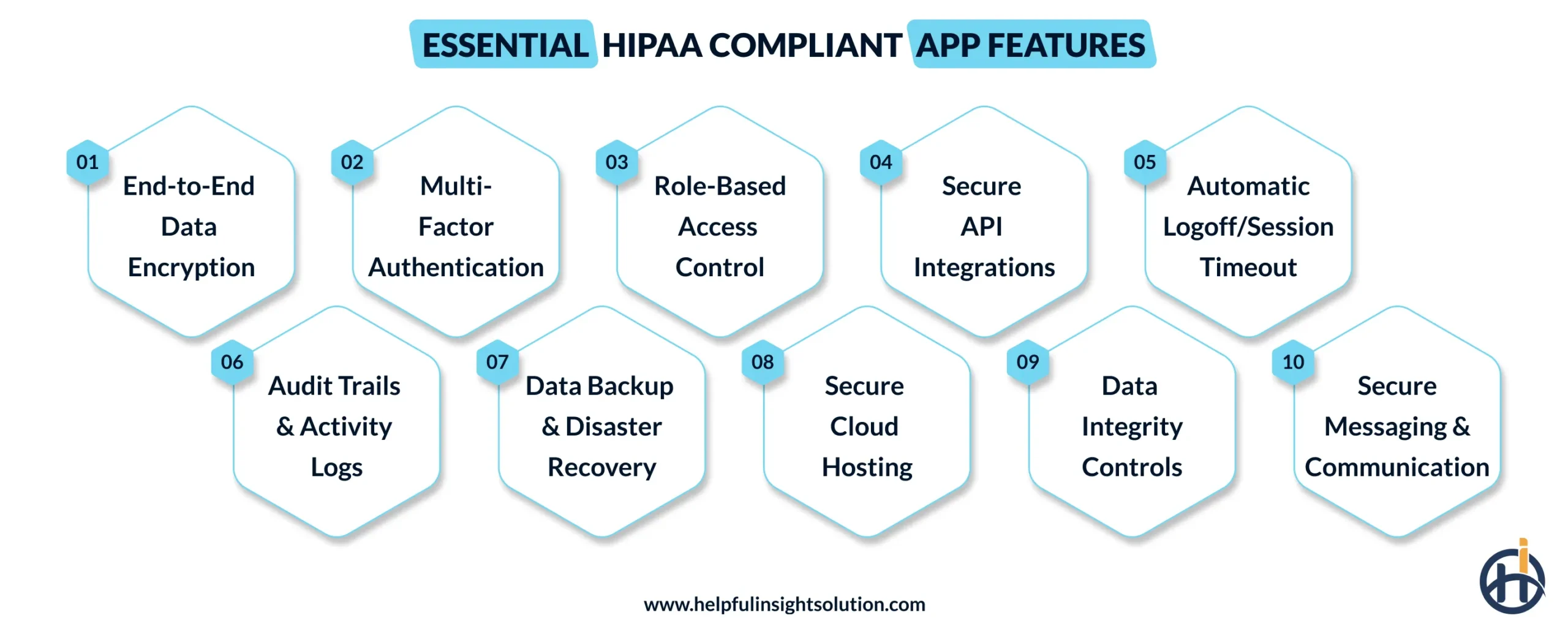
1. End-to-End Data Encryption
End-to-end encryption in healthcare apps ensures that patient health information is protected from unauthorized access. It protects sensitive healthcare data from breaches, DDoS attacks, and cyber threats.
2. Multi-Factor Authentication
This feature in a HIPAA compliant software application verifies user identity by using two or more authentication methods. This reduces the risk of unauthorized system access, even if login credentials are compromised.
3. Role-Based Access Control
The RBAC feature restricts system access based on a user’s role in a particular environment. A HIPAA-adherent healthcare solution ensures the necessary changes in data for specific tasks.
4. Secure API Integrations
A HIPAA-approved mobile app enables safe data exchange between healthcare systems through secure APIs. They use authentication tokens, encryption, and strict validation protocols to prevent data leaks.
5. Automatic Logoff/Session Timeout
A HIPAA-compliant application for businesses uses automatic logoff to terminate inactive user sessions. This use of AI in healthcare minimizes the risk of unauthorized access and fraudulent activities.
6. Audit Trails & Activity Logs
With HIPAA risk assessment and compliance auditing, businesses can record user actions, including data access and system changes. These logs detect suspicious activity and support compliance requirements.
7. Data Backup & Disaster Recovery
The data backup feature ensures that patient records can be restored after system failure or cyberattacks. Healthcare apps are compliant with HIPAA regulations to prevent data loss through disaster recovery plans.
8. Secure Cloud Hosting
Secure cloud storage for healthcare apps complies with HIPAA regulations and offers encrypted storage with strict access controls. They include Business Associate Agreements (BAAs) to ensure regulatory functions.
9. Data Integrity Controls
This feature ensures that patient information is not affected in an unauthorized manner. A HIPAA-aligned digital health app verifies that data remains accurate, complete, and trustworthy throughout its lifecycle.
10. Secure Messaging & Communication
These systems allow doctors to easily communicate with patients, ensuring secure patient data management. They use encrypted channels and access controls to prevent unauthorized disclosure of sensitive data.
HIPAA Rules & Guidelines for 2026
For developing a HIPAA compliant app, it is important to follow some common rules and regulations. These healthcare app encryption standards ensure the security of user data, safeguard medical records, and enhance accessibility.
The guidelines that are compliant with the Health Insurance Portability and Accountability Act are described with the help of the following table:
| HIPAA Rule/Guideline | Description | Industrial Use |
| Privacy Rule | Establishes standards to protect patients’ Protected Health Information (PHI) from unauthorized disclosure. | Ensures healthcare providers share patient data only with authorized individuals or entities. |
| Security Rule | Requires administrative, physical, and technical safeguards to protect electronic PHI (ePHI). | Guides organizations in implementing encryption, access controls, and secure systems for digital health data. |
| Breach Notification Rule | Mandates notification to affected individuals, HHS, and sometimes the media after a PHI breach. | Helps organizations respond quickly and transparently to data breaches. |
| Enforcement Rule | Defines penalties and procedures for HIPAA violations and non-compliance. | Encourages healthcare entities to maintain compliance to avoid legal and financial penalties. |
How to Build a Healthcare App with HIPAA Compliance?
Here, you will study how to build a HIPAA-compliant app with a certified development process. From domain knowledge to platform maintenance, we have covered all stages with detailed information:
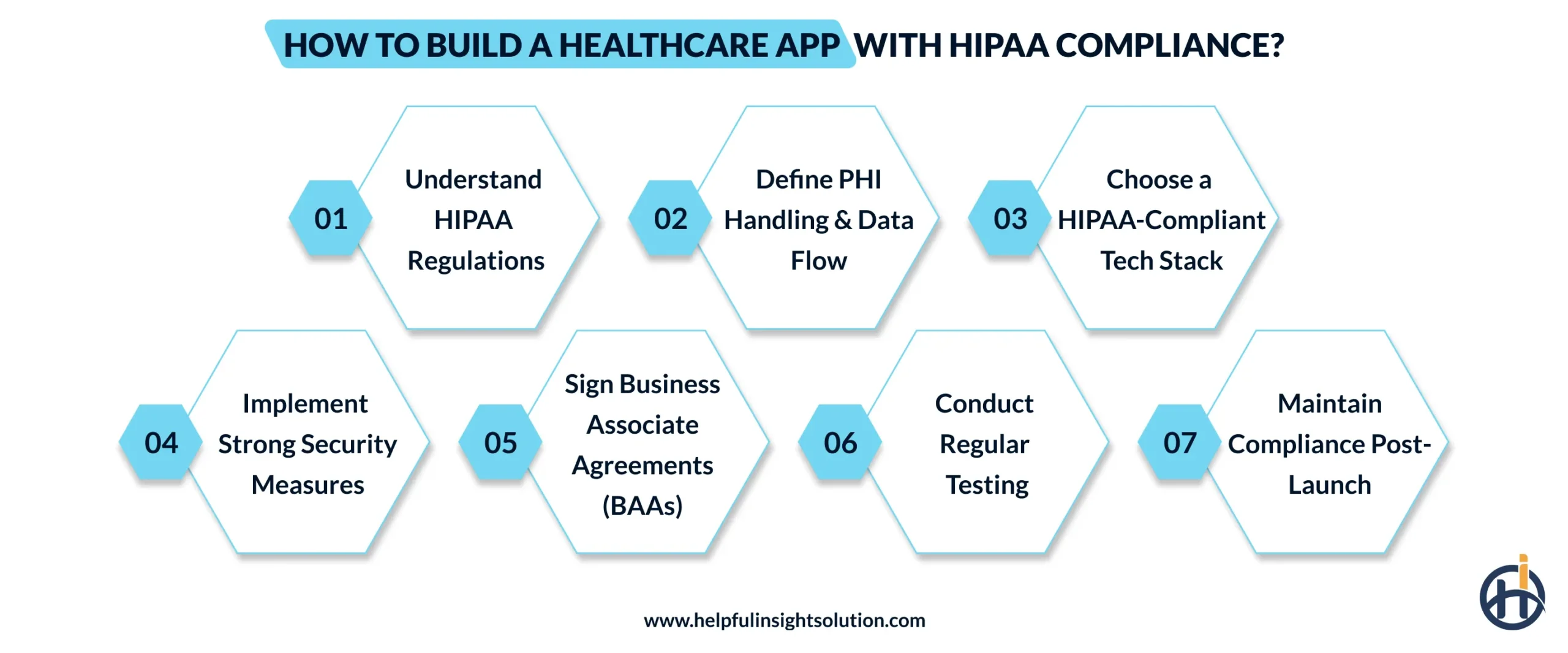
1. Understand HIPAA Regulations
The first step in building a healthcare app is to understand HIPAA regulations and their requirements. This includes learning about the Privacy Rule, Security Rule, and Breach Notification Rule. It is important to identify the app category as a covered entity or business associate.
You can avoid legal penalties by making an app that is compliant with HIPAA regulations. With strong regulatory features, you can ensure the security and privacy of protected health information.
2. Define PHI Handling & Data Flow
Businesses should know about the Protected Health Information (PHI) to collect, store, or transmit user data. You must identify the entire data flow, from user input to backend storage and third-party integrations. This will help you to judge PHI mobility and target potential data risks.
To make a proper document that ensures transparency in regulations, you can hire HIPAA-compliant mobile app developers. This minimizes expenses and enhances the security of healthcare systems.
3. Choose a HIPAA-Compliant Tech Stack
It’s time to select the right tech stack for making a HIPAA-aligned digital health app. You can use AWS, Azure, or Google Cloud, which offer compliance support during data access. A healthcare app development company implements secure backend frameworks and databases to safeguard PHI.
A strong tech stack provides secure hosting APIs and third-party tools. So, you must choose suitable tools and technologies that can secure healthcare applications through regulatory compliance.
4. Implement Strong Security Measures
The security of mobile apps includes multiple layers that ensure complete protection and privacy. You should use end-to-end encryption for both static and dynamic data to protect sensitive information. It is beneficial to implement MFA, RBAC, and other security features.
A HIPAA compliant app development company helps you to regularly update systems and fix issues. Additionally, it also assists in reducing the risk of data breaches and unauthorized access.
5. Sign Business Associate Agreements (BAAs)
If third-party vendors handle PHI, you must sign Business Associate Agreements (BAAs) with them. This contract ensures that vendors comply with HIPAA requirements through legal standards. It includes entities like cloud providers, analytics tools, and communication services.
To license your HIPAA compliant software application, it is important to sign Business Associate Agreements. This ensures accountability and legal protection of protected health information.
6. Conduct Regular Testing
The next step is mobile app testing that helps in identifying technical issues based on various parameters. A QA expert should perform vulnerability assessments and penetration testing to find weaknesses or loopholes. It must conduct regular audits to verify adherence to multiple HIPAA standards.
It is important to regularly monitor system logs to detect suspicious activities. The proactive testing method reduces compliance risks but affects the cost to develop a HIPAA-compliant app.
7. Maintain Compliance Post-Launch
This is the last stage in which the ongoing maintenance process is an important task. The experts help you to regularly update policies, security protocols, and software components. Additionally, they can train hospital staff by providing insights into compliance standards and theft protection.
By monitoring regulatory changes, you can easily adapt data security standards. This increases the HIPAA compliant application development cost but ensures patient trust and medical stability.
Read Also:- Healthcare App Development Cost: A Detailed Guide
What is the Cost of Developing HIPAA Compliance Apps?
The average HIPAA compliant app development cost for a low-code healthcare platform ranges from $10,000 and $30,000 because of limited functionalities. The cost to build a HIPAA-compliant app may increase to $70,000 or more due to advanced medical standards, complex APIs, and the latest technologies.
Multiple factors, like security integration, location, and tech stack, influence the making of a secure HIPAA healthcare platform. You can use a cost calculator that includes various parameters to estimate the right price. Let’s study the impact of those factors on the overall cost in the section:
Complexity Level: Mobile apps with fewer features, like general notifications, are affordable to develop, but as the complexity level of features rises, the overall cost also increases and can affect the budget.
Choice of Location: Various Western countries, such as the USA or Canada, have expensive development models, but regions like India and the UAE provide quality services at affordable rates.
Team’s Experience: Businesses can hire junior developers to add simple features and make small integrations, whereas it is beneficial to choose senior professionals to make full-stack applications.
Security Integration: Advanced security features like user authorization and MFA are expensive due to complete protection, but login services are affordable because there is a single layer of security.
Size of Enterprise: Small-scale businesses and startups can implement health standards with limited regulations, but large-scale enterprises can afford expensive HIPAA regulations for data protection.
Tech Stack Required to Make HIPAA Compliant Health Apps
To develop a HIPAA compliant mobile app, you must choose the right tools and technologies with advanced capabilities. A tech stack for healthcare apps includes various frontend, backend, database, and API tools with cloud-based technologies.
An expert HIPAA compliant mobile app development company helps businesses in choosing the right set of tools. We are observing a tech stack table to make a HIPAA-compliant healthcare application in this section:
| Component | Tools/Technologies | Description |
| Frontend Development | React Native, Flutter, Swift, Kotlin | Builds secure, responsive, and user-friendly healthcare app interfaces across platforms. |
| Backend Framework | Node.js, Django, Spring Boot, .NET Core | Handles secure business logic, API processing, and server-side operations. |
| Database Management | PostgreSQL, MySQL, MongoDB, Atlas, AWS RDS | Stores protected health information (PHI) with encryption and access control. |
| Cloud Infrastructure | AWS, Microsoft Azure, Google Cloud | Provides secure, scalable hosting with Business Associate Agreement (BAA) support. |
| API Integration Layer | RESTful APIs, GraphQL, FastAPI | Enables secure communication between apps, servers, and third-party healthcare systems. |
| Authentication & Authorization | OAuth 2.0, OpenID Connect, Firebase Auth, Auth0 | Ensures secure login, multi-factor authentication, and role-based access control. |
| Data Encryption | AES-256, TLS 1.2+, SSL Certificates | Protects PHI data both at rest and in transit to meet HIPAA security standards. |
| Audit & Logging System | AWS CloudTrail, Splunk, ELK Stack | Tracks system access and activities for compliance monitoring and breach detection. |
| Secure Communication Tools | Twilio, SendGrid | Facilitates encrypted patient-provider communication and notifications. |
| DevOps & Monitoring | Docker, Kubernetes, Jenkins, Prometheus, Datadog | Automates deployment and monitoring to ensure continuous compliance with uptime. |
Why Partner with Helpful Insight for Making HIPAA Compliance Medical Platforms?
We have studied the HIPAA compliant app development process with features, costs, and other related aspects. So, it is the right time for businesses to secure clinical systems and protected health information through a HIPAA compliant software application.
You can approach a reliable partner that has sufficient experience in this healthcare domain. We allow businesses to hire dedicated developers with good skill sets and dedication who can provide market-ready business models based on specific goals.
Additionally, our experts ensure a business-friendly environment through their collaborative and technically sound nature. They can develop a HIPAA-compliant app with highly secure healthcare standards and encrypted privacy features for safe user login.
This capability brings trust and reliability, enabling increased user engagement and worldwide brand recognition.
FAQs
For developing a HIPAA compliant mobile app, the average time required is between 3 months and 8 months. The overall time is dependent on several factors, such as the development process, project needs, and budget requirements. The duration is directly proportional to the development cost, so if the time increases, the price also increases.
It is important to know that there are several challenges in the process of making HIPAA compliant applications. Let’s understand those risks so you can counter them easily before development:
- Implementing strong data encryption and secure storage across mobile devices.
- Ensuring compliance with evolving HIPAA regulations and requirements.
- Managing third-party integrations (APIs/cloud) while maintaining full data protection.
Artificial intelligence is among the most secure technologies used in the development of HIPAA compliance applications. It offers advanced services like automated risk detection, predictive security maintenance, and personalized data protection. Additionally, this technology analyzes performance through various algorithms and ensures secure data sharing.
We have already seen mobile apps that include HIPAA compliance for user data security and protection. Let’s observe some non-compliant healthcare platforms through the following points:
- Fitness and wellness apps that do not store or transmit Protected Health Information (PHI).
- General health tracking apps that are used for personal and non-clinical purposes.
- Educational or informational medical apps without patient data collection and accessibility.
Healthcare apps with standard regulations like HIPAA compliance ensure the security of user data through different measures. Some of the major points are described in the following manner:
- Using end-to-end encryption methods for data transmission and storage.
- Implementing multi-factor authentication and strict access controls.
- Conducting regular security audits, risk assessments, and compliance monitoring.