

“Secure the future of your fitness business by integrating Blockchain technology.”
Fitness is the need of the hour! Many online platforms have gained a huge response and attention from users after the pandemic. This is because advanced technologies, such as AI, IoT, or Blockchain, have helped businesses to improve and enhance traditional ways to maintain regular fitness.
The impact of blockchain in fitness industry in 2026 is highly positive, as it ensures data security and encourages digital assets like NFTs to leverage fitness experiences.
The use of blockchain in health and fitness applications helped users to share their progress reports securely. As an entrepreneur, understanding the role and integration challenges of this technology is important for you.
This blog tells you about the benefits and key applications of blockchain in fitness platforms. Additionally, we will study the integration process in detail, so you can start on your own. Let’s move further and gain some useful insights.
Current Blockchain-Based Fitness Market
Businesses are rapidly developing fitness apps powered by blockchain technology because of their increasing demand and need. You must review the critical market scenario before starting the development, so it is easy to ensure blockchain-powered security:
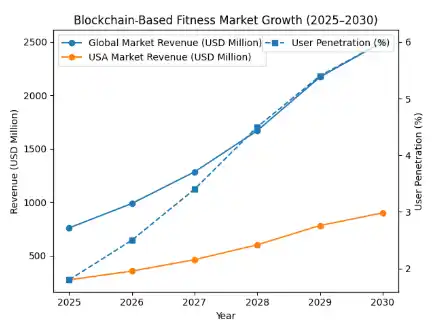
- The global blockchain-based fitness market was valued at $57.7 Billion in 2025. It will reach $2.5 billion by 2030 through increased Web3 adoption.
- The market is growing at a 88.2% CAGR between 2026 and 2034. It is possible because of blockchain wallets, fitness NFTs, and move-to-earn ecosystems.
- User penetration is currently 1.8% globally and is expected to cross 6% by 2030. The ARPU ranges between $40 and $55 due to in-app NFT purchases.
- Blockchain fitness platforms report ROI between 140% and 260% within 18–30 months. Revenue streams include tokenomics, NFT sales, and premium plans.
- The USA blockchain fitness market generated $185 million in 2025 and contributes 36% of global market revenue.
Investment in new web app ideas for the health & fitness industry is highly recommended, as the requirement is increasing. Business investors should start building blockchain fitness solutions for users looking for safe and secure healthcare services.
Key Roles of Blockchain in Fitness Industry
The role of blockchain in fitness industry is to provide security and build a link between users and service providers. Some of the important roles of this technology are discussed in this section:
1. Secure Data Management
Blockchain enables encrypted and safe storage of fitness data, giving users full control over information access. The relevance of blockchain in the fitness industry ensures higher data privacy and builds long-term trust among users.
2. Transparent Reward Systems
Various top exercise apps can issue rewards through smart contracts that are verified and fraud-proof. By integrating blockchain in health & fitness, businesses can track user activities to convert them into tokens or points, increasing trust in reward mechanisms.
3. Decentralized Ecosystem
A decentralized blockchain-based fitness ecosystem allows interaction between users and service providers, removing dependency on a single authority. The blockchain for fitness apps promotes interoperability, fair participation, and innovation across the domain.

What are the Benefits of Blockchain for Fitness?
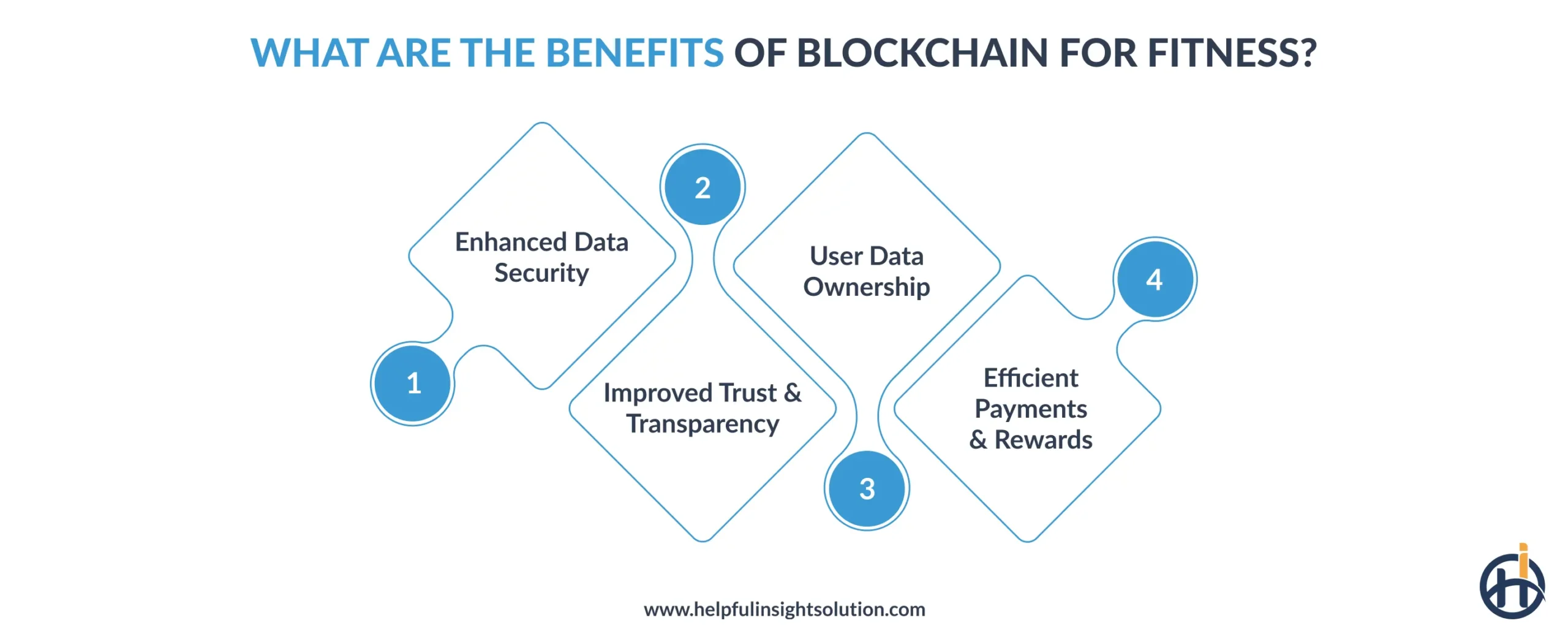
Here we are looking at the key benefits of blockchain in fitness industry, helping both businesses and users. These advantages ensure trust, flexibility, and productivity for the fitness lifestyle:
1. Enhanced Data Security
The use of blockchain in fitness app development helps to encrypt user data through decentralized nodes, preventing breaches. This ensures sensitive user information remains protected from unauthorized access.
2. Improved Trust & Transparency
You can record all healthcare activities by integrating blockchain technology in the fitness industry. Invest in calorie counter app development with blockchain ledgers to ensure trust in users and trainers.
3. User Data Ownership
The blockchain-based data privacy in fitness apps allows users to fully control and access their fitness data. This eliminates the misuse of third-party attackers and empowers users with true data ownership.
4. Efficient Payments & Rewards
Smart contracts automate payments, subscriptions, and rewards in a blockchain-powered fitness app. This reduces transaction costs, speeds up settlements, and ensures fair or tamper-proof reward distribution.
Major Use Cases of Blockchain in the Fitness Industry
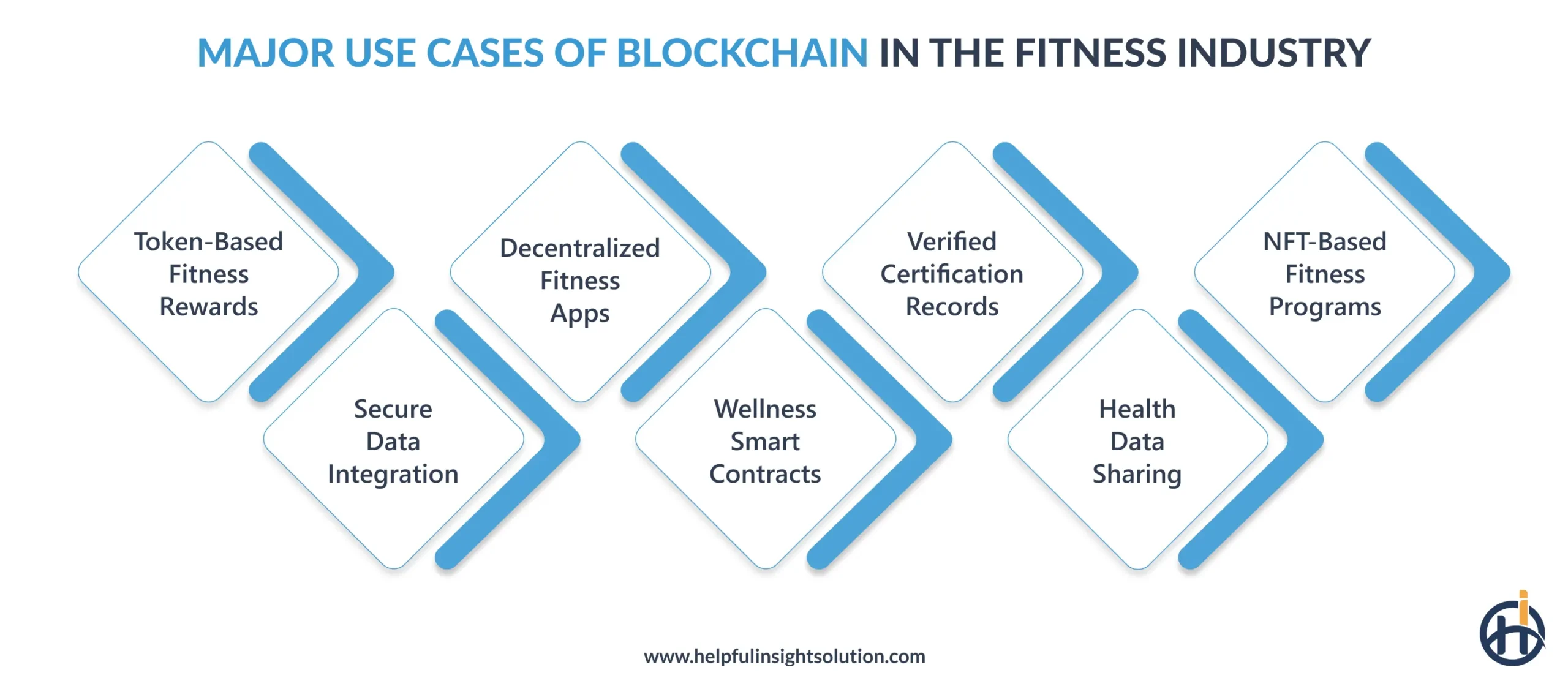
There are a lot of use cases of blockchain in fitness industry that an entrepreneur must know before investing. The applications of blockchain are discussed in this section with detailed information:
1. Token-Based Fitness Rewards
Blockchain enables fitness apps to reward users with tokens for completing workouts and achieving goals. These blockchain rewards in fitness apps help users in maintaining healthy habits regularly. The NFT rewards can be redeemed for memberships, merchandise, or premium features.
The transparent ledger in blockchain ensures rewards are fair and tamper-proof. This fitness model boosts the overall motivation and long-term user engagement.
2. Secure Data Integration
The role of blockchain in the workout industry is to provide a secure framework for integrating fitness data. For example, an app like Strava is connected with wearables and gym systems for secure data transfer. User data is encrypted and stored in a decentralized manner, reducing the risk of attacks.
They only allow authorized parties to access the information with user consent. This activity ensures data integrity and privacy across different platforms or operating systems.
3. Decentralized Fitness Apps
Several decentralized fitness apps can easily run on various blockchain networks instead of centralized servers. This transition of user-centric fitness data removes dependency on a single authority, ensuring app efficiency. Additionally, it improves system reliability through the distribution of information.
The use of blockchain in health and fitness allows users to gain more control over their data. It may reduce platform manipulation and the overall operational costs for service providers.
4. Wellness Smart Contracts
One of the best blockchain in fitness industry use cases is smart contracts that automate wellness programs. They provide subscription payments, reward distribution, and challenge completion. Once predefined conditions are met, actions are executed automatically without intermediaries.
These smart contracts increase transparency and trust between users, trainers, and platforms. Additionally, they also streamline operations and reduce administrative overhead.
5. Verified Certification Records
The blockchain technology can store trainer certifications and fitness credentials in a hyperledger facility. This allows gyms and users to instantly verify wellness qualifications without manual checks. It is beneficial to use blockchain in healthcare app development to deliver secure fitness features.
This blockchain application helps to prevent credential fraud and misrepresentation of user data. Various fitness professionals can easily benefit from globally verified wellness records.
6. Health Data Sharing
The sharing of health and fitness data is enabled by secure and permission-based blockchain technology. Users can set access requirements based on their workout history, vitals, or progress reports. It is one of the best applications of blockchain in fitness industry that ensures transparency in data sharing.
In the best workout apps for women, data sharing becomes transparent and easily traceable. This model is especially useful for collaboration with professional trainers, doctors, or insurers.
7. NFT-Based Fitness Programs
NFTs can represent exclusive workout plans, fitness challenges, or membership passes. These digital assets can be traded, upgraded, or unlocked easily based on user progress. You can implement digital assets in a blockchain-powered fitness platform to enhance their wellness experiences.
Different healthcare apps with blockchain ensure authenticity and ownership of each fitness program. This model helps to create new monetization opportunities for fitness brands and trainers.
How to Integrate Blockchain Technology in Fitness?
As a business investor, you must know how the implementation of blockchain in fitness industry works. Here, we will focus on the generally used stages of integrating blockchain in fitness platforms:
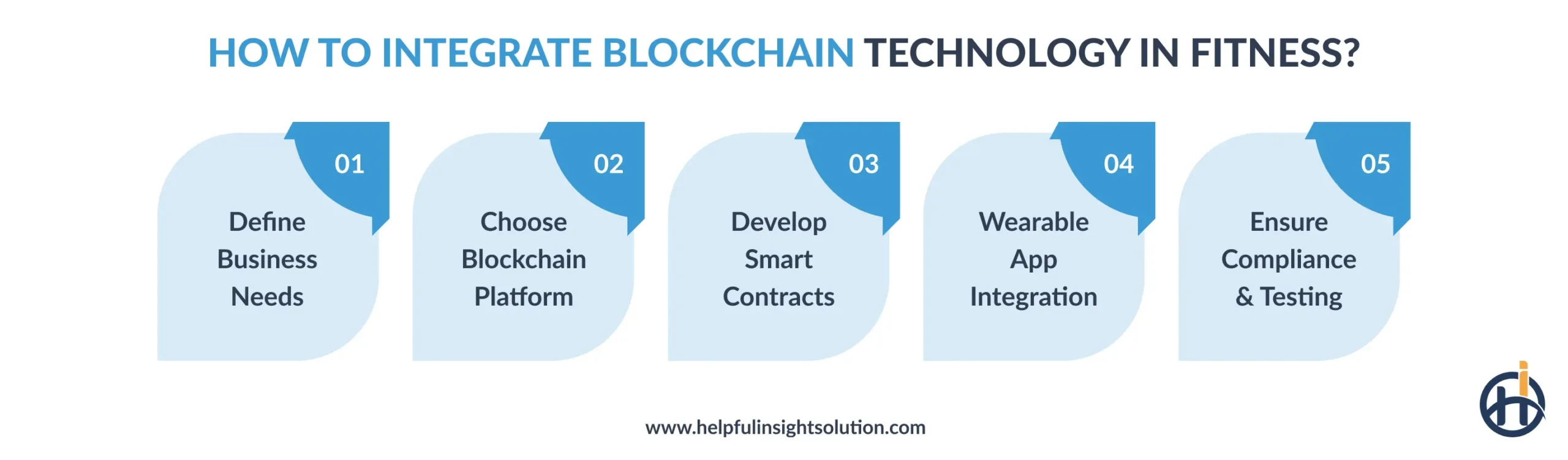
1. Define Business Needs
To build robust health and fitness apps on the blockchain, you must understand your requirements first. It is necessary to list budget specifications, available resources, and technical aspects of blockchain. Business investors should know about various tools and programming languages that are used in the blockchain. Professional Blockchain development services can help businesses build scalable, transparent, and secure fitness applications efficiently..
2. Choose Blockchain Platform
It is important to use the best blockchain technology in fitness app development to fulfill business goals. Popular tools like Ethereum, Polygon, or Hyperledger offer different benefits in terms of transaction speed, cost, and security. You can develop a fitness tracker app with a public, private, or hybrid blockchain based on data sensitivity. The right platform ensures seamless performance and future growth.
3. Develop Smart Contracts
The use of smart contracts helps to automate fitness services such as reward distribution and data-sharing permissions. They run on predefined rules, eliminating manual intervention and reducing data fraud. This shows how blockchain is used in fitness industry, ensuring transparency and trust between users and trainers. Well-audited smart contracts are essential for long-term platform reliability and efficiency.
4. Wearable App Integration
The integration of blockchain and IoT in fitness industry enables secure recording of fitness data like steps, heart rate, and workouts. Various APIs sync the Internet of Things for fitness to the blockchain without affecting user experience. This enhances data ownership by allowing users to control the sharing of their health data. Additionally, it also supports tokenized rewards for verified fitness activities.
5. Ensure Compliance & Testing
Entrepreneurs must ensure compliance with data protection regulations such as GDPR or HIPAA to handle sensitive health information. They should conduct testing to validate smart contracts, data accuracy, and system performance. You can identify vulnerabilities and prevent attacks through security audits. This is a crucial stage that also affects the cost of developing blockchain in the fitness industry.
Key Challenges with Blockchain for Fitness
It is important to know what challenges of Blockchain in the fitness industry may harm your business model. We will discuss some crucial risks with their respective solutions in this blog segment:
1. High Transaction Costs
Blockchain is a complex technology that leads to increased transaction costs for service providers. Additionally, it also increases the rate of other fitness services due to a long security process.
Solution: You must know how to monetize blockchain in the fitness industry to balance costs.
2. User Adoption & Awareness
Adoption and awareness of blockchain-powered apps is one of the biggest fitness app development challenges. It is difficult for people to understand the use and the capabilities of blockchain in fitness.
Solution: It is beneficial to provide blockchain-based fitness rewards to gather user attention and revenue.
3. Product Regulatory Issues
Some blockchain-enabled fitness apps are not regulated by official policies, lacking security compliance. This reduces trust in users and forces business investors to stop delivering fitness features.
Solution: Choose compliance-based blockchain technology in fitness apps to ensure security and privacy.

Let’s Summarize!!
Blockchain is helping businesses to enhance their mobile platforms through security and transparency of data. Different fitness apps powered by blockchain allow users to enjoy powerful features, offering decentralized fitness records, NFT-enabled gamification, and private gym options with smart contracts.
Smart coaching, tokenized rewards, and move-to-earn features for users are the future of blockchain in the fitness industry.
It is beneficial to use blockchain technology in workout app development that ensures secure governance and compliance with healthcare standards. You can approach an innovative fitness app development company to integrate blockchain into your existing systems.
At last, choosing blockchain in fitness industry is a great move to ensure trust and improve brand value with visibility.
FAQs
Blockchain technology is powerful and highly secure for fitness platforms. The main reasons behind choosing Blockchain are discussed as follows:
- It provides a continuous data log to users for easy access and tracking progress.
- Blockchain ensures the security of user information through advanced algorithms.
- The technology provides digital assets for NFT-based fitness ecommerce.
In the fitness industry, technologies like Blockchain help business investors to enhance the overall data privacy. A few security measures are described in the following manner:
- Blockchain uses smart contracts that are highly secure agreements.
- It provides advanced login services to ensure safe authentication.
- NFTs provide a dynamic record of digital assets, ensuring data privacy.
The USA is one of the largest innovation hubs in the world, offering different Blockchain-powered fitness solutions. Some of the best apps available in the country are as follows:
- Peloton: This is a personal workout app that ensures user data security and transparency.
- Strava: It is a running guide platform that uses smart contracts for secure operations.
- Google Fit: The app is common among users, offering private and safe NFTs.
The average cost to build a fitness app is between $8,000 and $25,000 without implementing the Blockchain technology. The overall development cost may increase to $30,000 or more because of advanced Blockchain-enabled security algorithms, transparent payment models, and smart contracts. Additionally, NFT development also increases the price due to encrypted methods.
A mobile fitness app with blockchain technology provides multiple secure and private features. Some of them are described in the following way:
- Smart Contract: It is a secure agreement between the service providers and users.
- Decentralization: This feature helps to keep the fitness records distributed over a server.
- Tokenized Rewards: Users get rewards in the form of digital assets and secure NFTs.