


“Implement FitTech in your wellness business to enhance user experiences and income growth.”
Fitness is not just a domain or an app category, but rather a complete lifestyle for people worldwide. It teaches how to stay physically and mentally fit through various exercises or wellness activities.
The introduction of modern technologies, such as Artificial Intelligence, which is the future of fitness, has changed the way people used to maintain their daily health and fitness. Additionally, more advanced innovations in fitness motivate entrepreneurs to deal with existing human problems.
According to a report published by the WHO, 31% of adults are suffering from physical inactivity issues across the world. The number reduced to only 7% after the implementation of the latest technologies, like IoT and AI in FitTech platforms.
This shows that a business investor must focus on the integration and development of fitness apps with modern tech stacks.
In this blog, we will provide the benefits of developing FitTech apps, the role of Artificial Intelligence in fitness technology, popular trends, and key challenges in this domain. So, let’s not waste much time and dive into the content to explore more.
Fitness App Market Recap
Without understanding the existence of the industry, businesses should not hire a fitness app development company. It is crucial to study all market stats and figures that encourage entrepreneurs to generate revenue and target users in large numbers:
-
Market Figures
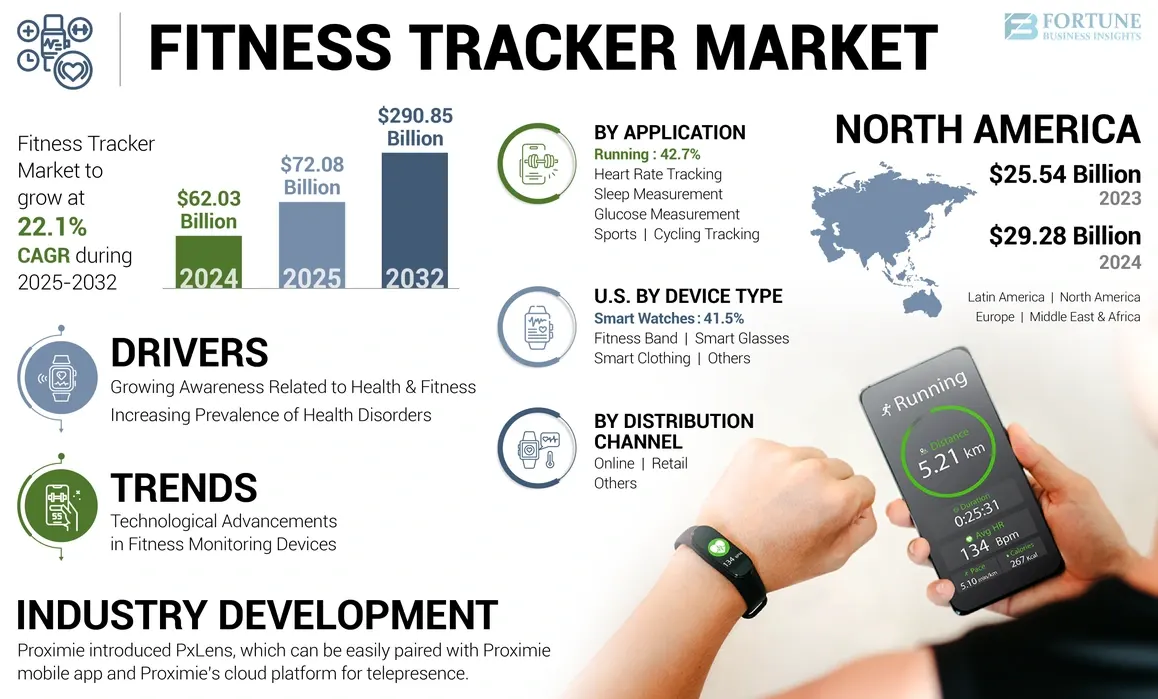
- The global fitness app and technology market is projected to cross $125 billion by 2030, driven by AI-powered personalization and wearable integration.
- By 2030, fitness apps are expected to have more than 10 billion downloads worldwide, with the USA contributing over 1.6 billion downloads.
-
Growth Factor
- The overall fitness app market is forecasted to grow at an overall 18% CAGR rate between 2025 and 2030.
- Global user penetration for fitness and health apps is expected to reach 19% by 2030, with developed markets exceeding 30% penetration.

Business Sustainability
- Well-optimized subscriptions and AI coaching are the future of fitness, projected to achieve an ROI ranging from 120% to 180% within 3 years.
- The ARPU for fitness apps is expected to rise to $52 annually by 2030, driven by premium plans and in-app services.
What are the Benefits of FitTech Development?
Investment of money in developing FitTech platforms is beneficial for entrepreneurs, as they are the future of fitness. We are observing some special advantages regarding FitTech in this section:
-
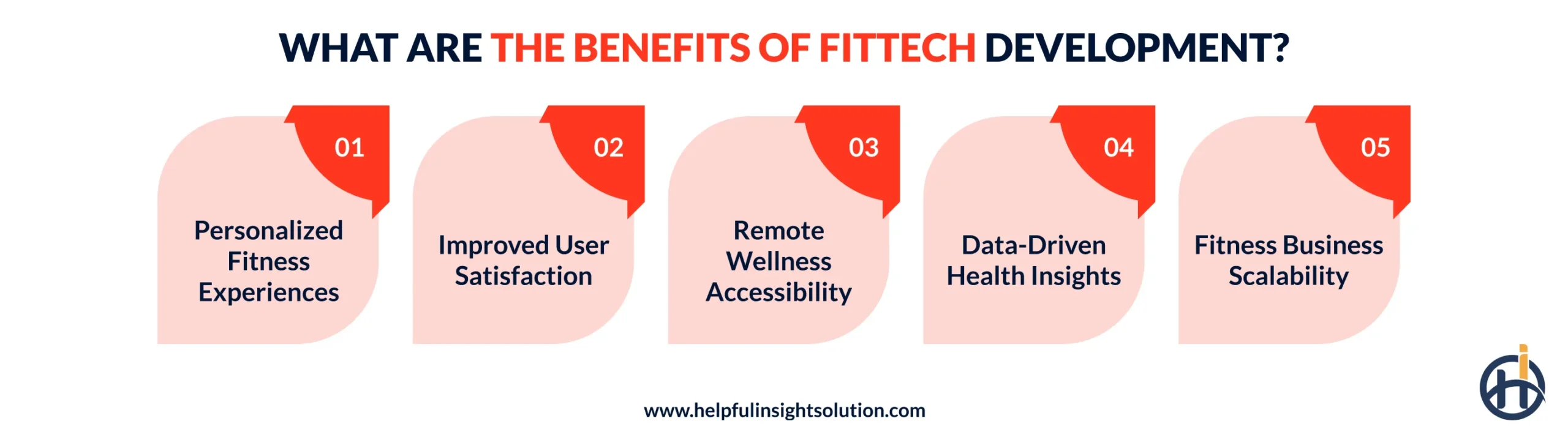
Personalized Fitness Experiences
Businesses investing in FitTech development provide workout plans, nutrition guidance, and activity tracking based on user data. This personalized fitness experience helps users achieve better results while staying motivated and engaged.
-
Improved User Satisfaction
Smart features like real-time feedback, progress tracking, and AI-driven recommendations enhance the overall user experience. As a result, users feel more supported, leading to higher engagement and long-term app retention.
-
Remote Wellness Accessibility
The use of Machine Learning in fitness allows users to access fitness programs and virtual coaching anytime and anywhere. The best workout apps for women remove location barriers and make wellness more convenient.
-
Data-Driven Health Insights
Advanced analytics in FitTech apps collect and interpret user data to deliver valuable healthcare insights. This information helps users and expert fitness trainers make informed decisions for improved wellness outcomes in the future.
-
Fitness Business Scalability
FitTech platforms enable healthcare-focused businesses to expand wellness services digitally through AI algorithms for fitness tracking and monitoring. Automation and cloud-based systems allow businesses to easily target advanced solutions, serving a larger user base.
Role of AI in Shaping the Future of Fitness
It is important to study the role of Artificial Intelligence in FitTech because AI is the technology of the future. Below are the key roles that are based on various AI-enabled components:
-
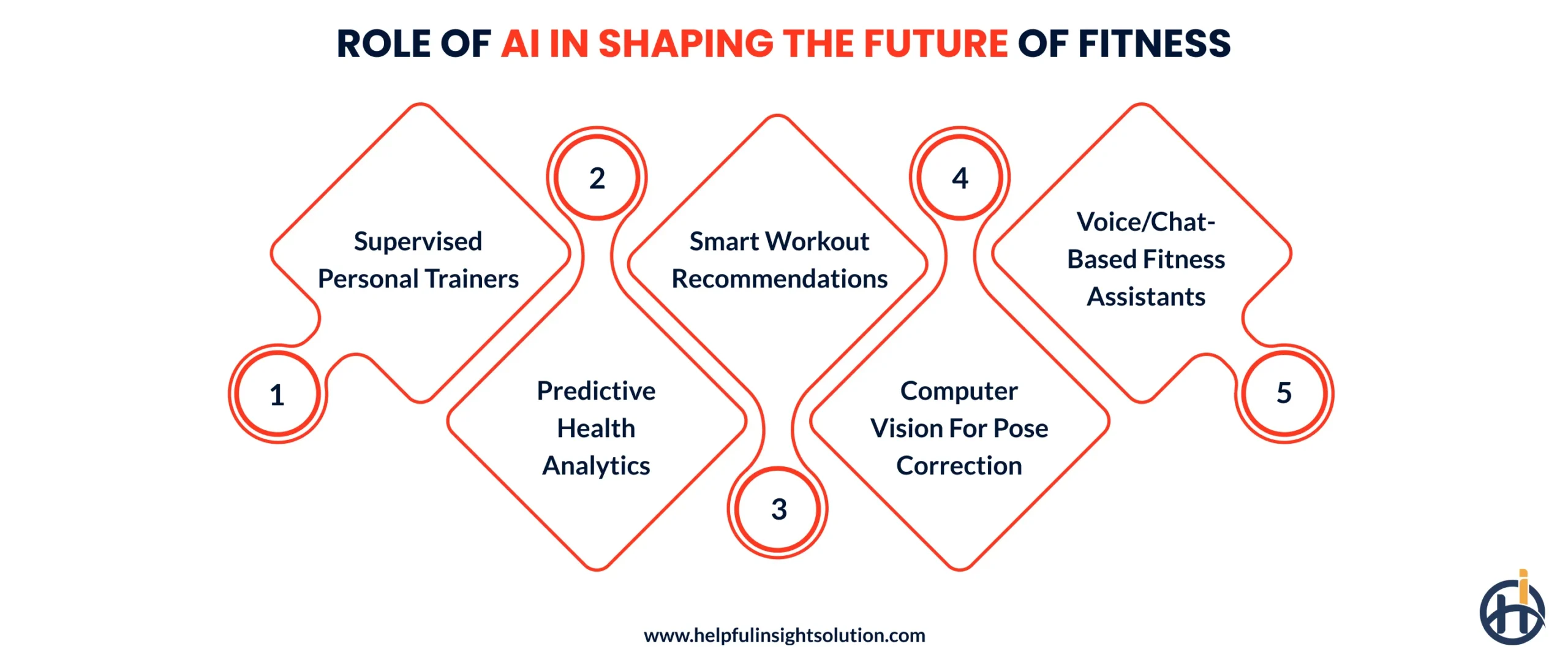
Supervised Personal Trainers
AI-powered supervised personal trainers use machine learning to analyze user data such as fitness levels. They adapt training programs, ensuring exercises are safe, effective, and aligned with individual goals.
The fitness solutions using Machine Learning and AI create a highly personalized coaching experience without the need for constant human supervision.
-
Predictive Health Analytics
Predictive health analytics leverage AI algorithms to assess historical fitness and health data to forecast potential risks and performance outcomes.
This information helps users prevent physical injuries, manage fatigue, and optimize mental recovery. By identifying healthcare patterns at early stages, AI supports proactive and long-term wellness planning.
-
Smart Workout Recommendations
AI-driven smart workout recommendations suggest exercises, intensity levels, and training schedules based on user preferences. The AI in the fitness industry continuously learns from user interactions to keep workouts engaging and goal-oriented. It is one of the important benefits of AI in FitTech solutions that provide better consistency, motivation, and measurable results to users.
-
Computer Vision for Pose Correction
Computer vision technology enables AI systems to analyze body posture and movement during workouts through cameras or sensors. The algorithm detects incorrect form and provides real-time corrective feedback to reduce injury risks.
This feature provides accuracy and transparency in home-based or virtual fitness training sessions.
-
Voice/Chat-Based Fitness Assistants
Voice and chat-based fitness assistants use natural language processing to interact with users during workouts or planning sessions. They easily answer fitness-related questions, guide exercises, and provide wellness motivation.
So, you must invest in building an AI fitness app, offering conversational support to enhance accessibility and create a more engaging fitness experience.
Modern FitTech Trends for 2026
Various new-age FitTech trends are the future of fitness platforms, attracting both users and revenue for businesses. In this section, we will look at the top FitTech trends that are most followed:
-
AI Hyper-Personalization
AI hyper-personalization in FitTech uses machine learning to analyze user behavior, fitness levels, and health data. The use of machine learning in fitness apps helps to deliver customized workout plans, nutrition guidance, and recovery strategies tailored to individual goals.
Adaptive AI continuously refines recommendations based on performance and feedback. This trend significantly boosts user engagement, motivation, and long-term fitness adherence.
Industrial Impact: This enables fitness companies to deliver real-time, data-driven workout and nutrition plans, boosting user engagement and retention.
-
Wearable Fitness Ecosystems
Wearable fitness ecosystems connect smartwatches, fitness bands, and health sensors into a unified platform. This AI-powered fitness technology regularly tracks health metrics such as heart rate, sleep patterns, activity levels, and stress.
A fitness app like MyFitnessPal easily syncs user data to deliver valuable results and personalized coaching. In 2026, interoperability across devices will define superior user experiences.
Industrial Impact: It creates unified health platforms by syncing wearables, apps, and services, allowing businesses to monetize continuous user data insights.
-
AR/VR Workouts
AR and VR workouts transform traditional exercise into interactive wellness and fitness experiences. Users can train in virtual gyms, participate in guided simulations, or compete in various gamified fitness challenges to top the leaderboard.
This technology enhances motivation by making workouts engaging and enjoyable. AR/VR also enables realistic remote training and virtual personal coaching.
Industrial Impact: They transform traditional workouts, helping fitness brands reduce downfall and attract younger generations.
-
IoT-Based Gym Equipment
IoT-based gym equipment uses connected sensors to monitor performance, usage, and durability of equipment. Weight machines can adjust resistance through the use of AI in smart fitness equipment, focusing on user profiles and tracking workout accuracy.
Gym owners benefit from predictive maintenance and usage analytics. This smart infrastructure improves safety, efficiency, and personalized training outcomes.
Industrial Impact: Empowers gyms with smart machines that track performance and maintenance, improving operational efficiency and member outcomes.
-
Mental Wellness Integration
Mental wellness integration combines physical fitness with mindfulness, meditation, and stress management tools. You must develop the best meditation app that includes mood tracking, breathing exercises, and guided relaxation sessions.
The machine learning fitness technology helps users balance mental and physical health. This holistic approach addresses burnout and promotes overall well-being.
Industrial Impact: Expands fitness platforms into holistic health solutions, increasing app stickiness and opening new revenue streams.
-
Digital Fitness Models
Digital fitness models focus on app-based training, virtual coaching, and on-demand workout content. Various subscription-based platforms like Fitbit and others provide flexibility in wellness training and access to expert trainers globally.
These models support hybrid fitness by combining online and offline experiences. In 2026, scalability and personalization will drive the success of digital fitness platforms.
Industrial Impact: Enables scalable, subscription-based fitness services that lower infrastructure costs while reaching global audiences.
Top 5 FitTech Innovations
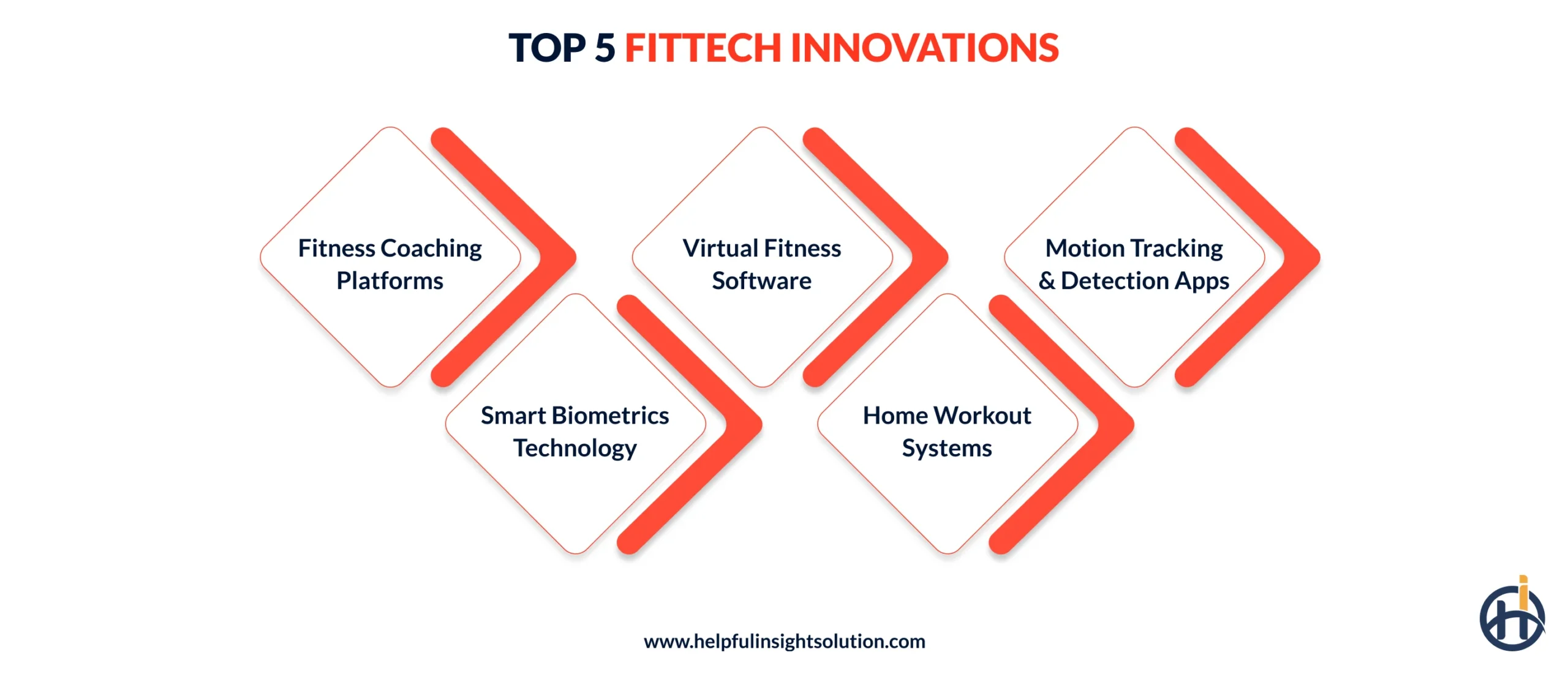
The use of AI in FitTech gives rise to the latest innovations that target specific user interests and preferences. Here, you will explore the best fitness innovations with their respective examples:
-
Fitness Coaching Platforms
Fitness coaching platforms use AI and data analytics to deliver personalized workout plans, nutrition guidance, and real-time performance insights. These platforms adapt daily wellness routines based on user progress, goals, and health metrics.
The AI integration for fitness platforms helps users stay motivated through virtual trainers, reminders, and progress tracking.
Example: The Fitbit app connects users with real human trainers who deliver personalized workout plans and coaching via the app.
-
Smart Biometrics Technology
Smart biometrics technology captures real-time physiological data such as heart rate, sleep patterns, oxygen levels, and stress indicators. This data-driven approach helps users understand their body responses during workouts and recovery sessions. It enables more precise training decisions and improved overall fitness outcomes that enhance user experiences.
Example: WHOOP tracks heart rate variability, sleep, and recovery to provide data-driven fitness insights in real time.
-
Virtual Fitness Software
The virtual fitness coaching software offers attractive workout experiences through live-streamed classes, on-demand sessions, and AI-powered instructors. Users can train anytime through top exercise apps that deliver similar physical training features for fitness and wellness. It bridges the gap between user convenience and professional fitness guidance.
Example: Peloton offers live and on-demand virtual workout classes with real-time performance tracking and leaderboards.
-
Home Workout Systems
Home workout systems combine connected equipment, interactive screens, and guided programs for a complete virtual fitness experience. These systems eliminate the need for gym memberships, offering structured and goal-oriented workouts. They provide smart workout optimization, flexibility, privacy, and consistent training results.
Example: The 7 Minute Workout app uses AI-powered digital weights and an app to guide strength training workouts at home.
-
Motion Tracking & Detection Apps
Various motion tracking and form detection apps use computer vision technology and sensors to analyze body movements in real time. They provide instant feedback on body posture, curvature, and exercise accuracy. This technology helps reduce injury risk and improve workout efficiency without requiring the integration of wearable devices.
Example: Freeletics uses smartphone sensors and AI to analyze body movements and improve workout form without wearables.
Potential Risks and Challenges for FitTech
There are several market risks involved in the integration of AI in FitTech platforms. We will discuss commonly identified challenges with their respective solutions in this section:
-
Data Privacy Concerns
Several fitness platforms offering FitTech services have data security issues because of open-source features. Additionally, they do not ensure proper authentication due to version or system updates.
Solution: It is important to implement standard encryption methods to protect sensitive user data.
-
High Operational Costs
The fitness app development cost is high, as the integration of AI technologies is complex. This requires additional infrastructure that can handle fast computation and easily manage automation methods.
Solution: Use deep learning for fitness that analyzes useful information, reducing the total expenses.
-
User Adoption Issues
People avoid using FitTech apps due to market pressure, initial reviews, and the complexity of features. It reduces the overall engagement and retention rate, leading to a decrease in revenue and business growth.
Solution: Perform brand marketing through freemium models and advertisements to attract users.
-
Technology & Accuracy Limitations
The use of AI and machine learning in the fitness industry with low-grade algorithms leads to technical limitations. It provides inaccurate data that deviates from the actual readings and expected results.
Solution: Build improvised AI models to learn and interpret data to provide precise fitness outcomes.
In a Nutshell!!
To make successful fitness solutions using Machine Learning and other AI components, it is necessary to make a detailed plan with specific budget requirements. There are more trends available for FitTech platforms that you should observe before initiating the development process. AI, IoT, AR/VR, and other technologies help in building the future of fitness platforms with modern and user-friendly models.
The use of Deep Learning in fitness technology ensures accurate and complete analysis of user healthcare data to deliver personalized workout or wellness plans. So, you should start finding new web app ideas for the health & fitness industry that help increase user engagement, revenue growth, brand visibility, and overall industry value.
FAQs
People in the USA use multiple fitness apps to fulfill different purposes, like weight loss and diet planning. Some of the best mobile fitness apps are as follows:
- Fitbit: It is an IoT-enabled platform for fitness that can be connected with hardware devices.
- Strava: Developed for professional athletes who are focused on running and cycling.
- Nike Training Club: This platform provides user-centric workout plans and exercises.
For building a FitTech platform with limited features and AI capabilities, the average time required is between 2 months and 4 months. The overall development time may increase to 6 months or more, depending on several market factors. These include platform complexity, the development process, cost, and business requirements.
Artificial Intelligence is one of the most powerful technologies that improves the working efficiency of a fitness application through advanced algorithms. It uses Machine Learning and other components to learn user data, develop AI models, and predict personalized results. This technology is the future of fitness platforms that ensures security and accurate forecast prediction.
The maintenance cost of the FitTech software is 15-20% of the original development cost. This is because several factors, like bug fixing, feature enhancements, security checks, and production management, are responsible. For a project of $20,000, the expected maintenance cost is between $3,000 and $4,000, which may expand due to user needs.
AI, other than user personalization, also secures the fitness app from unauthorized access. It uses the following methods to prevent data fraud and detect security attacks:
- Pattern recognition algorithms safeguard user data through human gestures.
- Multi-factor authentication uses learning methods to avoid unethical access.
- Biometrics through Computer Vision ensures the correct analysis of user information.