

Retail is one of the industries that has rapidly transformed as technology continues to evolve. The rise of e-commerce and mobile shopping has forced retailers to rethink traditional business models and adopt digital tools.
Moreover, the introduction of AI in retail has made this change even faster by helping retailers understand customers better, improve daily operations, and offer more personalized shopping experience across all channels.
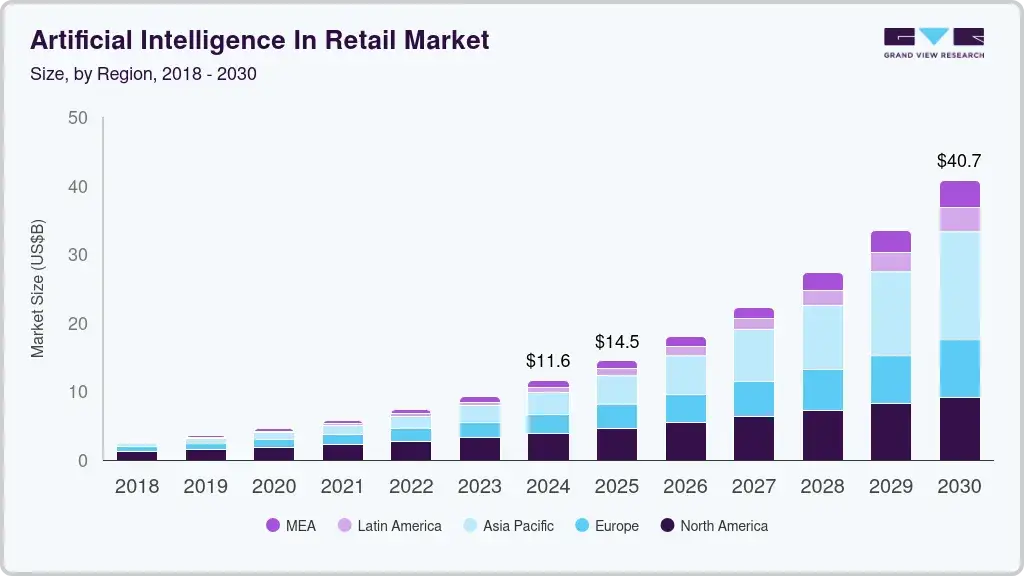
It would be right to say that artificial intelligence in retail is changing how customers shop and how businesses work. This is one reason why AI in retail market is growing very fast and is expected to reach $40.74 billion in 2030 from $14.5 billion in 2025.
Today, customers shop in many different ways, whether in stores, through apps, or on websites. To stay competitive, retailers use AI to seamlessly connect all these shopping channels. As shopping habits continue to evolve, more retailers are expected to adopt AI in the future.
So, if you are a retailer, by not adopting AI retail solutions you are really missing out on significant opportunities to enhance the customer experience, and increase profitability. It has become a key technology for success in modern retail.
Want to know more about AI in retail industry? Then keep reading this blog until the end.
What is AI in Retail?
AI in retail simply means using artificial intelligence to help physical and online stores work better and serve customers faster. It uses technologies like machine learning and natural language processing to understand customer needs, offer personalized services, and make shopping easier and more enjoyable.
Let’s understand AI in retail with an example. When you shop online on a website or app, you might notice that it shows products you may like based on what you viewed or bought before. This is AI in retail business helping find products faster and more conveniently.
The impact of AI in the retail industry is huge and has shown positive results for those who have adopted it. About 69% of retailers reported an increase in annual revenue thanks to AI, while 72% saw a decrease in operating costs after using AI solutions. This clearly shows that AI is becoming a key technology for retail success.
Benefits of Using AI in Retail Business
The combination of AI and retail is achieving things that were unimaginable for retailers in the past. Artificial intelligence has given retailers tools to handle the most common challenges they face with ease, such as frequent market changes, managing supply chain issues, and better understanding customer behavior.
Adopting AI in the retail sector can bring many benefits, which include:
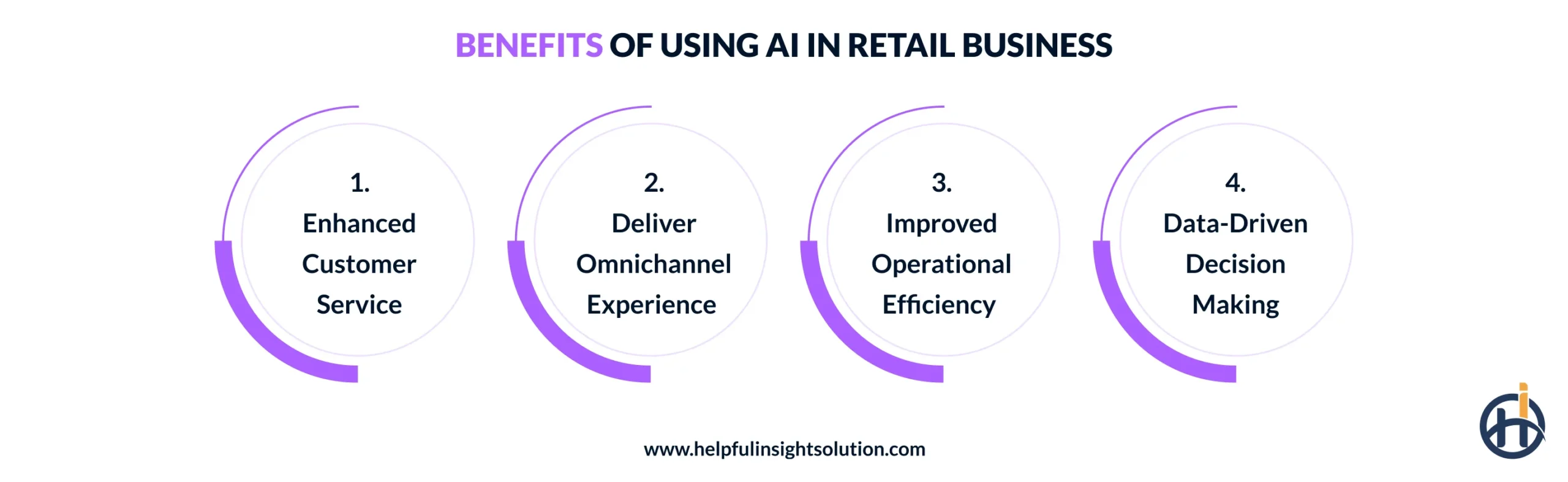
1. Enhanced Customer Service
With AI chatbots and virtual assistants, businesses can help customers anytime, day or night. They answer questions, suggest products, and guide shoppers through their purchases. When customers get quick help, they feel happy and are more likely to return, which improves their overall experience with your brand.
2. Deliver Omnichannel Experience
AI in retail collects and combines data from multiple touchpoints to give shoppers a smooth, consistent experience. Whether people browse online and buy in-store or the other way around, AI keeps everything simple. It shares information across channels so shoppers don’t get confused. This unified system makes shopping easier and encourages more purchases.
3. Improved Operational Efficiency
AI solutions for retail make managing daily operations much easier by automating repetitive tasks. AI can check inventory, manage deliveries, and handle other routine work automatically. This saves time, reduces mistakes, and allows retailers to get products to customers faster.
4. Data-Driven Decision Making
Running a retail business requires making many decisions. AI in retail operations helps make right decisions by analyzing large amounts of data, like sales reports and market trends. As a result, stores can plan better, set correct prices, manage stock wisely, and create strategies that improve sales and customer satisfaction.
Top Use Cases of AI in Retail Industry
Artificial intelligence can be applied in various areas of retail operations, with its uses extending far beyond just automation.
In this section, we will explore the key AI applications in the retail industry. Let’s have a look:
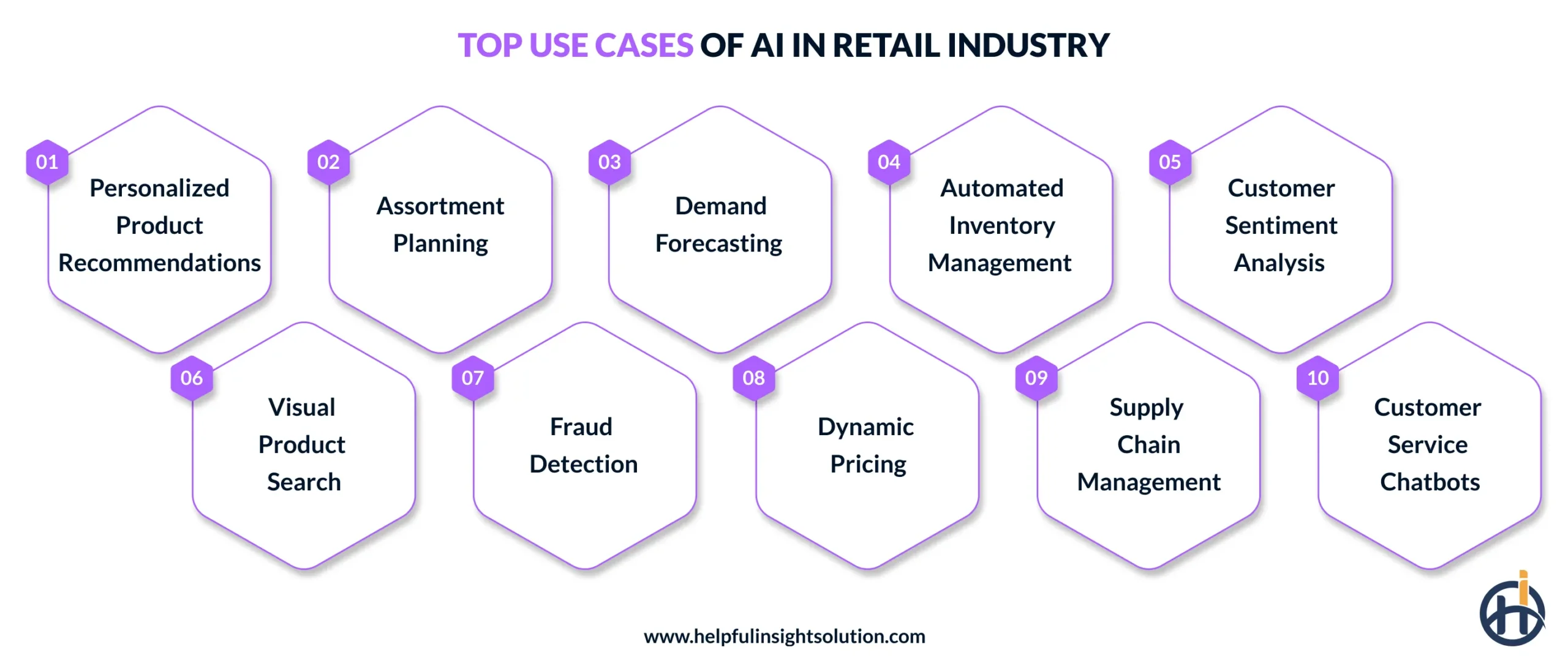
1. Personalized Product Recommendations
Customer nowadays expect personalized services which are difficult to achieve manually. AI in retail helps stores understand what customers like and need by tracking their shopping habits. It looks at things people have bought or searched for before and suggests products they might like in the future.
2. Assortment Planning
It can be really confusing for retailers to select the best mix of products to sell on their website or in store. But not with AI as it ensures that stores have the right products available at the right time, improving sales and customer satisfaction. For example, it can show that people are more likely to buy headphones with a smartphone.
3. Demand Forecasting
Using AI for demand forecasting especially in retail helps predict how much of a product will be needed by studying multiple factors like sales data and weather conditions. This helps retailers stock up on what customers want before it’s too late, while ensuring customers always find what they’re looking for, no matter the season.
4. Automated Inventory Management
Having stock ready when customers demand it is vital for retailers but sometimes due to misjudgement they don’t have stock which customers want. Using AI retail solutions can solve this problem as it instantly shows what’s in stock and what’s running low. It looks at past sales and predicts what to order next.
5. Customer Sentiment Analysis
It’s hard for human salespeople to know exactly how a customer feels when interacting with your brand or a product. Generative AI in retail helps by understanding customer emotions through their reviews, comments, and messages. This insight helps stores improve their products and services.
6. Visual Product Search
Give your customers extra convenience by allowing them to shop at your retail store using visual search. Through automated AI retail solutions customers take pictures of items they like and find similar ones to buy. AI analyzes the image to identify products with similar colors or shapes. Customers don’t need to describe what they want, and stores can show exactly what the customer is looking for.
7. Fraud Detection
With the rise of online shopping, fraud has also increased, leaving customers uncertain about whether to trust your brand. To boost customer confidence, implement artificial intelligence retail solutions. AI protects customers by monitoring suspicious or unusual activities in purchases. For retailers, it helps verify that customers are who they say they are, preventing fraudulent purchases.
8. Dynamic Pricing
Another popular AI in retail use cases is price optimization, where AI helps stores adjust prices based on factors like what competitors are charging, how much of a product is in stock, and how often customers buy it. It can even change prices depending on the time of year or current shopping trends. This helps stores increase profits without losing customers by setting the right price.
9. Supply Chain Management
By using AI in supply chain management, retailers can easily track which products need to be restocked, when to order more, and where to deliver them. AI predicts what customers will want next and ensures that popular items don’t run out. With all the changes happening, such as weather conditions and global disruptions, AI helps retail stores adjust quickly and keep operations running smoothly.
10. Customer Service Chatbots
Artificial intelligence in retail has changed the way businesses offer customer support. AI chatbot development services give retailers the tools that are available 24/7 to assist customers and answer their questions anytime. These chatbots can help customers find product information, place orders, or solve problems without the need to wait for a human.
Challenges of Implementing Artificial Intelligence in Retail Industry
Integrating artificial intelligence into retail is no simple task. AI developers face several challenges when working to bring AI solutions to the retail operations. Some of the main obstacles they encounter include:
| Challenge | The Impact | The Solution |
| Low Data Quality | Poor or fragmented data leads to wrong AI results. | Retailers need to focus on collecting high-quality data and organizing it well. |
| Integration Complexity | Hard to integrate AI into old, outdated retail management systems. | Retailers should update systems first to ensure AI works smoothly. |
| Resistance to Change | Employees may resist changes if they fear losing their jobs. | Clear communication and training can help staff adopt AI in retail and feel secure. |
| High Implementation Cost | Big investment upfront can feel risky and hinder small retailers capability to implement AI. | Start with small AI projects, test them, and gradually expand to keep costs manageable. |
What Is the Future of AI in the Retail Industry?
In the present, artificial intelligence in the retail industry is bringing positive transformation, providing new ways for retailers to improve their service offerings. Trust us, this is just the beginning, as in the future, AI in retail can do things that are unimaginable or limited to our imaginations:
Let’s explore what we can expect in the future of AI in retail:
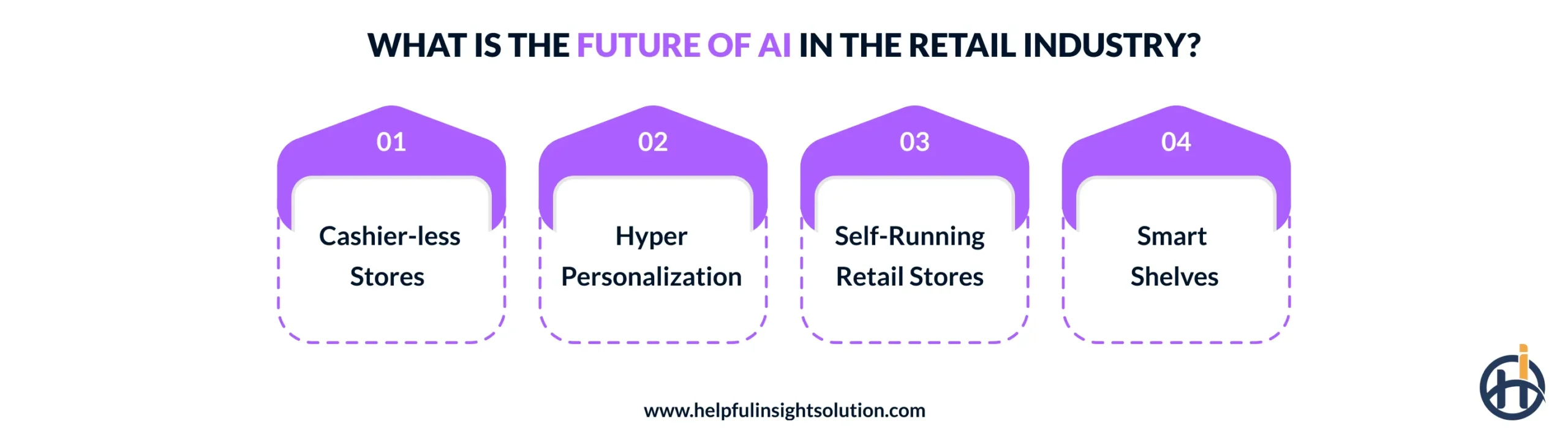
1. Cashier-less Stores
In the future, AI-powered stores could automatically charge customers for the items they pick up. Using sensors and cameras, these stores track what customers take and charge them as they leave.
2. Hyper-Personalization
We can expect to see AI-driven personalization in retail go to the next level. AI systems look at your browsing history and past purchases to create offers exclusively for you.
3. Self-Running Retail Stores
The future of shopping might not require staff to be available 24/7. With AI, stores could run on their own, everything from inventory to checkout happens automatically.
4. Smart Shelves
In the coming years, AI will help retailers keep track of stock by automatically detecting when items are low. When supplies run out, shelves will reorder products automatically.
Why Choose Helpful Insight to Develop AI Solutions for Retail?
AI in retail has brought a 360 degree transformation to how retail businesses operate and serve customers. Retailers who invest in AI implementation today will see benefits immediately and in the future, as AI keeps improving, making shopping experiences smarter and more personalized for everyone.
But to maximize the potential of AI in retail, successful implementation is very important and
that’s where our AI development company comes in. We are a leading provider of AI development services, helping retail businesses of all sizes make the most of AI’s capabilities.
Our AI developers have the expertise to build custom, AI retail solutions and to integrate artificial intelligence into your existing system. Whether your need is managing inventories or deliver personalized services, we will ensure the AI solution delivers maximum value to your business.
Connect with our team today to learn how we can help implement AI in your retail business.
FAQs
Every sector is moving towards digital transformation, AI in retail is essential to stay competitive and survive. AI retail technology helps retailers provide personalized services, improve in-store experiences, and meet changing customer needs while enabling smarter marketing. Simply put, artificial intelligence helps solve many challenges that the retail industry faces.
AI retail systems collect and analyze huge datasets using machine learning to understand customers and store operations. It then suggests products, adjusts prices, manages stock, and even runs chatbots. AI helps stores work smartly and provides a frictionless shopping experience to customers both online and in-store.
Yes, it is possible to integrate artificial intelligence into your current systems or workflow. AI developers at Helpful Insight will ensure the AI integration process is completed smoothly without disrupting your retail operations.
Some of the best AI in retail real-life examples are:
- Sephora: Suggests products using customer preferences and browsing patterns.
- H&M and Best Buy: Recommend items based on past shopping habits
- Walmart: Uses AI to predicts demand and reduce waste.