

Almost every industry is working to digitize its operations in today’s AI and mobile-first world, and healthcare is no exception. In this, healthcare mobile apps play a crucial role. These apps have completely transformed the way care is delivered.
All you need to do is download a healthcare app on your phone, and you can get care and assistance no matter where you are in the world.
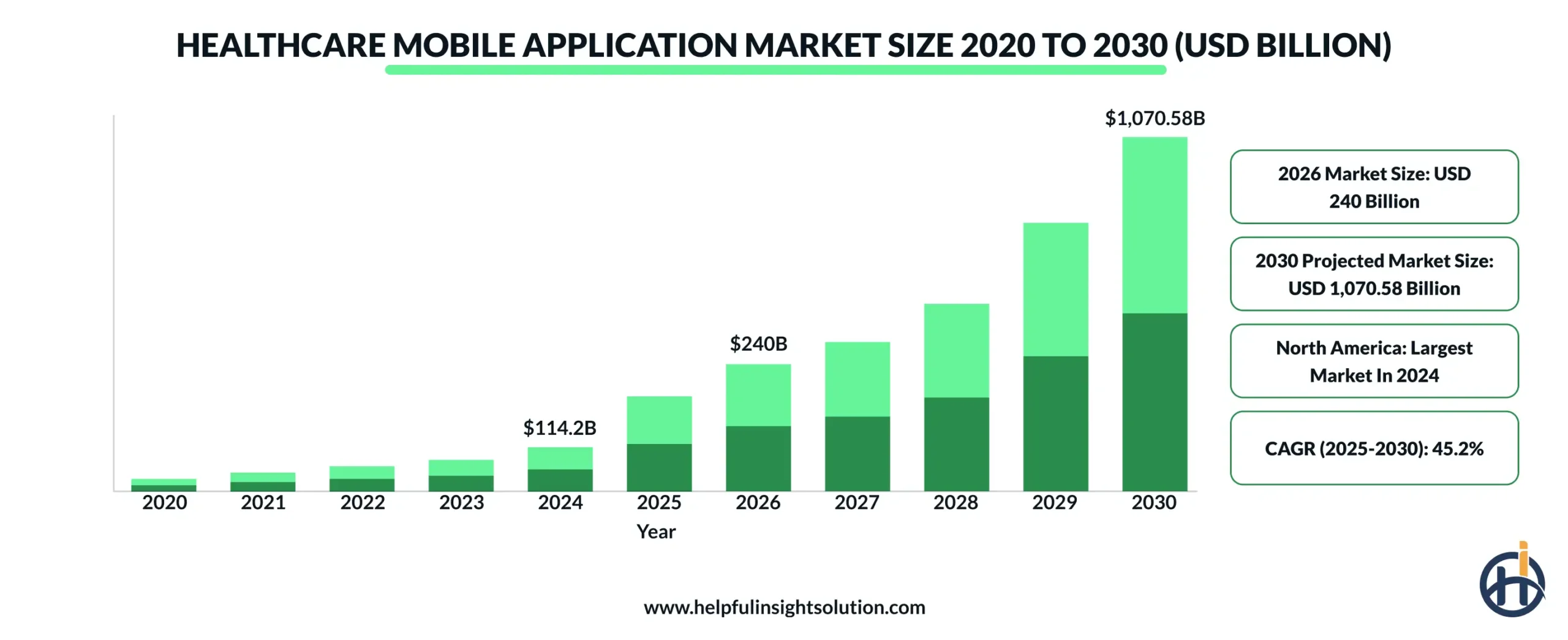
The growing importance of healthcare app development is clear from market projections, which are expected to reach $1,070.58 billion by 2030. This shows how much people rely on technology to access healthcare services. And why not?
mHealth solutions make healthcare more convenient, accessible, and efficient, offering better care and empowering patients to manage their health more effectively. It’s a win-win for both patients and healthcare providers.
For healthcare businesses, including hospitals and healthtech startups, having an app is essential to meet rising patient expectations and improve care services.
However, simply developing an app is not enough; creating a user-centric, value-driven solution is key to achieving long-term success in today’s digital healthcare landscape.
So, let’s get started.
What is Healthcare App Development?
Healthcare app development refers to the process of creating secure, user-friendly, and compliant apps that enhance patient engagement, streamline care delivery, and improve overall healthcare service quality.
These apps can be used by care providers to manage patients and everyday tasks, as well as by anyone who wants to take care of their health and manage medical conditions.
With mHealth apps, you can even talk to doctors online or get reminders for checkups. These apps are designed to help patients and doctors stay connected and improve health outcomes. There are different types of healthcare mobile apps that we will discuss in detail in the next section.
Types of Healthcare Mobile Applications
As healthcare app solutions serve both patients and healthcare providers, there are various types of healthcare and medical apps. These apps are designed to address different needs and help manage various aspects of healthcare.
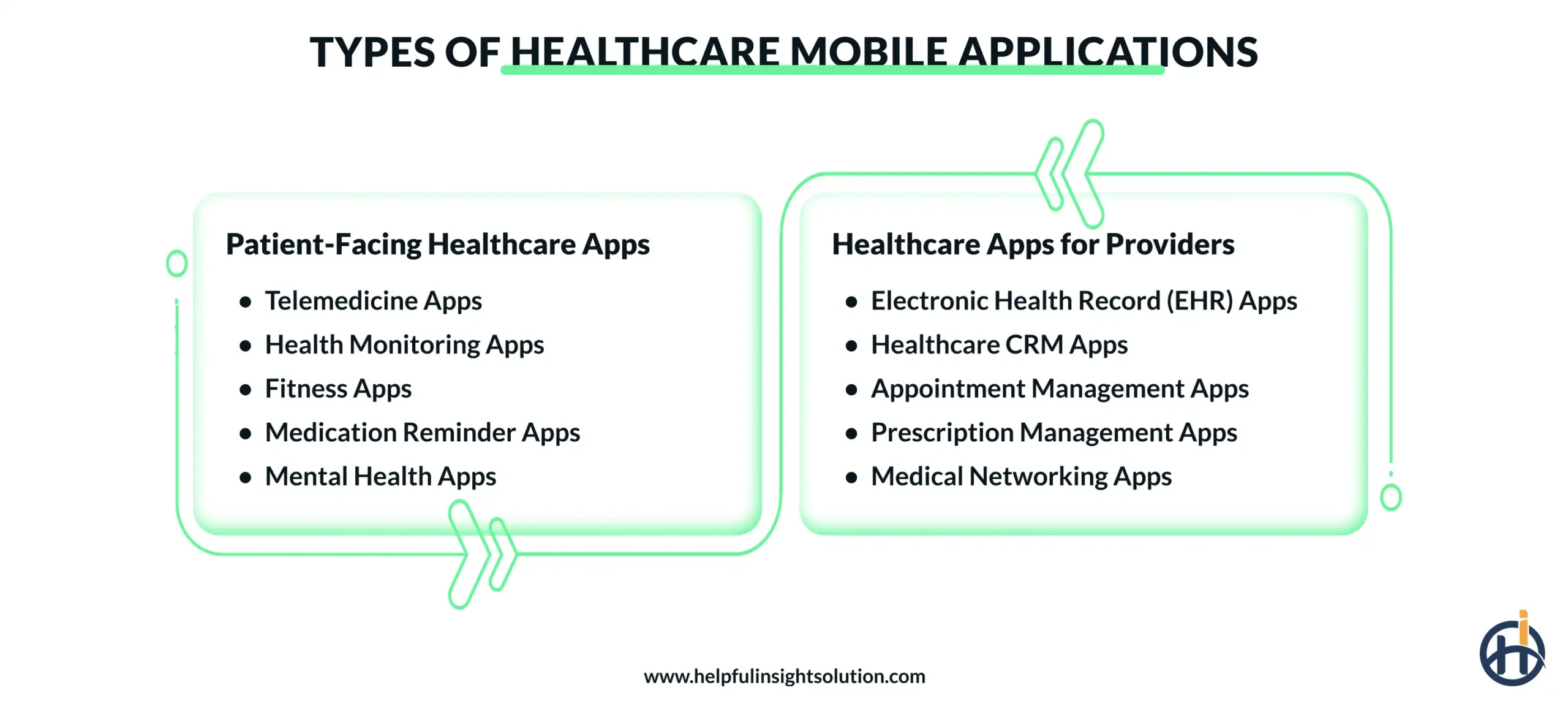
1. Patient-Facing Healthcare Apps
Healthcare apps for patients are built to help patients and their caretakers to better manage medical conditions and communicate with healthcare providers effectively. Let’s have a look at different types of healthcare apps for patients and general users:
2. Telemedicine Apps
Telemedicine apps let users connect with healthcare professionals through video call or chat. This helps get medical advice from home without needing to travel. You can ask about routine check-ups, medicine refills, or even get mental health support without leaving your house.
“The global telemedicine market is growing quickly, from $124.01 billion in 2026 to $532.08 billion by 2034. This presents a huge opportunity for telemedicine businesses to expand and meet the rising demand for affordable and convenient telemedicine solution.
Example: Teladoc and Doctor On Demand
3. Health Monitoring Apps
Health monitoring apps track important health information like heart rate, symptoms, medicines, and daily activity. They remind patients to take their medicine and help manage health problems like diabetes. Patients can also share their data with doctors for better care.
Example: Ada Health
4. Fitness Apps
Easily find a wide range of exercises and track your progress with a fitness mobile app, without needing to go to the gym. These apps are designed to make staying fit hassle-free by providing all the tools in one place.
You can also track calories burned, steps walked, and other metrics like heart rate and sleep patterns with fitness and activity tracking apps.
Example: Fitbit and Strava
5. Medication Reminder Apps
Medication reminder apps help patients remember to take their medicine on time. They send alerts when it’s time for a dose, track pills, and remind users when to refill. These apps help prevent missed doses and improve health by ensuring medications are taken as prescribed.
Example: Medisafe and MyMeds
6. Mental Health Apps
Better manage stress or anxiety with mental health apps. These mobile apps help users feel better by offering activities like deep breathing and therapy exercises. Whenever you feel anxious, these apps can provide support anytime, anywhere, and can even complement traditional therapy sessions.
Example: Calm and Headspace
7. Healthcare Apps for Providers
Healthcare app development for care providers is designed to help medical professionals perform their jobs better and deliver the best care. Below are different types of healthcare apps for doctors, nurses, and other medical staff.
8. Electronic Health Record (EHR) Apps
EHR apps help healthcare professionals manage and view patient health details like medical history and test results in one single platform. They make it easier to access patient data quickly without wasting time and let doctors to make better decisions.
Example: Cerner’s PowerChart Touch
9. Healthcare CRM Apps
Managing patient data can be difficult for hospitals and may cause confusion at times. Healthcare CRM apps help providers keep all patient information in one place. These apps improve communication between patients and doctors and make managing follow-ups easier.
10. Appointment Management Apps
With so many daily appointments, doctors can sometimes miss a scheduled visit. Appointment management apps help solve this problem. These apps allow doctors to easily manage appointments, organize schedules, and reduce wait times.
Example: Zocdoc and MyChart
11. Prescription Management Apps
Prescription management apps help doctors choose the right medication and track when patients need to take them. These apps make it easier to send prescriptions electronically, check for potential issues with medications, and avoid mistakes.
12. Medical Networking Apps
Medical networking apps allow healthcare professionals to connect with one another. They can ask questions, share knowledge, and discuss patient care. These apps help improve teamwork and communication, making it easier for doctors to collaborate and make progress in the healthcare field.
Example: Doximity and Sermo
Top Benefits of Healthcare Apps for Providers and Patients
Mobile app development for healthcare offers numerous benefits for both medical professionals and patients. When patients are satisfied, it ultimately contributes to the success of healthcare businesses.
In this section, we will explore the key advantages of healthcare mobile app development.
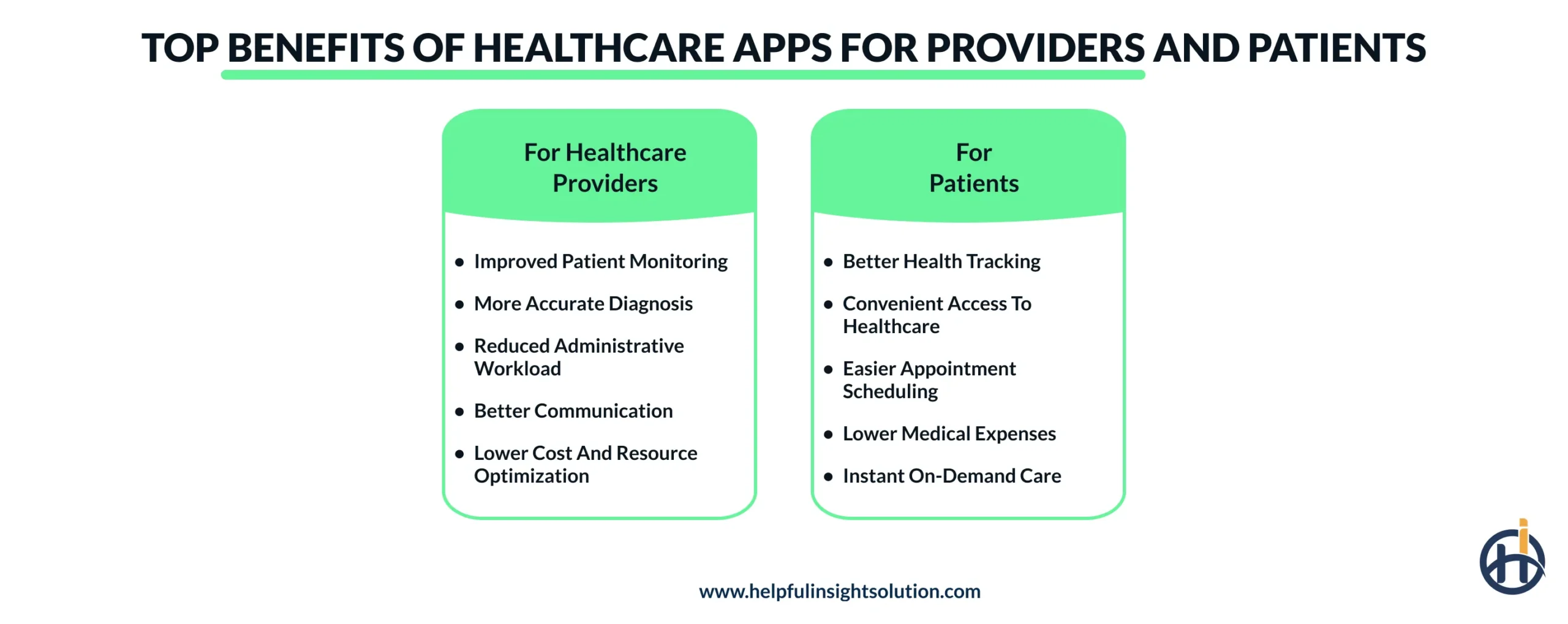
A. For Healthcare Providers
1. Improved Patient Monitoring
Healthcare apps help doctors take care of patients even when they are at home. Doctors can see updates like heart rate, sugar levels, or symptoms anytime. Patients can share how they feel using the app. This helps doctors act early and give better care without delay.
2. More Accurate Diagnosis
Medical mobile apps help healthcare professionals diagnose diseases more accurately and quickly. With smart built-in diagnostic tools, these apps help create better treatment plans and improve patient care. They also reduce mistakes in diagnosis and help doctors make better decisions.
3. Reduced Administrative Workload
In hospitals and clinics, there is a lot of paperwork to manage. Custom healthcare app development helps simplify daily paperwork for staff by automating tasks such as appointment scheduling, form filling, and record updates. This not only saves time but also reduces stress and burnout among staff.
4. Better Communication
With healthcare apps, care providers can easily connect with patients, no matter where they are, using video calls or messages. Not only patients, but healthcare staff like doctors and nurses can also stay on the same page. Everyone receives information quickly, which reduces confusion and ensures patients get the right care on time.
Read Also:- How to Build Healthcare Communication Platforms?
5. Lower Cost and Resource Optimization
Healthcare apps for doctors help save money by reducing paper work, repeat visits, and mistakes. Fewer emergency visits and better planning mean staff and time are used wisely. Doctors can treat more patients without hiring more staff. This saves cost while still giving good care.
B. For Patients
1. Better Health Tracking
The development of healthcare mobile apps lets patients check their health every day using their smartphones. They can track heart rate and sleep, and spot any unusual changes early to seek treatment. Patients also receive health tips, test results, and medical data instantly, all within the app.
2. Convenient Access to Healthcare
With healthcare applications it is been easy for patients to access medical and care services anytime without the need to leave home. They can do video calls, chat with doctors, order medicines, and check health information online. This is great for people far from hospitals or who can’t travel easily.
3. Easier Appointment Scheduling
mHealth app development makes booking doctor appointments easy, with no need to call or wait in long queues. Patients can schedule, cancel, or change appointments in seconds directly within the app. Automatic reminders are also sent to the phone, so you never forget the time or date.
4. Lower Medical Expenses
Healthcare mobile apps help patients reduce their overall treatment costs. Virtual consultations save money by allowing patients to see doctors online instead of traveling. Early health alerts can prevent serious problems and costly emergency visits.
On-demand medicine delivery apps bring medicine to your home, reducing extra trips and keeping healthcare affordable.
5. Instant On-Demand Care
Healthcare apps give fast access to medical services anytime. Patients can get medicines delivered, lab samples collected, and prescriptions filled quickly. All care needs are met at one place with a mobile app.
AI-driven healthcare solution even provides personalized advice by analyzing symptoms and health data in real-time
Must-Have Features of Healthcare Mobile Apps
Integrating the right set of features is very important for the success of a healthcare app. The features functionalities you add should serve both the needs of providers and patients; otherwise, the app will likely be ignored and fail to achieve its purpose. That’s why its best to take help of healthcare app developers to choose the best feature for your app.
In this section, we will explore the key healthcare mobile app features:
1. Healthcare Provider Panel Features
The healthcare mobile app features of care provider panel should make it easy for medical staff to provide the best care and streamline workflows.
| Features | Description |
| Personalized Doctor Profile | Doctors can create their profile in the health app by providing details like their contact details, qualifications and expertise. |
| Patient Dashboard | Let doctors see complete patient profiles with history, lab results and medications to deliver the best care. |
| Appointment Management | Easily view, add, or cancel appointments. Track schedules to ensure smooth clinic workflow. |
| EHR Access | Allow care providers to access and update patient records instantly. All documents are available in real-time. |
| E-Prescribing | Enable doctors to send prescriptions directly to patients and pharmacies through the app, saving time. |
| Virtual Consultations | With this feature doctors can conduct virtual consultations through video calls or chat, providing remote care. |
2. Patient Panel Features
When you build a healthcare app, ensure its patient-facing features help general users and patients manage their health and access care with ease.
| Features | Description |
| Profile Creation | The healthcare app should let patients create their account by adding details like medical history, allergies, and contact details. |
| Appointment Scheduling | Let patients book doctor appointments quickly. The app sends reminders automatically to avoid missing appointments. |
| Prescription Management | Prescription healthcare app allow patients to track medications, receive dosage reminders, and find pharmacies for medicine home delivery. |
| Symptom Checker | Healthcare app for fitness let users check symptoms and get guidance about what action to take. |
| Payment Integration | This feature enables patients and their caregivers to pay for consultations and medicines securely through the app. |
| Push Notifications | The mHealth app should send notifications to the user for appointment, medication , and follow- up reminders. |
| Wearable Integration | Make sure the app integrates with wearable devices like smartwatches to monitor heart rate and steps, and share data with doctors. |
Compliances to Follow for Healthcare App Development
It is very important for both healthcare businesses and dedicated developers to understand that to create a healthcare app, you have to meet certain compliance standards and follow specific regulations. If you don’t follow the compliance, its consequences can be severe,
which can impact you financially and destroy your reputation, leading to lawsuits and the shutdown of the app.
Let’s have a look at some important compliance standards to meet for healthcare mobile app development:
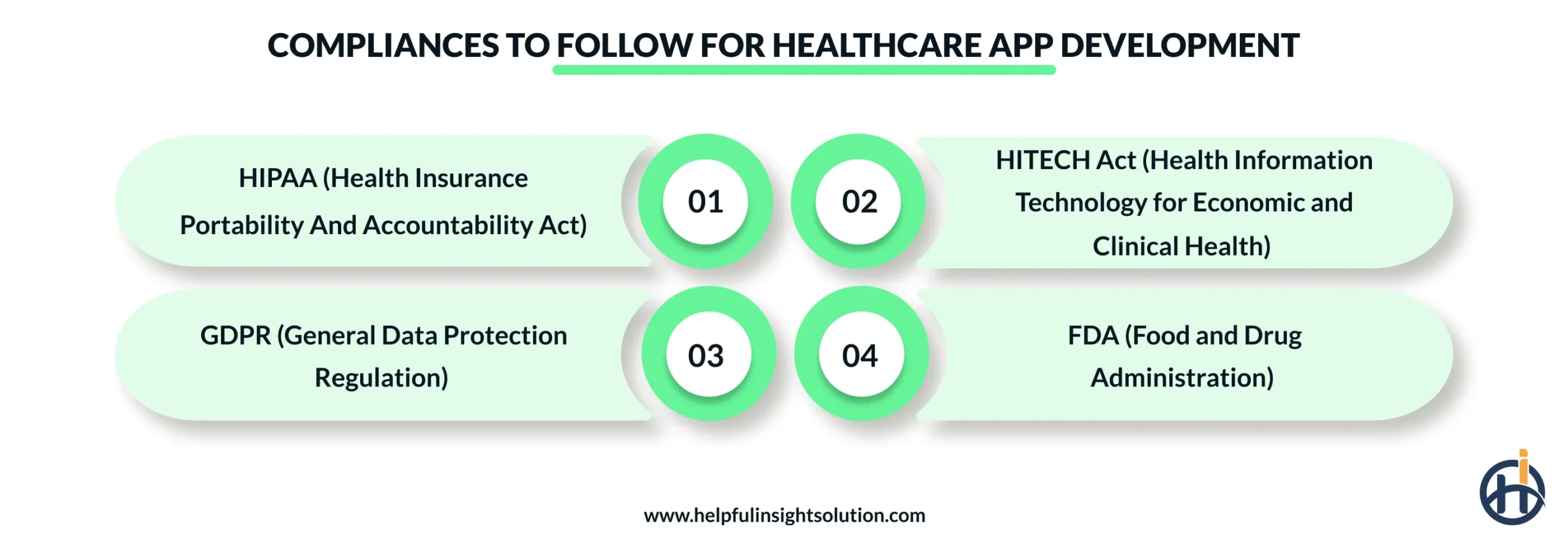
1. HIPAA (Health Insurance Portability and Accountability Act)
HIPAA is a US federal law that protects patient information. Healthcare apps must encrypt data, control who can see it, and record activity. Following it protects patient privacy, avoids fines, and builds trust in the app.
Read Also: A Guide on HIPAA Compliant App Development: Safeguarding Patient Data in the Digital Age
2. HITECH Act (Health Information Technology for Economic and Clinical Health)
HITECH strengthens HIPAA for electronic health records and encourages the usage of EHR in healthcare organizations. Following it ensures that patient records are kept private, and apps handle health information safely.
3. GDPR (General Data Protection Regulation)
GDPR is a privacy law that focuses on protecting personal data. This ensures that the app must get permission before collecting data, only keep what is needed, and delete it upon request. Following GDPR helps people trust your app worldwide.
4. FDA (Food and Drug Administration)
The FDA regulates mobile apps that act like medical devices in the USA. Obtaining FDA approval ensures users can trust the app for healthcare and that it is safe and effective for use. Failing to follow FDA compliance can result in legal issues or app removal.
Advanced Technologies Used for Healthcare Mobile App Development
Have you thought about how integrating advanced technologies like AI, machine learning and deep learning into your healthcare app can benefit your business? These innovations enable more accurate diagnosis and personalized treatment plans. In fact, they’re projected to save up to $360 billion in healthcare spending.
Below are some top emerging technologies for health app development that can enhance the healthcare experience for both patients and care providers.
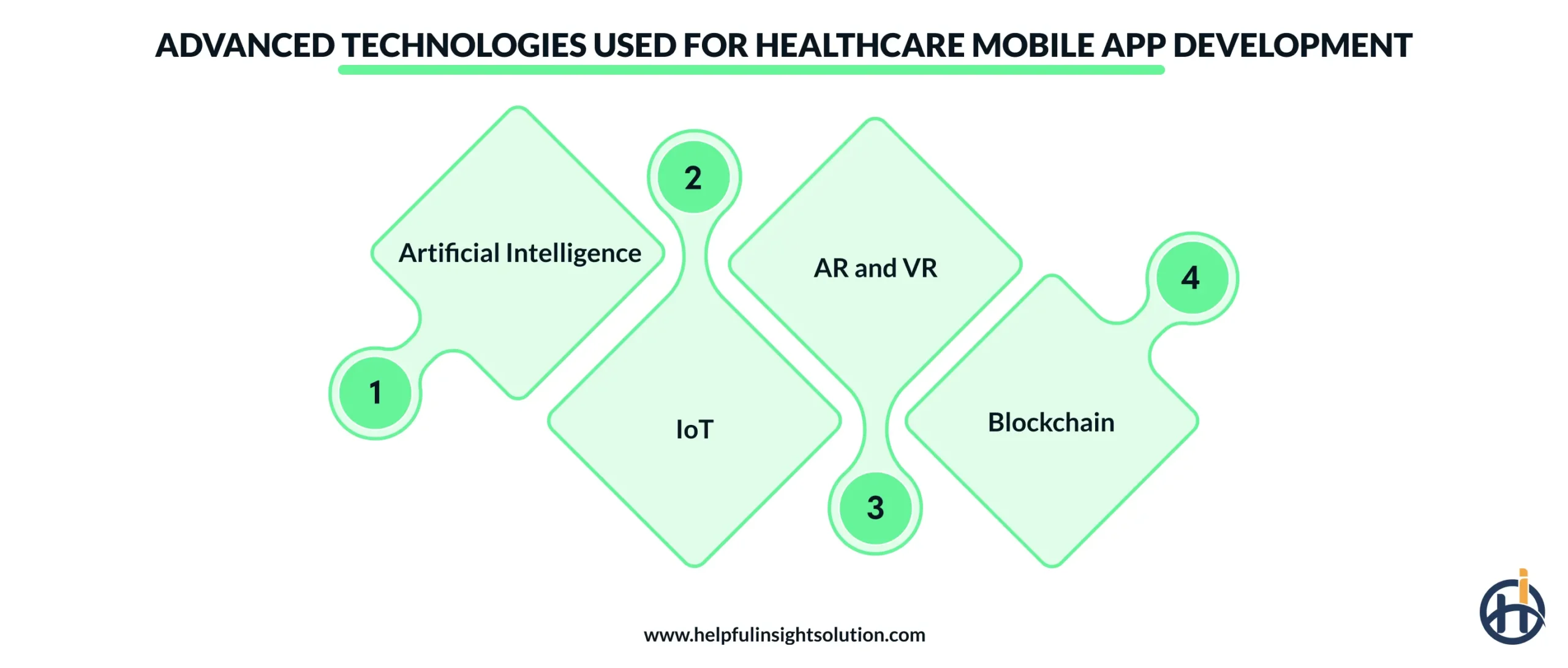
1. Artificial Intelligence
AI in healthcare apps uses machine learning and predictive analytics to generate personalized care plans and improve diagnosis. It also help medical professionals by automating tasks like
answering patient questions amd scheduling appointments.
2. IoT
Healthcare IoT app development let doctor track patients’s heart rate and blood pressure remotely. This helps doctors check on patients from afar and give better advice, reducing hospital visits and improving treatment.
3. AR and VR
The integration of AR and VR in health apps has taken the level of care up. It is used in different areas of healthcare like AR helps doctors with 3D body maps during surgeries, while VR creates safe environments for practicing surgery.
4. Blockchain
Blockchain in healthcare is not only a trend but the need of the hour to keep patient data safe by storing it in a secure, unchangeable system. It ensures that only authorized people can access records, which prevents cyberattacks.
How to Develop a Custom Healthcare App: Step by Step
If you are thinking of creating a healthcare app, then it is crucial for you to understand that it requires a strategic approach and many things to take into consideration. So, it’s best to hire dedicated developers, as they know very well what it takes to build digital healthcare solutions.
Let’s have a look at the healthcare mobile app development process:
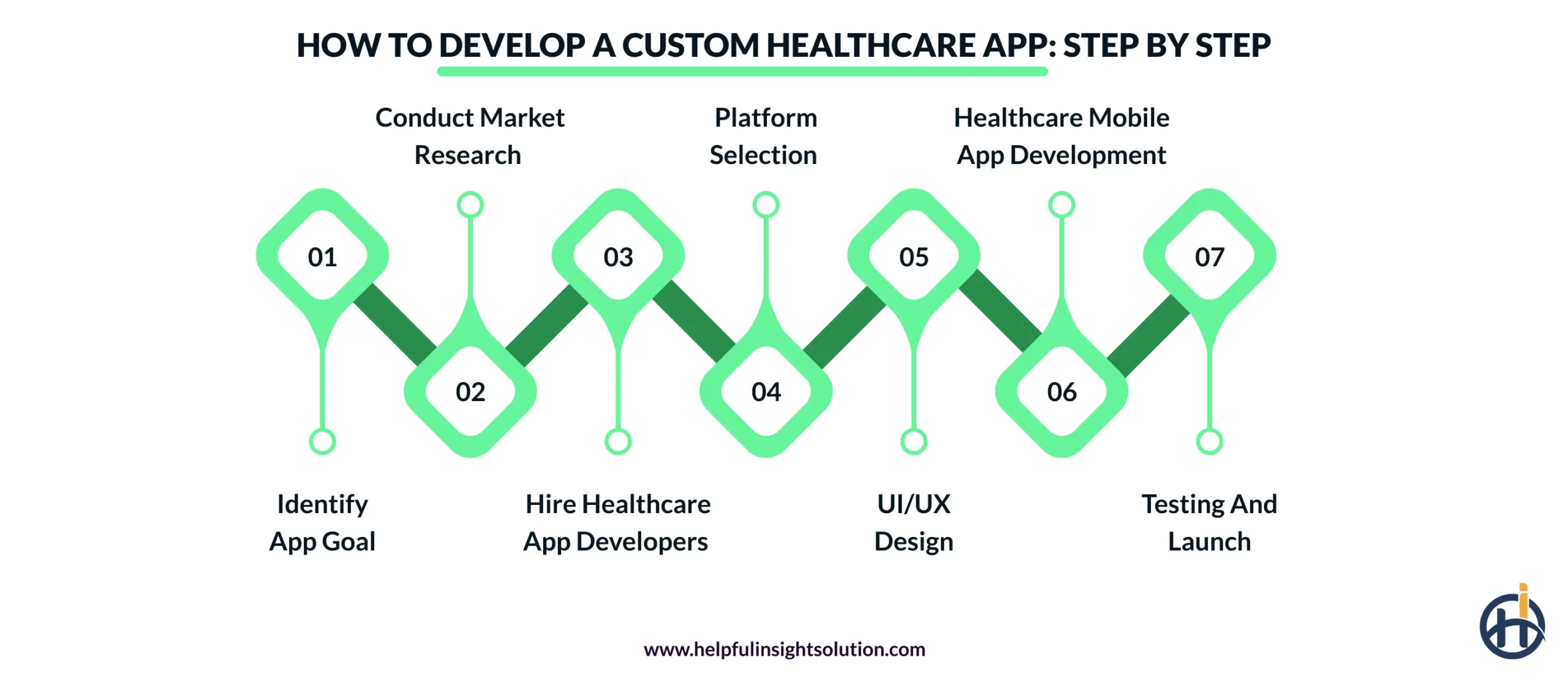
1. Identify App Goal
First, define why you want to develop a healthcare app, who it is for, and what problem it will solve. Identify specific issues, like medication reminders or remote patient monitoring, that your app will address. Clearly understanding the app’s purpose and target users is very important for app success.
2. Conduct Market Research
Once you get a clear idea of what type of app you want to develop, move forward by doing market research. Here, you will analyze competitors and pinpoint market gaps that you can take advantage of. This will help define the features of the app, its USP, and create an mHealth app that the market truly needs.
3. Hire Healthcare App Developers
To create a HIPAA-compliant healthcare app, you need a team that knows how to build secure and compliant apps. Hire experienced healthcare app developers from a reputable app development firm who can create innovative and custom mHealth apps that make you stand out.
Read Also: How to Select the Right Healthcare Mobile App Development Company?
4. Platform Selection
Next, it’s time to decide whether you want to make your healthcare mobile app for which platform whether for Android, iOS, or both. Be very mindful when choosing the app development platform, as it will significantly impact development cost, speed, and target audience reach.
5. UI/UX Design
App designers will start working on UI and UX of your healthcare mobile app. This part is crucial because the success of your app depends heavily on its UI/UX. Make sure the design appeals to all age groups in your target audience while fitting various screen sizes.
6. Healthcare Mobile App Development
Healthcare app developers will build the app using the best technology stack. It’s advisable to develop an MVP (Minimum Viable Product) before full-scale development. This allows you to test the app, gauge market response, and make changes without wasting resources. Additionally, an MVP can attract potential investors for scaling the app.
7. Testing and Launch
Testing is unavoidable and important part of process to develop a healthcare app. The QA team will thoroughly test the app to identify and fix any bugs or errors, ensuring a smooth user experience. Once testing is complete,
launch the app on the respective platforms and continue to monitor its performance. Regular updates keep the app relevant for modern users.
Healthcare App Development Cost
Cost is one of the most important concern that healthcare business have before they invest in healthcare mobile development project. The cost to develop a healthcare app is influenced by a wide range of factors which includes app complexity, platform selected, app features, UI/UX design, chosen tech stack, location of app developers, and many more.
So, with multiple variables contributing, it is difficult to determine the exact price. On average, building a basic version of an app (MVP) can cost around $20,000. However, creating more advanced apps that meet strict compliance requirements can be much more expensive, with costs reaching $90,000 or even higher.
In the below table, let’s have a look at the healthcare app development cost of different complexity levels.
| App Type | Estimated Cost Range |
| Simple App | $20,000 to $50,000 |
| Mid-Level App | $50,000 to $90,000 |
| Advanced App | $90,000+ |
To get a custom quote, feel free to reach out to our team. You can also try our cost calculator for an instant estimate.
How Do Healthcare Mobile Applications Make Money?
Now you know how much it costs to build a healthcare app. It is equally important for you to know how to earn money from these apps.
Let’s take a look at different monetization models for healthcare apps .
1. Subscription Plans
In the subscription model, app users pay a fee, either monthly or yearly, to access advanced features of the app, while basic ones are free. This way apps continue to earn recurring income.
2. Pay-Per Usage
With pay-per usage, healthcare app users have to pay for a specific service they use in the app, like booking a video consultation; no need to buy a subscription plan.
3. In-App Advertising
The healthcare app generates revenue by partnering with brands such as health insurance providers and pharmaceutical companies to display their ads. By personalizing ads and keeping them non-intrusive, apps can keep users happy and engaged.
4. Commission from Transactions
In this model, the app charges a small fee called a commission whenever a transaction happens. If a lab test is booked, then the app takes a percentage of the total cost.
Challenges of Developing Healthcare App
Healthcare app developers face certain challenges when building healthcare apps. Mitigating these obstacles is very important to ensure maximum benefit can be reaped from healthcare mobile apps.
| Challenge | How It Affects | The Solution |
| Data Security Concerns | Sensitive patient data can be stolen, causing trust loss and legal problems. | App developers should use strong encryption methods, and follow HIPAA/GDPR rules strictly. |
| Many Devices Compatibility | Healthcare apps may not work well on some smartphones, wearables, or smart devices. | Test the healthcare app on all devices and follow interoperability standards. |
| Ensuring Compliance With the Law | Not following compliances can stop users and stakeholders from using the app. | Make sure to follow every regulation and healthcare app development compliance. |
| Legacy System Integration | Some hospitals may have outdated systems, which can cause isolated data and inefficiency. | Healthcare app developers should use APIs and standard data formats to integrate apps with legacy systems. |
Best Healthcare Apps in the Market
There are so many best healthcare apps that are loved by users and healthcare professionals. If you are planning to create a healthcare application, it is important for you to study these apps, as they are your competitors. Moreover, from a user’s point of view, these apps are really good for taking care of your health.
So, let’s have a look at top healthcare apps
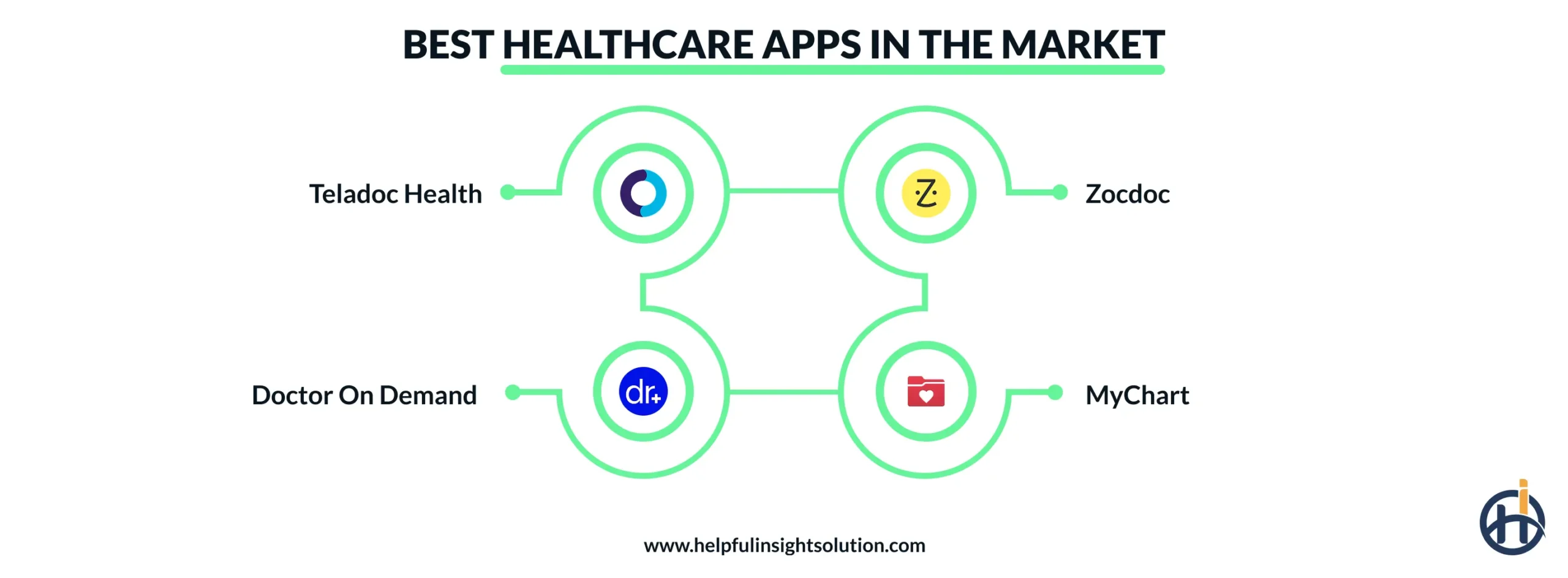
1. Teladoc Health
If you are looking for an app that let patients connect with doctors and other specialists through video calls or chat then Teladoc is perfect for you. With this app patients can get care anytime, even for common illnesses or mental health issues. The app has already had over 50 million virtual visits and has great ratings, 4.4 on Google Play and 4.8 on the Apple App Store.
- Covered by most major insurers
- Access to treatment for a wide range of medical conditions
- 24/7 access to certified doctors and nurses
2. Zocdoc
Zocdoc app helps find and book doctors. quickly. You can compare doctors, read reviews, and book appointments based on your insurance. Whether for a physical visit or telehealth, Zocdoc lets you see a doctor within 24 to 72 hours.
- 4.8 stars on Google Play, 4.9 on Apple App Store
- Access in-network doctors from 1,000+ insurance plans
- Simplifies booking for private practices across platforms
3. Doctor On Demand
This app provides 24/7 access to doctors, therapists, and psychiatrists via video calls. Whether you need prescription assistance or a consultation, Doctor On Demand makes it easy to receive medical care anytime, anywhere. Thousands of patients have left great reviews for virtual care, with the app boasting a 4.9-star rating out of 5.
- 24/7 urgent care and doctors availability virtually
- Consult doctor with or without insurance
- Available on Google Play and Apple App Store
4. MyChart
MyChart is an app that lets users manage all their health records in one place. You can view test results, schedule appointments, message doctors, and even pay bills. It keeps your health information organized, making it easier to manage care and treatments.
The app has a 4.6-star rating on both the Play Store and Apple App Store.
- Empowering 190 million+ patients to stay healthy
- Easily share your medical records with healthcare providers
- Quickly schedule appointments and find care
Partner with Helpful Insight to Build your Healthcare Mobile App
The healthcare industry has gone digital, transforming how care is delivered and how patients and doctors connect. Today, people seek personalized treatment and remote care, and healthcare mobile apps have proven to be a powerful tool in meeting these needs.
This has led to a growing demand for high-quality, secure healthcare apps. If you’re looking to create such an app, our healthcare app development company is here to help.
We offer end-to-end healthcare app development services, building reliable, feature-rich, and effective apps. Our app developers have extensive experience creating various mHealth apps, from telemedicine solutions to fitness and wellness apps.
We’ve developed healthcare and hospital management apps like Planora, which have helped our clients streamline workflows and deliver top-notch care services.
Connect with our team today and let us help you build a custom healthcare app.
FAQs
The time it takes to build a healthcare app depends on several factors, such as project scope, feature complexity, customization level, UI/UX design, third-party integration, and app testing. Generally, the timeline for custom healthcare app development can range from 3 to 15 months or more. This is just an estimate. Once you share your project details with us, we’ll provide an exact timeline.
Some of the most common tech stack used for iOS and Android healthcare app development are:
Frontend: React Native, Flutter, Swift, Kotlin
Backend: Python, Node.js, Java
Databases: MongoDB, MySQL, PostgreSQL
Cloud: AWS, Google Cloud Platform
Healthcare apps that handle patient data need to be HIPAA compliant. This ensures the privacy and safety of personal health information and build trust.
To select the best healthcare app development firm, there are a few key factors to consider. Check their experience, knowledge of healthcare regulations, and expertise in integrating with medical systems. They should also have a strong portfolio of past healthcare app development projects.