

Key takeaways
- Predictive analytics in retail uses historical data to look ahead at possible demand, purchasing behavior, stock requirements, and market changes that may affect future decisions.
- Demand forecasting, inventory management, pricing optimization, and customer churn prediction are some of the most popular use cases for predictive analytics in retail.
- Predictive analytics helps retailers improve efficiency, identify new sales opportunities, reduce business risks, and make more informed decisions.
- Amazon, Walmart, and Zara are examples of leading retail businesses that have incorporated predictive analytics into their operations and decision-making.
Retail businesses deal with changing demand every day. A product that sells steadily for months can suddenly slow down, while another may start gaining attention without much warning. Predictive analytics in retail gives retailers a way to examine sales history, customer activity, and other available data when trying to understand these shifts. The information can then support decisions about what may happen next.
As retail becomes more data-driven, having a clearer view of future conditions can help businesses plan with more context. Rather than looking at past performance in isolation, retailers can use predictive analytics to identify patterns that may be relevant to upcoming decisions. For businesses dealing with changing preferences and uncertain demand, retail predictive analytics gives another source of evidence when planning ahead.
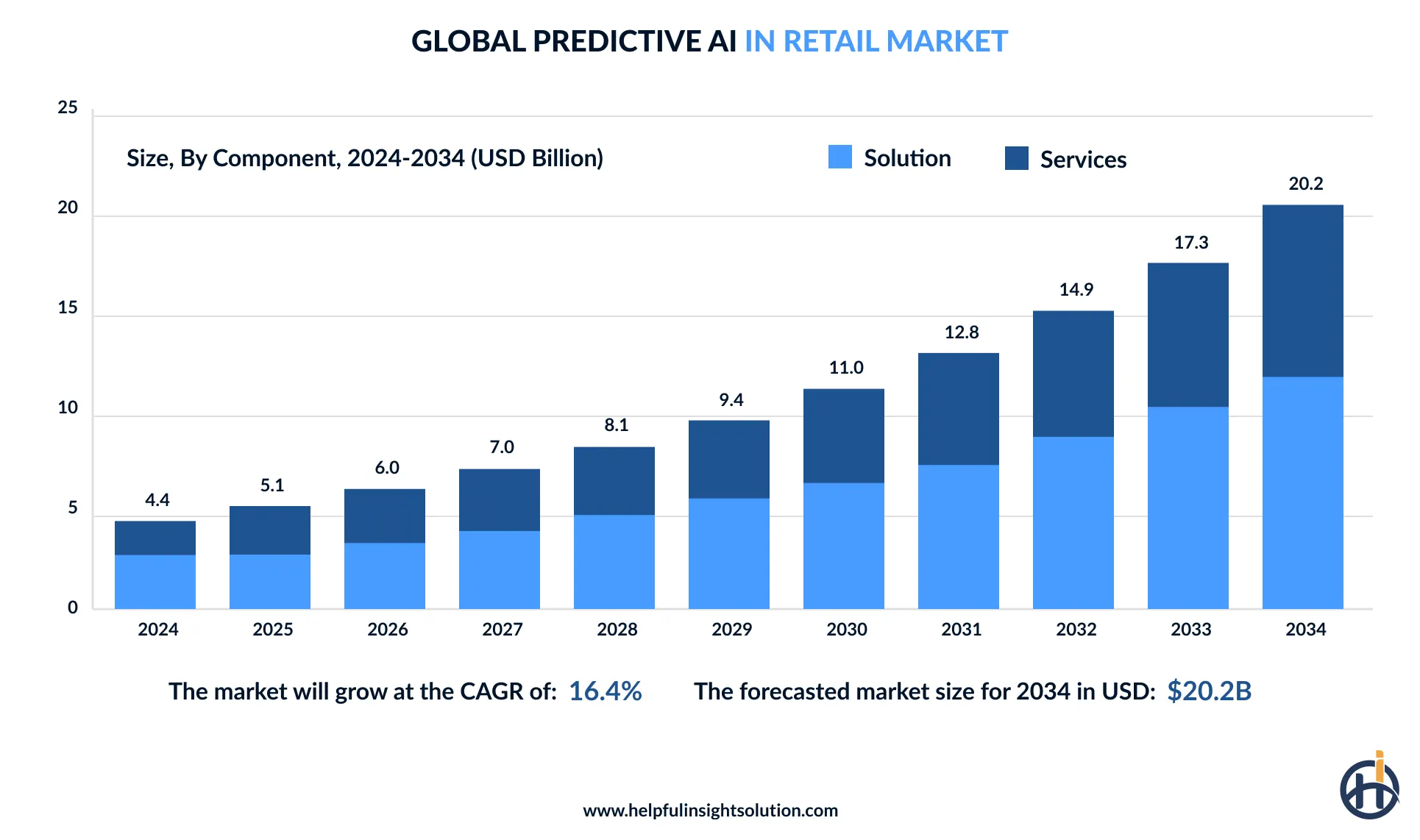
The growing interest in these capabilities is also reflected in market estimates. According to Market.us, the global predictive AI in retail market is expected to reach around $20.2 billion by 2034. This projection provides context for the increasing attention around predictive analytics in retail and its potential role in helping businesses make greater use of the data they already collect.
In this guide, we’ll look at retail predictive analytics in practical terms, including how it works, where it can be applied, its benefits and challenges, and the key considerations involved in adopting it.
What is predictive analytics in retail?
Predictive analytics in retail refers to the use of historical and current business data, statistical methods, and machine learning to estimate future outcomes. Retailers can use these predictions to understand likely changes in customer demand, sales, and purchasing behavior.
The purpose is not to predict every customer decision accurately, but to give retail businesses useful evidence when assessing future decisions and other business conditions.
How does predictive analytics work in retail?
In retail, predictive analytics is used to anticipate changes in areas such as customer behavior, demand, sales, and inventory. The process then turns these insights into predictions that can support specific retail decisions.
The following steps explain how retail predictive analytics works, from collecting relevant data to generating predictions for retail decisions.
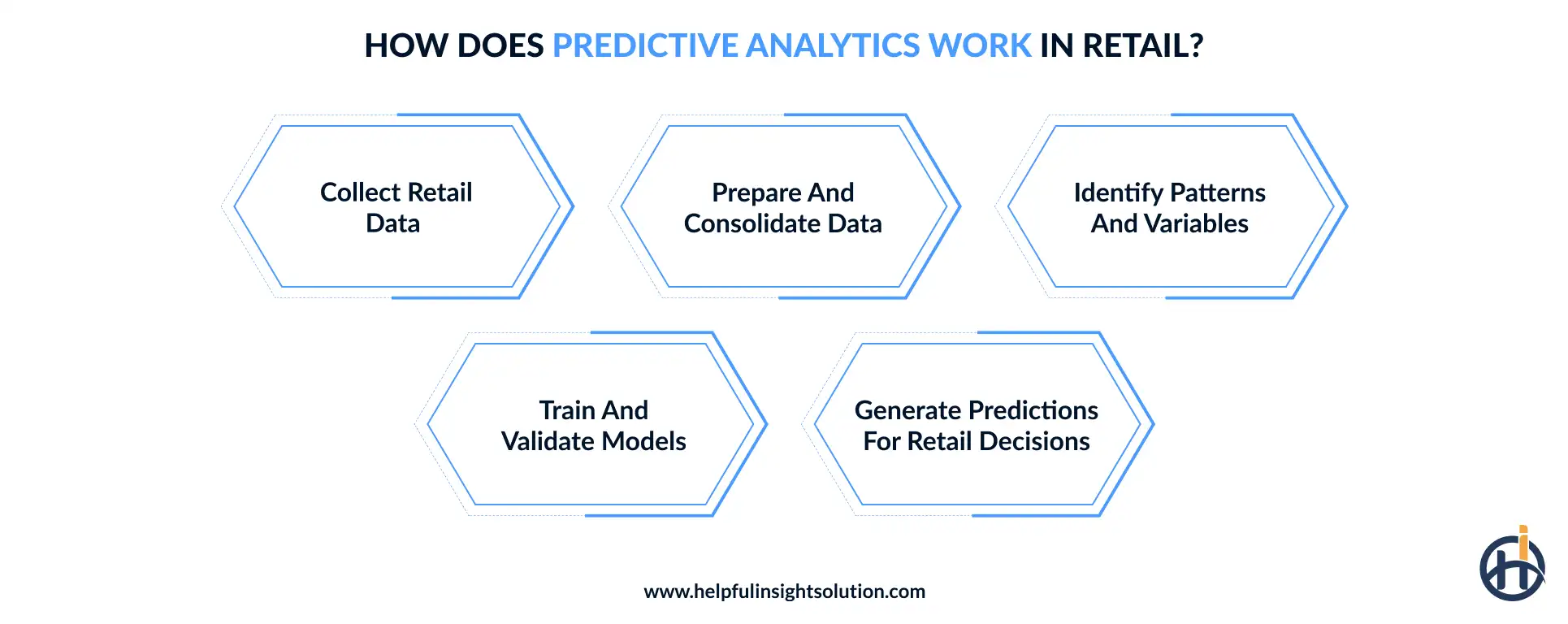
1. Collect retail data
Before starting the analysis, look at where the retailer’s data actually sits. Sales history, stock records, product information, website activity, and loyalty data are some possible sources.
Depending on the use case, data from outside the business may also be relevant. Weather and market conditions, for instance, can have an effect on buying patterns.
2. Prepare and consolidate data
Before a predictive model can identify useful patterns, the underlying data needs to be organized. Records from different retail sources are checked for errors, duplicates, and missing information, then brought together through data integration.
This data preprocessing helps create a reliable dataset for the next stage of analysis.
3. Identify patterns and variables
Using data mining and statistical methods, patterns in pricing, promotions, seasonal changes, and customer behavior can be examined to see which ones are worth including in a predictive model.
4. Train and validate models
The prepared data is used to train a model on past retail patterns. Once trained, the model should be evaluated on validation or held-out test data using metrics appropriate to the prediction task. This testing provides a basis for assessing its reliability before use.
5. Generate predictions for retail decisions
With the model trained and tested, it can be applied to fresh retail data and produce estimates for different business situations. A customer behavior model, for example, might identify shoppers who appear more likely to respond to a promotion based on their previous purchase activity.
What are the use cases of predictive analytics in retail?
Retail businesses use predictive analytics for more than understanding future sales. The technology can be applied to customer purchases, pricing decisions, inventory planning, promotions, and several other areas.
Here are some of the key applications of predictive analytics in the retail industry.
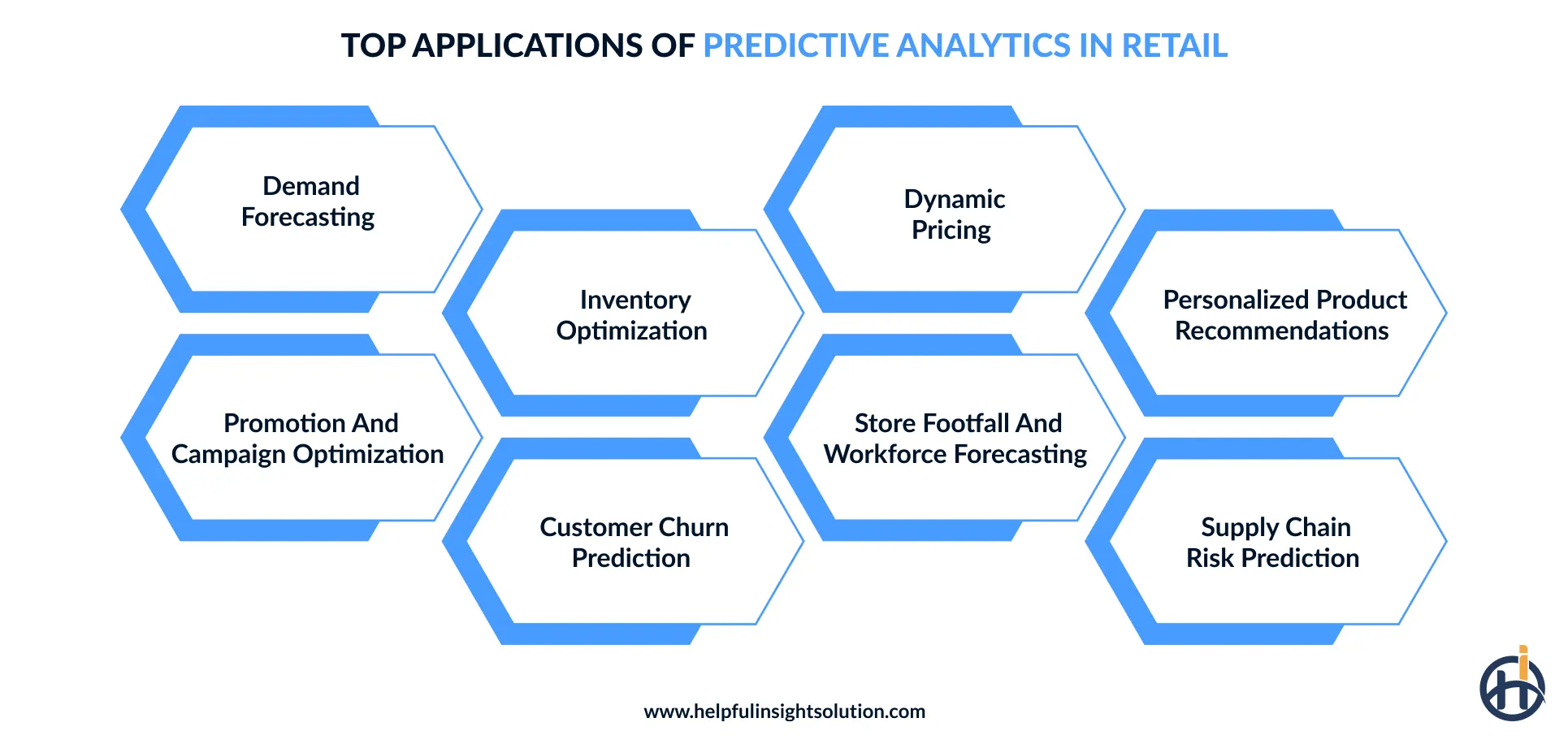
1. Demand forecasting
Market demand doesn’t always stay consistent for long. A shift in season, an active promotion, or simply changing customer habits can throw off any forecast based purely on last year’s numbers. Predictive models can improve demand forecasting by incorporating factors beyond historical sales.
It studies these underlying patterns to project what demand may look like in the near future. Retailers can factor that projection into stock planning, order quantities, and replenishment timing, rather than relying on historical sales alone.
2. Inventory optimization
Managing inventory becomes easier when future stock requirements can be estimated instead of relying only on current inventory. Predictive analytics for inventory management can examine sales patterns, purchase activity, existing stock, and seasonal changes to spot where inventory levels may shift.
The resulting insights can support replenishment planning and help maintain more appropriate stock across retail locations.
3. Dynamic pricing
Predictive analytics gives retail businesses another way to assess pricing decisions before making a change. Sales patterns, customer purchasing behavior, competitor prices, and available inventory can be examined to understand possible changes in demand.
For predictive analytics in retail, the value lies in turning these patterns into information that can guide pricing decisions. A model may indicate when a product could benefit from a price adjustment or promotion, making this a practical AI in retail application.
4. Personalized product recommendations
What a shopper looks at or buys can offer useful clues about what they might want next. Predictive analytics retail tools use those signals to find products that are more closely related to an individual’s interests.
For instance, someone browsing several laptop models might later see compatible bags, mice, or other accessories. Recommendations may use multiple signals, such as browsing, purchase history, and product relationships, depending on the recommendation system.
5. Promotion and campaign optimization
Retailers can learn a lot from how customers respond to earlier offers and marketing campaigns using predictive analytics solutions. A discount may work well for one product but do little for another, while some customers may respond better to email than other channels.
Past campaign and sales data can be used with AI predictive analytics for retail to estimate a specific outcome. That might be expected product demand or the chance that customers will respond to an offer. The retailer can then use the prediction to decide on the audience, promotion, and timing based on its campaign goal.
6. Customer churn prediction
Customer churn is not always easy to notice from a single transaction. A longer gap between purchases, fewer product views, or declining engagement with an app may tell a different story.
Among the predictive analytics use cases in retail, churn analysis helps connect these signals and identify customers who may be losing interest. That information can guide more relevant retention efforts before the relationship fades further.
7. Store footfall and workforce forecasting
A busy weekend, local event, or storewide discount can quickly change the number of shoppers coming through the doors. Retail footfall forecasting helps retailers prepare for these changes by using earlier traffic patterns and other relevant data.
If higher visitor numbers are expected, managers can arrange additional floor or checkout staff. In this way, predictive analytics in retail stores becomes useful for everyday workforce planning.
8. Supply chain risk prediction
Supply chain problems often give off small warning signs before they affect a delivery. A supplier may start missing promised dates, shipping times may stretch, or bad weather may threaten a route. Predictive analytics for retail businesses brings these signals together with logistics data to identify potential risks earlier.
Retailers can then review vulnerable orders and take action before a disruption affects product availability. When a risk becomes more likely, purchasing and logistics teams can adjust delivery schedules, change order priorities, or look for another source for critical products.
Key benefits of predictive analytics in the retail industry
The practical benefits of retail predictive analytics depend on where predictions are used in the business. Better visibility into likely demand, customer activity, pricing changes, and operational needs can give teams useful information before decisions are made.
The following benefits explain where predictive analytics can add value across everyday retail operations.
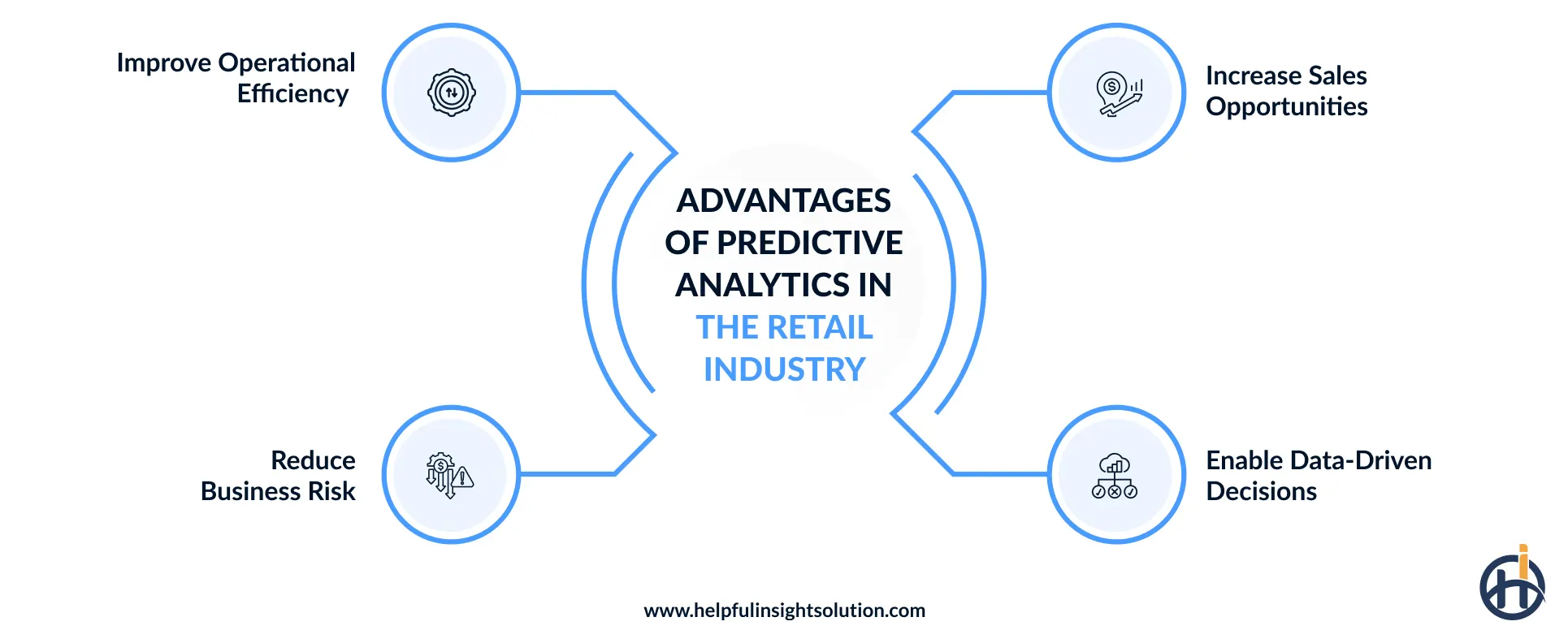
1. Improve operational efficiency
Retail operations do not always go according to plan. A late delivery, unexpected workload, or change in store activity can quickly create extra work for the team. Predictive analytics retail tools can point to changes that may need attention.
Retailers can then look at those signals while deciding what changes, if any, should be made to resources or schedules.
2. Increase sales opportunities
Sales growth can also come from understanding existing customer relationships. Businesses can look at how shoppers buy and which products they tend to purchase together.
Predictive analytics in retail industry can explore these patterns and point to possible upselling and cross-selling opportunities. Teams can then use these insights to make product offers more relevant to individual shopping behavior.
3. Reduce business risk
Important business decisions often have to be made before there is a clear picture of what lies ahead. Advanced analytics in retail gives decision-makers another way to examine possible risks before committing resources.
Sales trends, customer activity, and financial data may reveal changes worth watching. These predictive insights can be used to review spending, product plans, and other decisions more carefully.
4. Enable data-driven decisions
Business data becomes more useful when it can be connected to a specific decision or business question. Predictive analytics in retail can turn sales records, customer information, and other business data into useful evidence for planning.
This can help with decisions around resource allocation and product priorities, while machine learning use cases such as customer segmentation and sales prediction can add further context to the analysis.
Real-world examples of retail predictive analytics
Predictive analytics is already being used across different areas of the retail industry. Major retail businesses are already using data, forecasting models, and advanced retail analytics in different parts of their operations. Looking at these examples gives a clearer picture of how predictive insights are being used to solve practical retail problems.
1. Amazon
Amazon applies predictive analytics in retail across customer experiences and supply chain operations. Its recommendation systems use shopping activity and product relationships to suggest relevant items.
On the operational side, AI models forecast which products customers may want, where demand is likely to occur, and when, giving Amazon useful insights for inventory planning and product placement across its fulfillment network.
2. Walmart
Walmart uses ML and predictive analytics to anticipate demand before products are needed. Its forecasting engines look at different demand signals and continuously update their predictions as new information comes in. The forecasts then inform inventory management, including how products are distributed across stores, distribution centers, and fulfillment locations.
Walmart’s approach shows how demand predictions can be used to make practical inventory decisions. Businesses planning to build an app like Walmart can use a similar model by adding demand forecasting and inventory management features that support smarter stock planning.
3. Zara
Zara is a global fashion retailer known for responding quickly to changing customer preferences. Its parent company, Inditex, uses ML models to estimate how new products may perform and identify stores with similar purchasing patterns.
As sales data comes in, these insights can support decisions about where products should receive more or less stock. Zara is one of the most prominent predictive analytics retail examples to show how the technology can support faster, more responsive fashion retail decisions.
How to implement predictive analytics in retail?
A retail prediction is only useful if the data behind it is reliable and the result fits into an actual workflow. That is why implementation involves more than model selection. The predictive analytics implementation roadmap outlines the practical steps from defining the goal through deployment and monitoring.
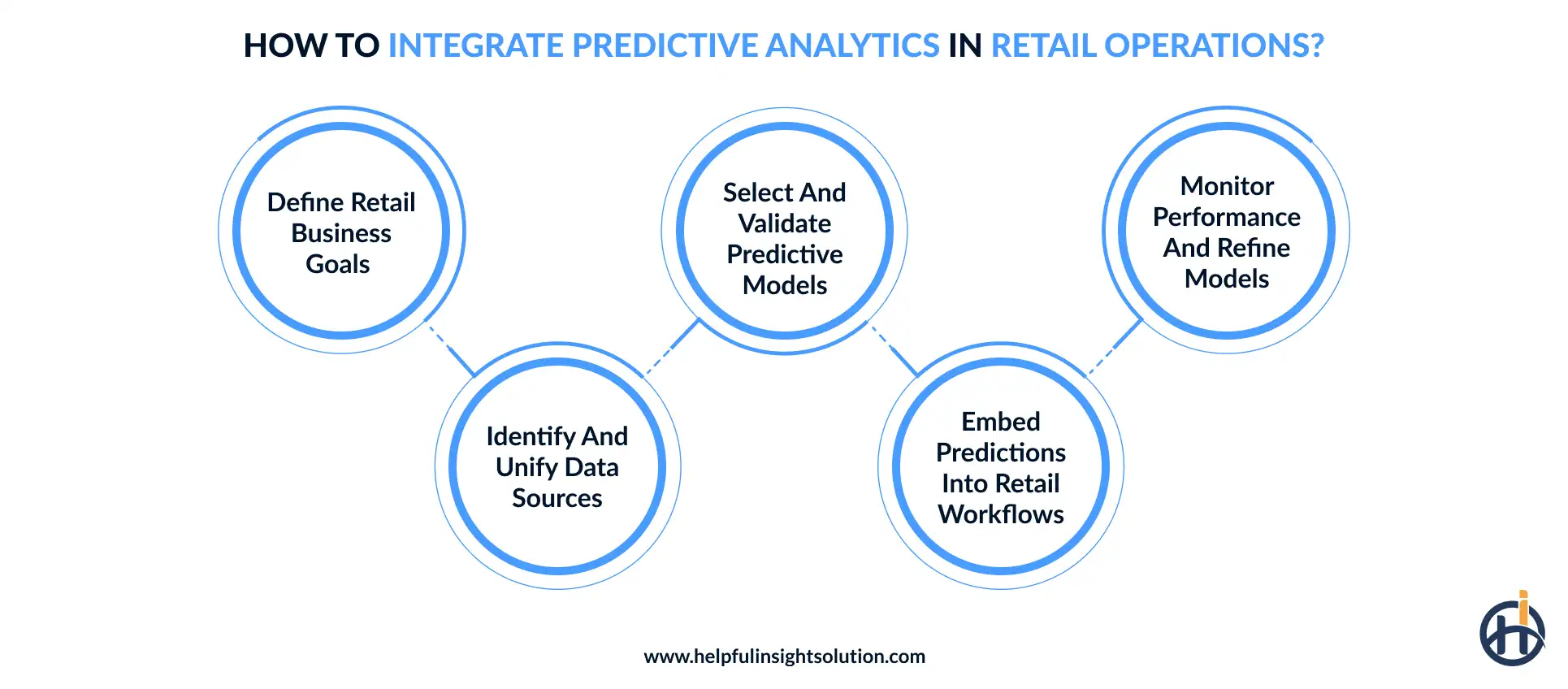
1. Define retail business goals
There is little value in implementing predictive analytics simply because the technology is available. First, decide which retail decision needs better support and what improvement would matter to the business.
That could be reducing overstock or improving customer retention. Once that priority is clear, advanced analytics in retail can be aligned with the right business metrics instead of becoming another project without a defined purpose.
2. Identify and unify data sources
Retail data is usually spread across different systems, from POS transactions and online orders to inventory records and loyalty programs. Bring these sources together before building predictive models.
A connected dataset gives retail predictive analytics platforms a more complete view of what is happening and reduces the gaps that can appear when information stays in separate systems.
3. Select and validate predictive models
The right model depends on the business decision as well as factors such as data quality, technical setup, and operational requirements. Compare suitable approaches using your business data, then test them on information they have not seen before.
If the right model is difficult to determine, an AI development company can help assess the options and recommend a suitable approach.
4. Embed predictions into retail workflows
Once a model is ready, connect its predictions to the tools employees already use. Inventory software might receive stock recommendations, while a marketing platform could use customer predictions to support campaign decisions.
This makes predictive analytics for retail business part of everyday operations instead of leaving useful predictions in a separate analytics dashboard.
5. Monitor performance and refine models
Retail patterns do not stay the same throughout the year. A model that works well today may produce weaker predictions after customer preferences or market conditions change. Track its results over time and compare predictions with what actually happened.
This gives retailers a chance to retrain their retail predictive analytics solutions before performance drops too far.
Challenges of implementing predictive analytics for retail and their solutions
Getting predictive analytics to work in a live retail environment brings its own set of problems, separate from picking the right tool. Below, we cover the common challenges retailers face in adopting predictive analytics, from data gaps to team readiness, along with solutions worth trying to solve them.
1. Poor data quality and silos
When sales, inventory, and customer information remain scattered across separate systems, retailers can struggle to establish which figures are reliable. Missing records and conflicting values can affect downstream predictions.
This becomes a practical concern for implementing AI predictive analytics in retail, where the quality and consistency of the information available to the model directly affect its usefulness.
How to overcome
Start by identifying where data conflicts occur and assign ownership for fixing them. From there, introduce validation checks and connect key systems through a centralized platform. Regular data-quality reviews can help keep predictive analytics tools reliable as new information enters the business.
2. Legacy system integration
Retailers do not always have the infrastructure needed to support newer analytics applications alongside their existing systems. Older databases, disconnected applications, and limited system capacity can create technical friction during implementation.
How to overcome
Start by addressing the systems that create the most integration or processing issues. APIs, middleware, and gradual upgrades can help introduce newer analytics capabilities while allowing essential legacy applications to remain in use.
3. Data privacy and compliance
Customer data can help retailers build useful predictions, but using it also raises privacy considerations. U.S. businesses may need to account for state laws such as the CCPA, while operations involving the EU can bring GDPR into scope.
Understanding which requirements apply, and where, can become a significant part of the implementation process.
How to overcome
Work with legal and IT teams to identify the privacy requirements that apply to each market. Build those requirements into data processes, security controls, and governance practices to support IT compliance regulations throughout the analytics lifecycle.
4. Skills gaps and adoption barriers
A predictive analytics software solution needs people who can manage the technology and teams willing to use its recommendations. Retailers may struggle when internal expertise is limited or employees are uncomfortable changing established processes.
Retail businesses need to understand how the predictions work and where they fit before using them in regular decision-making.
How to overcome
Retailers can address talent gaps by giving training to the employees. Start with the teams closest to the use case, give them practical exposure, and gradually develop the skills needed to manage predictive analytics independently.
How Helpful Insight can help you implement predictive analytics in retail operations?
The way retailers make decisions is becoming more forward-looking. Predictive analytics in retail uses the data already available to understand what might happen next.
This can make planning less dependent on looking backward at reports. As AI technology develops further, predictive capabilities are likely to become a more regular part of retail planning, customer engagement, pricing, and inventory decisions.
At Helpful Insight, our predictive analytics services help retailers decide where this technology can add value. We assess the available data, explore relevant use cases, and determine which predictive approach fits. Our team can then develop a solution for the specific need, from demand planning and customer insights to operational decisions.
Connect with our team today to discuss your predictive analytics project requirements.
FAQs
Implementing predictive analytics in retail can cost around $15,000 to $60,000 for a basic pilot, while larger enterprise deployments may exceed $200,000. Pricing varies based on the analytics platform, data readiness, integrations, and development requirements.
A small predictive analytics pilot usually takes around 3 to 6 months. For a larger enterprise rollout, the timeline can extend to 6 to 12 months or more. The actual time depends on the data available, the systems involved, and how broad the project is.
Predictive analytics in retail typically uses historical sales and transaction data, inventory records, customer behavior, and operational data. Depending on the use case, retailers may also include pricing, promotions, seasonal patterns, weather, or other relevant market information.
Tableau, Microsoft Power BI, Alloy.ai, Datawiz BI are some of the top retail predictive analytics platforms.