

“Use the power of AI to automate medical diagnostics and enhance healthcare techniques.”
What if you can automate the diagnosis of various diseases, provide accurate treatments, and generate a detailed report? The use of AI in medical imaging has transformed the way healthcare professionals detect and resolve clinical issues in the human body.
With the integration of artificial intelligence in health, doctors can easily perform multiple CT scans, MRI scans, and X-Ray scans. Through scanned images, they can judge the target area and prescribe treatments accordingly.
Businesses must find investment opportunities in the development of various medical imaging artificial intelligence systems. This is because AI diagnosis per patient is going to increase in the future, giving rise to more revenue generation.
Additionally, there are several applications of AI in healthcare imaging that are crucial to know before entering the market.
This blog brings different benefits, use cases, features, top platforms, and challenges to the table, helping entrepreneurs in large numbers. So, let’s not waste much time and dive into this guide for AI-enabled medical imaging applications.
What is Medical Imaging?
Suppose a person met with an accident, and to judge any bone fractures, a doctor will perform X-Ray scans that give images of fractured bones. This is an AI-based medical imaging technology that helps healthcare professionals and patients to identify different problems, such as cancers or tumors, easily.
Additionally, the integration of AI in medicine helped doctors to detect invisible issues like diabetes. With the best healthcare apps, people can also diagnose diseases through symptoms and get personalized treatments.
Through medical imaging with AI, users can track reports of MRI scans and CT scans, listing different medical parameters with recommended solutions. The use of AI-powered medical imaging technology is higher in the USA than in other countries.
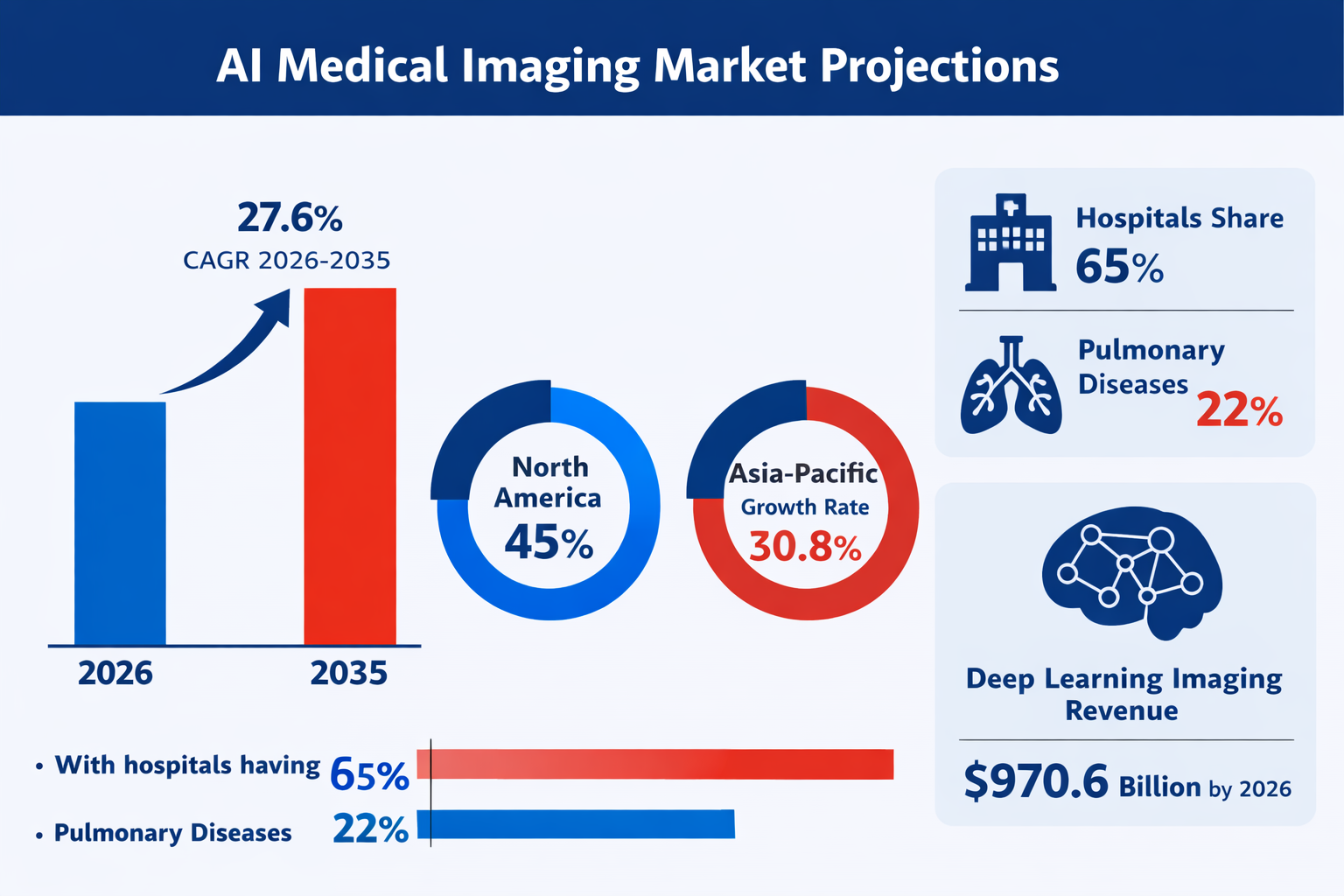
The worldwide market revenue of AI medical imaging is $2.6 trillion in 2026, which will increase to $23 trillion by 2035. The overall growth rate is 27.6% CAGR between 2026 and 2035. Some other market stats are as follows:
- The share of North America is 45%, and the Asia-Pacific region has the highest growth rate of 30.8% between 2026 and 2035.
- With hospitals having a maximum share of 65%, the clinical area of pulmonary diseases also has the largest share of 22% in 2026.
- The revenue generated through deep learning medical imaging is the highest, which is $970.6 billion by the end of 2026.
Role of AI in Medical Imaging Systems
Artificial intelligence imaging helps healthcare experts detect multiple medical issues with high accuracy and deliver precise treatments according to the generated reports. The role of machine learning in medical imaging is to learn through different imaging patterns and develop a supervised model based on different healthcare parameters.
With AI in healthcare, it is easy to analyze the severity of diseases and the probability of treatment efficiency. Deep learning is another AI technology in medical imaging used to enhance healthcare models with advanced algorithms. The integration of AI in medical imaging is essential for the future of hospitals, clinics, and patients.
- Image Analysis: Detects and classifies issues in X-rays, CT scans, and MRIs with accuracy.
- Disease Detection: Identifies image patterns to spot diseases like cancer at early stages.
- Image Enhancement: Improves image quality by reducing noise and increasing resolution.
- Workflow Automation: Prioritizes critical cases and speeds up radiology reporting.
- Decision Support: Assists radiologists with data-driven insights for accurate diagnosis.
What are the Benefits of AI-Driven Medical Diagnostics?
From a business point of view, there are multiple benefits of using AI in medical imaging systems. These advantages help entrepreneurs to easily understand user preferences and the software’s ability:
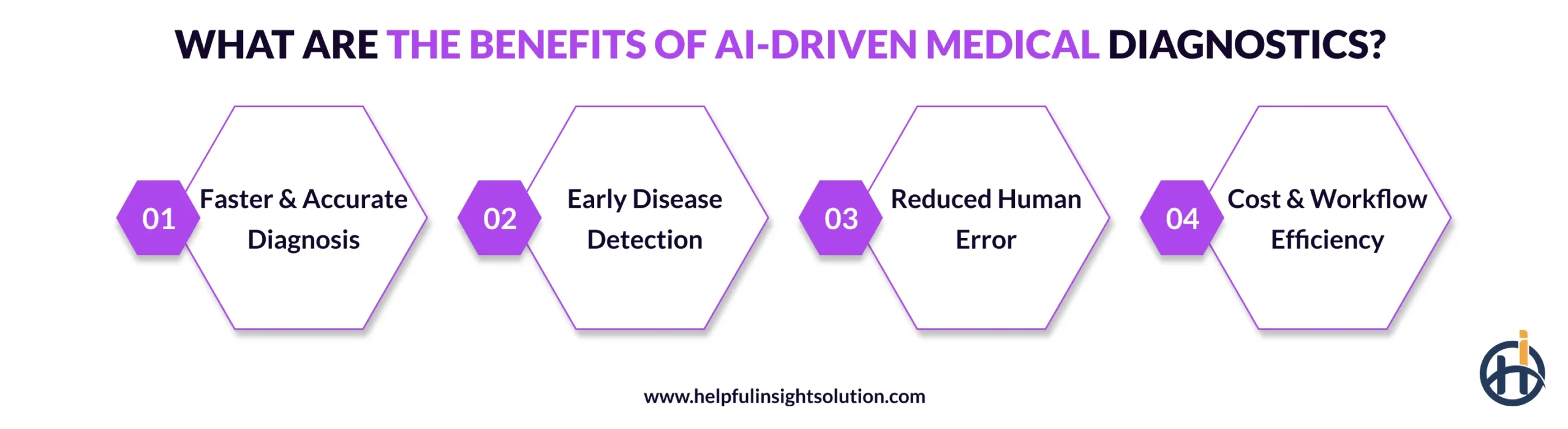
1. Faster & Accurate Diagnosis
The artificial intelligence and medical imaging systems analyze healthcare data and patient records with high accuracy. This reduces diagnostic time while improving precision compared to manual evaluation.
2. Early Disease Detection
Algorithms of artificial intelligence in medical imaging can identify patterns that are missed in the early stages. This enables timely intervention, improving treatment outcomes and patient survival rates.
3. Reduced Human Error
With AI and UI/UX design solutions, it is easy to reduce diagnostic errors caused by fatigue. It is among the best benefits of AI-powered medical imaging, ensuring consistent analysis across medical cases.
4. Cost & Workflow Efficiency
The artificial intelligence in medicine automates diagnostic tasks, lowering operational costs. It optimizes healthcare workflows and allows medical professionals to focus more on patient care and processes.
Top 8 Use Cases of Artificial Intelligence in Medical Imaging
It is crucial to study the use cases of AI in medical imaging that are currently available in the market. Some of the major applications of AI-enabled healthcare diagnostic services are discussed in this section:
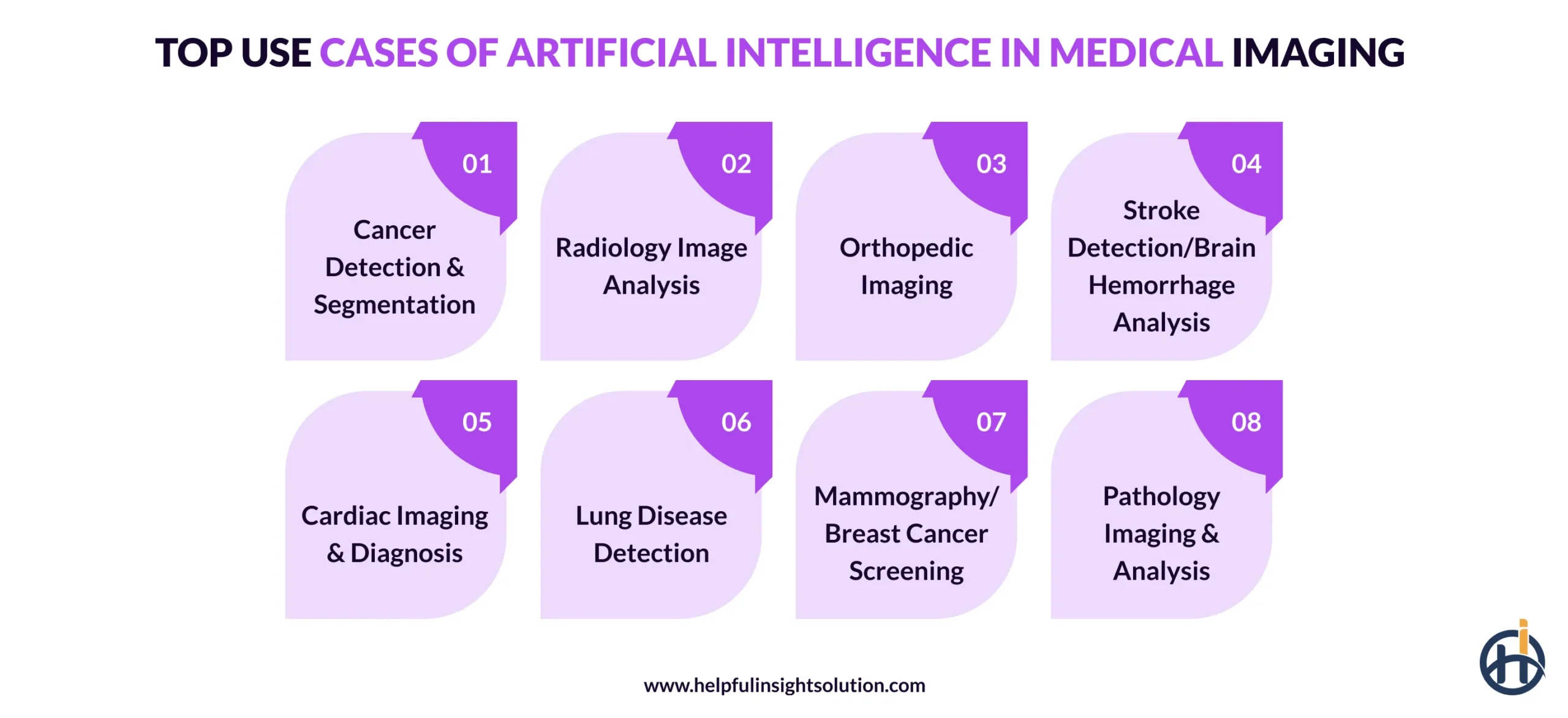
1. Cancer Detection & Segmentation
AI algorithms accurately detect cancer regions in medical images such as CT, MRI, and PET scans. They precisely segment tumors, helping doctors and clinics understand size, shape, and progression.
The combination of artificial intelligence and medical diagnosis improves early treatment planning. AI also reduces manual workload and diagnostic variability in the medical field.
Impact: It enables earlier and more accurate tumor identification, improving treatment planning and patient survival rates.
2. Radiology Image Analysis
AI enhances radiology workflows by quickly analyzing X-rays, CT scans, and MRIs. It identifies additional abnormalities such as fractures, tumors, or infections with high accuracy.
Artificial intelligence dermatology platforms use automated image interpretation to speed up diagnosis and reduce human error. This application allows radiologists to focus on various complex cases of the human body.
Impact: Radiology reduces diagnostic errors and radiologist workload by quickly highlighting abnormalities across X-rays, CTs, and MRIs.
3. Orthopedic Imaging
One of the biggest use cases of AI-powered medical imaging is that it assists in analyzing skeletal images from X-rays and MRIs. Investment in AI physiotherapy app development helps you to detect fractures, arthritis, and ligament injuries.
AI-driven insights improve surgical planning and rehabilitation strategies for patients. This leads to faster and more precise orthopedic care through a single platform.
Impact: This enhances detection of fractures and joint degeneration, leading to faster diagnosis and better surgical outcomes.
4. Stroke Detection/Brain Hemorrhage Analysis
AI rapidly identifies different signs of stroke or brain hemorrhage through CT and MRI scans. Early detection of diseases helps healthcare experts make time-sensitive treatment decisions.
By using artificial intelligence for medical imaging, you can prioritize critical cases, reducing response time in emergency cases. This application significantly improves patient survival and the overall healthcare outcomes.
Impact: The analysis accelerates emergency diagnosis, allowing rapid intervention that significantly reduces brain damage and mortality.
5. Cardiac Imaging & Diagnosis
Businesses can integrate artificial intelligence in health care to analyze cardiac images from echocardiograms to assess heart function. The technology detects conditions like coronary artery disease and heart failure at early stages.
AI improves measurement accuracy and consistency during a particular surgery. This application supports personalized and preventive cardiac care in a complete cycle.
Impact: It improves early detection of heart conditions, enabling timely treatment and preventing life-threatening cardiac events.
6. Lung Disease Detection
The AI technology examines chest X-rays and CT scans to detect lung diseases such as pneumonia and lung cancer. The artificial intelligence in medical field identifies different patterns that are missed by the human eye.
This application of AI supports early diagnosis and monitoring of disease progression. Additionally, it enhances respiratory care and treatment effectiveness through advanced algorithms.
Impact: The application supports early diagnosis of conditions like pneumonia and lung cancer, resulting in improved patient outcomes and reduced hospital stays.
7. Mammography/Breast Cancer Screening
Among the top use cases of Generative AI is that it improves breast cancer screening by analyzing mammograms for early signs of malignancy. It reduces false outcomes and inaccurate results, increasing diagnostic efficiency.
It is one of the key applications of AI in medical imaging that assists radiologists in identifying risks. This leads to earlier intervention of medical experts with better survival rates.
Impact: It increases screening accuracy and early cancer detection, lowering false outcomes and saving multiple lives.
8. Pathology Imaging & Analysis
With artificial intelligence in medical diagnosis, you can analyze digital pathology slides to detect cellular abnormalities and disease markers. This healthcare application assists pathologists in the classification of cancer and identifying its effects.
Artificial Intelligence improves accuracy, speed, and consistency in pathology reporting. It can enable more precise and data-driven clinical decisions through imaging.
Impact: This enhances precision in tissue analysis, supporting faster, more consistent diagnoses and personalized treatment decisions.
Essential Features of AI-Powered Diagnostic Software
By integrating AI in medical imaging, businesses can offer several advanced features that improve overall patient care. These clinical artificial intelligence features automate diagnosis, predict suitable treatments, and personalize services.
With AI in mobile apps for medical analysis, it is easy to attract more users and generate consistent profits:
| Feature | Description |
| Intelligent Data Analysis | Uses AI algorithms to analyze large volumes of medical data for accurate diagnosis. |
| Medical Image Recognition | Detects anomalies in X-rays, MRIs, CT scans, and ultrasounds using computer vision. |
| Predictive Analytics | Forecasts disease risks and progression based on patient history and patterns. |
| Real-Time Decision Support | Provides instant diagnostic insights to assist clinicians during evaluations. |
| Natural Language Processing (NLP) | Extracts meaningful information from clinical notes, reports, and EHRs. |
| Automated Reporting | Generates structured diagnostic reports with minimal human intervention. |
| Clinical Decision Support System (CDSS) | Suggests possible diagnoses and treatment options based on evidence-based data. |
| Continuous Learning Capability | Improves accuracy over time by learning from new medical data and outcomes. |
| Data Security & Compliance | Ensures patient data protection with HIPAA, GDPR, and healthcare standards. |
| EHR & System Integration | Seamlessly integrates with Electronic Health Records and hospital systems. |
Best AI-Enabled Medical Imaging Innovations
Now, it’s time to study the top medical imaging artificial intelligence platforms that are currently in use globally. They help to diagnose healthcare problems with high accuracy, security, and reliability:
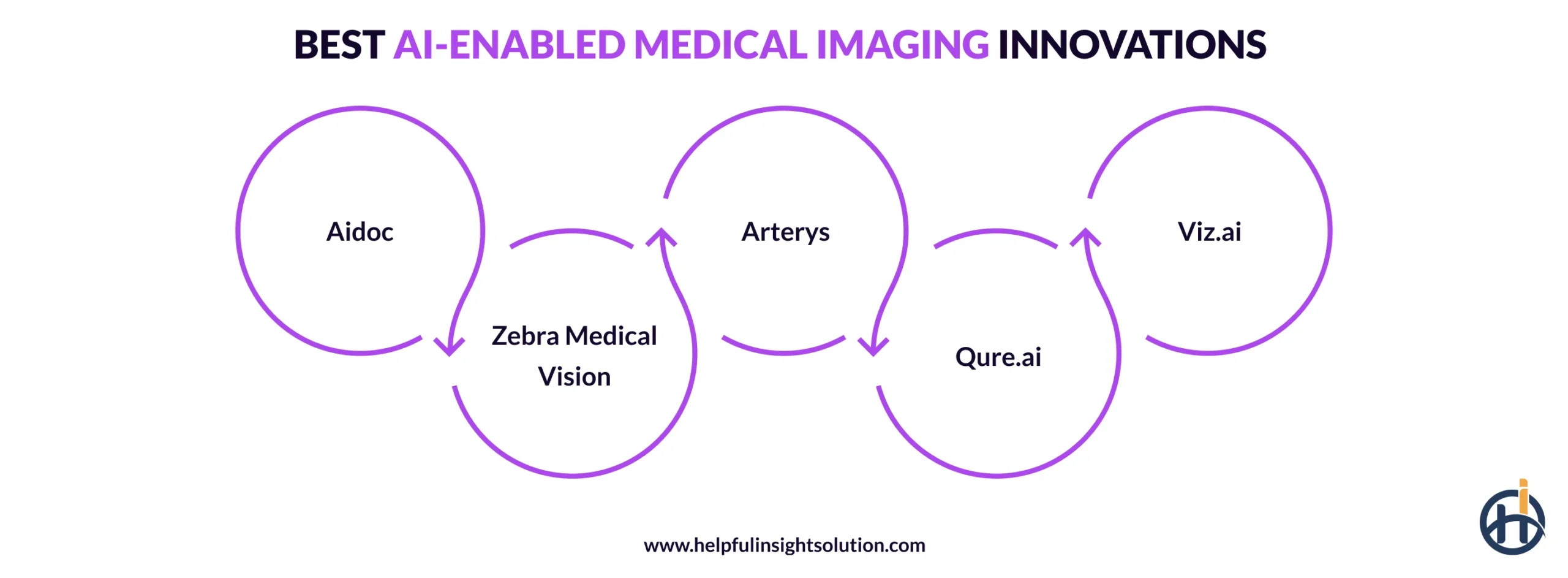
1. Aidoc
Aidoc performs artificial intelligence diagnosis to analyze medical images in real time. This helps radiologists detect critical conditions like strokes, hemorrhages, and pulmonary embolisms faster. It prioritizes urgent cases to improve clinical decision-making and patient outcomes.
Key Feature: Uses AI to automatically detect and prioritize critical findings like intracranial hemorrhage in medical scans for faster diagnosis.
2. Zebra Medical Vision
Zebra Medical Vision applies deep learning to medical imaging to identify a wide range of diseases. This medical artificial intelligence platform identifies various cardiovascular, liver, and lung conditions. Its AI solutions support early diagnosis and population health management.
Key Feature: Applies deep learning to identify a wide range of clinical conditions from CT and X-ray images at scale.
3. Arterys
Arterys is one of the best AI-powered medical imaging tools, delivering cloud-based AI medical imaging solutions. This involves AI development services to provide advanced 3D visualization and quantitative analysis.
It is used for cardiac, lung, and liver imaging to enhance diagnostic accuracy and efficiency.
Key Feature: Provides cloud-based AI imaging analytics with advanced visualization for cardiac and pulmonary assessments.
4. Qure.ai
Qure.ai leverages AI algorithms to interpret X-rays and CT scans for faster detection of healthcare conditions. This medical imaging artificial intelligence platform detects tuberculosis, brain hemorrhages, and lung problems.
It is especially impactful in improving diagnostic access in resource-limited settings.
Key Feature: Delivers AI-powered interpretation of X-rays and CT scans to rapidly detect tuberculosis, strokes, and lung abnormalities.
5. Viz.ai
Viz.ai uses AI-powered imaging analysis to quickly identify suspected strokes and large vessel occlusions. This AI medical imaging tool identifies various problems from CT scans. The platform instantly alerts care teams, reducing treatment delays and improving patient survival rates.
Key Feature: Uses real-time AI analysis to identify suspected strokes and instantly alert care teams for quicker intervention.
Severe Challenges with AI for Medical Imaging
Business investors must be aware of the AI medical imaging challenges that can affect overall user experiences. We will explore some risks with their respective solutions in this section:
1. Privacy & Security Risks
There is a risk of data theft and security breaches, as artificial intelligence is an open-source technology. The attackers can manipulate algorithms to affect the final results by disturbing the imaging patterns.
Solution: You should use AI in medical field with encrypted and highly advanced security algorithms.
2. Data Quality Issues
The AI technology is complex and can lead to the generation of inaccurate or deviated information. Additionally, this increases the AI agent development cost due to the need for data modelling.
Solution: It is important to enhance AI algorithms in medical imaging that can provide better results.
3. Clinical & Regulatory Barriers
Businesses may lack standard healthcare regulations, such as HIPAA, because of a lengthy process. There are a few clinical challenges, like equipment handling are associated with AI and medical diagnosis.
Solution: Build a proper ecosystem for handling inventories and ensure various medical standards.
Future of Medical Imaging with Artificial Intelligence
The medical imaging artificial intelligence sector has a bright future, as more innovations are going to be targeted. Let’s understand some major future scenarios for AI healthcare imaging in this section:
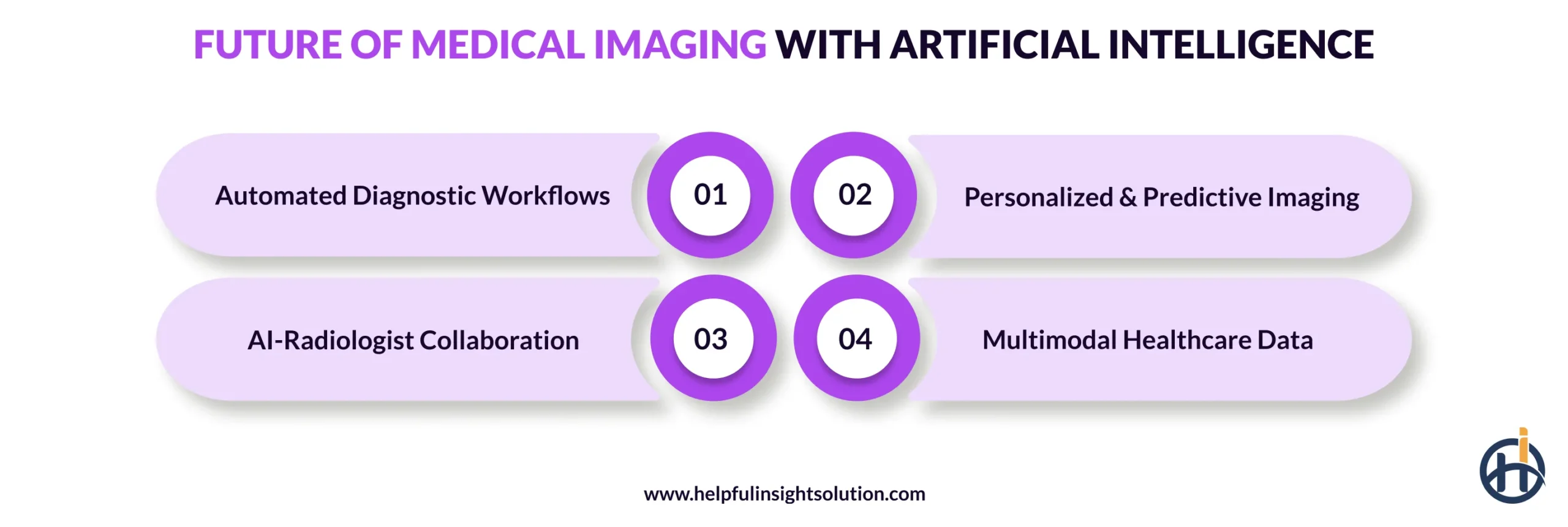
1. Automated Diagnostic Workflows
The use of AI in diagnosis automates image analysis, prioritizes urgent cases, and reduces manual efforts. This improves accuracy, enabling radiologists to focus on complex clinical decisions and operations.
2. Personalized & Predictive Imaging
Through AI integration in medical imaging, you can analyze patient data to predict diseases. It is beneficial to hire dedicated developers to customize treatment plans and long-term patient outcomes.
3. AI-Radiologist Collaboration
The artificial intelligence medical imaging systems enhance radiologists’ expertise without replacing it. This improves diagnostic confidence, reduces fatigue, and ensures more reliable interpretations.
4. Multimodal Healthcare Data
Various medical imaging AI platforms integrate data with clinical records and genomics for patient assessment. This unified view enables more informed diagnoses and data-driven healthcare decisions.
How Helpful Insight Helps Businesses in Integrating AI in Healthcare Diagnostics?
Till now, you have observed different AI-based medical imaging applications that are currently applicable in the market. Additionally, we have also discussed the top AI medical diagnosis software, which provides accurate imaging features and predictable results with enhanced treatment plans.
So, to start integrating AI in medical imaging, it is important to approach an experienced healthcare software development company that can deliver affordable services with dedicated developers.
The combination of AI and medicine improved existing healthcare standards for various doctors, clinics, and patients worldwide. With AI diagnosis, the detection of multiple medical emergencies like cancer has become easy.
So, it is beneficial to invest in the development of AI for medical imaging that will help you to increase user engagement, overall revenue, and brand visibility.
FAQs
Artificial intelligence technology helps healthcare experts to diagnose diseases through various medical techniques. It works with Radiology in the following manner:
- AI analyzes medical images using deep learning models.
- Algorithms detect patterns and abnormalities that indicate diseases.
- It assists radiologists by highlighting cavities for faster review.
- Predictive models help in disease classification and risk assessment.
- Continuous learning improves diagnostic accuracy and data processing.
The average cost of integrating AI in medical imaging ranges from $5,000 to $8,000, based on all the lowest parameters. Several factors, like the complexity of features, enterprise requirements, and the experience of developers, affect the overall rate. The cost may increase to $10,000 or more, as the levels of these market factors rise.
AI is one of the most powerful technologies that ensures the security and privacy of sensitive healthcare data of users through advanced algorithms. It integrates with cybersecurity and blockchain technologies that provide transparent access to stored data. Additionally, they perform security checks and provide standard encryption on database structures.
According to Markets and Markets, the global revenue of AI medical diagnosis is currently valued at $2.5 billion in 2026. It will increase to more than $4.7 billion by the end of 2029 at a whopping rate of 22.5 CAGR between 2026 and 2029. This represents that there is a lot of potential in the healthcare segment because of AI imaging and processing, allowing businesses to make more profit.
In medical imaging, AI can improve diagnostics and treatment planning through the prediction of healthcare results. The technology maintains accuracy through the following methods:
- AI enhances image analysis by detecting patterns that may be missed by the human eye.
- Automated algorithms reduce human error and variability in image interpretation.
- Continuous learning from large datasets improves diagnostic precision over time.