

Key takeaways
- Digital transformation in insurance industry means modernizing traditional processes with technologies such as AI, cloud computing, and automation to make operations faster and more connected.
- The global market for digital transformation in insurance is projected to reach $176.62 billion by 2035, showing the scale of continued investment.
- Digitalization can help insurance businesses reduce operational costs, simplify workflows, improve customer experience, and make better use of business data.
- Legacy systems, fragmented data, employee skill gaps, security requirements, and resistance to change remain major barriers for insurance businesses.
- Predictive risk intelligence, embedded insurance, personalized products, and digital payments are among the trends changing how insurance services are delivered.
Digital transformation in the insurance industry has shifted from a long-term technology goal to a practical business priority, as customers expect faster service and digital-first competitors set new expectations. That pressure is showing up in everyday work.
Underwriters need better access to risk data, claims teams need to move cases through faster, and policy servicing cannot depend on information being pulled from several disconnected systems.
For insurers still working around legacy technology, modernizing a legacy insurance system can be an important step toward removing these operational bottlenecks.
The aim is not simply to add new technology, but to make everyday processes easier to manage and information easier to use.
The growing investment in insurance technology points to the scale of the change ahead.
Market reports estimate that the global digital transformation of the insurtech market will exceed $176.62 billion by 2035. For insurers, however, the bigger question is where that investment should create measurable value.
The answer can vary from improving operational efficiency and risk decisions to reducing claims friction and giving policyholders more control over their policies.
If your insurance business is planning its digitization journey, this guide can help you evaluate the right priorities, technologies, and areas of investment.
What is digital transformation in insurance?
Digital transformation in insurance means moving away from slow, paper-heavy work toward cloud-based digital systems that make everyday operations easier to manage.
Insurers use technologies such as AI, machine learning, automation, and data analytics to improve areas like underwriting, claims, policy administration, and customer service.
It is also different from simply digitizing paperwork or adding a customer app.
Take underwriting as an example. Instead of relying on information spread across several systems, an insurer can bring relevant data into the workflow, connect claims history with risk models, and give employees a Digital Agent Workbench to access customer and policy details from one place.
For business leaders, adding another technology platform is rarely the end goal. What matters is whether it improves something that affects the business.
The impact of digitalization on the insurance industry can be seen when teams get information sooner, decisions take less time, and customers have fewer hurdles to deal with.
That is where digital investment becomes a business decision rather than simply an IT initiative.

Why do insurance companies need digital innovation?
The need for transformation becomes more apparent when insurers look beyond basic digitization and consider what technology can enable across the business.
This is where digital transformation services can support more connected and responsive operations.
Legacy system constraints
Legacy systems can make routine changes surprisingly difficult. A new product, data connection, or policy update may require changes across several systems.
Digital modernization gives insurers a way to address these constraints and build a more adaptable insurance technology infrastructure.
Rising customer expectations
Customers bring expectations from every other digital service they use, and they expect much of the same from their insurer.
A smoother experience means carrying information from one interaction to the next, simplifying complex steps, and offering personalized insurance experiences.
It’s less about insurers “going digital” and more about not making customers feel like they’re starting over every time they reach out.
Growing InsurTech competition
What InsurTech startups are really disrupting isn’t the product itself; it’s the pace at which products can be launched, tested, and refined.
Established providers are having to look closely at how InsurTech startups are reshaping traditional insurance models and what that means for their own businesses.
The insurers responding well aren’t scrapping everything they’ve built. They’re adding a focused insurance digital strategy around the areas where faster decisions and simpler processes can make a difference.
Pressure for business agility
Things move fast in the insurance sector, whether it’s a new risk nobody planned for or a regulation that just changed.
When the core systems are rigid, even an obviously good decision ends up stuck in implementation for months. Digital operating models give insurers more room to adjust workflows, launch changes, and respond without rebuilding the process each time.
Key areas of digital transformation in insurance operations
How is digitalization affecting the way insurers work day to day? The answer goes beyond simply moving paperwork online. It can change how teams handle claims, assess risk, work with data, and respond to customers.
Not every insurance function needs the same kind of digital change. Claims may benefit from automation, while underwriting depends heavily on timely data and risk insights.
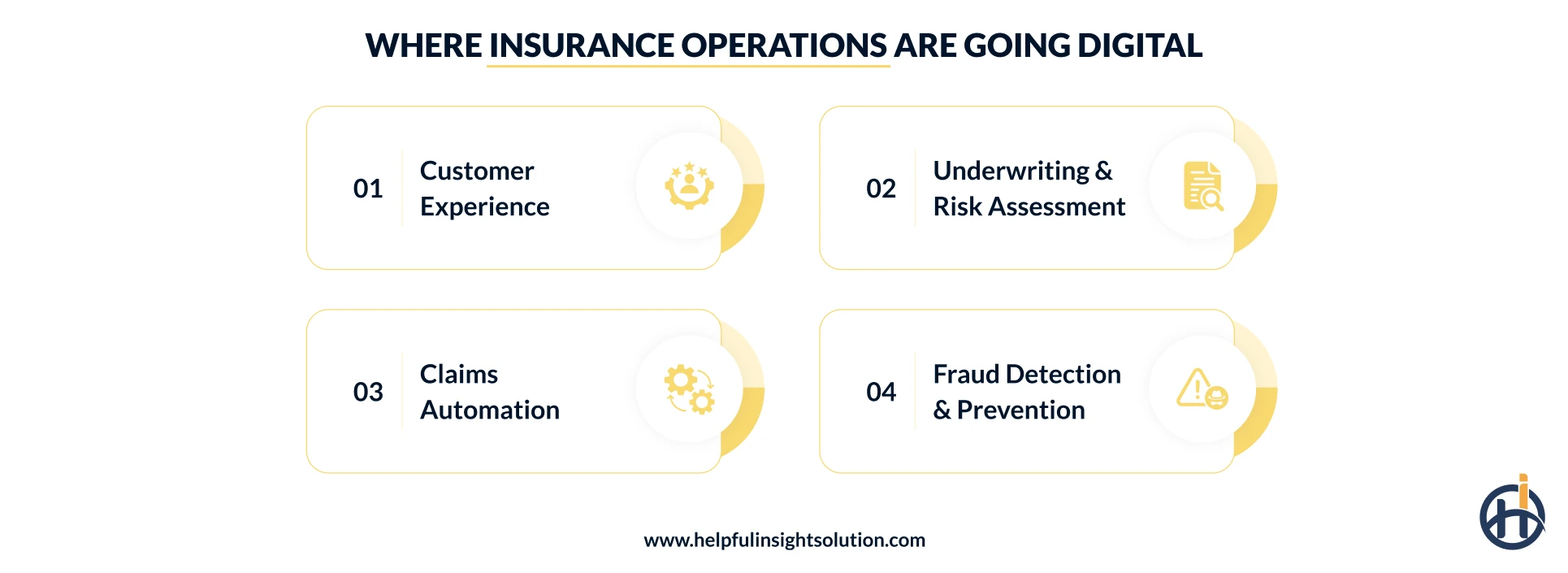
Looking at each area separately gives a clearer picture of where digital transformation in insurance can make a practical difference to the way work gets done.
Customer experience
Customer experience is becoming one of the key areas where digital innovation in the insurance industry is most visible. An insurer can use digital insurance platforms to make routine requests easier to handle and keep customers informed throughout a policy or claim cycle.
A connected view of customer data across different touchpoints can make interactions with insurers much less frustrating.
Policyholders can access relevant information without repeatedly explaining their situation or checking multiple systems for basic policy details.
At the same time, insurers have a clearer view of each customer’s history, making it easier to provide relevant responses and resolve requests.
This matters beyond convenience. Companies that place greater emphasis on customer experience can see 10-15% revenue growth, giving insurers a stronger business case for investing in digital experiences.
Underwriting and risk assessment
Underwriting has traditionally relied heavily on past claims, standard risk tables, and information that may not reflect a policyholder’s current situation.
Digital transformation is changing that by giving underwriters access to more timely and varied risk information.
With insurance underwriting software, claims history, telematics, customer data, and other relevant signals can be integrated into a single workflow.
Machine learning can then help spot patterns or unusual risk indicators for closer review. The technology supports the decision, but the underwriter still brings the experience and judgment needed for complex cases.
Claims automation
Digital transformation is making claims handling less dependent on manual coordination. Instead of moving information between emails, forms, and separate systems, insurers can connect the claims journey through an AI-powered claims management system.
With claims digital transformation, insurers can take routine checks out of the manual workload and let automation handle them in the background.
AI can assist with claim assessment and fraud screening where needed. Claim teams get a clearer view of each case, while straightforward claims can move ahead without sitting in a queue for basic checks.
Real-time fraud detection and prevention
A fraudulent claim can look much like a genuine one until the right pieces of information are compared.
This is where the impact of digitalization on insurance industry can make a practical difference.
When integrated with real-time data processing, predictive analytics can analyze claim history, transaction activity, and other available data to identify unusual patterns that may indicate potential fraud.
The insurer can investigate those cases sooner, while routine claims continue through the process without unnecessary delays.

Benefits of digital transformation in the insurance industry
As insurance companies modernize their operations, the value goes beyond introducing new digital tools.
Changes in workflows, data use, and customer interactions can affect how efficiently digitization in insurance industry operations runs the business and how quickly teams respond.
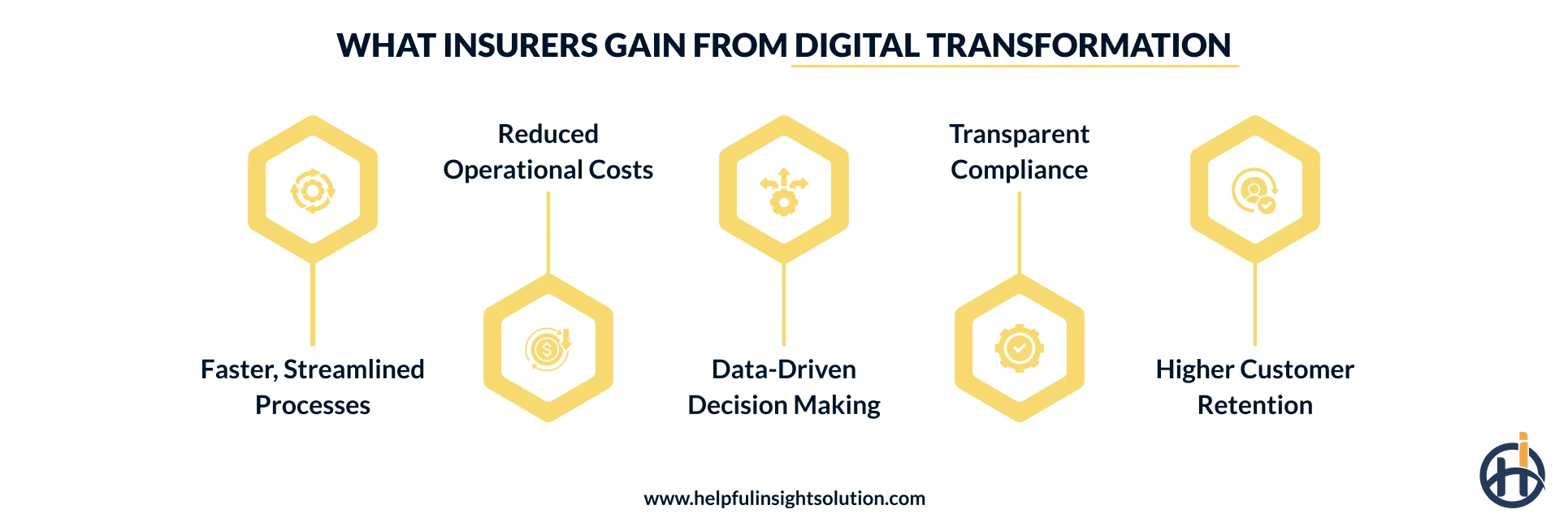
The benefits of becoming more visible when these changes lead to measurable improvements.
Streamlined insurance processes
In many insurance teams, the time lost is not always in the work itself but in everything around it, such as waiting for approvals, checking status, or entering the same details again and again.
Process automation can take some of that routine work off employees need to manage. It keeps tasks moving between teams, cuts unnecessary handoffs, and makes it easier to see where a process is getting stuck.
Lower operational costs.
For insurers, cost savings often come from removing repeated work rather than simply cutting resources. Digitization in the insurance industry can reduce manual processing, paperwork, and the effort required to move information between systems.
Claims operations are a good example, as leading carriers have reported 20% to 35% lower operating costs after implementing claims digitalization programs, freeing resources for higher-value business priorities.
Smarter data-driven decisions
Insurance decisions often depend on information coming from many places, and the challenge is knowing which signals actually matter. Advanced analytics can bring claims, customer, market, and external risk data together to reveal patterns that are difficult to spot manually.
Use of artificial intelligence in insurance can take this further by identifying emerging risks and supporting pricing, product, and portfolio decisions with more current evidence.
Greater compliance transparency
For insurers, regulatory compliance is not only about meeting requirements, but it is also about being able to show how those requirements were followed.
That is where insurance compliance technology becomes valuable, logging key actions and approvals as they happen across digital workflows.
When an audit does arise, teams can access the relevant records more easily and identify missing controls before they become larger compliance issues.
Stronger Customer Retention
A customer’s decision to stay is not always made when renewal comes around. It can be shaped by the small interactions in between like how easily a policy can be managed, getting reminders at the right time, or having to make a phone call for simple requests.
digital transformation of insurance operations can make these everyday interactions easier and give insurers more opportunities to stay relevant to their customers.
Key challenges of digital transformation in insurance and how to address them
Moving to digital can be harder when the existing setup has several moving parts. Data might be stored in different places, employees may need time to get comfortable with new tools, and any changes to established processes still have to satisfy regulatory requirements.
As digitalization in insurance industry moves forward, businesses have to deal with these practical issues without interrupting the work already underway. Addressing them early can help keep the transformation on track and avoid creating new operational risks.
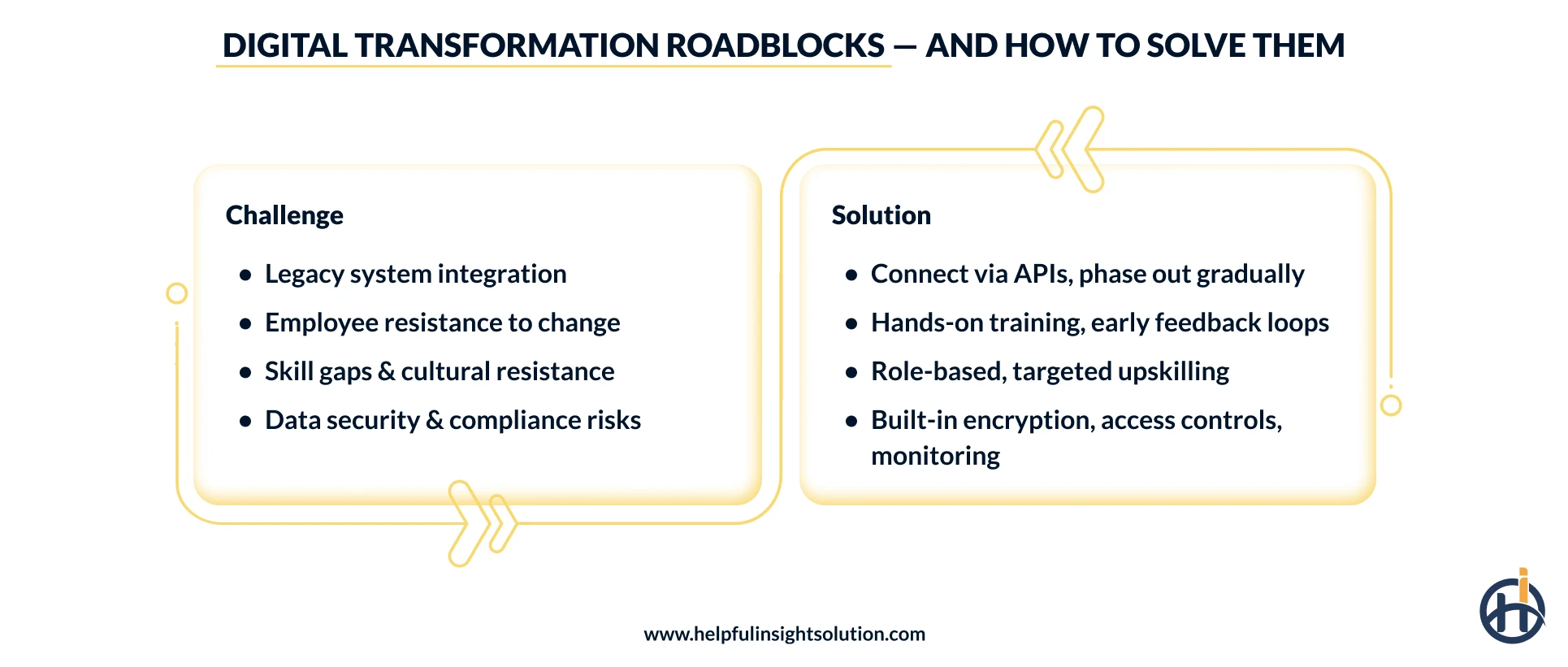
This section explores the key challenges of digital transformation and how insurance carriers can address them.
Legacy system integration
The trouble with an older insurance system usually doesn’t show up until something new needs to connect to it.
A policy portal that’s been running fine for years may not share data easily with a cloud application or AI tool. Getting the two systems to work together often means additional development, more rounds of testing, and longer timelines before anything new is actually ready to use.
Solution
A step-by-step approach can make the transition easier to manage. New capabilities can be connected through APIs, while the systems causing the biggest operational issues are addressed first.
Older components can then be phased out gradually, without putting essential insurance processes on hold.
Employee resistance to change
Changing a familiar process can take some getting used to, even when the new system is better. Employees may be unsure about what the change means for their daily work or worry that they will take longer to complete routine tasks.
If those concerns are ignored, they can quietly affect adoption and become a real insurance operations digital transformation challenge.
Solution
Training can explain how a new system works, but it does not show where employees may struggle with it. Giving teams time to use the actual workflow can uncover those gaps early.
Their feedback can then be used to make practical changes before the system becomes part of everyday work.
Data security and compliance risks
Digital insurance operations depend on large amounts of sensitive information, from customer details to claims and payment records. Once that information moves between multiple platforms, the risk is no longer limited to one system.
A weak connection, excessive access, or missed regulatory requirement can create problems that are expensive to fix later.
Solution
Security should be considered while new systems are being designed. Data encryption, access controls, regular security reviews, and automated compliance monitoring can help teams protect information while keeping pace with IT compliance regulations.
Skill gaps and cultural resistance
A transformation can lose momentum when the required skills are not available internally. At the same time, people who have relied on familiar processes may question a new approach or simply continue using old workarounds.
For insurers, insurance operations digital transformation challenges are therefore not only technical; they also involve how teams learn and adapt.
Solution
First, figure out which teams actually need new skills. A claims team, for example, may need hands-on training with a new workflow, while the IT team may need deeper platform knowledge.
Training can then follow the work instead of being a generic company-wide exercise.
Best practices to implement digital transformation in insurance
Technology alone does not make digitalization work. An insurance business also needs to know what it is trying to improve, where to start, and how to tell if the investment is paying off.
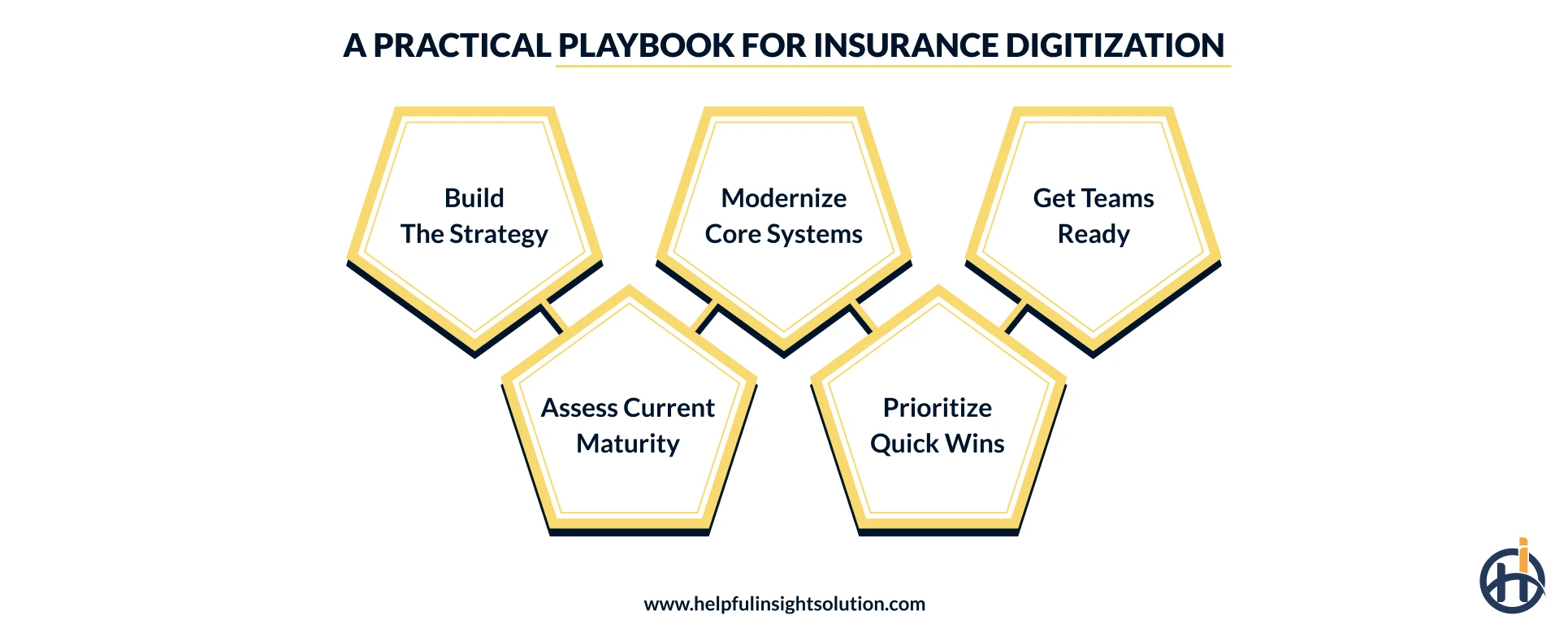
For insurance companies investing in digital transformation, the practices below can help keep the work practical and avoid unnecessary complexity.
Build a practical digital strategy
It is easy to build a long list of technologies an insurance business could adopt. That does not make it a strategy. Start with the areas that need improvement, decide what should happen first, and put clear ownership around each project.
This keeps digital investment focused on problems the business actually needs to solve.
Assess digital maturity first
Evaluate the current setup before bringing in another platform or technology. Speak with the teams using these systems every day and find out where they lose time, work around existing tools, or enter the same information twice.
This kind of technology readiness review gives insurance startups or established companies a much clearer idea of what needs attention first.
Modernize core operations
Before replacing core systems, take a close look at how routine work gets done. Identify the steps that depend heavily on emails, spreadsheets, paper records, or repeated checks. Then focus insurance process optimization on those areas first.
Automating suitable tasks and connecting related workflows can reduce unnecessary effort and give insurance teams more time for work that requires experience and judgment.
Prioritize high-impact initiatives
Start with projects where the benefit is easy to see and measure. A faster claims workflow, simpler policy servicing process, or easier document submission can deliver a useful early result.
As insurance process digitalization progresses, these smaller wins can help justify further investment and give teams practical experience before tackling larger, more complex projects.
Prepare teams for change
Bring employees into the process before new tools are rolled out. People working policies, claims, and customer requests day to day tend to catch problems others miss entirely. Give them hands-on training, explain what is changing, and create space for feedback.
This makes digital transformation in insurance operations easier to adopt because employees understand how the new process affects their work.

Digital insurance trends reshaping the industry
Technology is changing insurance in ways that go beyond adding new digital channels.
Some developments are influencing how policies are priced, how risks are understood, and how decisions are made behind the scenes. As these changes become more practical to adopt, they are likely to shape the next phase of insurance.
Let’s explore the key insurance digital transformation trends driving this shift.
Embedded insurance
Embedded insurance puts coverage into the buying journey instead of making policyholders search for it separately. A travel site, car rental service, or online retailer can offer relevant protection during checkout, when the need is already clear.
This digital innovation in the insurance industry can also open new distribution channels and help insurers reach customers through businesses they already use.
AI-powered customer service
Customer service is where the artificial intelligence role in insurance feels most everyday now.
An AI chatbot handles the routine stuff, explains basic policy details, and directs people to the right place, no agent wait required. Within digital transformation in the life insurance industry, that means less pressure on support teams, with human help still there when needed.
Predictive risk intelligence
Insurance risk assessment is becoming more forward-looking as insurers bring together data from connected vehicles, smart devices, claims records, and other sources.
Predictive models can pick up patterns that point to a changing level of risk and give teams time to respond. This shift, supported by digital transformation for insurance, can lead to more informed pricing and earlier risk intervention.
Hyper-personalized insurance products
Insurance products are becoming more flexible as connected data gives insurers a better understanding of individual needs.
A policy can be shaped around factors such as vehicle usage, travel frequency, or changing risk rather than relying only on broad customer categories.
Data-driven insurance products can give customers coverage that better matches their circumstances, while giving insurers more room to develop flexible offerings for different customer segments.
Rise of digital insurance payments
Digital payments are becoming a more practical part of the insurance experience, from paying premiums to receiving claim settlements.
Mobile wallets, bank transfers, and recurring payments can be built into an insurance mobile app, so customers do not have to switch between different services.
This wider digitalisation in insurance industry can also help payment teams reduce manual handling and give customers a quicker way to complete routine transactions.
How does Helpful Insight help insurers modernize their operations?
The value of going digital is not simply having another app or online service for customers. It can also change how information moves through the business and how employees handle everyday work.
For digital transformation in insurance industry to deliver lasting value, insurance businesses need to focus on practical improvements that support both current operations and plans.
This is where the right technology partner can make the process easier to navigate. We are a leading insurance software development company that works with insurance companies, startups, and insurTech businesses to identify practical opportunities for digitization and turn them into solutions that fit existing operations.
Whether the goal is to modernize an existing workflow, develop an insurance portal, or introduce AI and automation, the approach needs to match the business requirements.
Every insurance business has different processes, which makes relevant experience worth considering when choosing a technology partner.
Our portfolio offers a closer look at the projects we have worked on and the way we approach different digital requirements.
If you already have a process in mind that needs to be digitized, or are still working out where to begin, we can help you evaluate the options and plan the next step.
Frequently Asked Questions
Digital transformation is reshaping the insurance industry by replacing manual processes with cloud platforms, AI, and automated workflows.
The impact shows up in faster claims settlement, quicker underwriting decisions, and lower operational costs.
The use of AI in insurance can reduce the amount of routine work handled manually. Claims teams can use it to review documents, underwriters can assess risk using more data, and customer service teams can handle common queries through AI assistants.
Generative AI can also help insurance businesses spot patterns and respond to customers more efficiently.
Insurance businesses use a mix of technologies depending on what they are trying to improve. AI, machine learning, IoT, cloud computing, and RPA are some of the emerging technologies used for digitalization in the insurance sector.
For most insurance businesses, implementation works better as a series of manageable projects rather than one large technology overhaul. Start with a clear business problem, test the solution, and expand it once the results are clear.
- Review existing systems and find the biggest operational gaps
- Decide which problems should be addressed first
- Replace or upgrade legacy systems in manageable stages
- Connect systems so information can move between teams
- Automate repetitive work in claims and policy servicing
- Give employees time to learn new tools and workflows.