


Key takeaways
- Predictive analytics in ecommerce uses past data, statistical models, and machine learning to forecast future trends and anticipate shopper behavior.
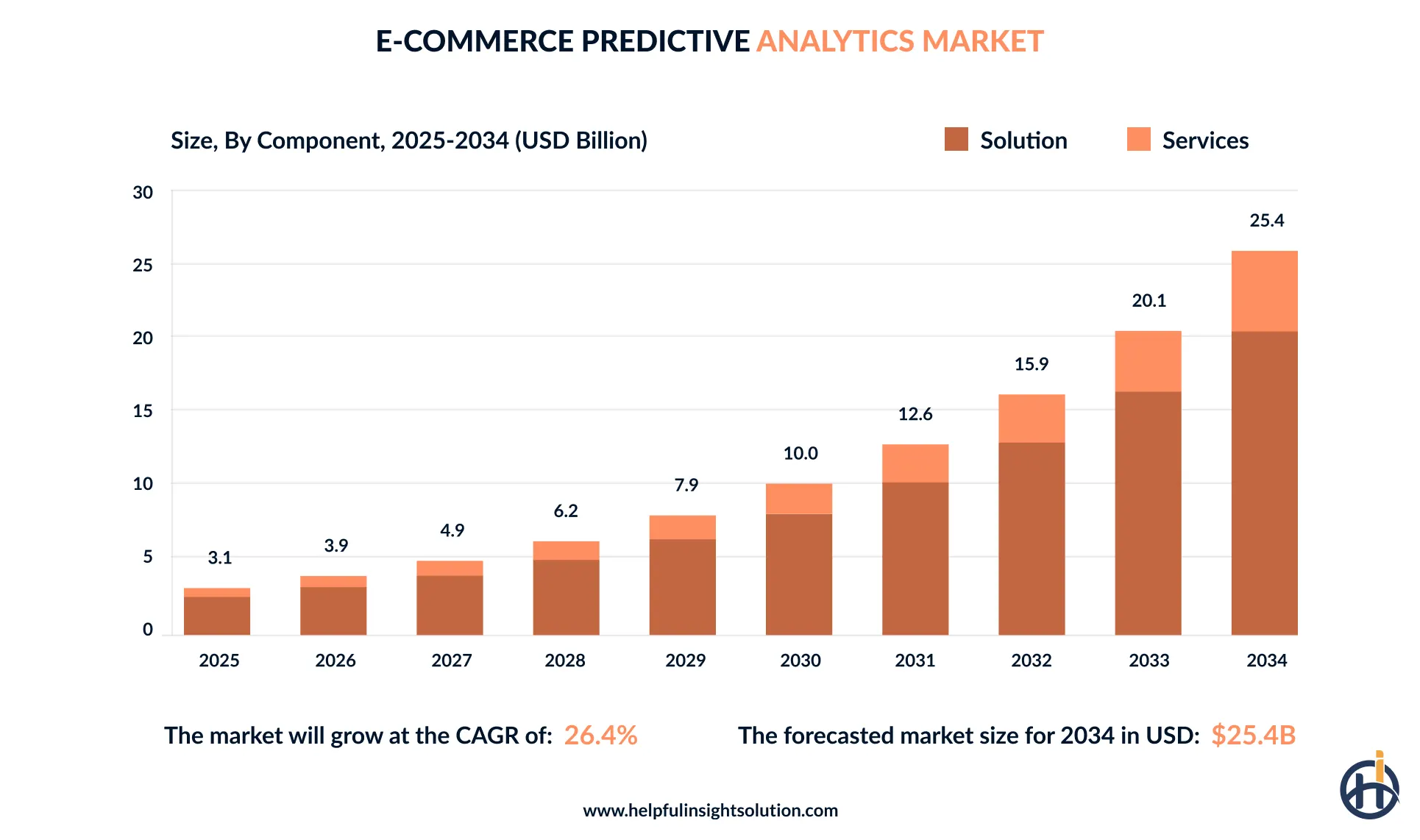
- The ecommerce predictive analytics market is projected to reach $25.4 billion by 2034, suggesting AI-based forecasting is becoming more common among online stores.
- Customer behavior analysis, reduced cart abandonment, real-time fraud detection, and personalized product recommendations are the top use cases of predictive analytics in ecommerce.
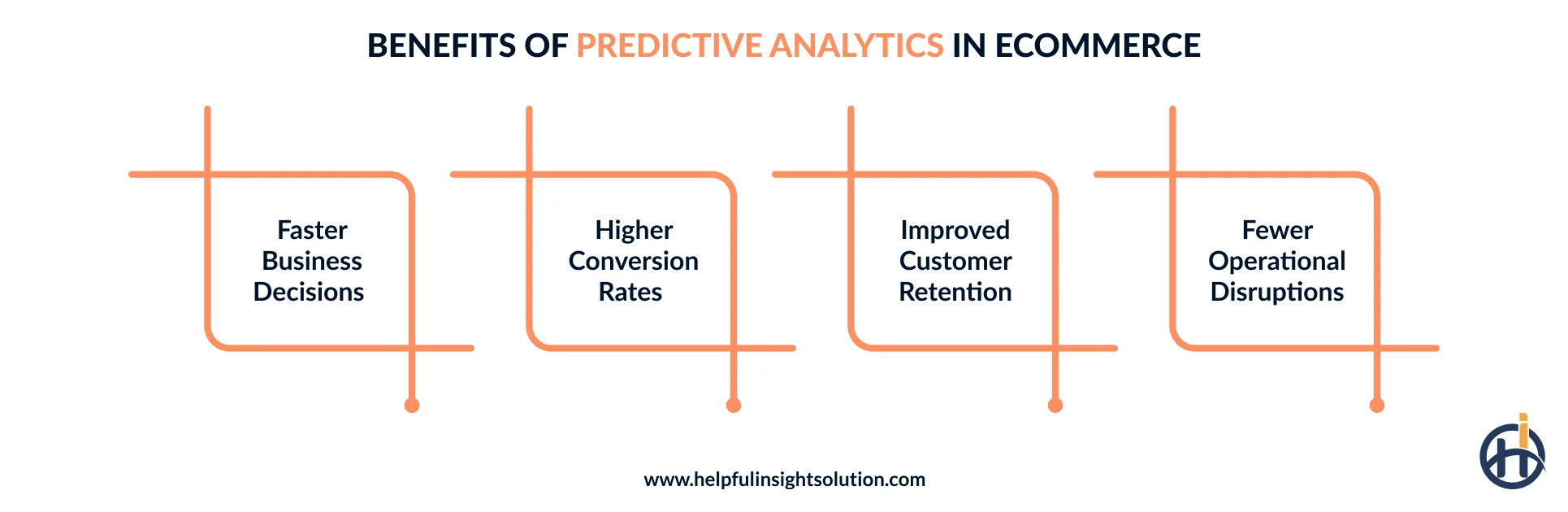
- Predictive analytics for ecommerce can help improve business agility, conversion rates, and customer satisfaction while reducing operational disruptions.
The ecommerce business is full of decisions that are hard to get right every time. Which products will customers want next month? How many website visitors will actually buy?
Are your ads reaching the right people? By analyzing past purchases and browsing activity, predictive analytics in ecommerce helps you forecast demand, buying intent, and ad performance well before they impact business decisions.
Keeping track of an online store means dealing with more than orders. There are returns to review, customer feedback to read, and marketing reports to check. It’s easy to miss something when all this information is spread across different tools.
Businesses use predictive analytics in retail and ecommerce to make better sense of their data. According to a Market.us report, the global ecommerce predictive analytics market will reach $25.4 billion by 2034. That growth suggests forecasting is becoming standard practice for many eCommerce stores.
Knowing where to start and which applications fit your business can take some thought. In this guide, we’ll look at the key uses of ecommerce predictive analytics, its benefits and the steps involved in implementation, along with common challenges businesses may face.
What is predictive analytics in Ecommerce?
Predictive analytics in ecommerce refers to the practice of using historical data, statistical techniques, and machine learning to forecast future customer behavior and business trends.
In practice, an online store can see which products may attract more buyers, which customers might make another purchase, and where sales are likely to slow down. That’s useful when business owners are deciding on promotions, improving the shopping experience, or choosing where to put a limited budget and effort.
What are the use cases of predictive analytics in Ecommerce
Every business has its own priorities, whether it’s understanding customer behavior or making better marketing decisions. Ecommerce companies can use predictive analytics technology in different parts of their operations to get a better idea of future customer behavior and sales trends.
Below are some common predictive analytics use cases in eCommerce:
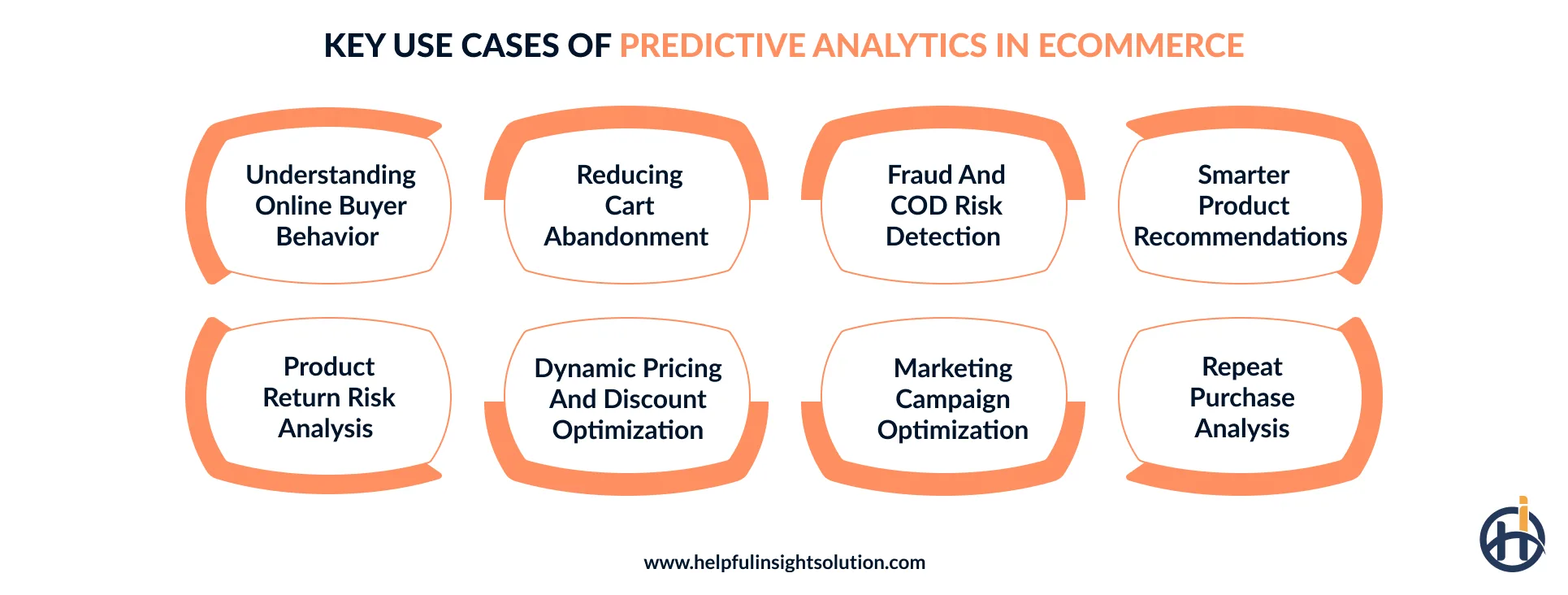
1. Understanding online buyer behavior
A visitor who lands on a product page and orders within two minutes is easy to read. Most aren’t like that. They open five tabs, leave, and come back on Friday.
Predictive analytics studies the searches, page visits and past orders behind those habits and estimates each person’s purchase intent. Ecommerce stores can use these findings to spot likely customer interests and make changes to product displays or suggestions based on how people shop.
2. Reducing cart abandonment
It’s much easier to deal with abandoned carts if you can see the warning signs early. Predictive analytics software for ecommerce looks at cart value, whether the shopper tried to check out before, and how they’ve behaved on past visits. From that, it finds the patterns that usually end in an incomplete order.
This helps businesses find out which shoppers may need a reminder or extra information and focus on likely drop-offs instead of sending the same offer to everyone.
3. Fraud and COD risk detection
A fraudulent payment and a rejected COD order create different problems, but both can cost an online store money. One may lead to a chargeback, while the other leaves a parcel to be shipped back.
Predictive analytics for fraud detection in ecommerce studies order value, delivery address, device, and a buyer’s earlier orders to give each order a risk score. High-risk orders can be flagged for review or additional verification under the retailer’s policies
4. Smarter product recommendations
Showing a customer products they have no interest in is unlikely to lead to a sale. Predictive analytics solutions look at what people browse and buy to find products they may want to see next.
It also gives predictive analytics in marketing a practical use when planning product promotions. For example, a customer who buys a phone might see a case or screen protector suggested on the store’s website or in a follow-up email.
5. Product return risk analysis
Predictive analytics tools examine past returns and connect them to specific products, sizes and order types. Some items come back because of fit. Others come back because the product image sets the wrong expectation.
Product return risk analysis makes these links visible before more units ship. Ecommerce stores can then correct product descriptions, expand size guides, or investigate items whose return rate is higher than expected.
6. Dynamic pricing and discount optimization
A discount can bring in more customers, but offering one on every product is not a smart move. Predictive analytics solutions for ecommerce can compare sales history with demand changes and competitor prices to estimate whether a price adjustment is likely to make a difference.
This also gives stores a better reason for choosing a discount instead of making a guess and guides pricing decisions so ecommerce business owners don’t give away their margins on products customers may have bought at the regular price.
7. Marketing campaign optimization
An ad may get plenty of clicks and still bring in very few orders. Ecommerce predictive analytics looks at earlier campaigns to find out which ads attracted people who actually bought something. This gives online shopping platforms a better basis for planning their next campaign.
With AI-powered predictive analytics in ecommerce advertising, they can decide which ads deserve more spending and which ones need a change before more money goes into them.
8. Repeat purchase analysis
Some people buy certain products regularly, while others leave a much longer gap between orders. Predictive analytics software for ecommerce looks at purchase history to work out these habits and estimate when a customer might buy again. That gives online sellers a better sense of when to reach out.
Online sellers can use this to send reminders when they’re more likely to be useful, rather than emailing everyone. One reported statistic puts the average sales increase from predictive analytics at 15%, but the outcome won’t be the same for every retailer.
Key benefits of predictive analytics for Ecommerce businesses
Using predictive analytics can help digital storefronts manage inventory, reduce customer churn, and make better decisions using their data. Let’s explore the key benefits of predictive analytics in ecommerce and where they can make a difference.
1. Faster business decisions
Things don’t always go as planned in a business, as customer demand can shift, and a campaign may not perform as expected. Predictive analytics gives an early indication that something may be changing, based on sales data and past trends.
With predictive analytics services for ecommerce, teams can make decisions with more time to respond, which is an important part of business agility.
2. Higher conversion rates
Getting visitors to your ecommerce website is easy compared with getting them to place an order. Someone may browse several products and leave without buying a thing. AI-powered predictive analytics in ecommerce looks at what people have bought and viewed in the past.
With this information, store owners can see more clearly what shoppers want to look at. Show people the right products and more of them will finish their purchase.
3. Improved customer retention
Some customers buy from a store once and never return. Others place orders for months before they stop. Predictive analytics helps stores spot changes in buying patterns and identify customers who may be losing interest.
With generative AI in ecommerce, stores can turn these insights into personalized messages based on each customer’s previous orders, instead of sending generic offers that feel the same to everyone.
4. Fewer operational disruptions
Predictive insights show where supply chain pressure may build, whether during a festive sale, bad weather or a sudden rise in orders. Teams can arrange shipping partners and warehouse capacity before things get busy.
This gives them more room to handle the rush, avoid delays and keep order fulfillment moving when order volumes climb.
How to implement predictive analytics in an Ecommerce store: Step by step
Getting started with predictive analytics means figuring out what you need from it first. Your data, your goals and the way your store runs all matter when choosing an approach. Here, we’ll go through the main steps to implement predictive analytics in ecommerce and put the results to use.
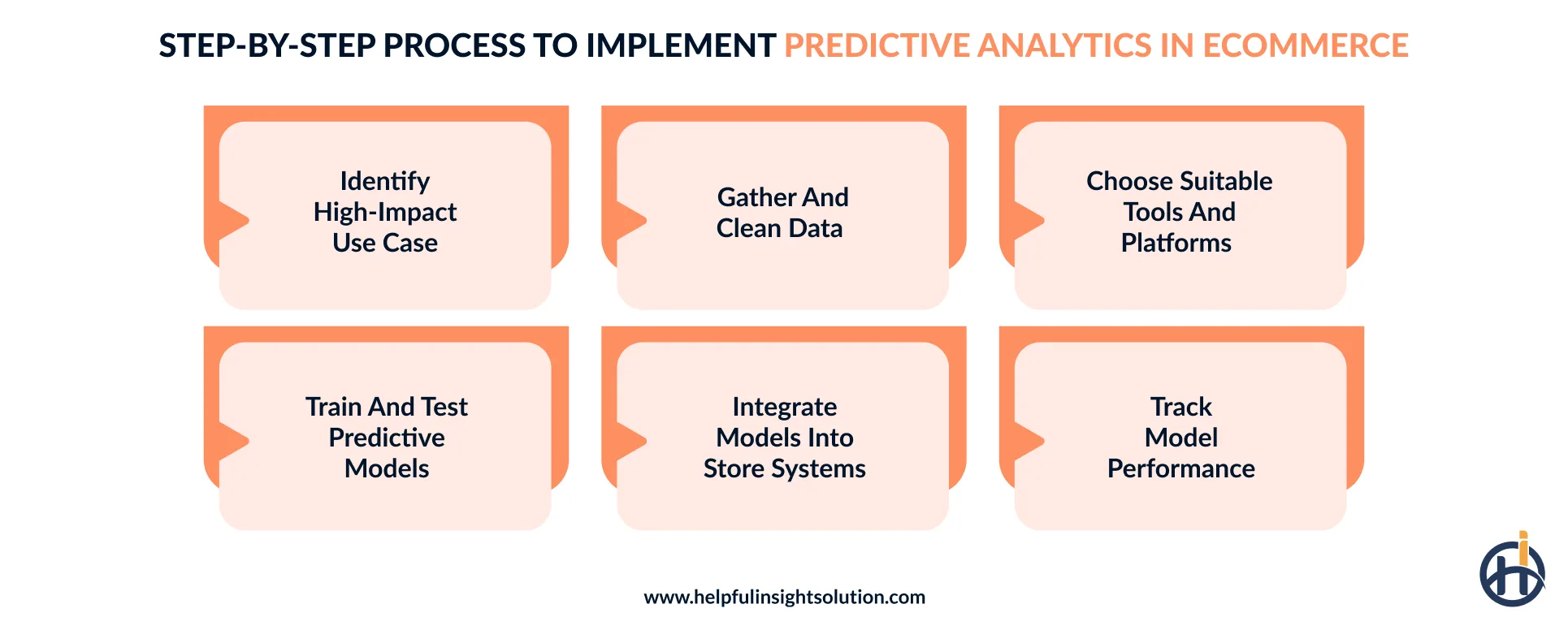
1. Identify high-impact use case
The very first thing is to decide what you need a predictive analytics system to do. Check which problems the store keeps running into and where the current data falls short. Common starting points are customer retention, purchase intent and campaign performance.
An AI consulting and development company can assess your goals and data to help you find out which use case deserves the first attention.
2. Gather and clean data
With the use case decided, go through your existing data. Check order records, website activity and feedback from customers. Bring the relevant data together and look for missing details or duplicate entries. Proper data collection and preparation is what makes the model’s results something you can actually trust.
3. Choose suitable tools and platforms
The right platform is the one that handles the predictions a store actually wants to make. It’s worth looking at the current software first, since the features may already be there. If they do, there is nothing more to buy. A separate tool only makes sense for specific needs the software can’t meet. Even then, make sure it connects to the existing system.
4. Train and test predictive models
After preparing the data, train the model to spot patterns in customer behavior. But don’t assume it will get everything right. Check its predictions against customer activity it hasn’t seen before.
Use later records when behavior changes over time, and keep future information out of training. Fix problems before relying on a predictive analytics tool for real decisions.
5. Integrate models into store systems
Put the model to work by connecting it to your store’s product pages, email system, or other relevant features. A prediction about customer preferences, for instance, can shape the products someone sees.
If your ecommerce service also has an app, integrate the model there to use predictive analytics in mobile apps and check that it works smoothly on both platforms.
6. Track model performance
It is very important to continuously monitor model performance once your store starts using its predictions. Check whether conversion rates and average order value improve. Watch for changes in prediction accuracy, too.
If the results begin to slip, retrain the model with recent customer data so it stays relevant to current buying habits.
Challenges of predictive analytics in Ecommerce
Although predictive analytics in ecommerce can support better customer and sales decisions, getting it to work well takes careful planning. Companies may face issues with data, integration, or model accuracy along the way.
Spotting these obstacles early gives dedicated developers and store owners a clearer idea of what needs attention during development.
1. Inaccurate or duplicate data
Customer information in an ecommerce store usually comes from several places. The CRM system holds some of it, and payment and marketing tools hold the rest. Problems start when these records don’t match.
An order goes missing, or one customer record shows up twice. Checking records and fixing mismatches before analysis prevents a lot of poor predictions.
2. Data privacy regulations
Ecommerce stores need to follow privacy rules when collecting customer information. GDPR and CCPA set limits on how personal data can be used and give people options to refuse certain tracking or request deletion.
Ignoring these requirements can lead to legal trouble. Stores should review their data practices, tell customers why information is collected, and respond to deletion requests in line with the law.
3. Model drift over time
Customer habits change, so a model cannot always rely on old patterns. An offer that attracted buyers last year may not work the same way today. Over time, this can affect the accuracy of its predictions.
Checking predicted results against actual customer behavior helps spot these changes. If the model starts making more mistakes, retrain it using recent customer data.
4. High implementation costs
For a small ecommerce brand, predictive analytics can be expensive to set up. Software, data storage, and hiring skilled developers all add to the expense. To keep costs under control, begin with one clear use case and expand only when the results justify further investment.

Conclusion
Predictive analytics is changing how ecommerce businesses understand customers and make decisions. Instead of relying only on past sales, teams can use customer activity to estimate what people may buy next and which offers are worth trying.
As AI technology develops, predictive tools may also spot changes sooner and suggest actions with less manual effort. Human review will still matter, especially when predictions affect pricing, customer data, or spending decisions.
Putting these tools to work takes more than choosing a model. The data must be reliable, the software needs to fit the existing store, and predictions must be checked against actual results.
That’s where Helpful Insight’s expertise can help. Our predictive analytics development company has hands-on experience developing advanced AI solutions for the ecommerce industry.
Our team can help plan, build, and integrate predictive analytics around the specific needs of businesses. Backed by certified developers, we use the latest tools and technologies and choose the right ones for each project. For businesses looking for a development partner, we can guide the work from the first use case to a working solution.
Connect with our team today to share your project requirements.
FAQs
Predictive analytics works by looking for patterns in data collected over time. This may include orders, browsing activity, customer records, and campaign results. After the data is checked, a model uses it to make forecasts. These findings can be shown in reports or dashboards so teams can understand what may need attention.
Predictive analytics models learn from earlier customer behavior and flag likely buyers and those about to drift away. Targeted offers, reminders, and product suggestions follow, raising conversions and encouraging repeat orders over time.
The right tool for predictive analytics in ecommerce depends on the use case, whether it is demand forecasting or churn prediction. Triple Whale, Klaviyo, and a few others are among the top predictive analytics tools for ecommerce.
Amazon’s recommendation engine learns from each shopper’s activity to suggest relevant products. Walmart uses demand forecasts, including seasonal patterns, to stock the right items and deliver online orders on time.