

Key Takeaways:
- The average cost of creating grocery delivery applications is between $5,000 and $50,000, which can increase further.
- Some of the major cost-affecting factors include feature complexity, location choice, platform selection, and development stages.
- Businesses can reduce expenses by implementing various techniques such as MVP, cross-platform, and third-party APIs.
- It is crucial to resolve various challenges through monetization and brand marketing.
Do you know that the grocery industry is one of the most rapidly growing sectors in the world in terms of aggregate e-commerce sales? If we talk about the largest regional market, North America will generate a revenue of $2.2 billion by the end of 2030.
The online supermarket stores and businesses are becoming more popular due to advanced delivery features and instant services. Additionally, investments to create a grocery delivery app are increasing due to high user demand.
Most entrepreneurs have started following the key monetization strategies for future-ready grocery delivery app solutions. So, they can make profitable revenue, increase their business value, and ensure constant user engagement. To start early, it is crucial to understand various aspects that affect the business model on a large scale.
You will study the grocery app development cost based on several factors, such as platform complexity, experience of developers, and development stages. We are also going to observe some cost-reducing methods and app-making challenges.
What are there for Businesses in the Grocery Industry?
The grocery industry is increasingly growing at a rate of 28.2% CAGR between 2026 and 2034, and its current value is $906 billion across the world. It offers a platform to vendors, retailers, and distributors for consistent revenue generation.
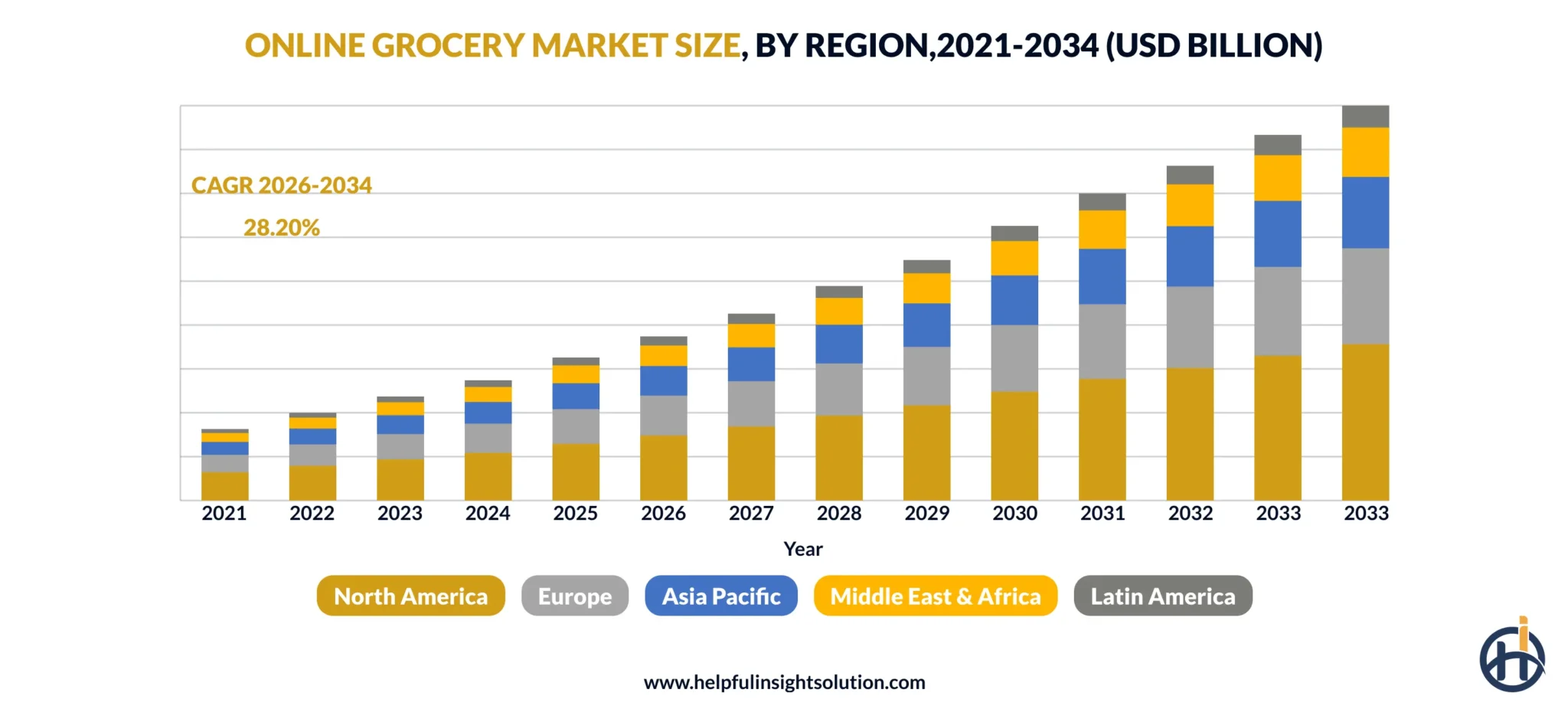
They can target various user-specific products, such as vegetables, fruits, and dairy, offering multiple delivery services. In North America, Walmart, Kroger, Costco, and Albertsons are the major online grocery chain brands that are connected with multiple stores. Entrepreneurs must approach a reliable grocery delivery app development company in the USA to get affordable services and start an online business.
There is high competition and increasing user demand in this domain, allowing businesses to invest more in profitable resources. It is beneficial to know the cost to develop a grocery delivery app for sustainability, expansion, and enhanced experiences. Various technologies, like AI and IoT, also support the grocery infrastructure, increasing the number of users and business revenue.
Business Models Influencing the Grocery App Development Cost
This section brings the top business models impacting grocery app development cost due to different user bases. They target multiple enterprises that deliver grocery services to regional or global consumers.
1. Inventory-Based Model
It is a capital-oriented model where businesses manage their stocks, warehouses, or dark stores to make higher profits. Additionally, it also helps them to increase quality control, but increases the system cost due to advanced technologies.
2. Marketplace/Aggregator Model
In this model, customers can directly connect with multiple local stores, allowing businesses to make revenue through commissions. The best grocery delivery apps, like Instacart, generate income by using this profitable approach.
3. Hyperlocal/Quick Commerce Model
This service allows grocery companies to deliver ordered items within 10-20 minutes to consumers, reducing market delay. A platform like Gopuff is the best example that provides quick commerce in various US cities.
Average Grocery Delivery App Development Cost by App Complexity
The cost to create a grocery delivery app is highly affected by the project and feature complexity. Businesses can choose to make simple platforms at affordable rates with user registration, a cart checkout, and product description features.
To implement advanced services, like order tracking, route optimization, automated payments, and discounted deals, it is beneficial to keep a dynamic budget. These features use the latest technologies, such as AI and IoT, that gather real-time user information and provide personalized results.
All these parameters may create confusion for businesses in calculating the accurate charges. So, it is recommended to use a cost calculator that helps in estimating the right price based on key features and complexity levels. Here is a table describing the grocery ordering app development cost based on app complexity in detail.
| App Complexity | Key Features Included | Estimated Cost (USD) |
| Basic App (MVP) | User login, product listing, cart, checkout, basic tracking | $5,000 – $15,000 |
| Moderate App (Mid-Level) | Real-time tracking, multiple payment options, notifications, admin panel | $15,000 – $35,000 |
| Advanced App (High Complexity) | AI recommendations, analytics dashboard, multi-vendor support, cloud backend | $35,000 – $60,000 |
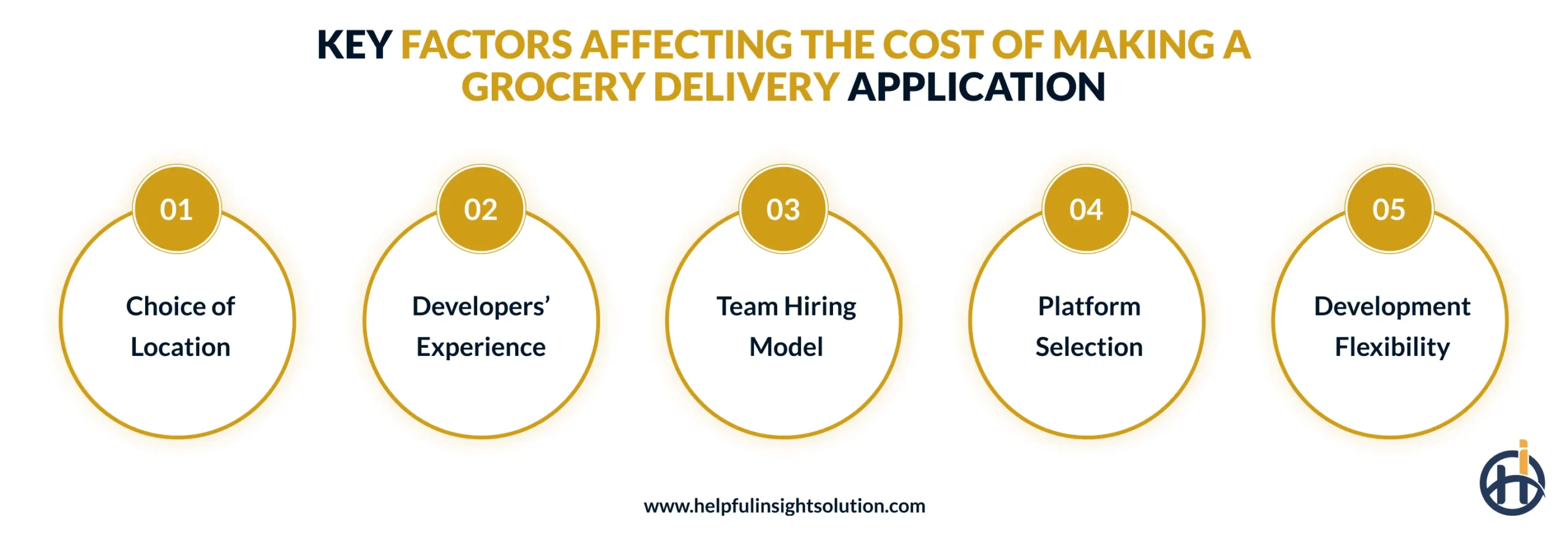
Key Factors Affecting the Cost of Making a Grocery Delivery Application
Some common factors affecting the cost of developing a grocery delivery app force businesses to think before investing. Here, we will discuss those points with their respective cost parameters in detail.
1. Choice of Location
Businesses can hire expert teams from different regions, like the USA, Canada, and the UAE, to make advanced grocery delivery platforms. The cost varies based on location due to multiple factors, such as technical complexity and increased labor rates.
| Component | Estimated Cost (USD) |
| North America (USA/Canada) | $40,000 – $60,000 |
| Western Europe | $30,000 – $50,000 |
| Eastern Europe | $20,000 – $40,000 |
| India/South Asia | $5,000 – $20,000 |
| Hybrid Offshore Model | $15,000 – $35,000 |
| Freelance Global Teams | $5,000 – $25,000 |
2. Developers’ Experience
You can select senior or junior developers to create mobile apps based on the project needs, budget requirements, and business model. The senior developers are expensive but are capable of handling complex tasks and ensuring complete assistance.
| Component | Estimated Cost (USD) |
| Junior Developers | $5,000 – $15,000 |
| Mid-Level Developers | $10,000 – $30,000 |
| Senior Developers | $25,000 – $50,000 |
| Specialized Experts (AI/Cloud) | $30,000 – $60,000 |
3. Team Hiring Model
Freelancers provide customized pricing structures, allowing businesses to hire app developers at affordable rates for making on-demand platforms. But for enterprise-level development, you can outsource expensive agency experts who are reliable.
| Component | Estimated Cost (USD) |
| In-House Team | $30,000 – $60,000 |
| Freelancers | $5,000 – $20,000 |
| Development Agency | $20,000 – $50,000 |
4. Platform Selection
The cost to make a grocery delivery app is dependent on the platform choice, such as Android, iOS, or cross-platform solutions. Entrepreneurs may create mobile apps for both platforms at reasonable prices by using hybrid services and frameworks.
| Component | Estimated Cost (USD) |
| Single Platform (Android or iOS) | $5,000 – $15,000 |
| Cross-Platform (Flutter/React Native) | $10,000 – $25,000 |
| Native (iOS + Android) | $20,000 – $40,000 |
5. Development Flexibility
An entrepreneur can hire mobile app experts through per-hour rates, full-time roles, and staff augmentation methods. These engagement models are based on specific business use cases, allowing investors to select teams for a particular period of time.
| Component | Estimated Cost (USD) |
| MVP Development | $5,000 – $20,000 |
| Agile Development | $15,000 – $40,000 |
| Fully Customized Scalable App | $30,000 – $60,000 |
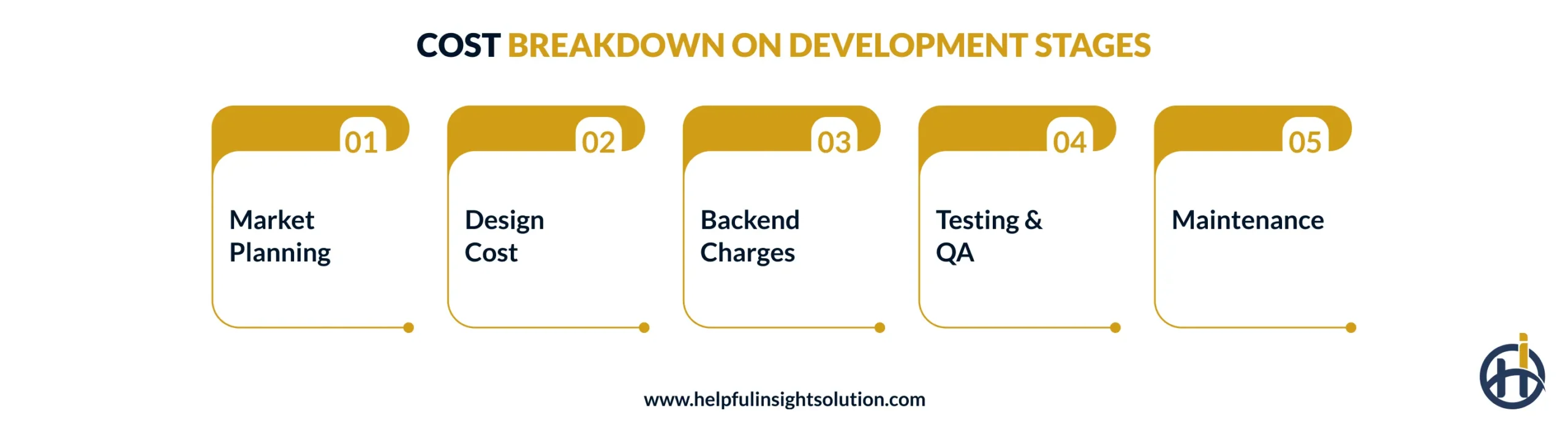
Cost Breakdown on Development Stages
To know more about the on-demand grocery delivery app development cost, we are focusing on the key stages that influence the overall pricing. They have different market rates that are important to know for an entrepreneur.
1. Market Planning
The grocery app development cost is highly dependent on the planning stage, which includes SWOT analysis, understanding USPs, and knowing user pain points. Different parameters like lead generation, brand scalability, and fund allocation are also responsible for affecting the cost.
| Component | Description | Estimated Cost (USD) |
| Market Research & Analysis | Competitor study, demand validation, and user behavior insights | $1,000 – $5,000 |
| Business Model Planning | Defining revenue streams, pricing strategy, and logistics model | $1,500 – $6,000 |
| Feature Roadmap & Strategy | Planning MVP features and future scalability | $2,500 – $9,000 |
2. Design Cost
In UI/UX design, there are various elements, such as wireframing and software architecture, which can influence the overall cost of grocery app-making. The complexity of features, repeated changes, and increased frontend requirements may increase the overall rates.
| Component | Description | Estimated Cost (USD) |
| Wireframing | Basic app layout and user flow creation | $1,500 – $5,000 |
| UI Design (Visuals) | High-fidelity screens, branding, and design elements | $3,000 – $10,000 |
| UX Optimization | User journey mapping and usability improvements | $2,000 – $8,000 |
3. Backend Charges
The cost of creating a grocery app is also based on the backend architecture, which includes server-side logic, database systems, and dynamic APIs. The charges are high in this stage because it focuses on enhanced platform scalability, security, and performance.
| Component | Description | Estimated Cost (USD) |
| Server Setup & Architecture | Cloud setup, APIs, and database structuring | $4,000 – $12,000 |
| Database Management | Data storage, retrieval systems, and optimization | $3,000 – $10,000 |
| API Development & Integration | Payment gateways, maps, and third-party services | $4,000 – $15,000 |
| Admin Panel Development | Dashboard for managing orders, users, and analytics | $3,000 – $10,000 |
4. Testing & QA
This factor involves various testing phases, such as functional, user acceptance, penetration, and regression, based on the project complexity. Additionally, manual or automated testing tools also affect the total investment charges, increasing delay costs.
| Component | Description | Estimated Cost (USD) |
| Manual Testing | Functional and usability testing by QA teams | $1,500 – $5,000 |
| Automated Testing | Script-based testing for performance and regression | $2,000 – $7,000 |
| Bug Fixing & Optimization | Issue resolution and performance tuning | $2,000 – $8,000 |
5. Maintenance
Various tasks like cloud hosting, API licensing, threat detection, and compliance updates are the major factors that increase the maintenance cost. Cost to develop grocery delivery app also expands due to user choices and business approach, focusing on expensive labor and technical advancements.
| Component | Description | Estimated Cost (USD) |
| Regular Updates | Feature enhancements and version updates | $2,000 – $8,000/year |
| Server & Hosting Maintenance | Cloud hosting, uptime monitoring, and scaling | $2,000 – $10,000/year |
| Technical Support & Bug Fixes | Ongoing troubleshooting and improvements | $2,000 – $7,000/year |
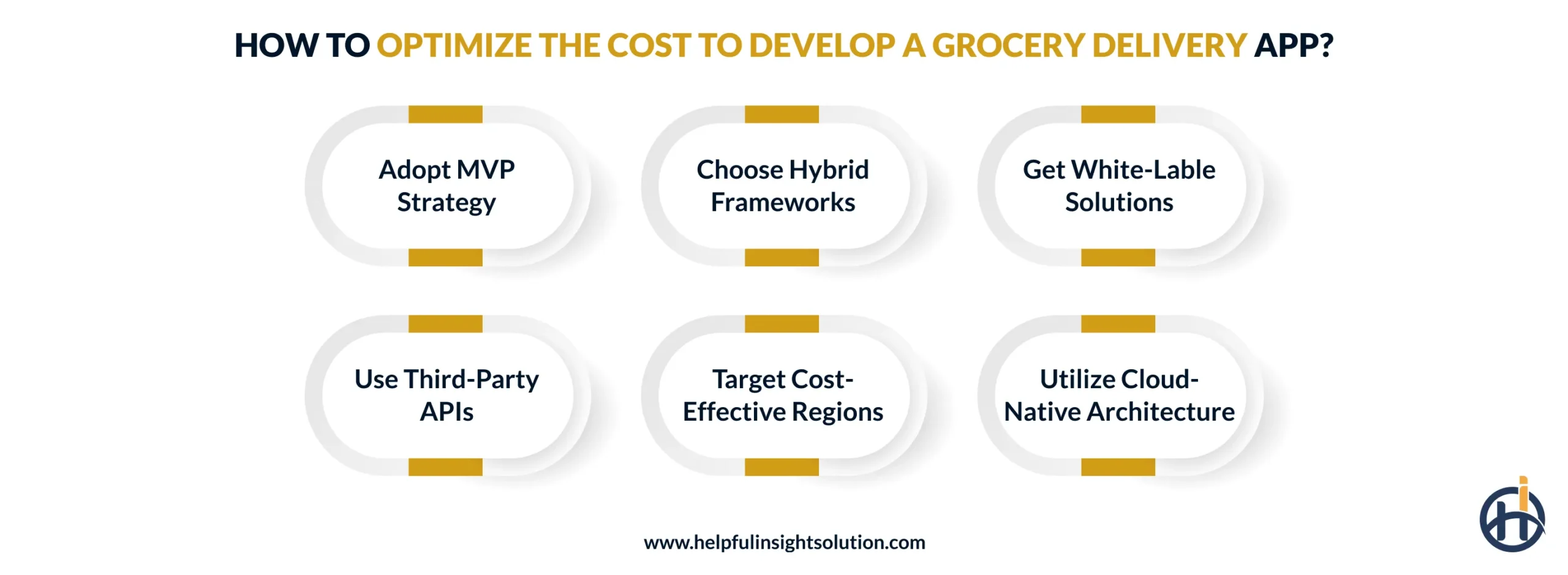
How to Optimize the Cost to Develop a Grocery Delivery App?
It is crucial to optimize the grocery delivery app pricing to create an affordable platform with quality services. Some of the best strategies are discussed in this section that help in reducing the total cost.
1. Adopt MVP Strategy
It is the most common cost-optimization method that allows businesses to focus on core app features, like product catalog, cart management, and GPS tracking. Here, you can easily identify the necessary grocery services for different users, such as drivers or vendors, with advanced tools and technologies.
2. Choose Hybrid Frameworks
Businesses can easily reduce the development cost of a grocery delivery app by selecting cross-platform tools and frameworks, such as Flutter or React Native. They use a single codebase that is more affordable than native services that target Android and iOS platforms separately.
3. Get White-Label Solutions
This approach focuses on low-code or no-code development, increasing deployment speed and reducing the market expenses for custom solutions. Entrepreneurs can improve their user base by investing money in one-time license fees to get different data approvals and platform certifications.
4. Use Third-Party APIs
You must utilize third-party APIs to perform core functions, like order tracking, payment processing, SMS notifications, and cloud storage, which enhance efficiency. Additionally, it also helps in resolving various user queries through data collection and automated responses.
5. Target Cost-Effective Regions
To reduce the cost to build a mobile app for grocery businesses, you should target developers from affordable regions such as India and the UAE. The expenses are lower in these countries due to cost-effective resources, quality services, and offshore solutions.
6. Utilize Cloud-Native Architecture
It is beneficial to distribute the app into various small services by using container models, such as Docker and Kubernetes, that reduce time consumption. You should use serverless cloud functions, like AWS Lambda, that can easily handle multiple tasks, enhancing system efficiency.
Challenges in the Development of Grocery Delivery Applications
Various challenges may occur while creating a grocery delivery application, such as inventory and performance. We will study a few of the major risks with their respective solutions in this section.
1. Inventory Management Issues
This leads to real-time data inaccuracy, high product volume, and stock-related challenges, like overstocking. Some goods have short lifespans that require a proper warehouse management facility.
Solution: You should implement barcode scanning with APIs that generate stock alerts, reducing human errors in the system.
2. Logistics Costs & Delivery Speed
A grocery pickup and delivery app may face various logistics issues, such as increased expenses and driver inefficiency. It affects the delivery speed in both remote and urban areas, reducing customer trust.
Solution: It is beneficial to implement automated algorithms that can distribute time slots to maximize the vehicle capacity.
3. Scalability and Performance
Increased user traffic on holidays or sales affects the scalability and efficiency of the grocery delivery platform. This may trigger routing issues and can harm the system architecture through data overload.
Solution: Businesses can use AI to optimize performance based on proximity and traffic, enhancing database efficiency.
Partner Helpful Insight to Build Affordable Grocery Delivery Solutions
You need a blueprint to start developing a grocery delivery application that can deliver instant services, accurate data tracking, and secure payment options. By hiring a reliable partner who has experience in the grocery domain, you can easily become a market leader.
We specialize in providing the best mobile app development services, from consulting to maintenance, at reasonable prices. Our skilled professionals have access to advanced tools, technologies, and frameworks.
As an entrepreneur, you can easily reduce the cost to develop a grocery delivery app by implementing different revenue models. But you should have a better understanding of the factors influencing the online grocery app development cost in USA and other regions.
You can update features, optimize the app’s performance, and ensure user trust with real-time strategies.
FAQs
Businesses that own local grocery chains or offline supermarkets require digital solutions to manage increasing users and sales. A grocery application provides multiple features that help vendors, delivery partners, and end consumers. Additionally, it can be integrated with advanced technologies like AI, IoT, and AR/VR, improving user experiences.
For creating smartly integrated grocery mobile apps, entrepreneurs must hire skilled experts with good experience. The hiring process is discussed with key steps in the following manner:
- First, you have to list major requirements, like business purpose.
- It is crucial to analyze the performance and work of developers.
- You must conduct a technical interview to judge knowledge.
- The experts must ensure credibility and integrity with ethical skills.
- At last, discuss the project outcomes and budget before hiring.
The cost of maintaining a grocery delivery platform is dependent on various hidden factors, such as beta testing, feature enhancements, and optimization. It ranges from 15-20% of the overall development cost, increasing the total investment. For example, a project of $200,000 may have a maintenance cost between $30,000 and $40,000, which may increase further.
Several parameters, like budget, market reach, and feature needs, help businesses to easily decide which option is suitable for them. They can choose ready-made solutions for faster deployment and affordable technology with limited control. For long-term scalability and ownership, you can create expensive custom grocery solutions.
Artificial intelligence is an advanced technology that uses multiple components, such as NLP, machine learning, and RPA, which are expensive. Experts can train AI models on multiple user datasets and integrate complex AI features, such as predictive analytics. This affects the overall development cost but allows businesses to reduce operational expenses.