

“Improve fitness and health tracking with modern wearable technology.”
Have you ever imagined a watch or any other device tracking your heartbeat, blood sugar, and sleep cycles? The invention of AI-powered wearable technology for health and fitness has made this possible for every individual through smart objects.
It helped people to examine various activities and movements, allowing faster decisions and better care. Various smartwatches, health trackers, and eyewear target different body parts, providing a collective result with real-time features.
As expected, the USA smart wearable market is valued at $15.7 billion, producing maximum revenue in North America. The impact of wearable tech on everyday life is high due to increasing fitness demand and health awareness.
It is a great advantage for modern startups that want to enter this industry and start a new business for athletes, fitness trainers, and individuals.
It is crucial to know various things, like benefits, challenges, and the cost to develop an AI wearable app. Here, we will study the top innovations and future trends with detailed information. Additionally, you will also observe different types of wearables in this blog.
What is Wearable Technology?
This technology involves various devices or accessories, such as smartwatches and rings, that regularly track human data. The information, including heart rate, blood sugar, and sleep patterns, is sent over the server for processing and execution.
Various technologies are used to enhance user experience, data efficiency, and report analysis. The role of AI in wearable technology is to automate data tracking, personalize user preferences, and predict accurate health results. Additionally, the use of IoT in healthcare and fitness is to combine different networks through integrated devices.
- It enhances communication between users and the fitness experts.
- The devices ensure the security and convenience of user data.
- This provides crucial information on health and fitness results.
A Glimpse of the Current Wearable App Market
Businesses can observe a sudden rise in the use of wearable technology for fitness and healthcare, enabling revenue generation and consistent user engagement. Let’s understand some key market stats that provide valuable information on revenue, growth rate, regional share, and segment analysis.
- The global wearable market revenue is $103.1 billion in 2026, with North America having a 33% market share.
- It is growing at a rate of 12.1% CAGR between 2026 and 2033, which will reach $230 billion by the end of this tenure.
- The smartwatch segment has a share of 60.4% in the market, whereas the share of Bluetooth devices is 67.8% across different regions.
- The overall share of consumer electronics is 38.2% and is growing rapidly at a rate of 16.8% CAGR between 2026 and 2033.
- The Asia Pacific region is expanding at 17.3% CAGR, which is the maximum across the world, with 34.9% market share.
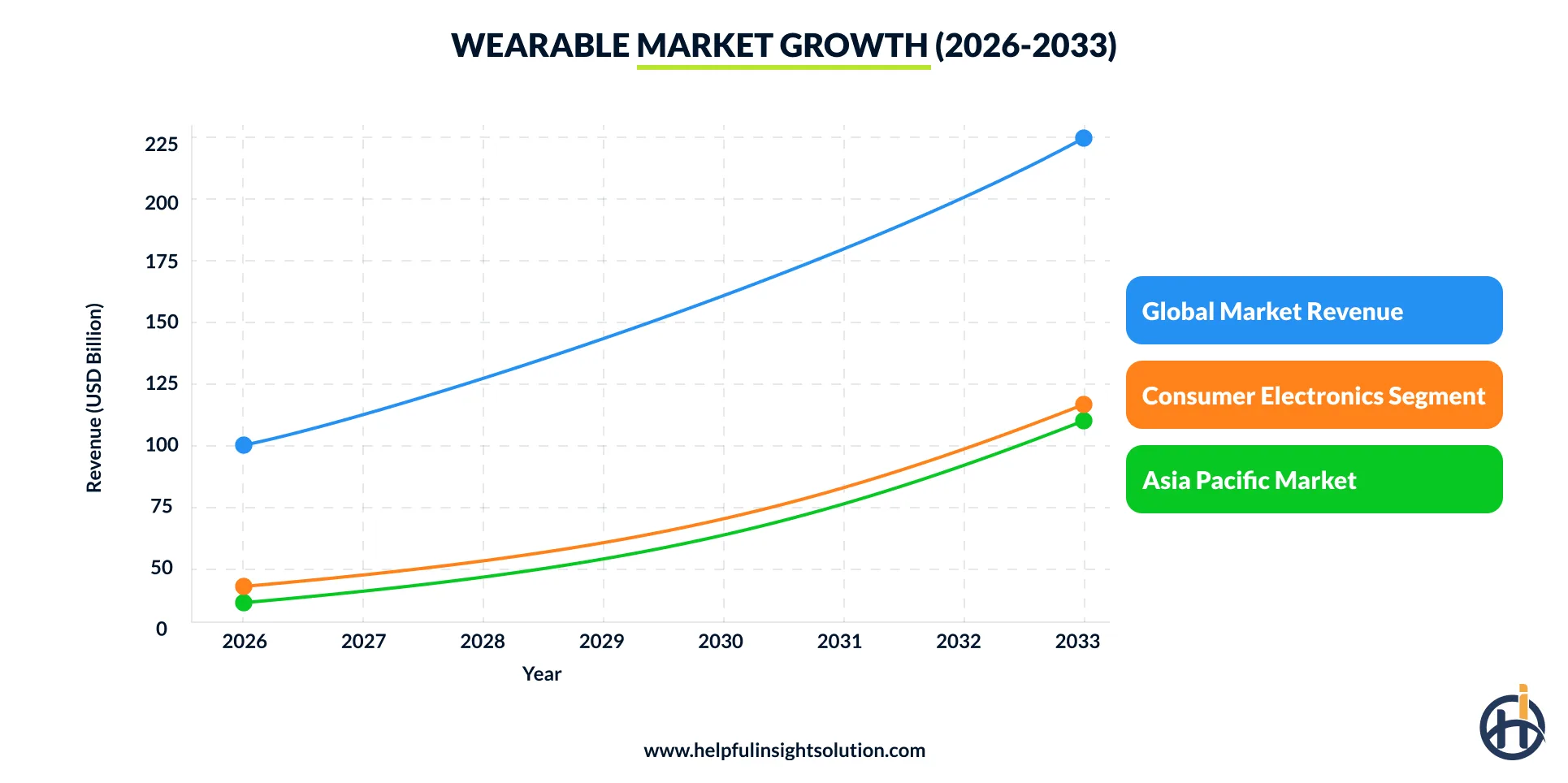
It is beneficial to invest in health and fitness app development because the market is growing rapidly due to increasing user demand. Additionally, it is offering multiple opportunities to entrepreneurs, allowing them to easily capture different industrial assets.
What do Wearable Devices Track?
The health and fitness wearable devices help users improve several medical issues by tracking various things. The key tracking elements, like sleep cycle and heart health, are discussed in this section.
1. Physical Activity and Movement
People use smart wearables to track different activities like walking, running, swimming, and sleep cycles. These devices monitor daily steps, distance covered, and calories burned, enhancing the overall experience.
2. Blood Oxygen Levels
Some smartwatches use pulse oximetry sensors that track oxygen levels (SpO₂) through red and infrared lights. Users can identify the requirement of oxygen in the hemoglobin and make decisions accordingly.
3.Sleep Patterns and Quality
A sleep tracker app helps people to easily analyze their duration and various stages through accelerometers. It gives a record of sleep poses, rapid eye movement, and sleep breakdowns, increasing user health knowledge.
3. Natural Body Composition
Various health and fitness wearable devices examine body fat, water content, and tissues by passing a low-voltage current. They use Bioelectrical Impedance Analysis (BIA) to study various body issues.
4. Heart Rate and Health
Users can easily measure their heart rate variability (HRV), abnormal blood pressure, and respiratory rate. Some advanced devices use photoplethysmography sensors that generate detailed reports for heart health.
Read Also:- How to Build a Heart Rate Monitor App: A Comprehensive Guide
Key Benefits of Wearable Technology for Health and Fitness
It is beneficial to implement wearable technology for fitness and healthcare, as it increases user productivity and efficiency. These advantages include health monitoring, sleep improvement, and activity tracking.
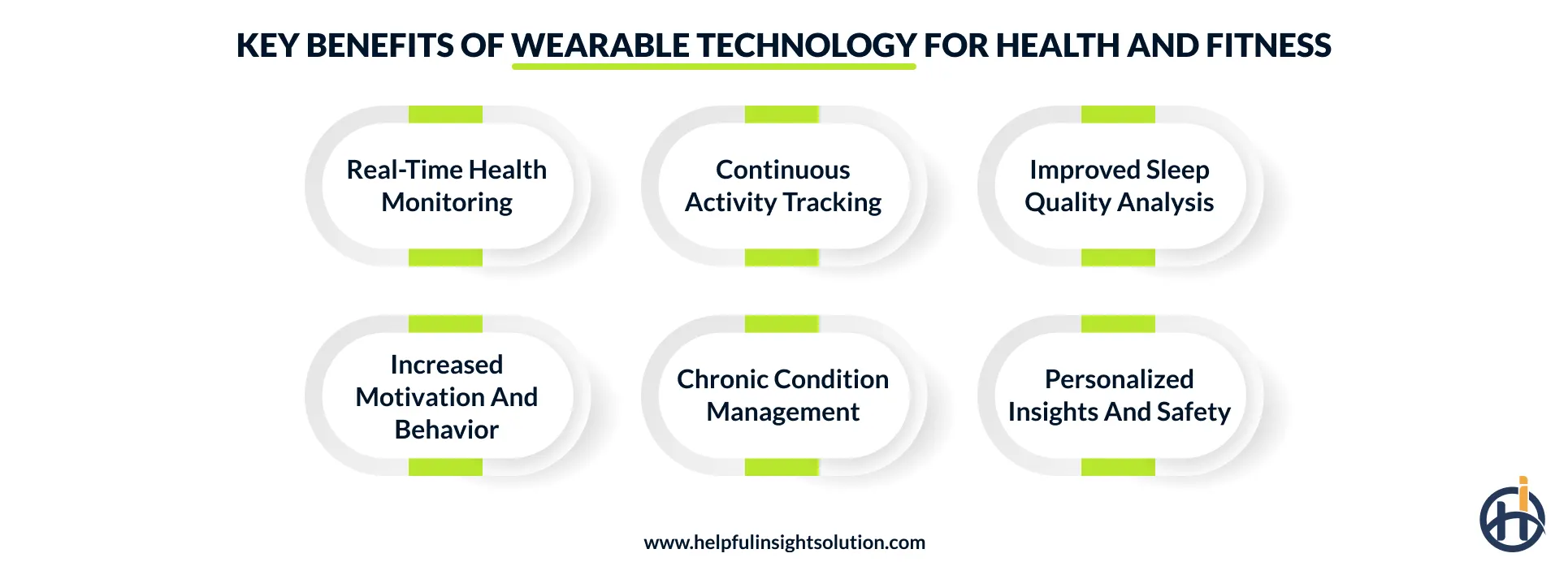
1. Real-Time Health Monitoring
Businesses should build an AI wearable health and fitness app because it can personalize user preferences, improve workout efficiency, and detect various diseases. Users can easily perform daily activities by tracking health vitals through realistic features.
This ensures regular progress tracking and proactive health management with optimized services.
2. Continuous Activity Tracking
Various fitness activity tracker apps integrate with smart devices to monitor various activities, like running, body movement, and heart rate. They provide features like automated reminders, goal settings, and expert columns that encourage an active lifestyle.
Additionally, patients can examine different diseases and get personalized suggestions from medical professionals.
3. Improved Sleep Quality Analysis
The advanced health trackers enhance sleep quality by analyzing different stages, such as light, deep, and REM, through multiple sensors. Additionally, they provide constant information about heart rate variability and abnormal pulse rates during sleep times.
This helps users to easily cure various issues like insomnia and other sleep disorders by tracking eye movements.
4. Increased Motivation and Behavior
Most AI-powered health and fitness wearables offer gamified features that increase user motivation through fitness streaks and milestones. They track user behavior through a questionnaire and provide suggested mental or physical exercises.
These include nutrition guides, workout sessions, yoga, and meditation that help to relax the user’s mind.
4. Chronic Condition Management
Businesses should invest in IoT app development to create apps that can offer integrated solutions for managing chronic health conditions. It enhances personalized care, increases patient engagement, and reduces long-term delay.
The best devices track different symptoms, like blood sugar and joint pains, delivering real-time solutions for all problems.
5. Personalized Insights and Safety
Users can go through various information about fitness activities, healthcare problems, and emergency conditions, ensuring prior knowledge. It targets fall detection, heart monitoring, and oxygen levels, which help users to understand and respond to various situations.
Various health tracking apps provide security and preventive measures for improved care.
Types of Wearables in Health & Wellness
You must know the popularly used health and fitness wearables that track and process real-time user data. They target different human parts like the heart, sensory organs, mental health, and body movements.
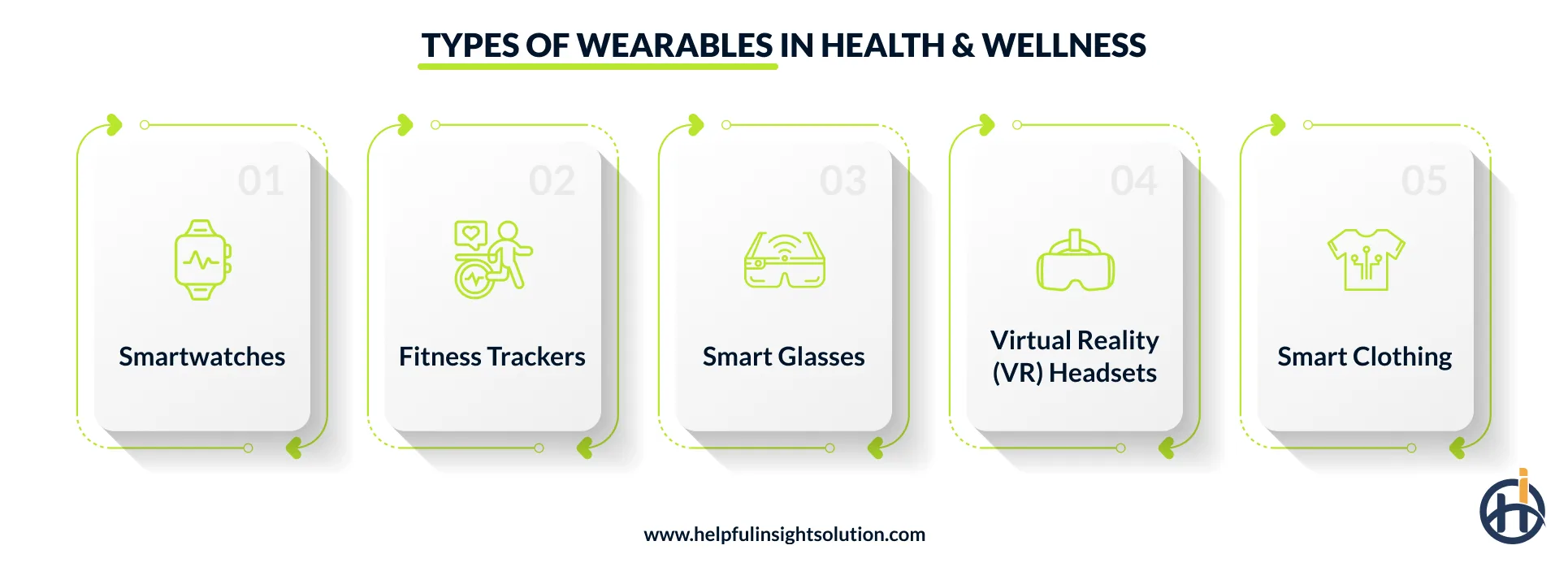
1. Smartwatches
People use smartwatches for fitness tracking and health monitoring, such as heart rate, calorie count, and physical activities. The Apple Watch is the best example that monitors various parameters with real-time features and functions.
2. Fitness Trackers
These fitness wearable health devices are lighter than watches and are used to track sleep, body movement, and posture regularly. The Fitbit Charge is a common device among users, which offers advanced settings and tracking services.
3. Smart Glasses
With AR and AI in wearable fitness technology, smart glasses enable remote consultations and wellness monitoring. For example, Google Glass uses a Head-Up Display (HUD) that helps users to visualize different health problems.
4. Virtual Reality (VR) Headsets
A smart VR headset provides virtual experiences to users through personalized sound effects, cameras, audio trackers, and avatars. The use of VR in healthcare and fitness is to help users easily understand adverse physical or mental conditions.
5. Smart Clothing
Smart clothing, like shirts and shoes, uses embedded sensors, conductive fibers, and microprocessors to monitor physical data. Most athletes wear these devices to track running patterns and analyze their body reactions with real elements.
Top Wearable Innovations in Health and Fitness
In this section, we will study the top innovations and use cases of AI-powered wearables for real-time health monitoring. These applications regularly monitor sleep cycles, heart health, and glucose levels, offering accurate results.
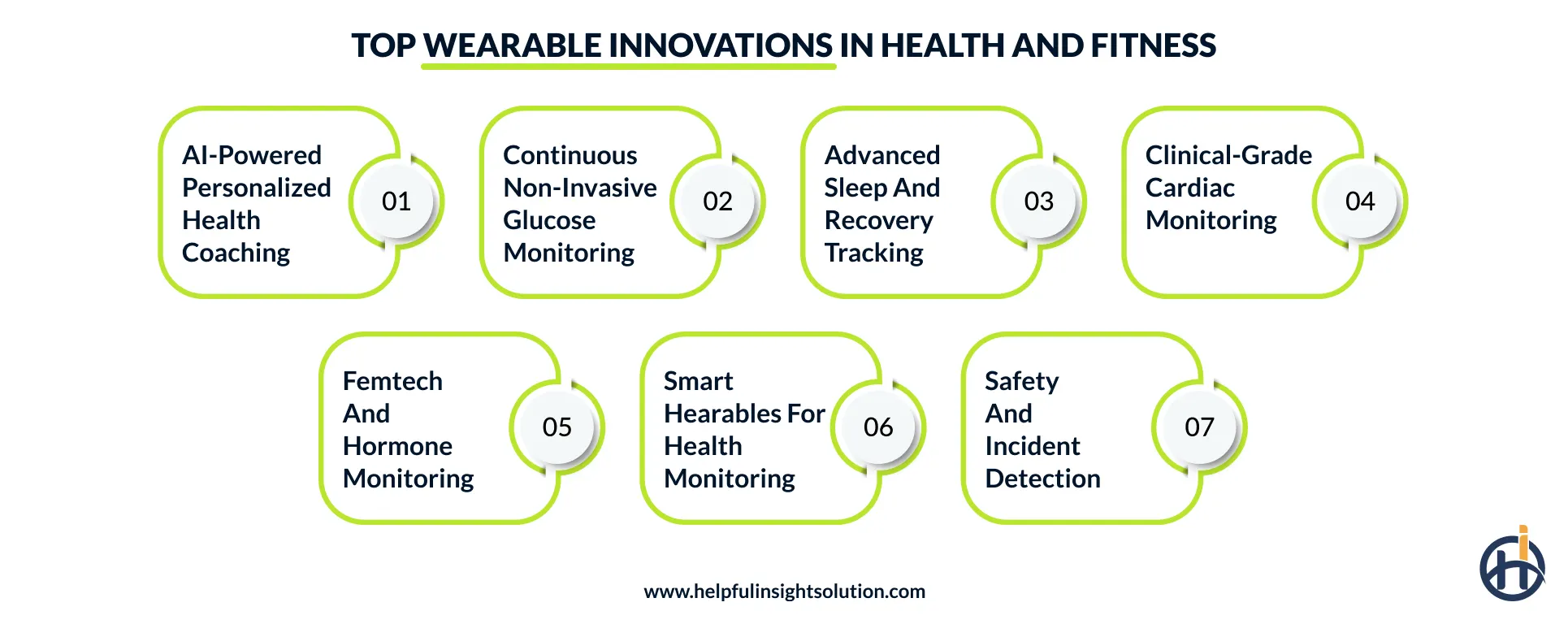
1. AI-Powered Personalized Health Coaching
The AI-powered wearable technology for health and fitness provides personalized features to athletes, fitness trainers, and health experts. A business investor must use the best AI development services to create personal health trainers for users. These virtual fitness coaches allow people to transform their wellness through automated and predictive features.
Google Pixel Watch 4: It is a premium OS smartwatch with deep Fitbit integration, offering advanced health tracking like ECG, HRV, and AI-powered coaching. The device provides a circular AMOLED display, improved battery life, and smart features like satellite SOS and Google Assistant support.
2. Continuous Non-Invasive Glucose Monitoring
This technique uses optical, electrical, and thermal parameters to measure blood sugar, decreasing the risk of pain and infection. Various methods like Near-Infrared Spectroscopy (NIRS), needle-free readings, and breath analysis help to detect glucose levels. Different smartwatches are used to detect diabetes in patients and send the information to the respective consultant.
Dexcom Stelo: This is a non-invasive continuous glucose monitoring (CGM) device designed to track blood sugar levels in real time without traditional finger pricks. It helps users gain insights into glucose trends for better metabolic health and can integrate with select health apps and wearables.
3. Advanced Sleep and Recovery Tracking
Several AI-powered wearable apps for health and fitness allow users to track their sleep cycles and patterns regularly by observing various parameters. These include eye movement, heart rate variability, and oxygen level, which give information on sleep duration and stages. Additionally, the latest devices track recovery rate for injuries and treatment, improving overall health.
Oura Ring 4: It is a smart ring that tracks sleep, heart rate, temperature, and activity, offering detailed readiness and recovery insights. With up to a week-long battery and a discreet design, this device focuses on wellness analytics through its companion app.
4. Clinical-Grade Cardiac Monitoring
These devices provide FDA-cleared heart monitoring features, like atrial fibrillation (AFib) and ECG recording, ensuring diagnostic accuracy. They detect various cardiac issues, such as arrhythmia, artery blockage, and pulse modulation. To monitor these activities, photoplethysmography sensors are implemented that capture instant heart movements.
Apple Watch Series 11: This smartwatch is integrated with the Apple ecosystem, featuring advanced health tools like heart monitoring and sleep analysis. It includes AI-driven fitness insights, a bright OLED display, and improved battery life with fast charging support.
5. Femtech and Hormone Monitoring
Females can manage hormonal changes, fertility, and reproductive health by tracking their body temperature, heart rate, and chemical activities. Various modern devices help them to easily control their menstrual cycles and reduce mental stress. They track various activities that help to improve regular sleep cycles, physical strength, and overall body stability.
Evie Ring: This is a women-focused smart ring that tracks health metrics such as sleep, activity, and menstrual cycles without requiring a subscription. It emphasizes comfort, privacy, and personalized health insights tailored specifically for female wellness tracking.
6. Smart Hearables for Health Monitoring
Various hearing devices enhance the power of the ears by activating closed blood vessels that are connected to the brain. By integrating AI in healthcare, these wearables help people maintain neurological balance, improve body control, and reduce mental fatigue. With the Ear-EEG technology, it is easy to capture brainwaves to track sleep patterns and detect seizures.
Samsung Galaxy Buds: These wireless earbuds offer high-quality audio, active noise cancellation, and seamless integration with Samsung devices. They also include features like touch controls, voice assistant support, and long battery life for everyday use.
7. Safety and Incident Detection
To monitor user activities, identify accidents, and deliver instant alerts, an AI-driven wearable application for health and fitness uses various sensors. They provide information on blood injuries, nervous breakdowns, and fatal accidents. They offer a panic button that can be paired with safety equipment, enhancing protection and reducing the risk of attacks.
Garmin Vivoactive 6: This smartwatch provides advanced training tools like PacePro, Auto Activity Start, and comprehensive health tracking. It is lightweight and affordable, offering strong battery life and an AMOLED display, and it is ideal for runners and active users.
Challenges of Integrating Wearable Technology in Health and Fitness
There are various challenges of integrating wearable technology for health and fitness, such as security and inaccuracy. We are going to study a few major risks with their respective solutions in this section.
1. Inaccurate Data Recording
Various hardware or software issues may occur that can lead to inaccurate data tracking, such as heart rate and temperature. Most health and wellness wearable devices show this kind of error, which is difficult to predict and resolve without expertise.
Solution: Businesses must ask developers to use AI-powered algorithms that improve efficiency and reduce dependency on manual entries.
2. Privacy and Security Risks
The sharing of user data through insecure wireless channels increases the security and privacy risks, supporting data breaches. The attackers may compromise hardware equipment, such as microphones or cameras, to identify loopholes.
Solution: The best way is to implement HIPAA regulations in fitness and healthcare apps that help to secure user information.
3. Interoperability and Technical Integration
This is caused by unrecognized data formats, poor communication, device compatibility, and fragmented health information. It can harm various medical systems, decision-making, and user experience by reducing the platform’s consistency.
Solution: It is beneficial to use FHIR protocols with the BLE technology in fitness and healthcare for smooth data flow integration.
Future Trends in Wearable Technology
It is important to know the future wearable technology trends in health and fitness for better care management. These include advancements in technologies, gym equipment, and medical techniques.
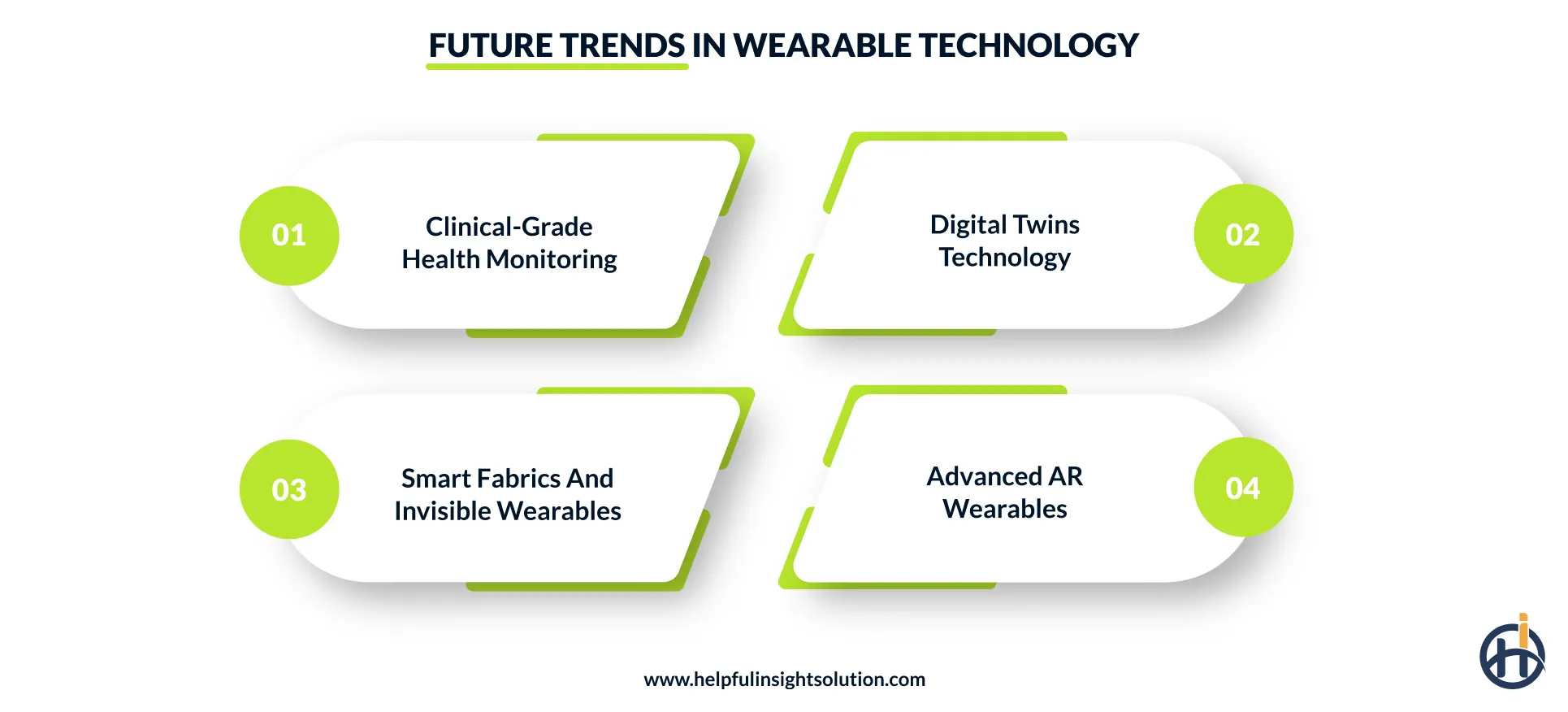
1. Clinical-Grade Health Monitoring
The modern tracking devices offer features for constant health diagnosis, such as glucose monitoring, ECG, and remote consultation. Most experts are trying to improve this technology for instant human revival during heart and pulse rate failure.
2. “Digital Twins” Technology
The use of AI wearable technology in fitness apps helps with predictive analytics of chronic health diseases, injuries, and mental disorders. In the future, it may track complex fitness issues like UV exposure, body hydration, and DNA sequencing.
3. Smart Fabrics and Invisible Wearables
Businesses must use the Internet of Things for fitness and health, as it is a common technology that provides the right tools and protocols. Some devices release microwave signals that are not noisy and cannot be tracked easily by data receivers.
4. Advanced AR Wearables
It is beneficial to implement advanced 5G connectivity modules and integrated touch sensors that can easily detect infected patients. This technology helps in medical surgeries and physical training, improving the recovery process for patients.
Partner with Helpful Insight for Wearable Technology Development
We are a leading partner in wearable technology for health and fitness, offering several solutions at affordable prices. Helpful Insight creates standard platforms that can be easily integrated with smart devices and provide advanced tracking features.
Businesses investing in healthcare app development should connect with our experts who deliver the best integration and support services. Additionally, they help businesses to implement the right wearable fitness app monetization strategies.
An entrepreneur must know different future trends of AI wearable fitness technology in a particular region before starting a business. This helps to improve user engagement, build trust, and increase revenue growth in this growing market.
So, you must focus on developing an effective business model that can be transformed into a real-world product for users.
FAQs
Wearable technology uses various hardware and software components with an integrated development environment for tracking. The key working steps in health and fitness are discussed as follows:
- Various data, like heart rate, is collected through sensors and trackers.
- The data is sent to the cloud servers through connection protocols.
- Users get personalized information through data processing and execution.
- They can set fitness goals and make the right healthcare decisions.
Artificial intelligence is a powerful technology that improves the operations and efficiency of simple health tracking devices through advanced data analytics. Additionally, it helps to increase user engagement and revenue growth with the latest personalized features. This enhances health recovery, reduces mental stress, and optimizes work-life balance.
People use various devices to track their blood pressure, calorie count, and sleep cycles at regular intervals. Some of the best examples are described in the following manner:
- Apple Watch: It is a premium product for tracking daily fitness activities.
- Oura Ring: This device can monitor sleep patterns and various stress levels.
- Fitbit: The tool provides real-time information on heart rate and blood pressure.
To ensure the security and accuracy of smart wearables, AI uses advanced algorithms that help to filter connectivity signals and remove noise. Machine learning is used to detect issues in the biometric data, enhancing health monitoring. This technology integrates with cybersecurity to predict risks and improve security through encryption standards.
The average price for creating wearable applications with AI-driven features is dependent on various factors, like complexity, integration, and location. The overall cost ranges from 15K to 150K, which can increase further due to additional requirements. The maximum cost may reach 200K, which you can easily balance by using various monetization methods.