

“Monitor your patients in real-time with IoT for better disease prediction and treatment planning.”
Have you ever imagined that without technology, it is difficult to maintain regular health these days? The use of AI, blockchain, and IoT in healthcare industry has helped care businesses, doctors, and patients by delivering quick services.
The Internet of Things in healthcare is the core technology that brings more power through data collection, processing, and execution. It streamlines various tasks, like staff management, patient monitoring, and appointment bookings.
According to a recent study, the USA’s IoT-based healthcare market generated a revenue of $87.9 billion in 2025. It will reach $341.5 billion by 2035 at a rate of 14.5% CAGR over this duration.
The Internet of medical things enables hospitals and pharmacies to track medications, healthcare equipment, and other inventories with accuracy. The role of IoT-generated healthcare data is crucial in this case.
To know more about the medical IoT system, you should go through this blog, which discusses major applications, examples, and challenges. All these concepts that we will study are important from a business point of view. So, it is the right moment to start.
Growth of IoT-Based Healthcare Market
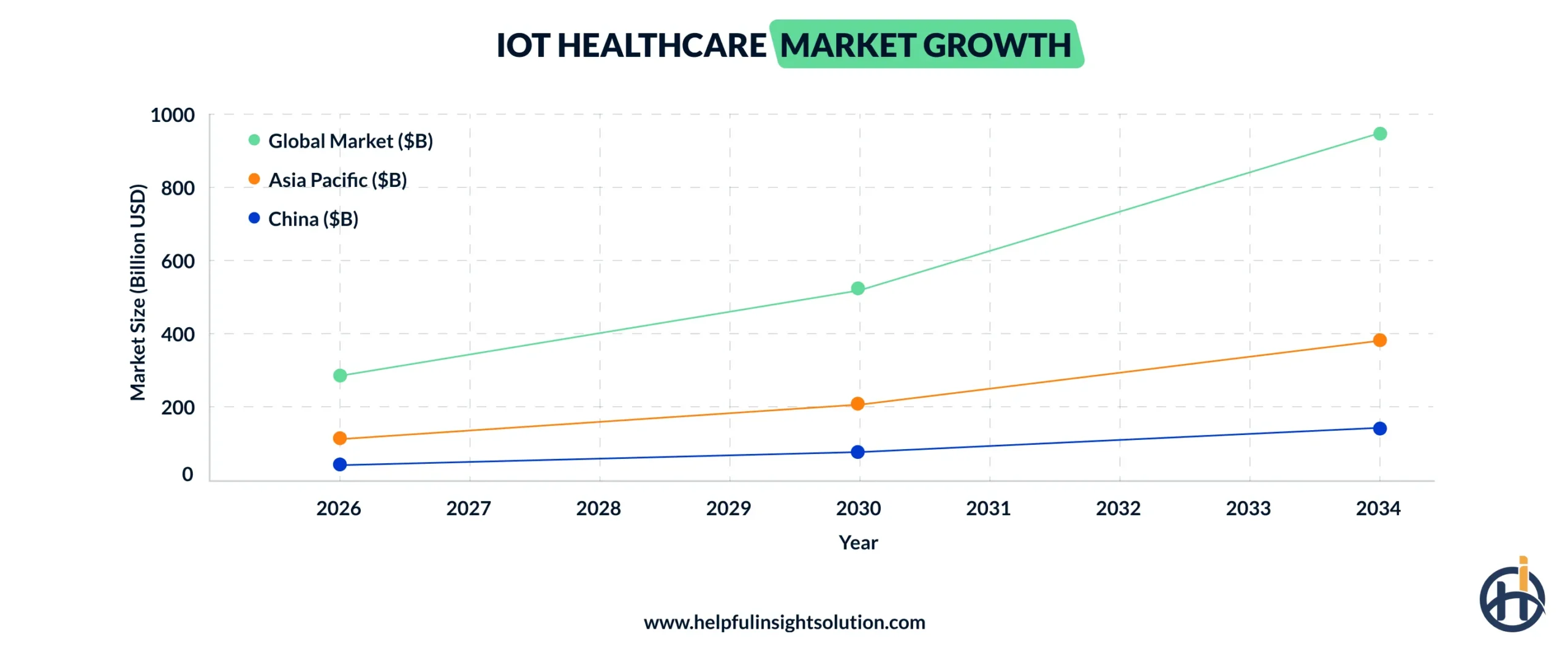
The integration of IoT and healthcare helped businesses to easily grow by investing in software or mobile app development for the future. The market is booming rapidly in 2026 due to increased revenue, user engagement, and improved ROI for entrepreneurs.
- The worldwide IoT healthcare market size is $278.9 billion in 2026, with the Asia Pacific region having a 40.8% market share.
- By 2034, the overall revenue will increase to $946.1 billion at a growing rate of 16.5% CAGR between 2026 and 2035.
- The revenue generated by the Asia Pacific region is $113.7 billion, where China has the largest size of $42.3 billion in 2026.
- The use of IoT-enabled healthcare devices is the highest in hospitals, which is 36.2% of the total market share.
- The telemedicine segment in the USA has a maximum share of 40%, and the Western USA is growing at a 16.7% CAGR in the country.
The invention of the Internet of Things medical devices also fueled the success of the healthcare industry. So, it is clear that developing IoT solutions in healthcare is the need of the hour, and there are a lot more opportunities available for businesses.
Key Benefits of Integrating IoT with Healthcare
Do you know the benefits of IoT in Healthcare? It includes advanced monitoring, instant decision-making, and a lot more that helps both patients and doctors in real time to easily identify diseases and treatments.
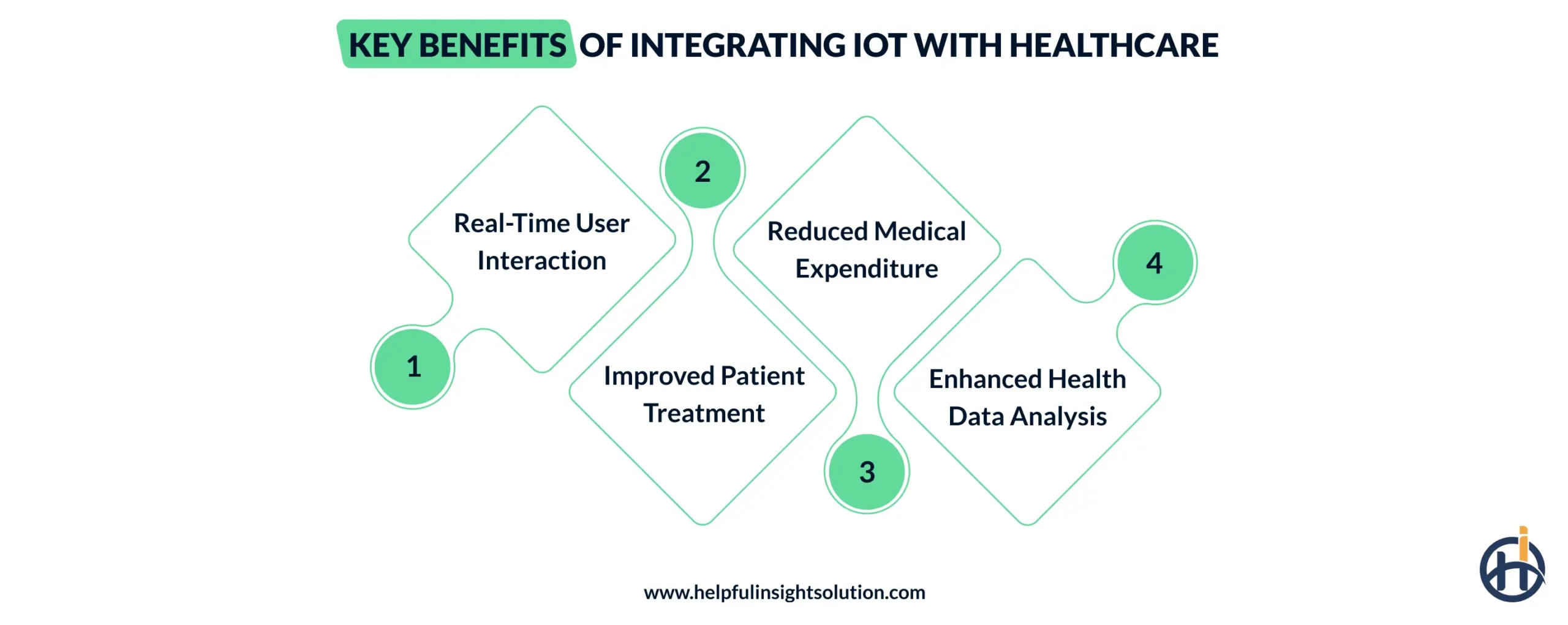
1. Real-Time User Interaction
Various healthcare IoT platforms help patients and doctors to easily connect through a secure communication channel. It helps in telemedicine, workout planning, personalized yoga sessions, and appointment bookings.
2. Improved Patient Treatment
The best advantage of IoT in the medical field is that it can track various diseases or health issues through advanced data analytics tools. This enables accurate diagnosis, treatment planning, medication, and scheduling for patients.
3. Reduced Medical Expenditure
The Internet of Medical Things helps in reducing various types of healthcare expenses for lab tests, medications, and therapies. A health & fitness app development company helps businesses to implement loyalty programs for discounts and offers, helping patients to decrease expenses.
4. Enhanced Health Data Analysis
By integrating IoT for health insurance companies, you can make data analysis easy and fast to predict the right policies for patients. The technology can analyze various information, such as the type of disease, age, family members, and medication.
Intersection of IoT with Other Technologies for Healthcare
The use of IoT and healthcare with other technologies, such as AI, Blockchain, or cybersecurity, is a great idea. In this section, we are going to understand their interaction with some interesting examples.
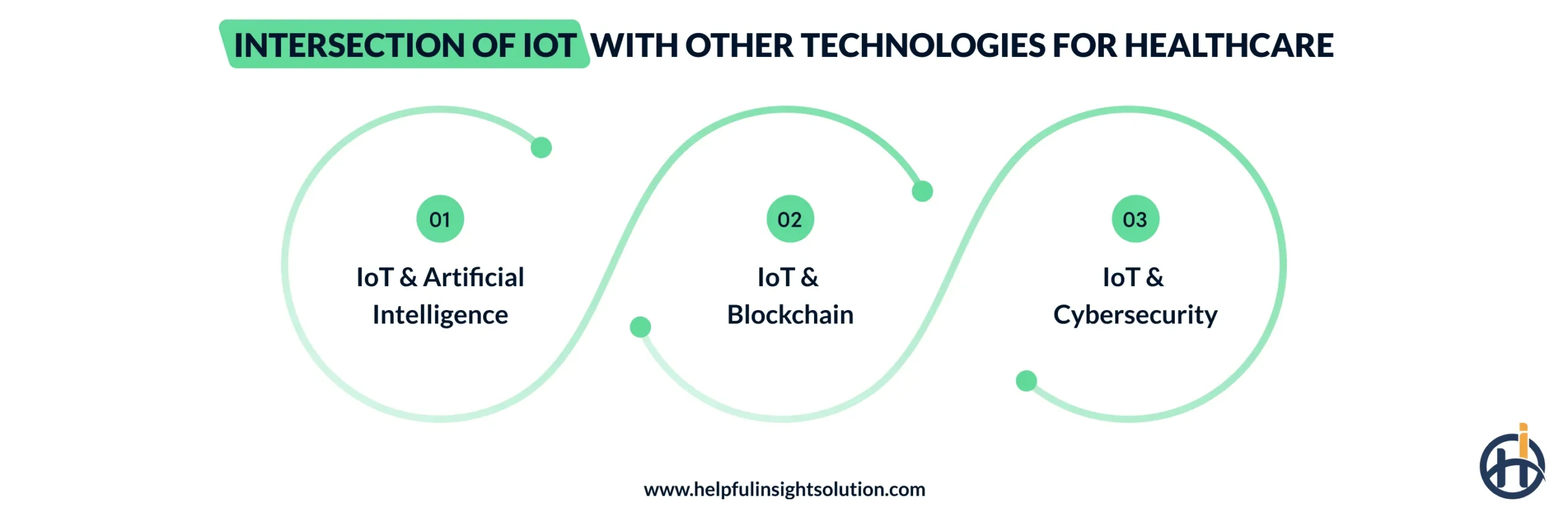
1. IoT & Artificial Intelligence
The implementation of IoT healthcare solutions with artificial intelligence is beneficial to automate and personalize the collected data. Both technologies help patients get the right medical information through predictive analytics and data sensing.
The Internet of Things and AI improve data flow, healthcare efficiency, and overall user experiences in real-time.
2. IoT & Blockchain
The Blockchain and IoT integration in healthcare can enhance transparency in storing large clinical records through decentralization. These include patients’ medical history, hospital data, prescriptions, and other information.
The use of Blockchain with the Internet of Things for Fitness apps helps to improve stability between users through smart contracts.
3. IoT & Cybersecurity
The impact of secure IoT in healthcare is big, as it ensures the protection of medical data from unauthorized access. It is beneficial to integrate cybersecurity with IoT to build healthcare platforms that can generate security alerts.
They provide a secure communication channel, allowing patients, doctors, and hospital staff to connect easily.
Top Use Cases of IoT in Healthcare Systems
Currently, there are multiple applications of IoT in healthcare, which include smart wearables and real-time monitoring. Here, we will study some major use cases with detailed information.
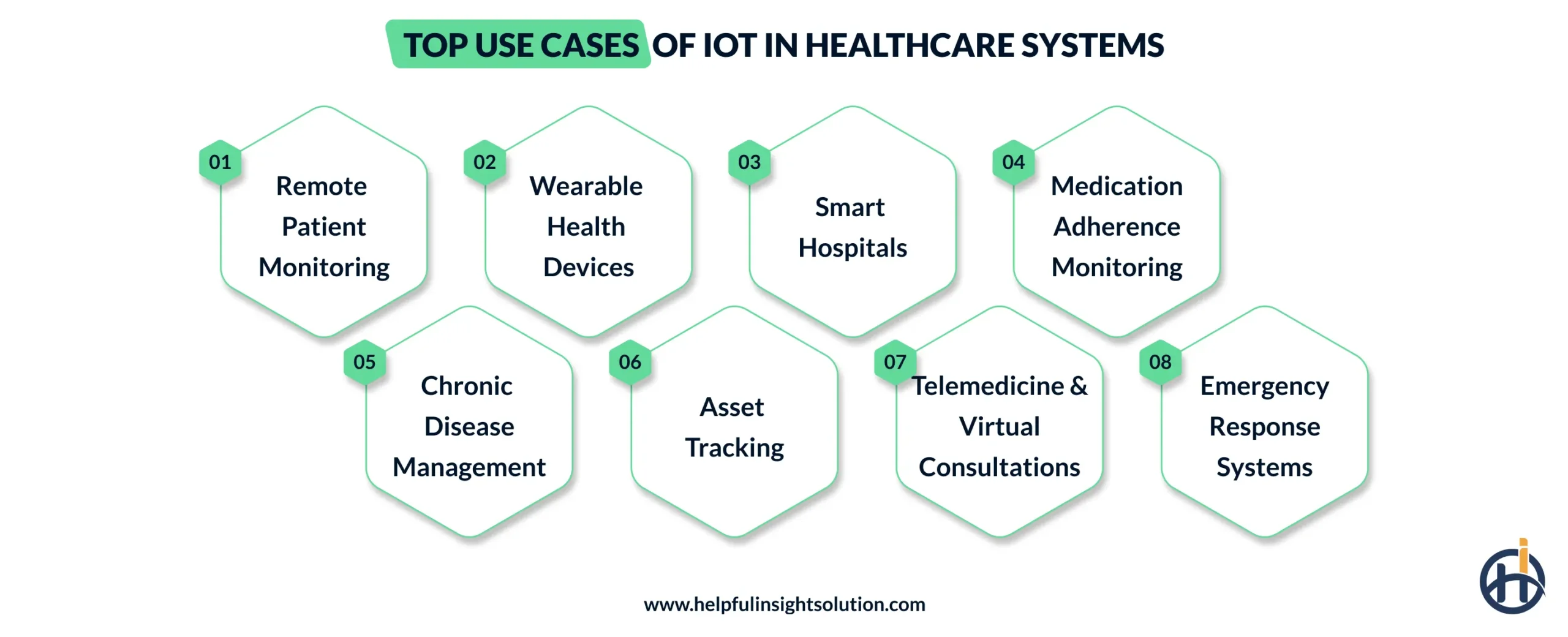
1. Remote Patient Monitoring
It uses IoT-enabled devices to collect patient health data such as heart rate, blood pressure, and oxygen levels in real time. This data is transmitted to doctors and medical staff for better assessment.
It is one of the best IoT applications in healthcare that reduces hospital visits and enables early detection of various diseases. This also improves healthcare convenience and outcomes for at-home patients.
Key Example: Various hospitals use the Philips eICU Program to track ICU patients’ vitals from centralized command centers.
2. Wearable Health Devices
These include smartwatches and fitness bands that track vital signs, physical activity, and sleep patterns. They provide continuous health insights to users, healthcare professionals, and fitness experts.
The use of the Internet of Things in medical helps with preventive care by identifying different health problems at early stages. Such devices help people to easily take control of their physical and mental health.
Key Example: An app like Fitbit can easily detect irregular heart rhythms and alert users to potential cardiac issues.
3. Smart Hospitals
Various healthcare institutions integrate IoT systems to automate medical operations and build smart hospitals. The role of IoT in healthcare is to manage patient flow, monitor equipment, and improve resource utilization.
They enhance patient safety through real-time data tracking and personalized alerts. This helps in creating an efficient and productive healthcare environment for patients.
Key Example: The Mount Sinai Health System uses various IoT sensors to automate patient flow, scheduling, and equipment usage.
4. Medication Adherence Monitoring
The use of IoT medical devices helps patients to take their medicines on time through smart reminders and mobile alerts. They track dosage and timing regularly, ensuring compliance with medical prescriptions.
It helps doctors to easily monitor medication remotely and provide real-time suggestions. This reduces treatment failures and hospital readmissions, enhancing overall satisfaction.
Key Example: The Proteus Digital Health Pill tracks the medication process of patients and sends their data to doctors.
5. Chronic Disease Management
You can implement IoT technologies in healthcare to manage chronic diseases like diabetes, hypertension, and asthma by monitoring various health parameters. They regularly analyze data to detect different trends and predict potential issues.
Patients and doctors can easily adjust treatments based on the real-time information. This leads to better disease control, improved lifestyle, and increased engagement.
Key Example: The Dexcom G6 platform helps diabetic patients to easily monitor glucose levels through smartphone apps.
6. Asset Tracking
An IoT-enabled asset tracking system helps hospitals to easily monitor the location and usage of medical equipment. The Internet of Things healthcare applications use various sensors and RFID tags to track items in real time.
This helps to reduce equipment loss, improve utilization, and save time for the hospital staff. Additionally, it also provides critical tools that are always available for tracking assets.
Key Example: The GE Healthcare software uses RFID-enabled systems to track hospital equipment like wheelchairs and clinical machines.
7. Telemedicine & Virtual Consultations
The Internet of Things supports telemedicine services by enabling real-time sharing of patient data during virtual consultations. It allows doctors to remotely diagnose and monitor patients using connected IoT devices.
Businesses can hire app developers to improve healthcare access in different rural areas. It helps patients to receive timely medical advice, reducing their traveling time.
Key Example: Various healthcare IoT applications, like Teladoc, enable patients to easily consult doctors through video calls and messages.
8. Emergency Response Systems
These systems can easily detect critical health events such as heart attacks or strokes using sensors and automated mechanisms. They instantly notify emergency services and medical centers with their precise location details.
The importance of IoT in healthcare is to ensure faster response times and save lives. It helps to continuously monitor patients’ health to enhance safety from various diseases.
Key Example: The Philips Lifeline system automatically detects major issues and alerts emergency services for elderly patients.
Best Examples of IoT-Enabled Clinical Devices
Various IoT-based healthcare systems are available for patients and doctors to detect multiple diseases and get updated results. These devices track sugar level, heart rate, daily activities, and rise in blood pressure.
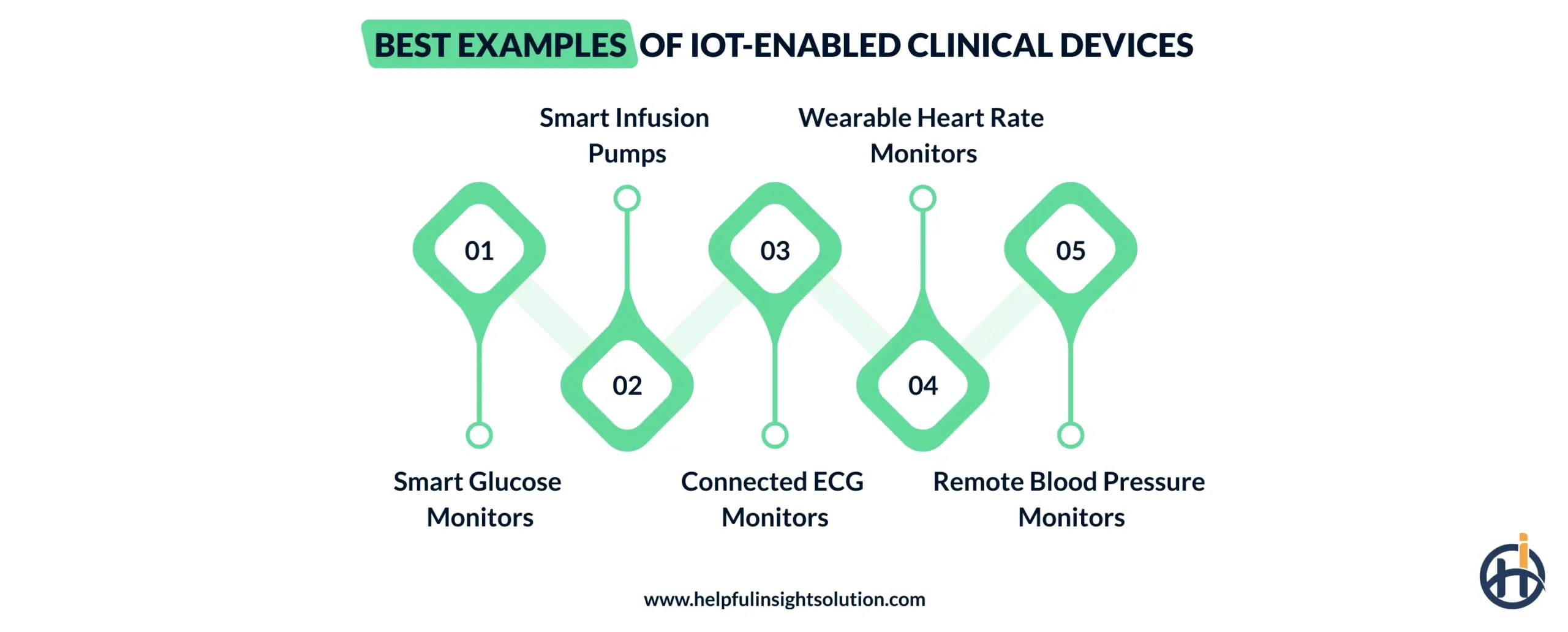
1. Smart Glucose Monitors
These IoT medical devices can track blood sugar levels and transmit data to mobile apps or cloud platforms in real time. They help patients and doctors to monitor trends, receive alerts for abnormal levels, and adjust treatment plans quickly.
Additionally, they improve diabetes management by enabling proactive and personalized care.
2. Smart Infusion Pumps
It delivers precise doses of medication or fluids and is connected to hospital networks for real-time data monitoring. These Internet of Things healthcare devices use safety features like dose error reduction systems and automated alerts to prevent medication risks.
The IoT connectivity allows doctors to remotely adjust settings and track patient data efficiently.
3. Connected ECG Monitors
They can record the heart’s electrical activity and send data to doctors for better treatment planning. These IoT enabled medical devices allow continuous heart monitoring, early detection of artery failures, and faster clinical decision-making.
This connectivity is especially useful for remote patient monitoring and emergency responses.
4. Wearable Heart Rate Monitors
Various IoT medical devices are used to track heart rate continuously during daily activities or exercises. They can easily sync with smartphones or health platforms, providing real-time information on different healthcare trends.
You can build a heart rate monitor app that supports fitness tracking and early detection of cardiovascular issues.
5. Remote Blood Pressure Monitors
The integration of IoT and medical devices helps to measure blood pressure readings and send them to healthcare systems through integrated networks. They allow doctors to monitor patients at different levels and detect hypertension-related risks at early stages.
This helps to reduce hospital visits and supports better management of multiple chronic conditions.
Challenges with IoT-Based Systems in Healthcare
Some common challenges may occur for businesses while integrating the Internet of Things in healthcare. We will explore the potential risks, like security and costs, with their respective solutions in this section.
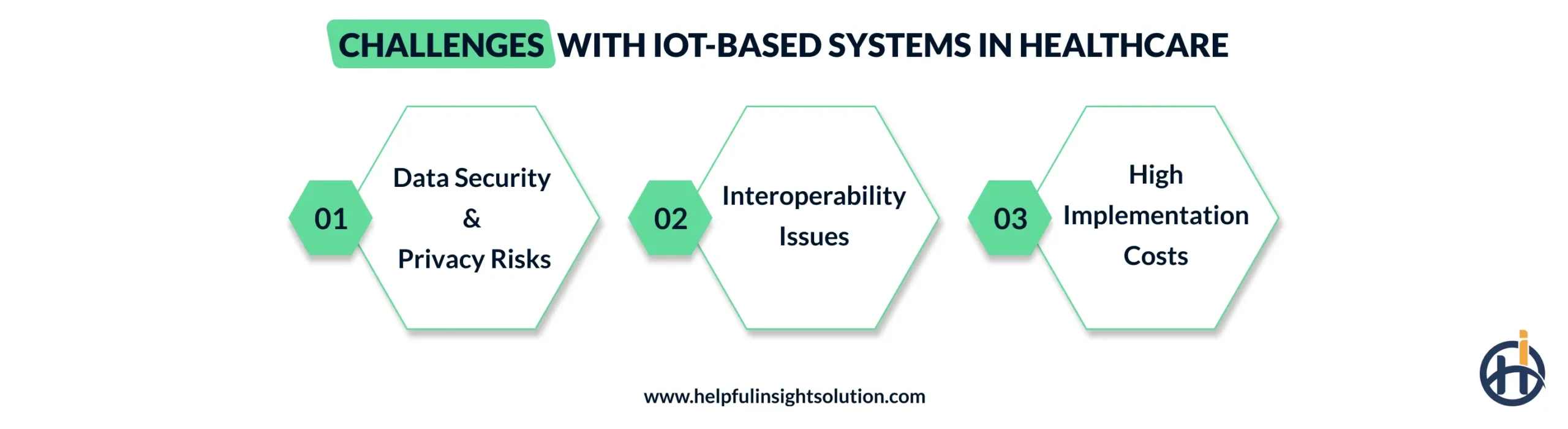
1. Data Security & Privacy Risks
The most common challenge is the security of the IoT healthcare devices and maintaining the privacy of the user data. It is easy for attackers to breach the system and harm the sensitive healthcare information.
Solution: It is better to use cybersecurity that helps to create multiple security layers for data protection.
2. Interoperability Issues
This is a connectivity issue that may occur due to various reasons, such as UI/UX design and network restrictions. It may prevent devices from sending and receiving the collected medical data to the server.
Solution: You should merge the Internet of Things in healthcare industry with third-party resources.
3. High Implementation Costs
The integration of the Internet of Things and medical devices may be expensive due to hardware complexity. This can affect data sharing, health tracking, and report generation, increasing expenses.
Solution: It is beneficial to target cost-effective regions that offer quality services at affordable rates.
How Helpful Insight Helps Businesses with IoT-Powered Healthcare Solutions?
The future of IoT for Healthcare is in the hands of startups, enterprises, and market investors. Their ideas and our technology are ready to transform healthcare app development solutions for hospitals, doctors, and patients.
We always work on modern innovations, such as the integration of the Internet of Things in healthcare industry for accurate data tracking. Businesses can develop medical IoT solutions to monitor every patient, deliver personalized results, and get feedback in real-time.
To implement IoT solutions in healthcare, you require the best resources and a talented team of IT professionals. Our experts help you to understand the purpose of using this technology for improving medical efficiency.
So, if you want the right IoT healthcare services for system integration, then connecting with us is the best choice.
FAQs
The overall time required to build IoT-enabled healthcare platforms is dependent on various business specifications and the complete development process. On average, the duration ranges from 2 months to 5 months based on limited services and functionalities. It can extend to 8 months or more if the budget requirements increase.
The cost of integrating IoT in the healthcare industry is based on several market factors, such as platform complexity, the team’s location, the experience of developers, and hiring models. Additionally, the overall price is also affected by the use of hardware devices that track health vitals. The total cost ranges from $10K to $50K, which may increase due to additional requirements.
For a business investor, it is crucial to know the process of integrating IoT in healthcare systems. The key steps to implement IoT in medication are described in the following manner:
- Various IoT devices are used to collect patient data such as heart rate and blood pressure.
- It enables data transfer between patients and doctors through a secure cloud network.
- The server uses data analytics and AI to detect various diseases and symptoms.
- It can store, manage, and access patient data for improved healthcare treatment.
- IoT can protect patient information and maintain privacy compliance through cybersecurity.
The Internet of Things can be easily integrated with cybersecurity to secure user data and ensure privacy in the healthcare ecosystem. The algorithms are installed in the hardware devices that prevent various unauthorized attacks and data breaches. This technology is used to send instant notification alerts in case of wrong passwords, unidentified face recognition, and misplaced data.
The maintenance cost may affect the overall process due to various factors, like bug fixing, feature updates, and security checks. It is calculated as 15% to 20% of the total development cost, which adds to the final price. Businesses should regularly maintain their healthcare systems to prevent data losses and crashes, reducing downtime.