

“Data is everything in healthcare, so use it to improve growth and ensure success.”
If you look at the present scenario, data is playing a crucial role in driving revenue growth, user engagement, and cost management. So, it is important to regularly analyze the information to segregate it based on requirements, priority, and authenticity.
For example, data analytics in healthcare is a necessary task to process various data that is collected through EHR, IoT devices, and software systems. The need for clinical data analytics is increasing rapidly due to the expansion in patients and medical services.
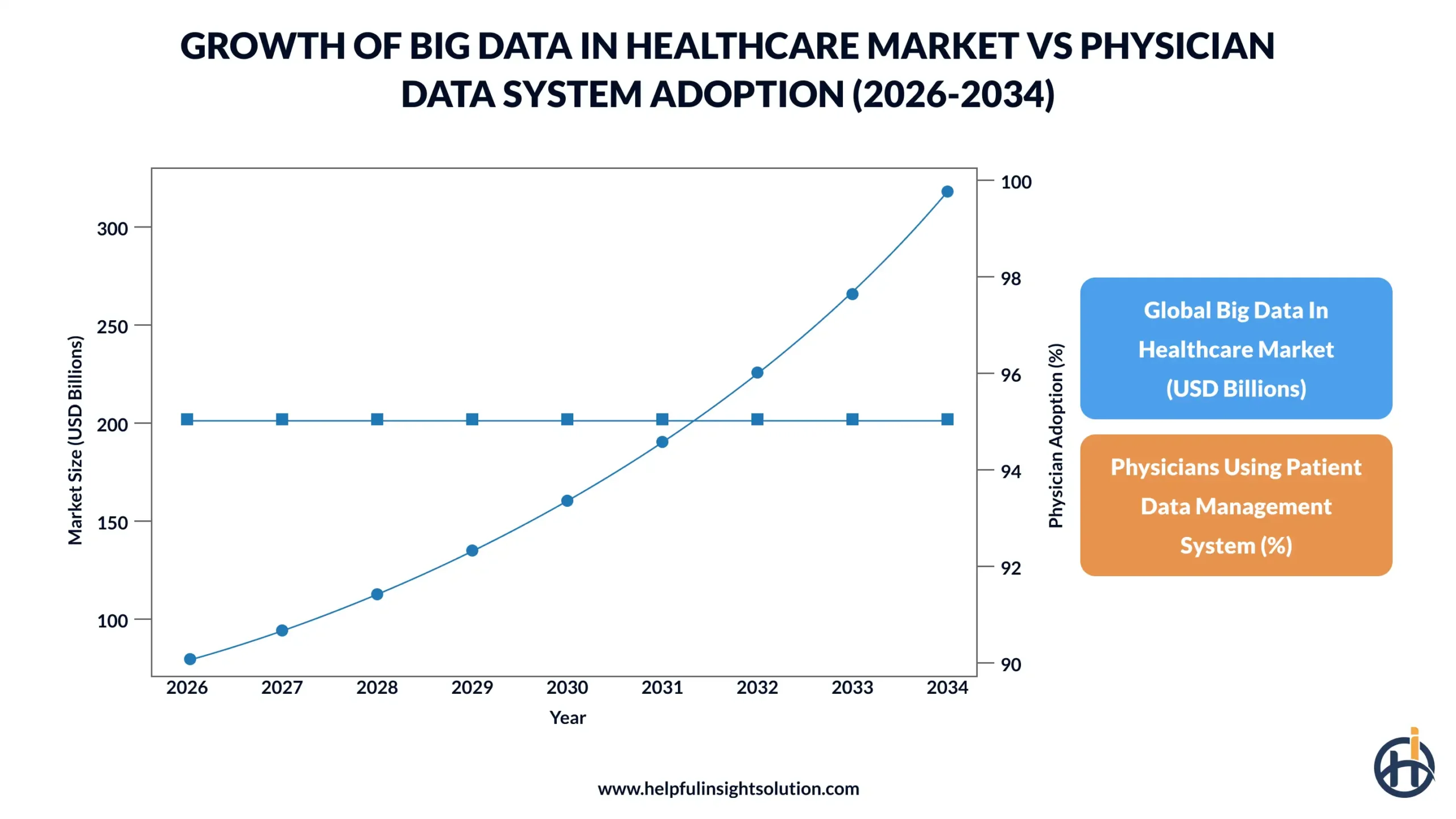
The market size of big data in healthcare at the global level is $80.3 billion in 2026, which will reach $327.6 billion by 2034 at 19.2% CAGR over this tenure.
The rise in the use of EHR systems is one of the main reasons why businesses are integrating predictive analytics and healthcare. More than 95% of physicians are using patient data management systems to maintain efficiency and improve results.
As a business investor, you must know the importance of implementing medtech data analytics in the existing healthcare networks. Here, you will understand various aspects, such as applications, benefits, and challenges with data analytics.
So, tighten your seatbelts and dive into the content to know more.
What is Data Analytics in Healthcare?
The data analytics in healthcare involves the gathering, analysis, and processing of medical information. This data is collected from different sources, like EMRs, wearable devices, medical billing, and health insurance databases.
The integration of big data and analytics in healthcare helps entrepreneurs to reduce additional expenses, improve patient engagement, and optimize administration.
Various technologies like AI and machine learning, with statistical mathematics, are used in a healthcare app to analyze data and make decisions. This enhances health data intelligence, which guides patients and doctors for secure communication and better treatment planning.
- Improved Patient Care: It helps doctors to analyze patient data and make accurate clinical decisions.
- Disease Prediction and Prevention: It identifies data patterns to predict diseases and ensure preventive care.
- Efficient Hospital Management: Analytics helps hospitals to optimize resources, reduce costs, and improve management.
What are the Benefits of Using Data Analysis in Healthcare?
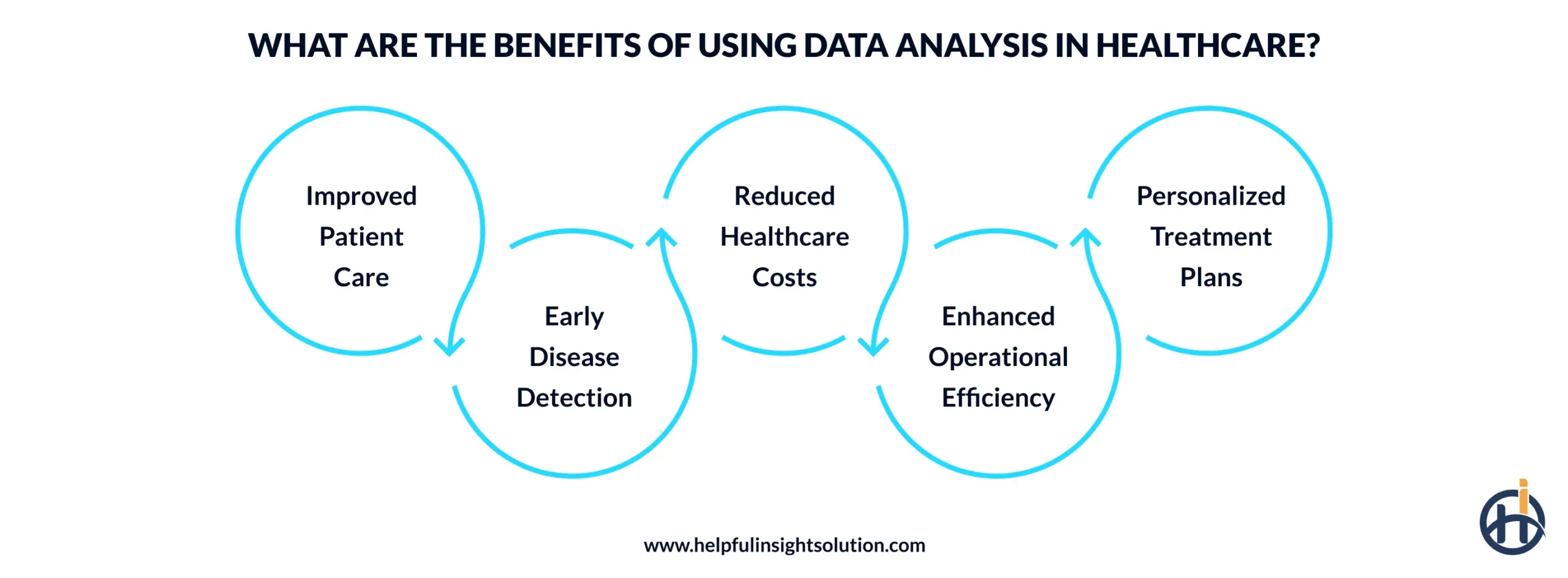
It is quite interesting for businesses to know that there are multiple benefits of data analytics in healthcare. You can implement this because it ensures instant decision-making and improves overall efficiency.
1. Improved Patient Care
It is easy to improve patient care with hospital data analytics systems that help in waitlist management and appointment scheduling. This allows healthcare professionals to make accurate decisions for patients by analyzing user flow and resource availability.
2. Early Disease Detection
The collection of patient information, such as symptoms, medications, and therapies, helps doctors to detect diseases at early stages. A certified health data analyst system provides various indicators to instantly judge different medical issues.
3. Reduced Healthcare Costs
Businesses should focus on leveraging big data analytics to reduce healthcare costs, increase profits, and improve user satisfaction. It analyzes inventories, such as medicines, equipment, and medical instruments, to predict ongoing requirements.
4. Enhanced Operational Efficiency
The integration of healthcare data and analytics helps hospital staff to easily understand the billing process, insurance claims, and prescriptions. With UI/UX design, this becomes more efficient, as it involves responsive dashboard analysis and processing.
5. Personalized Treatment Plans
Doctors can provide treatments and therapies based on the patient’s present condition through clinical information analytics software. They can view medical history, EMR/EHR, and prescription data to suggest the best remedies in real-time.
Various Types of Healthcare Data Analytics Practices
For health data analytics, multiple types of practices are available based on requirements and datasets. In this section, we will understand the most common data analytics categories that businesses use.
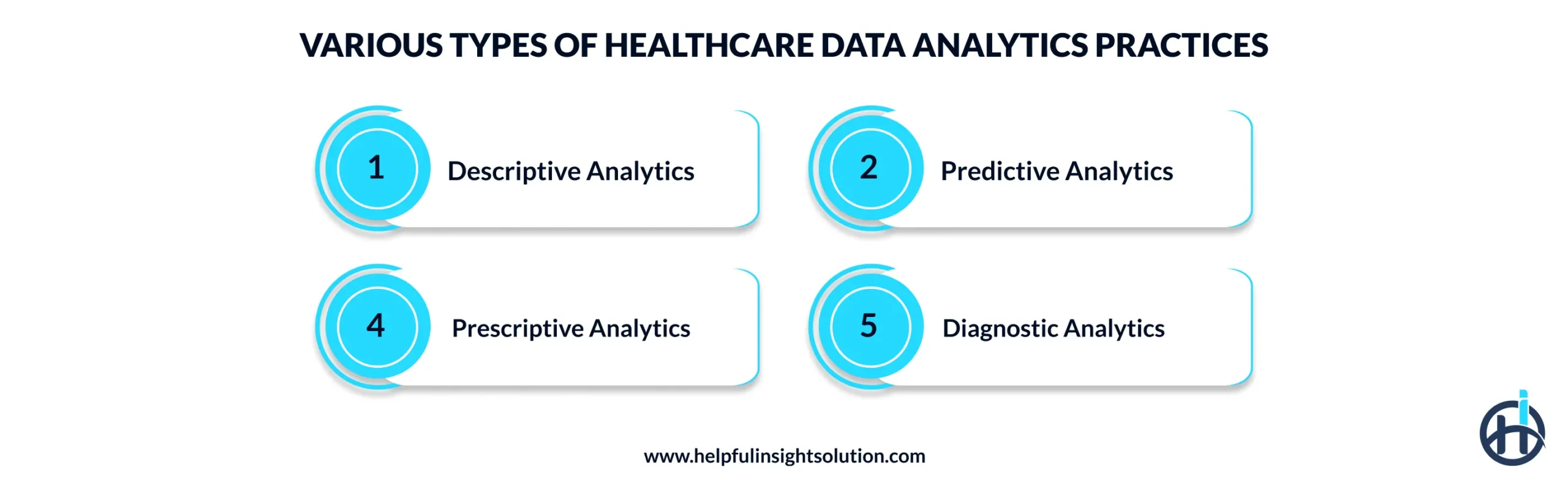
1. Descriptive Analytics
It focuses on analyzing historical healthcare data to understand past resorts and therapies. This health analytics practice helps healthcare organizations to track trends, patient records, treatment outcomes, and overall performance through reports and dashboards.
2. Predictive Analytics
The use of predictive analytics in healthcare is to analyze medical data along with machine learning algorithms and forecast future outcomes. The predictive analytics services help in determining disease risks, patient appointments, and potential health complications in advance.
3. Prescriptive Analytics
This healthcare information analytics model recommends the best possible actions based on predictive information and outcomes. It assists doctors in making superior decisions for treatment plans, resource allocation, and improving patient care outcomes.
4. Diagnostic Analytics
Doctors can easily determine the root causes of multiple healthcare issues through this medical analytics model. It helps them to understand various health events by analyzing different patterns, correlations, and patient history in the real-time environment.
Top Applications of Data Analytics in the Healthcare Industry
Business investors have adopted a lot of applications of data analytics in healthcare to improve growth and increase productivity. These use cases target various medical fields, enhancing workflow and user engagement.
1. Patient Risk Prediction
The technology helps healthcare providers identify patients who can easily get serious conditions by analyzing medical history, lifestyle data, and clinical records.
With healthcare predictive analytics models, you can detect early warning signs of diseases such as diabetes, heart disease, or cancer. This enables doctors to take preventive actions and improve patient outcomes.
Industrial Use: Various hospitals use predictive analytics to identify patients at high risk of heart attacks based on medical history and lifestyle data.
2. Hospital Resource Management
The use of data analytics in hospitals helps to optimize different healthcare resources such as staff, beds, medical equipment, and supplies. By analyzing patient admission trends and treatment data, hospitals can forecast demand more accurately.
This improves operational efficiency, reduces waiting times, and ensures better patient care.
Industrial Use: The data analytics models help hospitals predict patient admission rates to optimize bed availability and staff scheduling.
3. Drug Discovery and Development
It is easy to discover new drugs by analyzing large datasets from clinical trials, genetic research, and patient records. Most researchers identify drug compounds and predict their effectiveness by using data analytics in the pharmaceutical industry.
This reduces research time, lowers development costs, and speeds up the process of bringing new medicines to market.
Industrial Use: Multiple pharmaceutical companies analyze large biological datasets to identify potential drug compounds faster.
4. Fraud Detection in Healthcare Claims
With healthcare claims data analytics, it is easy to detect fraudulent insurance claims by identifying unusual billing patterns and suspicious transactions.
Machine learning models can quickly analyze vast amounts of claim data to flag potential fraud. This helps insurance providers reduce financial losses and maintain transparency in healthcare systems.
Industrial Use: Different insurance companies use analytics to detect unusual billing patterns that may indicate fraudulent claims.
5. Remote Patient Monitoring
This technology plays a crucial role in remote patient monitoring by analyzing data collected from wearable devices, mobile health apps, and remote sensors.
Doctors can track patient vitals such as heart rate, blood pressure, and glucose levels through AI-powered healthcare analytics. This allows early detection of health issues and reduces unnecessary hospital visits.
Industrial Use: Several wearable devices send real-time health data to analytics systems that alert doctors if a patient’s vital signs become abnormal.
6. Medical Imaging Analysis
The data analytics is combined with artificial intelligence to improve the analysis of medical images such as X-rays, MRIs, and CT scans. Advanced algorithms can easily detect abnormalities, tumors, or fractures with high accuracy.
The extensive use of AI in medical imaging assists doctors in faster diagnosis and improves treatment planning.
Industrial Use: AI-powered medical analytics helps radiologists detect tumors or abnormalities in X-rays, MRIs, and CT scans.
7. Population Health Management
The innovation of population health analytics models helps to study health trends across large groups of people. Most healthcare organizations analyze demographic, environmental, and clinical data to identify disease patterns and risk factors.
This helps in designing preventive healthcare programs and improving public health strategies.
Industrial Use: Various health organizations analyze regional health data to identify disease trends and plan preventive care programs.
What is the Role of Big Data Management in Healthcare?
In general terms, big data is a technology that handles complex and large data, providing an easy way to understand the information. The use of big data in healthcare is to collect, analyze, and process protected health information (PHI) with high security and transparency.
For example, the patient waitlist management software also uses this technology to differentiate patients based on their age, diseases, and location. This is the best way to represent your healthcare business intelligence, attracting more users and ensuring trust in it.
The integration of big data analytics in healthcare industry helped multiple entrepreneurs to enhance their services on a large scale.
- It improves patient care by analyzing large healthcare datasets to support accurate diagnosis and personalized treatment.
- The technology enhances clinical decision-making through real-time data insights from EHRs and medical systems.
- This supports disease prediction and prevention by identifying patterns and trends in patient health data.
- It can optimize hospital operations by managing resources, increasing patient flow, and reducing operational costs.
- This strengthens medical research and innovation by enabling researchers to analyze healthcare data for new treatments.
Major Challenges in Integrating Data Analytics in Medical
Businesses must know the key challenges in implementing data analytics in healthcare to prevent losses. We will study some major risks with their respective solutions in this section to easily help you out.
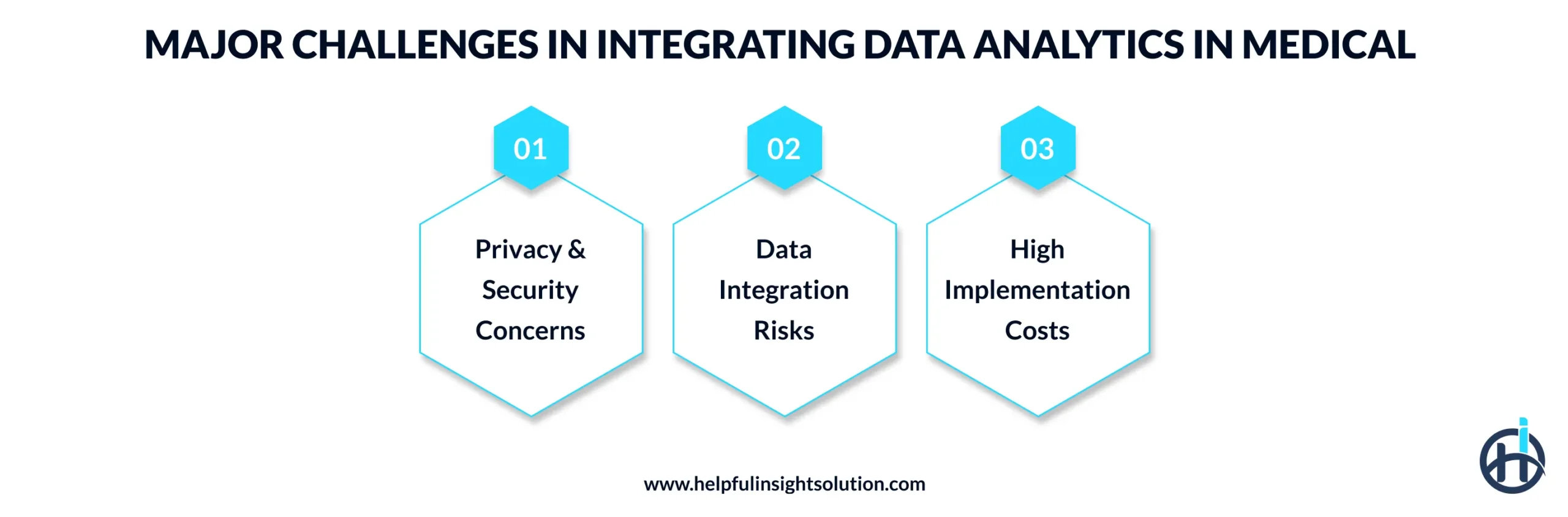
1. Privacy & Security Concerns
There is always a chance of a data leak if the resources are not handled properly during the integration process. This may affect the overall security, influence patients’ privacy, and decrease trust among users.
Solution: You must allow healthcare data analysts to implement security measures for safety and privacy.
2. Data Integration Risks
It is difficult to understand the authenticity of information because most clinical data looks identical. This disturbs medical scheduling software and forces it to make false decisions, which leads to inefficiency.
Solution: It is beneficial to use separation models for healthcare analytics to identify different data types.
3. High Implementation Costs
The cost of implementing data analytics services in healthcare increases rapidly due to the rise in complexity. Various AI algorithms affect the overall price because of advanced models and datasets.
Solution: Third-party solutions can be used for healthcare big data analytics, as they are affordable.
Future Trends in Medical Data Analysis
The future of data analysis in healthcare is full of innovation and technical advancements that promote medical efficiency. It will help to streamline operations, maintain accuracy, and deliver more security.
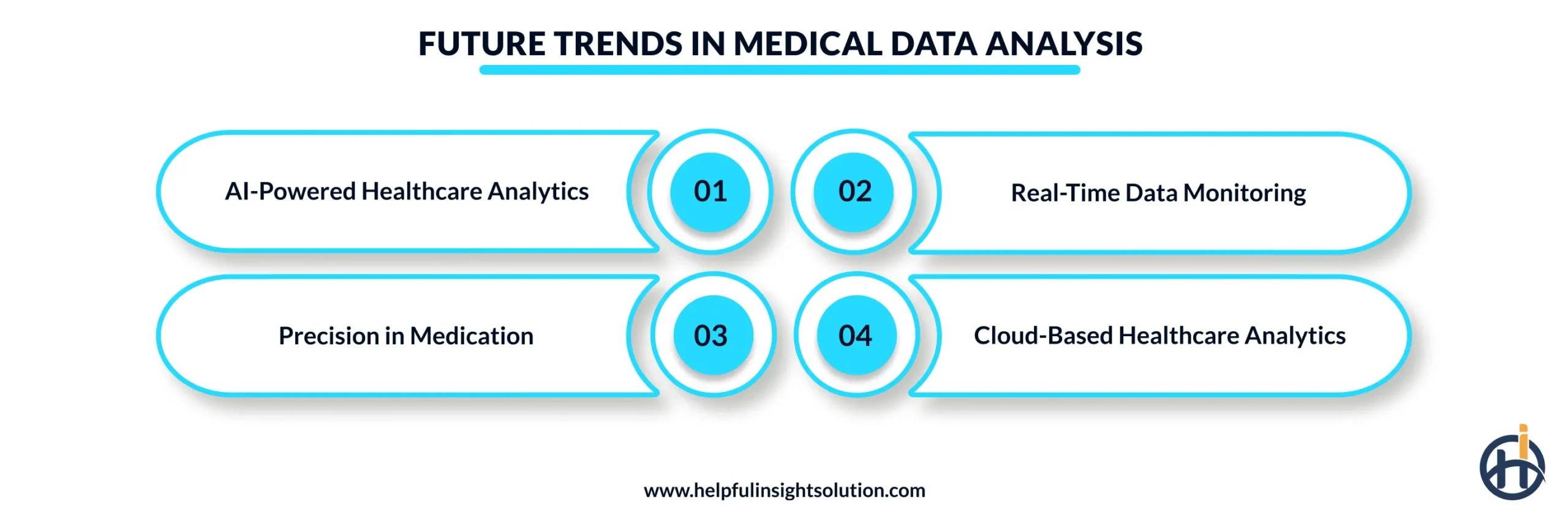
1. AI-Powered Healthcare Analytics
Artificial intelligence is used extensively for predictive analytics in healthcare because it helps to determine data for segregation. The use of AI in healthcare is increasing worldwide due to its capability to produce automated results accurately.
2. Real-Time Data Monitoring
The health data sciences will become more advanced through integrated devices, such as IoT-enabled smart wearables, that ensure remote patient care. Businesses have started investing in this innovation for delivering telemedicine services and online doctor consultations.
3. Precision in Medication
The use of data analytics in medicine helps doctors to choose the right medication for patients by analyzing progress reports and current dosage. This will enhance treatment planning, improve disease management, and reduce confusion among users.
4. Cloud-Based Healthcare Analytics
Cloud is a common technology for handling data and will become more advanced, providing dynamic access and centralization. The innovation of cloud data analytics in healthcare industry will help in patient data management, healthcare scheduling, and inventory handling.
Boost your Business Growth with Helpful Insight’s Data Analytics Services
Entrepreneurs who are looking to implement big data analytics in healthcare must approach a reliable partner who can deliver the best possible services.
Helpful Insight is a leading healthcare app development company that is working on medical data intelligence for business growth, smooth workflow, and increased user engagement.
We combine healthcare and analytics to improve patient care, strengthen efficiency, and streamline tasks for hospitals or clinics.
Among the best healthcare analytics companies, Helpful Insight is known for creating AI-powered platforms that help in advanced data processing and execution.
You can increase the number of treatments and manage operations by connecting with healthcare data analytics businesses, like us, to assess user information. This will help you in developing a strong perspective for revenue generation and growth.
FAQs
Data analytics is a powerful tool that helps entrepreneurs to analyze user and business information easily. You can implement this technology in healthcare by using the following methods:
- First, you must collect and centralize healthcare data from hospital management systems.
- It is crucial to use advanced analytics tools to process large healthcare models.
- You should implement HIPAA compliance to protect patient information.
- Now, you can integrate dashboards to analyze data and make clinical decisions.
- It is important to monitor outcomes to improve healthcare efficiency and patient care.
The cost of developing healthcare solutions for data analytics is dependent on various factors, such as security, design complexity, and the experience of developers. The average cost typically ranges from $10,000 to $70,000, which may increase due to these factors. You can manage expenses by implementing different common cost-reducing techniques.
The security of user and healthcare data is important because it may lead to unauthorized system access. Through data analytics, businesses can easily secure health information in the following manner:
- It detects unusual activity patterns in healthcare systems and identifies potential cyber threats.
- This enables predictive risk monitoring and prevents data breaches in real-time.
- It improves compliance and auditing to protect patient data according to HIPAA regulations.
Yes, artificial intelligence is one of the most widely used technologies that helps in analyzing large healthcare data. It uses predictive analytics to understand previous results, make decision models, and generate personalized reports. Additionally, AI is also helpful in detecting data that is produced from unknown sources to ensure security.
An entrepreneur must know the process of analyzing healthcare data to extract useful information and make accurate decisions. The steps for data analysis are discussed as follows:
- You should gather healthcare data from patient records, labs, and wearable devices.
- It is the right time to organize data to remove errors, duplicates, and incomplete information.
- The experts use statistical methods and machine learning to identify patterns or trends.
- You can view dashboards, reports, and graphs to understand healthcare requirements.
- It is easy to use this data to improve diagnosis, treatment planning, and healthcare.