

Key Takeaways:
- Businesses are using artificial intelligence to gather more customers and retain existing ones through personalization.
- Users choose pickup or delivery services according to their needs and e-commerce facilities.
- Various technical and marketing trends help to manage dynamic pricing, trading options, and product quality.
- You can increase delivery speed, customers’ buying efficiency, and business growth with modern trends.
Have you ever thought of expanding your grocery business from local supermarket stores to global supply chains? If yes, then what restricts you from moving ahead in the market, connecting with new customers, and generating profitable revenue?
There are a lot of barriers between you and your success, which can only be dissolved by implementing the latest trends in grocery retail. They cover various technical, geographical, and marketing insights that help in consistent business growth.
The future of grocery shopping is bright, as the market value of this industry is rising with more investments. According to experts, the current market volume is $1.06 trillion in 2026, which will rapidly grow to $1.74 trillion by the end of 2031. Additionally, AI, IoT, and other technologies are also providing great benefits to business investors.
We will now move forward and study the most widely accepted grocery delivery app trends that all entrepreneurs must focus on. Lastly, you will also understand what changes you can make to use these trends. So, come on and jump into this blog.
Why Should Retailers Invest in Grocery Apps?
Before going into the food retail trends, it is necessary to understand the need for investing in this industry. Here, some key advantages are discussed that every entrepreneur must know to start an online business.
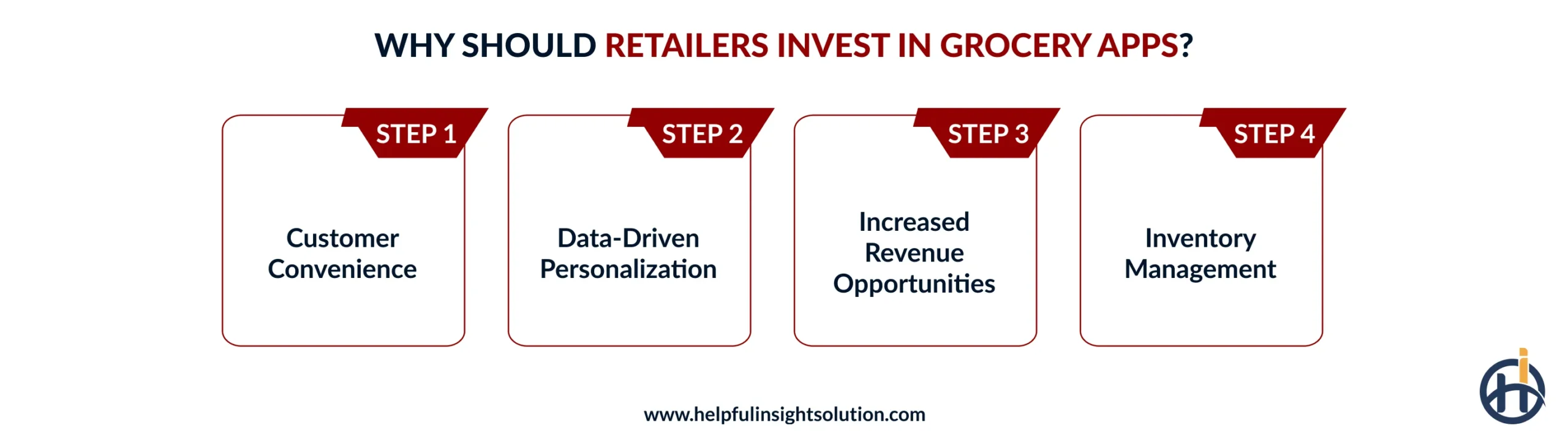
1. Customer Convenience
Users can easily save all the records of their past purchases, shopping lists, and store availability by using grocery mobile applications. Additionally, it also offers curbside pickup, crowd navigation, and instant delivery services to nearby or remote users.
2. Data-Driven Personalization
Businesses should focus on AI-powered trends in supermarket industry that help to personalize user choices and reduce customer acquisition costs. With data analytics, you can monitor user conversion and retention rates, increasing overall trust.
3. Increased Revenue Opportunities
Revenue generation is one of the key benefits of grocery delivery apps that allow investors to include additional functionalities for users. Additionally, they can make profits through subscription plans, in-app purchases, advertising models, and delivery charges.
4. Inventory Management
An online grocery platform helps businesses to manage logistics operations, monitor stock limits, and improve warehouse management. This reduces product wastage, ensures instant deliveries, and fulfills user demands through integrated APIs.
Understanding the Top Grocery Delivery Models
Businesses must know the different types of delivery models that are commonly used in this domain. Various grocery industry trends boost these models through AI route optimization, real-time order tracking, and GPS-based inventory handling.
Additionally, dependency on regional stores and vending zones also affects the adoption of delivery models in the present time. Here is a table that describes the key grocery models for delivery operations.
| Delivery Model | How it Works | Key Characteristics | Target Audience/Goal | Leading Examples |
| Inventory-led (Q-Commerce) | The company owns inventory stored in dark stores that handle both picking and delivery. | Ultra-fast delivery (10-30 minutes), a limited daily essential product catalog, and high operational costs. | Urban shoppers need immediate and small-basket top-ups. | Zepto, Blinkit |
| Marketplace | Customers order from multiple local supermarkets through centralized third-party platforms, allowing independent shoppers to fulfill the order. | Wide product variety, same-day delivery slots, and the platform takes commissions from partner stores. | Customers who want full-sized weekly groceries delivered without visiting a physical store. | Instacart, AmazonFresh |
| Aggregator | The platform acts as a digital mediator linking buyers to a specific nearby local grocery store or supermarket. | Lower overhead costs rely on existing supermarket staff to pick items and third-party delivery agents. | Local grocers want an online presence without managing their own complex delivery fleets. | 6amMart |
| Subscription-based | Customers pay a recurring weekly or monthly fee for scheduled deliveries of everyday products. | High customer retention, highly predictable supply chain for daily essentials like milk and bread. | Households looking for automation and convenience for recurring staple needs. | BigBasket |
| 5. Store-Pickup (BOPIS) | Customers order and pay online, then physically drive to collect pre-packed groceries at the store. | Zero last-mile delivery costs, no expensive warehouse setup required, and strong cross-selling potential. | Price-conscious consumers who prefer digital shopping but want to avoid delivery fees. | Walmart |
Logistics as a Service (LaaS): Improving Delivery Tasks
This is a dedicated delivery model for business investors that allows them to target third-party experts for transportation, warehousing, and order management. It decreases high upfront infrastructure costs, increases business scalability, optimizes delivery routes, and provides tracking security. With increased adoption, it will soon become the future of grocery shopping, enhancing user convenience.
- The increased use of different AI-enabled models and algorithms enhances communication between consumers and delivery partners.
- All orders, deliveries, purchases, and shopping carts are easily observed through online platforms, increasing transparency and trust.
- This model helps businesses to adjust their delivery capacity without maintaining large fleets during higher demands and sales.
- Entrepreneurs must shift from fixed-cost to variable-cost models, which reduces the overall transportation and operational expenses.
- Advanced LaaS solutions can be integrated with supply chain networks and e-commerce platforms, delivering an engaging dashboard.
Businesses can successfully achieve this goal by integrating various technical and branding grocery retail industry trends into their systems. By improving delivery tasks daily, they can consistently focus on various user demands, platform traffic, and product quality.
Key Technical Trends in the Grocery Industry
The use of modern-day technologies has increased rapidly, enhancing business operations and managing customers. In this section, we will study some technical trends in grocery that are popular and common.
1. Agentic AI & Hyper-Personalization
Agentic AI is transforming grocery retail by enabling systems to analyze shopper behavior, predict preferences, and automate personalized recommendations. These AI agents can create dynamic shopping lists, suggest relevant products, and offer tailored discounts based on purchase history and dietary habits.
Hyper-personalization also improves customer engagement through AI-powered chatbots, voice commerce, and predictive reordering features. As a result, grocery businesses can increase customer loyalty, boost conversion rates, and deliver a more convenient shopping experience.
2. IoT & Smart Store Infrastructure
IoT-powered smart stores use connected sensors, cameras, and devices to streamline operations and enhance customer convenience. These grocery shopping trends can automatically track inventory levels, monitor product freshness, and send real-time restocking alerts to store managers.
Technologies like smart carts, cashless checkout systems, and temperature-monitoring devices also improve operational efficiency and reduce human errors. This infrastructure helps grocery retailers optimize in-store experiences while lowering waste and maintenance costs.
3. AI-Driven Demand Forecasting
AI-driven demand forecasting enables grocery retailers to accurately predict product demand using historical sales data, seasonal trends, and consumer purchasing patterns. Advanced ML algorithms can identify fluctuations in buying behavior and optimize inventory planning.
This reduces issues like overstocking, stock shortages, and food spoilage while improving supply chain efficiency. Grocery businesses should make a pickup and delivery app to minimize operational costs and maintain consistent product availability.
4. Robotics in Store Automation
Other grocery app technology trends include the automation of repetitive tasks such as shelf scanning, inventory management, cleaning, and warehouse operations. Autonomous robots can quickly identify empty shelves, misplaced items, and stock issues with greater accuracy.
In fulfillment centers, robotic picking and packing systems accelerate order processing for online grocery deliveries. These automation capabilities help retailers improve productivity, reduce labor dependency, and enhance overall operational speed.
5. Blockchain-Based Food Traceability
Blockchain-based grocery retail trends improve food traceability by creating secure and transparent records of the supply chain, from farms to stores. Grocery retailers can use blockchain systems to track product origins, monitor handling conditions, and verify food safety compliance in real time.
This transparency helps businesses quickly identify contamination sources and manage recalls more efficiently. Additionally, consumers gain greater trust in grocery brands through access to verified information about product quality and sourcing.
Growing Regional Trends in the Grocery Market
The impact of various regions is different on the grocery business due to population and market support. You will know the best trends in grocery based on different geographies, gathering more app investors.
1. Asia-Pacific: Ultra-Fast Commerce & Micro-Fulfillment
The Asia-Pacific grocery market is rapidly adopting ultra-fast commerce models that allow deliveries within minutes through local micro-fulfillment centers. Rising smartphone penetration, dense urban populations, and high demand for convenience are accelerating this trend across major cities.
These grocery e-commerce app trends include dark stores, AI-powered logistics, and real-time inventory systems that improve delivery efficiency. This shift is helping businesses meet growing consumer expectations for speed, convenience, and seamless digital shopping experiences.
2. Europe: Private Label Dominance & Value Focus
In Europe, private-label grocery products are gaining strong popularity as consumers increasingly prioritize affordability and value-driven purchasing decisions. Retailers are expanding their in-house product lines across categories such as organic foods, ready-to-eat meals, and household essentials.
Inflation and changing economic conditions have encouraged shoppers to seek high-quality alternatives at lower prices, boosting grocery store industry trends. As a result, grocery brands are focusing on competitive pricing strategies and value-centric marketing to maintain customer loyalty.
3. North America: Experiential Retail & Digital Loyalty
North American grocery retailers are emphasizing experiential retail strategies that combine digital innovation with engaging in-store experiences. Smart carts, personalized promotions, interactive displays, and loyalty apps are being used to enhance customer satisfaction and retention.
Businesses can build grocery delivery apps like Instacart that provide data analytics, customized rewards, and targeted offers through loyalty programs. This trend is helping retailers strengthen long-term customer relationships while increasing repeat purchases and brand engagement.
4. Middle East & North Africa (MENA): Subscription-Based Ecosystems
The MENA grocery market is witnessing growth in subscription-based ecosystems that offer recurring grocery deliveries, meal kits, and membership-based benefits. Consumers are increasingly attracted to convenience, predictable pricing, and exclusive discounts provided through subscription models.
Grocery businesses are integrating digital payment systems, AI-driven recommendations, and loyalty rewards to improve customer retention. This approach enables retailers to build recurring revenue streams while delivering personalized shopping experiences.
5. Australia: Surging Online Adoption
Australia’s grocery industry is experiencing rapid online adoption as consumers prefer digital shopping platforms for convenience and time savings. Retailers are expanding eCommerce services, improving delivery infrastructure, and introducing click-and-collect facilities.
Mobile apps, digital payment systems, and AI-powered recommendations are the future of grocery shopping. This trend is driving strong competition among grocery businesses to provide faster deliveries and more seamless online shopping journeys.
Top Marketing Trends for Grocery Businesses
The branding of your business is also important for consistent market growth and revenue generation. Entrepreneurs can implement the following emerging trends in grocery apps that boost user attention.
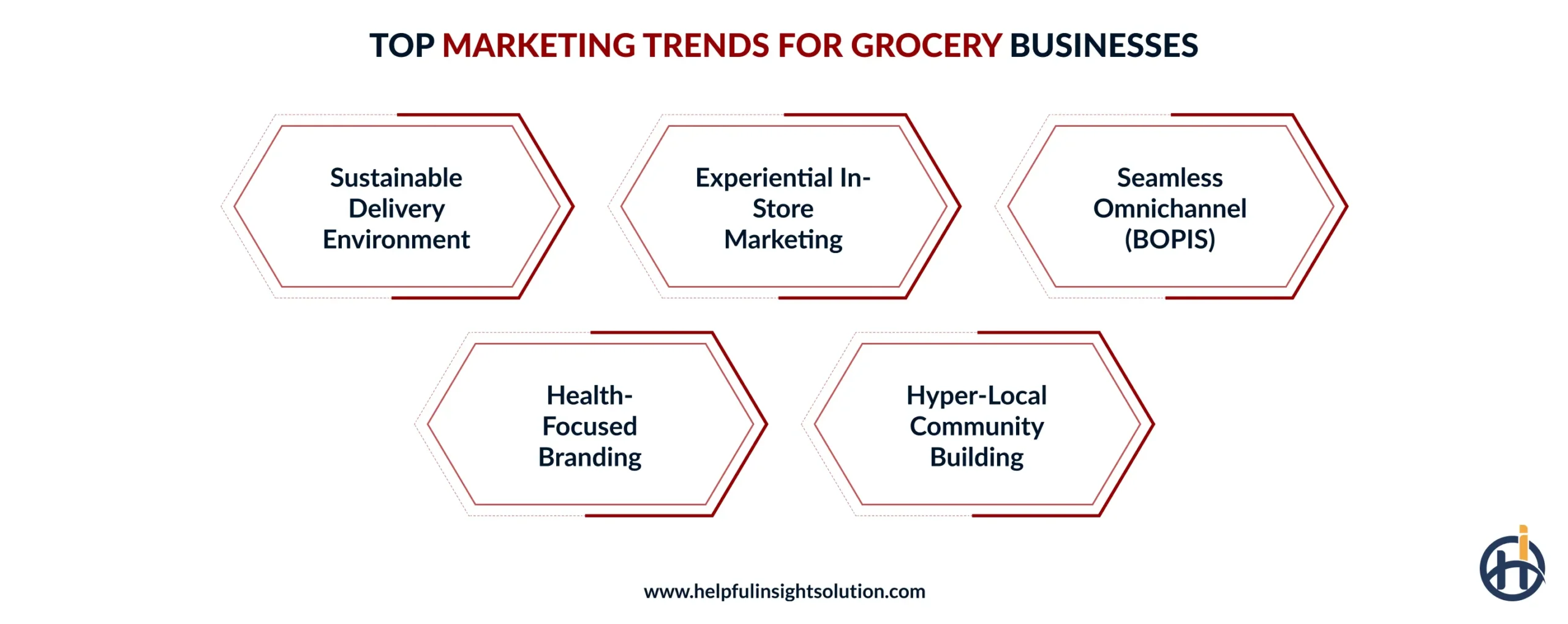
1. Sustainable Delivery
It is becoming a major marketing trend as grocery businesses focus on eco-friendly packaging, electric delivery vehicles, and optimized delivery routes. Consumers are choosing brands that prioritize green logistics and sustainable practices. Promoting carbon-conscious delivery services also helps grocery companies strengthen brand loyalty and attract environmentally aware retailers.
2. Experiential In-Store Marketing
This enhances customer engagement by creating interactive shopping experiences through live product demos, digital displays, and smart shopping technologies. Grocery retailers are using immersive experiences to increase customer retention and encourage impulse purchases. These grocery store trends help brands differentiate themselves in a highly competitive retail market.
3. Seamless Omnichannel (BOPIS)
Buy Online, Pick Up In-Store (BOPIS) allows customers to shop conveniently across digital and physical channels. Retailers are integrating mobile apps, websites, and store systems to provide real-time inventory visibility and faster order fulfillment. By integrating UI/UX design with an omnichannel approach, you can improve customer satisfaction, increasing operational flexibility and sales opportunities.
4. Health-Focused Branding
It is gaining popularity as consumers become more concerned about nutrition, wellness, and clean-label products. Grocery businesses are highlighting organic items, plant-based foods, and health-oriented product categories through targeted marketing campaigns. These online grocery app trends help retailers build trust and position themselves as wellness-driven brands in the market.
5. Hyper-Local Community Building
This focuses on building strong relationships with nearby customers through localized campaigns and community engagement initiatives. Grocery businesses are partnering with local farmers and using geo-targeted promotions to create stronger customer connections. This is the future of grocery shopping, which improves brand visibility, customer loyalty, and local communities.
A Roadmap to Implement Future Trends in Grocery Apps
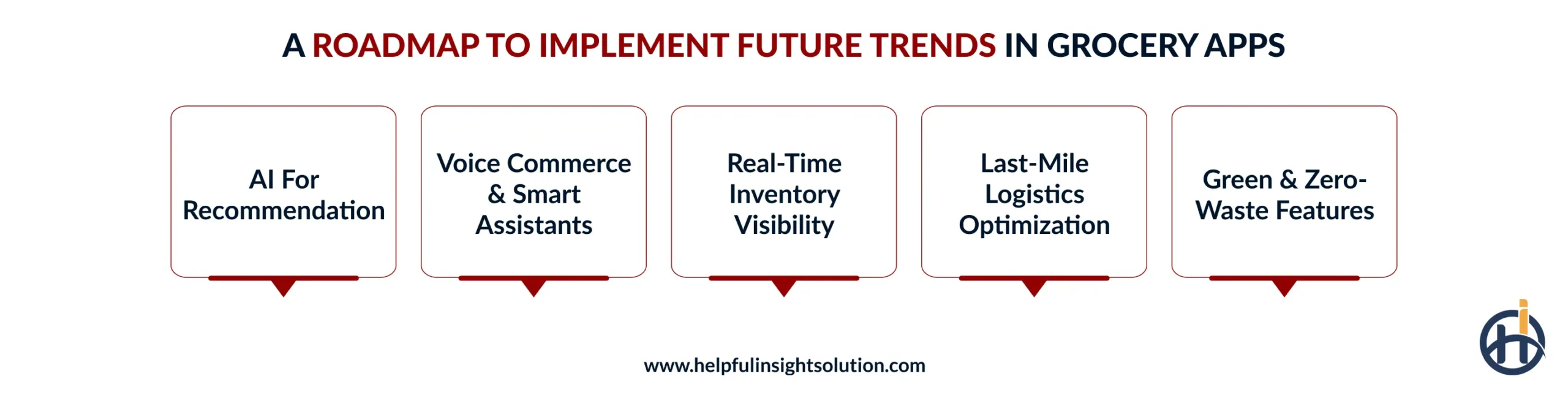
It is necessary to understand what resources you need to begin a venture with modern grocery industry trends. These include technical integration, behavior analysis, product lifecycle, and user convenience.
1. AI for Recommendation
The future of grocery shopping is the integration of AI recommendation algorithms and generative models that deliver a predictive buying and selling assistant. Artificial intelligence is one of the core technologies that helps businesses to understand consumer behavior and delivery issues.
2. Voice Commerce & Smart Assistants
By using conversational AI models, you can easily build voice-enabled virtual chatbots that handle complex user queries and provide instant solutions. It is necessary to hire app developers who are skilled with NLP and machine learning to develop interactive voice bots for e-commerce.
3. Real-Time Inventory Visibility
You must build or install the latest ERP, POS, and CRM systems for handling various inventory, transportation, and quality operations. Businesses can integrate IoT that uses sensors, cloud servers, and database structures, boosting grocery market trends for profitable revenue.
4. Last-Mile Logistics Optimization
With GPS sensing devices, integrated APIs, and digital verification codes, entrepreneurs can make delivery systems efficient, transparent, and flexible. People can monitor expected arrival times, check Proof of Delivery (POD), and analyze product quality with grocery platforms.
5. Green & Zero-Waste Features
It is beneficial to add trackers that monitor daily user consumption and predict the right amount of units, preventing food wastage and promoting sustainable delivery. You should deploy electric vehicles to deliver orders, which reduces carbon emissions and enhances the eco-friendly environment.
In a Nutshell!!
In this write-up, we have covered almost all of the latest trends in grocery apps that help entrepreneurs to make desired arrangements. For successfully implementing these trends in your existing business model, it is beneficial to use effective grocery app development services.
They target the design, integration, security, and maintenance of mobile applications, increasing the overall user engagement. You should adopt modern innovations, which focus on various technical, branding, and regional parameters.
These growing supermarket trends will boost brand value, ensuring constant profit margins for local vendors, retailers, and distributors. They enhance the future of grocery shopping through advanced technologies, market support, and user adoption. It is the right time for you to join with experienced IT partners and get market advantages.
FAQs
AI in the grocery industry helps to automate delivery operations, personalize user choices, optimize routes, and predict market demands. It uses machine learning algorithms to train models on various grocery items and pricing structures. Additionally, it also tracks traffic, weather patterns, and road blockages with real-time APIs.
The online grocery market has reached the maximum number of customers across the globe, which will expand further in the future. The Asia-Pacific region is rapidly growing at a 7.9% CAGR due to various market advantages. This includes a rise in instant deliveries, organized retail markets, and increased urbanization in different countries.
By creating your own grocery delivery mobile application, it is easy to control all the delivery operations, administrative tasks, and profit margins. But it is more expensive than using online grocery marketplaces, such as Instacart, and is suitable for large stores. Local vendors must opt for existing delivery services to start their online grocery business.
The USA’s grocery market is offering profitable opportunities to businesses, as it is expected to grow at a 16.4% CAGR rate. More than 60% of households in the country use online grocery delivery platforms for their daily needs. As a business investor, you can learn from existing brands, like Amazon Fresh, Walmart, Instacart, and DoorDash.
Grocery delivery or pickup is dependent on various consumer situations, like distance, weather, budget, and time. Pickup facilities are beneficial if you want to save money, prevent delivery errors, and avoid other item handling issues. Users can choose delivery services for improved convenience, to save time, or because they have transportation issues.