

“Handle your patients virtually through remote care by introducing a telemedicine platform.”
Do you believe in providing remote healthcare services? If yes, then you will support the idea of telemedicine app development through which multiple hospitals and clinics are offering virtual health consultations. Patients feel relaxed, as waiting times are reduced and treatment efficiency has increased.
A medical business owner can build a telemedicine app to decrease patient visits, ensure health standards, and maintain a long-term legacy.
According to the healthcare specialty, the psychiatry department has the maximum share of 29.2% among the total telemedicine business revenue. Additionally, other branches have a similar market fraction, encouraging medical entrepreneurs in large numbers. Most health investors are creating a telemedicine app to satisfy the needs of their patients and doctors.
If you are new to this industry, then you should go through this complete development guide. Here, you will study key features, a process to develop digital healthcare platforms, related costs, and other aspects. So, let’s move forward and grab some useful information from the content.
Understand the Global Telemedicine Market
By knowing the current situation of the virtual consultation market, you can easily invest in telemedicine application development. It is a modern healthcare domain, covering a large number of people worldwide. Let’s observe some interesting stats in terms of revenue and percentage growth:
- According to a report published by Precedence Research, the current telemedicine market revenue is $188.9 billion in 2026.
- This will increase to $806.9 billion by the end of 2035, as the market is growing at a rate of 17.6% CAGR between 2026 and 2035.
- Additionally, North America has the maximum share of 34% because the USA market will produce $45 billion this year.
- In 2035, this revenue will increase to $192.8 billion, as the annual growth rate is 18.3% CAGR between the same period of time.
- European countries are in second spot with a total revenue share of 29% and are expected to reach 33% by 2032.
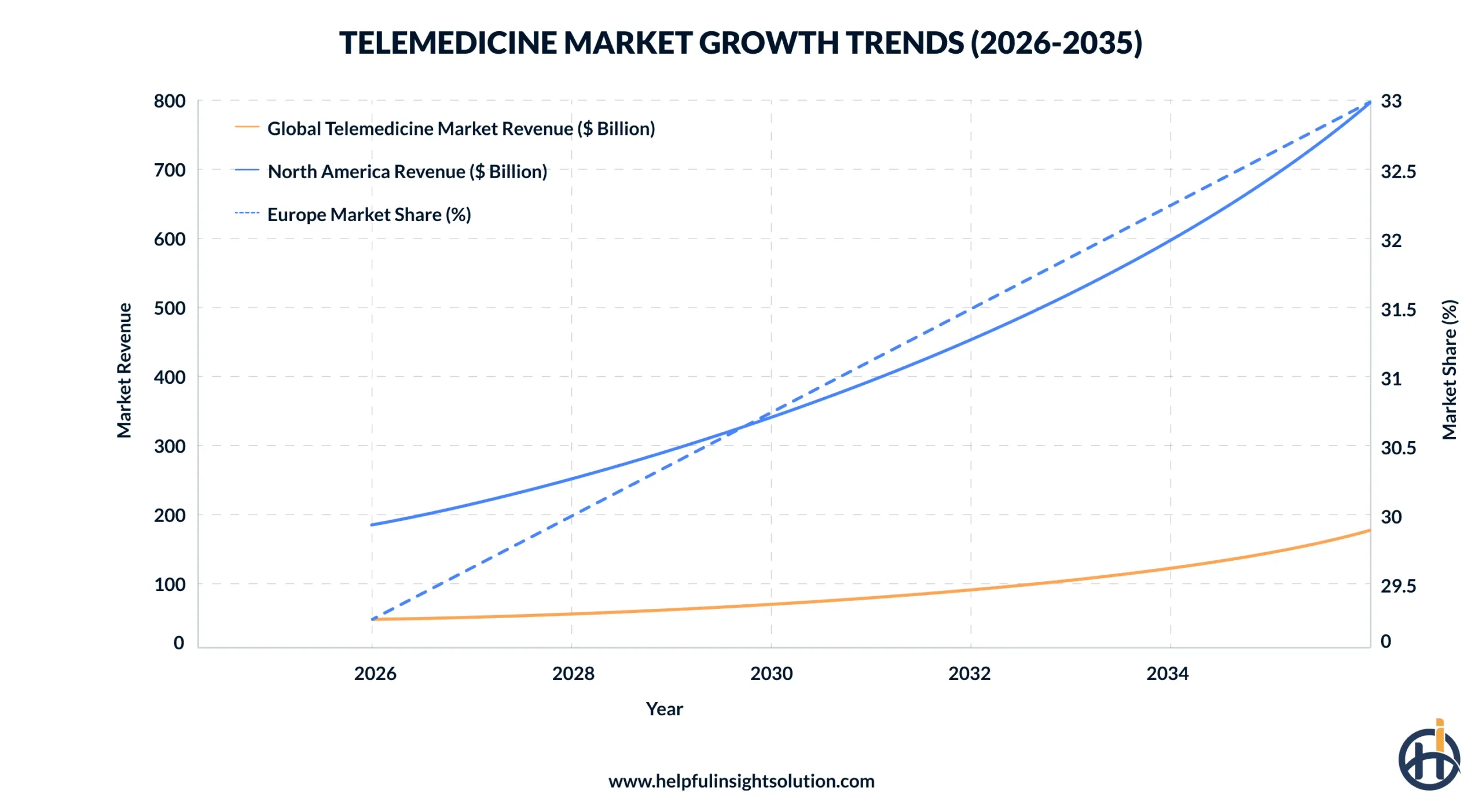
To invest in new mobile or web app ideas for the hospital industry, it is beneficial to study these market figures and target the telemedicine sector. You can develop smartly integrated digital healthcare platforms that will offer remote patient care and effective treatment plans.
Telemedicine Apps: What Healthcare Challenges Do They Resolve?
Businesses can develop a telemedicine app to resolve multiple healthcare challenges, enhancing user satisfaction. They ensure trust, innovation, and medical authority with advanced technologies:
1. Limited Healthcare Access
Various digital healthcare platforms connect patients in remote or underserved areas with licensed doctors through virtual consultations. This removes geographical barriers and ensures timely medical care without the need to travel long distances.
2. Long Waiting Times
By enabling online appointment booking and instant consultations, cloud-based healthcare applications significantly reduce patient wait times. Additionally, doctors can easily manage schedules efficiently, leading to faster diagnosis and treatment.
3. High Healthcare Costs
Businesses can reduce healthcare expenses by investing in full-stack development to manage hospital visits and transportation costs. They can hire an experienced partner that can deliver affordable patient care, optimizing operational costs through digital workflows.
4. Shortage of Medical Specialists
Telemedicine apps give patients access to medical professionals regardless of location via video consultations and remote monitoring. This balances the telemedicine application workflow and improves care quality in areas with limited expertise.
Types of Telemedicine Development Solutions
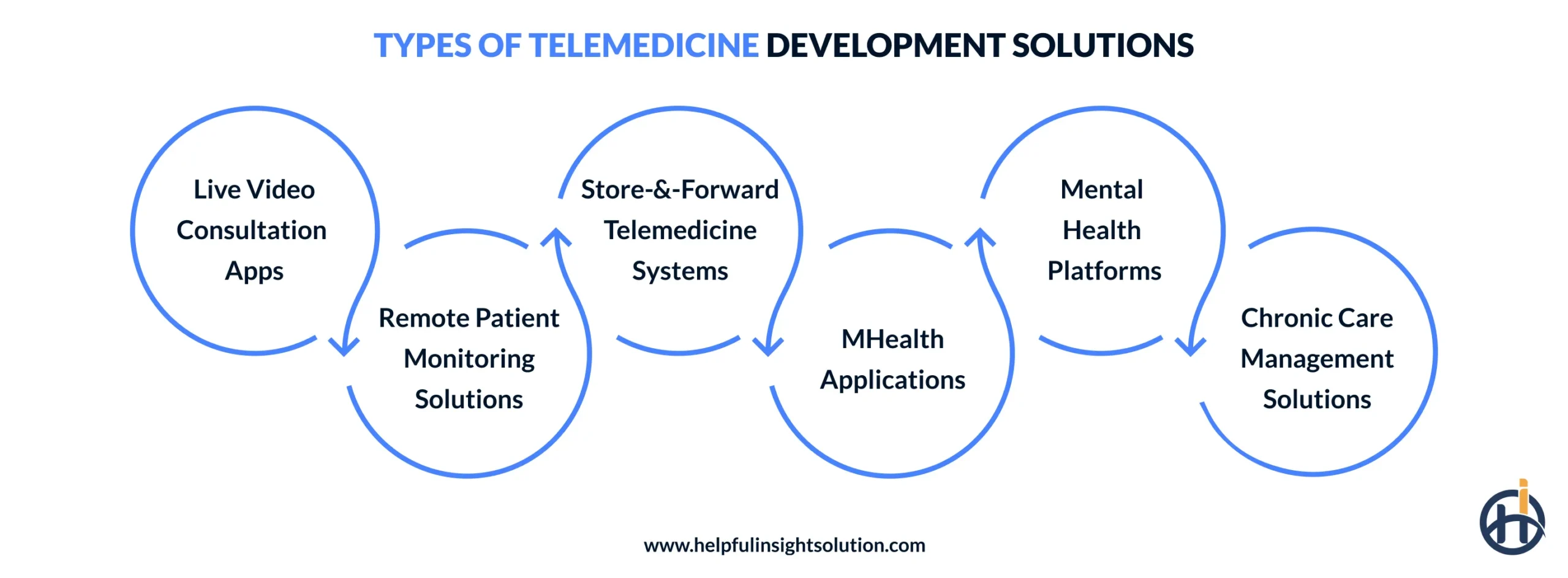
In the healthcare domain, several types of telemedicine app development solutions are available that investors can choose from. They cover various features, offering remote care and treatment planning:
1. Live Video Consultation Apps
An online doctor consultation app enables real-time video interactions between patients and healthcare providers. Additionally, they support instant diagnosis, follow-ups, and virtual care without regular visits.
2. Remote Patient Monitoring Solutions
Remote patient monitoring apps track glucose levels or heart rate using connected devices. The use of AI in Healthcare allows doctors to monitor patients remotely and intervene early when issues are detected.
3. Store-and-Forward Telemedicine Systems
These telemedicine software development solutions allow medical data such as images, reports, and videos to be shared securely. They are ideal for specialties like radiology, dermatology, and pathology.
4. mHealth Applications
Mobile health apps provide easy access to healthcare services, fitness tracking, and medical education. Through mHealth app development, you can empower users to manage their health with smartphones.
5. Mental Health Platforms
These telehealth app development solutions offer virtual therapy sessions, mood tracking, and mental wellness resources. They make psychological support more accessible, private, and stigma-free.
6. Chronic Care Management Solutions
Telemedicine platform development solutions help manage long-term conditions like diabetes, asthma, or heart disease. They enable continuous monitoring, medication adherence, and personalized care plans.
Key Features of a Virtual Healthcare App
The telemedicine app features are divided into 3 major panels, which are for patients, doctors, and admins. They ensure preventive care, enhanced medical diagnosis, and reliable health data handling:
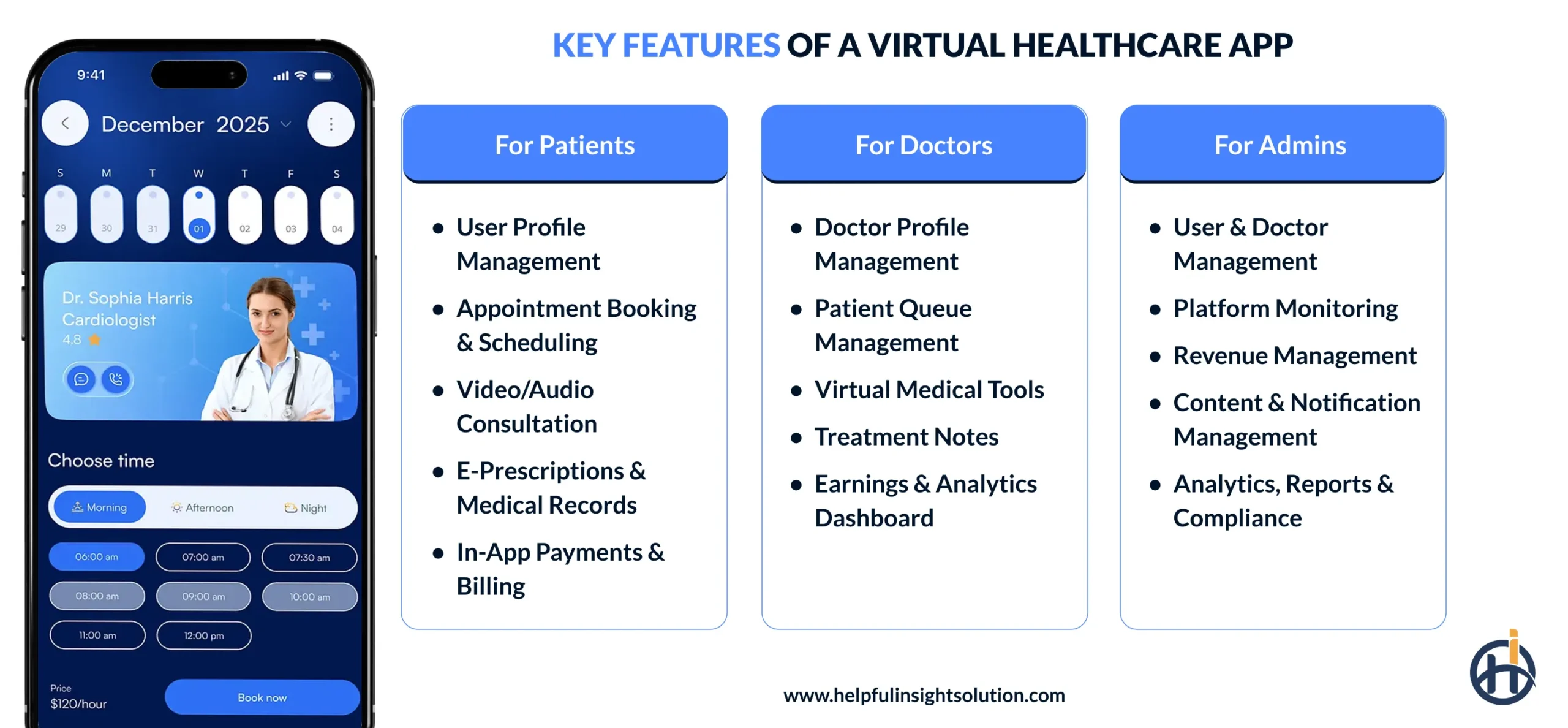
For Patients
1. User Profile Management
It allows patients to create and manage personal details, health history, and preferences. This feature ensures personalized patient care and quick access during consultations or video sessions.
2. Appointment Booking & Scheduling
Top virtual healthcare solutions enable patients to book, reschedule, or cancel appointments in real time. This reduces long waiting times and improves convenience with automated reminders.
3. Video/Audio Consultation
An online doctor consultation app provides secure virtual consultations through high-quality video or audio calls. It allows patients to easily connect with doctors anytime without place restrictions.
4. E-Prescriptions & Medical Records
This feature helps to store digital prescriptions, test reports, and the medical history of patients securely. Additionally, it ensures easy data access and continuity of care across multiple consultations.
5. In-App Payments & Billing
Various doctor appointment apps support seamless payments via cards, UPI, or digital wallets. They offer transparent billing with digital invoices, payment history, and assurance reminders in real-time.
For Doctors
1. Doctor Profile Management
This healthcare feature allows doctors to easily manage qualifications, availability, and consultation fees. It builds credibility among patients and helps them to make informed choices instantly.
2. Patient Queue Management
Top cloud-based healthcare applications organize patient appointments and virtual waiting rooms efficiently. This facility helps doctors manage time and reduce consultation delays for patients.
3. Virtual Medical Tools
An AI physiotherapy app provides tools such as digital stethoscopes, symptom checkers, and diagnostic aids. This enhances the accuracy and effectiveness of remote consultations, ensuring patient care.
4. Treatment Notes
A custom telemedicine app enables doctors to record diagnoses, prescriptions, and follow-up plans digitally. This healthcare facility improves treatment consistency and patient outcomes.
5. Earnings & Analytics Dashboard
Various AI-powered telemedicine apps display consultation earnings, payouts, and performance insights. It helps doctors to easily track their growth and optimize practice modules without affecting the quality.

For Admins
1. User & Doctor Management
Several custom telemedicine solutions allow admins to manage registrations, approvals, and account activity. Additionally, they ensure platform security and verified healthcare professionals.
2. Platform Monitoring
This feature allows admins to easily monitor app performance, uptime, and technical issues in real time. They can maintain a smooth and reliable user experience, offering more personalized tasks.
3. Revenue Management
The telemedicine software solutions regularly track payments, commissions, refunds, and subscription plans. Additionally, they provide financial transparency and revenue optimization for the users.
4. Content & Notification Management
Admins can control multiple health content, medical updates, and system notifications in real-time. This feature helps them to keep users informed and engaged with timely communication.
5. Analytics, Reports & Compliance
Different HIPAA-compliant healthcare apps generate detailed reports on usage, performance, and revenue. This ensures compliance with healthcare regulations and data privacy standards.
How to Develop Telemedicine Applications?
In this section, we will study how to create a telemedicine app by following a step-by-step development process. The stages discussed here are generally accepted by entrepreneurs due to their effectiveness:
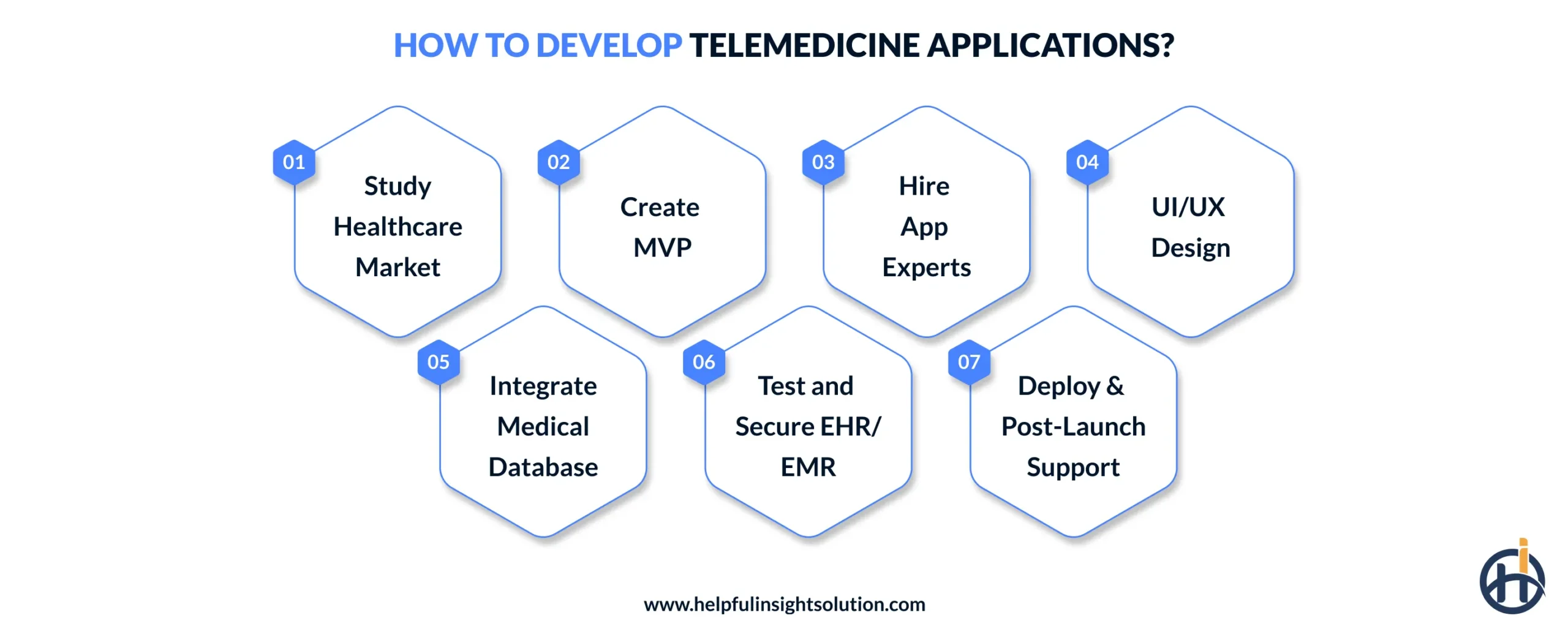
1. Study Healthcare Market
The first step is to understand current telemedicine trends, patient needs, and healthcare regulations in your target region. You should study competitors to observe their business and pricing models. It is crucial to identify primary users, like patients, doctors, or healthcare organizations.
You can initiate telemedicine mobile app development to deliver services like virtual consultations and remote monitoring. It ensures that the app can solve real problems and meets compliance standards.
2. Create MVP
An MVP focuses on core features such as user registration, appointment booking, and video consultations. It helps you launch quickly while managing the video consultation app development cost. Additionally, it allows early users to test functionality and share feedback.
This information helps refine mobile app features and improve user experience. Building an MVP reduces the overall risk before full-scale development of medical apps.
3. Hire App Experts
Businesses can hire mobile experts, UI/UX designers, and compliance experts from a healthcare app development company. Skilled professionals understand medical standards like HIPAA, HL7, and data privacy laws. They help in choosing the right tech stack for scalability and performance.
Their knowledge in the healthcare domain ensures accurate workflows for patients and doctors. The right team accelerates development while maintaining quality and security.
4. UI/UX Design
It is important to design an intuitive interface that is simple for patients and efficient for doctors. This ensures easy navigation for booking appointments, video calls, and accessing medical reports. Developers should use clean layouts, readable fonts, and user-friendly elements.
A telemedicine app development company focuses on reducing user friction during critical medical interactions. A strong UI/UX app design boosts user adoption and patient trust in real-time.
5. Integrate Medical Database
Now, you can integrate secure medical databases to store patient records, prescriptions, and consultation history. This ensures seamless data flow between doctors, patients, and healthcare systems. Additionally, it supports interoperability with EHR/EMR systems for accurate data exchange.
Experts can implement data syncing in HIPAA-compliant healthcare apps to avoid errors or delays. A robust medical database improves clinical efficiency and decision-making for doctors.
6. Test and Secure EHR/EMR
Mobile app experts conduct various testing methods to ensure accuracy in EHR/EMR systems. They should perform security testing to protect patient health information. This allows you to maintain compliance with custom telemedicine app development regulations and encryption standards.
It is important to hire dedicated developers to test system performance under high user loads. This step ensures data integrity, privacy, and uninterrupted healthcare delivery.
7. Deploy & Post-Launch Support
The last stage is to deploy the telemedicine application on various cloud platforms for scalability and uptime. It is important to monitor app performance and user behavior after launch. This functionality provides regular updates, bug fixes, and feature enhancements.
By using telemedicine software development services, you can offer technical support to doctors and patients. Continuous maintenance support ensures long-term success and user satisfaction.
Real-World Examples of Telehealth Platforms
To create telemedicine apps with advanced features, it is highly recommended to go through various realistic examples. Some of the top telehealth apps are discussed in this section that you must know:
1. Teladoc Health
Teladoc Health is a leading global telehealth platform that provides virtual consultations for primary care, mental health, and specialty services. Businesses can invest in teladoc like app development that will allow patients access to online licensed doctors.
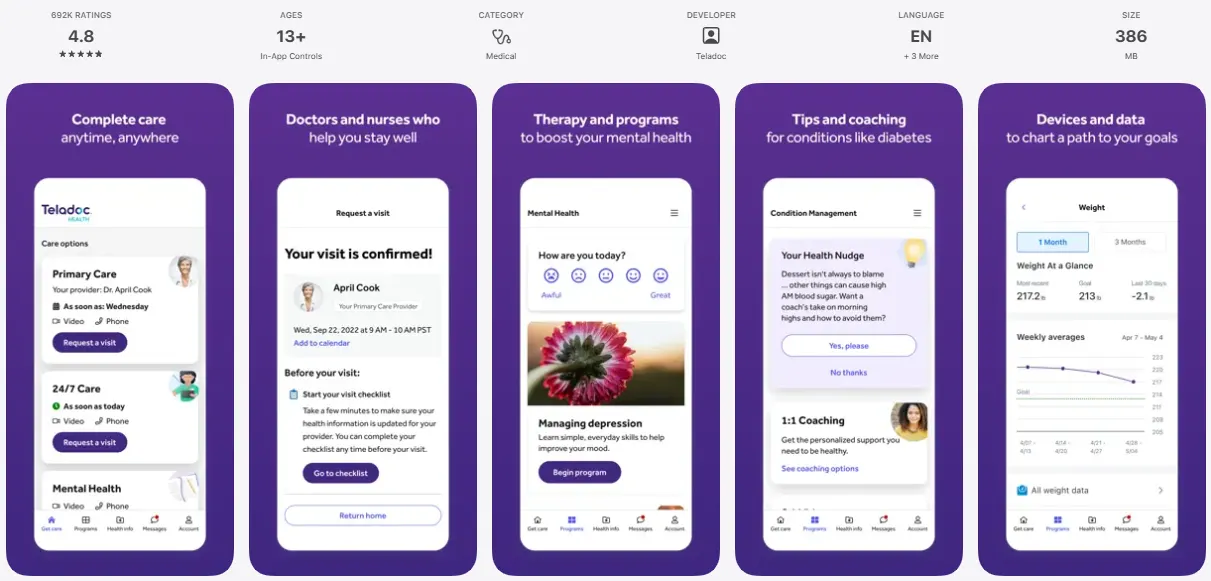
Downloads: 5M+
Ratings: 4.6
Key Feature: Provides 24/7 on-demand virtual consultations for primary care, mental health, and diagnosis.
2. Amwell
Amwell is among the best health apps that connect patients with certified doctors for therapy, psychiatry, and chronic disease management through secure virtual visits. The platform is widely used by healthcare providers, employers, and insurers to deliver scalable digital care.
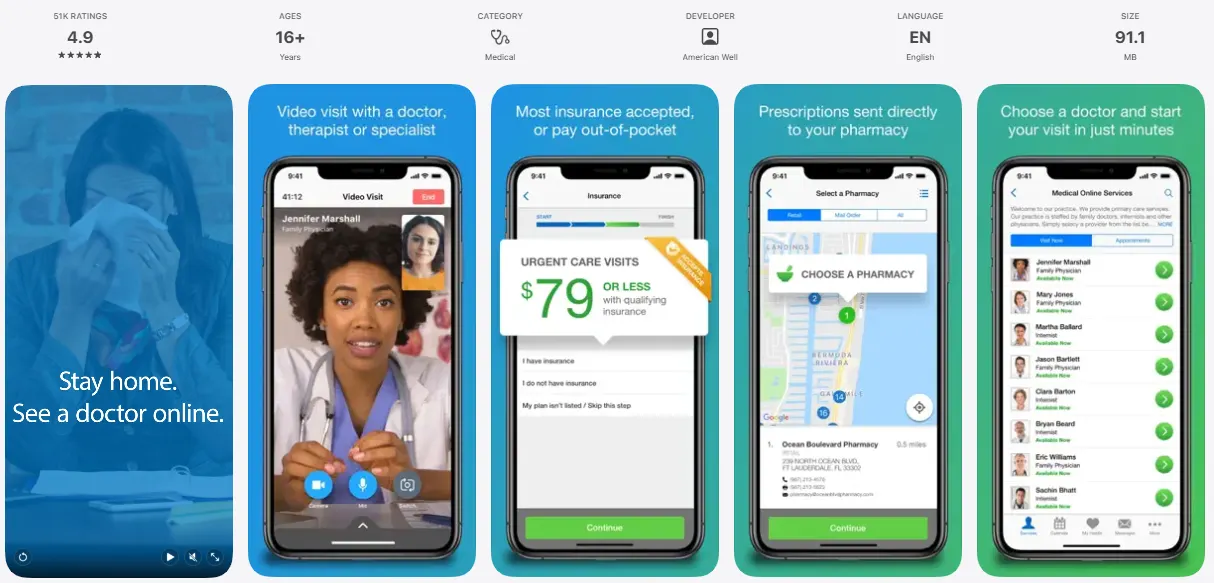
Downloads: 1M+
Ratings: 4.0
Key Feature: An enterprise-grade telehealth platform with seamless EHR/EMR and insurance integration.
3. Practo
Practo is a popular healthcare platform that allows users to book doctor appointments, consult online, and manage digital health records. It is one of the best custom telemedicine solutions that bridges the gap between patients and healthcare providers across the emerging markets.
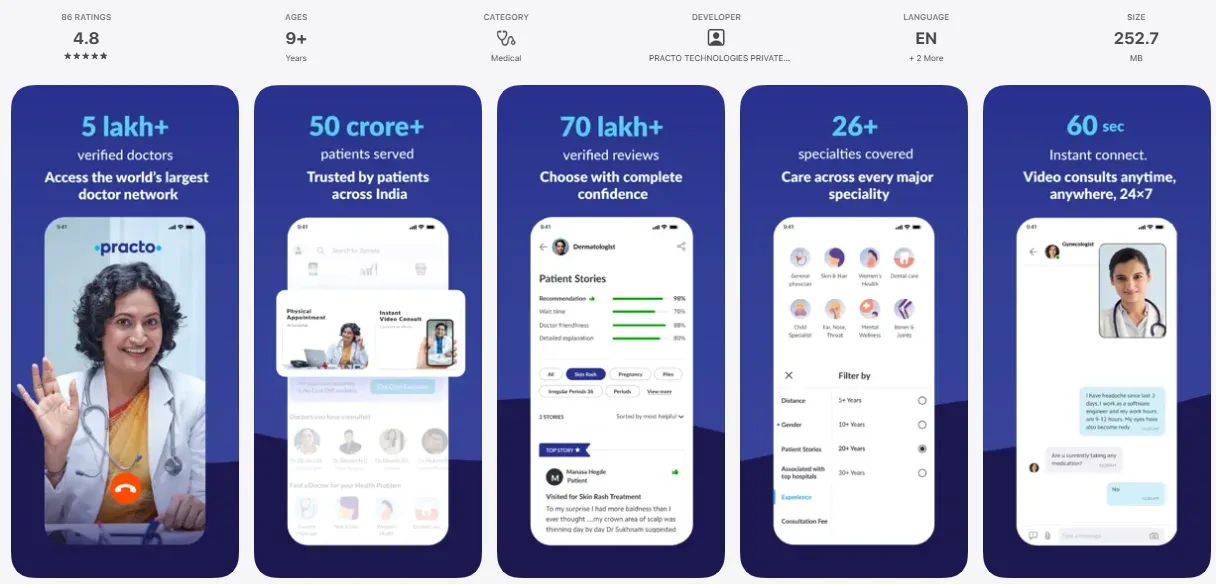
Downloads: 10M+
Ratings: 4.5
Key Feature: End-to-end healthcare access with online doctor booking, teleconsultation, and digital prescriptions.
4. Doctor on Demand
Doctor on Demand offers on-demand and scheduled virtual visits with physicians, psychiatrists, and therapists via video calls. These AI-powered telemedicine apps focus on convenient, high-quality care for everyday medical needs and mental health support.
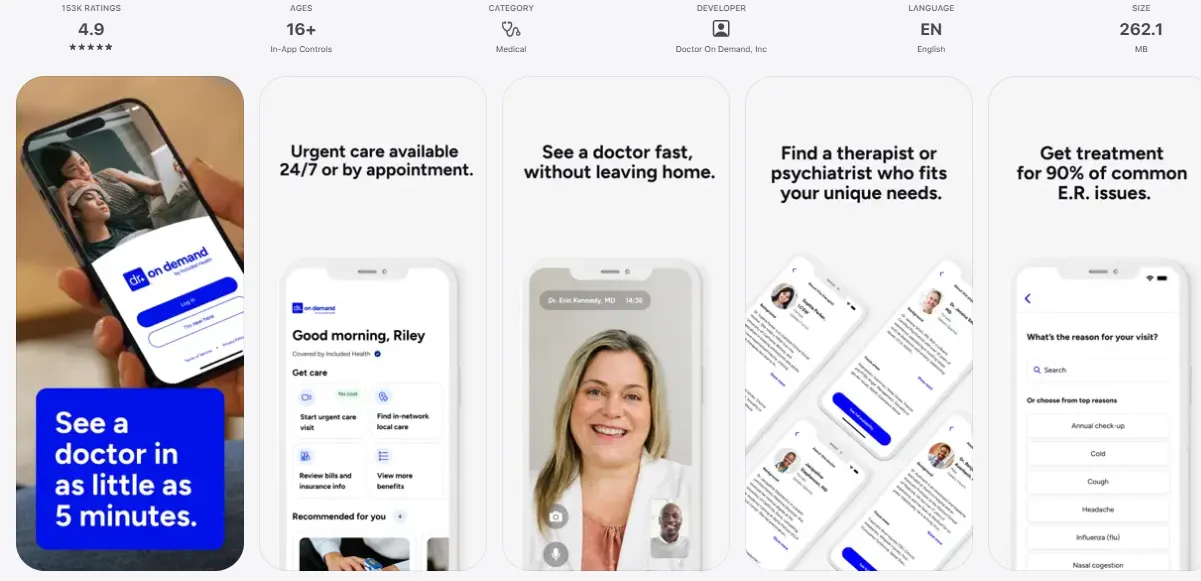
Downloads: 1M+
Ratings: 4.1
Key Feature: Delivers video-based urgent care and behavioral health services with board-certified physicians.
5. Altibbi
Altibbi is a leading telemedicine platform that allows patients to get immediate medical advice through AI-powered symptom assessment. It improves quality medical access across the Middle East and North Africa (MENA) region by providing convenient, secure, and personalized digital healthcare services.
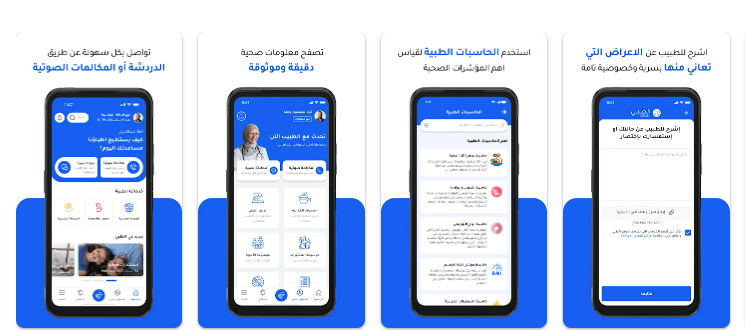
Downloads: 1M+
Ratings: 4.5
Key Feature: This app enables patients to connect with licensed healthcare professionals anytime via chat or voice calls.
Tech Stack Required for Telemedicine App Development
For successful telehealth app development, a business investor should know about the latest tools and technologies. An advanced tech stack includes various frontend, backend, and database tools with integrated APIs. You can hire Flutter developers to learn the use of cross-platform tools and frameworks. In this section, we will see a tech stack table representing the telemedicine application workflow:
| Component | Tools/Technologies | Description |
| Frontend (Web) | React.js, Angular, Vue.js | Builds responsive and interactive user interfaces for patients and doctors on web platforms. |
| Mobile App | Flutter, React Native, Swift, Kotlin | Enables cross-platform or native mobile apps for seamless telemedicine access. |
| Backend | Node.js, Django, Ruby on Rails, Spring Boot | Handles business logic, API management, and server-side processing securely. |
| Database | PostgreSQL, MongoDB, MySQL, Firebase | Stores patient records, appointment data, medical history, and logs efficiently. |
| Video Conferencing | WebRTC, Twilio Video, Agora | Supports real-time, secure video and audio consultations between users. |
| Cloud Infrastructure | AWS, Google Cloud, Microsoft Azure | Provides scalable hosting, data storage, and high availability for the app. |
| API & Integration | REST APIs, GraphQL, HL7, FHIR | Enables smooth integration with EHRs, labs, pharmacies, and third-party services. |
| Security & Compliance | OAuth 2.0, JWT, HIPAA, GDPR | Ensures data privacy, secure authentication, and regulatory compliance. |
| Payment Gateway | Stripe, PayPal, Razorpay | Facilitates secure online payments for consultations and subscriptions. |
| Analytics & Monitoring | Google Analytics, Firebase Analytics, New Relic | Tracks app performance, user behavior, and system health in real time. |
What is the Cost to Build a Telemedicine App?
The average telemedicine app development cost ranges from $10,000 to $30,000 if the selected features are less advanced or of low priority. As the number of features and advancements increases, the overall cost may rise to $60,000 or more, depending on the requirements.
Let’s discuss some market factors that are responsible for influencing the cost of making virtual healthcare apps:
1. Feature Complexity
The development cost of a telemedicine app is mainly dependent on the complexity of features. If the selected mobile app features are highly advanced, then the overall cost increases from the average rate. So, it is important to set functional priorities based on the business requirements.
2. Location Choice
Various countries like the USA and Canada are expensive due to their complex architecture and labor. This increases the healthcare app development cost, affecting the overall business model and infrastructure. Whereas India and the UAE are affordable countries, providing quality services.
3. Experience of Developers
Businesses can hire a junior telemedicine app developer to create mobile apps, but it doesn’t ensure quality and credibility. Experienced professionals are expensive and are hired to develop healthcare apps from scratch. So, you can choose experts according to your needs and budget specifications.
4. Development Platform
If you want to develop a telehealth app for a single platform, then Android is the best choice as it is cheaper than iOS. To create apps on multiple platforms, you can choose cross-platform frameworks because they are affordable. Telemedicine app cost estimation is important to select the best platform.
Impactful Ways to Monetize Telemedicine Apps for a Successful Business
As a business investor, you should create telemedicine apps and generate income by implementing various revenue models. A few of the most common monetization strategies are discussed here:
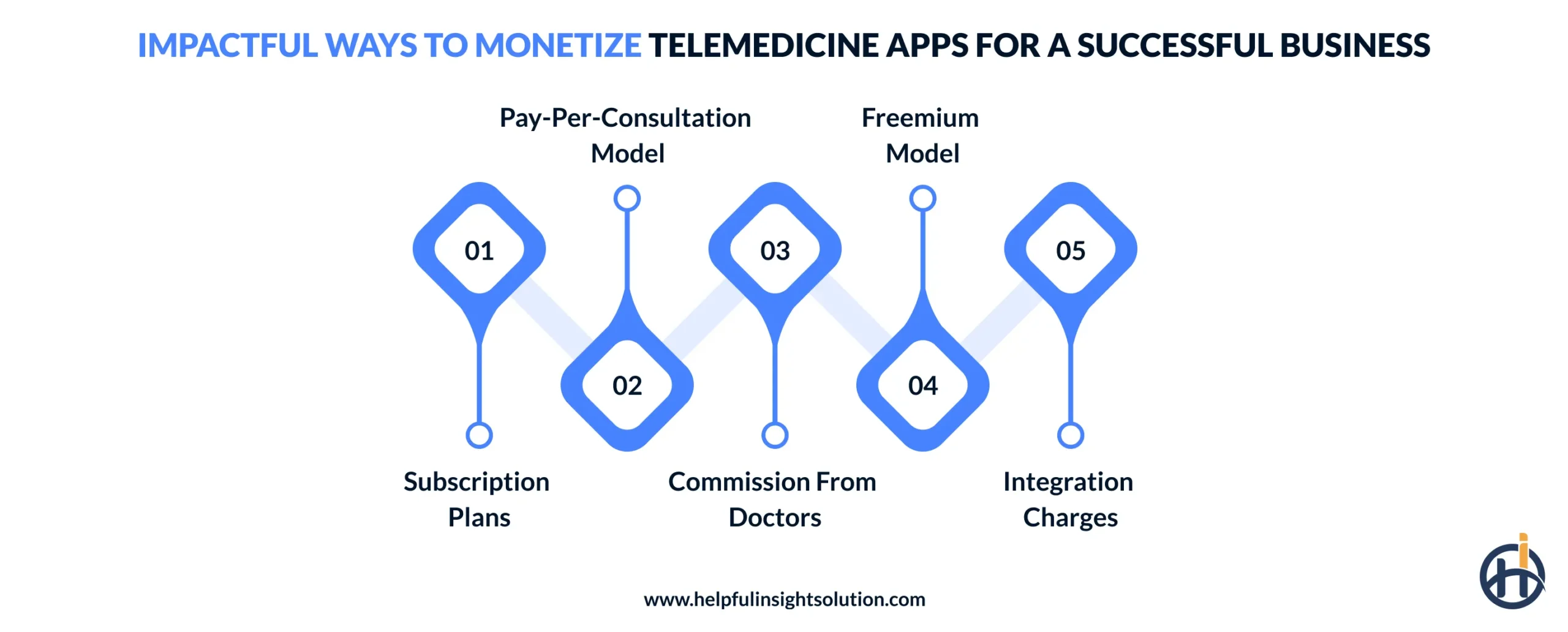
1. Subscription Plans
Users pay a monthly or annual fee to access premium features like unlimited consultations, priority appointments, or specialist access. It ensures predictable revenue while increasing long-term user retention and balancing the telemedicine application software development cost.
2. Pay-Per-Consultation Model
Patients are charged for each virtual consultation based on the doctor’s expertise or consultation duration. This revenue model offers flexible remote healthcare services to users and generates direct income without requiring long-term commitments.
3. Commission from Doctors
The platform earns a commission for every appointment booked or consultation completed through the app. The implementation of telehealth app development services with this revenue model ensures consistent income generation and user growth.
4. Freemium Model
Basic services such as appointment booking or limited chats are offered for free, while advanced features are locked behind paid upgrades. You can use a cost calculator to lower entry barriers and encourage users to convert to paid plans over time.
5. Integration Charges
Healthcare providers or clinics are charged for integrating third-party tools like EHR systems, payment gateways, or diagnostic services. You can hire a telehealth development company to create an additional revenue stream beyond patient consultations through recurring revenue.
What are the Key Development Risks with Telemedicine Apps?
An entrepreneur must be aware of the various issues related to the telemedicine app development. Here, we will discuss some common app-making challenges with their respective market-focused solutions:
1. Data Security Issues
Lack of healthcare app security and compliance is an important challenge in the development process. This occurs when there are budget limitations, ignorance of policies, and misunderstanding among clients.
Solution: You must integrate a strong encryption architecture that can safeguard patients’medical data.
2. Regulatory & Compliance Challenges
When you decide to launch a healthcare app in different regions like the USA, compliance-related challenges occur. For example, there are HIPAA and HL7 regulations in America and GDPR in Europe.
Solution: Plan a single regulatory model with the telemedicine software development company.
3. Poor App Performance
Mobile app performances are common challenge in healthcare app development, affecting user engagement. Businesses that are not focusing on design and integration may face this long-term issue.
Solution: Ask developers to use automated design tools that can manage heavy user traffic and loads.
4. Low User Adoption
If you avoid brand marketing and promotion, then you may have to suffer from less user adoption. Additionally, it may affect your revenue model, reducing the capability for income generation.
Solution: Advertise telemedicine software solutions to reach a large number of people worldwide.
Future Projections in Telemedicine Application Development
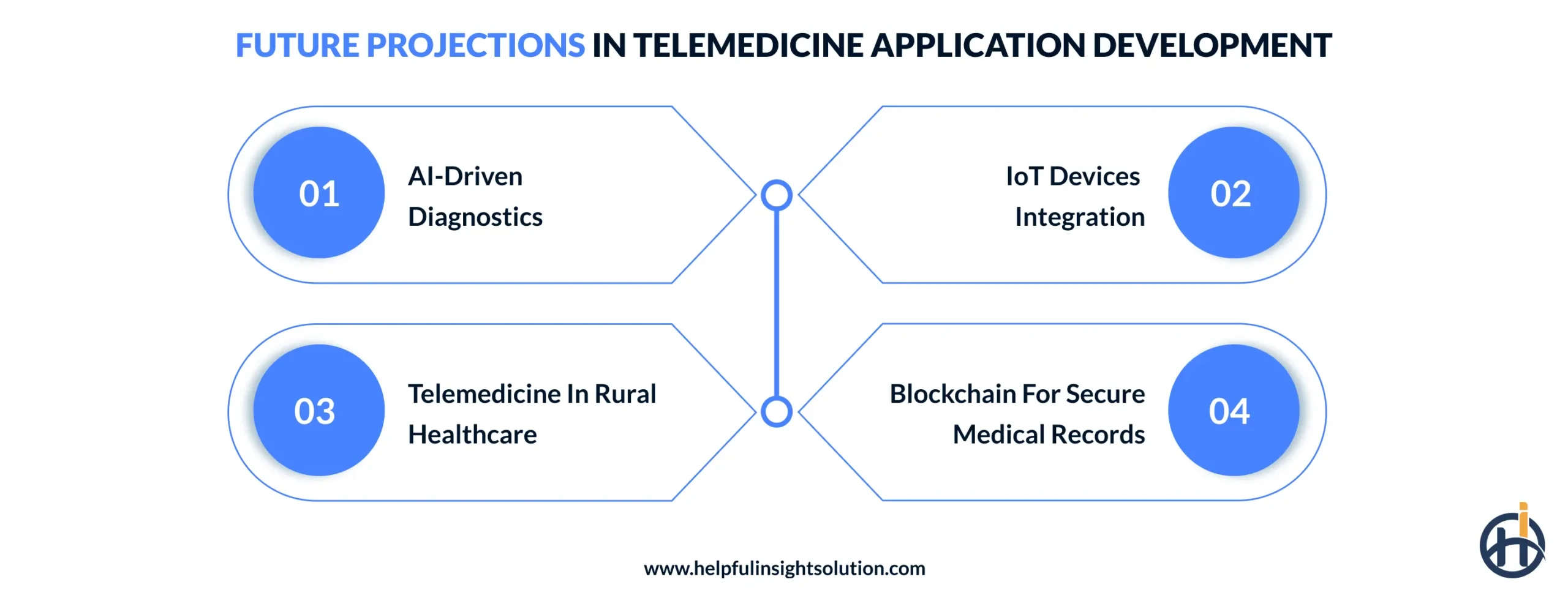
In telehealth app development, more innovations are expected in the future, enhancing user engagement and remote patient care. Some major future trends are discussed in this section that you may know:
1. AI-Driven Diagnostics
AI diagnostics will enable telemedicine apps to deliver accurate clinical insights through predictive analytics and data interpretation. AI-powered telemedicine apps will reduce diagnostic errors and support doctors in making treatment decisions remotely.
2. IoT Devices Integration
IoT-enabled medical devices will allow telemedicine applications to collect patient health data such as heart rate, glucose levels, and blood pressure. This telemedicine platform integration will improve chronic disease management and enable proactive healthcare interventions.
3. Telemedicine in Rural Healthcare
By delivering advanced telemedicine features, you can ensure healthcare access in rural and remote areas by connecting patients with doctors. To lower travel costs, reduce wait times, and improve healthcare outcomes, AI development services are more efficient.
4. Blockchain for Secure Medical Records
Blockchain technology will enhance telemedicine platforms by ensuring secure, transparent, and tamper-proof medical record management. You can help patients to access data while maintaining compliance with healthcare regulations by investing in e-prescription app development.

Why Choose Helpful Insight for Developing Telemedicine Apps?
Entrepreneurs who want to invest in the development of telemedicine apps should start working on resource planning and budget management. They should approach a reliable partner with expertise in creating telehealth software to hire skilled experts and get a cooperative business environment.
We deliver exclusive mobile app development services that are effective and affordable, from consulting to mobile app maintenance, ensuring security and personalization.
Our experts are experienced and skilled in developing smart telemedicine software solutions, offering remote patient care and enhanced healthcare treatments. So, it is the right time for you to make a telemedicine app for patients, doctors, and hospital staff.
You can gradually experience an increase in user engagement, business revenue, and the overall market valuation.
FAQs
A telemedicine app is a digital healthcare platform that allows patients to connect with doctors remotely. It provides advanced features like virtual sessions, database management, and secure payment options. Advanced technologies like AI, IoT, and Blockchain enhance the overall user experience by improving the efficiency and productivity of mobile app features.
To build a remote patient care app with limited or less-advanced functionalities, the average time ranges from 2 months to 5 months. The overall duration may increase to 8 months or more, if the business requireemts increases. It is dependent on several factors, like the development process, platform selection, and MVP making, influencing business operations.
It is important to build digital virtual consultation platforms that are compliant with standard healthcare regulations like HIPAA, commonly used in the USA. They ensure the security of user data, transparency in medical operations, and flexibility in record management. Additionally, HIPAA-compliant telemedicine apps provide secure communication between patients and doctors.
Businesses use different methods to ensure user data security while developing telemedicine apps. Some of the crucial measures are described in the following manner:
- Uses encryption and secure APIs to protect patient data during transmission and storage.
- Implements strong authentication methods like multi-factor login and role-based access control.
- Follows healthcare compliance standards with regular security audits and updates.
For clinics, real-time doctor consultation apps are the most beneficial, as they enable instant video or chat-based interactions. These apps help clinics reduce appointment overflow, improve patient engagement, and deliver timely care. Additionally, features like e-prescriptions, appointment scheduling, and EHR integration streamline daily clinical operations.