

Key Takeaways:
- Music applications use premium subscriptions, in-app purchases, advertisements, and event ticket sales to generate revenue.
- Initially, businesses can acquire users by offering free access and increase paid conversions with ad-free listening and offline downloads.
- Music streaming platforms can monetize users through audio/video ads and sponsored playlists, maintaining constant engagement.
- Businesses can maximize revenue by ensuring content quality, personalized recommendations, and licensing compliance.
Music streaming is not only a relaxing free-time activity anymore. It has now become a full-fledged market that is creating multiple opportunities for leading brands, artists, and individual listeners to generate revenue.
Despite offering free streaming, music apps make money through exciting revenue models, like limited audio access, in-app advertisements, and event ticket distribution. These strategies are quite interesting and help businesses to balance investments in the music streaming industry.
The market is skyrocketing due to the increasing number of subscribers, digital content production, and the purchase of music licensing rights. According to Business of Apps, 80% of all recorded music revenue comes from streaming. Additionally, YouTube has around 2 billion users who watch online music videos. So, different platforms follow varied money-making methods to make profits and gain users’ trust.
This blog provides you with the best music app revenue streams that are common and deliver consistent income generation. We will also cover some more topics like key features, future aspects, and revenue comparison with detailed information.
The music streaming industry: A quick market recap
A business investor must know the current market growth and revenue opportunities in the music industry before investing in it. While choosing the music streaming app revenue model, you should keep these figures in mind for faster decision-making.
- According to Mordor Intelligence, the global music streaming market size is $25.1 billion in 2026, with North America having a share of 33.4% in the market.
- This sector is growing at a rate of 8.4% CAGR between 2026 and 2031, which will reach $37.6 billion by the end of this tenure.
- The global podcasting market has a volume of $12.9 billion in 2026, with North America (40%) and Europe (30%) having the maximum market share.
- By 2035, the total value will reach $115.6 billion, as this market is rapidly growing at a rate of 27.6% CAGR over this tenure.
- The advertising segment will dominate the market and experience an increase, rising from 50% to 55% between 2026 and 2035.
- The USA podcast market will shoot up from $3.9 billion in 2026 to $35.3 billion in 2035 due to digital expansion across the region.
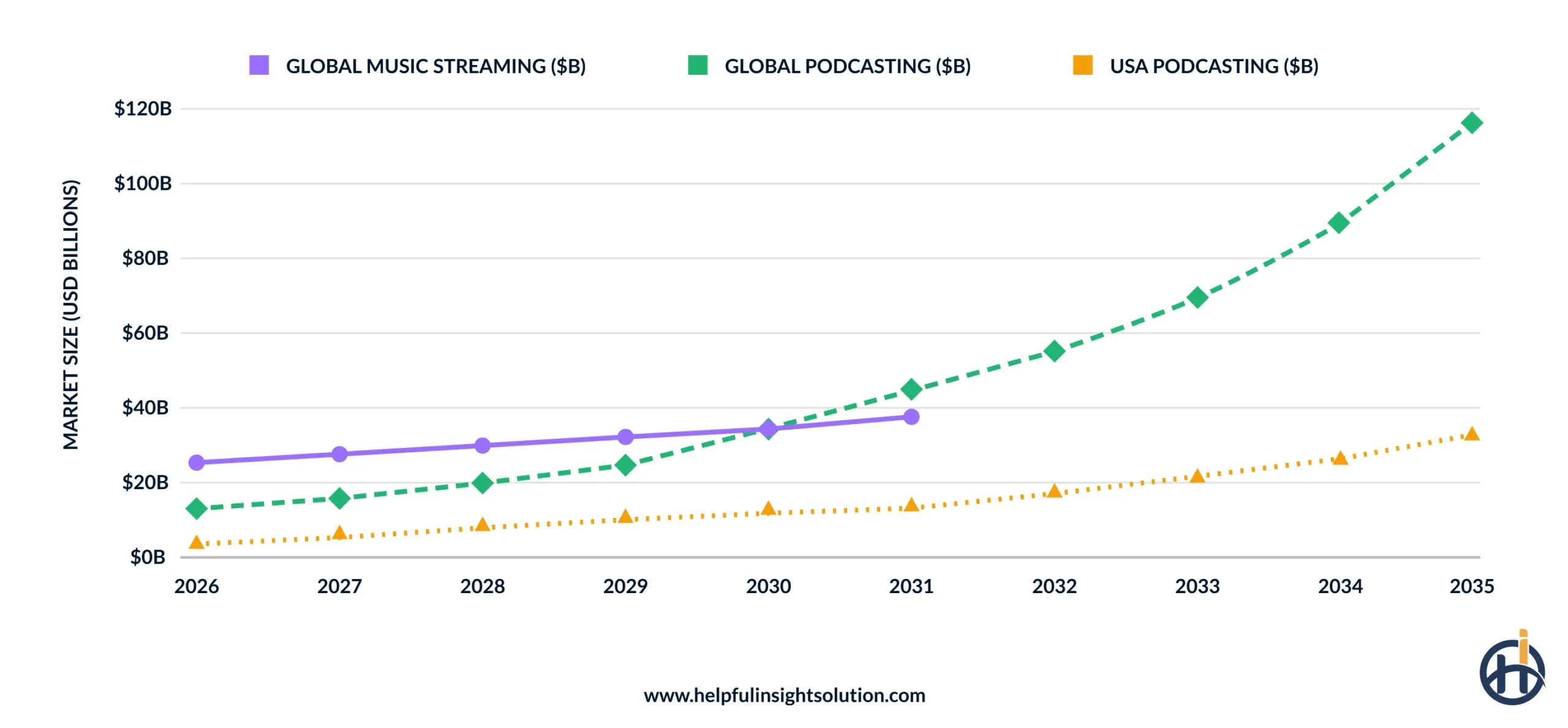
The above stats help enterprises to get music streaming royalties based on their customer base, distribution model, and business goals. You can make profits by targeting different regions, user demographics, and market segments.
Why does scaling a music app boost profitability?
For music app monetization, platform scaling is important because it depends on revenue diversification. The digital content delivery costs and hosting charges decrease as the user base grows, which allows the platform to maximize revenue. In this section, multiple drivers of profitability boosts will be discussed, which include subscription upselling and data-driven retention.
- The infrastructure cost of music streaming for 100 users is the same as it is for 100,000 users. Each subscriber converts to high-margin revenue after covering development and server costs.
- Businesses get a larger audience that creates a pool of free-tier listeners that can convert into premium subscriptions. This allows music apps to upsell podcasts, audiobooks, and video content.
- With scaling, enterprises can utilize in-app purchases, sponsored playlists, and priced virtual events. Most brands invest money to reach larger and highly targeted customers in real-time.
- Various music apps can optimize marketing and recommendations to prevent churn through listener data. This facility helps entrepreneurs to easily implement licensing agreements with different record labels.
- The platform has the right to produce or license exclusive original content for customers. This prevents media houses from giving standard streaming royalties, which ensures profit-making.
Top monetization models music apps use
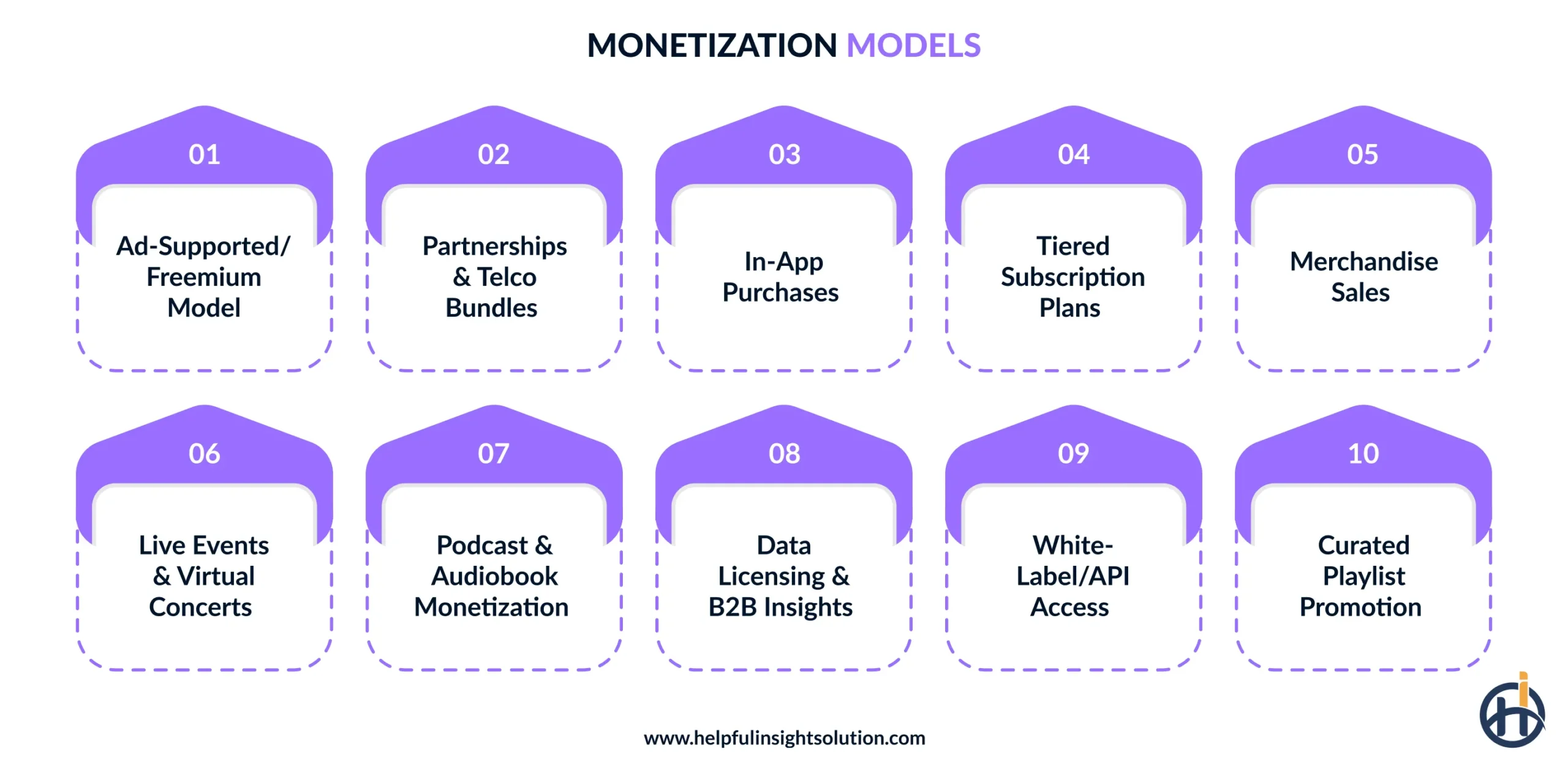
Various music apps generate revenue through different money-making strategies, which offer membership plans, personalized products, and more. We will discuss the top trending music streaming monetization models in this section with key examples.
1. Ad-supported/freemium model
The music apps are free for users who do not mind listening to music with ads, which include video ads that play while music is streaming. If users want to get additional services, this freemium music app model allows them to pay for premium programs. This way, most audio listening platforms can get a lot of users and make money from ads and subscriptions.
Key Example: An app like Spotify offers free, ad-supported streaming while encouraging users to upgrade to Spotify Premium for an ad-free experience and additional features.
2. Partnerships & telco bundles
Various music and podcast services work with mobile phone companies, device makers, and network providers. They offer music subscriptions with internet plans, allowing users to get personalized music and save money on advertising. This allows enterprises to make money from these partnerships by delivering content-based albums or podcasts.
Key Example: YouTube Music is bundled with mobile plans from telecom providers in several countries, helping increase subscriber adoption.
3. In-app purchases
Users can also buy multiple products and accessories inside the music streaming platform. They can purchase music albums, special features, extra storage services for bigger files, or branded items. This music app business model gives advanced streaming services along with money besides what they get from other revenue models.
Key Example: Audiomack allows fans to purchase premium features through Audiomack+, including ad-free listening and offline downloads.
4. Tiered subscription plans
A music streaming subscription model includes various schemes like individual, family, student, and premium Hi-Fi plans. The expensive plans let users download music to listen to offline, have better sound quality, and use the service on multiple devices. Businesses make money by offering different personalized plans to various users across the globe.
Key Example: You can develop an develop an app like Apple Music that provides individual, student, family, and Apple One bundle plans to serve different customer segments.
5. Merchandise sales
Many music apps have stores where users can buy things like t-shirts, records, and other items related to their artists. This allows different music platforms to easily make money, helping artists connect with their fans. It also makes users more engaged with the personalized audio content and the preferred artists.
Key Example: SoundCloud enables artists to sell branded merchandise directly to fans through integrated merchandise partnerships.
6. Live events & virtual concerts
Music platforms make money from performances by selling tickets, having pay-per-view virtual concerts, and doing exclusive livestream events. This way, fans get enhanced music experiences and artists generate extra revenue through live streaming. A live virtual concert music app allows people from around the world to watch and listen, irrespective of their location.
Key Example: TIDAL has hosted exclusive livestream concerts and artist events, generating revenue through premium access and partnerships.
7. Podcast & audiobook monetization
Streaming platforms make money from podcasts or audiobooks by using ads, subscriptions, sponsorships, and product sales. Some popular content creators will even make episodes or bonus content just for their subscribers. This model ensures consistent user engagement, enhances listening experiences, and increases revenue through ad display.
Key Example: Spotify monetizes podcasts through advertising, premium subscriptions, and exclusive shows such as creator-exclusive podcast content.
8. Data licensing & B2B insights
Various music platforms analyze audio listening patterns to easily find out some useful information. They can observe people’s choices, popular tracks, and ad performance, allowing record labels, advertisers, artists, and people to do market research. This collected data helps platform owners to decide on music distribution and revenue generation without exposing user information.
Key Example: SoundCloud provides audience analytics and listening insights that help artists and labels make data-driven marketing decisions.
9. White-label/API access
Some music platforms will let other companies use their technology, like AI recommendations or music APIs. This is called white-label music streaming, which helps them make their music services available without starting from scratch. The music platforms make money from this by charging fees or by making companies pay for each time they use the API or by having them pay for a subscription.
Key Example: 7digital licenses its music catalog and streaming APIs to businesses that want to build branded music streaming services.
10. Curated playlist promotion
Record labels and independent artists pay platforms to feature their music in playlists and editorial surfaces, increasing discoverability. This gives platforms a high-margin promotional revenue stream on top of standard advertising income. Music platforms allow creators to become famous among their fans and build a cult following.
Key Example: Spotify offers Marquee and Showcase promotional tools that help artists increase the visibility of new releases through personalized recommendations and discovery surfaces.
Revenue comparison of the Top Music Platforms
It is important to observe how leading platforms, like Spotify, Apple Music, and more, are generating income from their customers. The following table describes their paid music app monetization plans, revenue streams, and overall rates.
| Top Music Apps | Primary Monetization Plans | Key Revenue Streams | Overall Revenue (Approx.) |
| YouTube Music | Free (ad-supported), Premium Individual, Family, Student | Subscription fees, video/audio ads, YouTube Premium memberships | Subscriptions: 60–70%
Advertising: 30–40% |
| Spotify | Free (ad-supported), Premium Individual, Duo, Family, Student | Premium subscriptions, podcast ads, display/audio advertising | Subscriptions: 85–90%
Advertising: 10–15% |
| Amazon Music | Prime Music, Amazon Music Unlimited, Family, Single Device, Student | Subscription fees, Amazon Prime ecosystem, device integration | Subscriptions: 90–95%
Ecosystem value & other: 5–10% |
| Apple Music | Individual, Family, Student, Apple One Bundle | Subscription fees, Apple One bundles, ecosystem retention | Subscriptions: 95–100% |
| SoundCloud | Free, Go, Go+, Artist Pro | Premium subscriptions, creator subscriptions, advertising, artist services | Subscriptions & Creator Services: 60–70%
Advertising: 30–40% |
| HeartRadio | Free Radio, iHeartRadio Plus, All Access | Digital advertising, Broadcast radio ads, Premium subscriptions, Podcasts, Events | Advertising: 70–80%
Subscription support: 60-70% |
| TIDAL | Individual, Family, Student, DJ Extensions | Subscription fees, high-fidelity audio plans, DJ partnerships | Subscriptions: 90–95%
Partnerships & Other: 5–10% |
| Pandora | Free (ad-supported), Pandora Plus, Pandora Premium | Digital advertising, subscriptions, branded audio campaigns | Advertising: 65–75%
Subscriptions: 25–35% |
| SiriusXM | Satellite Radio Plans, Streaming Plans, Platinum Packages | Subscription fees, advertising, automotive partnerships | Subscriptions: 75–85%
Advertising & Other: 15–25% |
| Audiomack | Free (ad-supported), Audiomack+ | Advertising, premium subscriptions, creator monetization, brand partnerships | Advertising: 55–65%
Subscriptions & Creator Services: 35–45% |
Key features every profitable music app needs
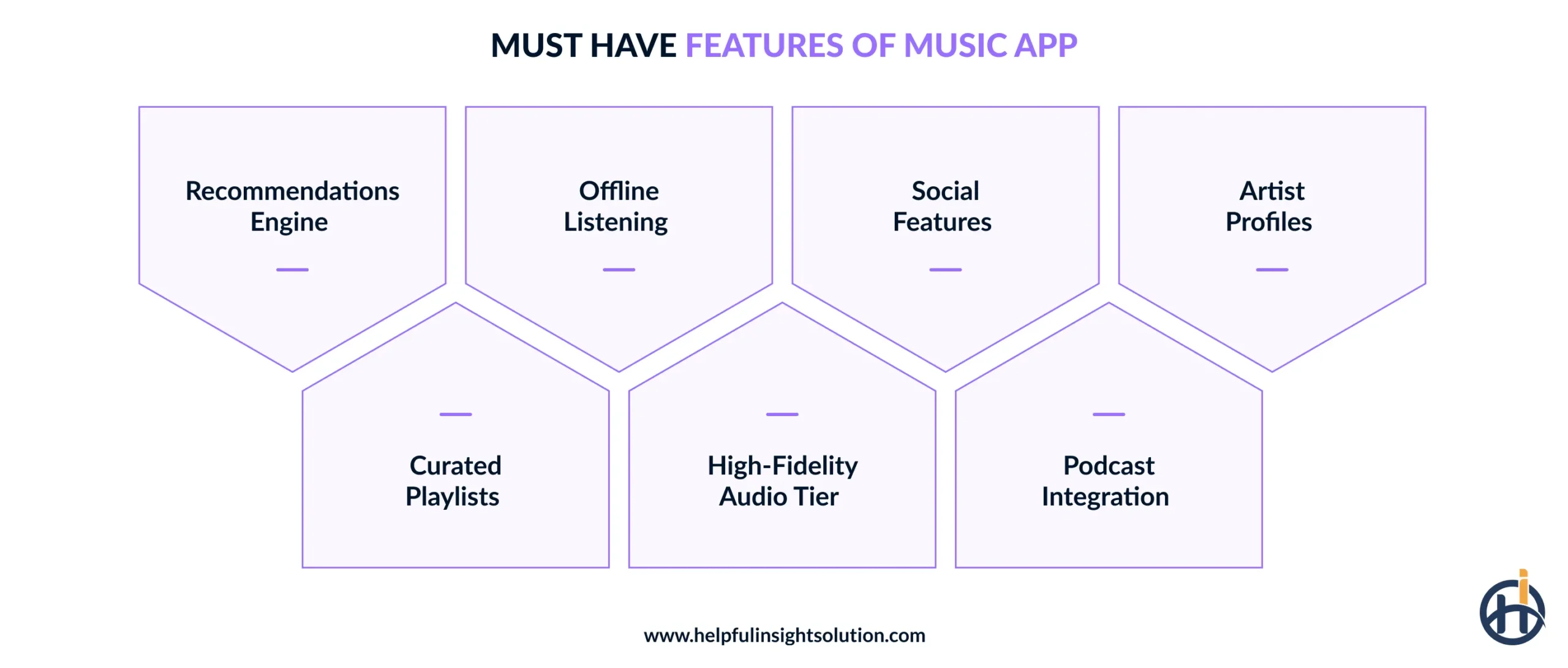
To get music streaming royalties, you must implement the best features that target user pain points and ensure revenue generation. Here, we are discussing some of the important features that enhance listening experiences and deliver safety.
1. Recommendations engine
This system analyzes current playlists, history, and preferences to ensure music app data monetization. It can suggest songs, albums, and playlists, allowing them to easily find their favorite music and listen endlessly.
2. Offline listening
The offline listening feature allows users to download music or playlists to listen without using the internet. This is convenient for users, reduces data consumption, and ensures subscription management.
3. Social features
Users can easily share songs, connect with friends, check their playlists, and set audio tones on their devices. These music app features help users connect, find music in real-time, and keep using the platform.
4. Artist profiles
Various music artists can share their story, music, upcoming shows, merchandise, and exclusive content with users. This allows sound creators to connect with real fans and make money by using modern trends.
5. Curated playlists
Some playlists are made by people or computers to group songs by type, feeling, activity, and popularity. These playlists help users find music easily and keep them interested during busy hours.
6. High-fidelity audio tier
Most music apps like Spotify or YouTube Music provide a high-quality audio option that ensures better sound. This can target people who want better sound quality and make money from tiered subscription plans.
7. Podcast integration
This feature allows users to listen to music, podcasts, and audiobooks with premium models. This gives more content access, improves service delivery, and generates revenue from ads or subscriptions.
Future trends in music app monetization
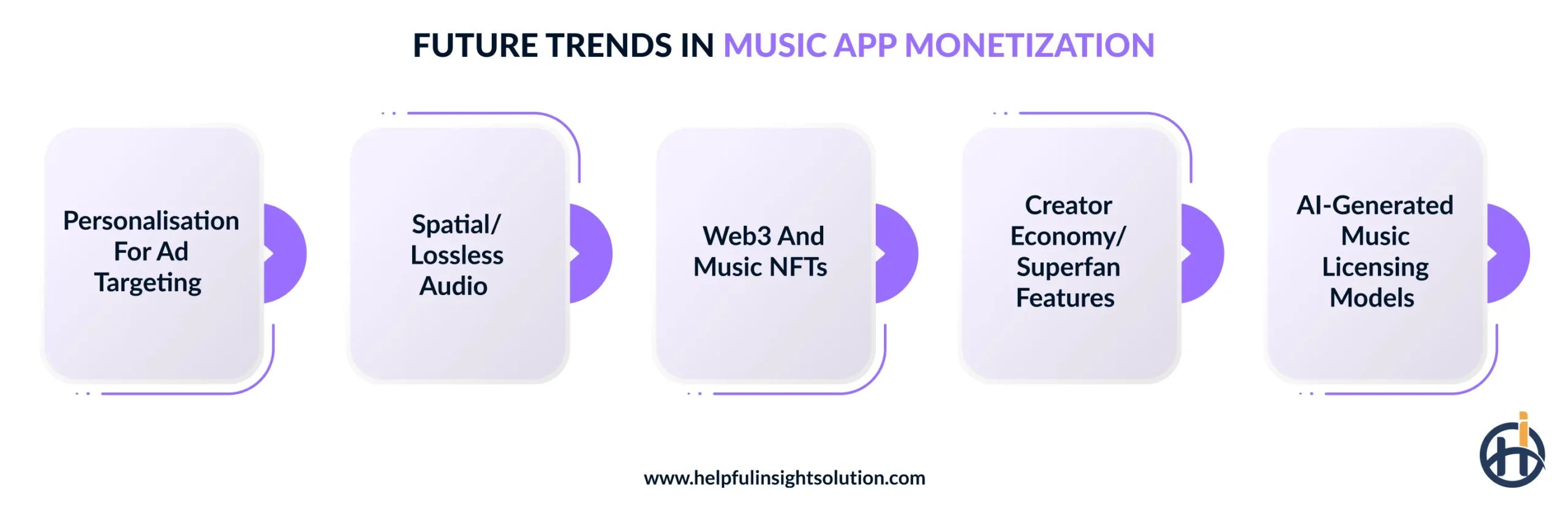
You must think of the future of music streaming monetization to retain customers for the long term and provide advanced services. In this section, we will study major future money-making trends that music businesses can implement.
1. Personalisation for ad targeting
Audio platforms are using contextual data, behavioral signals, and subscription tiers to enhance Ad-supported music streaming. They are shifting from generic advertisements to AI-driven personalized campaigns, as they focus on privacy-aware monetization.
- Dynamic Ad Insertion (DAI): Various streaming platforms like Spotify Ads Manager process first-party user data that allows ads based on specific listeners’ demographics, location, or activity.
- Moment-based contextual ads: To understand user intent, various algorithms analyze listening patterns and target micro-moments to deliver ads when users choose workout or bedtime playlists.
2. Spatial/lossless audio
Various music streaming services use spatial audio to increase subscription revenue and manage price hikes without increasing the churn rate. This includes high-fidelity streaming, telco bundles, commercial licensing, and premium hardware integrations. With ecosystem lock-in and AR/VR expansion, more monetization streams are being used by investors.
3. Web3 and music NFTs
The future of music app monetization is shifting towards decentralized models, like Web3 protocols, smart contracts, and Music NFTs. They enable direct-to-fan sales and automated royalty sharing, which allow artists to retain their earnings.
- Decentralized streaming: Creators get rewards, like native platform tokens, for publishing their music on services like Audius.
- NFT ticketing: Blockchain-based event tickets allow promoters to resell profits to the artists, offer VIP access, and prevent scalping.
4. Creator economy/superfan features
This strategy allows platforms to prioritize community participation by offering digital drops and token-gated content, helping creators to generate more revenue. This is possible through direct patronage, data ownership, and exclusive content delivery. Various digital streaming providers deliver premium subscription tiers to superfans.
5. AI-generated music licensing models
Modern-day music applications use automated micro-licensing and generative capabilities to deliver hyper-personalized streaming experiences. This promotes AI music ecosystems with in-app utility tools for fitness, gaming, and social platforms, allowing users to generate sounds based on their moods.
- Transactional micro-attribution: In this model, users spend tokens to generate AI music. The apps divide revenue for artists that influence AI generation by allocating micropayments.
- Dynamic content stations: Businesses monetize their platforms by selling dynamic music stations for commercial spaces, video games, or podcasts.
- Quality labeling & polarization: Various platforms like Tidal use AI badges to detect machine-generated music and protect the human royalty pool.
Music licensing costs: A key parameter
Music licensing costs are primarily dependent on a song’s popularity, usage pattern, recording rights, and publishing rights. It also includes stock libraries, broadcasting commercials, and public performances, which are responsible for affecting the licensing charges.
Businesses can easily manage the cost to build a music streaming app by understanding key licensing parameters. Through the following table, we will study some important music agreements with their respective values.
| Licensing Parameter | Description | Typical Market Cost/Value |
| Master Recording License | Grants the right to use the original recorded version of a song owned by a label or artist. | US$500–US$100,000+ per track, depending on artist popularity and usage. |
| Sync License | Allows music to be paired with visual content such as videos, films, advertisements, or games. | US$500–US$250,000+ per project, with global ad campaigns often exceeding this range. |
| Mechanical License | Covers the reproduction and distribution of copyrighted musical compositions for downloads, physical copies, and eligible streaming uses. | US$0.124 per copy for songs up to 5 minutes or formula-based for streaming. |
| Public Performance License | Permits public or digital performance of copyrighted music through streaming, radio, live venues, or businesses. | Typically 2–6% of revenue for digital services or negotiated blanket licensing fees for venues/businesses. |
| Publishing Royalties | Paid to songwriters and music publishers whenever a composition is streamed, performed, or reproduced. | Typically 10–20% of a streaming platform’s gross music revenue is allocated toward publishing royalties. |
| Performer Royalties | Royalties paid to performers and record labels for digital broadcasts and certain public performances of sound recordings. | Generally, 45–50% of eligible digital performance royalty pools are distributed to performers and labels, depending on jurisdiction and collection society rules. |
Why choose Helpful Insight to create profitable music streaming platforms?
We have discussed how do music apps make money by using different revenue models, such as subscriptions, premium music streaming, and data licensing. Now, it’s time to connect with a reliable team who can easily implement these income strategies in your systems.
Our music streaming app development company delivers business-oriented solutions that help generate revenue faster and more efficiently. We ensure that music platforms follow standard licensing guidelines to prevent copyright issues.
The experts review various monetization methods and suggest suitable ones based on the user base, platform requirements, and budget. For example, they can implement a few income-based plans from the Spotify revenue model or choose any other platform. This allows businesses to enjoy profit through music streaming, utilize resources for innovation, and gather more audiences.
FAQs
Most free music platforms use a freemium model where the basic listening is free, but the app is subsidized by real-time audio and display ads. Listeners get ads between song transitions and during playback, allowing apps to generate consistent revenue. Various platforms like Spotify and Pandora offer initial music streaming services for free to users.
UI/UX design, backend integration, cloud streaming infrastructure, and music licensing fees are the major expenses during the music app-making phase. The average cost of an MVP with core music streaming features ranges from $20,000 to $80,000. The overall price may increase to $200,000 or more due to AI-powered recommendations and lossless audio streaming.
Spotify uses a pro-rata “stream share” model to calculate payouts, as it considers subscription and ad revenue, takes 30%, and distributes the remaining 70% among right holders. On average, Spotify pays artists between $3 and $5 per 1000 streams, which can shift every 12 months. It is dependent on listener location, premium tiers, and distribution model.
Businesses must get sponsorships in music apps to generate high-margin revenue through curated integrations like sponsored playlists. Other strategies include tiered in-app visibility, audio/video segments, and monetizing discovery. This enhances cultural alignment and boosts creator-audience connections, improving user experiences.
You must choose the right revenue models for your music streaming platform to gather millions of listeners and make profits. Some of the major selection strategies are discussed in the following manner:
- The first step is to analyze product type and niche before launching.
- You should know user intent and preferences to list monetization plans.
- It is crucial to study market competitors and their business models.
- Businesses must define their project requirements with future goals.
- Now, they can build and test the architecture with a hybrid approach.