

“Ensure long-term growth by developing a wellness app for your audiences.”
What is the exact meaning of wellness? It is related to your personal well-being, enhancing the overall physical and mental strength. As technologies evolved, the shift from traditional practices to digital wellness has become common.
Business investors are focusing on how to develop a wellness app that engages customers in large numbers and drives revenue generation. Additionally, the market is also supporting the idea to create a wellness app due to increased demand.
Based on a recent report published by Statista, the wellness industry will experience a rise in user penetration from 12.2% in 2025 to 13.2% in 2030. You can integrate AI functionality into a wellness app to increase overall user engagement and retention rate. All this is possible only with a detailed plan that includes basic requirements and resources.
In this blog, we will study key benefits, app features, the development process, estimated cost, and monetization methods. So, you can easily approach a wellness app development agency and propose your idea of a smart wellness app. Let’s get started!
Expansion of the Health & Wellness Sector
Before making an effective AI-based wellness app, it is crucial to understand the current market status. The wellness industry has created multiple opportunities for business investors and supported them in terms of revenue, downloads, and user penetration:
- The current US corporate wellness market size is $20.6 billion, which is growing at a rate of 3.9% CAGR between 2025 and 2033.
- The annual revenue after this tenure will be $24.8 billion, with medium-scale businesses registering a growth rate of 4.3% CAGR in the wellness market.
- A fitness app like MyFitnessPal has generated a revenue of $400 million in 2025 through subscriptions and has more than 500 million downloads worldwide.
- According to the North American Industry Classification System (NAICS), the number of organizations is more than 150K with 100 or more employees.
- By 2027, worldwide revenue in the corporate wellness sector will be $146.6 billion, with the USA allowing 50% of its employees in wellness programs.
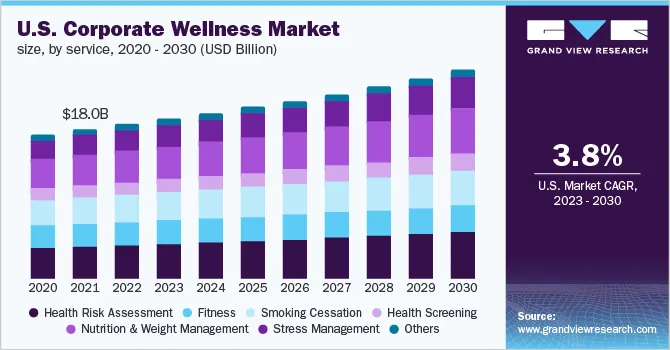
You should target custom wellness app development solutions based on specific user preferences, issues, and needs. These market figures show that there is a lot of scope for entrepreneurs in the health & wellness industry, which is a great advantage.
What are the Benefits of Building AI-Powered Wellness Apps?
Business investors can build a wellness app and get multiple benefits that lead to a successful brand. In this section, you will understand some important advantages of developing wellness apps:
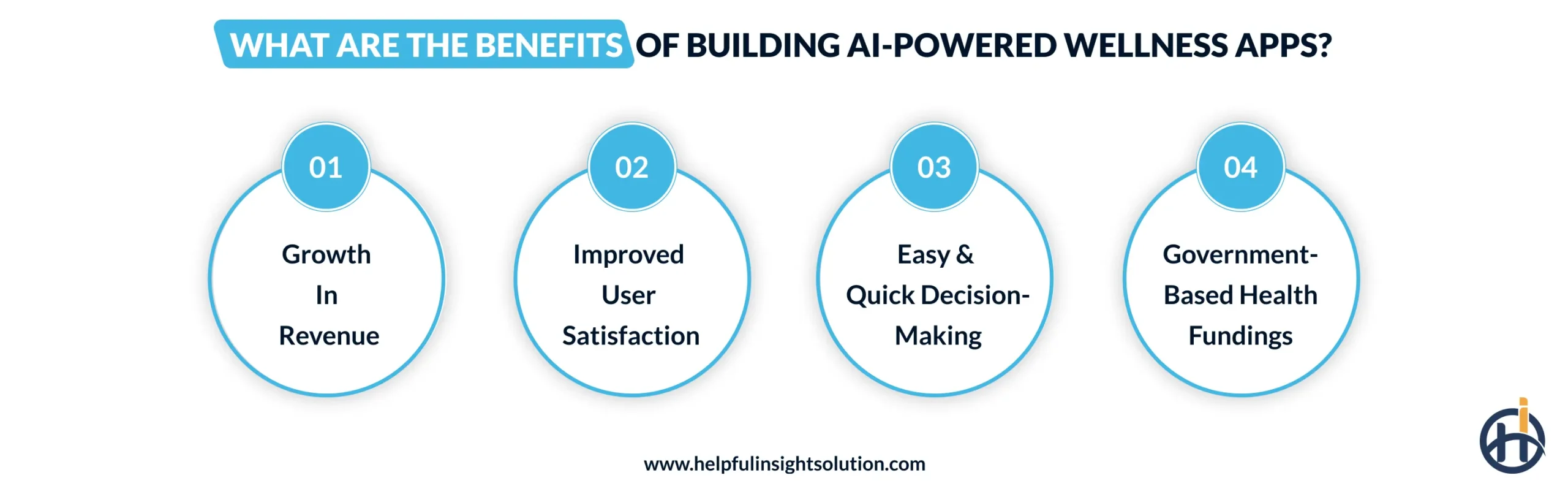
1. Growth in Revenue
AI-powered wellness apps enable personal subscriptions and upselling, helping businesses unlock new revenue streams. Automated AI features also reduce the cost to develop a wellness app with profits.
2. Improved User Satisfaction
AI delivers personalized workouts, nutrition plans, and wellness insights, enhancing user engagement and retention. You should invest in wellness mobile app development to provide adaptive user experiences.
3. Easy & Quick Decision-Making
Businesses must develop an AI-based wellness app to analyze health data, enabling users to make informed decisions. The use of AI development services helps identify trends, risks, and progress.
4. Government-Based Health Fundings
The reduced cost of wellness app development services delivers preventive healthcare and digital innovation. This increases government grants, health-tech funding, and large-scale wellness partnerships.
Types of Wellness Apps in the Market
Before you build a wellness app, it is important to know the types that are available in the US market. Here are a few wellness app categories that are popular among people:
1. Digital Workout Apps
Digital workout apps offer exercise programs, workout tracking, and personalized fitness plans. The use of health tracking in wellness apps helps users get guided routines, progress monitoring, and AI features.
2. Mental Wellness/Meditation Apps
You can develop the best meditation app to manage stress, mindfulness, and emotional well-being. An effective AI-based wellness app provides live sessions, exercises, and mood tracking for mental balance.
3. Nutrition Wellness Apps
Nutrition wellness apps assist users in managing diet plans, calories, and nutrient intake. An AI-based wellness application supports healthy eating habits with meal planning and personalized nutrition.
4. Sleep Wellness Apps
It is beneficial to create an AI-powered wellness app that improves sleep quality by tracking sleep patterns. They use insights, soundscapes, and smart alarms to promote better rest and recovery.
Exciting Features of a Body Wellness Application
To develop a wellness app, you must know various features that attract customers, drive revenue, and ensure growth. Some of the interesting features will be discussed in this section:
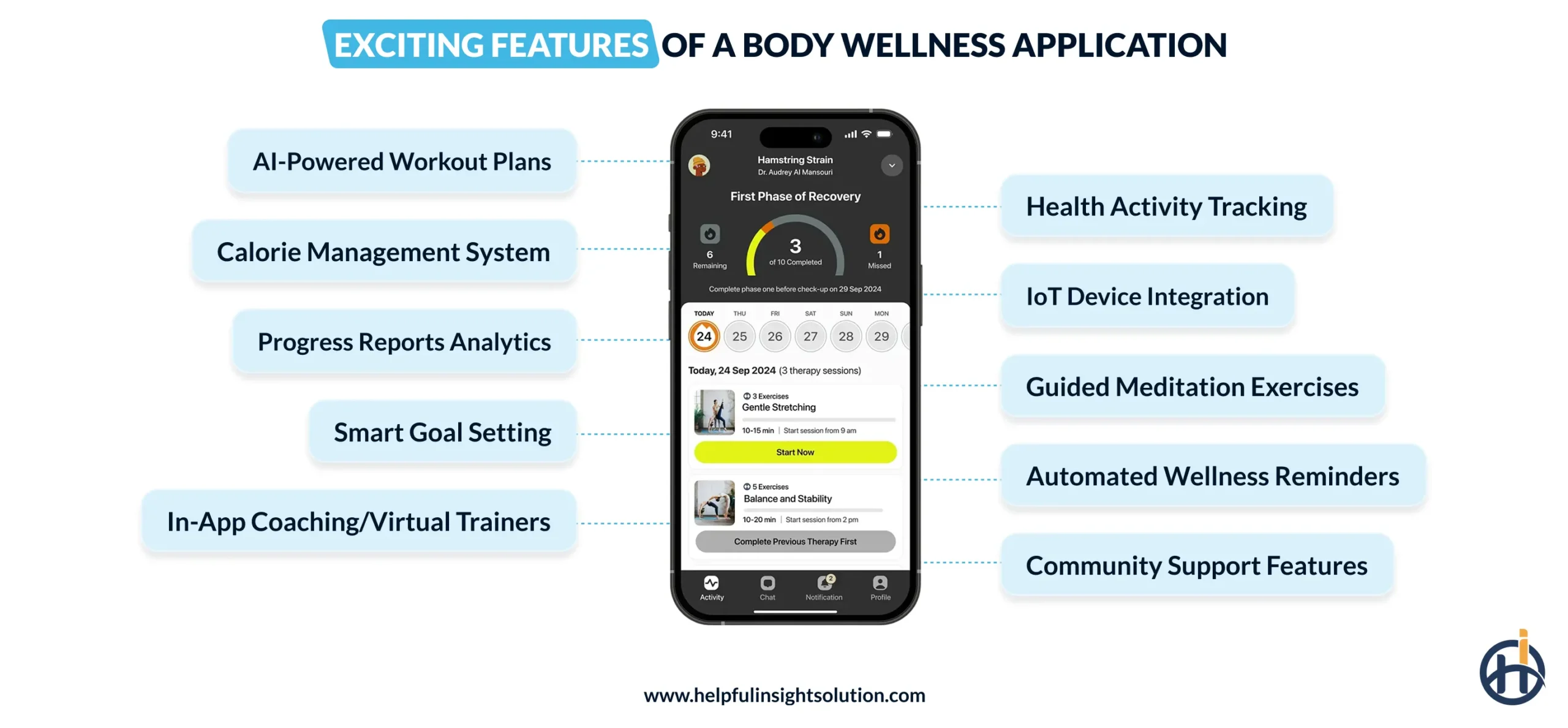
1. AI-Powered Workout Plans
Personalized workout routines are generated using AI based on user fitness levels, goals, and performance data. You should develop an AI-based wellness app to ensure optimal results and prevent burnout.
2. Health Activity Tracking
This feature tracks daily activities such as steps, workouts, heart rate, and sleep on a dashboard. Top self-care apps like Finch help users maintain consistency and monitor overall wellness trends.
3. Calorie Management System
Users can easily log meals and track calorie intake with smart food recommendations. A digital wellbeing app balances nutrition goals with a high workout intensity for healthier lifestyle choices.
4. IoT Device Integration
Various good self care apps seamlessly connect with wearables and fitness devices to sync real-time health data. This ensures accurate monitoring of health vitals, workouts, and activity levels.
5. Progress Reports Analytics
Advanced visual analytics and insights help users understand their fitness journey. An effective AI-based wellness app provides detailed reports highlighting improvements, challenges, and areas for optimization.
6. Guided Meditation Exercises
People can access expert-led meditation sessions designed to reduce stress and improve mental well-being. Different health coaching apps promote mindfulness, focus, and emotional balance.
7. Smart Goal Setting
It is easy to set various fitness and wellness goals based on personal data and progress patterns. You should invest in AI wellness app development to help users stay motivated and track fitness progress.
8. Automated Wellness Reminders
This feature provides timely reminders for workouts, hydration, meals, and rest periods. An AI-based wellness application encourages healthy habits and consistent engagement with fixed timings.
9. In-App Coaching/Virtual Trainers
The best workout apps for women guide AI-powered virtual trainers or professional healthcare coaches. This feature ensures correct buddy posture, motivation, and personalized feedback on fitness.
10. Community Support Features
You can build an excellent wellness app that engages with communities through challenges, forums, and group activities. Social interaction boosts motivation, accountability, and long-term success of the app.
Key Steps to Build Mental Wellness Applications
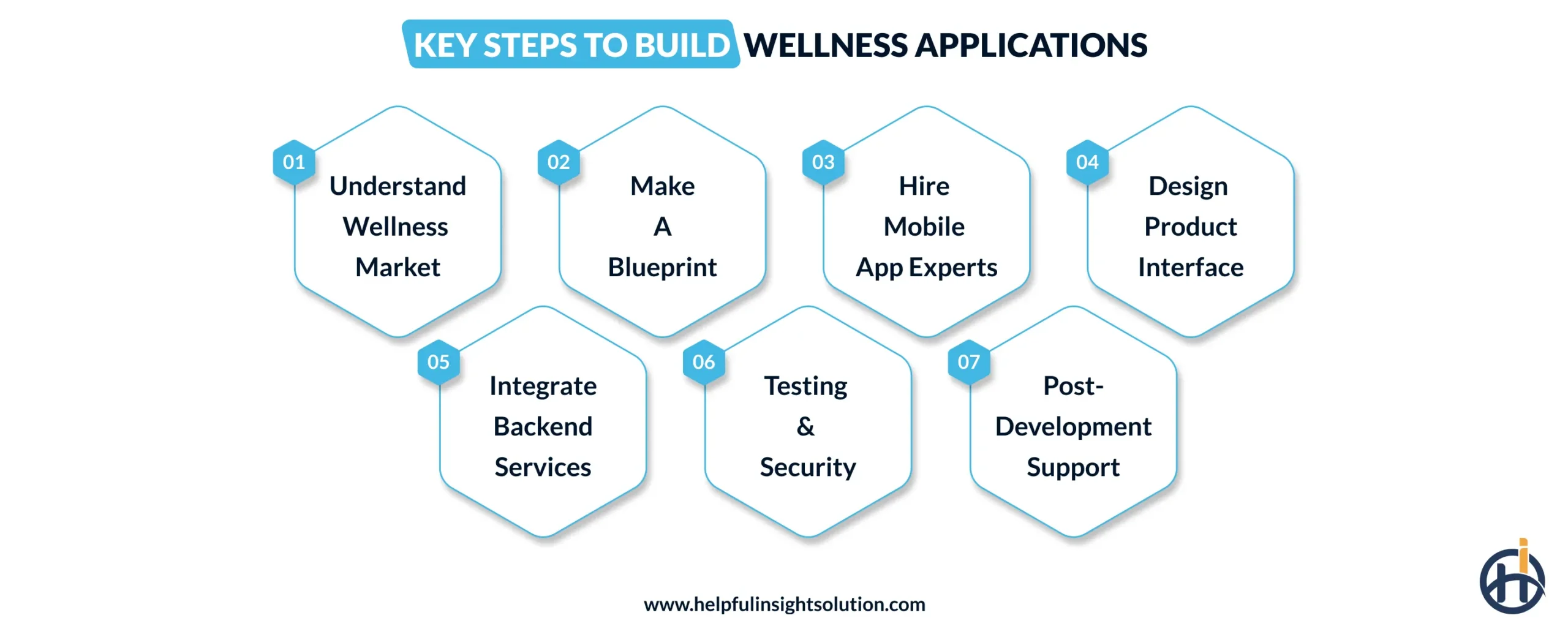
In this section, you will study how to develop a wellness app with a certified development process. We are looking at the generally used app-building stages with detailed information:
1. Understand Wellness Market
It is crucial to know the mental wellness market and how to build a wellness app. It involves researching user needs, mental health trends, or popular wellness solutions such as meditation and therapy apps. Market analysis helps identify gaps, target demographics, and user pain points.
Studying competitors also reveals expectations for features and pricing models. This step ensures the app aligns with real user demands and industry standards.
2. Make a Blueprint
Creating a blueprint helps define the app’s vision, goals, and core functionalities. This stage includes outlining features like mood tracking, guided meditation, therapy sessions, and notifications. You should approach the best wellness app development company to visualize the app structure with wireframes.
A detailed roadmap ensures a smooth development process and effective resource allocation. A strong blueprint minimizes risks and keeps the project on track.
3. Hire Mobile App Experts
Businesses must hire an experienced fitness app development company to ensure high-quality development. Skilled developers, designers, and QA professionals must have technical expertise and industry knowledge. They help choose the right tech stack for performance and security.
Expert teams can efficiently handle challenges during the process to make a wellness app. This step directly impacts app reliability and long-term success.
4. Design Product Interface
Designing an intuitive user interface is crucial for fitness and wellness app development. The UI should focus on simplicity, interesting colors, and easy navigation features. A well-designed interface enhances user engagement and emotional comfort.
UX design ensures seamless interactions across different features and operating systems. This step improves user retention and overall app satisfaction with productivity.
5. Integrate Backend Services
A tech stack for wellness app development enables smooth data management and app functionality. Backend integration includes setting up servers, databases, APIs, and cloud services. Secure backend systems support user authentication, data storage, and real-time updates.
The integration of secure standards also ensures scalability as user demand grows. A robust backend of a mobile app guarantees effective performance and stability.
6. Testing & Security
Testing and security are important for delivering a reliable mental wellness application. You should hire dedicated developers for rigorous testing to identify bugs, performance issues, and usability gaps. Security measures protect sensitive user data and ensure compliance with data privacy regulations.
Regular vulnerability checks may reduce the risks of data breaches in a wellness app. This step may increase the cost to create a wellness app, but it builds user trust and app credibility.
7. Post-Development Support
Post-development support ensures the app remains updated and functional after launch. The maintenance of mobile apps includes bug fixes, performance optimization, and feature enhancements. Continuous monitoring helps improve user experience based on feedback.
Regular updates keep the app compatible with new OS versions and devices. This step in the wellness app development process ensures long-term growth and user satisfaction.
List of Top 10 Wellness Apps in the USA
If you want to choose the best app for body and mental wellness, then it is difficult, as there are many. To select an AI-based wellness application, it is necessary to observe the top 10 platforms that are available in the market. Some are the best weight loss apps, and some are made for diet planning. Businesses must go through the table below for wellness app development in USA:
| Top 10 Wellness Apps | Supported Devices | Downloads | Ratings |
| Calm | Android & iOS | 50M+ | 4.3 |
| Insight Timer | Android & iOS | 10M+ | 4.7 |
| Daily YogA | Android & iOS | 10M+ | 4.6 |
| Headspace | Android & iOS | 10M+ | 4.3 |
| BetterMe | Android & iOS | 5M+ | 4.4 |
| Mindbody | Android & iOS | 5M+ | 4.3 |
| FITPASS | Android & iOS | 1M+ | 4.8 |
| Amaha | Android & iOS | 1M+ | 4.3 |
| Quabble | Android & iOS | 500M+ | 4.8 |
| United Heroes | Android & iOS | 100K+ | 4.4 |
Tech Stack Required for Wellness App Development
As an entrepreneur, you must select an effective and widely used tech stack for fitness app development at an affordable rate. It should include advanced frontend or backend tools, quick-response APIs, database software, and cloud services. All these technologies may affect the cost to build a wellness app, but they are necessary. Let’s look at the table below for successful digital health and wellness app development:
| Component | Tools/Technologies | Description |
| Frontend Development | React Native, Flutter, Swift, Kotlin | Builds an intuitive and responsive user interface for both iOS and Android platforms. |
| Backend Development | Node.js, Django, Ruby on Rails | Handles business logic, API management, and seamless communication between app and server. |
| Database Management | PostgreSQL, MongoDB, Firebase | Stores user profiles, activity logs, wellness data, and app configurations securely. |
| Cloud Infrastructure | AWS, Google Cloud, Microsoft Azure | Provides scalable hosting, load balancing, and high availability for the wellness app. |
| AI & Machine Learning | TensorFlow, PyTorch, OpenAI APIs | Enables personalized wellness recommendations and predictive health insights. |
| Wearable Integration | Apple HealthKit, Google Fit, Fitbit SDK | Syncs fitness and health data from smartwatches and wearable devices. |
| Payment Gateway | Stripe, Razorpay, PayPal | Supports secure subscription billing and in-app purchases for premium features. |
| Notifications & Messaging | Firebase Cloud Messaging, Twilio | Delivers reminders, alerts, and motivational messages to improve user engagement. |
| Analytics & Monitoring | Google Analytics, Mixpanel, Firebase | Tracks user behavior, app performance, and wellness trends for data-driven decisions. |
| Security & Compliance | OAuth 2.0, SSL, HIPAA/GDPR Tools | Ensures data privacy, secure authentication, and regulatory compliance. |
What is the Cost to Develop a Wellness App in 2026?
The cost to build a wellness app is dependent on various market factors that we will see later in this section. If you consider all the lowest parameters, the average fitness app development cost is between $8,000 and $15,000, which is influenced by different market standards. It is important to know how to create an AI-powered wellness app before integrating advanced technologies.
The cost to develop a wellness app may increase to $25,000 or more, based on user needs and business requirements. Additionally, maintenance and security also play a major role in disturbing the budget specifications. Let’s understand some of the crucial factors that affect the overall wellness app development cost:
Project Complexity: Addition of more features may increase the development cost due to a rise in the complexity level.
Location Factor: Targeting cost-effective regions like Asia rather than North America is beneficial because the development model is affordable.
Team’s Experience: Senior developers ensure quality support but are expensive, as they are suitable for long-term development.
Hiring Model: Freelancers should be hired for app integrations and server hosting because agency developers are expensive and hired for full-stack development.
Development Platform: Choosing a single platform, like Android or iOS, is more expensive than hybrid services that involve a single codebase.
How to Monetize a Wellness App?
After you build a wellness app, it is important to generate revenue from the platform to balance the development cost. In this section, we will see the best strategies to monetize a wellness application:

1. Subscription Plans
This model offers users recurring access to premium wellness content such as guided meditation, fitness programs, or personalized health insights. Subscription plans are one of the best monetization strategies for wellness apps that ensure steady revenue and long-term user engagement.
2. In-App Purchases
It allows users to buy one-time digital products like workout plans, diet charts, or exclusive meditation sessions. This model lets users pay only for features they find most valuable and helps businesses to balance the cost to develop a wellness app.
3. Freemium Model
It is among the top fitness apps monetization strategies that provide basic wellness features for free to users. This approach attracts a wide user base, converts active users into paying customers, and helps to balance the cost to make a wellness app.
4. Advertisement Services
Businesses can easily generate revenue by displaying relevant ads such as fitness brands, health products, or wellness services. They can create a wellness app with integrated advertisement services to avoid disrupting the user experience.
5. Affiliate Marketing
This model promotes third-party wellness products or services within the app, helping investors to earn commissions on each referral. It works best when recommendations align with users’ health goals that directly balance the cost of creating a wellness app.
Why Choose Helpful Insight for Creating Smart Wellness Applications?
At last, it’s time to recall everything that we have learned in this blog about wellness app development for startups and entrepreneurs. Initially, you should prepare a full-fledged plan to make a wellness app, involving different aspects.
Hiring an expert partner for developing smartly integrated wellness applications is necessary, who can combine all the resources.
It must ensure affordable services to develop a wellness app, from consultation to deployment and maintenance. Investors can build a diet and nutrition planning app by going through multiple business models with the help of expert developers.
Additionally, it is important to balance the cost to build an AI wellness app with effective revenue models. All these strategies help you to increase the overall brand value and platform visibility at the global level.
FAQs
Modern wellness applications fall under the lifestyle category, which is different from the fitness or medical apps. Let’s observe some major differences through the following points:
- Wellness apps focus on mental well-being, stress management, and lifestyle balance.
- Fitness apps emphasize workouts, activity tracking, and physical performance.
- Medical apps deal with diagnosis, treatment, and clinical health data.
Artificial Intelligence is among the core technologies behind the success of wellness applications. A few important roles of AI in wellness are described as follows:
- AI enables personalized wellness plans based on user behavior and preferences.
- It analyzes data to provide real-time insights and recommendations.
- AI-powered chatbots and coaches improve user engagement and support.
To create a mobile wellness app, you must know that several factors, like complexity, development process, and user needs, affect the overall duration. The average time is between 2 months and 5 months, considering all the lowest parameters. As the level of factors increases, the total development time also rises to more than one year.
To ensure strict security regulations, HIPAA and GDPR compliance are implemented in wellness applications. Some important healthcare measures are discussed as follows:
- Implement strong data encryption and secure storage for user information.
- Collect user consent and follow transparent data usage policies.
- Regular audits and compliance checks ensure regulatory adherence.
The average maintenance cost ranges from 15% to 20% of the overall development cost, which includes several parameters. Bug fixing, feature enhancements, security checks, and performance analysis are some important factors. If the overall project cost is $20,000, then the cost of maintenance is between $3,000 and $4,000 or more, based on user demand.
IoT is one of the most common technologies that help in automation, data processing, cloud management, and decision-making. Businesses can easily integrate multiple IoT or wearable devices with wellness apps, allowing users to track their daily activities. Additionally, they can monitor various healthcare parameters, like blood pressure, weight, and calories.