

“Become a smarter person with IoT-based fitness devices and elevate your wellness journey.”
Think of a scenario where you can easily measure calorie count, track workout sessions, and get updated fitness results. Quite interesting, right?
The Internet of Things for fitness devices works similarly to enhance user experiences and improve overall wellness through automation services. Additionally, it provides real-time data by gathering information from surrounding elements like temperature, humidity, and traffic insights.
The implementation of IoT in sports and fitness is beneficial for entrepreneurs in the USA, as the overall revenue is $25.4 billion in 2025. We will discover more stats and market figures in the upcoming section, showing the change in growth due to technical advancement. The evolution of IoT in fitness apps has completely transformed the way people used to maintain their fitness.
This is the reality of the Internet of Things in fitness that businesses must accept to become successful and start a new brand. In this blog, we will see various use cases, integration, tech stacks, and the future of IoT fitness apps with detailed information.
What is the Internet of Things, and Why is it Booming?
The Internet of Things is an advanced domain that can be integrated with AI, Blockchain, Cloud, and other technologies. Businesses must use mobile app development services that include IoT as a core technology, which powers fitness applications.
It uses hardware devices, such as sensors, networking protocols, connection devices, and cloud software to build a complete infrastructure. This technology has a wide range of applications in multiple domains like healthcare, finance, logistics, education, and retail.
- IoT sensors monitor machine health in real time to prevent unexpected equipment failures.
- Connected devices optimize processes, reduce downtime, and improve product quality.
- IoT tracks inventory, shipments, and environmental conditions for better logistics efficiency.
The use of the Internet of Things for fitness and various other domains is the main reason behind its success. Let’s understand why IoT is becoming popular among people through the following reasons:
1. Device Connectivity
Internet of Things fitness devices ensure connectivity with mobile apps for tracking workouts and health metrics. This interconnected ecosystem improves accuracy, convenience, and user engagement.
2. Data Automation
Automated data collection through IoT-enabled fitness apps eliminates manual tracking and reduces errors. It provides continuous insights into activity, sleep, and vitals for better performance analysis.
3. Demand Personalized Experiences
The demand for the best workout apps for women is increasing due to personalized features based on their health data. You must know the best ways to use IoT in fitness for improved business results.
4. Cloud & AI Advancements
Cloud computing and AI enhance a fitness Internet of Things system by enabling data storage and analytics. They help deliver predictive insights, smart coaching, and real-time performance optimization.
Global IoT Fitness Market Size
The use of IoT in the fitness industry has increased because of rising user demand and modern innovations. Over the past few years, both the revenue and overall percentage growth have increased, creating multiple opportunities for business investors:
- The current IoT fitness market in 2025 is around $83.9 billion, which is growing at a 11.1% CAGR rate between 2025 and 2030.
- By the end of the tenure, the overall revenue will reach $137.3 billion through smart wearables and high-end IoT gym equipment.
- The North American region is at the top with a total market share of 36.7% and a revenue of $30.8 billion in 2025, followed by the Asia-Pacific region.
- The revenue from home fitness equipment is $12.9 billion, which is rapidly increasing with a rate of 6.3% CAGR between 2025 and 2032.
- The online sales increased by 1.3% from the previous year and reached 3.2% because of the rising demand for IoT smart devices.
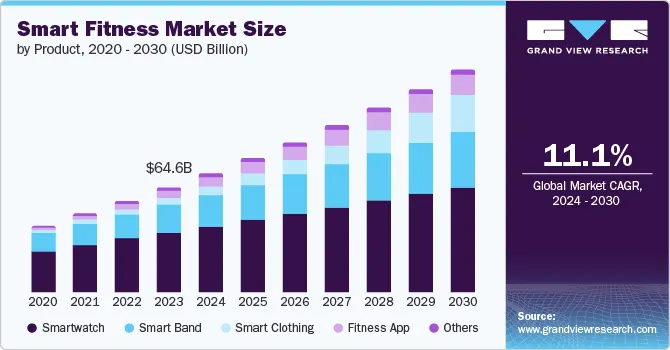
The idea of building top exercise apps for users in the present time is beneficial for all business groups in the fitness domain. So, get motivated with these exciting market figures and start investing money to target a specific IoT for fitness solution.
Read Also: 20+ Key Fitness App Market Statistics You Should Know
How Does IoT Impact the Fitness Industry?
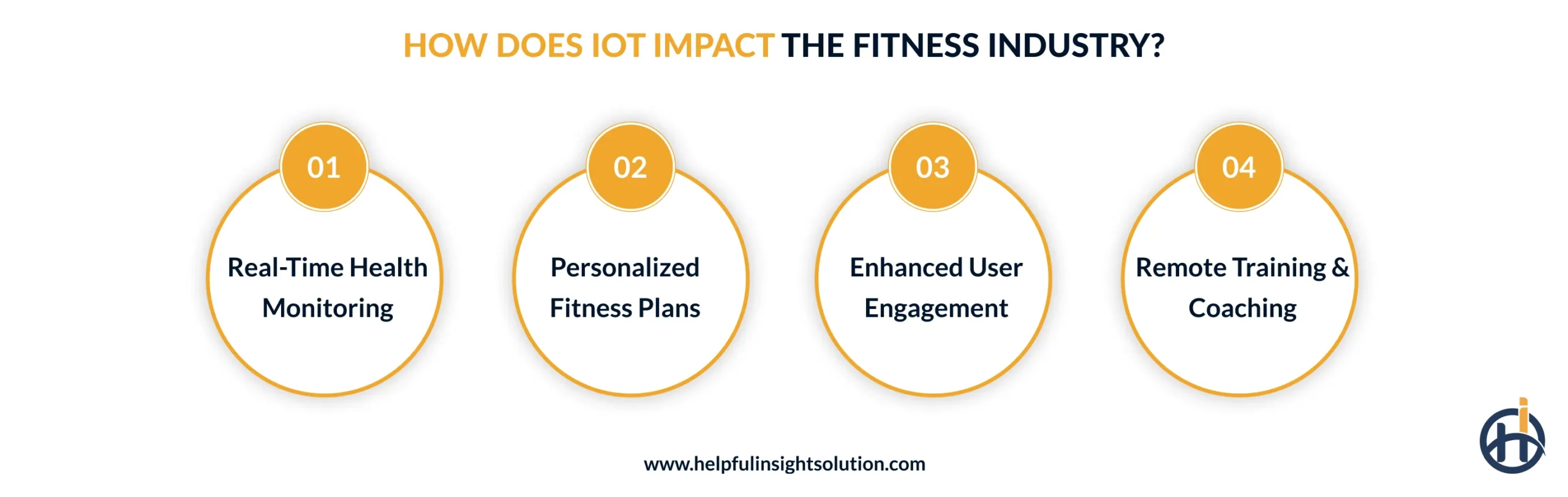
IoT in fitness and healthcare solutions offers multiple benefits, allowing users to get automated features. Below are some major reasons that are crucial to know for business investors:
-
Real-Time Health Monitoring
IoT-enabled fitness devices track vital metrics like heart rate, calories burned, sleep patterns, and activity levels. This is among the best benefits of IoT in Fitness, helping users make decisions to improve health.
-
Personalized Fitness Plans
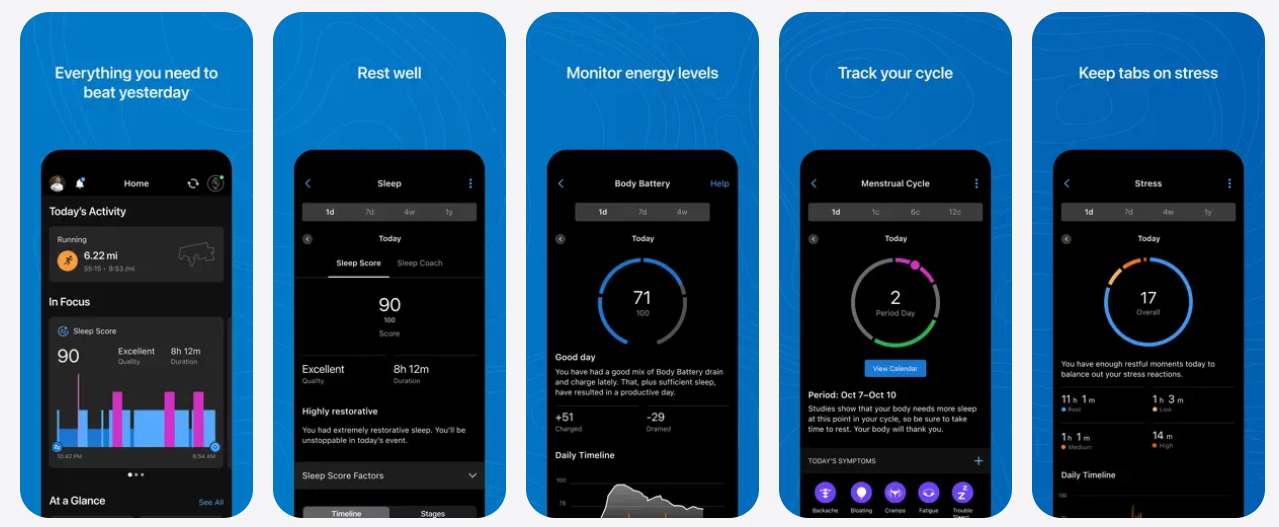
By analyzing data from popular IoT in fitness analytics tools, users can create workout and nutrition plans. An app like Garmin Connect provides results based on user progress and physical goals.
-
Enhanced User Engagement
You must use IoT fitness mobile app development services with feedback, notifications, and gamification for consistency. Interactive dashboards make fitness routines more engaging and rewarding for users.
-
Remote Training & Coaching
Activity trackers IoT apps allow trainers to monitor workouts and health metrics through connected devices. This enables virtual coaching, real-time feedback, and continuous support without presence.
Various Types of IoT-Powered Fitness Devices
Using the Internet of Things for fitness app development gives rise to multiple categories that improve overall wellness. In this section, we will focus on different types of IoT-enabled fitness devices:
1. Smartwatches
Smartwatches track heart rate, steps, calories, sleep, and workouts in real time using IoT connectivity. They sync with a fitness Internet of Things application to provide personalized fitness and health alerts.
2. Exercise Machines
Various health and fitness Internet of Things devices for exercise monitor speed, resistance, and calories burned. They connect to apps or cloud platforms to offer guided workouts and progress tracking.
3. Fitness Trackers
A fitness app like MyFitnessPal offers lightweight wearable devices to record daily activity and vital signs. This IoT for fitness solution delivers real-time data and goal-based fitness reports for users.
4. Clothing/Footwear Sensors
Smart clothing and footwear use embedded sensors to analyze posture, movement, and muscle activity. These fitness tracker IoT devices help improve performance and reduce injury risks.
5. Implantable Sensors
Implantable sensors are placed inside the body to monitor health and fitness-related data. This use of IoT in gym helps transmit accurate information to healthcare or fitness platforms for advanced tracking.
Top Use Cases of Internet of Things for Fitness
As a business investor, you should be aware of various use cases of the Internet of Things for fitness platforms. The best industrial applications of IoT in wellness are discussed in this section:
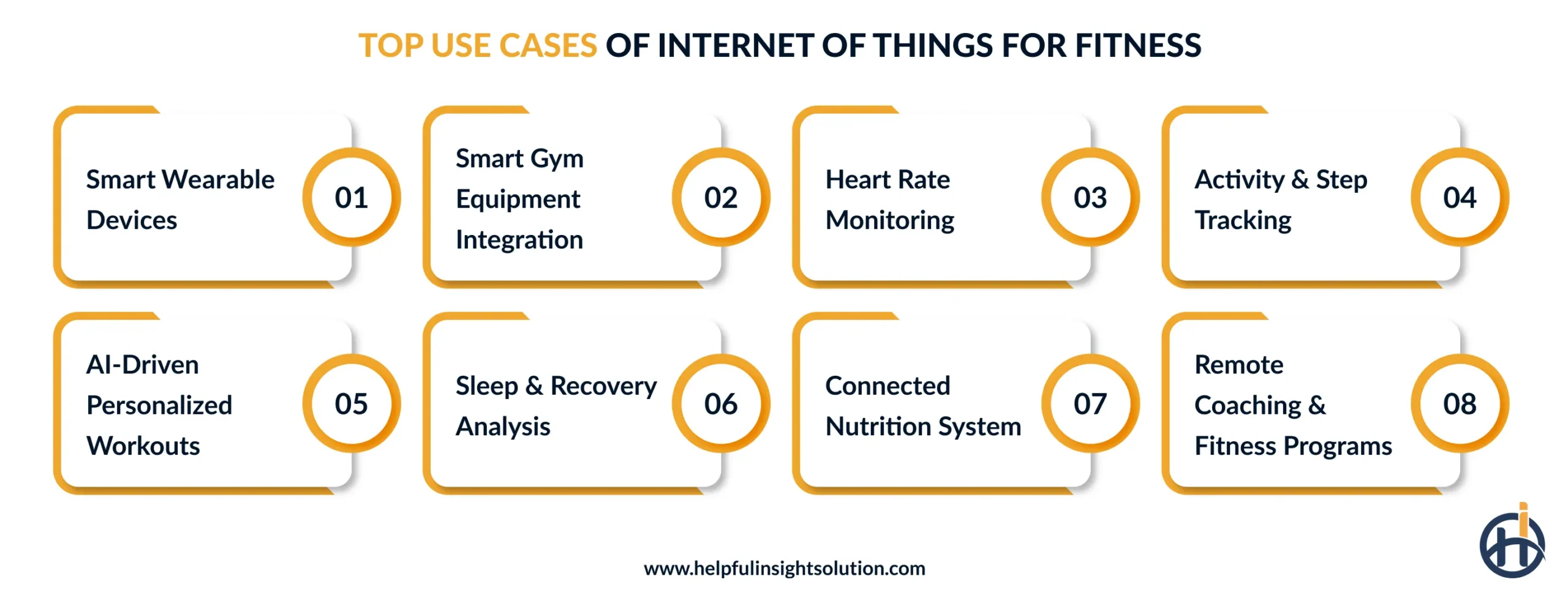
1. Smart Wearable Devices
A smart fitness Internet of Things system uses IoT sensors to track real-time fitness metrics like steps, calories, and heart rate. They sync seamlessly with mobile apps for instant data access.
These devices help users monitor daily activity levels and overall health trends. Wearables promote consistency by offering alerts, goals, and performance insights.
2. Smart Gym Equipment Integration
IoT-enabled gym equipment connects machines to the best gym management software. It automatically records workout data such as repetitions, weight, and duration of training sessions. Users can track progress without manual input through the use of IoT in gym.
This integration improves training accuracy and enhances the gym experience.
3. Heart Rate Monitoring
IoT-based heart rate monitoring provides continuous and real-time pulse tracking. It helps users understand workout intensity, cardiovascular health, and fat quantity in the body.
Various popular IoT in fitness analytics and alert tools notify users of abnormal heart rate levels. This ensures safer and more effective training sessions.
4. Activity & Step Tracking
Activity or step tracking utilizes health and fitness IoT sensors to measure users’ daily movement patterns. It tracks walking, running, and active minutes throughout the day to deliver accurate suggestions.
The data helps users maintain an active lifestyle by increasing their fitness levels. Progress reports motivate users to consistently achieve their fitness goals.
5. AI-Driven Personalized Workouts
IoT devices combined with AI analyze user fitness data to create personalized workout plans and fitness training sessions. These plans are based on user-centric performance, goals, and health metrics. Users receive tailored exercise recommendations with the help of this Internet of Things technology. It leads to improved fitness results and reduced risk of injury.
6. Sleep & Recovery Analysis
Various fitness and wellness IoT devices monitor sleep patterns, duration, and recovery cycles. They provide insights into sleep quality and rest efficiency that enhance overall user health. Proper recovery data helps optimize workout schedules and maintain a healthy lifestyle.
This ensures balanced physical training and better overall mental health.
7. Connected Nutrition System
Connected nutrition systems use IoT to track regular diet, hydration, and calorie intake. Smartly integrated IoT fitness tracker apps sync food data with fitness metrics for a complete health view.
Users receive nutrition recommendations based on activity levels through new fitness app trends. This supports healthier eating habits, performance goals, and fitness stability.
8. Remote Coaching & Fitness Programs
IoT enables remote coaching and virtual fitness training through connected devices or fitness apps. Trainers can monitor performance and provide real-time feedback through advanced IoT-enabled fitness apps.
Users can easily access guided workouts from anywhere with just one click. This makes fitness programs more flexible and personalized for people.
How to Integrate IoT for Smarter Fitness?
It is important to study the integration of the Internet of Things for fitness web and mobile apps. This approach helps to manage the overall budget, necessary resources, features, and tech stack:
-
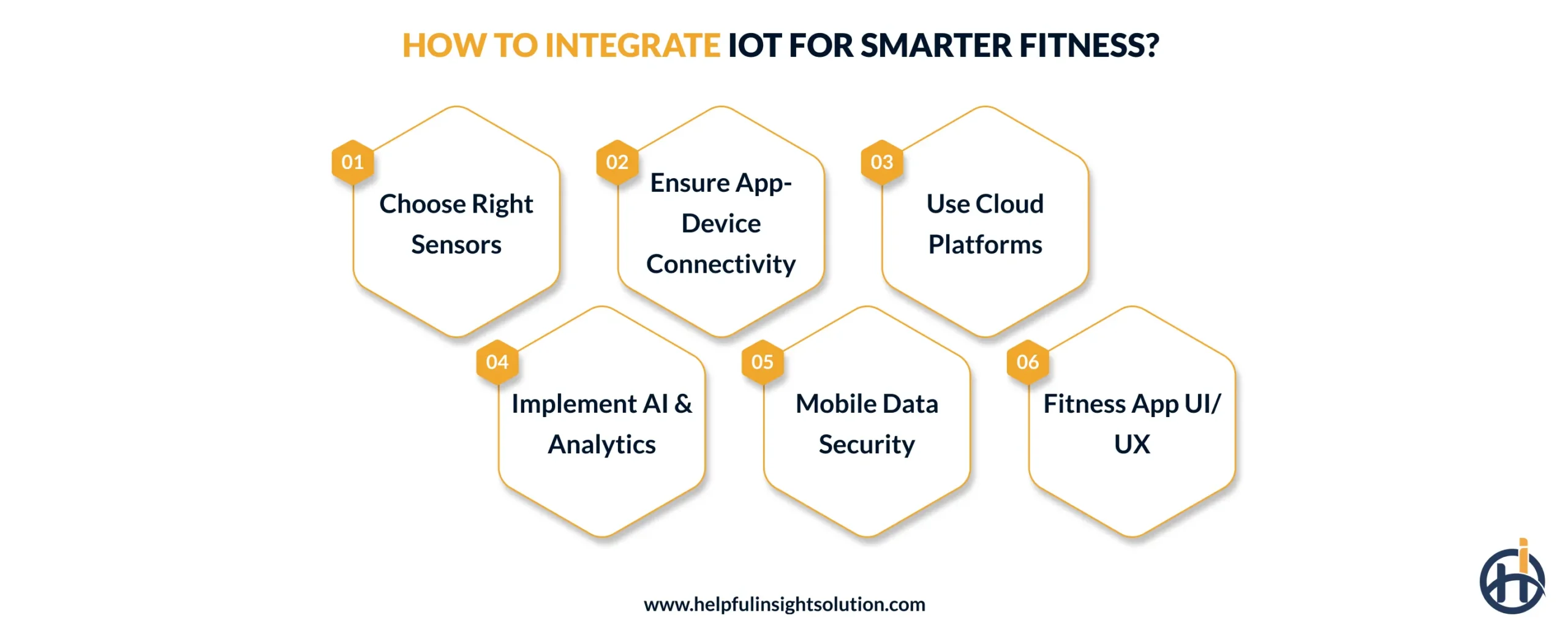
Choose Right Sensors
Selecting accurate and reliable sensors is the foundation to create a workout tracking app with IoT. Heart rate monitors, motion sensors, GPS, and wearable biosensors help capture real-time health and activity data. The right sensor choice ensures precise tracking, better insights, and improved user trust.
-
Ensure App-Device Connectivity
A good connection between an IoT fitness tracker and mobile apps enables smooth data flow. Technologies like BLE, Wi-Fi, and APIs help sync workouts and health metrics. You should contact an IoT app development company for stable connectivity, performance monitoring, and user experience.
-
Use Cloud Platforms
Businesses can use cloud platforms to store, manage, and process large volumes of fitness data securely. They must hire an IoT fitness mobile app development company to enable data access, scalability, and synchronization across devices. Cloud integration also supports updates, backups, and advanced analytics.
-
Implement AI & Analytics
AI and analytics in sports Internet of Things devices transform raw fitness data into meaningful insights. They help personalize workout plans, predict health trends, and provide smart recommendations. This intelligence improves user engagement and fitness outcomes.
-
Mobile Data Security
It is crucial to protect user health data in a workout tracking app with IoT integration. You must hire dedicated developers to ensure strong encryption, secure authentication, and compliance with data protection standards. Robust security builds user confidence and ensures regulatory compliance.

-
Fitness App UI/UX
An intuitive and engaging UI/UX makes IoT fitness tracker apps easy to use and motivating. You must build clear dashboards, simple navigation, and visual progress tracking to enhance usability. A well-designed interface keeps users active and committed to their fitness goals.
Leading IoT-Enabled Fitness Applications
In this section, we will observe the best IoT fitness tracker applications that are currently active in the USA and across the globe. You will understand their IoT-based features that are responsible for engaging a large number of people:
| Top 5 IoT-Enabled Fitness Apps | Supported Devices | Downloads | Ratings |
| Strava | Android & iOS | 100M+ | 4.7 |
| Nike Training Club | Android & iOS | 10M+ | 4.2 |
| Fitbit | Android & iOS | 100M+ | 4.3 |
| MyFitnessPal | Android & iOS | 100M+ | 4.5 |
| Garmin Connect | Android & iOS | 10M+ | 4.7 |
1. Strava
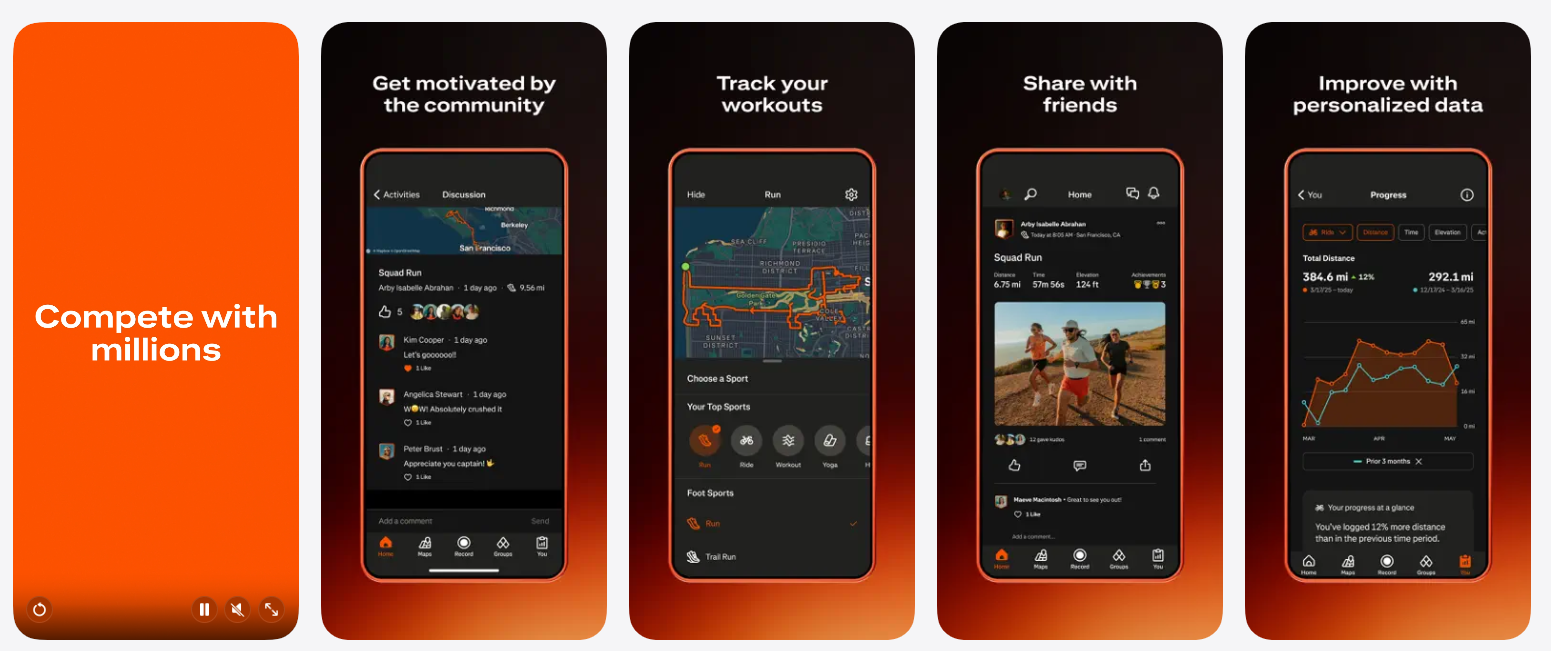
Strava uses IoT-enabled GPS tracking to record runs and workouts to deliver performance insights. This IoT fitness tracker app provides social features, leaderboards, and challenges to keep users connected.
2. Nike Training Club
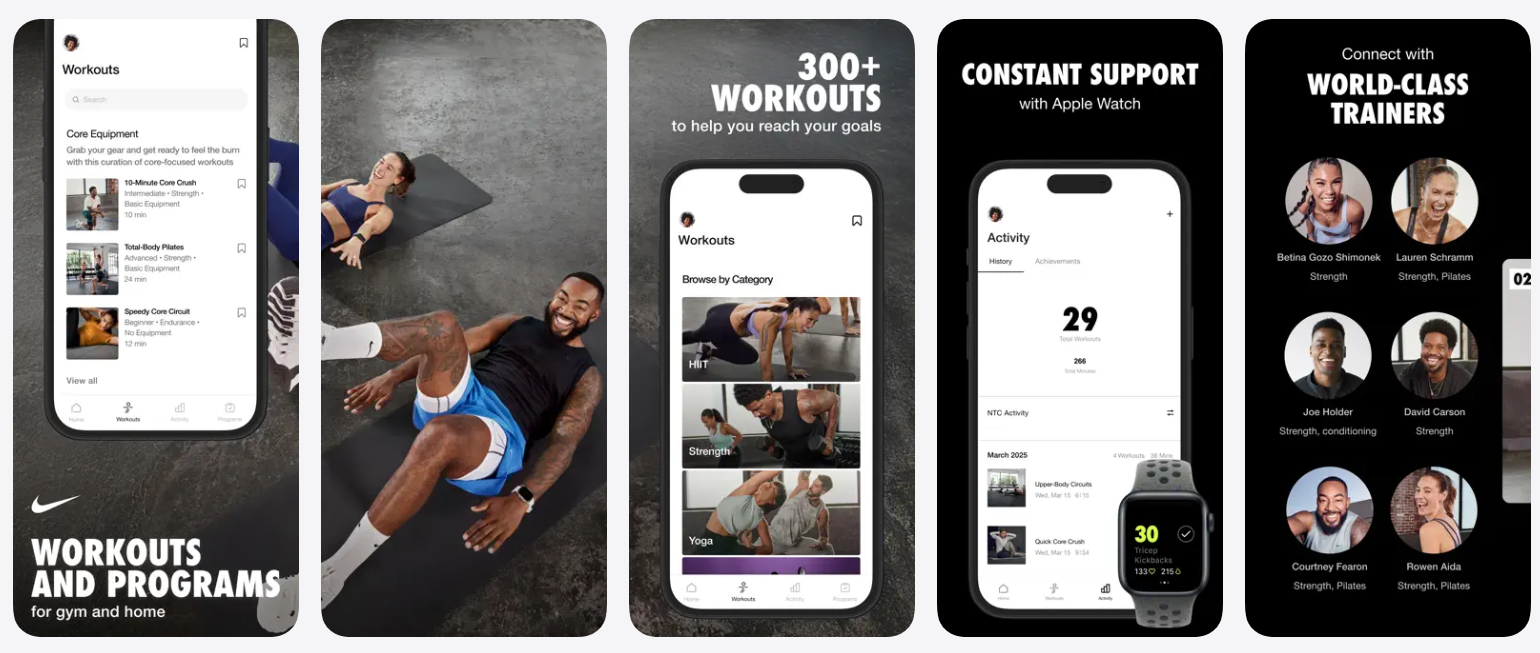
Nike Training Club integrates with smart devices to offer workouts, activity tracking, and fitness plans. This gym & workout tracking app with IoT integration is based on user progress, goals, and data.
3. Fitbit
A fitness app like Fitbit connects with wearables to monitor activity, heart rate, and health metrics. It is among the best IoT-enabled fitness apps that provide trends to support healthier lifestyle choices.

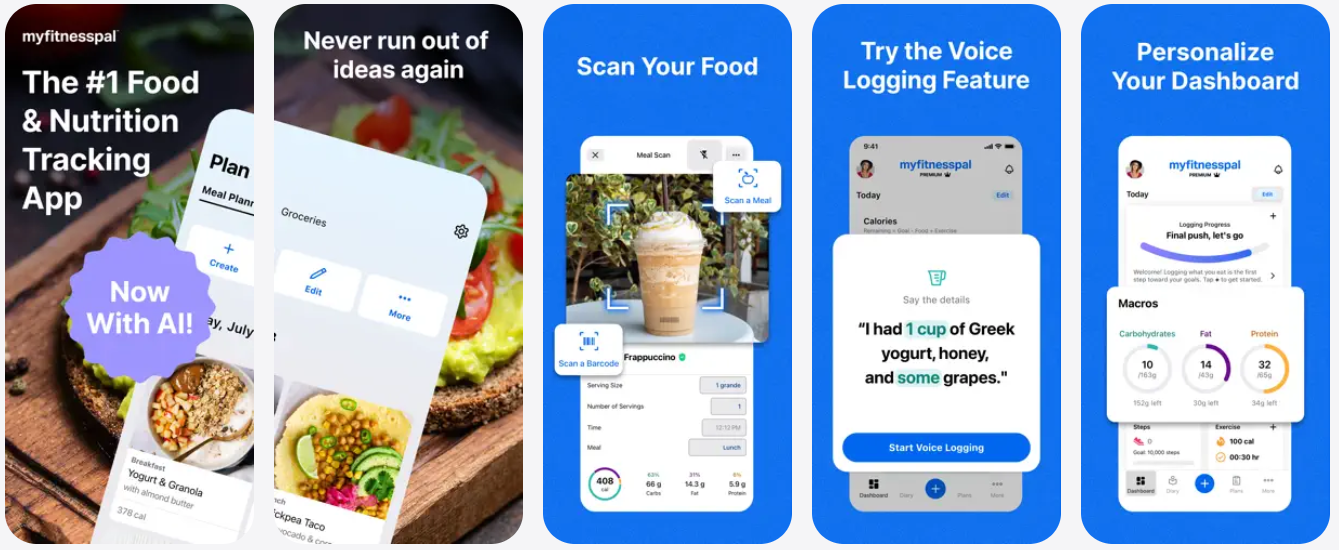
4. MyFitnessPal
MyFitnessPal integrates IoT data from wearables to track calories, nutrition, and exercise. This health and fitness IoT solution helps users align diet and fitness goals through a detailed food database.
5. Garmin Connect
Garmin Connect works with wearables to deliver advanced fitness, training, and health analytics. It uses IoT in gym for performance tracking, recovery insights, and personalized training recommendations.
Read Also: Women Health Tracking App Development: A Complete Guide
IoT-Based Tech Stack for Fitness App Development
To create a reliable Internet of Things system for the fitness industry, it is crucial to know the latest tech stack. Here, you will understand various tools and technologies based on different components with the help of their respective tables:
1. Devices & Sensors
Wearables and smart fitness devices use sensors to track real-time health data such as heart rate, steps, calories, sleep, and activity levels. The Internet of Things for fitness tracking forms the foundation for accurate fitness insights and personalized recommendations.
| Component | Tools/Technologies | Description |
| Heart Rate Sensor | Polar H10, Apple Watch HR Sensor | Tracks real-time heart rate during workouts and rest periods. |
| Accelerometer | Bosch BMI160, ADXL345 | Measures movement, steps, and workout intensity. |
| Gyroscope | MPU-6050, L3GD20 | Detects body orientation and exercise form accuracy. |
| GPS Sensor | u-blox NEO-6M, Qualcomm GNSS | Enables outdoor activity tracking like running and cycling. |
| Body Temperature Sensor | MAX30205, MLX90614 | Monitors body temperature for health and recovery insights. |
2. IoT Connectivity
IoT connectivity enables data transfer between fitness and wellness IoT devices with mobile apps using Bluetooth, Wi-Fi, or cellular networks. You can develop a fitness tracker app to ensure continuous synchronization and real-time monitoring of user activities.
| Component | Tools/Technologies | Description |
| Bluetooth Low Energy (BLE) | Bluetooth 5.0, Nordic BLE SDK | Provides low-power communication between wearables and mobile apps. |
| Wi-Fi | ESP8266, ESP32 | Enables high-speed data syncing to cloud platforms. |
| NFC | NXP PN532 | Allows quick device pairing and user authentication. |
| Cellular Connectivity | LTE-M, NB-IoT | Supports remote fitness devices without Wi-Fi access. |
| USB Connectivity | USB-C, Micro-USB | Facilitates device charging and wired data transfer. |
3. IoT Networking
IoT networking manages how multiple devices communicate securely and reliably within the fitness ecosystem. A health and fitness IoT solution supports scalable data flow between sensors, gateways, and servers for uninterrupted performance.
| Component | Tools/Technologies | Description |
| MQTT Protocol | Eclipse Mosquitto | Ensures lightweight, real-time data transmission. |
| CoAP | Californium | Enables efficient communication for constrained IoT devices. |
| HTTP/HTTPS | REST APIs | Supports secure data exchange between devices and servers. |
| Edge Computing | AWS IoT Greengrass | Processes fitness data locally for faster insights. |
| Device Management | Azure IoT Hub | Handles firmware updates and remotely monitors devices. |
4. Cloud-Based Software
Cloud-based software stores, processes, and analyzes fitness data collected from IoT devices in real time. It enables advanced analytics, AI-driven insights, data security, and easy access across platforms by using IoT in gym equipment.
| Component | Tools/Technologies | Description |
| Cloud Platform | AWS, Google Cloud, Microsoft Azure | Provides scalable infrastructure for fitness app backends. |
| Data Storage | Amazon S3, Firebase Storage | Stores user health data securely and efficiently. |
| Real-Time Analytics | Google BigQuery, AWS Kinesis | Analyzes workout data for performance insights. |
| AI & ML Services | AWS SageMaker, TensorFlow | Enables personalized workout and health recommendations. |
| Security & Compliance | AWS IAM, HIPAA-compliant services | Ensures secure data access and compliance with relevant regulations. |
Challenges for IoT Integration in Fitness Apps
An entrepreneur may face different levels of challenges while implementing IoT in fitness platforms. We are going to understand a few of these issues and find out their solutions for enhanced development:
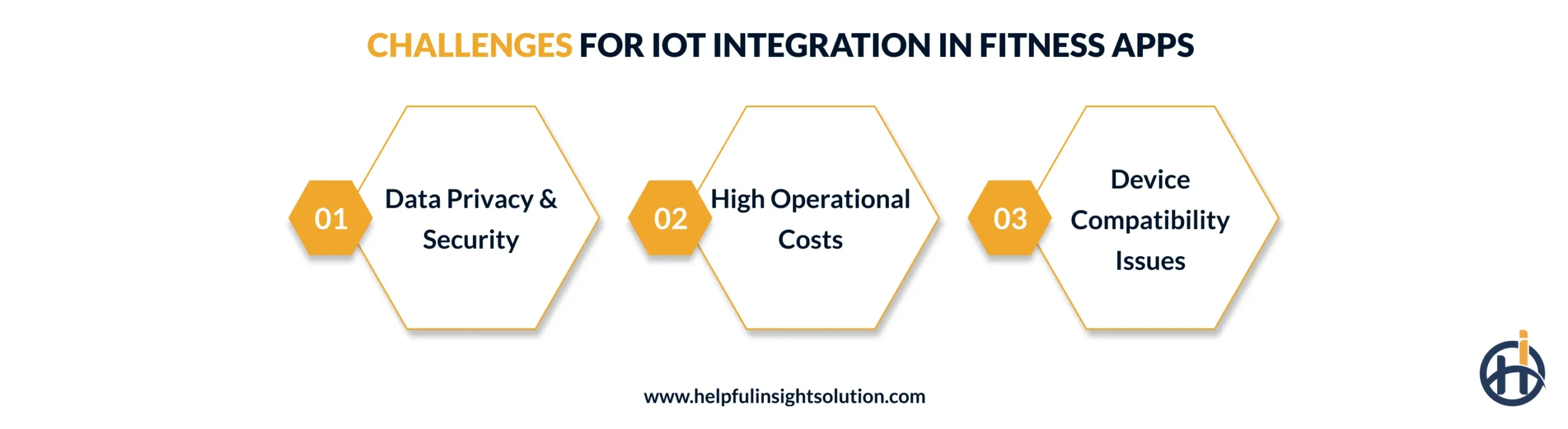
1. Data Privacy & Security
Some IoT fitness devices lack data security due to the limited compatibility of the hardware with the supporting system. This issue is concerning and forces users to step back from using such platforms.
Solution: Implement advanced and encrypted security algorithms with AI components like NLP.
2. High Operational Costs
The fitness app development cost increases with the integration of IoT services, networking protocols, and connectivity. This directly impacts the selling price, allowing users to pay more for the same product.
Solution: Third-party platforms, a health and fitness IoT solution that is affordable and effective.
3. Device Compatibility Issues
Various IoT-enabled fitness apps do not support all hardware devices or sensors because of compatibility issues. It increases the risk of network failure, data loss, and inaccurate fitness predictions.
Solution: Use advanced FPGA platforms that ensure a stable connection with operating systems.
Future of IoT Fitness Devices & Apps
More innovations are being made in the Internet of Things for Fitness apps and devices. It is important to know various future trends for developing sustainable IoT-powered wellness platforms:
1. Advanced Smart Wearables
Next-generation smart wearables will offer deeper biometric tracking, including hydration and stress. The use of IoT in gym devices provides more accurate, comfortable, and seamless connections to fitness apps.
2. AI-Powered Predictive Health
AI in IoT fitness devices analyzes health data to predict potential risks and prevent injuries. The use of AI in the fitness industry will shift apps from reactive tracking to proactive health guidance platforms.
3. Integrated Healthcare Systems
IoT fitness mobile app development solutions integrate with hospitals and electronic health records for data sharing. This connectivity will support remote monitoring and more informed medical decisions.
4. Personalized Fitness Ecosystems
IoT in sports and fitness creates unified ecosystems combining workouts, nutrition, and mental wellness data. Users will receive hyper-personalized plans based on their goals, lifestyle, and health conditions.
In a Nutshell!!
It is beneficial to implement the Internet of Things for your health and fitness company to improve wellness services. It delivers accurate data on different health metrics like blood pressure, calorie count, BMI level, and workout reminders. Businesses should approach an experienced fitness app development company that provides affordable services, from consultation to deployment and maintenance.
The use of IoT in sports and fitness is helping entrepreneurs to make extra revenue through increased sales of integrated devices. With this, they can manage the IoT fitness mobile app development cost by focusing on multiple revenue models.
So, the investment in the Internet of Things for fitness app development is recommended to increase brand value and user retention rate.
Frequently Asked Questions
There are several benefits of implementing IoT in fitness apps that an entrepreneur must know. Let’s focus on some big advantages through the following points:
- Reduces manual efforts through data automation and hardware sensors.
- May store a large amount of user data on secure cloud servers.
- Enhances data representation through interactive charts and analytics.
An IoT-enabled mobile fitness app like Fitbit attracts millions of users through advanced features. Some of the major reasons are discussed as follows:
- They provide updated information on heartbeat, calorie count, and weight loss.
- Delivers personalized features for daily workout plans and makes diet meals.
- Tracks routes for walking, running, cycling, and hiking with effective devices.
The integration of the Internet of Things in various fitness apps is affordable due to the high availability of sensors. Various networking protocols and connectivity modules require licensing permissions to ensure transparent delivery of services. It is important to focus on budget requirements and user demands before deciding on IoT integration.
To integrate IoT features in a fitness application, you must focus on various parameters that influence the overall cost. The average price is between $5,000 and $8,000, which is dependent on hardware compatibility, networking fees, and connection charges. The overall cost may increase to $10,000 or more based on these factors.
Yes, IoT is a highly secure technology that combines AI and Cybersecurity to protect sensitive user information through encrypted algorithms. The hardware devices are programmed to prevent unauthorized user access through 2-factor authentication and biometrics. Additionally, the cloud servers are also safe, which ensures the safety of crucial records and data.
The development time of IoT-enabled fitness applications is dependent on the complete process, complexity, and requirements. The average time of development is between 1 month and 2 months because of limited integration services. But the overall duration may increase to more than 3 months due to licensing of connectivity and networking protocols.