


Key takeaways
- Loan management software is a digital tool that automates lending operations, covering approval, disbursement, repayments, collections, and account closure.
- Essential features include loan origination, KYC verification, credit risk assessment, repayment management, collateral tracking, and a borrower portal.
- The cost of an MVP is around $30,000 to $80,000, while an enterprise-grade platform typically costs $200,000 to $400,000+.
- Custom software suits lenders with unique workflows; off-the-shelf tools work for standard products and quick launches.
Managing loans involves several connected tasks, from checking eligibility and scheduling monthly payments (EMIs) to tracking overdue accounts and handling collections. When these tasks are spread across different tools, keeping records accurate takes extra effort. Loan management software development brings key loan operations into one system, helping manage accounts more efficiently, which helps lenders manage accounts more efficiently.
As loan volumes grow or new products are introduced, existing software may stop meeting a lender’s needs. This often leads to a review of system capabilities, integrations, and operational requirements. Digital transformation in financial services has made such review more common across banks and NBFCs.
According to a Research and Markets report, the global loan management software market is projected to reach $22.6 billion by 2030. The forecast points to steady demand, though the right investment depends on each lender’s size, priorities and existing systems.
Lending companies planning to build a loan management system have a few choices to make early on. This guide covers the features to include, how development works, and what drives the cost.
What is loan management software?
Loan management software is a digital system that helps financial institutions automate and manage the full lending lifecycle, from approval and disbursement through repayment and closure. It holds each borrower’s details, payment schedule, balance due, and payment history in one place.
Depending on the system, it may also cover servicing, overdue follow-ups, collections, and reporting. Lending teams get current account information and can monitor repayment status and outstanding dues.
Benefits of building custom loan management software
Building a loan servicing software is not just about moving tasks to a digital platform. It gives banks and lenders a chance to rethink how their lending operations work and where a system built around the business can make a real difference.
Automated loan workflows
Loan processing involves repeated steps that are easy to get wrong manually, such as eligibility checks, payment calculations, and approval routing. A purpose-built system automates them against the lender’s own rules, which reduces manual errors and review delays. Lenders can then process higher volumes while keeping errors low and records consistent.
Better borrower experience
Borrowers often have simple questions about their loans: Has the application been approved? When is the next EMI due? How much is left to repay? A digital lending platform lets them find these answers on their own, including tracking an application and checking the remaining balance.
This is useful for businesses planning to build a FinTech app with loan management features, as the system can give borrowers a simple way to check their loan details.
Data-driven lending decisions
Reviewing a loan application means looking at more than the requested amount and the applicant’s income. Lenders may need to check past payments, current monthly obligations, and outstanding debt before deciding.
A custom system keeps these records in one place, so staff can review a borrower’s financial situation without piecing together information from different sources.
Competitive advantage
Lenders need to adapt as borrower expectations and market conditions change. Custom software makes it simpler to rework loan processes, launch new products, and cut waiting time on applications.
Lenders that respond faster and offer easy digital services compete better against providers already known for a smooth borrowing experience.
What are the core features of loan management software?
Lenders do not need to build every feature from day one. Start with the basics the business needs, such as borrower verification, application processing, and repayment tracking. As operations grow, more functions can be added. These are the essential features to consider.
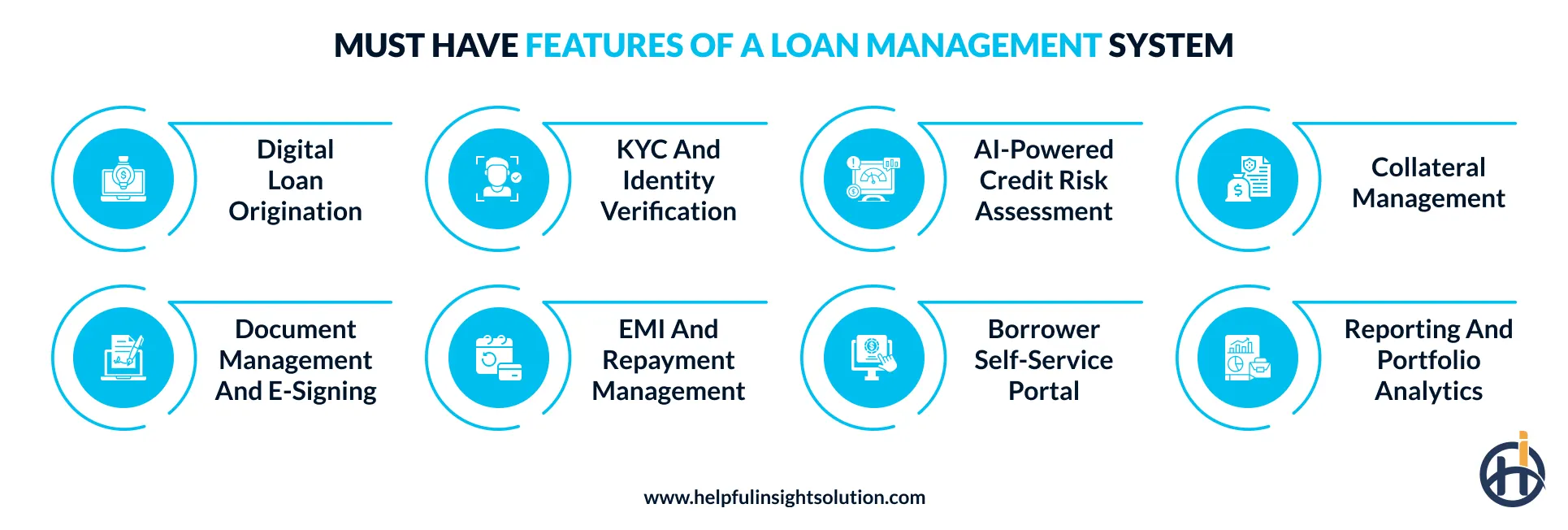
Digital loan origination
Not every application should begin with a branch visit. Online loan origination lets borrowers submit forms and documents online. Lenders can then check identity details, review eligibility, and move each application through approval in an organized way.
KYC and identity verification
The system checks a borrower’s identity using submitted documents and personal details before the application moves forward. As part of banking software development, this feature can include digital ID checks and address verification to help detect false information and meet identity verification requirements.
AI-powered credit risk assessment
The system reviews a borrower’s credit history, income, existing debts, and repayment records using AI to judge whether the loan can be repaid. This keeps assessments consistent and flags risky applications before they turn into defaults.
Lenders should also build in explainability and regular bias checks, since fair lending rules apply to automated decisions.
Collateral management
A pledged car or property isn’t something a lender can afford to lose track of. Ownership details, asset value and documents are stored against the loan, valuation updates are tracked, and the release date is recorded once the borrower has repaid in full.
Document management and e-signing
Agreements are signed electronically instead of being printed and mailed. Behind that, loan document management software keeps income proofs, approval forms, and other supporting papers sorted by loan, so finding one record does not mean digging through folders.
EMI and repayment management
The system maintains each borrower’s repayment schedule and updates the outstanding amount after every payment. It can also flag missed installments, calculate late charges, and account for early payments or loan prepayments.
Borrower self-service portal
Borrowers log in to see their loan balance, upcoming EMIs, and payment history in one place. They can pay online, download statements, and update contact details. The loan administration system feeds the portal directly, so what borrowers see matches the lender’s records.
Reporting and portfolio analytics
This functionality of loan portfolio management software keeps a running view of outstanding balances, overdue accounts and repayment behavior. Lenders notice when loan performance changes and can quickly pick out accounts that need a closer look.
Custom loan management software vs. off-the-shelf solutions: Key differences
Choosing between prebuilt software and a custom system depends on your lending needs, budget, and plans for growth. The table below compares both options to help you understand where custom loan management software development may be the right fit.
| Factor | Off-the-shelf system | Custom loan management system |
| Time to Market | Ready to deploy with existing features | Takes longer to develop and launch |
| Initial Cost | Lower setup costs | Higher upfront development costs |
| Customization | Limited to vendor-provided options | Features can be built around the lender’s processes |
| Scalability | Depends on vendor plans and limits | Grows with changing business requirements |
| Ownership and control | Vendor controls core updates and features | Greater control over software changes |
How to build custom loan management software: step by step
Developing loan lifecycle management software starts with understanding how the lending business operates and what the new system must handle. Each stage, from planning the core functions to testing repayment workflows, prepares the software for real lending operations.
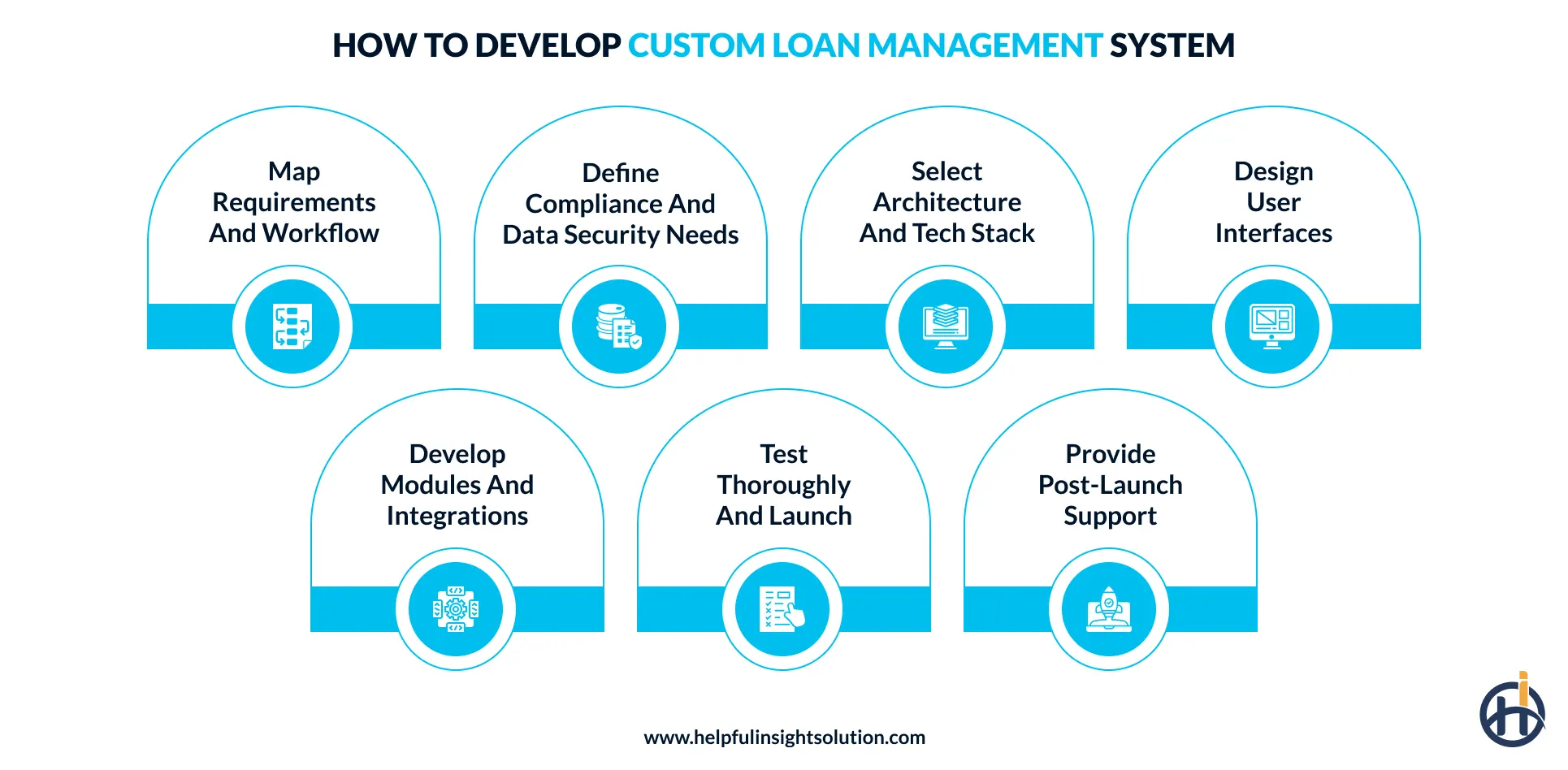
Map requirements and workflows
Begin with what the software needs to handle each day. Map out how applications are reviewed, how decisions are made and how the team deals with payments and missed installments. Once that’s on paper, FinTech consulting services can help refine it into requirements that developers can build from.
Define compliance and data security needs
Compliance needs should be clear before development moves forward. Banks, credit unions, and NBFCs must account for requirements such as KYC, borrower data protection, audit records, and role-based access.
If the system handles payment card data, PCI DSS requirements may also be relevant. These measures help protect sensitive information and support compliant lending operations.
Select architecture and tech stack
Architecture is one of the few decisions that are expensive to reverse. A loan platform has to cope with rising volumes, new products and stricter security demands, so choices around databases, frameworks and hosting matter early. Picking suitable technology up front helps avoid limits later.
The following table outlines the technologies used to develop loan management software:
| Aspect | Tools and Technologies |
| Frontend | React, Next.js, Angular, Vue.js, TypeScript |
| Backend | Java, C#, Node.js, Python, Go |
| Databases | PostgreSQL, MySQL, MongoDB |
| APIs and integrations | REST APIs, GraphQL, gRPC, Apache Kafka |
| Cloud infrastructure and deployment | Amazon Web Services, Microsoft Azure, Google Cloud Platform |
Design user interfaces
Once core workflows are defined, turn them into practical screens for each type of user. A borrower should be able to apply, send documents, check the balance and see the next payment date without extra steps. A loan officer needs a clear application queue, borrower profiles and a simple way to process each case.
Develop modules and integrations
Developers build the modules first, covering applications, approval workflows, servicing and repayment tracking.
The backend handles loan records, calculations and lending rules in the background. Developers write clean, well-documented code, and work moves in short sprints, with each module reviewed and tested before the next one begins.
Test thoroughly and launch
Before going live, the QA team checks key points. Are loan amounts calculated correctly? Do payment records show the right details? Can staff find the information they need? Functional and security testing help answer these questions. Once errors are fixed, a small group of users can test the system and point out anything that still needs work.
Provide post-launch support
Launch is not the last step. Over time, teams need to fix bugs, update security settings, or add features based on staff feedback. Keep checking how the system handles daily loan tasks and whether it meets current business needs.
Regular lending automation software maintenance helps lenders keep their systems running and adjust when lending rules or processes change.
Essential integrations for a loan management system
Loan data comes from many places, including identity checks, credit reports, bank accounts and payment channels. When these tools share data, staff spend less time entering the same details in several places. Common integrations are listed below.
KYC and e-signature services
For online lending, borrowers should be able to verify their identity and sign agreements without visiting a branch. KYC services check their details, while e-signature tools handle digital signing. The software can connect with these providers to make both steps part of the application process and reduce the need to handle paper documents.
Credit bureau APIs
A borrower’s credit history often says more than the application form. Credit bureau APIs let the software pull credit scores, past payments and current debts from credit agencies.
Loan officers then have this information when they look at risk. Linking these APIs with loan servicing software also helps keep borrower records together, so loan officers have this information when assessing risk. It also keeps borrower records together in the servicing system.
Payment gateways
Finance companies and banks need a way to send approved loan amounts to borrowers and collect repayments on time. A payment gateway lets the software handle these transactions through bank transfers, cards, or digital wallets and record payment status for staff to review.
It can also record payment status for staff to review. During FinTech app development, this integration helps manage disbursements and repayments inside the app.
Accounting and ERP systems
Every loan payment has to show up in the company’s accounts. Connecting accounting and ERP tools passes repayments, interest, and fees to the finance team, who can check records more easily and prepare reports with less manual work.
How much does loan management software development cost?
The cost of loan management software development for an MVP typically ranges from $30,000-$80,000; a mid-complexity platform costs $80,000-$200,000; and an enterprise-grade system can cost $200,000-$400,000 or more. Estimates from different vendors can also differ because of what each one includes, such as testing, documentation and post-launch support. Multiple factors impact the cost to develop software for loan management, which include:
- Project complexity and scope
- Number of features
- UI/UX design complexity
- Development team location
- Third-party integrations required
- Compliance and security requirements
- Number of loan products
- Technology stack and architecture
Starting with an MVP is a practical way to manage your budget without building every feature at once. Lending firms can launch the core loan management features, see how borrowers and staff use them, and use their feedback to decide what to add next.

How Helpful Insight can help you build custom loan management software
Digital lending is changing what the financial industry expects from its software. With borrowers looking for faster decisions and more convenient services, lenders are moving to loan management software that can manage growing application volumes and more varied lending needs. Looking ahead, AI-based credit assessments, predictive risk analysis, and personalized loan services will probably have a growing influence on lending decisions.
Our financial software development company works with banks, credit unions, and NBFCs to build custom loan management software around their actual processes. We get involved from the planning stage, helping to define the required features, choose the right technology and map out integrations.
Our certified fintech developers understand the compliance requirements in financial software and account for them during development. Whether the need is a basic platform or a complex lending system, we handle planning, building, testing, and ongoing support.
Frequently Asked Questions
Developing a simple loan management system can take 3 to 5 months, while an enterprise-level platform may take 9 to 12 months or longer. The timeline depends on several factors, including project complexity, the number of features, UI/UX design, third-party integrations, and testing requirements.
Loan origination software manages the pre-approval and application process, including borrower verification and credit checks, while loan management software handles the loan after disbursement, including repayment tracking and interest calculations.
- To select the right loan management system, consider the following factors:
- Confirm core features match the lender’s products and workflows.
- Look for support for relevant regulations and KYC requirements.
- Assess scalability for growing loan volumes and new products.
- Compare total cost, including licensing, customization and maintenance.
- Evaluate the vendor’s experience, support quality and update track record.
Off-the-shelf software suits lenders with common loan products who need a fast launch, while custom software fits those with unique workflows, specific compliance needs, complex integrations or plans for significant growth.