

The healthcare industry has completely transformed how it delivers care in this tech-driven world by adopting the latest technologies like AI and IoMT. However, we cannot ignore that it is one of those sectors that remain among the most targeted for cyberattacks.
Roughly 89% of healthcare organizations face cyber threats nearly every week. More than half of these facilities lack the skilled staff needed to fix security gaps, making it easy for hackers to target the many connected devices used in patient care. Hence, cybersecurity in healthcare is a serious concern.
Think about this, when you visit a hospital, you share very personal details. You trust that your information is safe. But what happens if that trust is broken? It can cause fear, stress, and even serious problems for patients.
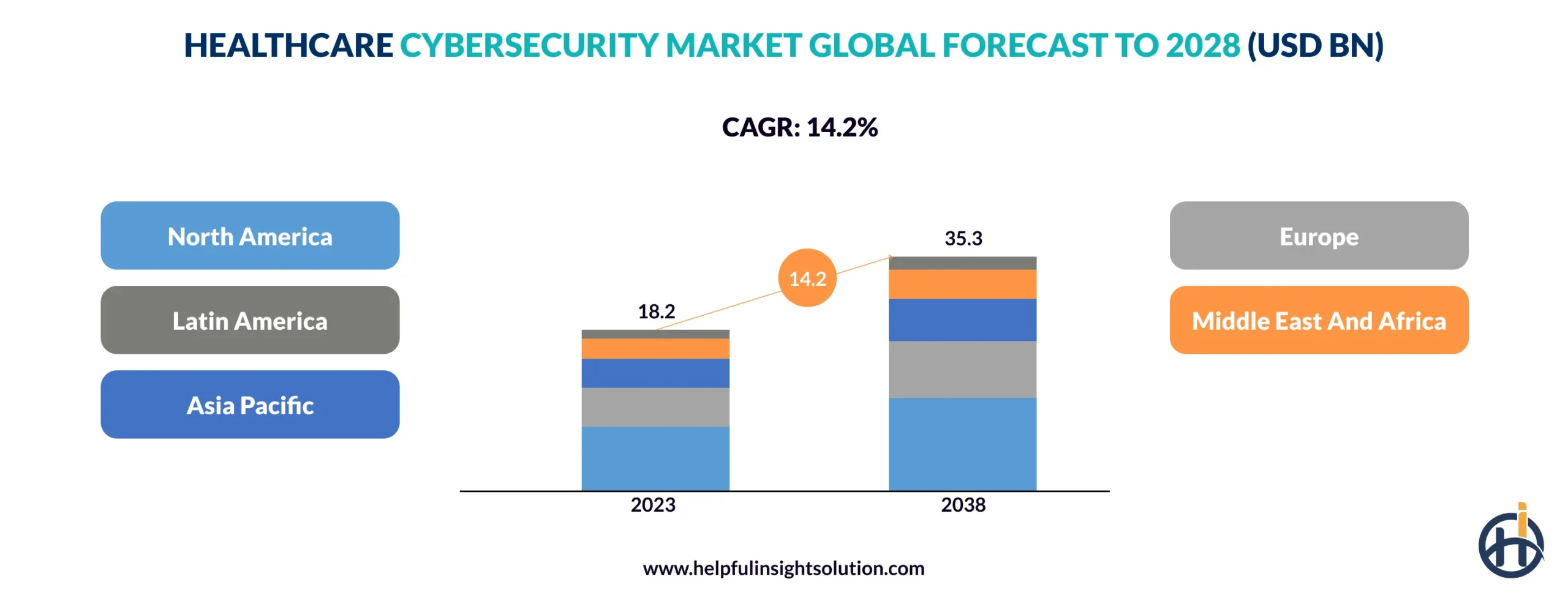
That’s why hospitals must take healthcare cybersecurity very seriously. The global healthcare cybersecurity market is predicted to reach $35.3 billion by 2028, showcasing care providers are already prioritizing digital security to protect patient trust.
If you are a healthcare business, then you should definitely implement cybersecurity solutions in your systems. In this blog, we will discuss the role of cybersecurity in healthcare, best practices, challenges, and everything you need to know to get started.
What is Healthcare Cybersecurity and Why It Matters?
Every time you visit a hospital or clinic, your details like your name, reports, and medical history, are stored in digital systems. Healthcare cybersecurity helps protect this sensitive data so no one can steal or misuse it. It also keeps medical devices and hospital networks safe and functioning properly.
Cybersecurity in healthcare industry also ensures that medical professionals can access the right information at the right time without compromising patient privacy or losing access to data. Along with that, it helps healthcare organizations follow compliance requirements, like HIPAA, protecting against lawsuits.
Types of Cybersecurity Threats in Healthcare Industry
It is important to understand that cyberattacks do not have any one form; they can occur in multiple ways and can cause significant damage to data and reputations. In this section, let’s take a look at common examples of cyber threats in healthcare.
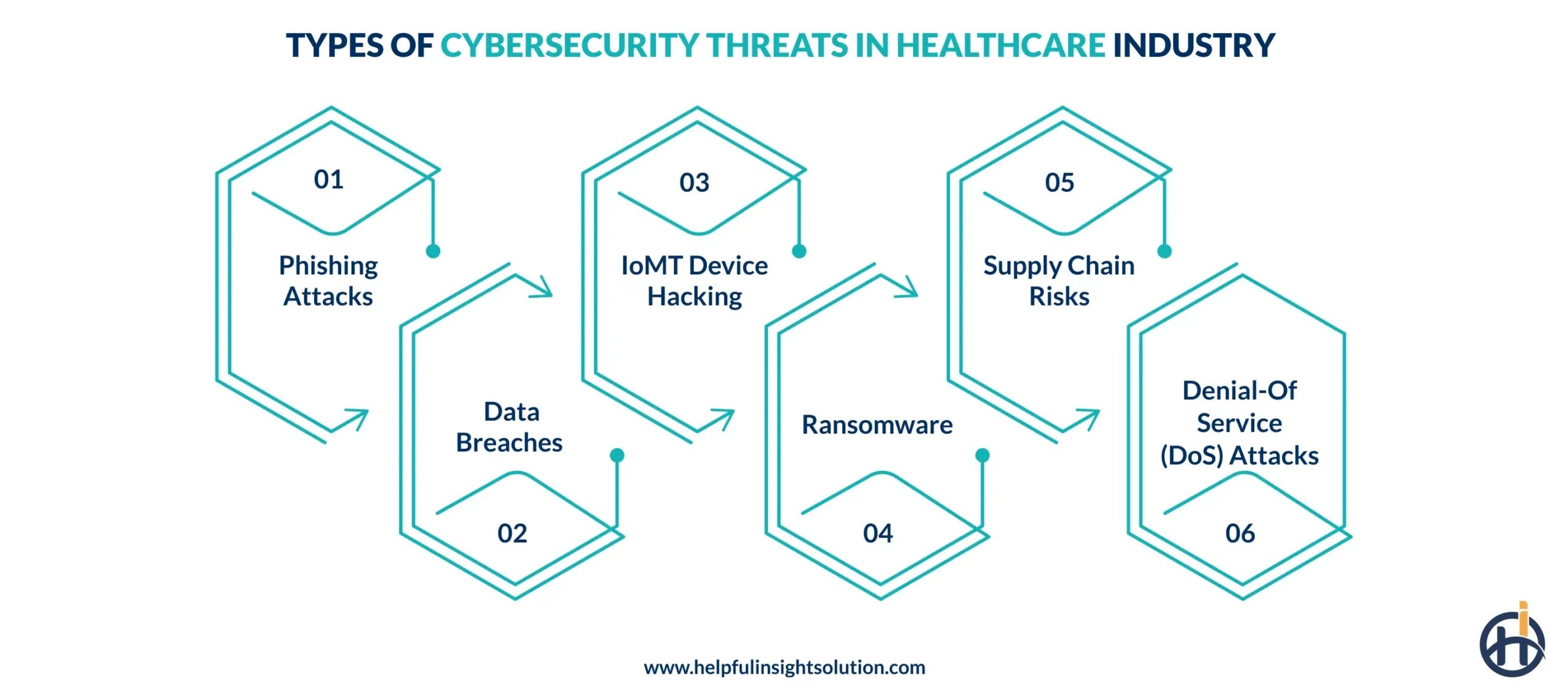
1. Phishing Attacks
Phishing is a type of scam where hackers send fake emails or messages that look real. They try to trick hospital staff into sharing passwords or clicking harmful links. If someone falls for it, hackers can enter the system easily. This can really put valuable patient data and hospital systems in danger.
2. Data Breaches
A data breach happens when someone steals or accesses patient information without permission. It usually happens because of weak security in systems. These breaches can harm patients’ privacy and also cause financial and legal problems for healthcare organizations. Therefore, data security in healthcare apps is essential.
3. IoMT Device Hacking
Many hospitals and clinics use smart medical devices connected to the internet, called “IoMT,” for managing equipment and remote patient monitoring. Cybercriminals can target these devices and may change how they work or use them to enter the hospital system. This can directly affect patient health and safety.
4. Ransomware
The Change Healthcare attack has shown us that ransomware is a very dangerous threat, as it caused widespread disruptions to US pharmacy services. It locks important data so no one can access it.
Then, hackers ask for money to unlock it. This can prevent doctors from viewing patient records, delay treatments, and even cancel surgeries.
5. Supply Chain Risks
Many healthcare providers depend on third-party companies for software services and medical supplies. If one of these vendors gets compromised, it can affect the entire network, as hackers usually target weaker systems. This can lead to data leaks, system performance issues, and problems in everyday operations.
6. Denial-of-Service (DoS) Attacks
Another cybersecurity risk in healthcare is DoS attacks, where hackers overload medical systems with too much traffic. Because of this, healthcare apps and systems stop working properly. Its impact is that patients may not be able to book appointments or access services.
Best Practices to Improve Healthcare Cybersecurity
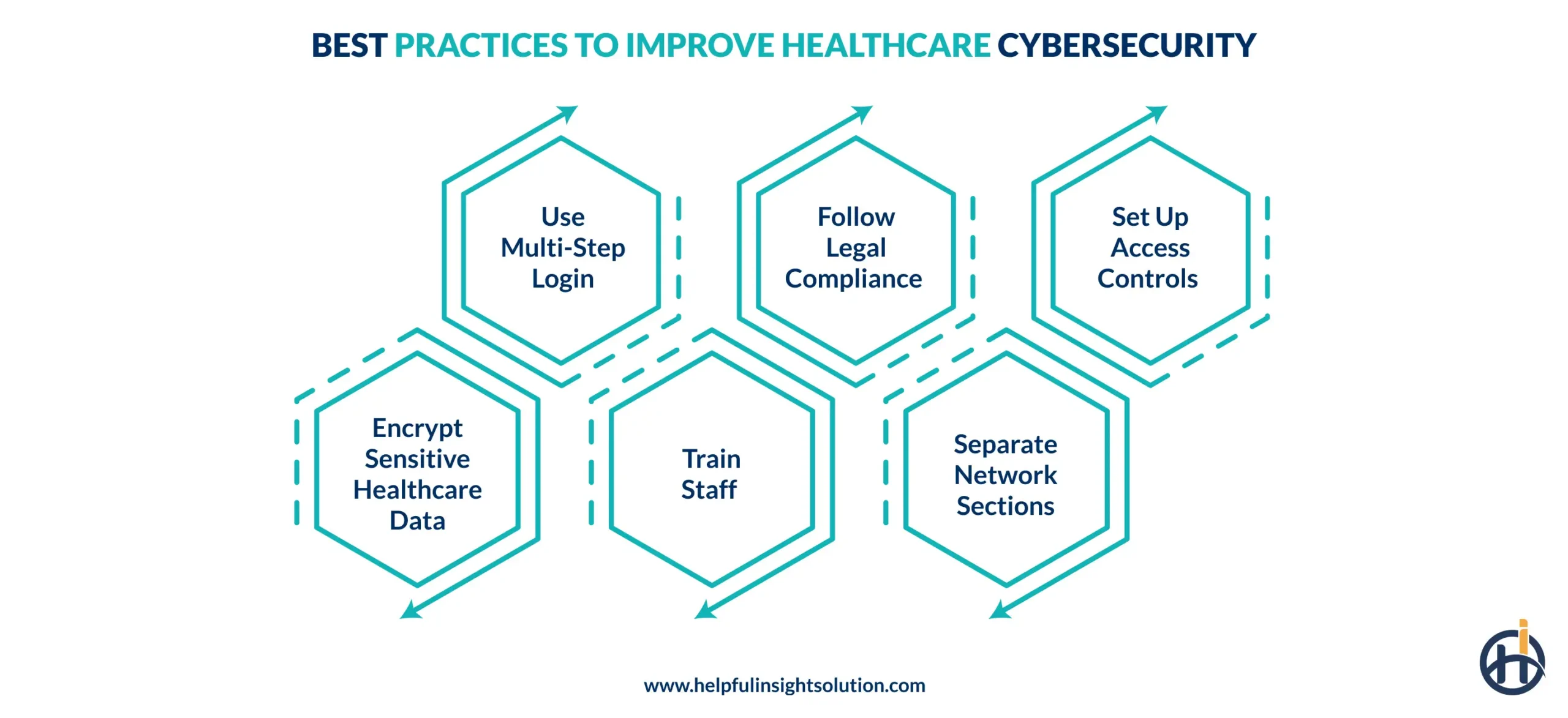
To strengthen cybersecurity in healthcare, it is crucial to follow some best practices which are:
1. Use Multi-Step Login
To add an extra layer of security, implement a multi-step login as it helps stop hackers from stealing passwords and keeps patient records safe, especially when systems are accessed remotely.
2. Follow Legal Compliance
Make sure you develop a HIPAA compliant app for the secure handling and storing of patient data. Also, organize timely and regular audits so that you can identify security gaps while confidently ensuring you meet all the current compliance requirements.
3. Set Up Access Controls
Only give people access to the data they truly need for their job. This helps stop mistakes and keeps patient information safe. Check access often and remove it when roles change. Use personal logins and track activity to know who is using data.
4. Encrypt Sensitive Healthcare Data
Encrypting sensitive patient data is a must-have and one of the best practices for data security in healthcare solutions. It turns data into a format that becomes unreadable for unauthorized personnel while ensuring the information remains confidential. 5.
5. Train Staff
Implementing cybersecurity solutions is not enough, but it is also important to train the staff on how to use them. Well-trained staff can stop many attacks early and become a strong line of defense instead of a weak point.
6. Separate Network Sections
Divide your network into smaller parts to limit damage. If one device is attacked, it cannot spread easily. Keep medical devices, office systems, and guest networks separate. This helps protect important systems and keeps everything more secure.
How to Implement Cybersecurity in Healthcare Systems?
Wondering how to deploy cybersecurity solutions in healthcare? Well, it requires following a versatile approach which involves:
1. Perform Risk Analysis
To begin, first identify the potential risks and threats in your existing system. Think about how these vulnerabilities could impact patients’ data, financial stability and everyday operations.
Use AI in healthcare solutions to identify weak spots and test your system. This helps you clearly understand risks and prepare before any real problem happens.
2. Create Framework
For securing medical devices and systems, it is important to establish clear cybersecurity policies. This will give clarity to staff and healthcare providers on how to handle data and respond to problems.
3. Invest in Best Technologies for Security
Make sure you invest in the best and most advanced technologies to safeguard healthcare data from cyberattacks. Right from antivirus systems, firewalls, cloud solutions to threat detection systems. Keep updating these technologies on a timely basis so that they are always ready to fight against threats.
4. Continuous Monitoring
Regularly monitor the healthcare software to check how it is performing. If any unusual activity is detected, investigate it immediately. Conduct timely audits to identify security gaps and technical errors, while keeping improving your cybersecurity policies.
Challenges in Healthcare Cybersecurity
Adopting cybersecurity in healthcare is not easy, it brings some hurdles that are important for care providers and software developers to understand.
| Challenge | The Impact | The Solution |
| Remote Access Gaps | Increased remote work like telemedicine services, expands the attack surface that provides hackers more entry points for cyber attacks. | Developers should add multi-factor authentication and organizations should give remote access to trusted devices only. |
| Integration with Legacy Systems | Many healthcare organizations use outdated systems that don’t support modern cybersecurity solutions which makes them an easy target for attacks. | Slowly update your legacy systems and make upgrades to areas first with high security risks. |
| High Implementation Cost | Implementing cybersecurity for healthcare providers is costly which hinders small hospitals or clinics from adopting cybersecurity solutions. | Start with small patches and backups. It is also a cost-effective way to outsource to managed security services. |
How Helpful Insight Can Help You Develop Robust Healthcare Cybersecurity Solutions
With rising cyber risks, healthcare organizations urgently need to strengthen their digital security and must think ahead to protect their systems before any attack takes place.
We are a trusted healthcare app development company that is well-versed in using the most advanced technologies like AI and machine learning to build powerful and secure healthcare cybersecurity solutions.
Our team has a strong understanding of compliance like HIPAA, which enables them to design solutions that ensure regulatory compliance and build user trust.
We understand the business requirements and then craft custom advanced cybersecurity strategies for healthcare apps and software that mitigate current risks while engineering a strong infrastructure for future challenges.
Get in touch with our team today to implement cybersecurity in your healthcare systems.
FAQs
Implementing cybersecurity and data security in healthcare apps can bring so many benefits which includes:
- Helps protect sensitive patient data
- Maintains patient trust and reputation
- Detects and stops threats early
- Prevents expensive ransomware attack losses
Data encryption, network security, access control, risk assessment and management are some the key components of healthcare cybersecurity.
Medical devices that hackers usually target include insulin pumps, diagnostic equipment, MRI images and pacemakers.
Healthcare providers should follow compliance like HIPAA, GDPR and HICP, ensuring patient data remains secure and protected from cyberattacks.