

“Handle long patient queues with digital waitlist management solutions.”
As different diseases and syndromes are rising rapidly, the demand for healthcare also increases. It is quite shocking to know that primary physicians in the USA handle 2000+ patients daily.
Additionally, the per-hour patient volume ranges from 3 to 5 in most clinics and hospitals. It is a worldwide issue that has forced investors to develop patient waitlist management software that streamlines healthcare management.
It helped a lot of medical centers to manage patients and increase work efficiency.
In this phase, modern technologies like AI play a crucial role in enhancing the hospital patient queue software features. Various automated scheduling systems help businesses to gather more users through personalized services and accurate predictions.
So, it is no longer a future innovation because of its excessive use in the development process of patient waitlist management systems.
You have a good opportunity to capture this healthcare segment and lead the market from the front. In this guide to building a waitlist management platform, you will see everything that is necessary for an investor. Let’s begin the journey and get what you are looking for.
Global Market of Patient Scheduling and Management
People across the globe suffer from various medical appointment queue management issues that lead to a heavy revenue loss and time consumption. Entrepreneurs need to understand this market scenario before investing in the healthcare app development and entering into this segment:
- The current patient management market value is $635.6 million in 2026, with North America having 34.1% market share.
- The growth rate is a 14.7% CAGR between 2026 and 2034, in which the overall revenue will increase to $1,905.9 million by the end of the tenure.
- Based on different types of scheduling applications, the calendar management platforms have 29.7% market share in 2026.
- The USA market will generate a revenue of $117.3 million in 2026, which will increase by 15% in the next decade.
- China is in second position, which is growing at a 17.4% CAGR and will reach $153.9 million by the end of 2030.
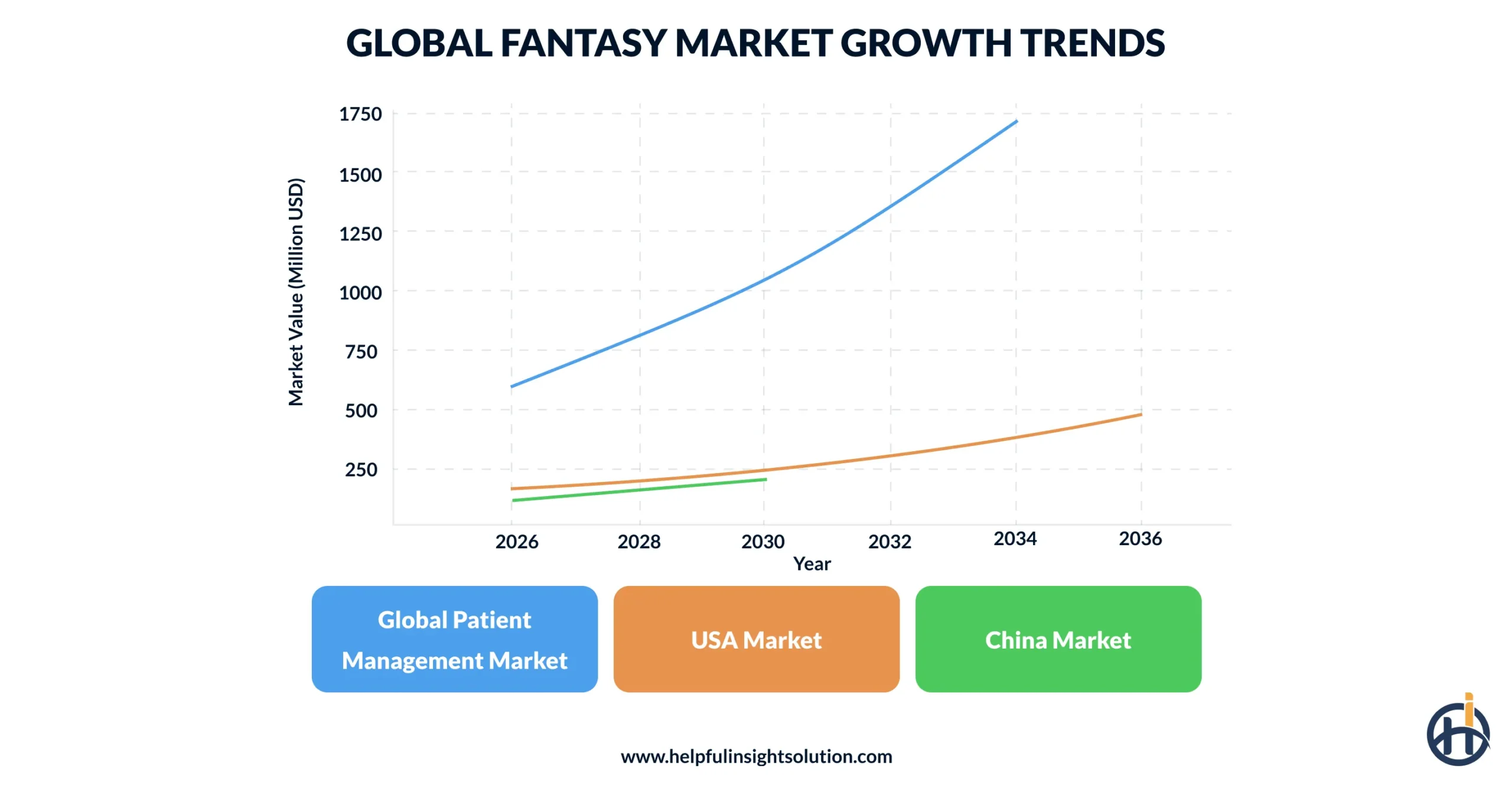
The medical queue scheduling software helps patients and doctors to easily manage appointments, increasing the overall healthcare efficiency. These market figures show the growth potential of this medical sector and opportunities for businesses.
What is Patient Waitlist Management Software?
A patient waitlist management system allows hospitals or clinics to easily manage their patients through different features. Some of them include queue management, appointment handling, check-in alerts, and rescheduling.
The medical scheduling software helps doctors to review patient lists, set availability, analyze the dashboard, and manage prescriptions. Additionally, it enables patients to select slots based on their preferences and cancel them anytime.
By developing patient flow management software, you can reduce waiting times, prevent delays, and enhance the overall healthcare experience. These platforms are compliant with standard regulations to ensure security and transparency.
- It can optimize appointment scheduling by automatically filling canceled slots.
- The software reduces waiting time by notifying patients at regular intervals.
- This platform improves clinical efficiency by managing patient queues and appointments.
Key Benefits of Developing a Patient Queue Management System
A business investor should build patient waitlist management software, as it can improve medical workflow and reduce delays. You can observe some of the major user advantages in this section:

1. Reduced Patient Waiting Time
A healthcare scheduling and waitlist solution reduces long waiting hours and enhances medical efficiency with real-time features. This ensures that patients get instant appointments, smooth scheduling services, and cancellation facilities.
2. Improved Hospital Workflow
A healthcare waitlist management system improves workflow for hospitals and clinics by easily handling patients through advanced and secure communication. The virtual health assistants analyze user appointment queries and provide instant answers.
3. Better Resource Utilization
An investor must use the right patient waitlist management software development services that help in selecting better resources for remote care. The doctors can easily monitor patients and provide accurate treatments through proper queue management.
4. Enhanced Patient Satisfaction
The digital waitlist system for clinics enhances patient satisfaction through smooth management features and rescheduling facilities. This increases trust and reliability in the healthcare services, improving the overall user retention rate.
Essential Features of Hospital Patient Queue Software
Let’s discuss the key features of patient waitlist systems that streamline healthcare efficiency and task management. They reduce long waiting times, enhance patient management, and ensure security:

1. Online Appointment Scheduling
A digital patient queue management solution helps in booking instant appointments, reducing delays. It allows hospitals to easily manage patient flow efficiently by allocating time slots based on availability.
2. Queue Monitoring
An automated patient queue management system enables hospitals to track the patient queue status. This feature helps to reduce waiting time and ensures smooth patient flow management for doctors.
3. Patient Check-In System
The AI patient waitlist management software provides self-service kiosks, mobile apps, or reception desks to patients. It automatically places them in the appropriate queue and updates their waiting status.
4. Doctor Availability Management
The patient waitlist management software for hospitals allows doctors to manage and schedule their appointments. It helps them to allocate patients based on doctor availability and medical workload.
5. SMS/Email Queue Notifications
A patient appointment queue system sends notifications about appointment time, queue position, or delays. This helps patients to get updated and reduces the overcrowding situation in waiting areas.
6. Multi-Department Queue Handling
You can create automated patient waitlist management software to manage queues for OPD, laboratory, and radiology departments. This ensures organized patient flow and better coordination between doctors.
7. Digital Queue Display
It is easy to view queue numbers and patient status on digital screens through a waitlist management solution. This improves transparency and helps patients to easily track appointments in real-time.
8. Patient Profile Management
Doctors can store and manage patient medical history and appointment records with an effective patient waitlist management system. This allows them to easily access patient data quickly for better remote care.
9. Analytics and Dashboard
The patient scheduling software helps to analyze patient flow and waiting times through a dashboard. Investors can use AI in healthcare to improve the overall operational efficiency and patient experience.
10. Hospital Management Systems (HMS)
It is beneficial to integrate the hospital waitlist tracking software with other systems, such as billing, records, and scheduling. This creates a unified platform that streamlines overall hospital management.
How to Create a Healthcare Waitlist Management System?
To develop patient waitlist management software, you should know about the complete process, from start to end. In this section, we will study the development stages that are generally accepted worldwide:

1. Start with Blueprint Planning
It is good for a business investor to start by developing a blueprint plan that include budget specifications, user demands, and business goals. To create patient waitlist management software you should know your target customers and necessary resources.
You must have a clear idea of what you want to deliver, such as instant appointment bookings, rescheduling, and slot management services.
2. Build App Prototype
The next phase is the development of mobile app prototypes through which you can easily choose necessary health scheduling featutres and tech stack. It helps you to easily reduce the cost to develop a patient waitlist management system.
For successful mobile app development, you need the best MVP models to implement the right resources and services at affordable prices.
3. Design User Interface
To target user interests, you should build an engaging design with smooth navigation, interactive menu bars, and quality animations. You can make patient waitlist management software by using wireframing tools like Figma that provide various elements for designing.
It is important to add features, like instant hospital search filters, current queue status, and personalized dashboards that can be easily viewed by patients.
4. Develop Backend Architecture
A backend is a crucial part of any software that provides responsiveness, secure communication, and big data storage services. Various APIs, cloud-based solutions, and database tools are used for patient waitlist management system integration and development.
Additionally, a runtime environment is used to install different packages that support real-time data sharing, medical record access, and seamless slot bookings.
5. Testing and Security
You can ask custom patient waitlist management software development company to test the platform through various methods to identify different errors. You should list these technical issues in a report to predict the right security measures and regulations.
Businesses should implement advanced encryption standards, user authorization, multi-factor authentication, and biometrics based on the testing results.
6. Launch & Updates
An entrepreneur should focus on deploying the healthcare scheduling platfrom at different public portals by adopting various marketing and branding techniques. You can develop a patient waitlist management system to provide feature updates, ensure security, and improve performance.
The software maintenace practices are important to avoid data breaches, enhance user experiences, and increase overall productivity with scalability.

Tech Stack Required for Patient Scheduling Software Development
For making an advanced clinic appointment management system for hospitals, you should use the latest tools and technologies. Businesses can hire app developers to implement the best tech stack, which includes different frontend, backend, and database tools.
You can also develop AI patient waitlist management software by integrating ML algorithms and data models. Here, we will understand a table listing different components and tools:
| Component | Tools/Technologies | Description |
| Frontend Development | React.js, Angular, Vue.js | Used to build responsive and interactive user interfaces for patients, doctors, and administrators. |
| Backend Development | Node.js, Django, Ruby on Rails, Laravel | Handles server-side logic, appointment processing, and system workflows. |
| Mobile App Development | Flutter, React Native, Swift, Kotlin | Enables cross-platform or native mobile apps for easy appointment scheduling on smartphones. |
| Database Management | MySQL, PostgreSQL, MongoDB | Stores patient records, doctor availability, appointments, and scheduling data securely. |
| Cloud Infrastructure | AWS, Google Cloud, Microsoft Azure | Provides scalable hosting, storage, and computing resources for healthcare platforms. |
| API Integration | REST APIs, GraphQL | Connects the scheduling software with EHR systems, payment gateways, and third-party healthcare services. |
| Authentication & Security | OAuth 2.0, JWT, SSL Encryption | Ensures secure login, role-based access control, and protection of sensitive patient data. |
| Notification Services | Twilio, Firebase Cloud Messaging, SendGrid | Sends appointment reminders, alerts, confirmations, and updates via SMS, push notifications, or email. |
| Calendar & Scheduling Engine | Google Calendar API, Cron Jobs | Manages real-time appointment slots, doctor availability, and automated scheduling workflows. |
| Analytics & Monitoring | Google Analytics, Mixpanel, Prometheus | Tracks system performance, user behavior, and operational metrics to improve service efficiency. |
What is the Cost to Develop Patient Waitlist Management Software?
The cost to develop patient waitlist management software is highly dependent on several market factors. These include the location or experience of development teams, project complexity, and developers’ hiring model.
If you want to estimate the right price, it is better to use a cost calculator that considers all parameters before calculation. The average patient waitlist management software development cost ranges from $10,000 to $70,000, which may increase due to additional requirements.
A few of the important cost-affecting factors are discussed in this section:
Software Complexity: You can build advanced management software with AI and other technologies, but the overall cost may rise due to the increased project complexity.
Experience of Developers: It is beneficial to hire senior developers for complete assistance and to ensure security, but they are expensive because of their experience levels.
Team Hiring Model: Businesses can hire skilled and professional freelancers, as they have a custom engagement model that is suitable for large-scale development.
Development Location: Various Western countries, like the USA and Canada, are more expensive than India because of their complex architecture and rigid app regulations.

Why Choose Helpful Insight to Build Patient Queue Management Software?
It is difficult for a business investor to create clinic queue management systems on its own because they require a lot of technical assistance and planning.
Here comes the role of an experienced and reliable partner who can ensure affordable development, problem resolution, and increased user engagement. We help businesses to deliver the best solutions to manage patients in real-time. Our facilities include:
- Cost-effectiveness: You can reduce the cost to build patient waitlist management software through various methods, like the MVP approach.
- Strong expertise: Our experts can help you to implement an interactive UI/UX design with a responsive backend to easily handle patient scheduling.
- Collaborative environment: We are always ready for suggestions and feedback that help in improving overall user experiences.
Entrepreneurs can trust our AI patient waitlist management software development process that is certified, agile, flexible, and scalable.
If you want to be successful in the healthcare industry by joining hands with modern innovations, then it is beneficial to create healthcare appointment optimization software. This enhances brand visibility, increases user reach, and ensures revenue growth.
FAQs
It is easy to use a patient management platform because it offers a simple interface and interactive features. Let’s understand the working steps of scheduling software in the following manner:
- Patients can request appointments through online portals or scheduling systems.
- The system forms a digital queue based on appointment time and priority rules.
- It provides real-time updates to patients about delays and rescheduled slots.
- Doctors can manage the queue through an integrated dashboard facility.
- The system regularly updates the queue and calls the next patient instantly.
Doctors, patients, and hospital staff in the USA use different types of appointment management software. Some of the best queue handling platforms are discussed as follows:
- Doctors, patients, and hospital staff in the USA use different types of appointment management software. Some of the best queue handling platforms are discussed as follows:
- Epic Systems: It offers advanced patient scheduling tools for large hospitals and networks.
- Athenahealth: This platform provides cloud-based scheduling with automated reminders.
- NextGen Healthcare: The software delivers integrated waitlist solutions for clinics and doctors.
: It offers advanced patient scheduling tools for large hospitals and networks.
- Athenahealth: This platform provides cloud-based scheduling with automated reminders.
- NextGen Healthcare: The software delivers integrated waitlist solutions for clinics and doctors.
The development time is dependent on different factors, like the app-building process, platform complexity, and budget requirements. The average timeline ranges from 2 months to more than 8 months based on the above factors. You can manage the overall duration by using agile methods and resource planning at the initial levels.
Artificial intelligence is among the most widely used technologies for managing patients and appointments. The key roles of AI in medical scheduling are explained in the following way:
- It predicts appointment cancellations and fills empty slots from the waitlist.
- AI prioritizes patients based on medical history and availability for faster care.
- The AI tools send notifications and optimize scheduling to reduce waiting times.
The software for patient waitlist management is compliant with standard HIPAA regulations that ensure data protection and remote access control. They use Business Associate Agreements (BAAs) to safeguard protected health information (PHI) and manage healthcare audits. Various solutions like NexHealth and WitingMed offer HIPAA compliance services.