

“Win the fitness race by developing Runkeeper-like apps.”
The fitness and wellness domain is not limited to weight management, diet planning, or mental health. It now provides GPS-enabled features, guided movement tracking, and AI-powered geoinformation in the form of a marathon training app like Runkeeper.
Earlier, the metrics used to track marathons or cross-country races were manual boards and record books that were difficult to handle. These personal fitness tracker platforms have made this task easier for athletes, improving efficiency and productivity.
Looking at this, businesses have started investing money to develop a fitness app like Runkeeper. Additionally, the user adoption increased to 74% in the USA, encouraging startups and big enterprises on a larger scale.
For successful Runkeeper clone app development, you must know various things like cost, features, and the process. We will start our blog by first understanding the current market situation and knowing the importance of this segment. So, tighten your seatbelt and come along with us on this journey.
Worldwide Market of Fitness Tracking Apps
The market for training and fitness monitoring apps has experienced a sudden rise in the past five years due to increased user demand. Further, it will expand more, allowing entrepreneurs to develop an app like Runkeeper for revenue growth and improved ROI:
- The current revenue of the smart fitness market is $9.2 billion in 2026, with a user penetration rate of 12.6% in the same year.
- By the end of 2030, the overall revenue will reach $9.9 billion at a growth rate of 7.8% CAGR between 2026 and 2030.
- The user penetration rate will increase to 13.3% by the end of the tenure, with a total ARPU of $22.6 across the globe.
- Among different countries, the USA is expected to generate a maximum revenue of $2.8 billion in 2026, which will rise to $3.1 billion by 2030.
- More than 52% of people in the world use smart devices to track running activities, which will rise to 65% by 2032.
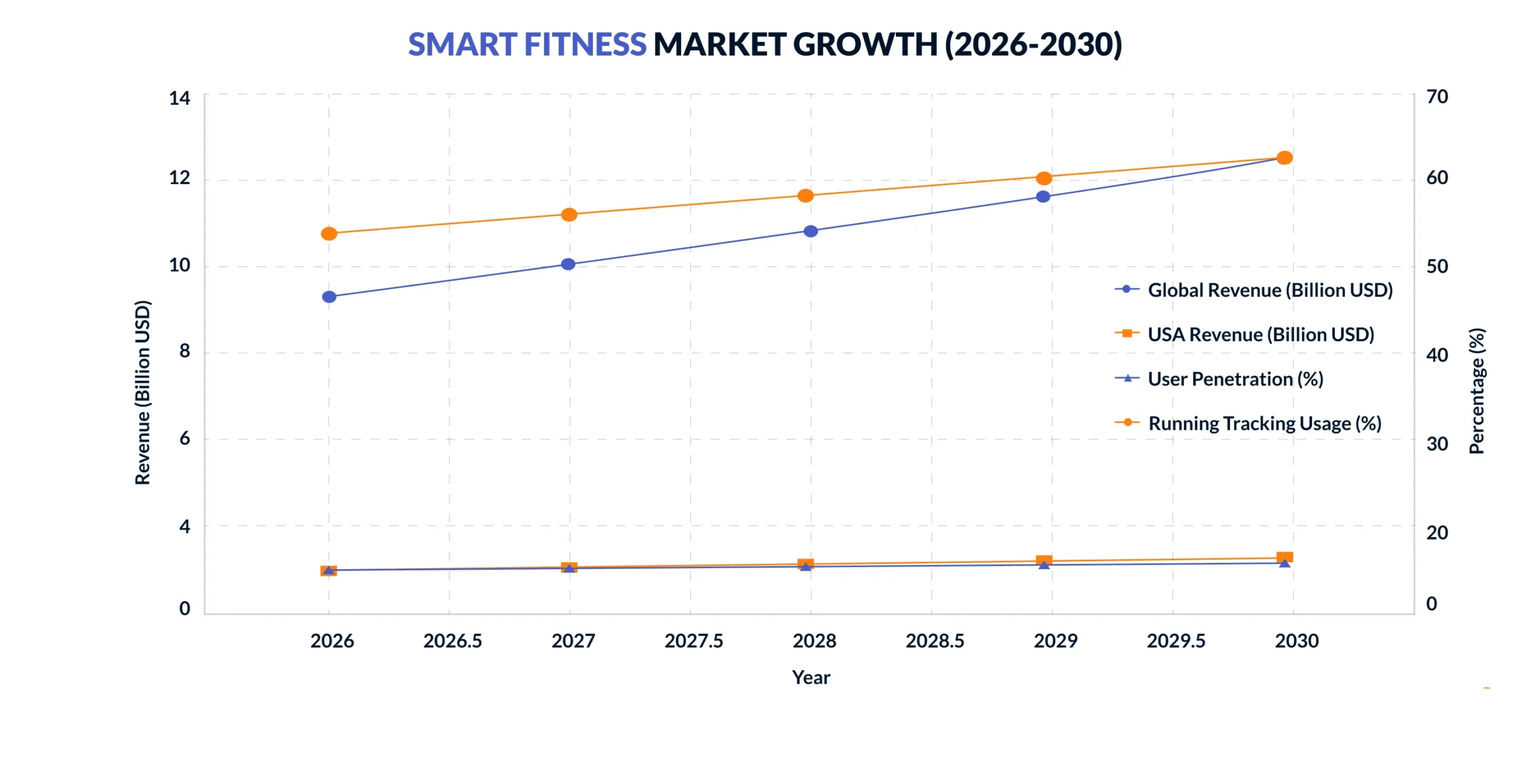
For Runkeeper-like application development, these market figures act as a fuel that powers business expansion. You can easily build an app like MyFitnessPal or Runkeeper by understanding user preferences and expected industry demands.
What is Runkeeper and How Does it Work?
Among various run tracking applications, Runkeeper is the best platform that provides guided workout features, running challenges, and a shoe tracker. It was launched in 2008 and then acquired by ASICS, a popular shoe brand, in 2016.
Additionally, it also provides live tracking, indoor facilities, and integrated apps or devices for a better fitness experience. It is an AI-powered fitness app that uses third-party services to deliver automated running plans, predictive reports, and personalized workout features. This makes it a suitable choice for athletes and sports enthusiasts.
The working process of an app similar to Runkeeper is very simple because of a smooth interface and easy-to-use features. Let’s have a look at the following steps to clearly understand:
- The Runkeeper app first allows users to create an account by entering their details, like name, fitness goals, height, weight, and other important information.
- This distance and pace tracker platform uses GPS tracking to monitor distance, speed, route, and workout duration, allowing users to make well-planned decisions.
- It can record fitness data such as calories burned, steps, elevation, and heart rate by integrating with smartphone sensors and wearables.
- The app provides personalized training plans and goal-based programs tailored to the user’s fitness level and objectives.
- Runkeeper stores workout history in the cloud, allowing users to track progress, analyze performance trends, and share achievements.
Benefits of Developing Apps Like Runkeeper
If you are looking to build a fitness app like Runkeeper, then it is crucial to know what business benefits it provides. We are discussing some of the major advantages, like growth and user reliability, in this section:
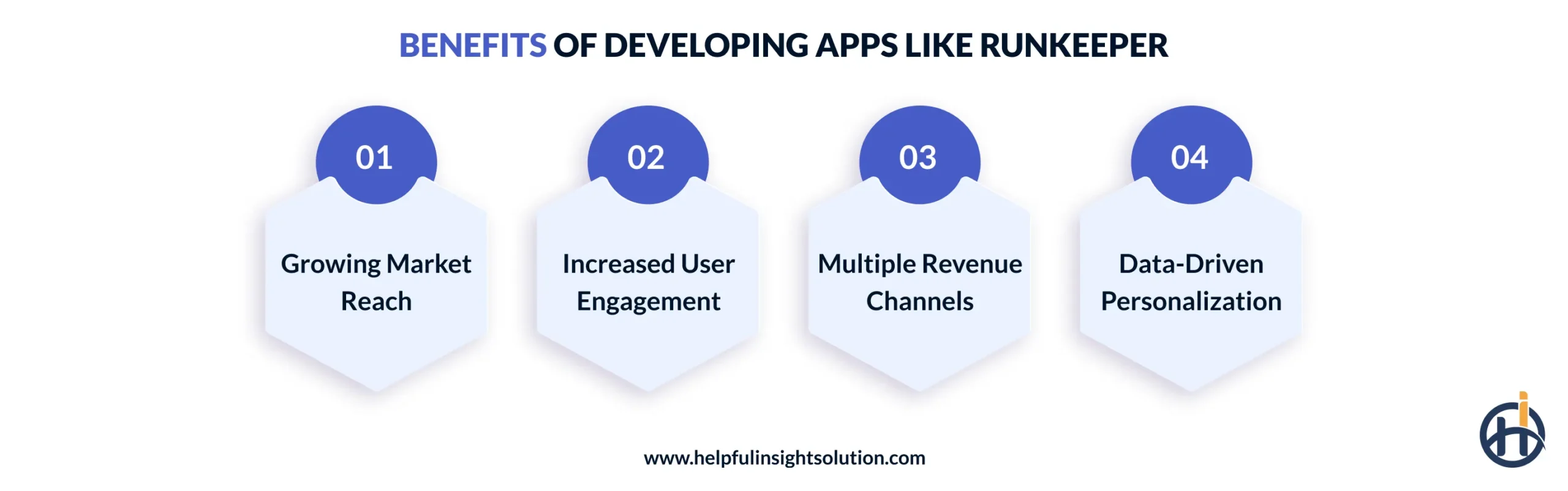
1. Growing Market Reach
The workout and step tracking apps help businesses to reach multiple athletes and sports organizers at a global level. For example, a fitness app like Fitbit is popular among different groups of people because of its intuitive features.
2. Increased User Engagement
It is beneficial to develop running apps like Runkeeper because you can increase user engagement and retention through interactive app design. Additionally, businesses can make this app the best choice for all fitness activities, like running, for users.
3. Multiple Revenue Channels
An entrepreneur should develop a running app similar to Runkeeper, as it helps to generate profitable income through various strategies. These include subscriptions, in-app purchases, advertising, and more, which target a large audience in less time.
4. Data-Driven Personalization
You can increase user experience by using their data, such as weight, height, running goals, and health vitals for personalization. For this, businesses need to integrate custom Runkeeper app development services with dynamic databases and cloud APIs.
Exciting Features of Running Apps Similar to Runkeeper
A fitness and workout tracking app similar to Runkeeper provides multiple features that help to attract customers. They enhance personal wellness, improve decision-making, and reduce overload.
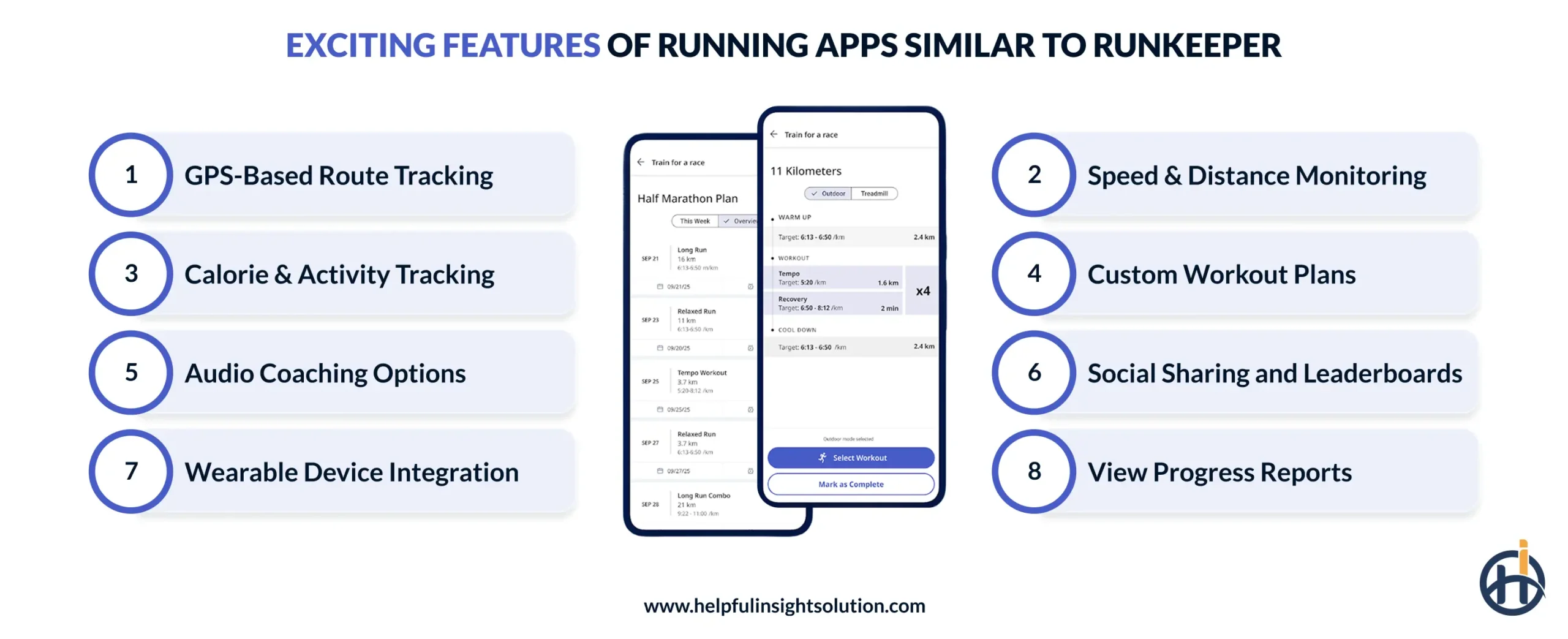
1. GPS-Based Route Tracking
A GPS tracking fitness app allows users to map their running paths in real time with high accuracy. It helps runners analyze terrain, elevation, and route history for better performance planning.
2. Speed & Distance Monitoring
This feature in a Runkeeper-like application tracks speed and total distance covered during each run. Additionally, it provides real-time metrics that help users maintain consistency and improve endurance.
3. Calorie & Activity Tracking
A walk tracking app like Runkeeper estimates energy burned based on distance, pace, and user profile data. It also monitors overall activity levels to support various fitness and weight management goals.
4. Custom Workout Plans
A fitness app like Nike Training Club offers personalized training schedules based on fitness levels and goals. Users can follow structured programs for weight loss, stamina building, or marathon preparation.
5. Audio Coaching Options
A run-tracker app like Runkeeper uses audio coaching to provide voice guidance during workouts. It delivers pace updates, motivation, and performance insights without interrupting the running experience.
6. Social Sharing and Leaderboards
This feature enables users to share achievements and routes with friends on social media platforms. Some popular fitness tracking tools like Runkeeper, provide leaderboards with rankings and performance.
7. Wearable Device Integration
It is easy to connect the running application with smartwatches and fitness bands. Additionally, it ensures seamless tracking of heart rate, steps, and workout data across devices.
8. View Progress Reports
An outdoor running app provides detailed progress reports with running history and performance trends. This feature helps to see visual charts and summaries, allowing users to track improvements.
Smart Features of Runkeeper-Like Applications
Businesses can create an app like Runkeeper with smart AI and IoT features that increase overall user experiences. These functionalities include device integration, advanced analytics, and predictive behavior.
1. Personalized Training Plans
A health & fitness app monitors fitness level, goals, and performance history to create workout schedules. The use of AI in fitness ensures steady progress and reduces the risk of injury.
2. Geographic Insights
Various jogging and fitness tracker apps use GPS data to track routes, elevation, terrain, and distance. Users can easily analyze their performance based on location and discover popular running paths.
3. Daily Milestone Tracking
A running tracker app like Runkeeper tracks steps, distance, calories burned, and workout duration. It motivates users through daily goals, fitness programs, and progress reports with exciting rewards.
4. Heart Rate Monitoring
This feature integrates with wearable devices to track pulse rate during workouts and exercises. Many sports and running tracker apps help users to improve their endurance and maintain safety.
5. Predictive Performance Analytics
A running application like Runkeeper uses workout data and AI algorithms to forecast future trends. It provides valuable information to enhance training efficiency and achieve fitness goals faster.
Read Also: CRM for Fitness Industry: Benefits, Features, and Best CRM Softwares
How to Build a Running App Like Runkeeper?
Are you ready to develop a fitness app like Runkeeper? Here, we will study a certified development process that is accepted worldwide by developers, covering design, integration, and maintenance.
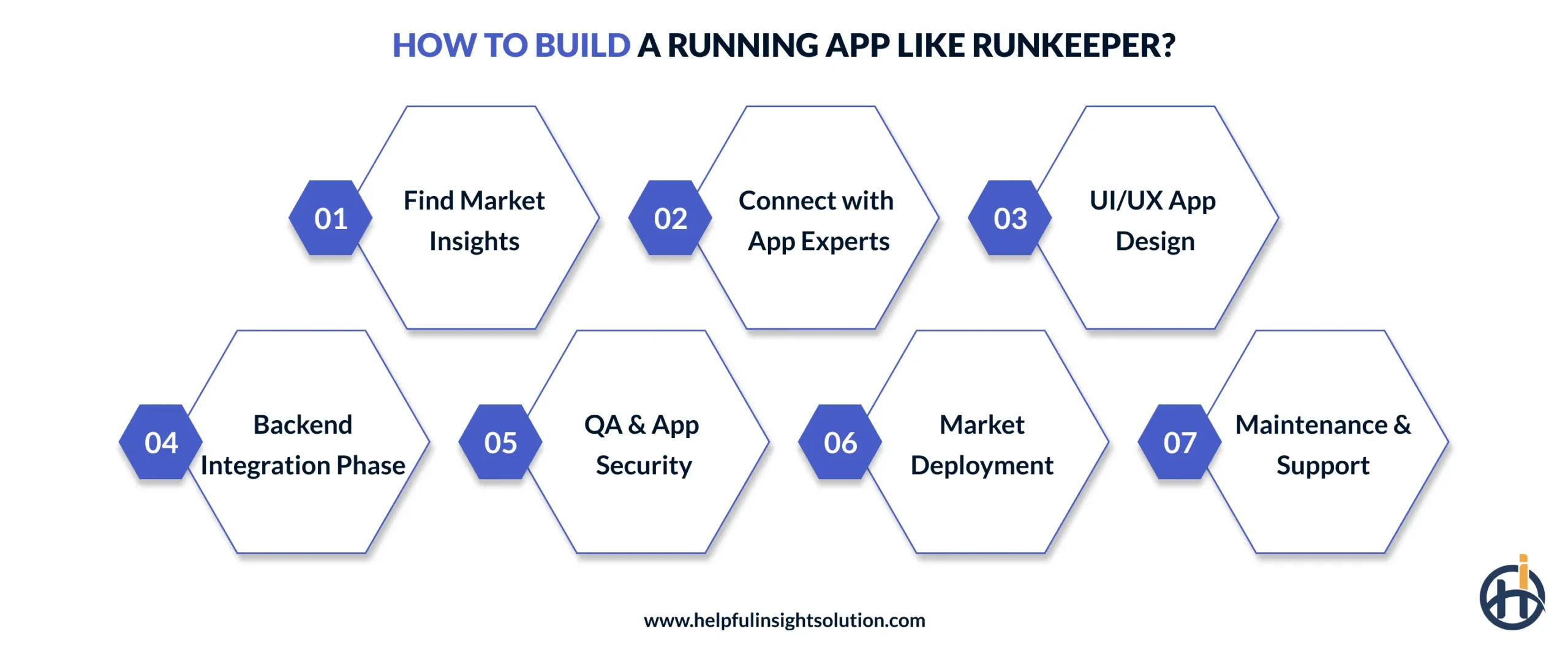
1. Find Market Insights
A business investor should understand the current market situation, leading fitness trends, and user concerns. To build a fitness app like Runkeeper, it has to know various running events, race event organizers, sporting brands, and key requirements.
It is good to prepare a prototype that lists important features, budget restrictions, and design specifications before moving forward in the app-making process.
2. Connect with App Experts
Once you have created the MVP model, it’s time to approach a leading mobile app development company and hire skilled experts. They help you to select the right tools and technologies to make an app like Runkeeper with advanced functionalities.
Additionally, they also provide different business models, a tour guide for all services, and an estimated cost for the complete project based on modern standards.
3. UI/UX App Design
If you want to create a Runkeeper app replica, it is crucial to study the user interface design, app navigation, and frontend features. In this stage, wireframing is the most important task that helps businesses to build intuitive designs with interactive panels.
For this, Figma is the most common tool that provides various elements and visual effects to design the mobile app interface with complete feature accessibility.
4. Backend Integration Phase
The next step is the integration of different backend services like databases, dynamic or static APIs, and cloud-based solutions with the user interface. A Runkeeper app development company helps you to easily understand the working of server logic through data communication.
You must be aware of various backend technologies like Node.js, which is a runtime module, MongoDB for database, and AWS or Azure for big data storage.
5. QA & App Security
It is a crucial phase in the development process where QA experts perform different testing methods to detect bugs, backdoors, and other potential technical risks. According to their findings, they provide various security or encryption standards, like MFA, OAuth 2.0, and user authorization.
This can influence the cost to create a fitness app like Runkeeper because it requires additional resources to find errors, create a sophisticated report, and implement solutions.
6. Market Deployment
Businesses should build a run-tracker app like Runkeeper and list it on different platforms so Android and iOS users can download and use it easily. It is crucial to ensure app store optimization with market standards so you do not face any difficulty in reaching millions of people.
In this case, beta testing helps you to easily understand user feedback through early access and provide them advanced version updates in the form of a fully accessible fitness app.
7. Maintenance & Support
Mobile app maintenance is the last stage in the development of an app like Runkeeper, where feature enhancements and security checks are the important tasks. They help to improve the overall user experience, platform lifecycle, privacy, and reliability.
You can hire experts to manage both frontend and backend frameworks to enhance existing features, increase user trust, and reduce operational costs.
Top Alternatives to Runkeeper
Runkeeper is not only in the race, but there are also several other physical activity tracking apps available for users. These Runkeeper alternatives may provide some common or more advanced UI/UX design features that interact with the athletes easily.
In this section, we will look at the following table, which shows the top 10 apps like Runkeeper in the market:
| Top 10 Runkeeper Alternatives | Supported Devices | Downloads | Ratings |
| Strava | Android & iOS | 100M+ | 4.7 |
| adidas Running | Android & iOS | 50M+ | 4.6 |
| Nike Run Club | Android & iOS | 50M+ | 4.5 |
| GPS Run Tracker | Android & iOS | 10M+ | 4.8 |
| Relive | Android & iOS | 10M+ | 4.6 |
| Sports Tracker | Android & iOS | 10M+ | 4.1 |
| Running & Jogging | Android & iOS | 5M+ | 4.5 |
| FITAPP | Android & iOS | 5M+ | 4.1 |
| Runna | Android & iOS | 1M+ | 4.7 |
| PUMATRAC | Android & iOS | 1M+ | 4.5 |
What is the Cost to Develop a Fitness App Like Runkeeper?
The cost to develop a fitness app like Runkeeper is a variable factor and is dependent on several parameters, like location, complexity, and the experience of developers. The average Runkeeper app development cost lies between $10,000 and $70,000, which can increase more due to increasing market demands.
For example, if you choose the iOS platform over Android to develop apps for a single user base, then the rates are high. The price can be reduced by using hybrid frameworks that help you to target a large number of customers with quality services.
To get a better idea, you can use our cost calculator, which helps you to understand this concept and predict estimated rates over a number of market parameters.
The cost to build an app like Runkeeper also varies according to development stages, third-party integration, and white-label solutions. You can easily balance your investments through different cost-reducing methods and revenue models.
How to Generate Revenue from Runkeeper-Like Running Apps?
You can implement various revenue models, like subscription or advertising, to balance the cost to make a fitness app like Runkeeper. In this section, we are discussing some important money-making techniques:
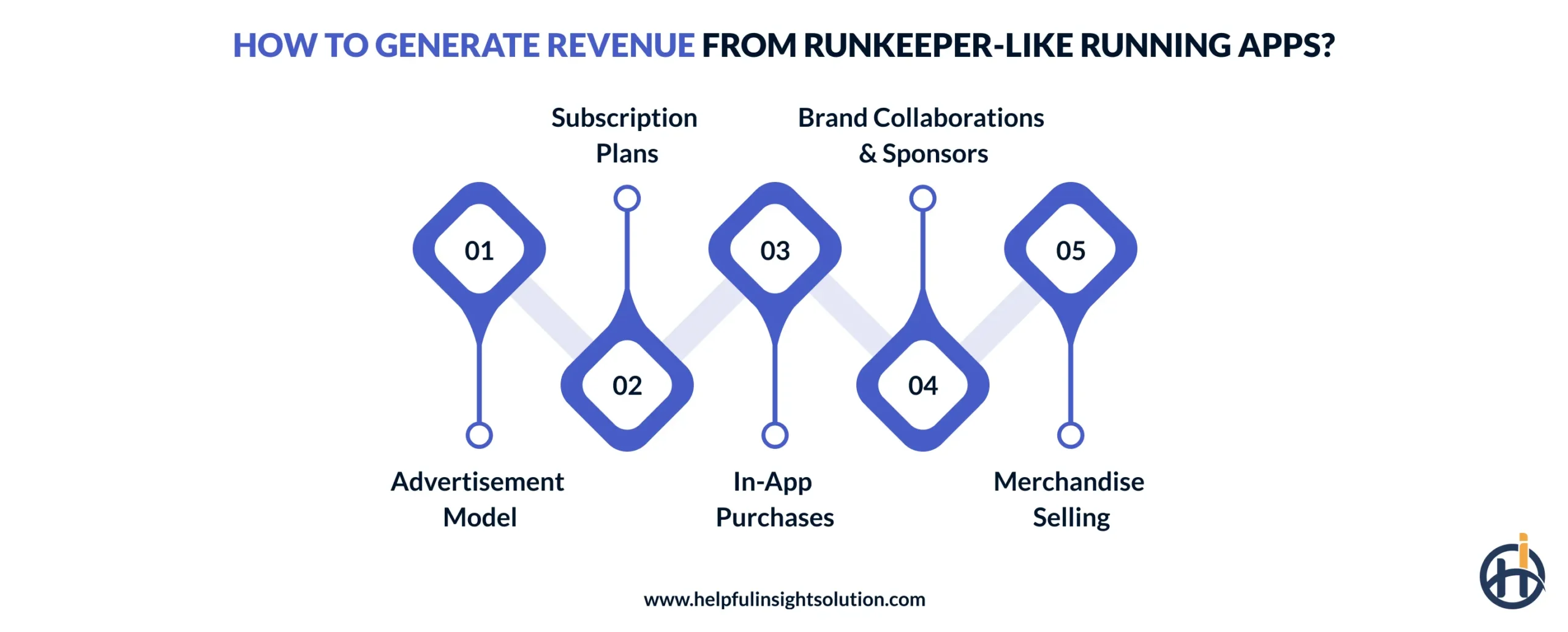
1. Advertisement Model
This revenue model is widely used for revenue generation and profit-making in various exercise and performance tracking apps. Businesses can run wellness ad campaigns and post fitness banners for different brands that promote sports.
2. Subscription Plans
You can create a mobile application similar to Runkeeper and allow users to become members by subscribing through various plans. These schemes include monthly, annual, or lifetime models, which are based on user preferences and choices.
3. In-App Purchases
Users can buy online credits, like getting more workout points, unlocking long distances, and viewing expert guidance videos. Investors should develop a fitness app like Runkeeper with gamified features that promote revenue through the in-app purchasing model.
4. Brand Collaborations & Sponsors
Businesses can collaborate with different brands to sponsor running events, such as marathons, and provide rewards within a step counter app. You can hire app developers to integrate APIs that generate alerts for different races and jogging programs.
5. Merchandise Selling
By using this model, an entrepreneur allows users to order different products, like shoes, trousers, protein supplements, and other amenities. So, it is highly recommended to build a fitness app similar to Runkeeper with brand merchandising.
Why Choose Helpful Insight for Runkeeper App Development?
Before concluding our blog, let’s discuss some important facts that will help you to easily create a fitness app like Runkeeper. Initially, you must approach an experienced and reliable partner who can understand business needs and budget requirements.
We provide access to different business models, app prototypes, and tech stacks, so entrepreneurs can easily manage the cost to build a fitness app. Additionally, our dedicated developers focus on standard protocols to ensure security at every level.
The services are selective and based on business goals, enhancing the overall product efficiency. You can deploy popular fitness tracking tools in the market through our expert optimization strategies and methods.
After this, businesses can easily monitor user engagement and revenue growth. Finally, it is important to keep track of the challenges in the development process. This helps in finding proper solutions with effectiveness and leads to brand visibility.
FAQs
A business investor needs to know that it may take 2 months to 5 months to develop running apps with simple functionalities. The overall development time can increase to 8 months or more due to additional demands. The duration is dependent on various factors, such as the development process and budget requirements.
The average maintenance cost is 15-20% of the original development cost, which can be influenced by different parameters. If a project cost is $10,000, then the overall maintenance cost is between $1,500 and $2,000. The cost of maintenance depends on security checks, bug fixing, and feature updates.
Various fitness and workout training apps like Runkeeper provide advanced security features to safeguard user data. They use multi-factor authentication, biometrics, and other encryption standards for data security. This reduces data breaches, enhances communication, and improves authority.
Businesses can integrate artificial intelligence in apps like Runkeeper to personalize features, prevent fraud, and predict results. The integration process is discussed in the following manner:
- You should integrate AI-powered activity tracking and predictive analytics.
- It is crucial to use ML to analyze workout data and provide injury prevention alerts.
- You must implement chatbots for virtual coaching and progress feedback.
For developing smartly integrated Runkeeper-like apps, you must use an advanced tech stack. Some of the major technologies are described as follows:
- React Native: It is a cross-platform framework for both Android and iOS with a single codebase.
- Node.js: It can handle data processing, user authentication, and activity tracking.
- Google Maps API: This provides GPS tracking, route mapping, and distance calculation features.