


Have you heard someone say that they have completed 8,000 steps today? You might have if you are into fitness. Have you ever thought about how they are able to track their steps so accurately? Well, it’s all because of the pedometer and step counter app.
These apps are gaining immense popularity and are highly used by people of all age groups as they make it easy to keep track of how many steps you take throughout the day. This ultimately helps in managing overall well-being as users see their progress and make healthier lifestyle choices.
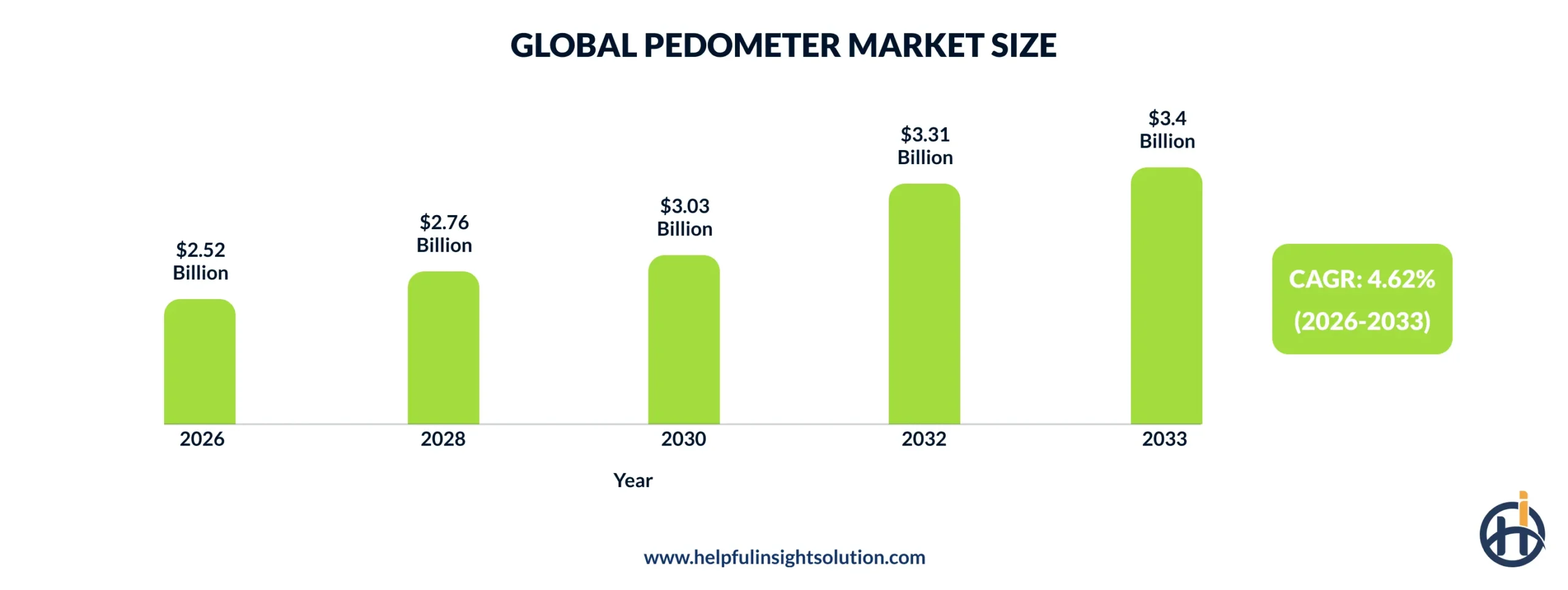
You will be amazed to know that the global pedometer market is predicted to reach $3.4 billion billion by 2033. For fitness brands and health tech startups, this shows a promising opportunity as these platforms continue to grow and have become essential tools for healthier living.
So, if you’re looking for a way to boost your brand’s presence and offer real value to your customers, developing a step counter app is a smart move. Want to know how to build a Pedometer and step counter app? Then keep reading this blog.
What is a Pedometer App?
Pedometer is a highly popular step counter app that counts how many steps you take each day. It uses a smartphone’s built-in sensors to track activities like walking distance and calories. You don’t need any extra devices as the Pedometer app works quietly in the background and shows the progress.
How Does it Work?
Using a pedometer app is very simple; just tap on the start button, and it will automatically start counting your steps, no matter where your phone is, in your hand, pocket, or bag. The best part is you don’t even need to have the screen on for it to work.
Top Reasons to Invest in Developing a Pedometer and Step Counter App
Confused about whether you should develop a pedometer step counter app or not? You definitely should, as it offers so many benefits. To clear your doubt, we will provide you with the top reasons why to create a step tracking app. Let’s have a look:
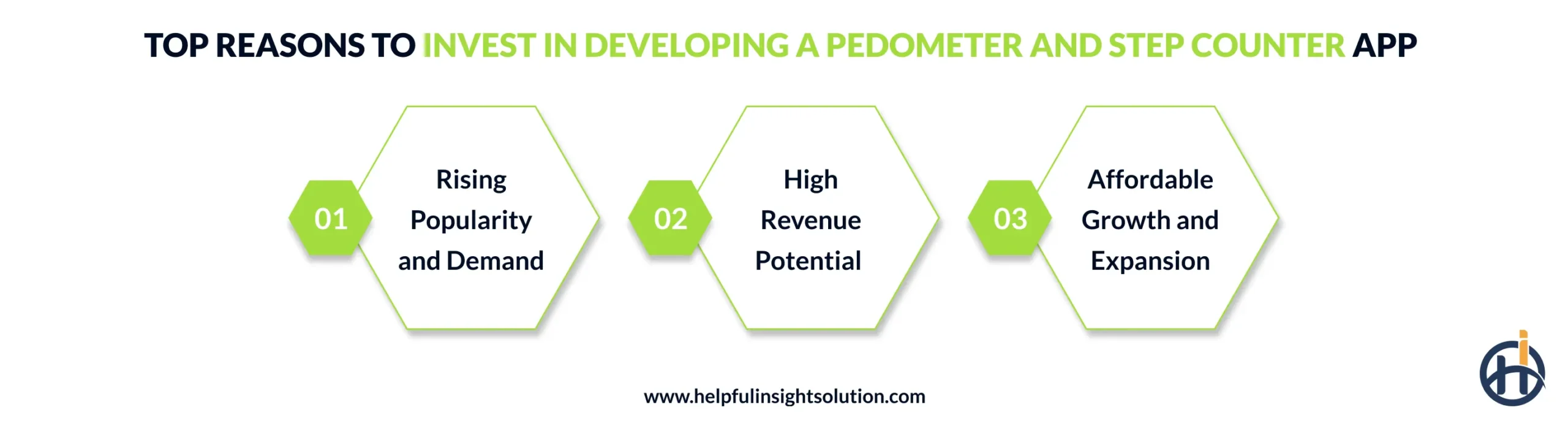
1. Rising Popularity and Demand
Nowadays, more people focus on keeping a record of how much they walk and the calories they burn, and step tracker apps have become their go-to tools for this. As a result, the demand for these apps is soaring.
Although the app store is filled with many fitness step counter apps, there is a lot of potential for new apps to succeed, as people are looking for innovative apps with exciting features beyond just step counting steps..
2. High Revenue Potential
If you want to boost your revenue base, then you should definitely build a Pedometer and step counter app. With a walking tracker step counter app, you have the opportunity to make money from diverse sources, reducing reliance on a single income stream.
You can generate revenue through subscriptions, in-app ads, brand partnerships, and more. This flexibility allows businesses to choose the monetization strategies that work best for them.
3. Affordable Growth and Expansion
Investing in a step and calorie counter app is a cost-effective way for your brand to grow. Unlike a physical fitness center, a mobile app can reach users worldwide with minimal additional costs. Since the app uses your phone’s built-in sensors, there’s no need for extra equipment.
This makes it possible to serve millions of users at once and expand your fitness brand without spending heavily on overhead costs.
Must-Have Features of a Step Tracker and Pedometer Application
Selecting the right features for a custom step counter app is paramount, as your app’s success depends on them. Great and helpful features will make the app highly loved by users; if it doesn’t have features that support their fitness goals, they will abandon your app.
We understand it is difficult to select the right features, so hiring dedicated developers will help you with feature selection.
| Feature | Description |
| Automatic Step Counting | This feature allows the pedometer app to automatically track steps without needing to start or stop, using phone sensors. |
| Goal Setting | It lets users set step goals for weekly or monthly targets, helping them stay active and reach their fitness goals. |
| Distance and Speed Tracker | This functionality allows app users to measure how far they walk or run and track their walking speed. |
| Calorie Burn Counter | Allow users to monitor and track calories burned based on their steps and activity level. |
| Manual Activity Log | Help users add steps manually for activities like walking or running that aren’t tracked automatically. |
| Offline Capability | An app to calculate steps should work without internet, saving data and syncing later when connected. |
| Wearable Integration | Ensures that the Pedometer walking app syncs with wearables like smartwatches to track steps directly from the device. |
| Activity History | It allows users to review past activity records, providing insights into their step count and fitness progress over time. |
Steps to Develop a Step Tracker Application
Are you planning to build a pedometer and step tracker app? As a business, you must have a basic understanding of what you can expect in the fitness app development process. Building a foot step counter app for Android and iOS requires following a step by step process, which includes:
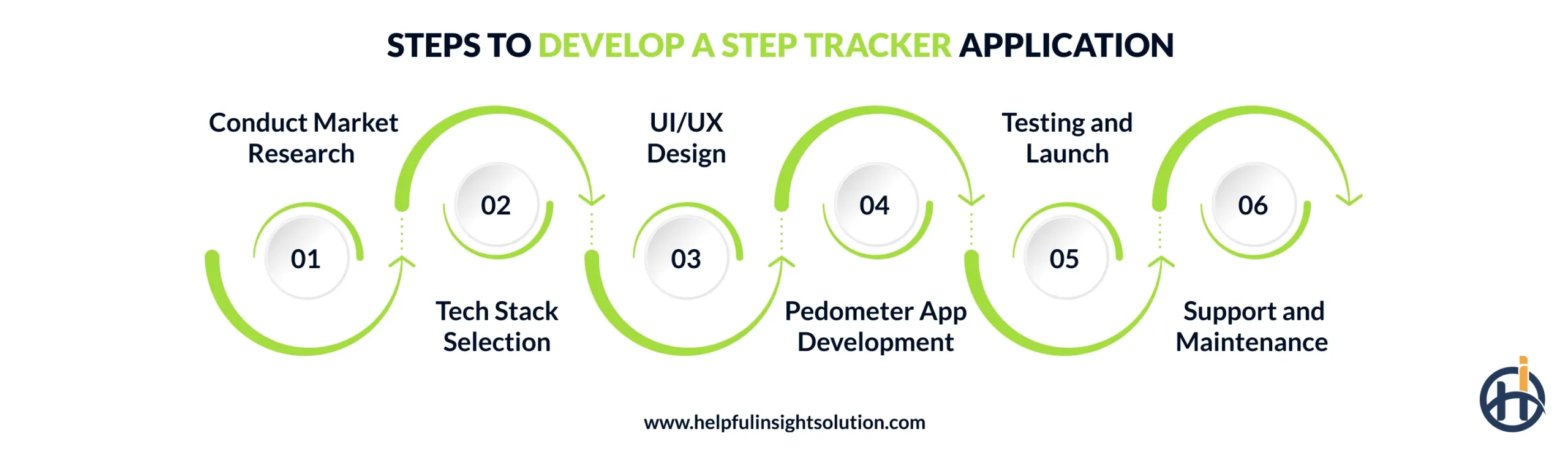
1. Conduct Market Research
First, you have to decide why you want to develop a fitness step counter app and for whom. To understand that you have to do research, identify market gaps, and check what is trending. Analyze competitor apps to see what they offer, how they succeed, why users like them and what features they offer. This way, you can also decide the features and business model.
2. Tech Stack Selection
The technology stack you choose to develop a fitness tracker app like Pedometer decides its security, reliability, and performance. So, picking the best tools and programming languages is vital. The tech stack of the real-time step tracking app includes:
| Aspect | Tools and Technologies |
| Frontend | React Native, Flutter, Swift, Kotlin |
| Backend | Python, Node.js, Ruby on Rails |
| Database | PostgreSQL, MongoDB |
| Cloud Service | AWS, Google Cloud, Microsoft Azure |
| Analytics and Tracking | Google Analytics, Firebase Analytics |
3. UI/UX Design
The UI/UX design team will start working on the user experience and user interface of the app. They will make sure the app is not only visually appealing but also easy to use across all devices.
Prototypes are also designed to test how the pedometer app is looking and functioning overall. Ensuring all the elements like logos, typography and graphics are coming together well.
4. Pedometer App Development
Fitness app development builds the frontend and backend of the step tracker app using the most advanced technologies. They will smoothly implement the features in the app and ensure it works properly.
To boost app capabilities, they will integrate machine learning, NLP and AI in fitness app. If required, third-party APIs are also designed.
5. Testing and Launch
App testers will thoroughly test the pedometer app to find bugs and glitches. If any are found, they are immediately fixed. Security and usability testing are also conducted, ensuring the app is secure and user-friendly. Once testing is done, you can deploy the app in the production environment.
6. Support and Maintenance
If you think the job is done after launch, then no, it’s just started. Carefully monitor what users say about the pedometer and step counter app. Do fixes as per their feedback and keep updating the platform with new features to keep users always engaged.
Cost to Create a Step Counter Mobile App
Understanding the cost to build a pedometer and step counter app is very crucial for entrepreneurs and investors. It helps ensure proper budgeting and allows you to know where your money is going.
The pedometer app development cost is influenced by a wide range of factors like app complexity, choice of platform, number of features, UI/UX design, API integrations and location of fitness app experts.
On average, building a step counter app MVP can cost between $12,000 and $60,000. For an advanced app with AI-powered features, the cost can range from $60,000 to $120,000 or more.
This is just an estimate; we can provide a more accurate quote once we understand your project requirements. You can also use our cost calculator for a quick estimate.
How to Generate Revenue from a Pedometer Step Counter App?
Now you know how to develop a pedometer app and what its cost is. But have you thought about how you are going to make money from fitness activity tracking apps? In the table below, let’s take a look at the monetization strategies for fitness apps similar to pedometer apps.
| Monetization Model | Description |
| Subscription Model | This model allows users to use basic version of the app but to access premium features they have to buy subscription plans (monthly or yearly). |
| In-App Advertising | The walking tracker and step counter app displays ads from other fitness or food brands. It earns money when users see ads or click them. |
| In-App Purchases | Users can buy extras inside the Pedometer app like themes and avatars. These items do not require a subscription and need only a one-time payment. |
| Affiliate Marketing | The app shares links to running shoes or fitness gear and when users buy through links, the app earns commission. |
Best Pedometer Apps in the Market
If you want to develop a personalized pedometer app for fitness, then you should definitely check out the top apps that dominate the market. Some of the popular step tracker apps are:
1. StepsApp Pedometer
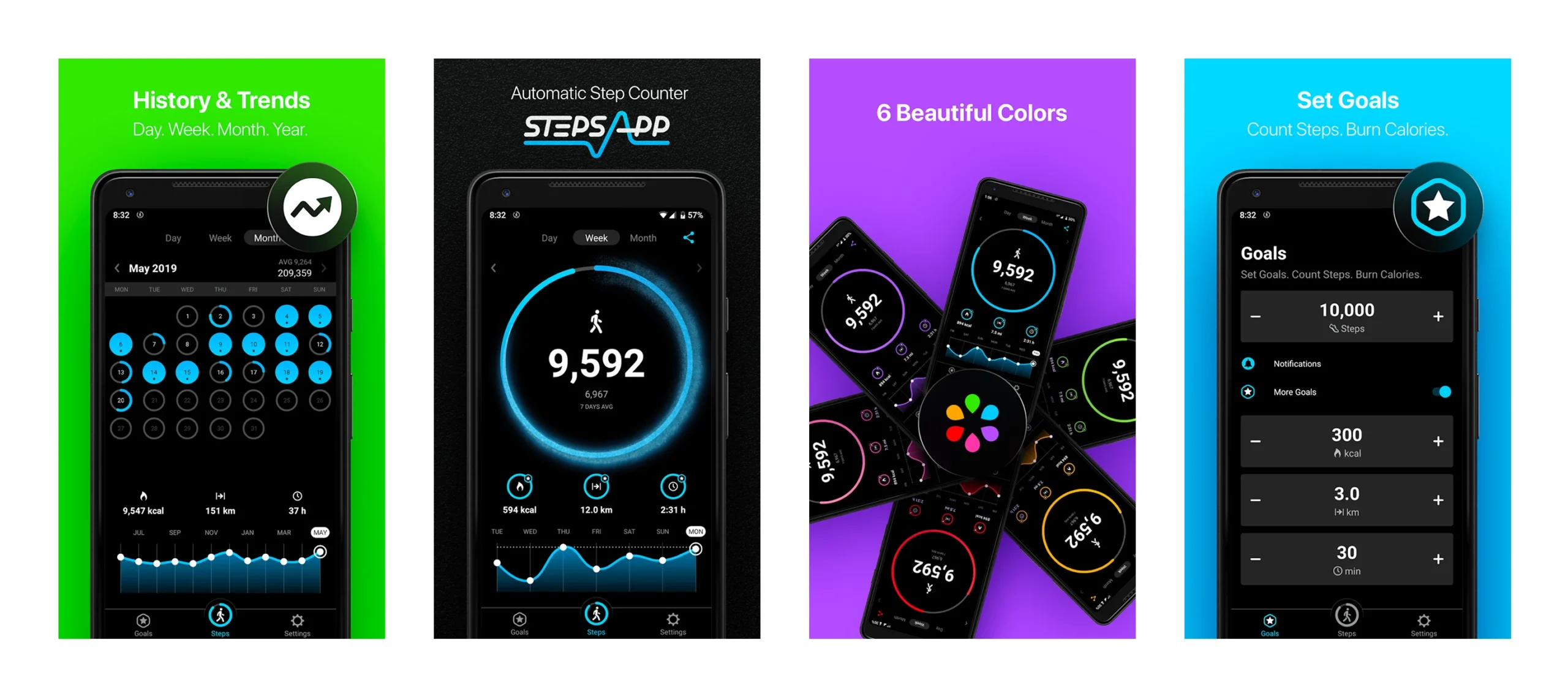
StepsApp Pedometer is an easy to use app that counts your daily steps using your phone. It also shows distance walked, calories burned, and floors climbed. Users can set daily step goals in the app and it works with many fitness devices. The app has 100+ million downloads and a 4.8-star rating.
2. Pacer Pedometer & Step Tracker
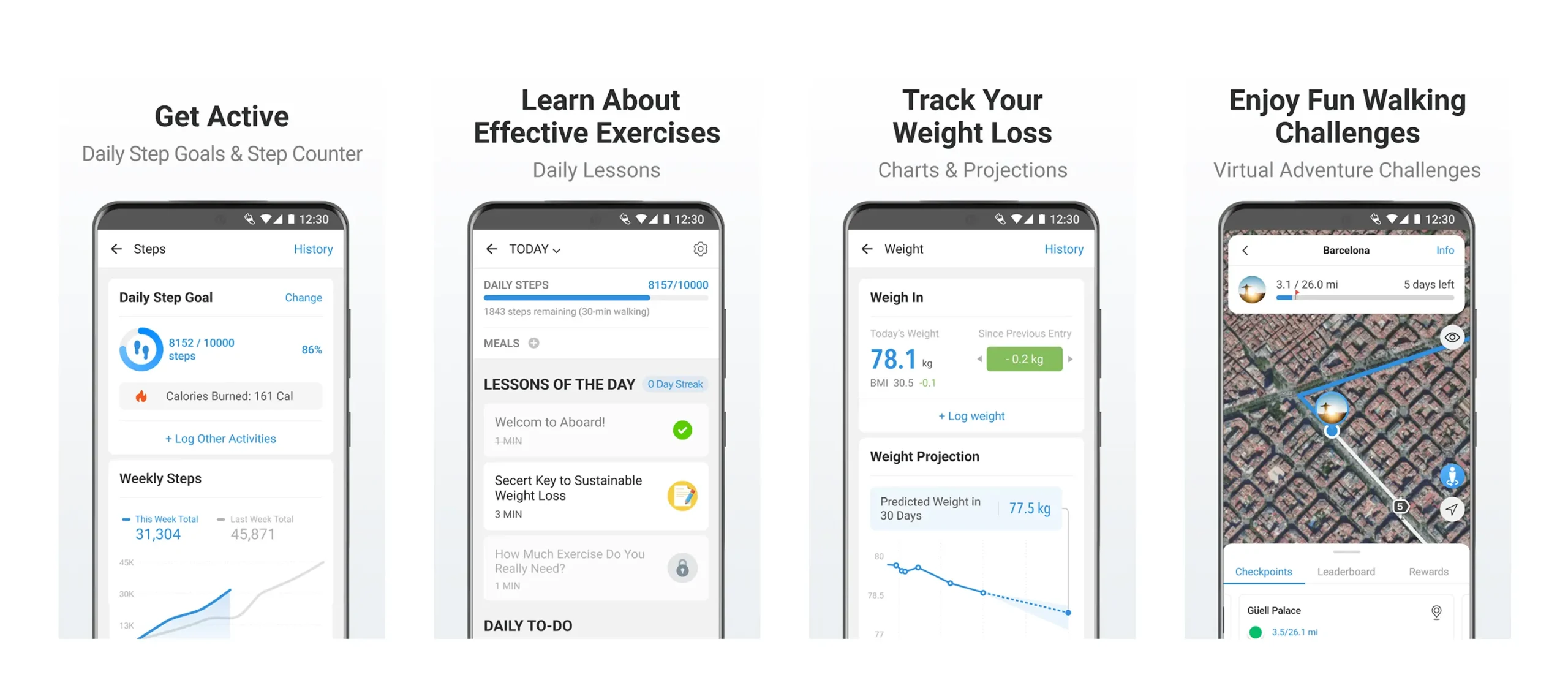
Pacer Pedometer and step tracker is another popular app for counting steps on iPhone and Android.. It tracks steps, walking distance, and calories burned The app also shows GPS walking routes and fitness plans. Pacer Pedometer app has over 1 crore downloads.
3. Accupedo Pedometer
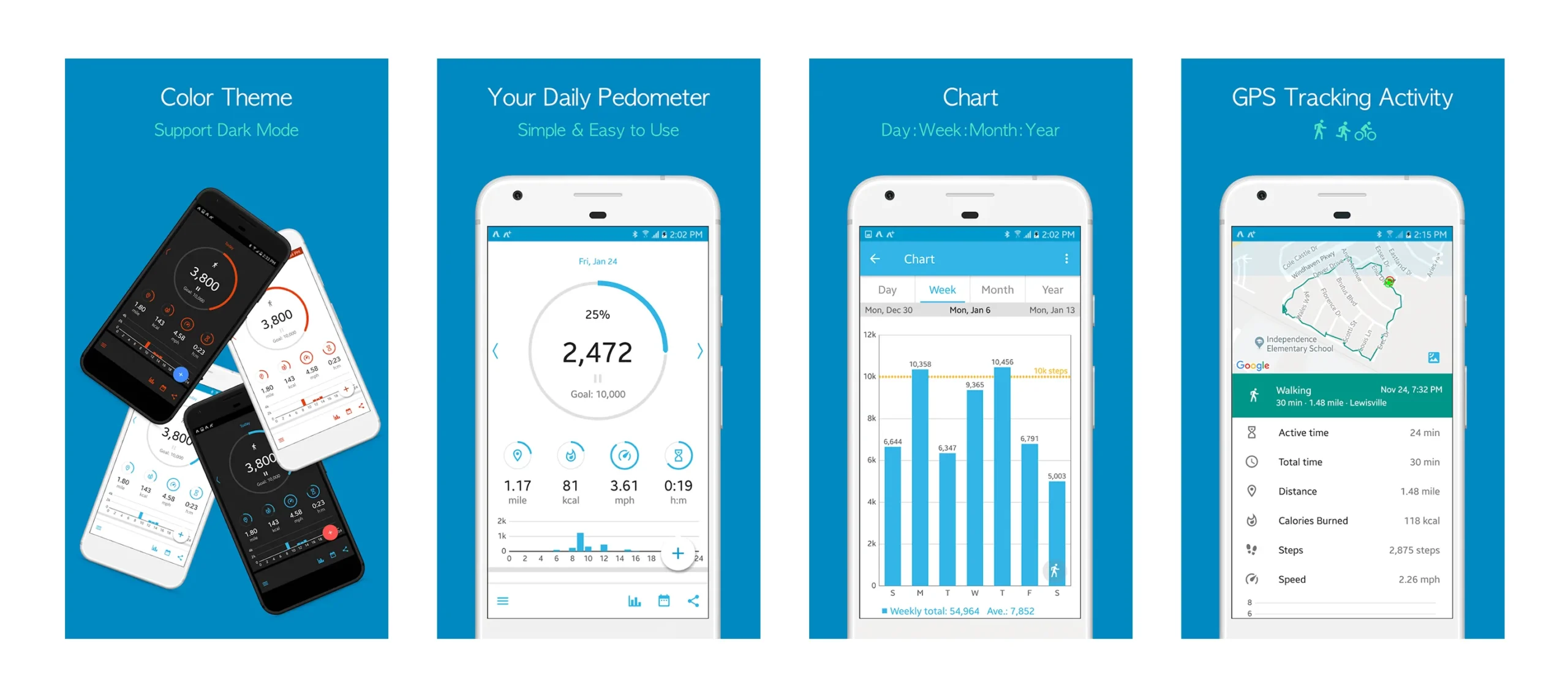
Accupedo is a smart steep counter mobile app that focuses only on real walking steps. Its 3D motion system ignores other movements, so results are more accurate. You can keep your phone in your pocket or bag and it still counts steps. The app has a 4.4 rating on Play Store and 4.7 on App Store.
Partner with Helpful Insight to Develop a Step Tracker and Calorie Counter App
Pedometer and step counter apps are very popular among fitness lovers because they make it easy to track steps. As more people use these apps, fitness businesses have a great chance to develop their own. That’s where we come in!

Helpful Insight is a top fitness app development company with experience in creating reliable, feature-packed pedometer apps. Our team has years of experience in building high-quality apps. We can even create a unique pedometer clone app for you.
It won’t be just a copy; we’ll design it with new, exciting features that will make your brand stand out and attract more users.
Connect with us to share your Pedometer step counter app idea.
FAQs
The timeline to create a pedometer and step counter app is affected by different variables such as project scope, platform choice, features and UI/UX design complexity, level of customization, and third-party integrations. On average, it can take around 3 to 10 months or more to build a Pedometer clone app.
To get accurate timeline details, please share your project details with us.
Yes, you can customize the Pedometer/step calorie counter app according to your needs and integrate the features and design of your choice.
Yes, the walking step counter app Pedometer can easily integrate with existing systems and platforms using APIs to share data between devices.
When developing a step tracker app, the following challenges may arise:
- Ensuring accurate step counting is a difficult task.
- Integrating with multiple devices and platforms.
- Creating a battery-efficient Pedometer app.
- Handling large amounts of user data.