

“Contribute to food management and donation with smart digital software.”
You have observed that most people consume excessive or unnecessary food that is often wasted when not eaten. It has now become a serious problem for the present society, leading to food shortages and environmental damage.
The idea to build food waste management software has opened wide doors for common citizens and NGOs to save food for needy persons. So, you must know how to build a food waste management app that can automate the saving of food.
According to the experts, 1/3 of the overall food is wasted daily, which can be managed through food waste management software development solutions. Business investors must focus on various methods through which they can prevent food wastage and improve the donation system. They should know about different topics before investing money in the development.
In this blog, we will see the reason for food wastage and why we need software for it. Additionally, you will understand the complete development process, including the cost to develop a food waste management app. So, let’s move further to explore deeply.
Food Waste: A Social Crisis
Food wastage has now become a social crisis as it is standing in its adverse stage, affecting millions of people worldwide. There is a need to develop smart food waste management solutions because the condition is highly vulnerable for both the people and the environment:
- According to UNEP, an international organization, more than 783 million people are suffering from adverse hunger.
- The report says that 8% to 10% of the wasted food is responsible for harmful greenhouse gases like CO₂ and others.
- The value was around $1 trillion in the previous financial year, which will rise to $2.3 trillion by the end of 2030.
- In 2025, the current food management market is $83 billion, which is growing at a 5.4% CAGR and will reach $106.7 billion by 2030.
- The USA has the highest market share of 32.6%, which is followed by European countries with a total fraction of 12.3% in 2025.
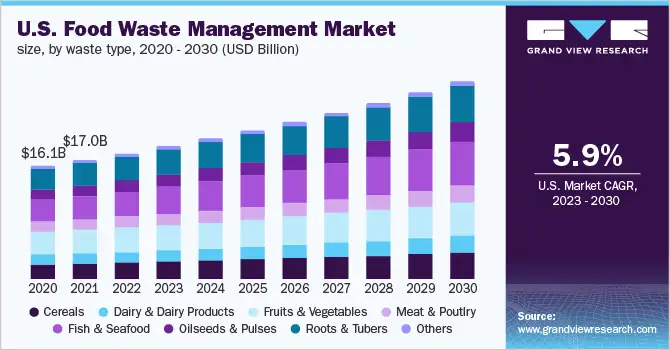
By looking at the above market figures, business investors must hire dedicated developers and start developing food management apps. This can help them resolve the food waste issue properly without disturbing the delivery services and the donation campaign.
How Can Software Manage Food Waste?
The wastage of food and grocery items can easily be managed through a successful food waste management app. Let’s focus on some interesting points that are crucial to know:
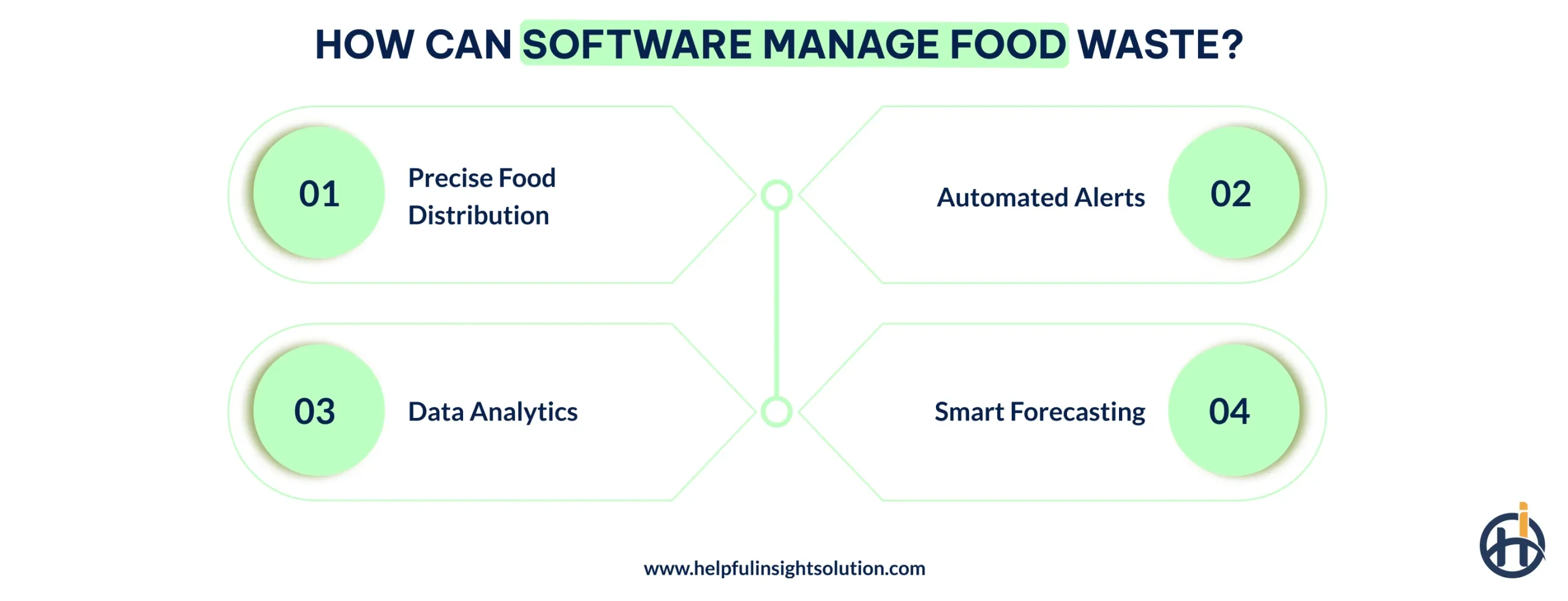
1. Precise Food Distribution
A popular food waste management app can track inventory and match supply with demand, ensuring precise food delivery. This reduces overstocking of food and minimizes the risk of waste.
2. Automated Alerts
Automated notifications can warn staff about expired or limited items, prompting timely action. This affects the cost of food waste management app development but ensures items are used efficiently.
3. Data Analytics
By analyzing consumption and waste trends, expert Laravel app developers identify inefficiencies in the supply chain. Businesses can make informed decisions to optimize inventory and reduce food loss.
4. Smart Forecasting
Advanced algorithms predict future demand based on historical data, seasonality, and trends. An app for food waste management helps prepare the right quantity of food, preventing overproduction and waste.
How Does Food Waste Management Software Work?
It is important to know the working mechanism of modern food waste management applications before development. In this section, we will look at the steps that are usually followed by users:

1. Collects Data
Food waste management software gathers data from multiple sources, such as POS systems, kitchen logs, and smart bins. This real-time data captures what food is wasted, when it occurs, and in what quantity.
2. Analyzes Waste Sources
An effective food waste management app processes collected data to identify patterns and key sources of food waste. It highlights problems like overproduction, spoilage, or plate waste to support management.
3. Provides Dashboard Reports
Interactive dashboards with UI/UX design solutions present waste insights through charts and graphs. These reports help managers quickly understand trends, costs, and improvement opportunities at a glance.
4. Keep System Records
The system securely stores historical data, reports, and compliance-related records for future reference. This ensures transparency, easy audits, and long-term tracking of waste reduction efforts.
5. Automates Actions
The food waste management and delivery app automates actions such as inventory alerts, portion control, and reorder adjustments. This reduces manual work while proactively minimizing food waste.
Types of Software for Food Waste Management
You can make food waste management software based on multiple types that are available for users. We are going to discuss major categories in this section to give you an idea of food management:
1. Inventory Management Systems
These systems help food businesses monitor stock levels, expiration dates, and storage conditions that reduce spoilage. It keeps accurate inventory data to prevent food waste and optimize purchase decisions.
2. Food Waste Tracking Tools
They record and analyze the amount of food discarded through patterns and sources. You can create a custom food waste management app to target waste reduction strategies and improve sustainability.
3. Donation & Redistribution Platforms
It connects food businesses with charities, food banks, or community programs to redistribute food. The E-commerce development services minimize waste, support social causes, and ensure safe consumption.
4. Supply Chain Optimization Software
This software improves the efficiency of food production and distribution to reduce loss. The mobile app development cost for food waste management apps may increase with prediction and optimization.
Role of AI in Food Waste Management
Advanced technologies, such as Artificial Intelligence, help automate various software for food waste management. This technology uses multiple components, like ML, NLP, and reinforcement learning, to predict the amount of food left.
Additionally, businesses must use AI Development Services that recommend the nearby centers or NGOs that collect these food items. It may affect the cost of a food waste management application, but it is important for delivering smarter solutions. So, to build food waste management software by using AI, you must be prepared with all the necessary resources.
- AI predicts demand accurately, helping businesses reduce overproduction and minimize food waste.
- AI-powered sensors monitor food quality in real time to detect spoilage early.
- Smart inventory systems use AI to optimize stock levels and prevent expired items.
- AI-driven sorting technologies improve recycling efficiency by identifying food and non-food waste.
- AI analytics help supply chains track waste patterns and implement better reduction strategies.
Necessary Features of a Food Waste Management Platform
The food waste management software offers multiple features, helping users manage left food items. You must include the following features in your platform to target a large number of people across the globe:
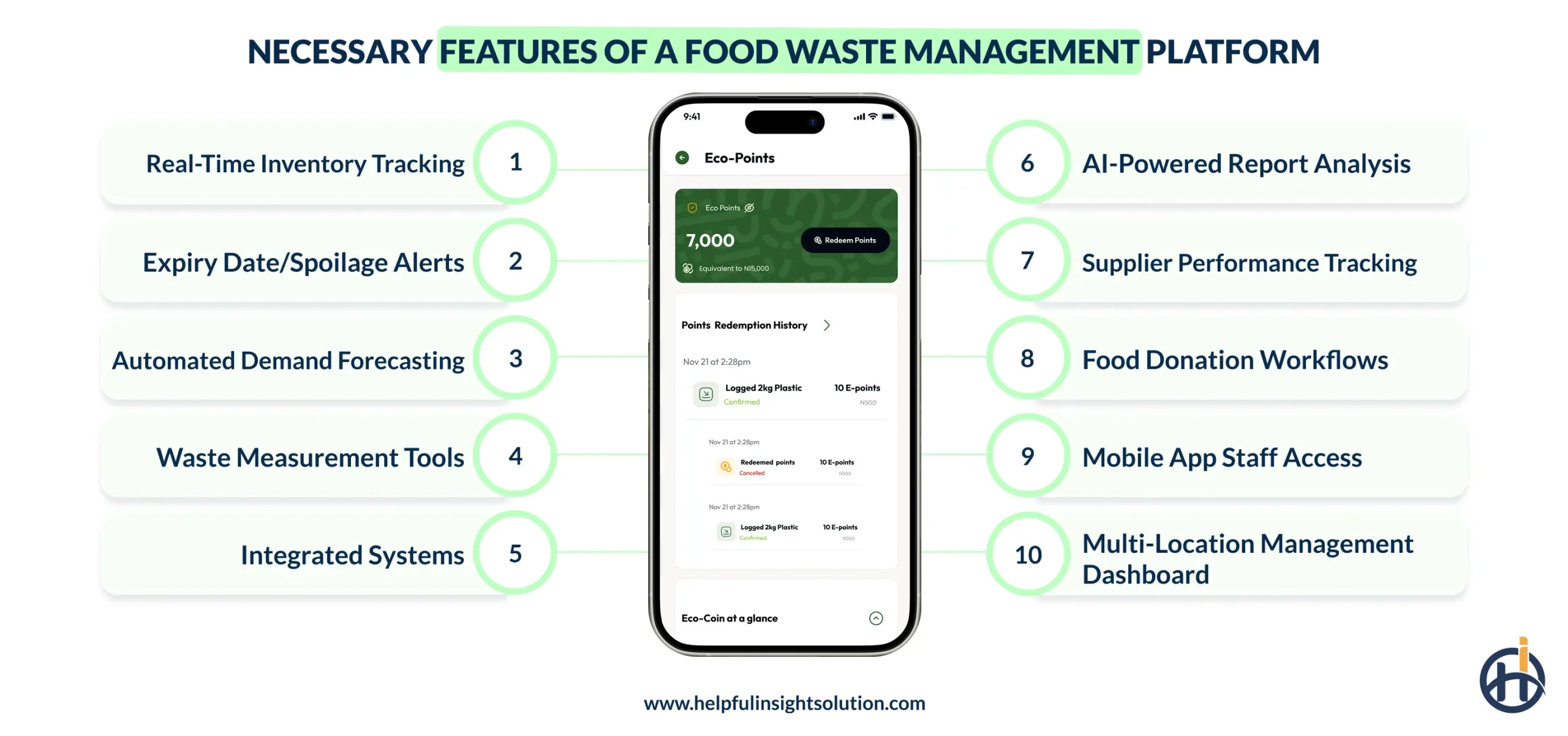
1. Real-Time Inventory Tracking
The app provides instant visibility into stock levels across all storage areas, helping teams make faster, data-driven decisions. It reduces overstocking and ensures ingredients are utilized before they degrade.
2. Expiry Date/Spoilage Alerts
Applications for food waste management automatically notify staff when items are nearing expiry or showing spoilage risk. This helps prioritize usage and significantly cuts preventable waste.
3. Automated Demand Forecasting
The food lending app uses historical data and AI to predict future consumption patterns. This ensures precise purchasing, reducing surplus inventory and associated waste.
4. Waste Measurement Tools
The food donation app captures detailed waste data through manual inputs, smart scales, or sensors. It helps identify patterns and inefficiencies to improve operational practices.
5. Integrated Systems
Apps seamlessly connect with POS, ERP, and kitchen management systems for unified data flow. The use of IoT app development services reduces manual effort and enhances decision-making accuracy.
6. AI-Powered Report Analysis
These apps generate intelligent insights from food waste, sales, and inventory data. They provide quick and precise recommendations to optimize production and reduce losses.
7. Supplier Performance Tracking
A well-planned food waste management app monitors supplier quality, delivery timeliness, and wastage impact. It helps businesses select reliable partners and improve overall supply chain efficiency.
8. Food Donation Workflows
The software streamlines the process of identifying excess food and coordinating donations to NGOs. It ensures safe handling, compliance, and timely redistribution of food items.
9. Mobile App Staff Access
A global food waste management app allows staff to log waste, check inventory, and receive alerts on the go. It increases operational agility, accuracy, and real-time responsiveness.
10. Multi-Location Management Dashboard
Various food waste management apps gather data from all branches into one centralized dashboard. They enable top-level managers to compare performance, track waste trends, and enforce consistent standards.
How to Create Software for Food Waste Management?
For a business investor, it is mandatory to know an effective and affordable process to develop food waste management software. We will discover the generally used development stages in this section:
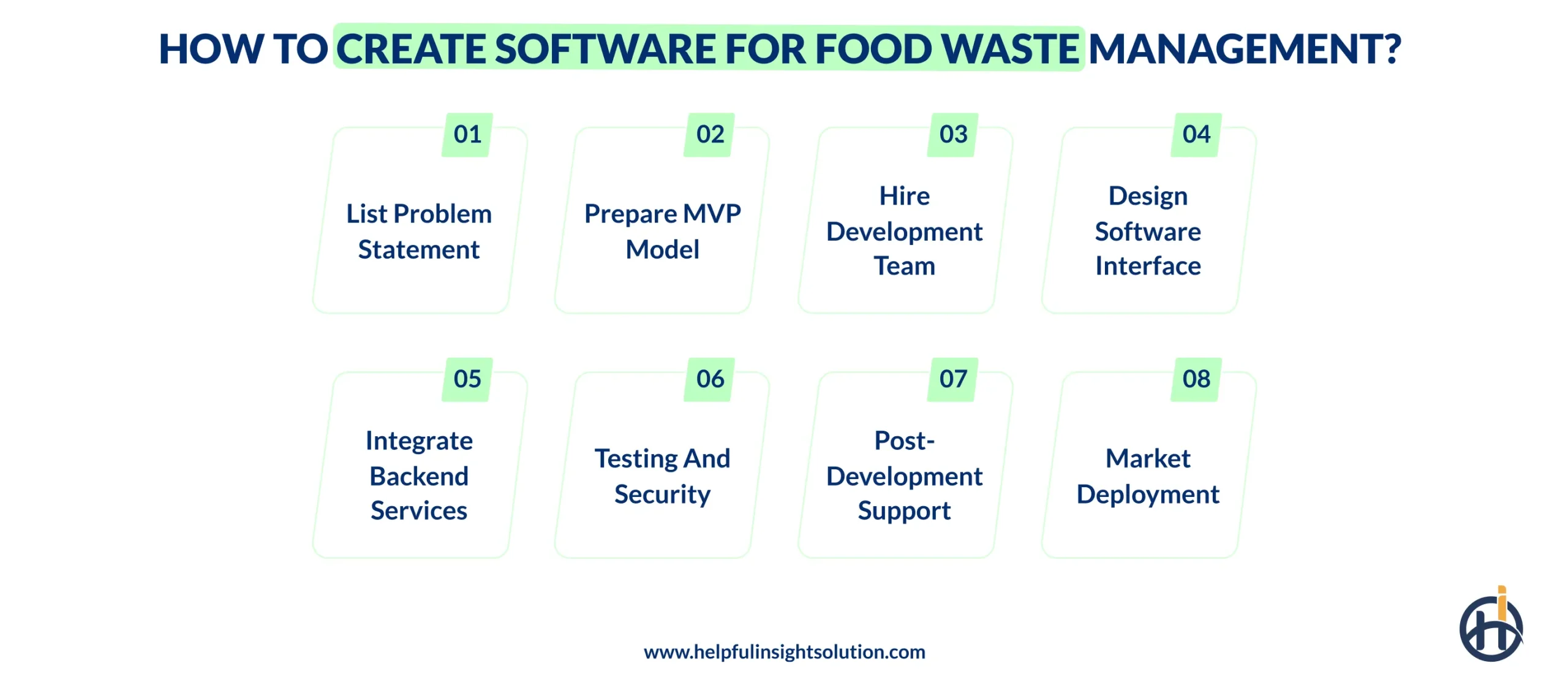
1. List Problem Statement
Defining the problem statement is the first step to build food waste management software. It involves identifying issues such as supply chain inefficiencies, excess inventory, or lack of data visibility.
This step helps you understand user pain points based on restaurants, households, or enterprises. A well-structured problem statement guides all future development decisions.
2. Prepare MVP Model
Before you know how to develop a food waste management app, create an MVP to validate your idea with essential features. It allows you to test core functionalities like waste tracking, inventory alerts, or donation management.
The MVP ensures faster development, lower cost, and early user feedback. It forms the foundation for future enhancements before scaling the app.
3. Hire Development Team
Choosing the right full-stack development company determines the software’s quality and success. Select developers experienced in mobile app and web development, IoT, AI, or analytics, depending on your goals.
Ensure the team understands food industry workflows and compliance requirements. A well-aligned team accelerates delivery and improves product outcomes.
4. Design Software Interface
You must create food waste management software with an attractively designed user interface that focuses on a clean, intuitive, and user-friendly UI/UX.
It should simplify tasks like logging waste data, tracking inventory, or generating sustainability reports. Prioritize easy navigation, responsive design, and accessibility for smart use. A smooth interface boosts user adoption and long-term engagement.
5. Integrate Backend Services
Backend integration connects the app with databases, APIs, analytics engines, and automation systems. A food waste management software development company ensures smooth data flow for food waste tracking. Scalable backend architecture also supports features like AI predictions and real-time monitoring. Reliable backend services keep the system fast, secure, and efficient.
6. Testing and Security
Testing ensures the software runs smoothly across devices, operating systems, and use cases. Conduct functional, performance, and usability testing to detect issues early. Strong security measures like encryption, secure API communication, and role-based access control protect sensitive data. This step increases the development cost of a food waste management app but ensures reliability.
7. Post-Development Support
Post-development support keeps your food waste management software updated and efficient. It includes bug fixes, performance upgrades, and feature enhancements. Continuous monitoring prevents downtime and improves user satisfaction. Ongoing support ensures the software remains competitive and aligned with industry needs.
8. Market Deployment
Market deployment involves launching the software for real users through targeted channels. This includes optimizing app store listings, creating marketing campaigns, and identifying ideal customers. Collect early feedback to refine features and reduce the cost to make food waste management software. Successful deployment boosts adoption and sets the product’s market position.
Read Also: Top 20+ Food Delivery Apps In USA
Top 5 Food Waste Management Platforms
Businesses can create a food waste management app or website by understanding the top business models that are available in the market. Here are the 5 best platforms that you must go through:
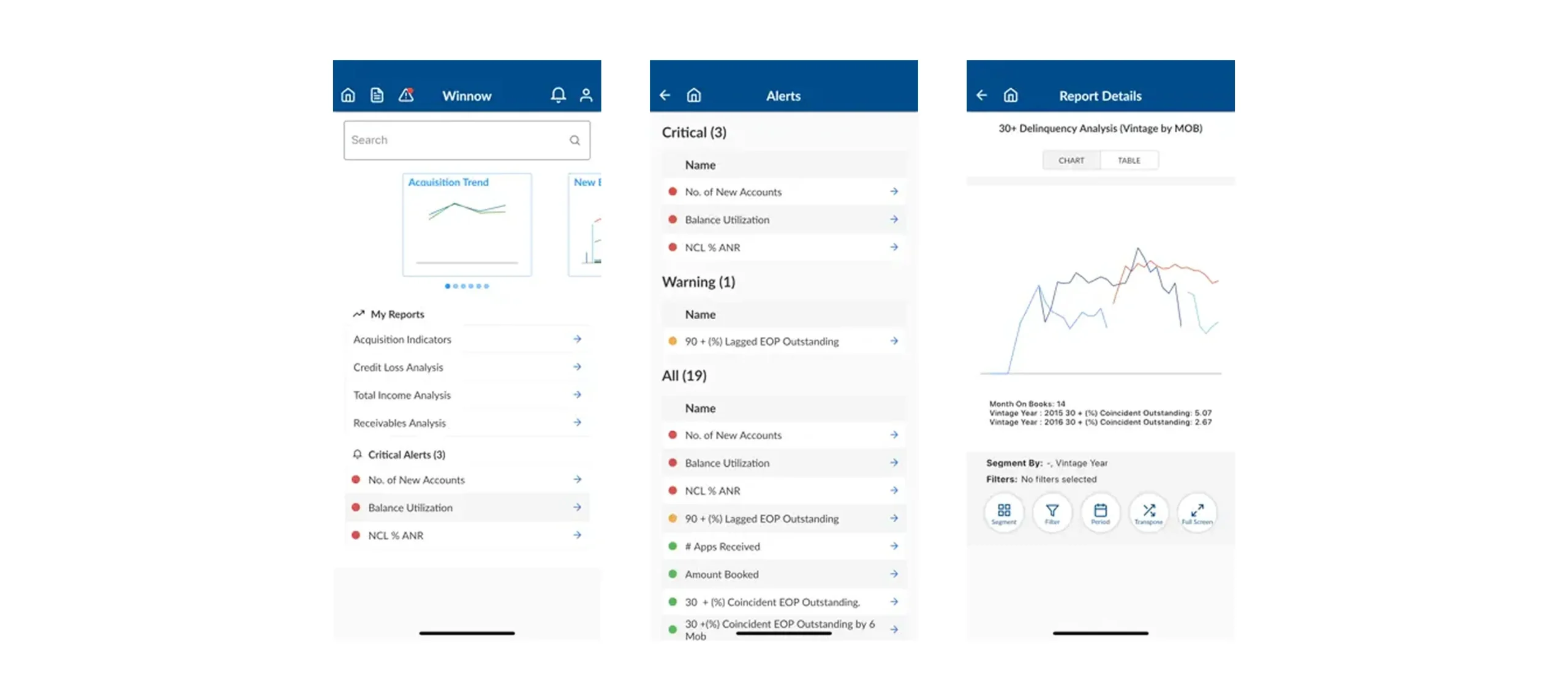
1. Winnow
Winnow uses AI-powered smart kitchen scales to help restaurants track, measure, and reduce food waste. By identifying waste patterns, it enables businesses to cut costs and improve operational efficiency.
2. Olio
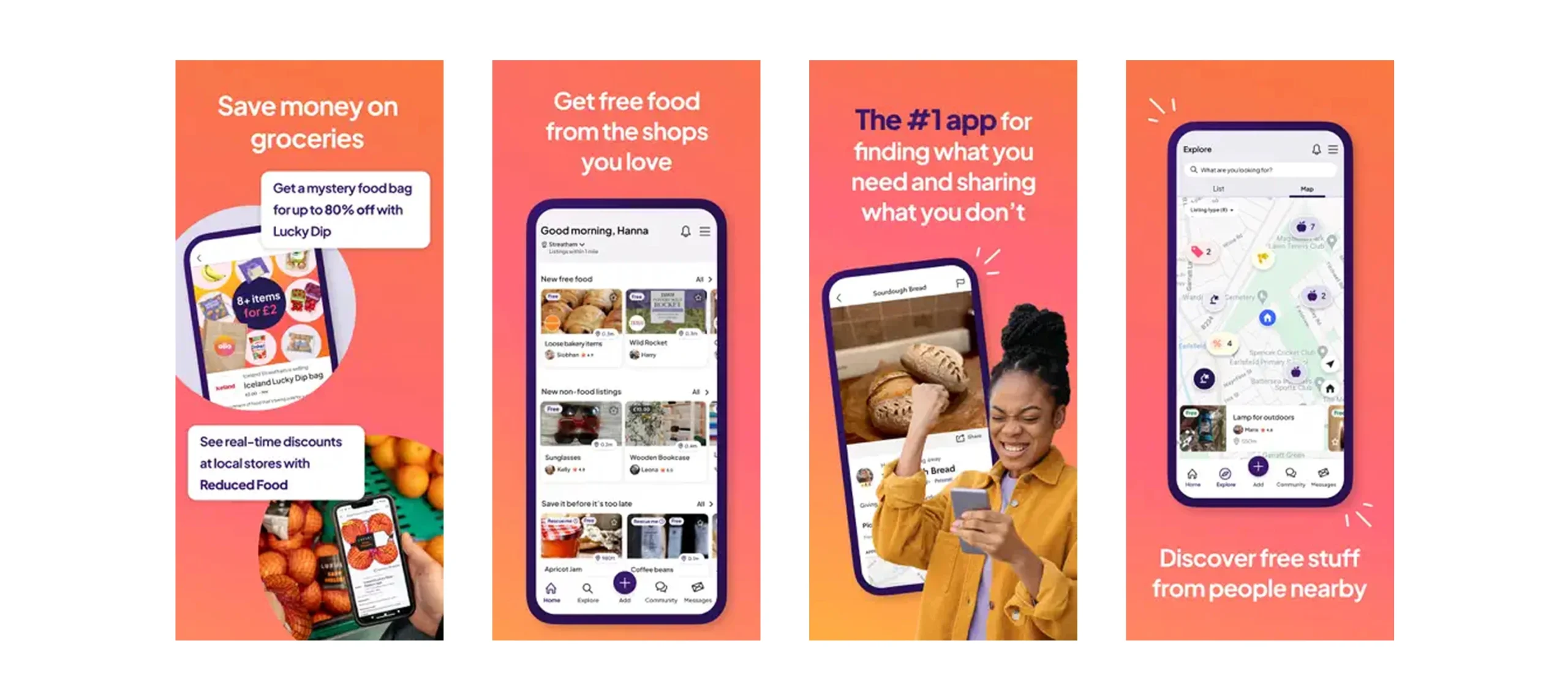
Olio is a scalable food waste management app that connects individuals with people who can use surplus food. Its platform reduces waste by redistributing extra meals, groceries, and household items.
3. Too Good To Go
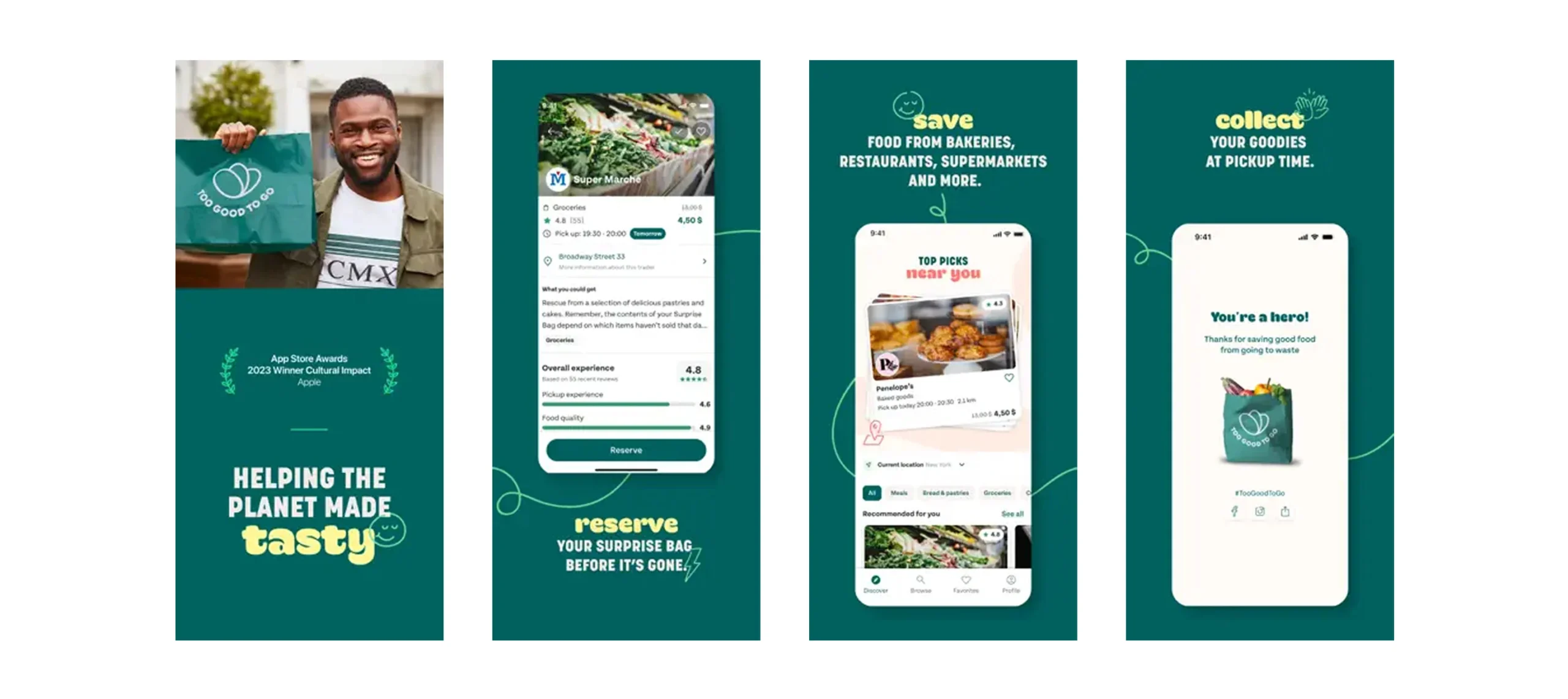
Too Good To Go partners with restaurants to sell unsold food at discounted prices through “Magic Bags.” This on-demand food delivery app helps prevent waste while offering consumers quality meals.
4. Orbisk
Orbisk provides automated food waste monitoring using AI image recognition to track exactly what gets thrown away. It delivers real-time insights to help kitchens reduce waste and improve sustainability.
5. Leanpath
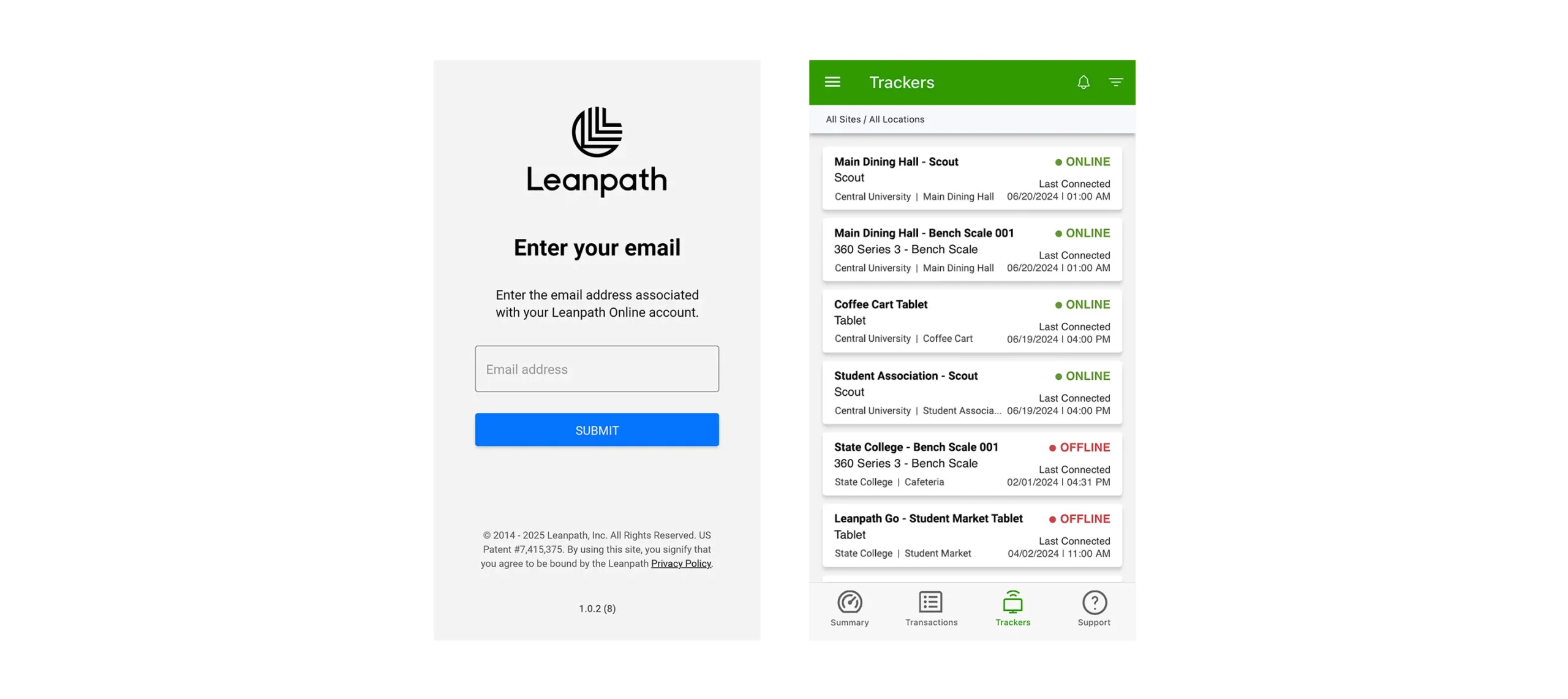
Leanpath offers food waste tracking tools to empower foodservice teams to pinpoint waste sources. Its reporting system helps organizations reduce waste and achieve cost savings with smart operations.
Tech Stack for Developing Food Donation Software
Before investing in mobile app development for food waste management, you must be aware of the latest tools and technologies. A tech stack must include various frontend, backend, database, and analytical tools.
Additionally, it should provide custom WordPress platform development with CMS functionalities. Businesses must ensure the use of the tech stack in food waste management software development services. Here is a table showing key components with their respective tools:
| Component | Recommended Tools/Technologies | 1-Line Description |
| Frontend Framework | React, Vue.js, Angular | Builds responsive and user-friendly interfaces for donors, NGOs, and admins. |
| Backend Framework | Node.js (Express), Django, Laravel | Manages server-side logic, APIs, and core donation workflows. |
| Mobile App Development | Flutter, React Native, Kotlin/Swift | Enables cross-platform or native mobile apps for food pickup/delivery coordination. |
| Database | PostgreSQL, MySQL, MongoDB | Stores user data, donation records, NGO details, and delivery schedules. |
| Real-Time Communication | Socket.io, Firebase Realtime DB | Enables real-time updates for pickup requests, driver tracking, and notifications. |
| Cloud Hosting & Deployment | AWS, Google Cloud, Microsoft Azure | Hosts the application securely with scalable infrastructure. |
| Maps & Location Services | Google Maps API, Mapbox | Supports donor/NGO location mapping, routing, and distance calculations. |
| Authentication & Security | Auth0, Firebase Auth, JWT, OAuth 2.0 | Ensures secure user login, role management, and data protection. |
| Push Notifications | Firebase Cloud Messaging, OneSignal | Sends instant alerts for new donations, pickups, and status updates. |
| Analytics & Monitoring | Google Analytics, Mixpanel, Datadog | Tracks user behavior and app performance for insights and optimization. |
What is the Food Waste Management Software Development Cost?
Along with the development process, it is important to know the right food waste management app development cost. It is dependent on various market factors that we will see later in this section.
Considering all the lowest parameters, the average food waste management software development cost is between $8,000 and $15,000. It may increase to $25,000 or more because of the rise in user demand and business requirements. It is beneficial to use our cost calculator to identify the accurate prices for all kinds of development.
App Complexity: Addition of more features can make software complex for users and increase the overall development cost.
Location Factor: Choosing regions like the USA may increase the price due to expensive development models and labor.
Development Platform: It is beneficial to select hybrid platforms, as they use a single codebase for developing food donation software.
Experience Level: The skills and experience of developers also affect the cost of building food management software.
Ways to Monetize Food Waste Control Software
To balance the cost to build food waste management software, various monetization strategies are available that businesses can use. You will learn about those money-making methods in this section:
1. Subscription Plans
Food waste control software can be monetized through monthly or annual subscription plans that provide access to tracking, analytics, and reporting tools. You must know how much food waste management app development costs to ensure profit through regular updates and feature enhancements.
2. Tier-Based Pricing
Tier-based pricing allows businesses to choose plans based on features, data volume, or organization size. This flexible approach attracts startups as well as large enterprises by managing the cost to create a food waste management app with their operational needs.
3. Usage-Based Fees
In a usage-based model, customers are charged based on metrics such as the number of locations, transactions, or data processed. You should hire Flutter app developers to ensure fair pricing by allowing users to pay only for what they use.
4. Marketplace Commissions
The software can integrate a marketplace connecting users with suppliers, recyclers, or donation partners and earn commissions on transactions. This creates additional revenue while enhancing the platform’s overall value and balancing the cost to create food waste management software.
5. Advertisement Services
Advertisement services enable food suppliers, sustainability brands, or service providers to promote their offerings within the software. Targeted ads generate extra income without disrupting core functionality and help businesses to reduce additional costs.
Why Choose Helpful Insight for Building Software to Manage Food Waste?
It’s time for business investors to start investing in the development of food waste management apps, as the demand is rising. We have gone through every topic in this blog that is crucial for you to understand for managing the wastage of food and groceries. It is beneficial to approach a grocery delivery app development company that can provide the following advantages:
- Insights on related business models providing food management and donation features.
- Tips to reduce the cost of developing a food waste management app through monetization.
- A talented team of dedicated and skilled experts with good technical experience.
- Affordable food waste management mobile app development services, like maintenance.
An entrepreneur requires these benefits to make an advanced and user-friendly platform for food waste management. With this, it is easy to decrease the cost to develop food waste management software and increase the overall business profit. Additionally, you can increase the brand value through successful marketing techniques.
FAQs
People in the USA and all over the world waste food, which leads to a global crisis. The management of food waste is important for the following reasons:
- Increase in food adulterant activities due to a lack of availability.
- Adverse effects on the environment, leading to an increasing number of diseases.
- A rise in the number of people with malnutrition who are starving for food.
There are a lot of benefits to developing software for food waste management and donation. Below are the key advantages that business investors must know before software development:
- Fulfill a social cause of removing hunger among needy people with digital innovation.
- Fast collection of donation funds for starving people through fines for food wastage.
- It is easy to avail various government schemes for people through food collection.
The average time for developing a food waste management platform is dependent on various parameters like the development process, complexity, and cost. For a low-level platform, the development time is between 2 months and 5 months. But, as the demand and requirements increase, the overall time also rises to more than one year.
Yes, most food waste management and donation software ensure high security standards to keep user data safe from all fraudulent activities. Various encryption algorithms, such as 2FA, biometrics, and login authentication, are implemented. They help to prevent unauthorized access and different backdoor attacks, like denial of service.
To maintain a food waste management platform, you must know the respective rate, which is around 15% to 20% of the overall development cost. If a project cost is $20,000, then the corresponding maintenance cost is between $3,000 and $4,000 or more. This is because several factors, like bug fixing and feature updates, are responsible for the price rise.
Modern technologies and innovations are shaping the future of food waste management apps. Some of the major upcoming trends are described as follows:
- AI-powered predictive analytics forecast demand and minimize excess food production.
- IoT-enabled sensors provide real-time insights for food waste patterns.
- Blockchain enhances traceability, compliance, and sustainable supply chain practices.