

Key Takeaways:
- AI ensures personalized recommendations, automated promotions, and enhanced shopping experiences by analyzing user preferences.
- Various grocery apps use AI for order processing, inventory management, and demand forecasting, which reduces cost.
- Businesses can manage delivery times, improve logistics, and ensure accuracy through smart route planning and predictive analytics.
- Some AI-powered features include voice search, virtual assistants, product suggestions, and budget management that improve shopping.
Artificial intelligence is available for everyone, as it is now delivering advanced facilities to various industries, including grocery delivery. From complex computation to essential tools, AI is helping consumers and businesses on a large scale.
The use of AI in grocery delivery apps has improved the user buying experience through smart intelligence, data prediction, and delivery accuracy. Additionally, businesses can manage warehouses, monitor stocks, and track sales regularly.
In a recent study, more than 71% of businesses have adopted AI in their systems, which also includes the grocery industry. This helped market vendors to reduce food waste by 49% and increase inventory accuracy by 95%, optimizing business workflow efficiency. This shows AI is helpful for supermarkets, local vendors, grocery retailers, and consumers.
In this blog, we are going to explore various use cases of artificial intelligence in grocery stores, with their benefits and future projections. You will also discover the key AI features of grocery apps and top platforms that use AI to gather audiences and increase retention rate.
Growth of the AI-driven online grocery shopping market
Businesses can invest in grocery delivery app development with AI, as the market is expanding rapidly and creating several revenue-generating opportunities. Let’s understand more about this AI-driven industry through the following stats.
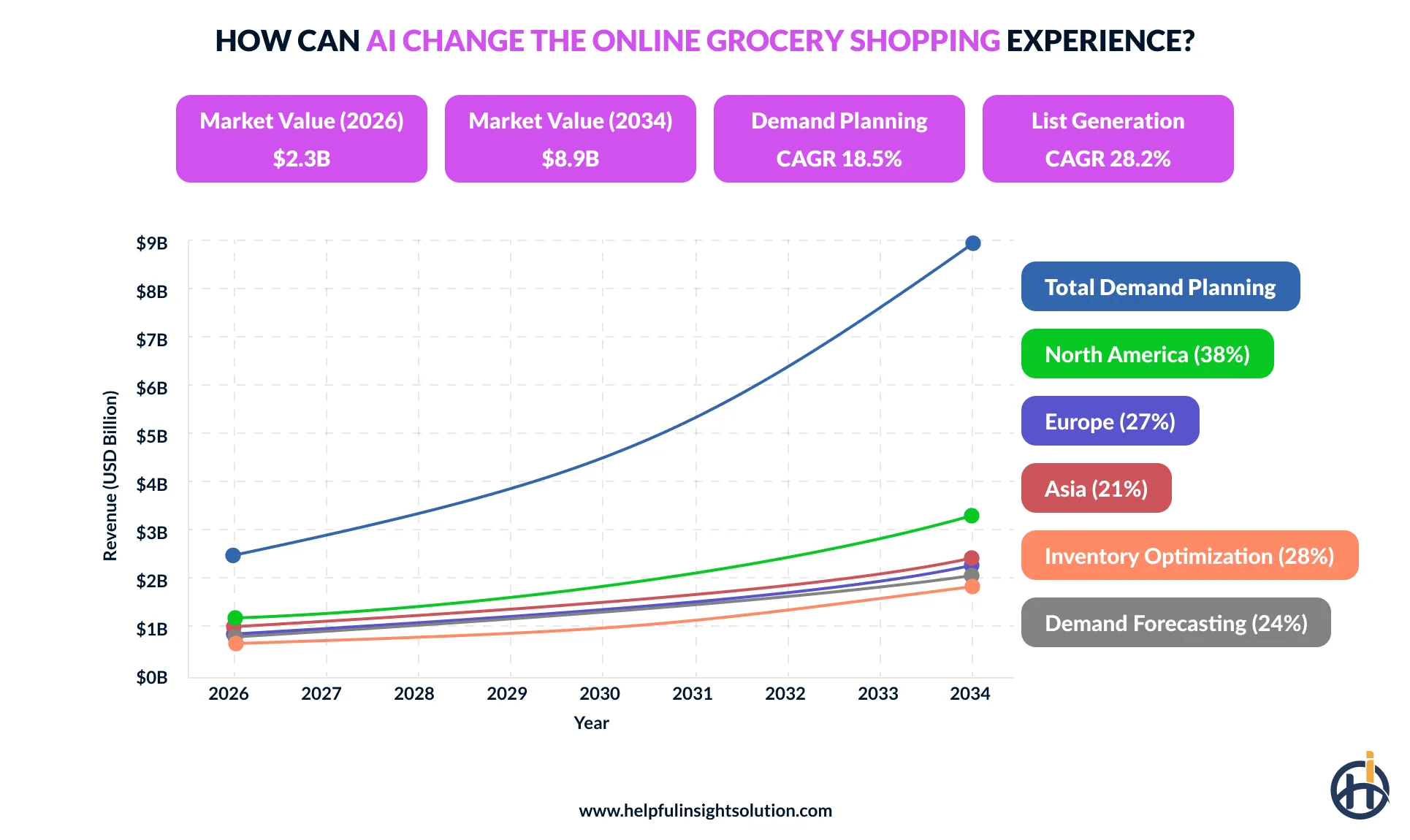
- Currently, the grocery list generation AI market is growing at 28.2% CAGR and will reach a value of $4.7 billion by the end of 2030.
- The AI-driven grocery demand planning market value is $2.3 billion in 2026, with North America having a share of 38% in the market.
- This revenue will reach $8.9 billion by the end of 2034, as the market is growing at a 18.5% CAGR rate during this tenure.
- Europe and Asia have shares of 27% and 21%, respectively, due to expanding AI-powered supermarkets in these regions.
- Inventory optimization and demand forecasting are two major contributors in the app segment, with shares of 28% and 24%, respectively.
AI technologies can easily manage logistics operations, grocery sales, user engagement, and daily recommendations. So, you must implement machine learning, NLP, and data analytics in the existing grocery applications or build new ones with modern AI innovations.
Key benefits of artificial intelligence in grocery apps
Businesses must know the advantages of integrating AI in grocery delivery apps, such as cost reduction. In this section, you will study more benefits like food management, market planning, and more.
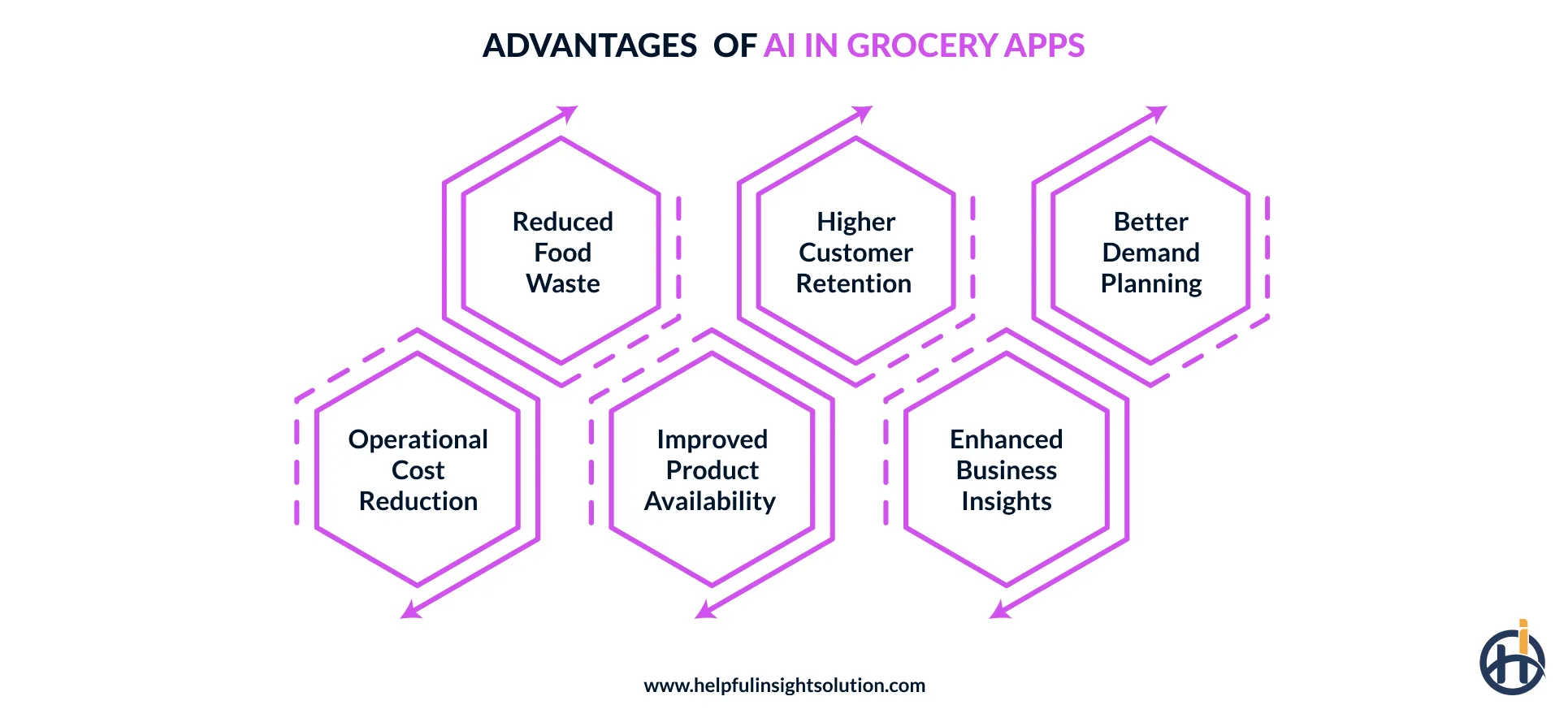
1. Reduced Food Waste
AI analyzes purchase data, expiration dates, and current stock levels to help stores order the right amount of perishable food. This means less food is thrown away, there is less waste, and the grocery store is more environmentally friendly.
2. Higher Customer Retention
AI automates tasks like inventory tracking, order processing, and delivery scheduling, freeing staff from repetitive work and reducing both time and operational costs. These benefits of grocery delivery apps make customers happy and allow them to easily come back to the store again.
3. Better Demand Planning
This technology uses sales information on what sells at different times of the year and things like the weather to guess what people will buy in the future. This helps grocery stores make choices about what to stock and what to buy.
4. Operational Cost Reduction
AI does tasks like keeping track of stock, processing orders and scheduling deliveries. This means people do not have to do these tasks, which saves time and money. So businesses can work better. Spend less money.
5. Improved Product Availability
Artificial intelligence helps stores have the right amount of stock and restock before things run out. This way, customers can always find what they need, which improves their satisfaction and increases time spent in the app.
6. Enhanced Business Insights
It looks at a lot of information about customers. How the store works to find important trends and patterns. This helps grocery stores make plans, make good decisions for advertising, and find ways to grow and get bigger.
Which AI components are necessary for a grocery delivery app?
Various AI components ensure personalized grocery recommendations, sales prediction, and automation. Here we will focus on key AI elements like machine learning, Natural language processing (NLP), and other important technologies.
1. Machine learning engine
With machine learning, apps look at what the customers do what they buy and how they shop to make the experience better for them. This helps the apps suggest things that the customers might like figure out how much of something they will need, and make decisions on their own to make shopping easier.
2. Natural language processing (NLP)
NLP helps to understand what the customers are saying when they talk to automated tools like the chatbots or when they use the voice assistants. An AI development company uses NLP that makes it easy for the customers to find what they want get help away and talk to the app more naturally.
3. Computer vision system
The apps can also look at pictures of things and know what they are, like when you take a picture of a barcode. This helps the customers find things they want to buy and helps the stores keep track of what they have, in stock.
4. Predictive analytics module
The grocery apps use sales information, what the customers like to buy and other things that might affect sales in the future. AI-powered demand forecasting helps stores stock the right amount of food, use resources efficiently, and fulfill orders on time.
Use cases of AI in grocery delivery apps
Various use cases of AI in grocery delivery apps, such as warehouse management, are discussed in this section. You must go through all applications before implementing them in your grocery platforms.
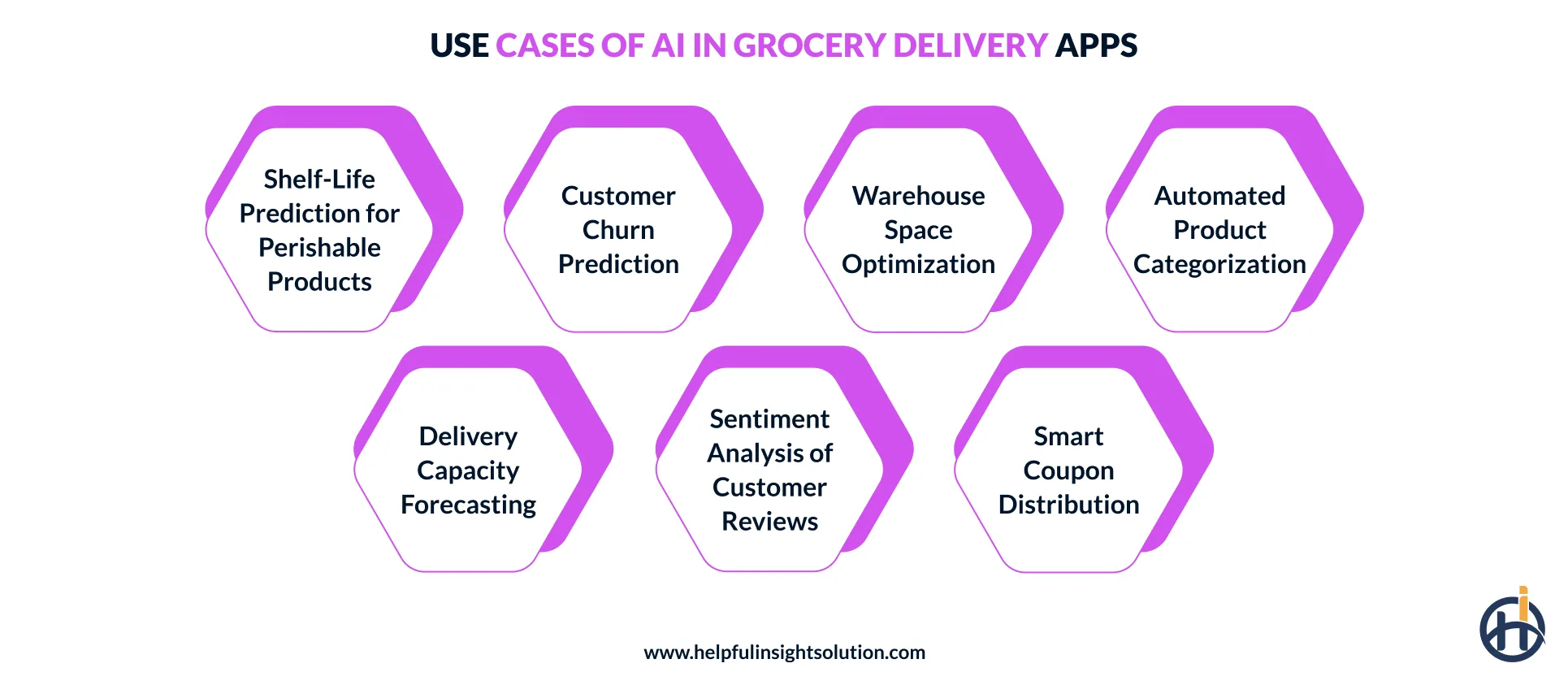
1. Shelf-Life Prediction for Perishable Products
AI helps grocery businesses figure out how long the food they have will last by looking at things like how it’s stored how fast it sells and what has happened to similar food in the past. This helps retailers use the food they have before it goes bad and reduce the amount of food that gets thrown away.
The system can also tell them when to put foods on sale because they are getting close to expiring. This way businesses can make sure they are using their food in the way possible while still keeping it fresh.
2. Customer Churn Prediction
AI looks at what customers do like how they buy things, how much they spend and what they like to find out which customers are likely to stop using the app. Then businesses can try to keep these customers by sending them deals rewards for being loyal or other offers that are just for them.
If businesses can find out when customers are thinking about leaving they can try to make things right and keep them as customers. This helps businesses keep customers and make more money in the long run.
3. Warehouse Space Optimization
AI looks at how products are moving what people are buying and how the storage space is being used to find the best way to organize things in the warehouse.
Frequently purchased items are placed in the most accessible locations, allowing orders to be filled faster. AI also ensures storage space is used as efficiently as possible, keeping workflows clear and unobstructed. This makes things more efficient, convenient, and optimized.
4. Automated Product Categorization
This means that people do not have to enter all the information by hand and that all the products are organized in a way.Businesses can invest in mobile app development to integrate AI technologies for customers. It also makes it easier for retailers to keep track of what they have, in stock.
5. Delivery Capacity Forecasting
Artificial intelligence predicts future order volumes by looking at people’s purchase history, behavioral patterns, market conditions, and personal choices in real-time. This means that companies can make sure they have delivery people and supplies when they need them.
When companies can predict what will happen they can make sure things get to people on time and that their service is good. It also helps them save money and make sure they have the number of workers.
6. Sentiment Analysis of Customer Reviews
Artificial intelligence looks at what customers say about a company, what they like and what they do not like. This helps companies understand what people want and fix problems before they get big.
When companies know what people like and do not like they can make their products and services better. This makes people happier with the company and more likely to come.
7. Smart Coupon Distribution
Artificial intelligence looks at what people like to buy how they shop and what they have bought before. Then it sends them personalized offers and targeted discounts, increasing the likelihood of purchase and improving brand satisfaction.
This means that companies are more likely to get people to buy things and that people will like the company more. It also helps companies make sure they get a return, on the money they spend on promotions.
Best AI-powered features of grocery delivery applications
It is interesting to know AI grocery delivery app features, which include smart product search, delivery prediction, and more. These features enhance user experiences and reduce manual errors in real time.
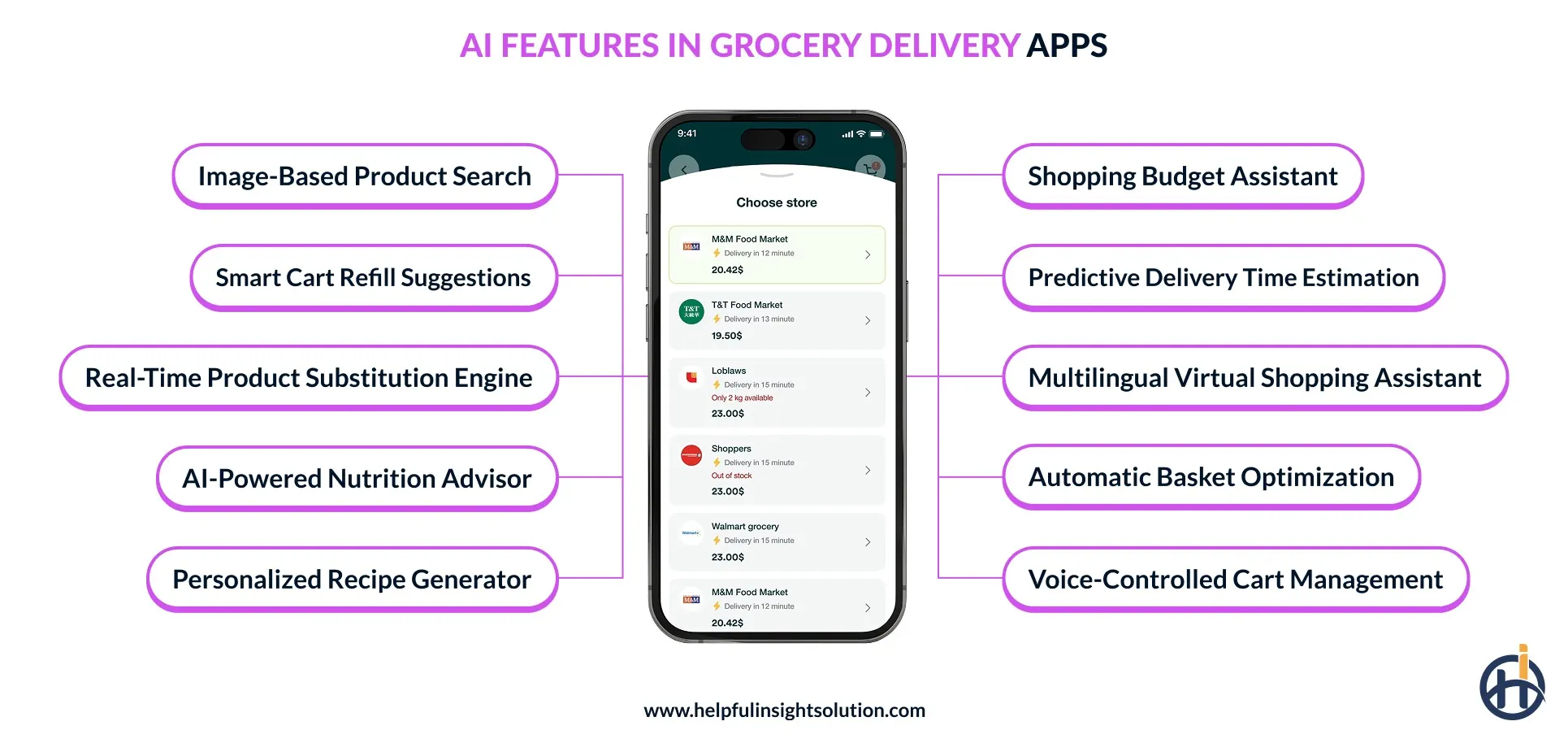
1. Image-Based Product Search
AI lets people upload a picture or scan something to find stuff in the grocery app right away. The computer looks at the pictures and finds matching products so people can find what they want faster and more easily.
2. Smart Cart Refill Suggestions
It keeps track of what people buy and how often they buy it so it can remind them when they might be running out of something at home. It suggests buying more of the things people get all the time, which helps people save time and not run out of stuff.
3. Real-Time Product Substitution Engine
If something people want is not available the app suggests things that are similar based on the brand, price and what people like. This way people can still shop easily without having to look for things themselves.
4. AI-Powered Nutrition Advisor
The nutrition advisor looks at what’s in the food how healthy it is and what people like to eat to suggest better choices. It helps people make decisions when they buy food so they can eat healthy and feel good.
5. Personalized Recipe Generator
AI meal planning in grocery helps users, based on what they buy, what they can and cannot eat, and what is in their cart. This helps people plan their meals better and maybe even buy a few things they need.
6. Shopping Budget Assistant
The budget assistant keeps an eye on whats in your cart. Suggests cheaper options when you’re about to spend too much. It helps you get the value for your money without missing out on the groceries you need.
7. Predictive Delivery Time Estimation
AI looks at traffic, weather how many deliveries are. How many drivers are available to give you a good idea of when your delivery will arrive. This way you can plan your day better.
8. Multilingual Virtual Shopping Assistant
Our AI assistant can talk in their preferred language, either through chat or voice. It helps you find products answers your questions and makes it easier to use our platform.
9. Automatic Basket Optimization
When you’re shopping AI checks what’s in your cart. Suggests other products you might like discounts on bulk buys or special offers that make shopping easier. This way you get value and we can make sure you have a good experience.
10. Voice-Controlled Cart Management
You can use voice commands to add, remove or change items, in your cart. This makes shopping easier especially when you’re doing things or on the move.
Read Also: Grocery Delivery App Development: A Detailed Guide
Top AI-driven grocery delivery platforms
Various mobile apps use artificial intelligence in online grocery shopping, which allows increased user engagement. We are discussing the top 5 platforms that deliver AI-driven features, reduce long waiting times, and ensure personalization.
1. Instacart
An app like Instacart uses intelligence to give people the products they want make shopping better and get orders to them faster. It looks at what people buy and how they shop to suggest things they might like. The platform also tries to figure out what people will want next so it can have stuff in stock and get it to them on time.
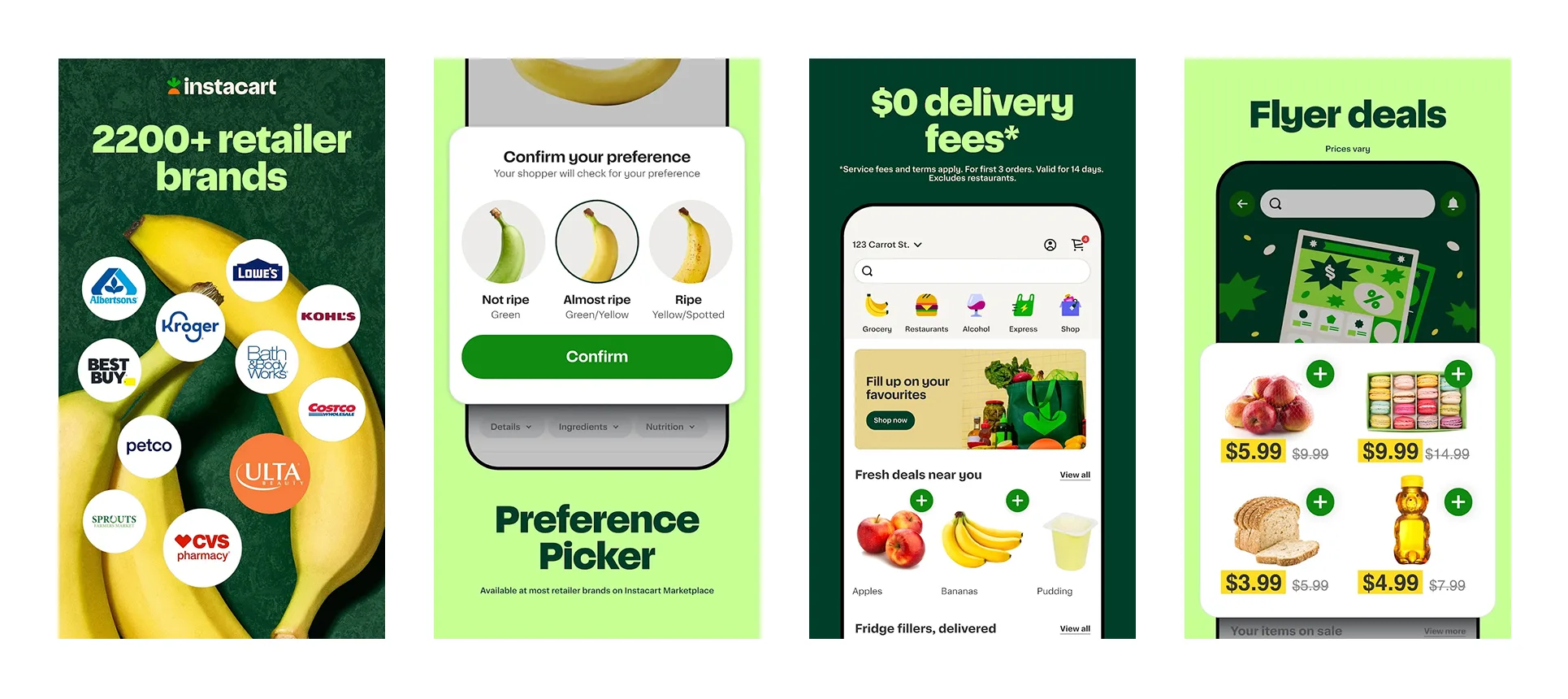
AI facilities: It uses AI-powered product recommendations and smart search to personalize shopping experiences.
Downloads: 10M+
Ratings: 4.4
2. Walmart Grocery
Walmart Grocery uses intelligence to make sure it has the right things in stock and to give people the things they want. It looks at what people buy and what they like to give them suggestions for things they might want. Artificial intelligence also helps Walmart get things from the store to peoples homes quickly.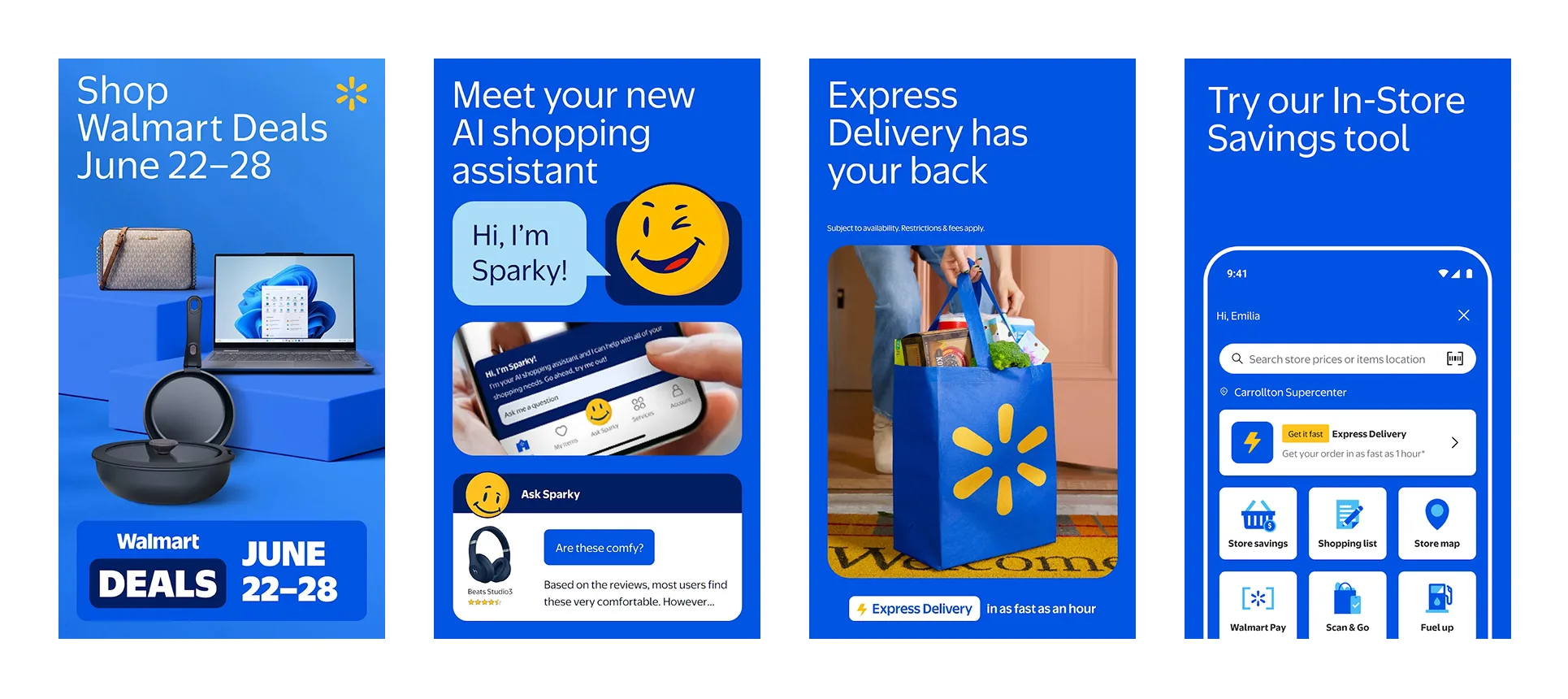
AI facilities: AI helps in demand forecasting, inventory optimization, and personalized offers.
Downloads: 5M+
Ratings: 4.7
3. Ocado
Ocado is really good at using intelligence to make its warehouses work better. The company uses machines that can think to make sure it stores things in the way and gets orders out quickly. These smart machines help Ocado get orders to people faster use money and work more efficiently.
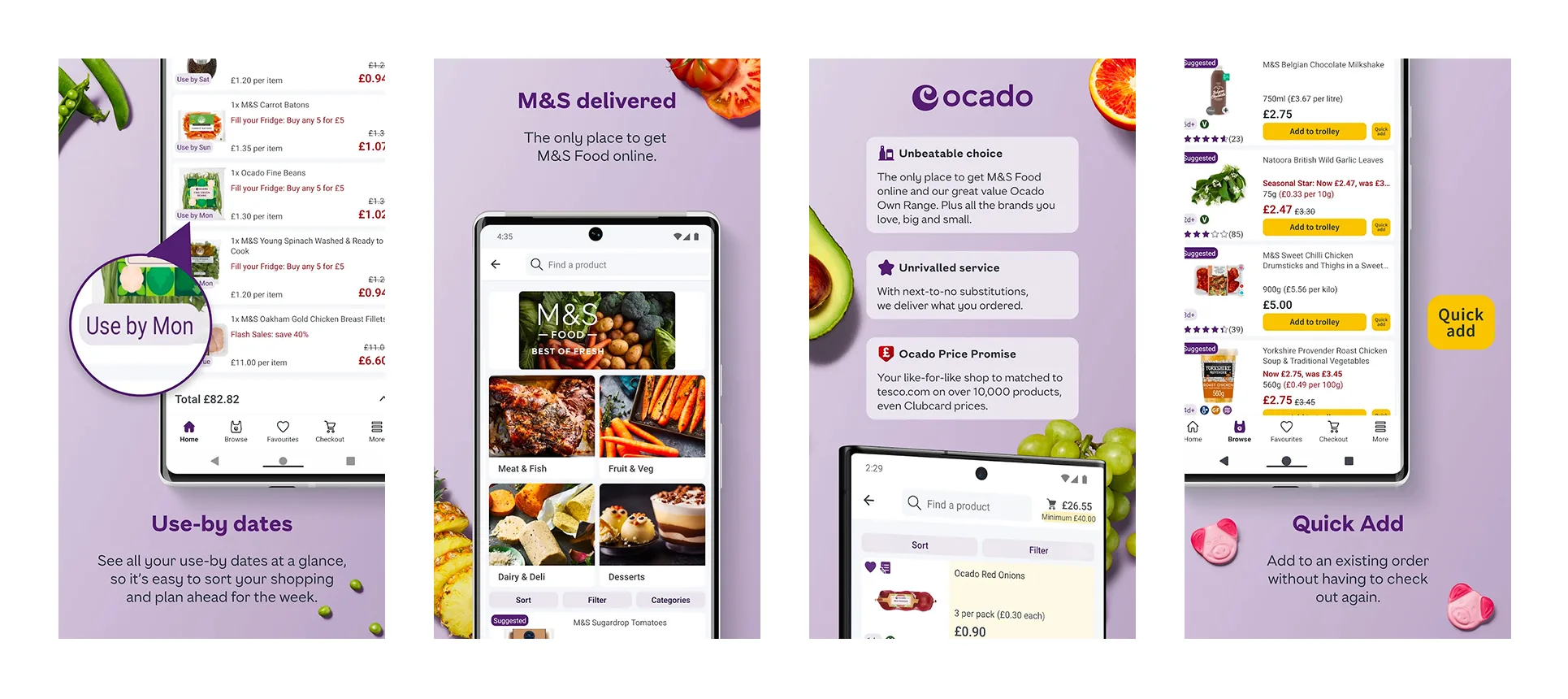
AI facilities: This app delivers AI-driven warehouse automation, robotic fulfillment, and logistics optimization.
Downloads: 500K+
Ratings: 4.0
4. Shipt
Shipt uses intelligence to get orders to people at the right time. It tries to figure out when a lot of people will want things delivered so it can have enough people working. Shipt also looks at what people like and what they buy to make shopping easier and make people happier.
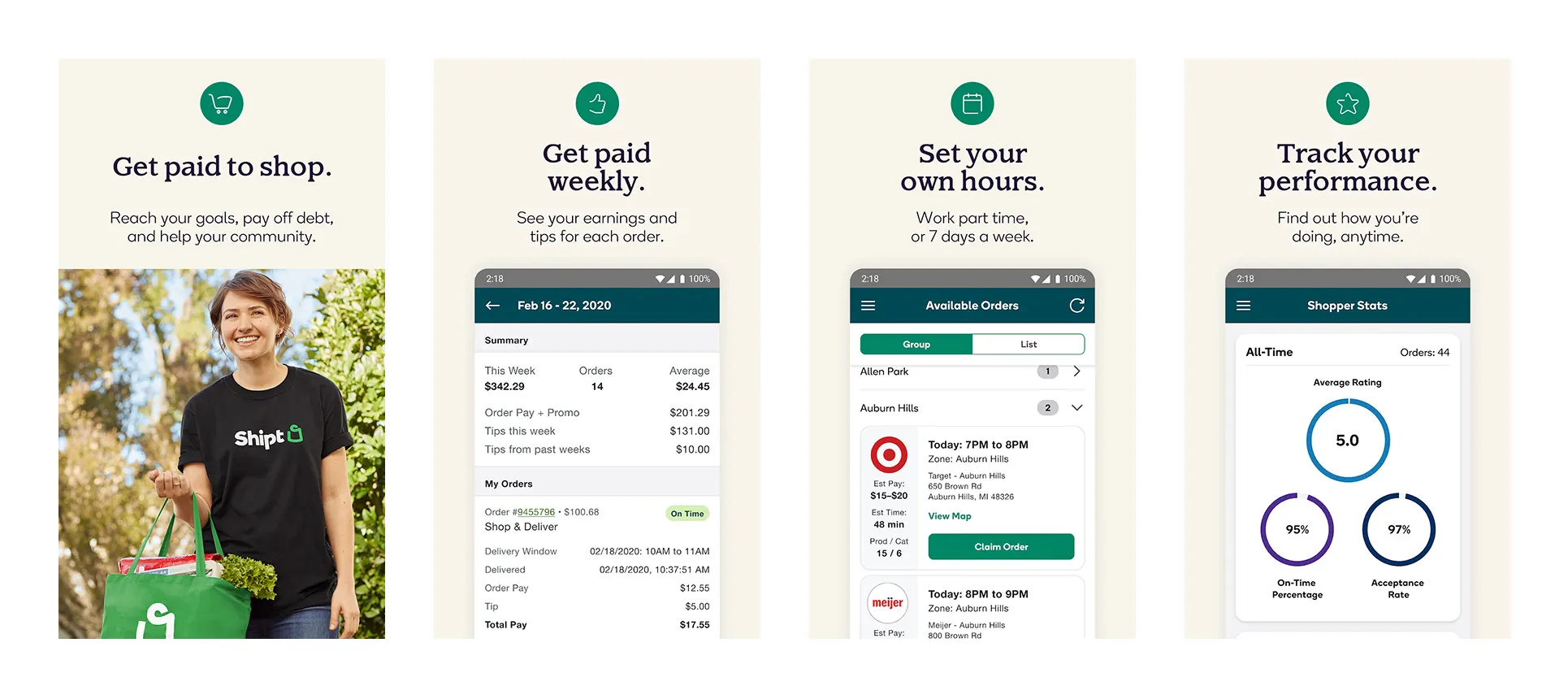
AI facilities: It uses machine learning for order allocation, delivery scheduling, and customer engagement insights.
Downloads: 1M+
Ratings: 4.0
5. BigBasket
BigBasket uses intelligence to make sure it has the right things in stock and to give people the things they want. It looks at what people like and what they buy to suggest smart grocery shopping lists. BigBasket also tries to figure out what people will want next, so it can get it to them on time and not run out of things.
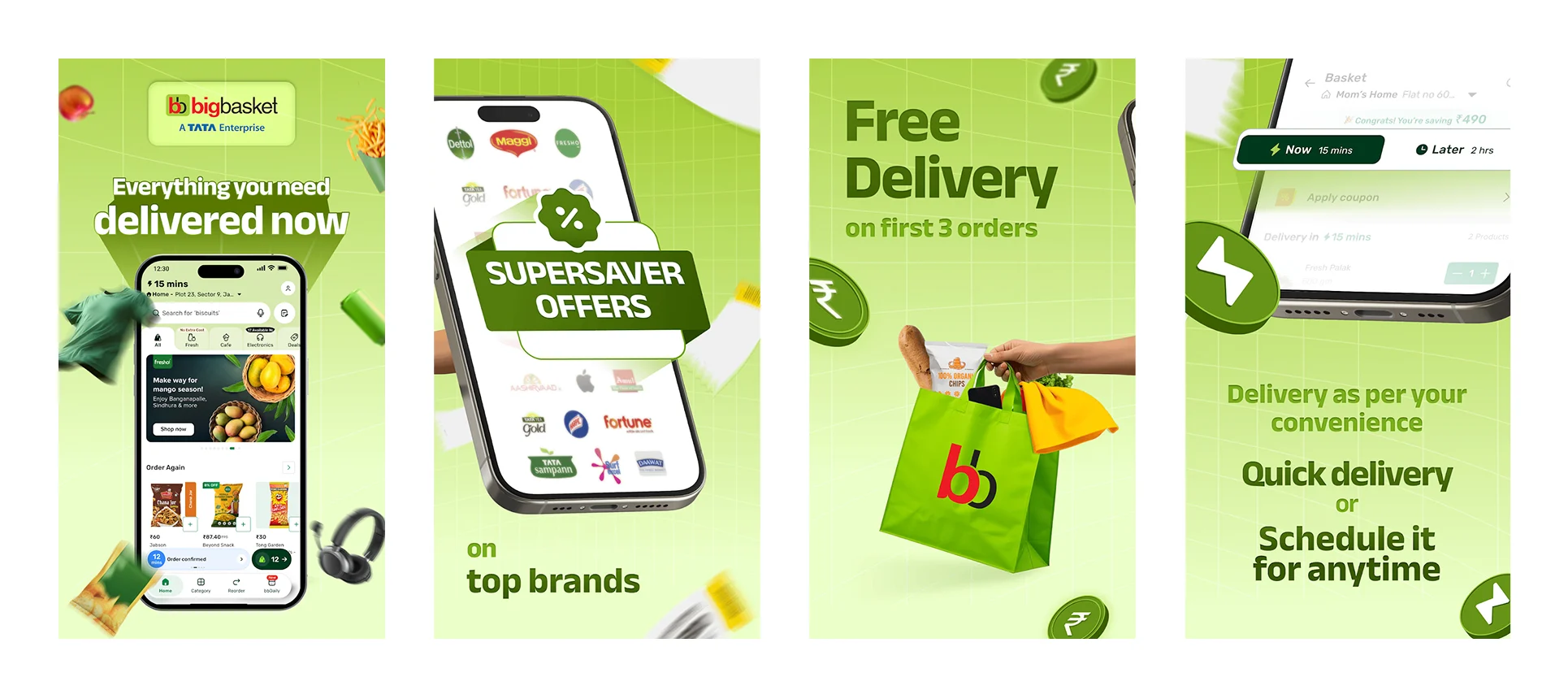
AI facilities: AI offers demand prediction, personalized recommendations, and inventory management.
Downloads: 100M+
Ratings: 4.7
The future of AI and machine learning in grocery delivery apps
The future of machine learning and AI in grocery delivery apps is becoming more relevant due to advanced innovations. You will observe some of the best trends, like voice assistants, in this section.
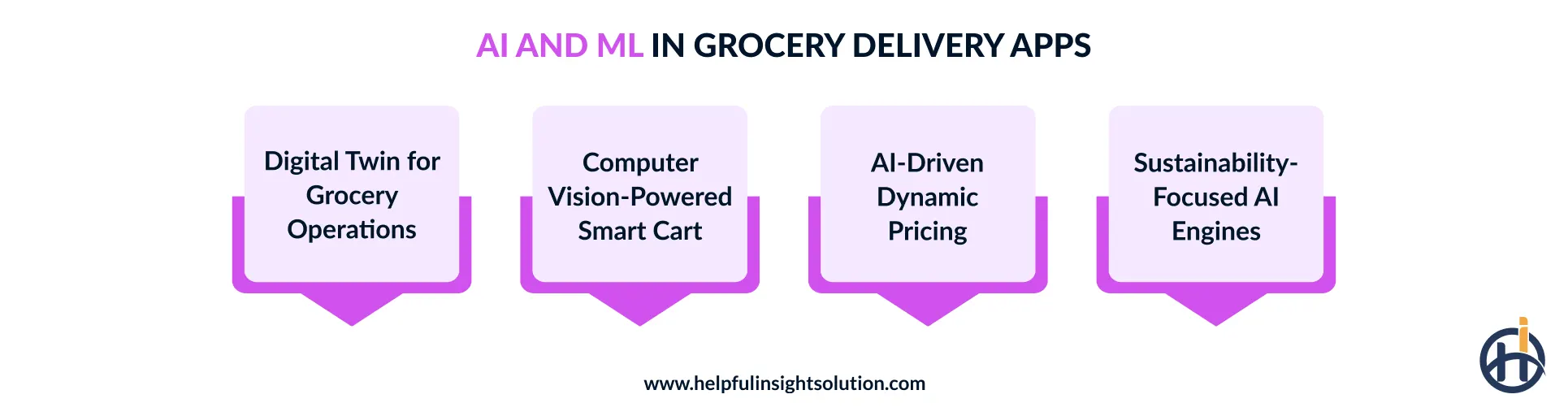
1. Digital Twin for Grocery Operations
Digital twin technology makes copies of grocery stores, warehouses and supply chain networks. The digital twin technology uses intelligence to look at these virtual copies and figure out what will happen when things like demand and inventory change. This helps businesses use their resources better get rid of things that are not working, and make decisions before they actually do something.
2. Computer Vision-Powered Smart Cart
Some carts use computer vision to see what people are putting in their carts. The computer vision-powered smart carts can automatically see what products are being added so people do not have to scan them by hand.
The smart carts can also suggest products that the customer might like, based on what they’re already buying.
3. AI-Driven Dynamic Pricing
Artificial intelligence is used to set prices for products, and it always looks at things like how much people want to buy something, what other companies are charging, and how long it will last.
The digital twin technology and artificial intelligence look at all these things. Then change the prices so that the company can sell more and make more money.
4. Sustainability-Focused AI Engines
Some artificial intelligence systems are used to help grocery stores be more sustainable. The sustainability-focused artificial intelligence systems help grocery businesses reduce food waste and be better for the environment.
They do this by managing inventory well, guessing what products people will want to buy and finding the best ways to deliver things so that less fuel is used.
![[Talk to our experts]](https://www.helpfulinsightsolution.com/wp-content/uploads/2026/06/POWERY1-scaled.webp)
How can Helpful Insight assist businesses in integrating AI in grocery apps?
Entrepreneurs need to implement AI grocery delivery trends in 2026 that ensure smooth delivery tracking, cart automation, and enhance inventory management. It is beneficial to approach a reliable partner who provides the best resources and grocery app solutions, optimizing growth.
We have experience in making AI-enabled mobile platforms for startups and large enterprises. Our grocery delivery platforms use advanced technologies like machine learning, computer vision, and NLP.
It is the right time to integrate AI in grocery delivery apps because this industry is becoming more innovative. With hyper-personalization, enhanced supply chain management, and route optimisation, you can easily increase brand value.
AI is the only way to boost business profit, user retention, and reduce operational expenses, becoming the technology of the future.
FAQs
On average, the total cost of integrating AI technologies in grocery delivery apps may range from $40,000 to $150,000 due to predictive analytics and machine learning. This can impact user experiences by enhancing delivery options and increasing personalization. Additionally, the cost is also dependent on the region, experience, platform choice, and maintenance.
Artificial intelligence helps to predict grocery sales, personalize user experiences, and automate business operations. Additionally, it reduces expenses through smart inventory management, route optimisation, and fraud prevention. AI uses machine learning, NLP, and predictive analytics to improve existing features and enhance user engagement.
Various predictive, conversational, and generative models are used in grocery delivery platforms. The working of AI for user satisfaction and business growth is described in the following manner:
- Machine learning analyzes purchase history, user preferences, and shopping lists.
- AI algorithms can identify stocks based on sales history and growing user demand.
- It ensures fast deliveries through route management and pattern monitoring.
- AI helps in substitution by replacing exhausted items with new products.
- It can adjust prices and discounts based on present market conditions.
Businesses use machine learning algorithms to generate accurate delivery routes by analyzing different patterns such as traffic and weather. These include regression models, reinforcement learning, the KNN algorithm, and neural networks. Additionally, it also uses mathematics based on the Hungarian algorithm for calculating the shortest path.
It is crucial for an entrepreneur to implement multiple revenue models to generate income and increase profit margins. Some of the best monetization strategies are discussed as follows:
- Delivery fees: Businesses can charge money for instant deliveries and premium orders.
- Subscription plans: Users pay for different mobile app plans, such as annual or monthly.
- Vendor commission: You can charge local supermarkets and vendors on every sale.