

Key takeaways
- A basic AI chatbot may cost $15,000-$40,000, while mid-level chatbots with features like self-service support range from $40,000-$150,000. Enterprise-grade AI chatbots with multiple system integrations can cost $150,000-$300,000 or more.
- The AI chatbot development cost is influenced by several factors, including AI model selection, data preparation and training, UI/UX design, third-party integrations, compliance requirements, and the location of the development team.
- The total cost of an AI chatbot also covers ongoing and hidden expenses such as AI model usage, hosting, maintenance, support, and human agent involvement.
- A few ways to lower AI chatbot development costs include building an MVP first, choosing pre-trained models, and outsourcing the project to an experienced partner.
Businesses are using AI chatbots for different purposes, from answering routine customer questions to helping users complete tasks and find information. Some projects are quite simple and only require a handful of core functions, while others are much more complex and require more advanced AI capabilities and integration with business systems.
Naturally, the budget changes with the scope. The AI chatbot development cost may start at $15,000 to $40,000 for an MVP and reach $150,000 to $300,000 or more for an enterprise-level solution.
There is more to consider than the initial budget when planning an AI chatbot. The choice of AI model, features, data preparation, and integrations all affect the final price. For example, building a chatbot like ChatGPT for general conversations may involve different requirements than creating one for a specific business.
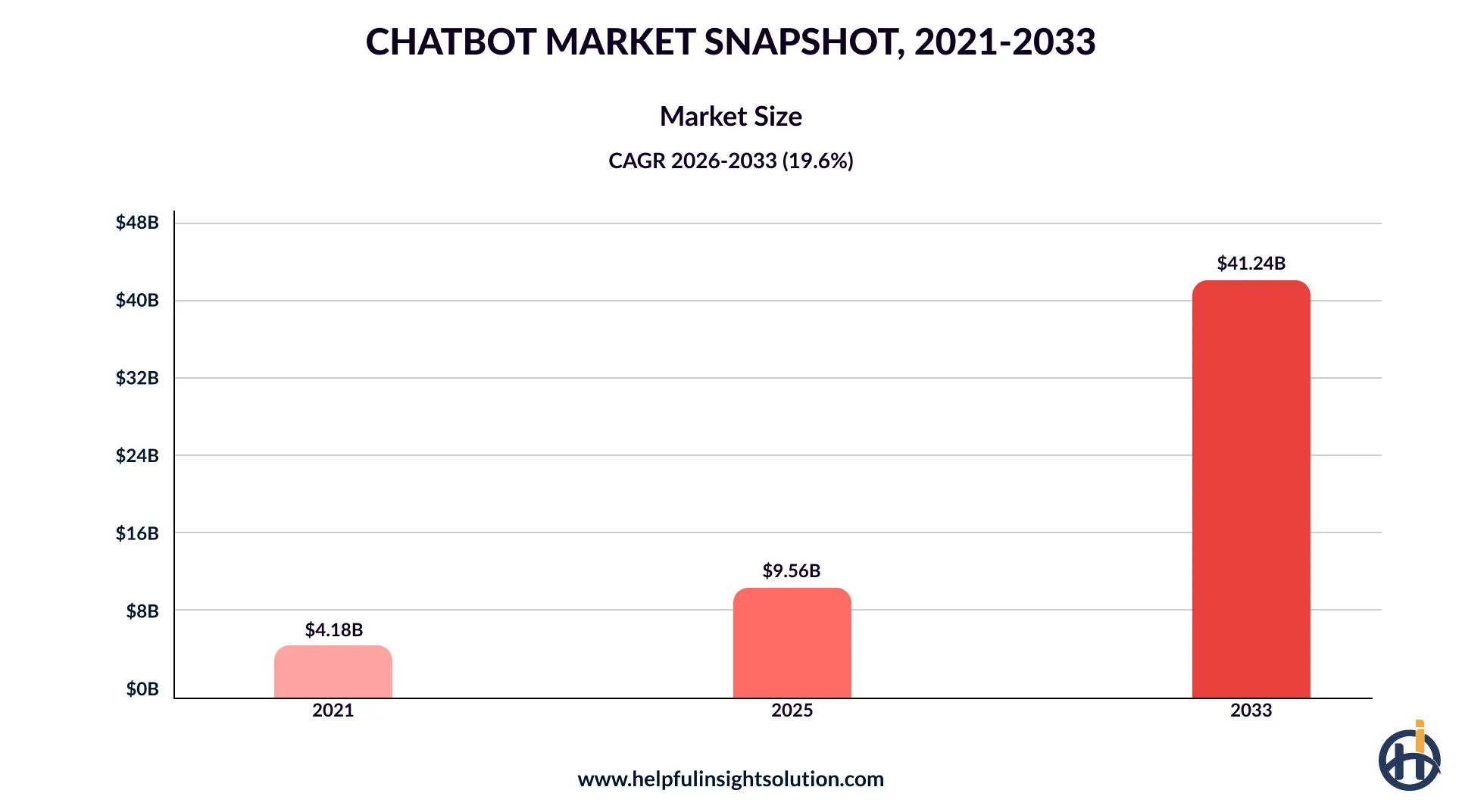
The demand for chatbot technology is growing, and market projections show just how much interest this technology is gaining. According to Grand View Research, the global chatbot market is expected to reach $41.2 billion by 2033. Still, before investing in one, businesses need to look at the development cost and consider whether it can deliver a good return.
In this guide, we look at what goes into chatbot development pricing, including hidden costs and practical ways to reduce development expenses.
AI chatbot development cost by complexity level
The amount you need to spend on developing an AI chatbot will highly depend on the project complexity. Each level comes with a different development scope and budget, so it’s worth looking at the estimates before setting aside money for your project. The table below gives you a breakdown of the expected costs at each level.
| Complexity level | Estimated cost range | Development timeline | Key features |
| Basic AI chatbot | $15,000- $40,000 | 1 to 3 months | FAQ responses, basic NLP, website integration |
| Mid-level AI chatbot | $40,000- $150,000 | 3 to 6 months | Context-based conversations, CRM integration, analytics dashboard |
| Enterprise-grade AI chatbot | $150,000- $300,000 | 6 to 12+ months | Custom AI models, multi-system integration, role-based access, high-volume support |
AI chatbot development cost breakdown by type
There are different types of AI chatbots, and each serves a different purpose. The cost of building one depends on the type you choose and what you want it to do. Below, we’ll look at the price to build an AI chatbot for each type.
1. Rule-based chatbots
A rule-based chatbot is a basic type of chatbot. It follows a set of predefined rules and gives answers based on the options or keywords entered by users. Its responses are already set during development.
Estimated cost range: $3,000- $15,000
2. NLP-based chatbots
NLP-based chatbots use natural language processing to understand what users are asking. They can recognize the meaning behind different ways of asking the same question and provide relevant answers instead of relying only on fixed keywords.
Estimated cost range: $10,000- $50,000
3. Generative AI chatbots
This is a type of chatbot that uses large language models to generate responses as the conversation progresses. It can answer follow-up questions, explain things, and assist with a variety of tasks. The responses are not confined to the answers that were pre-programmed during the development phase.
Estimated cost range: $30,000- $250,000 or more.
4. RAG-based chatbots
A RAG-based chatbot looks through stored documents to find information before answering a question. It uses retrieval-augmented generation to give answers from company records, product guides, and other business documents.
Estimated cost range: $15,000- $110,000
5. Voice AI chatbots
A voice AI chatbot lets users ask questions by speaking instead of typing. It converts their words into text, understands the request, and then responds by voice.
Estimated cost range: $50,000- $140,000+
Key factors that influence the cost to develop an AI chatbot
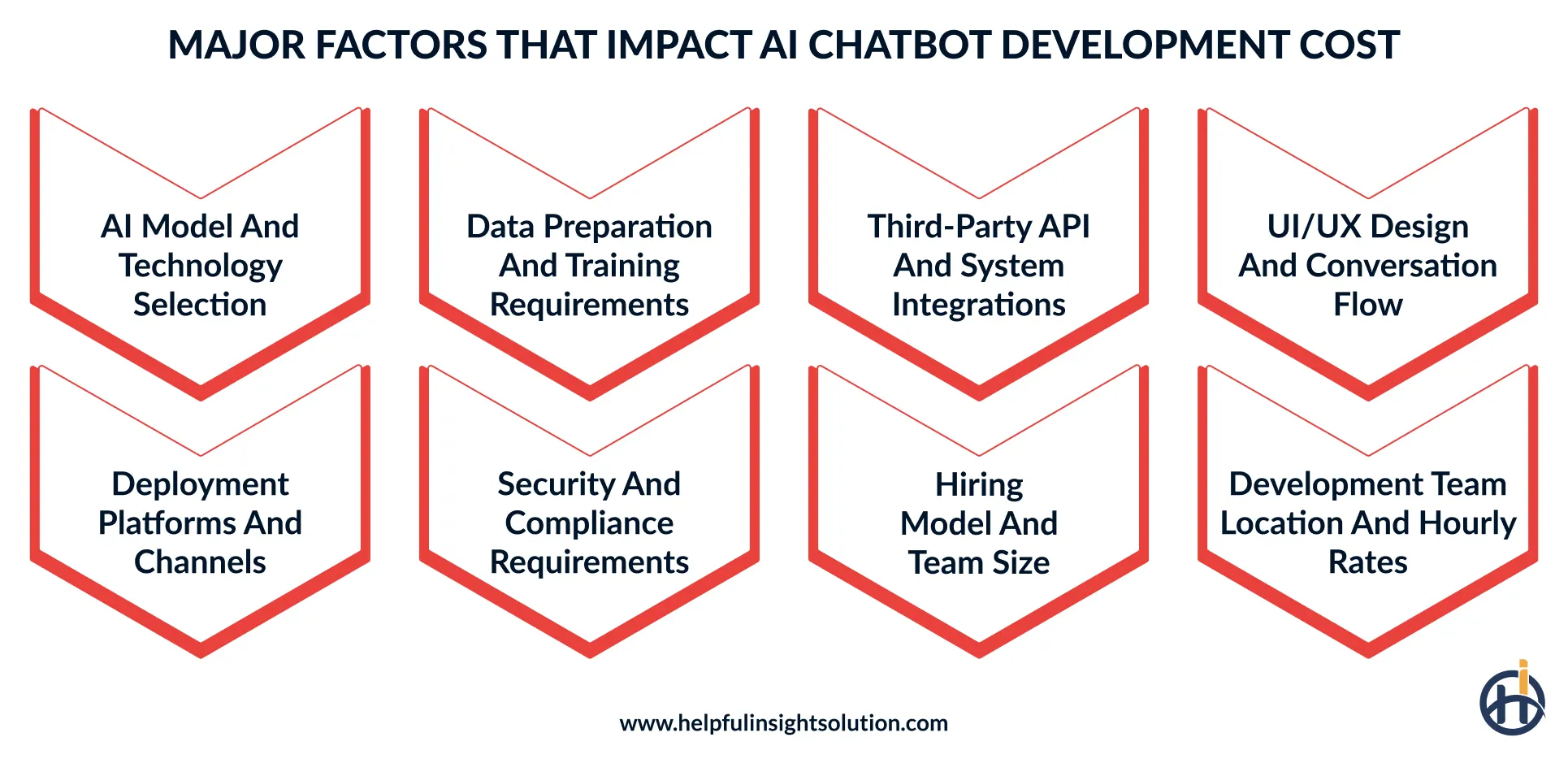
Two chatbots may have similar purposes but still come with different pricing. The reason often comes down to their features, technology, and project needs. Here are the key factors that affect the enterprise AI chatbot development cost.
1. AI model and technology selection
The AI model you pick has a massive impact on the cost of creating your AI chatbot. If you go with one of the off-the-shelf models (GPT, Claude, Gemini etc) then you’ll have significantly less development work to do.
On the other hand, if building a bespoke model, you’re going to be spending a lot more time on training data and infrastructure setup. That all adds to development costs and could also affect the cost of running the chatbot.
2. Data preparation and training requirements
Preparing data for a chatbot takes time and effort. Business documents, customer queries, and other records may need to be sorted, cleaned, and organized for use in RAG systems or model fine-tuning.
Developers also evaluate the chatbot’s responses for accuracy, relevance, and consistency across different queries. These steps add to the overall AI-based chatbot cost.
3. Third-party API and system integrations
Many businesses already use different tools to manage their daily work. When a chatbot needs to work with these systems, connect them through APIs and check that everything works as expected.
Some common integrations are:
- CRM software
- ERP platforms
- Payment services
- Inventory management systems
- Booking applications
Setting up AI data integration between these systems takes extra coding and testing. As the number of connections grows, so does the development budget.
4. UI/UX design and conversation flow
The chatbot design is not just about how it looks. The way users will be asking their questions, navigating through the options and getting their answers is also important. A basic chatbot will have far fewer screens and conversation paths.
A more complex AI bot with custom layouts, voice support and multiple user journeys will require far more effort in terms of UI/UX design. The more complex the design the more it will cost.
5. Deployment platforms and channels
Choosing where a chatbot will be available is a budget decision. A website-only chatbot has fewer deployment requirements than one connected to mobile apps, WhatsApp, Slack, or Microsoft Teams.
When adding AI in mobile apps, developers also need to account for app integration and testing. The chatbot must work properly on each platform and keep conversations in sync.
For example, WhatsApp charges per delivered message. Utility and authentication messages cost $0.0034 each in the US. Other platforms may have different pricing or integration requirements. Supporting more channels also requires additional setup and testing, which increases the AI chatbot development cost for business.
6. Security and compliance requirements
The level of security a chatbot needs depends on the type of information it handles. A chatbot that’s going to be used for storing medical records or payment details is going to need a lot more security than one that’s just going to be answering the basic customer query.
Implementing encryption, secure data storage and access controls all adds to the development effort. Businesses must also account for compliance checks under standards such as GDPR or HIPAA, which can raise the cost of chatbot development.
7. Hiring model and team size
The team structure and engagement model a business chooses also affect the overall price. There are different hiring models to choose from, and each comes with its own expenses depending on the project’s size and technical requirements.
a). Freelancer
Hiring a freelancer is usually a lower-cost option for basic chatbots or projects with limited features. Rates typically range from $2,000 to $25,000 per project, depending on the work involved.
b). In-house team
Building an in-house team gives a business direct control over its AI development services, but it also brings regular expenses such as salaries, recruitment, software, and infrastructure. This model is more suitable for businesses that plan to develop and maintain AI products over the long term.
c). Outsourcing to a dedicated development team
Hiring a dedicated team gives businesses access to developers, AI specialists, and testers without the expense of recruiting each role internally. Project costs typically range from $30,000 to $150,000+, depending on the chatbot’s features and complexity.
Larger projects with custom AI models and several integrations may require a higher budget.
8. Development team location and hourly rates
Another factor that affects the custom AI chatbot development cost is the location of the development team. Hourly rates vary across regions because salaries and operating expenses differ from one country to another. Developers in the USA may charge higher rates than teams in Asian regions.
The table below compares the hourly rates of AI chatbot developers across different regions.
| Geographical location | Developer’s hourly rates |
| United States | $100- $250+ |
| Eastern Europe | $45- $100 |
| Western Europe | $60- $170 |
| Asia | $20- $80 |
AI chatbot cost by feature: What each capability adds to your budget
Beyond the chatbot type and technology, the features included in the solution also impact the overall budget. Each capability comes with its own development and maintenance requirements, which can affect the AI chatbot ROI over time.
Let’s look at the cost of adding each important functionality.
| Feature | Description | Cost range |
| User authentication and access control | Lets users log in securely and access information based on their roles or permissions. | $1,500- $8,000 |
| Knowledge base preparation | Allows the chatbot to answer questions using company documents, FAQs, and product details | $2,000- $15,000 |
| Third-party SaaS integrations | Connects the bot with tools such as HubSpot, Zendesk, and other business applications. | $2,000- $12,000 per integration |
| Human handoff and live chat | Transfers a conversation to a human agent when the chatbot cannot resolve a query. | $3,000- $9,000 |
| Multilingual support | Allows the chatbot to understand and respond in multiple languages. | $1,000- $6,000 |
| Voice input and output | Enables users to speak to the bot and receive spoken responses. | $5,000- $20,000 |
| AI agent and task automation | This feature helps the chatbot to perform actions such as updating records or checking order status. | $8,000- $30,000+ |
Hidden chatbot development costs that often get overlooked
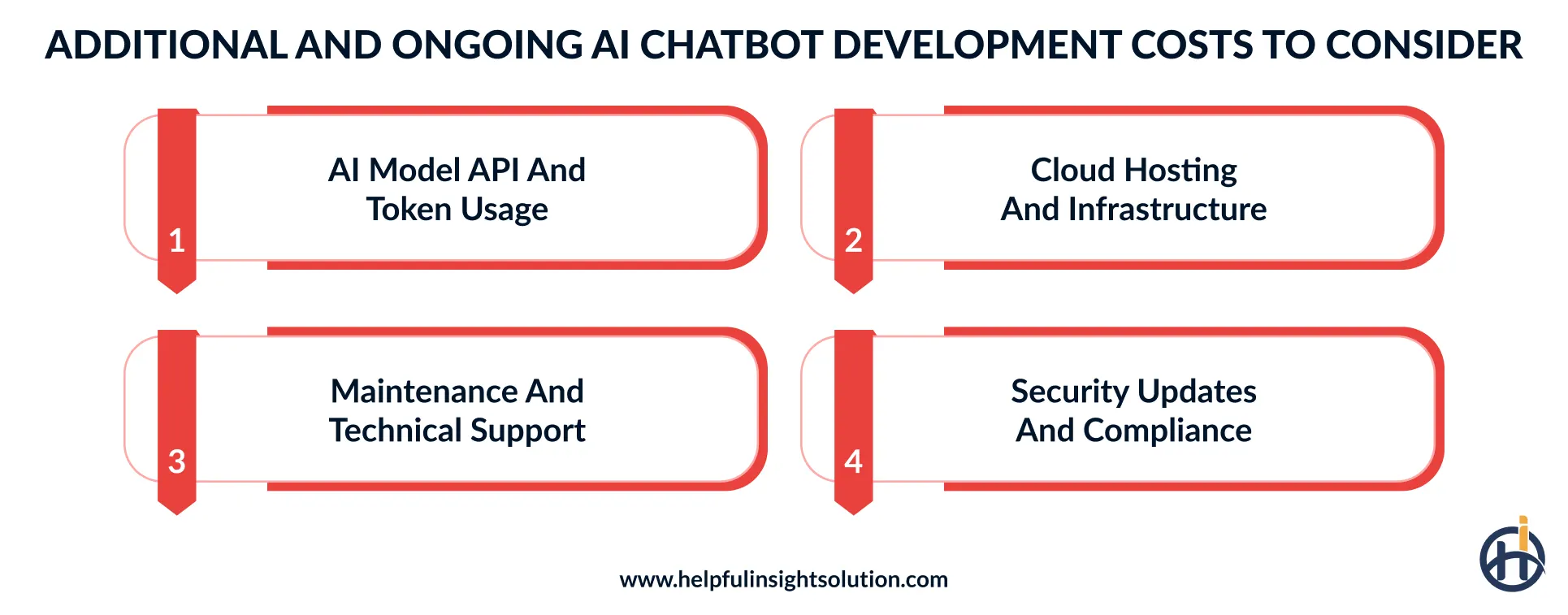
The initial budget does not always cover every expense involved in building and running a chatbot. Some costs only come up after the chatbot goes live. To get a clearer idea of how much a chatbot cost, let’s look at some additional expenses businesses should plan for.
1. AI model API and token usage
API usage is an ongoing expense once the chatbot goes live. Some AI model APIs charge based on token usage, while other services may charge per request or based on usage levels.
The total cost depends on the services used and how often the chatbot accesses them. In AI agent development, multiple model calls and external API requests to complete tasks can add to these recurring expenses.
2. Cloud hosting and infrastructure
A chatbot also needs server space in order to run and handle user requests. As the number of users grows, the demand for storage and computation will go up. Storing the chat history and all the other data associated with a conversational AI agent increases the monthly bills.
3. Maintenance and technical support
Once people start using a chatbot, new issues can arise. It may provide outdated answers, bugs may appear, or issues may arise with integrations. Regular checks and maintenance help keep the chatbot working properly. Organizations should include these recurring expenses in the cost.
4. Human review and escalation costs
Some customer queries are too complex for a chatbot to handle on its own. In such cases, the conversation needs to move to a support agent along with its chat history. Setting up this process and managing additional support staff can add to the overall AI development cost.
Custom AI chatbot development vs SaaS platforms: Cost comparison
There are two ways to get an AI chatbot for a business, either build a custom solution or use a ready-made SaaS platform. The costs and features vary between these options. The comparison below will make the differences clear and help you choose based on your business needs and budget.
| Factors | Custom AI chatbot development | SaaS AI chatbot platforms |
| Initial cost | $15,000-$80,000+ depending on features and complexity | $0 to $500 for initial setup |
| Monthly cost | $100 to $2,000+ for hosting, API usage, and maintenance | $50 to $1,000+ depending on the subscription plan |
| Integration cost | $3,000-$15,000 depending on the number and complexity of integrations | Often included in higher plans or charged separately |
| Maintenance and updates | Businesses pay for ongoing technical support and infrastructure management | Platform provider handles most updates and maintenance |
| Best for | Businesses that need custom features, specific integrations and greater control | Startups and small businesses that need a chatbot quickly, have limited budgets, and can work with standard features |
How to reduce AI chatbot development cost without cutting quality
Developing an AI bot does not always require a large budget. Businesses can build a chatbot that meets their needs and fits their budget by making a few smart choices. Here are some practical ways to reduce development expenses without affecting the quality of the AI solution.
1. Start with a focused MVP
There’s no need to add every single feature when you’re starting a chatbot project. It’s actually better to focus on the core purpose and build an MVP with just the features you need. You can always add more features later on based on user feedback. This also helps to keep the AI chatbot MVP cost within budget.
2. Use pre-trained models first
Rather than building a language model from scratch, you can take an existing pre-trained model and then connect it to relevant business data and adjust it to handle specific tasks. That way you avoid the cost of training a large-scale model and the associated infrastructure, making it easier to manage the monthly cost of running an AI chatbot.
3. Optimize token and API usage
Not every chatbot query needs a powerful AI model or a lengthy response. Simple questions can often be handled by smaller, less expensive models. Dedicated developers can also shorten prompts and reuse responses to repeated queries.
These steps reduce token usage and help businesses keep the LLM API cost for chatbot under control.
5. Partner with an offshore team
Another way to lower the generative AI chatbot development cost is to outsource the project to regions where developer hourly rates are generally lower, such as Asia and Eastern Europe. Businesses can work with skilled developers at more affordable rates without compromising on service quality.
Conclusion
The AI chatbot development cost is not just about the amount spent on building the chatbot. It is also about how well the final product fits business needs and supports daily operations.
Before setting a budget, businesses should consider the problems the chatbot needs to solve, the users it will serve, and how it may need to grow in the future. This helps make a practical investment rather than spending on features that may not add much value.
Our AI chatbot development company builds secure and feature-rich chatbots for businesses across healthcare, eCommerce, finance, and other industries. We focus on creating solutions that meet business requirements and fit the planned budget without cutting down on quality.
We discuss the costs upfront, so there are no surprises later. Moreover, our consultants help businesses understand their options, plan their spending, and choose the right engagement model for working with our team.
Share your AI-based chatbot project details with us, and we will provide a personalized cost estimate.
FAQs
A simple AI chatbot usually takes 1 to 3 months to develop. An enterprise-level chatbot with advanced features, custom integrations, and complex workflows can take 6 to 12+ months.
The cost of AI chatbot integration usually ranges from $5,000 to $60,000 for standard systems. Large enterprise projects with complex connections may exceed $200,000.
The upgrade cost usually ranges from $10,000 to $30,000 or more. Using an existing AI model may cost less than building a custom LLM or RAG system.
The average monthly maintenance cost of an AI chatbot ranges from $100 to $10,000+. The amount depends on user traffic, hosting needs, API usage, and ongoing support.