


“Create a virtual world for patients to easily recover and doctors to practice their training.”
You have experienced the incorporation of AI and IoT technologies in various medical solutions for enhancing patient care. But you haven’t imagined that VR in healthcare can also improve clinical training and help patients to recover fast through virtual simulation.
It increases the treatment success rate by 40%, allowing more patients to use this technology. The integration of virtual reality and healthcare also helped doctors to enhance their training through digital human anatomy.
It is surprising to know that the medical education segment has a 29% market share, which is the maximum among all other categories.
So, the implementation of virtual reality in medical field becomes more important for modern businesses and startups that want to improve healthcare standards. They must know how VR improves rehabilitation, mental health, and clinical processes.
For a better understanding, we will explore the best use cases of virtual reality in medicine with some benefits and challenges. It’s time to tighten your seatbelts and come along with us on this journey, exploring virtual healthcare.
Market Stats on VR-Based Healthcare Platforms
The role of virtual reality in healthcare is to boost patient health, enhance medical training, and improve clinical efficiency. To grow in this market, businesses must invest in mobile app development to create VR-based medical solutions for mobile users and become a market leader.
- The size of the global VR-driven healthcare market is $7.6 billion in 2026, where North America dominated with a 36.7% share in the last year.
- The overall market revenue will reach $66.9 billion by the end of 2034, with a rapidly growing rate of 31.3% CAGR over this duration.
- The total number of VR devices shipped was 560 million, which accounted for a share of 48% in the hardware market.
- In North America, the total revenue generated in 2026 is $2.8 billion, with the USA having a market volume of $1.8 billion in the same year.
- The application segment describes that training platforms have a market share of 29%, as 82% of healthcare professionals are using these tools.
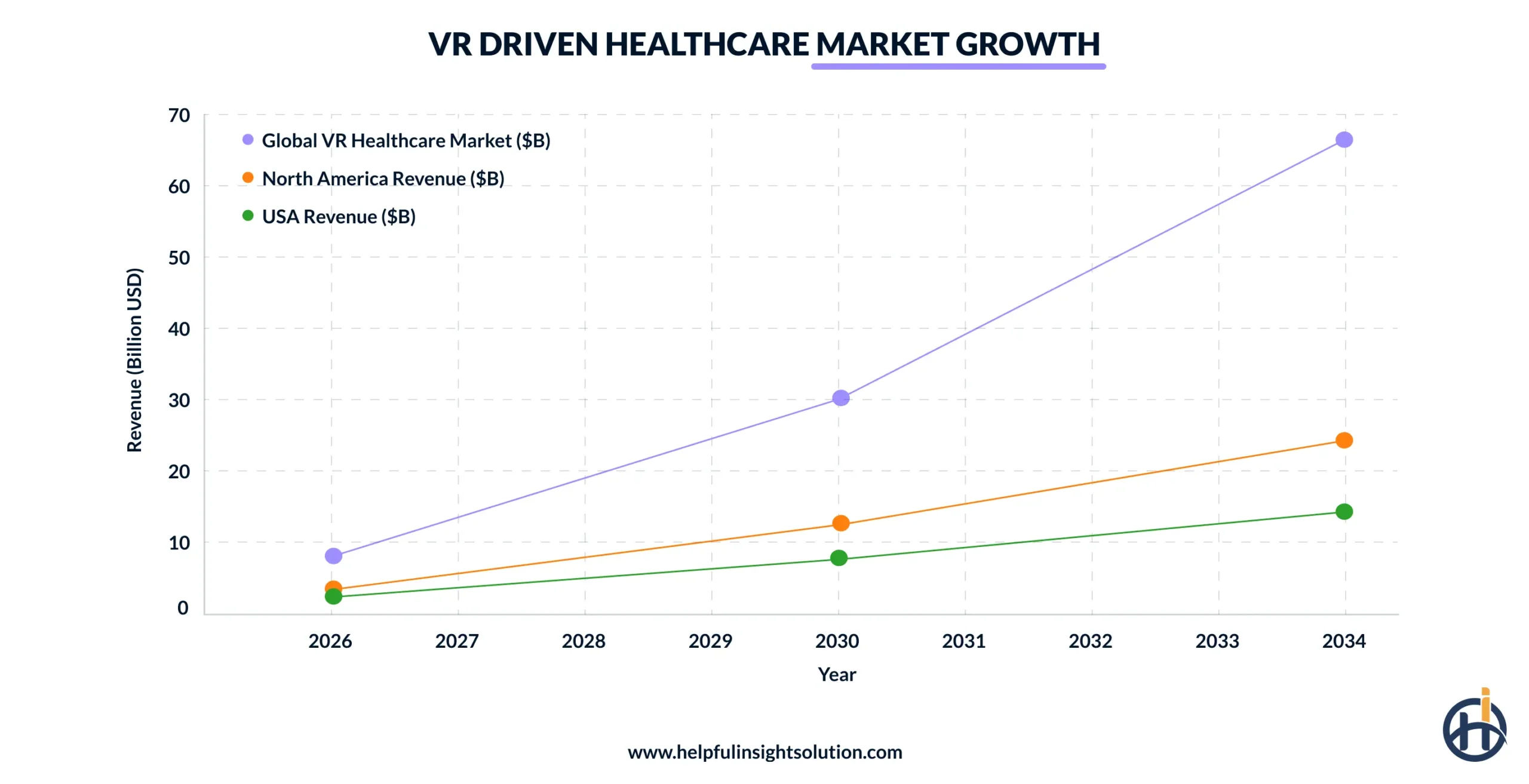
The integration of VR and healthcare helped businesses grow rapidly, creating multiple opportunities for them in rehabilitation and therapy. These market stats show the potential of this technology to improve healthcare standards for patients and doctors.
Benefits of Integrating Virtual Reality in Healthcare
Do you know the benefits of virtual reality in healthcare? If not, then this is the section for you that talks about different advantages, like improved patient care, reduced expenses, and increased engagement.
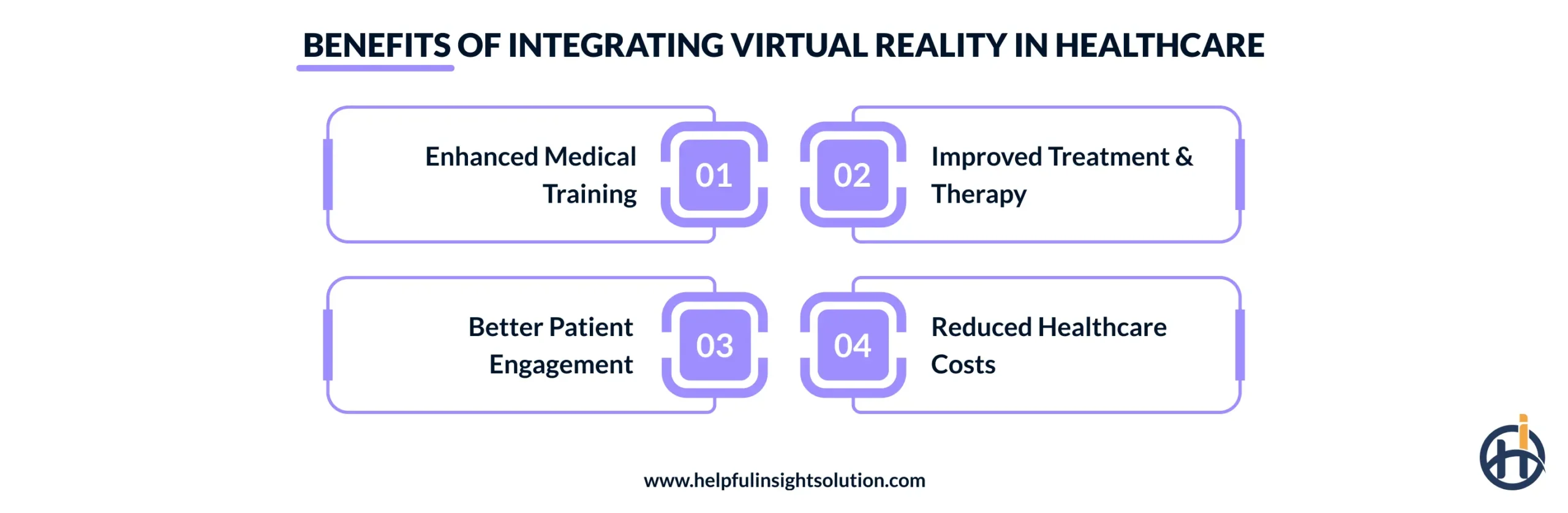
1. Enhanced Medical Training
The use of VR in the medical industry helps multiple doctors to easily practice virtual operations to avoid failure during the actual tasks. This improves their confidence and encourages them to perform the surgeries correctly through accurate suggestions.
2. Improved Treatment & Therapy
The improvement in therapies and treatment processes is one of the best advantages of VR for patients, which helps in quick recovery. This technology helps people to experience better rehabilitation through detailed descriptions and interactive elements.
3. Better Patient Engagement
By using virtual reality for patients in healthcare, you can easily increase engagement and retain existing users instantly. It is beneficial to implement strong UI/UX design solutions that can bind patients for a long time, ensuring trust and reliability.
4. Reduced Healthcare Costs
One of the widely accepted benefits of VR in healthcare is that it helps patients reduce their expenses, such as hospital fees and consultation charges. Additionally, this technology prevents doctors from spending extra money on medical training.
Types of VR-Based Apps in Healthcare
There are several types of VR applications in healthcare that help both patients and medical professionals. They provide features for quick recovery, clinical training, and stress management through simulation.
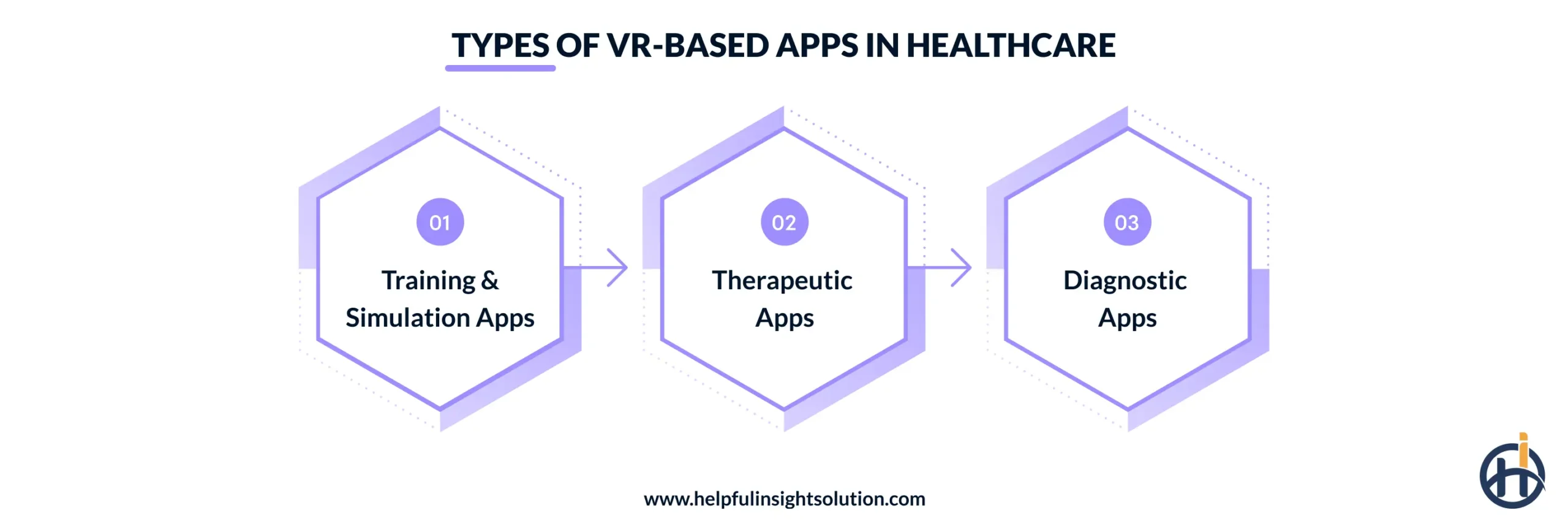
1. Training & Simulation Apps
This category provides virtual reality for medical professionals with an immersive environment to practice operations. It includes procedural training, emergency cases, and clinical decision-making for hospitals and universities.
Example: The Osso VR platform is highly used in medical surgeries to avoid failure and ensure accurate treatment.
2. Therapeutic Apps
The best healthcare apps provide therapies to improve mental health, reduce pain, and increase the recovery process. They offer the best VR-powered healthcare experiences for remote patient care in a medically guided environment.
Example: The XRHealth platform manages chronic pain and rehabilitation with FDA-authorized solutions.
3. Diagnostic Apps
The role of VR applications in the healthcare industry is to provide interactive visuals that can be easily understood through 3D modeling. They examine different types of MRI and CT scans by using AI-powered algorithms for better analysis.
Example: The VR DICOM platform scans various body parts to give different enhanced visuals in a digital way.
Best Use Cases of VR in Healthcare Systems
Several applications of VR in healthcare help medical experts to easily improve the treatment process for patients. These use cases target different clinical tasks, like therapies, remote care, and medical practices.
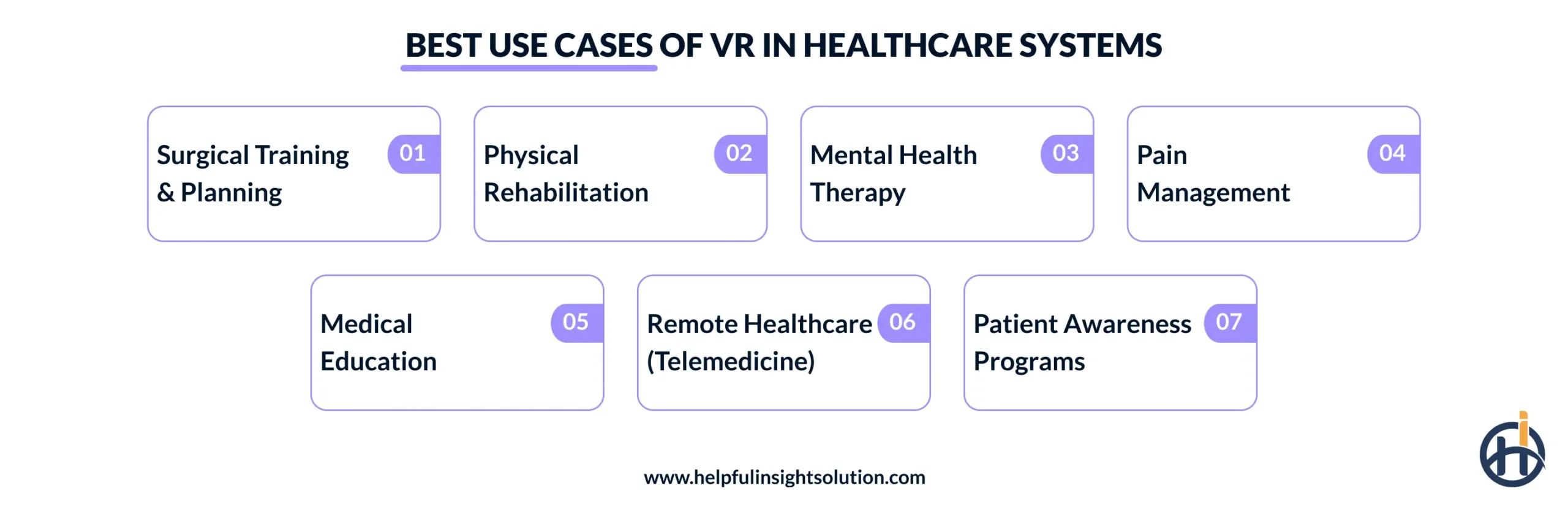
1. Surgical Training & Planning
It is one of the most common use cases of VR in healthcare, allowing doctors to practice different types of surgeries, such as cancer and hemorrhage. This helps medical professionals to improve their training, enhance clinical standards, and increase knowledge.
It is a real-world application that provides a risk-free environment with 3D models, ensuring patient safety and regulated healthcare procedures. Various orthopedic, neural, and general surgeons use this model to improve their skills by performing virtual operations, reducing the risk of failure.
2. Physical Rehabilitation
The use of VR in rehabilitation is the best way to enhance patients’ recovery through visual methods and digital experiences. It is highly beneficial for balance training, neurological conditions, and chronic disease management under real situations. This increases patient motivation, allowing them to recover instantly through biomechanical and nutritional tracking.
Patients get personalized treatment plans and gamified features that make exercises easy to perform. It helps people to recover from different injuries, trauma, disorders, and unhealthy addictions, like smoking.
3. Mental Health Therapy
The role of virtual reality in mental health is to treat patients suffering from various types of phobias, anxiety attacks, and PTSD (post-traumatic stress disorder). This provides Exposure therapy (VRET), Cognitive Behavioral therapy (CBT), relaxation methods, and social training skills to overcome issues.
It allows therapy experts to change scenarios based on the patient’s conditions, ensuring better treatment. This VR use case enables patients to encounter different social activities, such as public speaking, through interactive simulations, virtual elements, and digital experiences.
Read More: How to Develop a Mental Health App: Tracking Anxiety and Depression
4. Pain Management
This is one of the unique use cases of virtual reality in healthcare that distracts patients from experiencing pain during surgeries and therapies. It targets both acute and chronic pain, including wound injuries. recovery from fatigue and arthritis treatment.
Businesses can hire app developers to implement the pain management model, which increases patient satisfaction and reduces medication. It reduces discomfort for patients by reducing anxiety, enhancing the physiotherapy process, and controlling brain signals to ensure a better healthcare environment with safety.
5. Medical Education
By using VR in medical field for education and practice, businesses can increase knowledge retention by 74% as compared to traditional standards. It is easy to understand the human anatomy and medical procedures through interactive 3D models, offering digital visualization.
Additionally, it allows doctors to handle various emergencies like cardiac arrests, traumatic injuries, and mass casualties. Through VR headsets, medical students can easily understand their mistakes and get suggestions. This ensures safety, accessibility, scalability, and retention through enhanced care management.
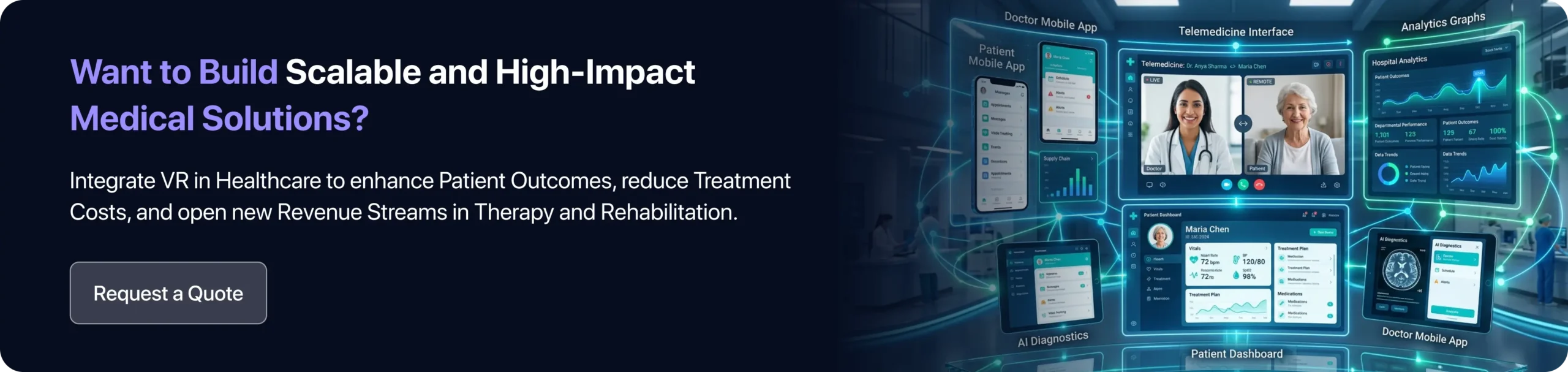
6. Remote Healthcare (Telemedicine)
An entrepreneur may implement VR technologies in healthcare to boost telemedicine services, such as doctor consultations, remote patient care, and AI-powered diagnosis. The use of 3D avatars helps to improve the experience for kids who are suffering from mental and physical illness.
It allows doctors to generate visual effects, describing various healthcare issues, remedies, treatment processes, and complications. Patients can use smart glasses and other VR devices to understand different therapies and recovery procedures with real-time communication facilities.
7. Patient Awareness Programs
Patients can improve their knowledge by understanding various diseases, medical procedures, and recovery plans through virtual settings. It is one of the best real-life use cases of virtual reality in healthcare that allows users to study different types of scans, clinical reports, and prescriptions.
The simulations help patients to manage multiple chronic diseases like diabetes and COPD. This helps to reduce stress during operations, improve engagement, and decrease recovery time. It is important to maintain health compliance and ensure better treatment under guided supervision.
Major VR Challenges to Overcome in Healthcare
Some challenges of VR in healthcare integration, like increasing cost and user privacy, may occur for businesses. They must resolve these risks instantly to deliver the best services for patients and doctors.

1. High Implementation Costs
The cost to implement VR in healthcare is high because it is a modern technology that requires multiple resources. It is dependent on different factors, which include technical integration and complexity level.
Solution: A business investor should use third-party resources to build affordable VR-enabled healthcare solutions, decreasing the overall price.
2. Technical Limitations
The integration of VR technology for healthcare may involve certain design, medical, and operational challenges. Its excessive use may also affect the health of users, affecting their stability and concentration.
Solution: You must choose the right VR tech stack for healthcare app creation, which includes SDKs, 3D tools, and software engines, like Unity.
3. Data Security Concerns
One of the most common challenges in implementing virtual reality in healthcare is the security of patient and medical data. This can encourage cyberattacks on PHI, EHRs, and other sensitive health information.
Solution: It is highly recommended to use AI with cybersecurity for fraud detection, attack prevention, and threat prediction in real-time.
Shape Your Healthcare Business with Helpful Insight’s VR Experience
Are you looking to implement the VR technology in your existing medical systems or create modern solutions? It is the right time for you to start by partnering with a reliable healthcare app development company.
We help our clients to understand the future of VR in healthcare, such as AI and IoT integration for improving clinical experiences. Our experts focus on reducing the cost of virtual reality in healthcare by adopting various technical standards.
You can help healthcare professionals, hospital staff, and patients to experience a digital environment by using virtual reality in medicine field.
It can increase overall engagement, business growth, and market stability in the upcoming time. This is the real impact of VR technology in healthcare that brings more revenue and targets specific user concerns.
FAQs
Virtual Reality technology offers a digital experience and a non-real environment to users through the simulation of various elements and objects. Augmented reality adds a digital experience to the real world with the help of a mobile camera. Both technologies are different in terms of application, usage, and features, targeting multiple users.
The main role of VR in the healthcare industry is to enhance patient care and medical training through simulation techniques. Additionally, it is also used for pain management, mental therapy, rehabilitation, and diagnostics. It provides 3D models for doctors to perform human anatomy, conduct clinical practices, and understand drug compositions.
The average cost of integrating virtual reality in the healthcare sector is dependent on various factors, such as app complexity and tools required. With limited functionalities, the cost is between $8K and $25K, which includes normal simulation levels. The overall cost may rise to more than $50K if the technical requirements increase.
In virtual reality, 3D modeling is one of the main components that help users to easily visualize various things through advanced simulation. It creates a virtual model of the environment, allowing patients and doctors to perform different activities. The 3D model interacts with the user, providing descriptions of mental illness or training equipment.
The virtual reality in the medical sector provides multiple features that help patients recover quickly. The working of VR technology is discussed in the following manner:
- It targets brain activities that improve the overall recovery process.
- Patients can perform different tasks like walking and balancing.
- This technology also enhances mental health through virtual environments.
- It allows patients to easily change the settings based on their preferences.
- VR works on the past medical history of patients to provide the best outcomes.