

“Improve your healthcare business by developing management software with real-time services.”
Do you feel that without a digital platform, it is difficult to manage patients, doctors, healthcare services, and other medical tasks? This may be a problem for most businesses across the globe, as they want to improve their facilities, enhance growth, and increase user engagement.
The idea to develop healthcare management software for hospitals and clinics is really a good initiative at present. This helps to streamline the medical workflow through instant scheduling, bookings, and online consultation.
It is quite fascinating to know that more than 76% of people aged 55 use telemedicine services for remote care. The overall number increased to more than 30 million, which is the maximum in the past few years.
These healthcare management solutions are not only benefiting the USA or North America but also impacting other regions in the world.
Businesses that want to improve healthcare workflow management need a complete guide for implementation. So, you should read this blog that tells about the process, cost, and features of medical practice management software.
The Global Healthcare Landscape for Businesses
The healthcare management has become smoother due to technical advancements, increased investments, and modern innovations. A business investor needs to understand the growth potential and revenue expectations before investing in the software or mobile app development for patients and doctors.
- The healthcare providers’ market revenue is $8.7 trillion in 2026, with the USA having the maximum revenue of $3.4 trillion across the globe.
- By the end of 2030, the overall revenue will reach $10.2 trillion with a constant rate of 4.1% CAGR between 2026 and 2030.
- The healthcare analytics segment is generating a revenue of $36 billion in 2026, with North America having 49% market share.
- This market will reach $262.5 billion by the end of 2034, with an increasing growth rate of 28.2% CAGR between 2026 and 2034.
- The home healthcare market is $459.3 billion in 2025, which is going to reach $747.7 billion by 2030, and grow at a rate of 10.2% CAGR between 2025 and 2030.
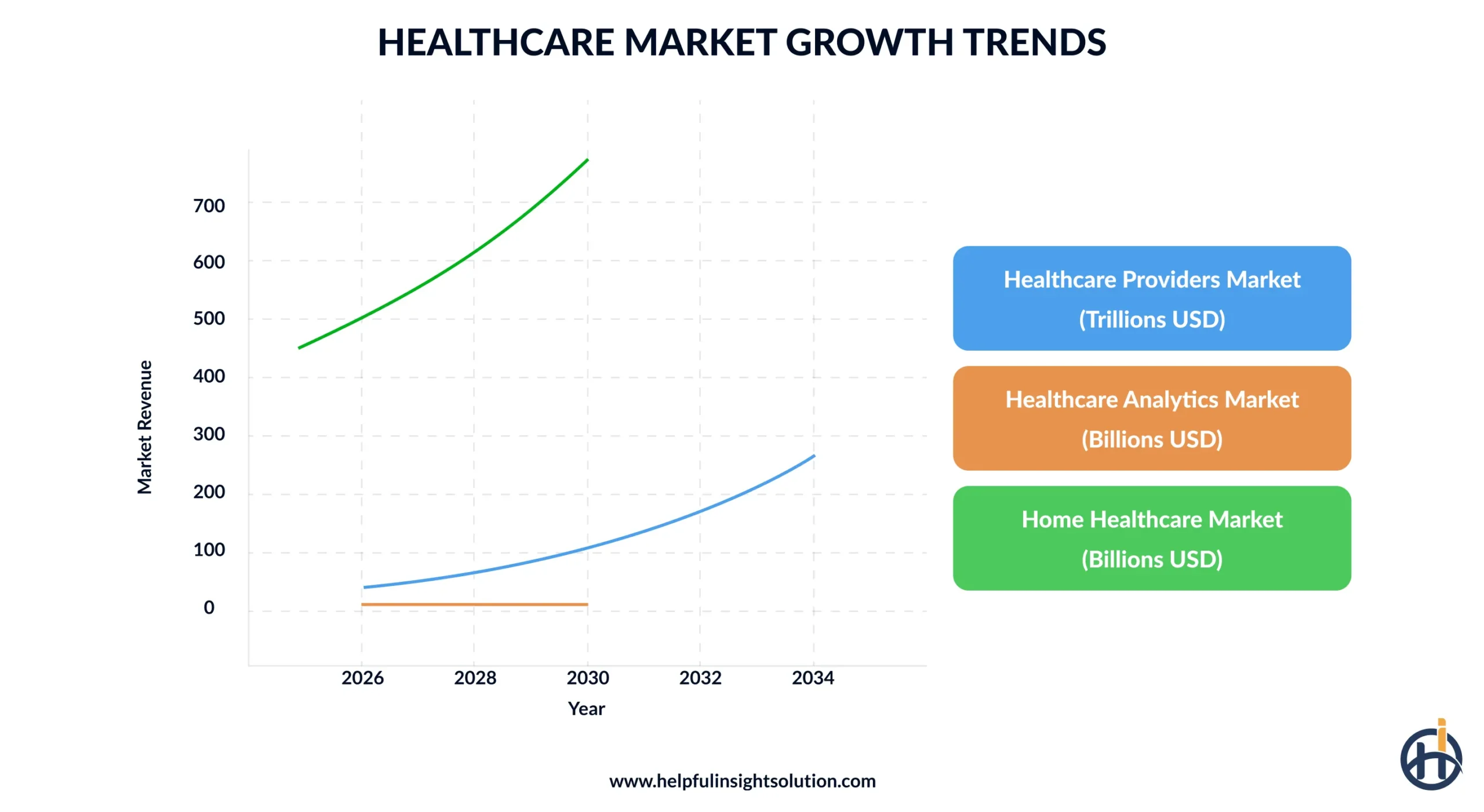
These market figures show that there is a lot of scope for entrepreneurs in this industry with multiple opportunities. So, you should know various aspects to create healthcare management system software and become a market leader in the future.
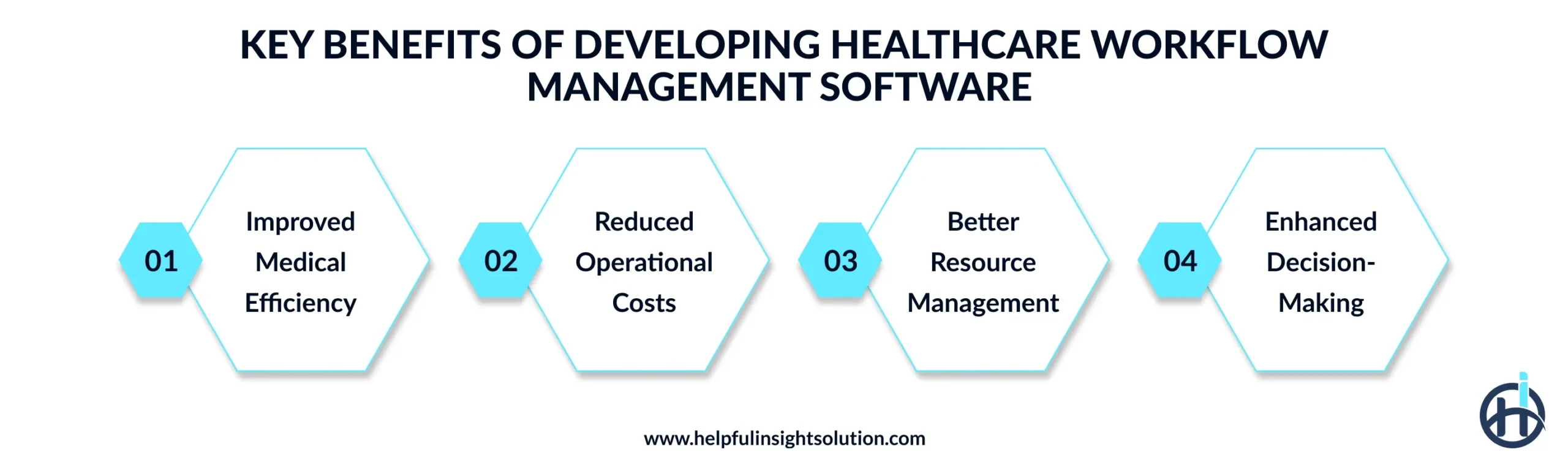
Key Benefits of Developing Healthcare Workflow Management Software
A healthcare software solution provides multiple benefits to a business investor in terms of growth and efficiency. You can build similar platforms to manage workflow and streamline multiple tasks.
1. Improved Medical Efficiency
A healthcare management platform helps various medical centers, such as hospitals or clinics, to improve their operations. Additionally, it allows smooth patient and prescription management, which enhances medical efficiency at all major levels.
2. Reduced Operational Costs
Businesses can track activities, such as inventories, pharmacy deliveries, and treatments, to manage expenses. It is crucial to integrate the right healthcare management software development services into the platform to monitor and reduce additional costs.
3. Better Resource Management
With a healthcare learning management system, it is easy to handle multiple resources, like medical files, patient lists, and operation timings. You can create health insurance software that allows patients to manage claims, get instant premiums, and check policies.
4. Enhanced Decision-Making
You should make a hospital management system that helps in making accurate decisions for patients, staff, and tasks. It uses advanced technologies like machine learning and natural language processing to predict requirements based on scalability.
Essential Features of Medical Management Software
In this section, we are discussing some must-have features of healthcare management software that help entrepreneurs attract users. The role of UI/UX design is important in developing interactive features for patients, doctors, and admins.
For Patients
Various specialized healthcare software solutions provide patient panel features that include instant bookings, lab tests, and medications. They reduce waiting time and enhance the overall experience.
| Feature | Description |
| Online Appointment Booking | It allows patients to easily schedule, reschedule, or cancel appointments with doctors. |
| Digital Health Records Access | Patients can securely view their medical history, prescriptions, and test reports anytime. |
| Telemedicine / Video Consultation | This feature enables remote consultation with doctors through secure video or chat. |
| E-Prescription Access | It allows patients to receive and download digital prescriptions directly from doctors. |
| Appointment Reminders | The software provides automated notifications via SMS, email, or app to reduce missed appointments. |
| Online Bill Payment | This feature allows patients to pay medical bills securely using digital payment methods. |
| Lab Test Booking | Patients can easily schedule diagnostic tests and view results online through management platforms. |
| Medication Reminders | The medical care software sends alerts to patients to take medicines at the correct time. |
| Patient Profile Management | Users can easily update personal details, insurance information, and health data. |
| Health Monitoring Integration | The software is integrated with wearable devices to track health metrics like heart rate and activity. |
For Healthcare Providers
The hospital management software offers features like staff management, billing, and insurance claims. This streamlines healthcare workflow, boosts medical efficiency, and enhances customer engagement.
| Feature | Description |
| Patient Registration Management | This feature allows hospitals to register and maintain detailed patient records digitally. |
| Appointment Scheduling System | A health management system helps to manage doctor schedules and patient appointments efficiently. |
| Electronic Medical Records (EMR) | It stores patient medical history, diagnoses, treatments, and reports in a centralized system. |
| Billing and Invoicing Management | The software generates accurate invoices, manages payments, and tracks financial records. |
| Inventory & Pharmacy Management | It is easy to track medicines, equipment, and medical supplies in real time with medical software. |
| Lab Management System | Hospitals can easily manage lab test reports, human samples, and lab equipment with the software. |
| Doctor & Staff Management | A medical office management platform organizes staff schedules, roles, and performance tracking. |
| Bed & Ward Management | This feature helps hospitals to easily monitor room availability and bed allocation. |
| Telemedicine Integration | It allows doctors to conduct virtual consultations with patients through telemedicine services. |
| Insurance Claim Management | The medical software also simplifies insurance verification and claim processing. |
For Admins
The admin panel features help to maintain security, ensure data communication, and provide record access. The healthcare administration software delivers a dashboard for tracking medical activities.
| Feature | Description |
| User Role & Access Management | Admins can easily control permissions for doctors, staff, and patients within the system. |
| Dashboard & Analytics | A dashboard provides information on hospital performance, patient data, and revenue reports. |
| System Configuration | This feature allows admins to customize workflows, modules, and system settings. |
| Data Security & Compliance | It ensures compliance with standard healthcare regulations and protects sensitive data. |
| Multi-Hospital Management | The software enables the management of multiple hospitals or branches from one platform. |
| Audit Logs & Activity Tracking | It can easily record various user activities for transparency and security monitoring. |
| Report Generation | The clinical tracking software generates detailed operational, financial, and patient reports. |
| Notification Management | It is easy for admins to control system alerts, announcements, and communication channels. |
| Integration Management | This feature allows integration with third-party systems like labs, payment gateways, and insurance providers. |
| Backup & Data Recovery | It protects system data through automated backups and various disaster recovery options. |
How to Develop Healthcare Management Solutions?
You can build healthcare management software by following a certified development process that includes various stages. Here, we have discussed these steps from planning to deployment in detail.
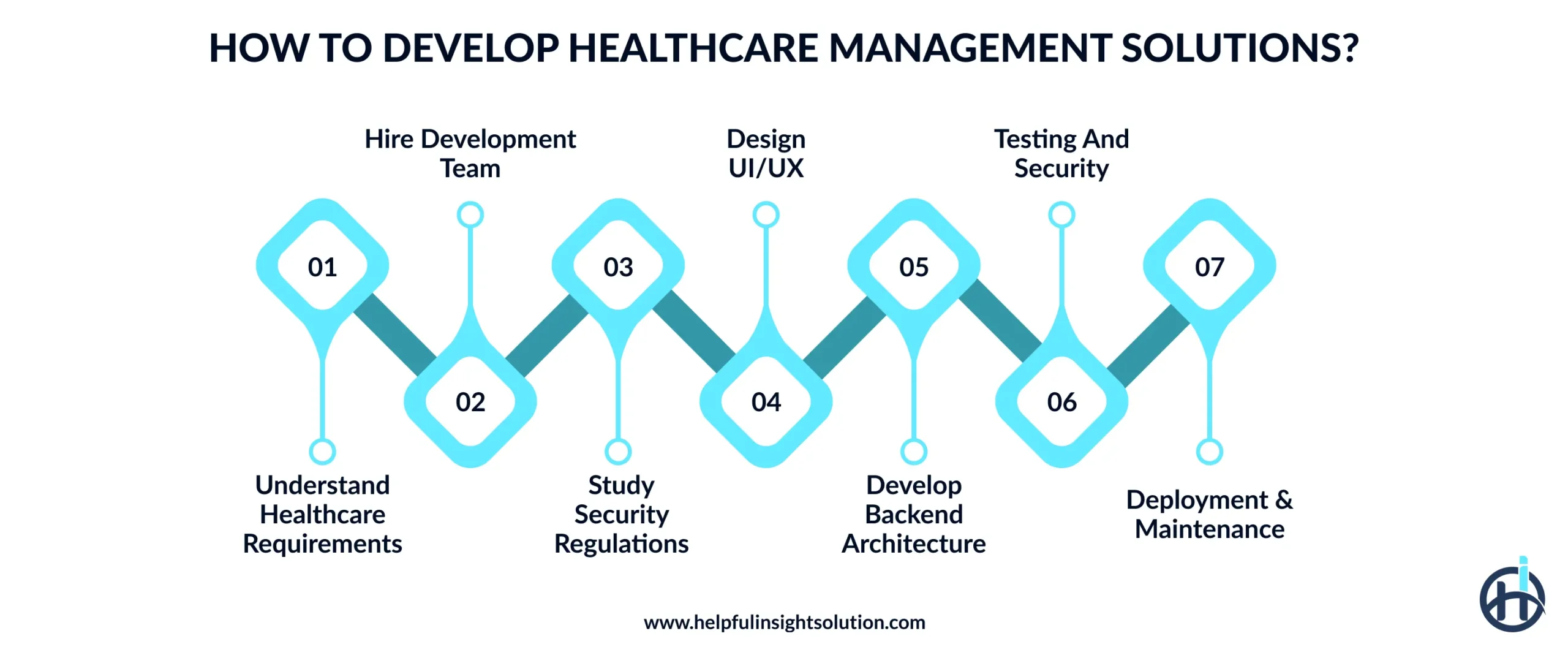
1. Understand Healthcare Requirements
Before starting anything, the first step is to understand user pain points, business issues, and market demands. You need to identify the current medical innovations and new technologies that are used for creating advanced platforms to manage healthcare operations.
In a guide to healthcare management software development, entrepreneurs should list important metrics, such as budget requirements, feature specifications, and target audiences.
2. Hire Development Team
The next stage is the hiring of a healthcare app development company that provides technical assistance and access to top business models. You can connect with skilled experts who know how to use advanced tools and technologies for developing clinical management software.
Businesses can create MVP models, identify key features, and select their own tech stack by signing non-disclosure agreements to keep the ideas confidential.
3. Study Security Regulations
As you know, healthcare is a very sensitive matter for patients in terms of data security and treatment planning, so it is crucial to know standard regulations. These include HIPAA, HL7, FHIR, and GDPR, which target different regions and policies.
You can implement these protocols in the healthcare operations management software based on the security requirements and the number of cyber cases in the region.
4. Design UI/UX
Now, you can design the user interface by understanding different UI and UX needs, such as navigation, responsiveness, page scrolling, and division blocking. You can create healthcare management software by wireframing the featured elements that target user engagement and retention.
There are different automated tools, such as Figma and Codepen, available for frontend designing that provide page layout, box modeling, and padding features.
5. Develop Backend Architecture
A healthcare management software development company helps you to integrate dynamic APIs, databases, and server-side logic. The developers use advanced tools and cloud-based solutions to store user information in a secure environment, preventing threats.
For desktop software, languages like Java and C# are used at a large scale because they provide more security, transparency, and accessibility to healthcare providers.
6. Testing and Security
Software testing is an important phase that helps in detecting technical errors and marginal risks that can affect the platform by harming user information. QA experts list various issues in a detailed report that helps to judge the right security measures for a healthcare learning management system.
You can use standard tools like Wireshark and TCPdump that identify unauthorized packets from unknown sources and implement multiple security layers.
7. Deployment & Maintenance
It’s time to deploy the medical service platform on different integrated healthcare networks, targeting hospitals, clinics, and incubation centers. You should make healthcare management software with post-development services to ensure smooth performance, efficiency, and productivity.
The software maintenance is the last stage, which helps you to enhance existing features, implement newer versions, and update data management facilities.
Top Examples of Healthcare Management Systems
There are various healthcare management systems available for hospitals or clinics that easily handle patients. Additionally, they help to improve overall efficiency and enhance experiences in real time.
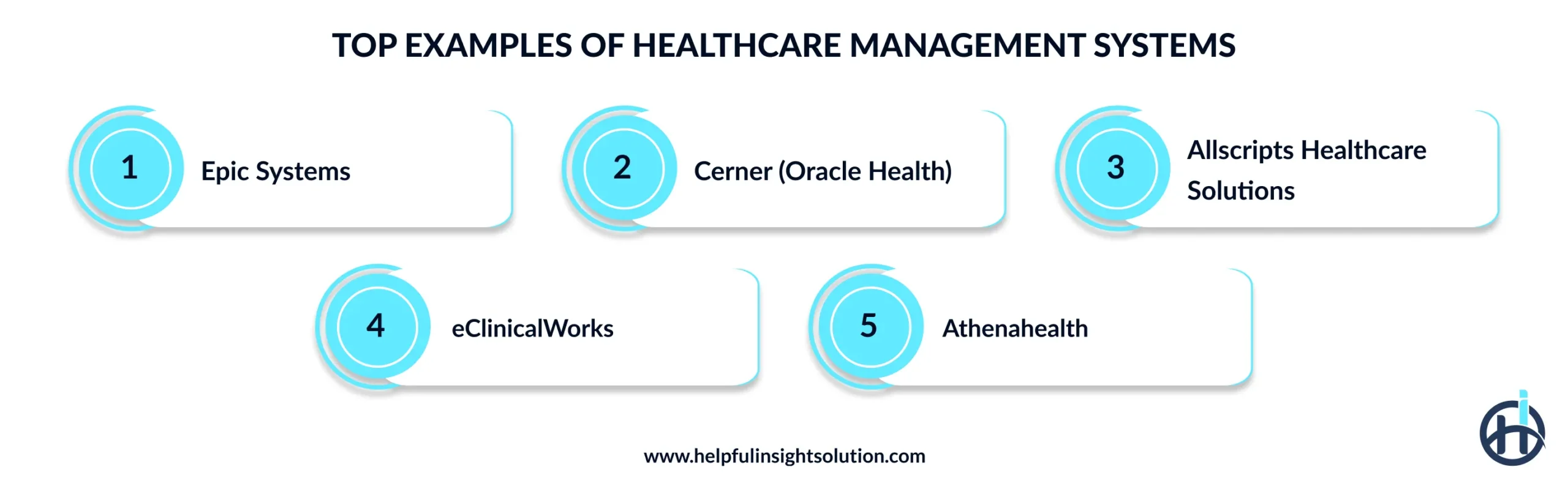
1. Epic Systems
It is the most widely used patient management system, offering integrated electronic health records (EHR), healthcare management, and billing solutions. It helps hospitals and healthcare providers to streamline clinical workflows, improve patient care, and manage data efficiently.
Industrial Use: It is widely used in large hospital networks to manage electronic health records (EHR), patient scheduling, billing, and clinical workflows in integrated healthcare systems.
2. Cerner (Oracle Health)
This electronic health records (EHR) software provides advanced healthcare management solutions, including population management and data analytics. It enables healthcare organizations to improve patient outcomes through real-time data access and coordinated care systems.
Industrial Use: It is used by healthcare organizations to streamline patient data management, clinical documentation, and real-time decision support across hospitals and clinics.
3. Allscripts Healthcare Solutions
This medical scheduling software delivers cloud-based healthcare solutions that support EHR, practice management, and patient engagement. This hospital management system helps healthcare providers to enhance operational efficiency and ensure better communication.
Industrial Use: The software is applied in hospitals and clinics to manage patient records, coordinate care, and improve clinical and financial operations.
4. eClinicalWorks
It is a comprehensive medical practice management software designed for clinics and medical practices, offering EHR, telehealth, and billing management features. It helps doctors to manage patient records, automate workflows, and improve healthcare delivery.
Industrial Use: It is commonly used in secondary clinics and small to mid-sized healthcare centers for EHR management, telehealth services, and patient engagement.
5. Athenahealth
This healthcare information system provides cloud-based management solutions focused on medical billing, EHR, and patient engagement. It helps healthcare organizations to optimize revenue cycles, improve care coordination, and enhance patient experiences.
Industrial Use: It is used by medical professionals to manage cloud-based EHR, medical billing, and revenue cycle management to improve operational efficiency.
Tech Stack Required for Making Clinical Management Software
The use of an advanced tech stack to build an engaging and secure medical practice management software is important for a business investor. It is crucial to know the latest tools that help in developing responsive interfaces, a strong backend, and dynamic databases.
You can easily create innovative healthcare IT solutions by implementing these technologies. A detailed table is shown here for your explanation.
| Component | Tools/Technologies | Description |
| Backend Framework | Node.js, Java (Spring Boot), .NET Core | Handles business logic, APIs, and core system operations securely. |
| Database Management | PostgreSQL, MySQL, MongoDB | Stores patient records, medical history, and transactional data efficiently. |
| Cloud Infrastructure | AWS, Microsoft Azure, Google Cloud | Provides scalable, secure, and compliant hosting environments. |
| API Management | REST, GraphQL, Swagger | Enables smooth communication between different healthcare systems and services. |
| Authentication & Security | OAuth 2.0, JWT, Okta, Auth0 | Ensures secure user access, identity management, and data protection. |
| Data Encryption | AES-256, TLS/SSL | Protects sensitive healthcare data during storage and transmission. |
| Integration Engine | Mirth Connect, Apache Camel | Facilitates integration with EHR, EMR, labs, and third-party systems. |
| Messaging & Queue System | Apache Kafka, RabbitMQ | Manages real-time data flow, notifications, and asynchronous processing. |
| DevOps & CI/CD | Docker, Kubernetes, Jenkins, GitHub Actions | Automates deployment, scaling, and continuous integration workflows. |
| Monitoring & Logging | Prometheus, Grafana, ELK Stack | Tracks system performance, logs events, and ensures reliability and uptime. |
What is the Cost to Build Healthcare Management Software?
There is a concept other than the development process, which is crucial to know for an entrepreneur. It is the cost to develop healthcare management software that is dependent on several market factors, such as location, experience, and complexity.
The average cost of developing medical software ranges from less than 30K to more than 200K, which may increase due to advanced integrations. Various parameters are responsible for affecting the overall price and the timeline.
For example, the healthcare management software development cost in Western countries is more than in India and the UAE, as the architectural model is expensive.
A business investor must use a cost calculator to get the estimated price by considering all factors and parameters. This helps businesses in managing the rates through various cost-reducing methods.
Read Also– Types of Healthcare Software: Features, Benefits, and Examples
Major Challenges in Healthcare Management Software Development
Entrepreneurs use healthcare management software for streamlining operations and improving user engagement. But some challenges may occur in the development phase that are important to know for a business investor. We will discuss them with their respective solutions in this section.
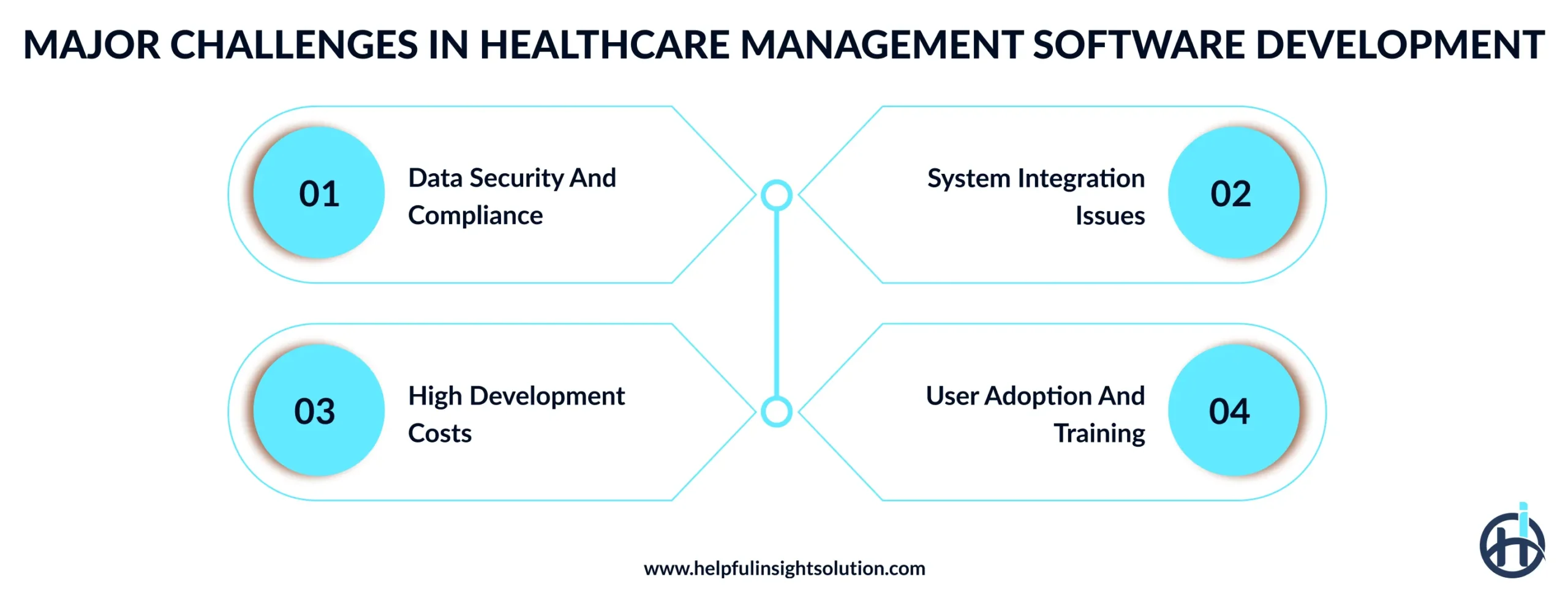
1. Data Security and Compliance
It is difficult to ensure the security of medical practice management software because it requires additional resources. Healthcare regulations like HIPAA compliance are also a challenge for investors.
Solution: Businesses can implement AI algorithms to detect security issues and prevent threats.
2. System Integration Issues
The integration of medical office management software with EHR/EMR is a challenge due to high complexity. Various APIs, databases, and cloud solutions also require a strong and supportive structure.
Solution: You can implement third-party services that are affordable and reliable for system integration.
3. High Development Costs
Another obstacle is the cost of making medical billing and coding software, which increases due to advanced technologies. The development price is affected by expansion in the business requirements.
Solution: It is crucial to use various cost-reducing methods, like MVP development, to manage costs.
4. User Adoption and Training
Users cannot easily accept online medical services due to trust issues and personal satisfaction. Also, it is difficult to train hospital staff if the features are complex and require technical knowledge for operation.
Solution: The top healthcare management software ensures responsiveness and smooth navigation.
Why Choose Helpful Insight for Creating Software for Healthcare Management?
As we have discussed in the development process about the importance of hiring a development partner, it’s time to choose one. Helpful Insight is a leading name that is creating advanced healthcare management software solutions for staff management, patient management, and telemedicine.
Our innovative customizable solution for healthcare management provides instant booking and rescheduling services. We help businesses to easily manage the cost to build healthcare management software with different revenue models.
If you are looking to develop patient waitlist management software, then our experts will help you to understand business models, choose the right tech stack, and ensure platform security.
Additionally, it is now easy to deploy healthcare data management solutions in the market due to standard protocols. So, you should immediately start with us to ensure regulatory compliance, increase user reach, and improve worldwide brand visibility.
FAQs
The development time of a platform for healthcare management is between 2 months and 5 months due to limited features and functionalities. This duration may expand to 8 months or more because of additional requirements and changes in the development approach. Businesses should manage the overall timeline to reduce development costs and resources.
Most management systems for hospitals or clinics comply with standard HIPAA regulations to safeguard patients’ information and medical records. They follow various interoperable healthcare protocols like HL7 and FHIR for secure data management. This ensures the medical operations’ privacy, transparent patient communication, and enhanced treatments.
For a business investor, it is crucial to know the leading trends in healthcare management based on patients and doctors. Some of the major innovations are discussed in the following manner:
- AI and data analytics improve diagnosis, patient outcomes, and operational efficiency.
- Remote patient monitoring enables continuous patient care inside and outside hospitals.
- Various personalized care platforms enhance patient engagement and healthcare accessibility.
To create software for managing various healthcare operations, like consultation, billing, and diagnosis, you must use the best services. A few of the most important ones are described as follows:
- Custom solutions can meet specific hospital, clinic, and healthcare requirements.
- System Integration with EHR, EMR, and billing systems for data exchange.
- You can use HIPAA compliance, strong data security, and ongoing updates.
Yes, software that manages both patients and doctors provides advanced data security services, preventing unauthorized attacks or breaches. It uses encrypted algorithms, such as OAuth 2.0, MFA, and XML scripting, to protect sensitive healthcare information. Users can easily access their medical data without disturbing the security layer, ensuring overall privacy.