

Fantasy sports apps have completely changed how fans engage with their favorite sports and enjoy leagues like NHL or NBA. These apps cater to sports fans of different types and skill levels by allowing them to create virtual teams, compete in contests, and win prizes.
If you’re thinking about creating a fantasy sports app, it’s important to know there are two main types, daily fantasy and season-long. Each has its own style, so you’ll need to decide which one works best for your idea before starting.
Right now, the daily fantasy sports market is the biggest, but the season-long fantasy sports market is also growing fast. Both app types have strong appeal and significant potential for success.
In this blog, we’ll take a closer look at the differences between daily fantasy vs season-long fantasy sports apps to help you make the best choice.
What is a Daily Fantasy Sports App?
Daily fantasy sports apps are a kind of mobile application that lets users create teams with real-life players and compete in short contests, lasting just a day or a week. Players earn points based on how their team performs, and if their team scores high, they win cash prizes.
The global Daily Fantasy Sports Market is expected to grow from $12830 million in 2026 to 27296.58 million by 2035, with an 8.75% annual growth rate. This growth is driven by the convenience that DFS apps offer, players can enjoy quick gameplay and see results the same day. Some of the best daily fantasy sports apps are DraftKings, Fanduel and PrizePicks.
Reasons Behind the Popularity of Daily Fantasy Sports Apps
You will be amazed to know that the North America leads the Daily Fantasy Sports market with 60-65% of users, followed by Asia-Pacific with 15-18%. This shows how popular DFS apps are. In this section, we’ll explore why these apps are so widely enjoyed and growing fast.
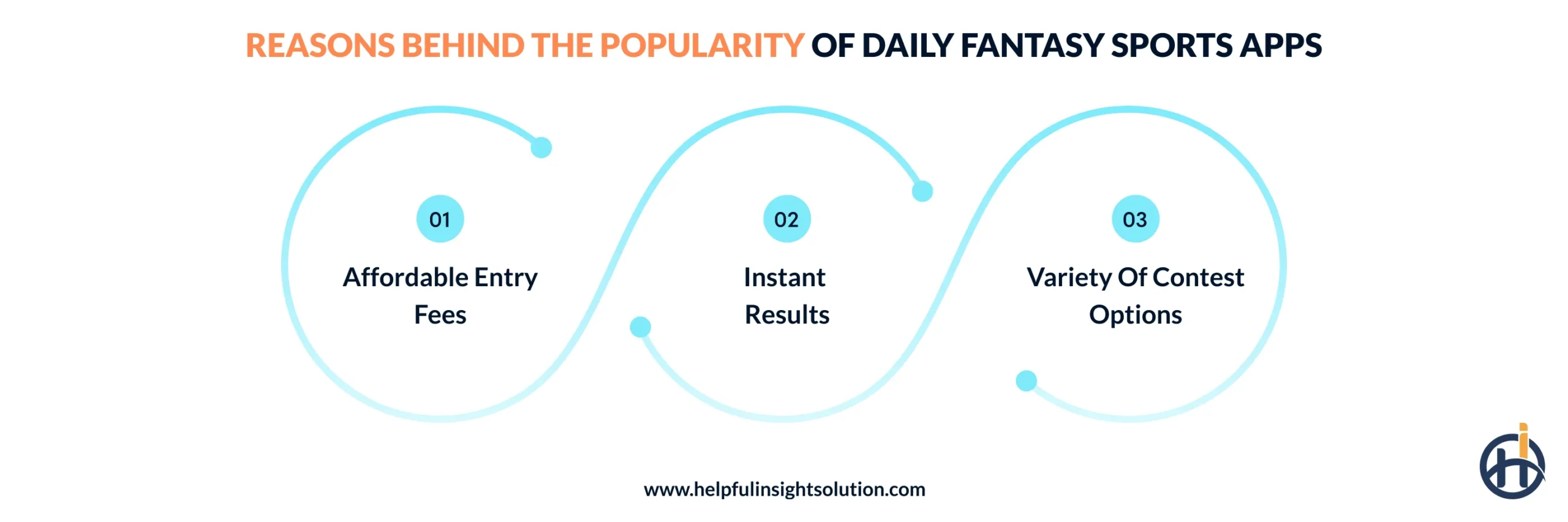
1. Affordable Entry Fees
Daily fantasy sports apps charge low fees to participate in DFS leagues, so anyone can join without spending too much. This makes it easy for new players or casual fans to start playing and enjoy the experience without a big financial commitment.
2. Instant Results
With daily fantasy apps, users don’t have to wait months for their favorite league to start. They can pick a team, watch the games, and find out how their team performed by the end of the day, unlike season-long leagues.
3. Variety of Contest Options
The best part about daily fantasy sports apps is that they offer a variety of daily contests, giving users plenty of options to choose from. Players can pick contests that match their interests and schedules, ensuring they never get bored.
What is a Season-Long Fantasy Sports App?
A season-long fantasy sports app allows sports fans to draft teams using their favorite players and manage them for an entire season. The points are earned each week based on how the players perform in actual games.
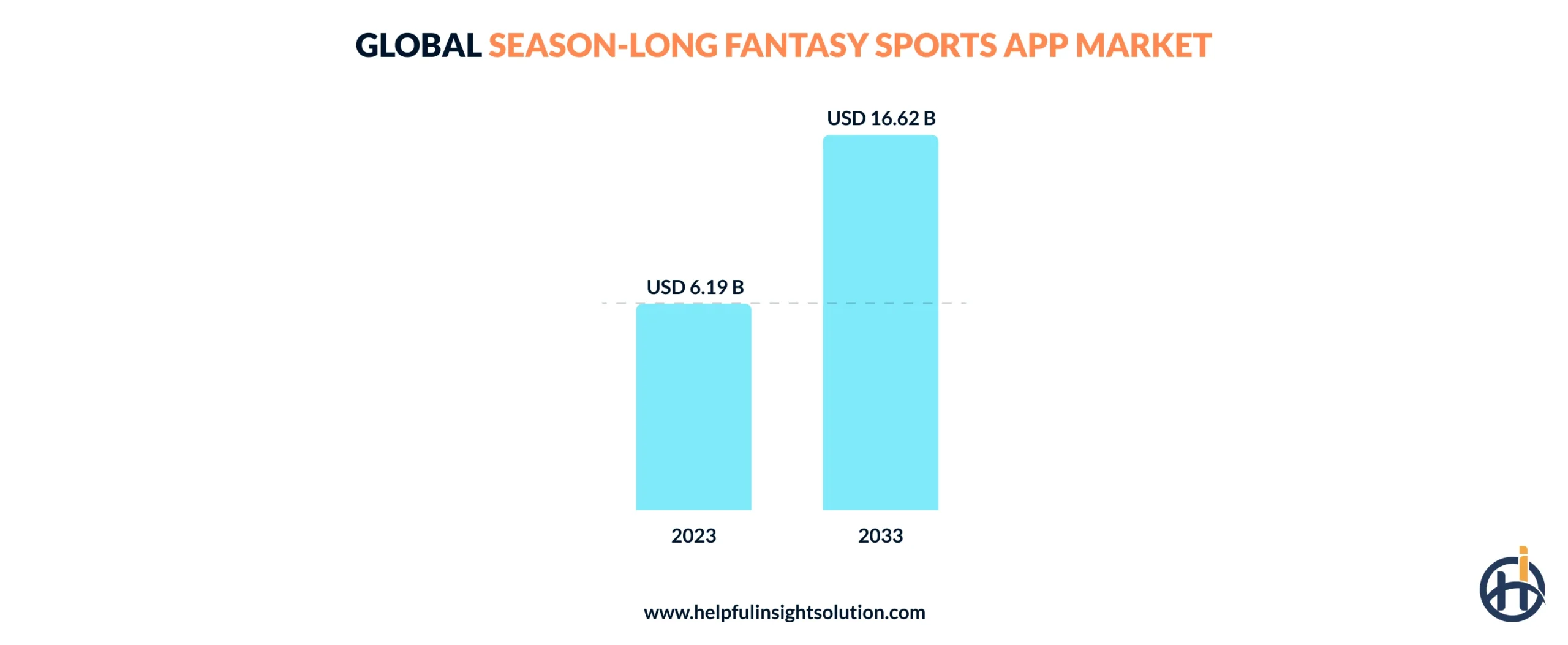
Many people are enjoying this format more as it’s fun to compete all season long. That is why the global season-long fantasy sports market is growing at a rapid pace and is expected to reach $16.62 billion by 2033.
Yahoo Fantasy Sports, ESPN Fantasy Sports, and Sleeper are some of the popular season-long fantasy league apps.
Reasons Behind the Popularity of Season-Long Fantasy Sports Apps
Season-long fantasy sports apps also have a strong fan base. People who focus on long-term strategies and long-running games rather than quick finishes love this app. Let’s take a look at some key reasons behind the popularity of season-long fantasy sports apps.
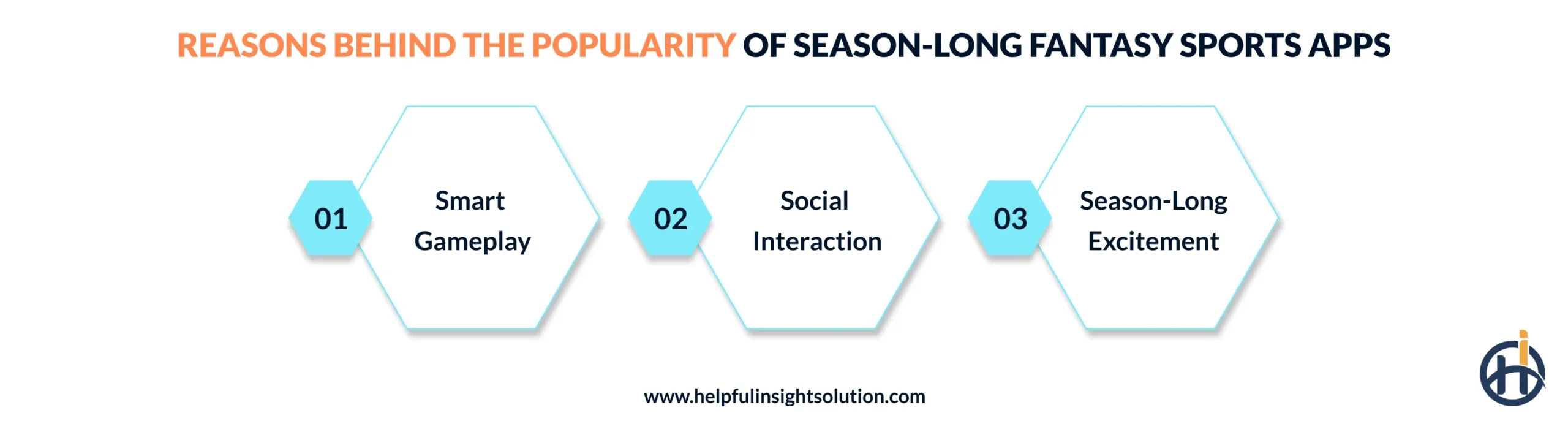
1. Smart Gameplay
Season-long fantasy sports apps allow players to use their knowledge of sports to win. They create strategies like a coach, make lineup and trade decisions. Developing strategies to win makes the game more enjoyable and engaging.
2. Social Interaction
These types of fantasy sports applications give fans a new way to socialize and interact with other people with similar interests every season. Season-long fantasy sports apps offer features like chat and trade discussions, letting the whole community enjoy the game together.
3. Season-Long Excitement
In season-long fantasy sports, users follow their team all season, not just one game. This keeps them excited every week, even for games they usually wouldn’t watch. This is one reason why people love these apps.
Benefits of Developing Season-Long and Daily Fantasy Sports Apps for Businesses
For businesses in the fantasy sports industry, choosing between daily fantasy sports apps and season-long fantasy sports apps creates confusion. One thing is clear, whatever you choose, both fantasy sports app types offer significant benefits. Let’s have a look at them:
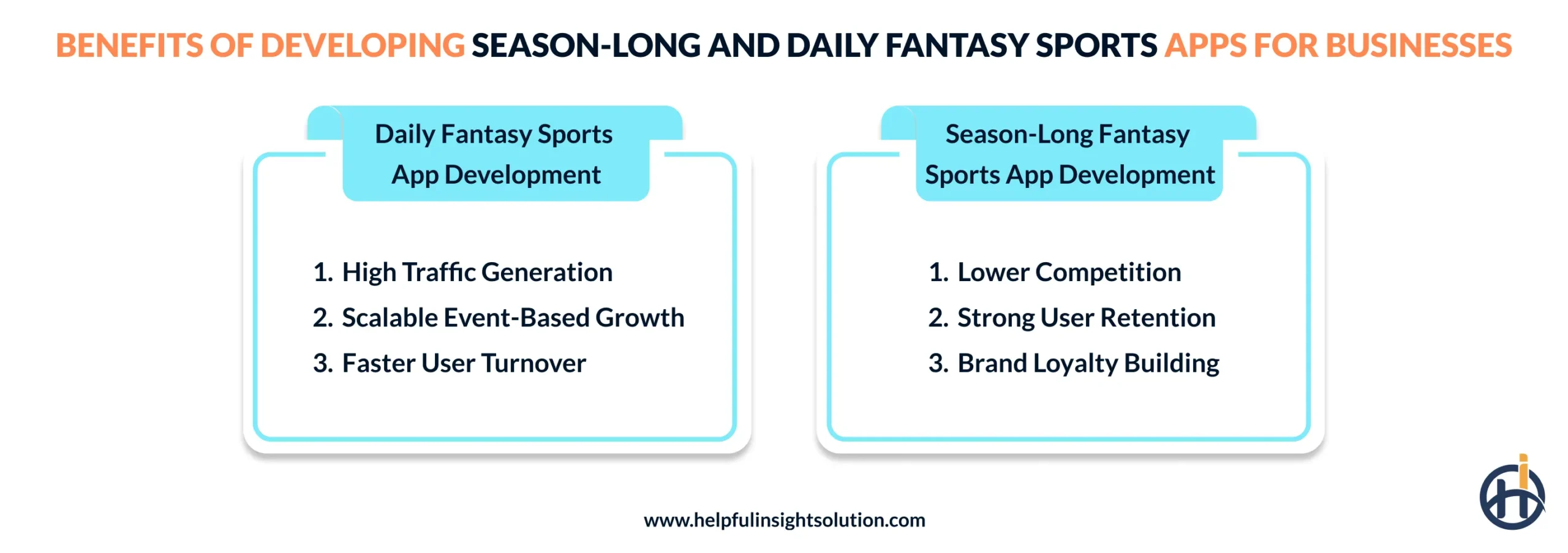
Advantages of Daily Fantasy Sports App Development
1. High Traffic Generation
Daily Fantasy Sports apps bring in a lot of users due to the abundance of sports fans year-round. This results in more visitors, increased revenue, and greater app popularity.
2. Scalable Event-Based Growth
DFS apps can easily grow by adding different sports like football, basketball, or cricket. This helps businesses add new games quickly for big events without extra costs. It lets the app grow fast and make the most of its investment.
3. Faster User Turnover
Daily fantasy sports apps offer short games that end in a day. This fast gameplay encourages players to join more often. It keeps them coming back, helping the app creating loyal users over time.
Advantages of Season-Long Fantasy Sports App Development
1. Lower Competition
The season-long fantasy sports app market is still in a growing stage and has less competition in comparison to daily fantasy apps. Therefore, building these apps offers entrepreneurs the opportunity to enter the market where they can achieve significant growth due to the high demand and lower market saturation.
2. Strong User Retention
For businesses investing in season-long fantasy sports app development, it gives them the opportunity to boost their user retention rate. How? As the contests in these apps run for the long term, like months, it keeps users hooked and they keep coming back regularly.
3. Brand Loyalty Building
Developing a season-long fantasy sports app helps businesses build brand loyalty, which is very important for any business. Users connect with the app more, and this constant interaction increases their trust in the app and the brand.

Daily Fantasy vs Season-Long Fantasy Sports Apps: A Key Comparison
Now you have an idea of what daily fantasy and season-long fantasy sports apps are. To give you more clarity and help you make the right decision about which app to develop, in the table below, we will explore the main differences between daily fantasy sports apps and season-long fantasy sports apps.
| Factor | Daily Fantasy Sports App | Season-Long Fantasy Sports App |
| Contest Duration | The contest in the DFS app last a day or a week, keeping users excited daily. | The contest in season long fantasy app lasts the whole season, which keeps users engaged for months. |
| Team Structure | Let app users pick a new team for each contest/league, daily or weekly. | Create one team at the start of the game and manage the same team for the entire season. |
| Entry Fees | Fees differ per contest and are usually low which allows many users to join often. | This app has generally has a one-time entry fee as users commit for a long period. |
| Draft System | The user gets to draft a team using real-life players frequently for different contests. | The user gets to create a team only once and manage it throughout the whole season. |
| Prizes and Rewards | Instant prizes based on daily or weekly performance. | Rewards are based on the overall performance throughout the season. |
| User Engagement | The DFS apps receive high engagement, but users may leave after each contest ends. | There is long-term engagement as users interact with the app until the season ends. |
| Flexibility | Very flexible, with users joining whenever they want. | Less flexible as users are committed for the entire season. |
| Revenue Model | The app earns money through entry fees, in-app ads, and sponsored contests. | Revenue is generated through subscriptions, entry fees, and in-app purchases |
| Best For | Businesses seeking quick and frequent user participation. | Businesses aiming for long-term user loyalty and engagement. |
Major Similarities Between Daily Fantasy and Season-Long Fantasy Sports App
Although daily fantasy sports apps and season-long fantasy sports apps differ in many ways, they also share some similarities that are important for businesses to understand looking to develop a fantasy sports app like Yahoo Fantasy Sports and FanDuel.
Let’s take a look at the top similarities between daily fantasy sports apps and season-long fantasy sports apps:
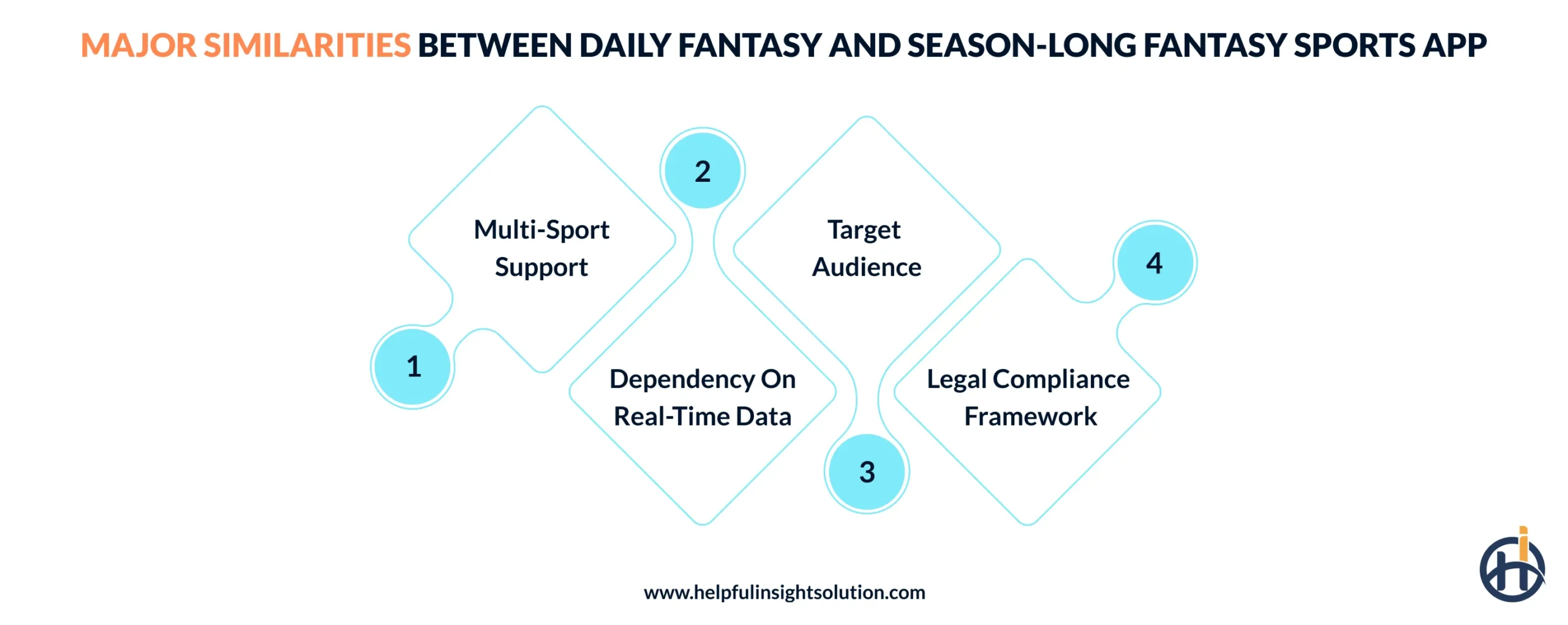
1. Multi-Sport Support
Both types of apps let users enjoy different sports, like fantasy cricket, hockey, and basketball. This gives users a variety of choices, and no matter which sport season is happening, users can always find something exciting to play on the app.
2. Dependency on Real-Time Data
Live scores need to be updated in daily fantasy and season-long fantasy sports apps; for that, real-time data is required. This helps users see right in the app how their team is performing and enhances user experience.
3. Target Audience
Whether it is a DFS app or a season-long fantasy app, both target users who love sports and enjoy participating in online games. Though the experience may differ, these apps aim to keep users engaged and passionate about their favorite sports.
4. Legal Compliance Framework
Both the applications require meeting compliance and regulations; not following them can result in serious consequences like lawsuits and large fines.
To ensure a compliant app is developed, you can hire consultants, they will guide you through the things to consider to meet legal compliance in fantasy sports app development.
Trust Helpful Insight to Develop Your Fantasy Sports App
We hope that this blog has helped you understand the difference between daily fantasy sports apps and season-long fantasy apps. By now, you may have decided which app to develop for your business. If you still have doubt doubt and not able to make a decision, Helpful Insight is here to help you.

We are a trusted fantasy sports app development company that specializes in developing premium-quality, feature-packed, and secure fantasy sports apps. Our strategic consultants will assist you in choosing the right app type that best suits your vision.
Our experienced fantasy sports app developers will create an app that drives user engagement and maximize your ROI. Whether you pick a daily sports fantasy app or a season-long fantasy app, we understand the market and workings of these apps, which allows us to deliver an app that stands out.
So, schedule a free consultation with our team today and let us help you build your fantasy sports app.
FAQs
The cost depends on multiple factors, whether you are developing a daily fantasy sports app or a season-long fantasy sports app. These factors include app complexity, platform selection, number of features, UI/UX design, third-party integrations, location of fantasy sports app developers, and many more.
On average, the cost to build a simple fantasy sports app can start from $20,000, and it can go up to $80,000+ if you decide to create an advanced app.
To get a custom quote, feel free to get in touch with our team.
The timeline for fantasy sports app development is influenced by various variables like project scope, feature and design complexity, customization level, and app testing. Therefore, it is difficult to provide an exact timeline without knowing your project requirements.
To give you an idea, it can take around 3 to 15 months or more to create a fantasy sports app. We can provide you with accurate timeline details once you share your app requirements with us.
Daily Fantasy Sports (DFS) lets you pick a new team for short periods, like a day or week. Season-long leagues, on the other hand, require you to draft a team and manage it for the entire season.
Businesses and startups who are unsure whether to develop a season-long or daily fantasy sports app should keep a few key factors in mind. These considerations will help guide them in making the right decision:
- Consider target audience preferences and interests.
- Think about the level of user engagement.
- Evaluate potential revenue models for each.
- Look at competition and market trends.