

“Know the best pricing to build healthcare apps that provide traffic and revenue at the same time.”
Starting online in 2026 is a great advantage for most entrepreneurs in the medical industry. Innovations and technologies are there to help them develop advanced health applications for global users.
Here, you need a powerful healthcare app development cost guide that provides all the information regarding market factors based on different parameters. It is necessary to go through all the aspects that are responsible for affecting the cost to create a healthcare app.
Businesses must understand that the current healthcare market value is $49.7 billion, which will reach $154.1 billion by 2034. The growth rate is 15.2% CAGR, enabling them to control the rise in the cost of building the healthcare app.
It seems that there is a lot of potential for new investors in this industry, resulting in high-value growth and ROI.
Let’s understand what factors affect the price of healthcare app development solutions, with cost-reducing methods in this blog. Additionally, you will also know the monetization strategies that help in balancing the investment.
Why Build a Healthcare App?
To become successful in the medical sector, you must build healthcare applications that improve user engagement. Let’s understand some key advantages before moving forward in this blog:
1. Improved Patient Convenience
Healthcare apps allow patients to book appointments, consult doctors, and access medical records, reducing travel. So, you must invest in medical mobile application development to get these benefits.
2. Efficient Healthcare Management
By using healthcare app development services, you can streamline billing and data management. Investment in AI physiotherapy app development helps to monitor patients and improve workflow.
3. Digital Health Solutions
Healthcare apps support digital solutions such as telemedicine and AI-driven diagnostics. So, you must know the average cost to develop a healthcare system to enhance quality and enable data-driven tasks.
How to Estimate the Cost of Healthcare App Development?
To estimate healthcare app development costs, you must calculate the total development hours. It includes the duration for UI/UX designers, frontend/backend engineers, and automation testers. Then the value is multiplied by the team’s hourly rate.
Crucially, in 2026, you must also consider “compliance taxes” for HIPAA/GDPR adherence and the complexity of EHR integrations. The cost typically ranges from $10,000 for a basic MVP to $50,000+ for enterprise AI-driven platforms.
Suitable Estimation Method: The most accurate method for a preliminary budget is the Bottom-Up Estimation using the standard hourly formula.
Total Cost = (Development Hours * Hourly Rate) + Compliance & Integration Overhead
Average Breakdown of the Healthcare App Development Cost
If you are looking forward to building smart healthcare apps for the patients who want quick and remote services, then it is important to know the development price initially.
In this detailed healthcare app development cost analysis, you will find that the average rate is between $10,000 and $90,000, which may increase due to various market factors.
It is advised to use a cost calculator that counts features, technologies, and other factors to estimate an accurate price. Let’s understand the healthcare app development cost breakdown in detail with the help of the following table, listing costs and timelines:
| Key Elements | Estimated Cost | Development Timeline |
| Medicine Management System | $10,000 – $15,000 | 2-5 Months |
| EHR/EMR Integration | $15,000 – $30,000 | 5-8 Months |
| Video Consultation Apps | $30,000 – $50,000 | 8-12 Months |
| Healthcare Compliance Layer | $50,000 – $80,000 | 12+ Months |
Key Factors Affecting the Cost to Develop a Healthcare App
Here, we will study the key factors that shape healthcare app development cost with their respective tables. This will help you to easily manage resources and make plans according to your budget:
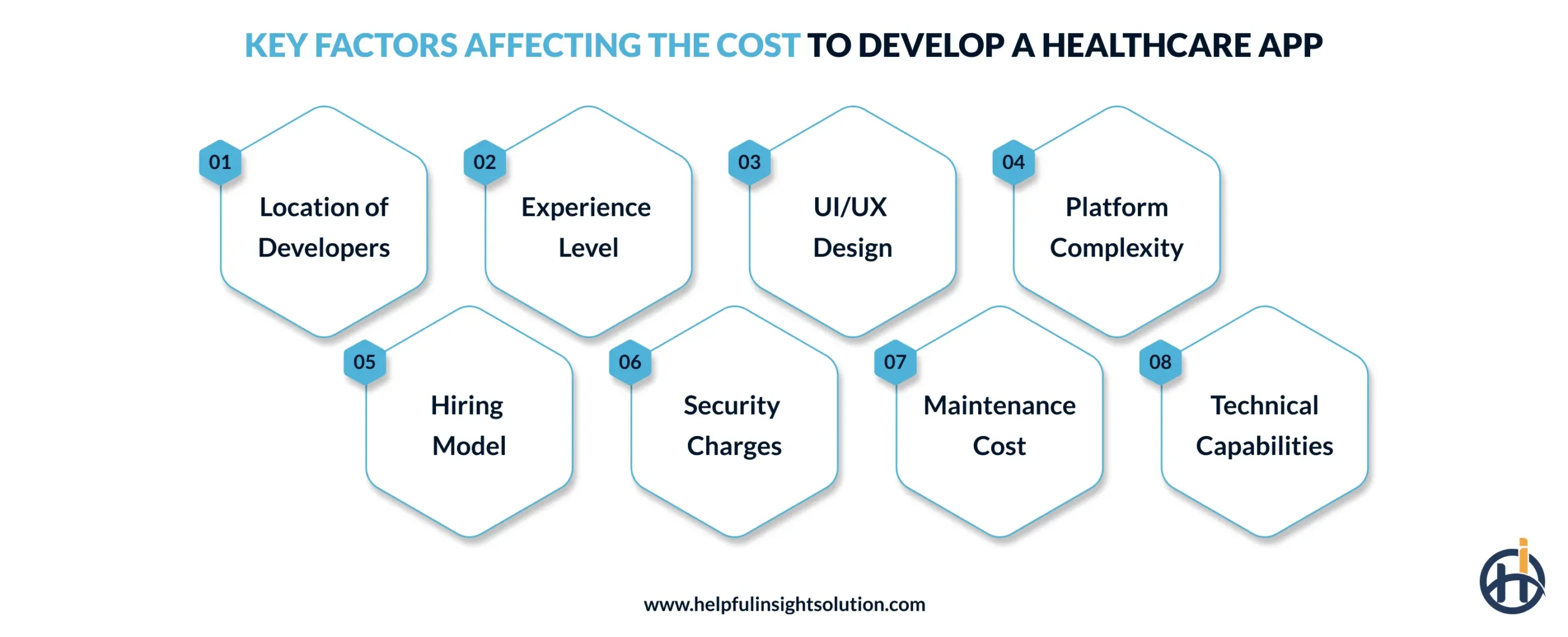
1. Location of Developers
The cost to build a healthcare app varies significantly based on the geographic location of the team. Developers in North America and Western Europe typically charge higher rates than those in Asia or Eastern Europe. Time zone differences and local regulations can also impact the overall expenses.
| Regional Factor | Estimated Cost |
| India | $10,000 – $20,000 |
| UAE | $20,000 – $30,000 |
| Russia | $30,000 – $40,000 |
| UK | $40,000 – $50,000 |
| USA | $50,000 – $70,000 |
| Australia | $70,000 – $80,000 |
2. Experience Level
Highly experienced healthcare mobile app developers and specialists demand higher fees but deliver better quality and security. Junior or mid-level teams cost less but may require more time and development resources. In healthcare apps, expertise often reduces long-term risks and costs.
| Experience Level | Estimated Cost | Experience (Years) |
| Junior Developers | $8,000 – $15,000 | 1-2 Years |
| Mid-Level Developers | $15,000 – $25,000 | 2-5 Years |
| Senior Developers | $25,000 – $40,000 | 5-8 Years |
| Expert Professionals | $35,000 – $50,000 | 8+ Years |
3. UI/UX Design
User-friendly and accessible UI/UX design solutions increase the development cost due to research and prototyping. Healthcare apps require interactive navigation for patients and medical professionals. Custom animations and accessibility features further influence the cost of designing a healthcare app.
| Cost Factor | Estimated Cost |
| UI Design | $8,000 – $15,000 |
| UX Design | $10,000 – $18,000 |
| Design Testing | $5,000 – $10,000 |
4. Platform Complexity
The number of platforms, like iOS, Android, or web, directly affects mobile app development costs. Complex architectures, integrations, and device compatibility add more time and effort. Cross-platform solutions may reduce the cost to develop a healthcare app in 2026, but can limit advanced features.
| App Complexity Level | Estimated Cost |
| Simple Apps | $8,000 – $20,000 |
| Medium Complexity | $20,000 – $40,000 |
| High Complexity | $40,000 – $50,000+ |
5. Hiring Model
Various hiring models, like freelancers, in-house teams, or development agencies, impact overall app pricing. Freelancers are cost-effective for small projects, while agencies offer end-to-end services at higher rates. To manage the development cost for healthcare apps, you should target long-term contracts.
| Hiring Model | Estimated Cost |
| Freelancers | $8,000 – $18,000 |
| In-House Teams | $18,000 – $35,000 |
| App Development Agency | $30,000 – $50,000 |
6. Security Charges
Healthcare apps must comply with strict regulations like HIPAA, increasing security-related costs. It is among the most crucial cost factors in healthcare app development, which includes data encryption and secure authentication. Investing in security standards helps prevent costly data breaches and attacks.
| Cost Factor | Estimated Cost |
| Functional Testing | $8,000 – $12,000 |
| Security Testing | $10,000 – $18,000 |
| Bug Fixing & QA Cycles | $6,000 – $10,000 |
7. Maintenance Cost
Post-launch maintenance includes bug fixes, updates, server costs, and performance optimization. A healthcare app development company provides constant monitoring to ensure reliability. Ongoing maintenance typically accounts for 15–20% of the initial medical app development cost.
| Maintenance Cost | Estimated Annual Cost (USD) |
| Bug Fixes & Performance Updates | $5,000 – $15,000 |
| Security Updates & Compliance | $8,000 – $20,000 |
| Server & Cloud Infrastructure | $6,000 – $18,000 |
| Feature Enhancements & Upgrades | $7,000 – $25,000 |
8. Technical Capabilities
Advanced features like AI, IoT integration, and Blockchain raise the healthcare app development cost for hospitals. To implement these capabilities, you require skilled engineers and specialized infrastructure. The more advanced the technology stack, the higher the overall investment in medical apps.
| Technology | Estimated Cost |
| Artificial Intelligence | $60,000 – $80,000 |
| Blockchain | $50,000 – $60,000 |
| Augmented Reality/Virtual Reality | $40,000 – $60,000 |
| Internet of Things | $20,000 – $40,000 |
Cost-Influencing Factors on Types of Healthcare Solutions
In this section, we will explore some more factors affecting healthcare app development cost in detail. It is crucial to know the prices based on these solutions so that you can target different groups of people:
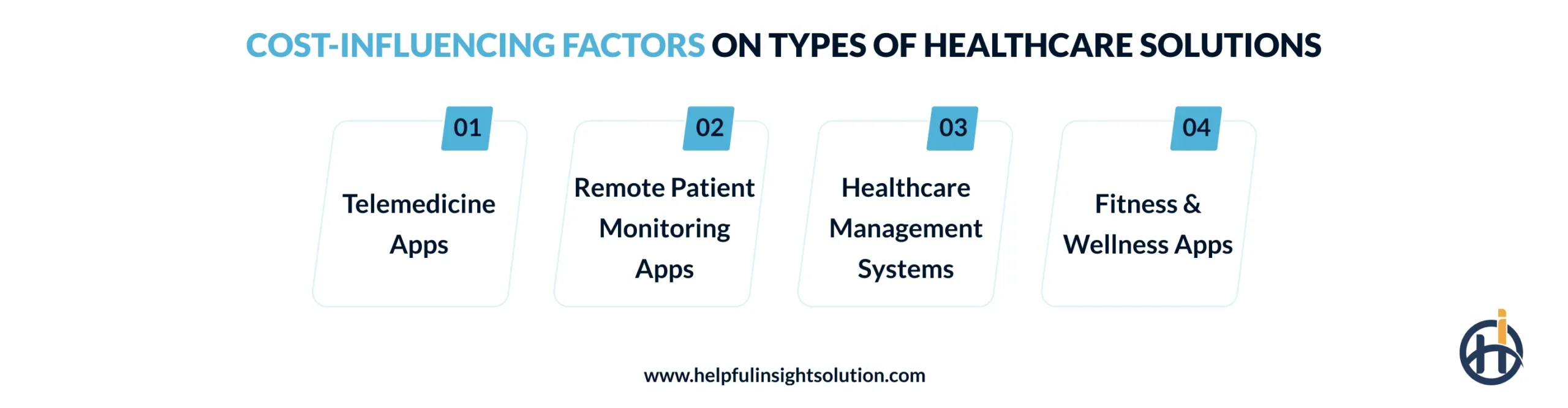
1. Telemedicine Apps
The telemedicine app development cost is driven by features like video consultations, secure messaging, e-prescriptions, and compliance with healthcare regulations. Advanced integrations with EHR systems, AI diagnostics, and multi-platform support further increase development costs.
| Feature | Estimated Cost |
| Video Consultation | $25,000 – $45,000 |
| Appointment Scheduling | $15,000 – $30,000 |
| E-Prescription System | $20,000 – $40,000 |
2. Remote Patient Monitoring Apps
The cost to develop a medical app depends on wearable and IoT device integration, data analytics, and health tracking features. Using AI in healthcare industry with cloud infrastructure and security standards may increase expenses based on critical health conditions, especially when the platform needs to route alerts the way an urgent care app does for fast medical response.
| Feature | Estimated Cost |
| Wearable Device Integration | $30,000 – $60,000 |
| Real-Time Health Data Tracking | $25,000 – $50,000 |
| Alerts & Notifications | $15,000 – $30,000 |
3. Healthcare Management Systems
The cost to develop a healthcare app is influenced by features like patient data management, billing modules, appointment scheduling, and interoperability. Scalability requirements, role-based access control, and regulatory compliance significantly impact overall development rates.
| Feature | Estimated Cost |
| Electronic Health Records (EHR) | $40,000 – $80,000 |
| Billing & Insurance Management | $30,000 – $60,000 |
| Role-Based Access Control | $20,000 – $40,000 |
4. Fitness & Wellness Apps
The healthcare application development cost varies based on personalized workout plans, activity tracking, nutrition guidance, and third-party API integrations. Additional factors such as gamification, AI recommendations, and wearable device support increase development and maintenance costs.
| Feature | Estimated Cost |
| Activity Tracking | $15,000 – $30,000 |
| Personalized Workout Plans | $25,000 – $45,000 |
| Nutrition & Diet Planning | $20,000 – $35,000 |
Methods to Optimize Healthcare App Development Price
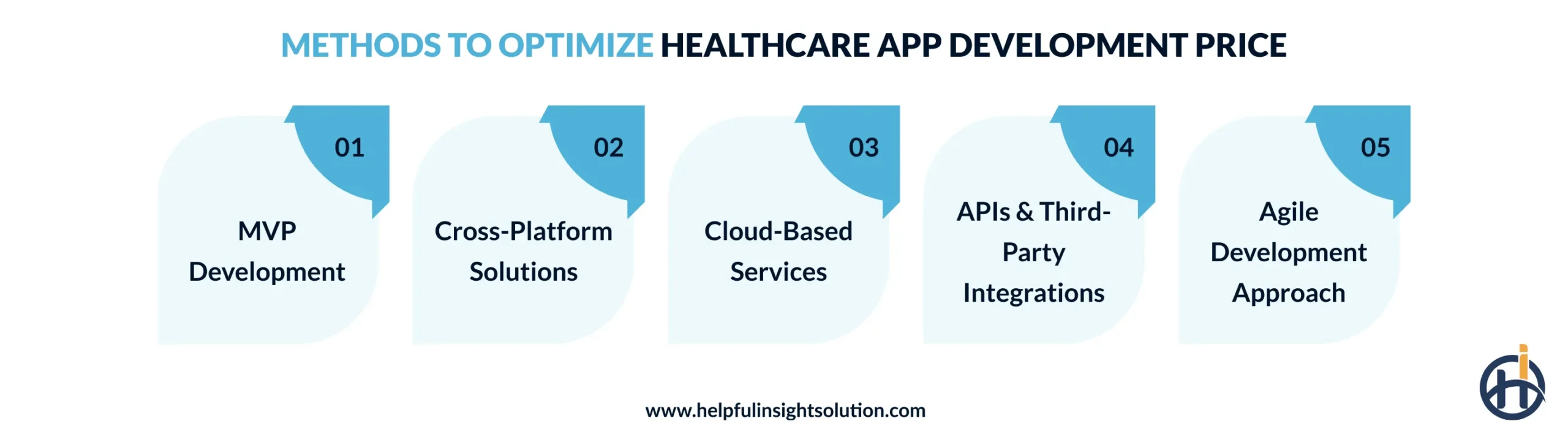
A business investor may implement several methods to reduce the healthcare app development cost. They target specific points in a particular cycle, enabling entrepreneurs to control additional expenses:
1. MVP Development
The MVP development strategy focuses on building essential healthcare app features first. This healthcare app cost estimation framework reduces initial costs and speeds up the overall market reach. Feedback-driven improvements help business investors to avoid unnecessary expenses at later stages.
| Method | Reduction (%) | Savings ($) |
| MVP Development | 40% | $2,500-$3,000 |
2. Cross-Platform Solutions
The cross-platform or hybrid development method enables a single codebase for both iOS and Android apps. It significantly lowers the medical app development cost with maintenance services. This cost-reduction approach ensures faster updates and a consistent user experience across devices.
| Method | Reduction (%) | Savings ($) |
| Cross-Platform Solutions | 30% | $2,000-$2,500 |
3. Cloud-Based Services
One of the best cost optimization strategies for healthcare apps is to use cloud-based services to eliminate expensive infrastructure. You can hire dedicated developers who offer scalable storage at reduced operational expenses. These models help entrepreneurs to control long-term healthcare app costs.
| Method | Reduction (%) | Savings ($) |
| Cloud-Based Services | 20% | $1,500-$2,000 |
4. APIs & Third-Party Integrations
Using APIs and third-party integrations minimizes the need for custom development that increases expenses. Pre-built solutions for payments, EHRs, and analytics reduce time and the cost of healthcare app development. This cost management approach also ensures faster deployment and reliability.
| Method | Reduction (%) | Savings ($) |
| APIs & Third-Party Integrations | 15% | $1,000-$1,500 |
5. Agile Development Approach
Businesses must target agile development to break projects into smaller and easily manageable tasks. Continuous testing and security identify issues at early stages by reducing the healthcare software development cost. It ensures flexibility, efficiency, and better budget control throughout development.
| Method | Reduction (%) | Savings ($) |
| Agile Development Approach | 10% | $500-$1,000 |
How to Monetize a Healthcare App?
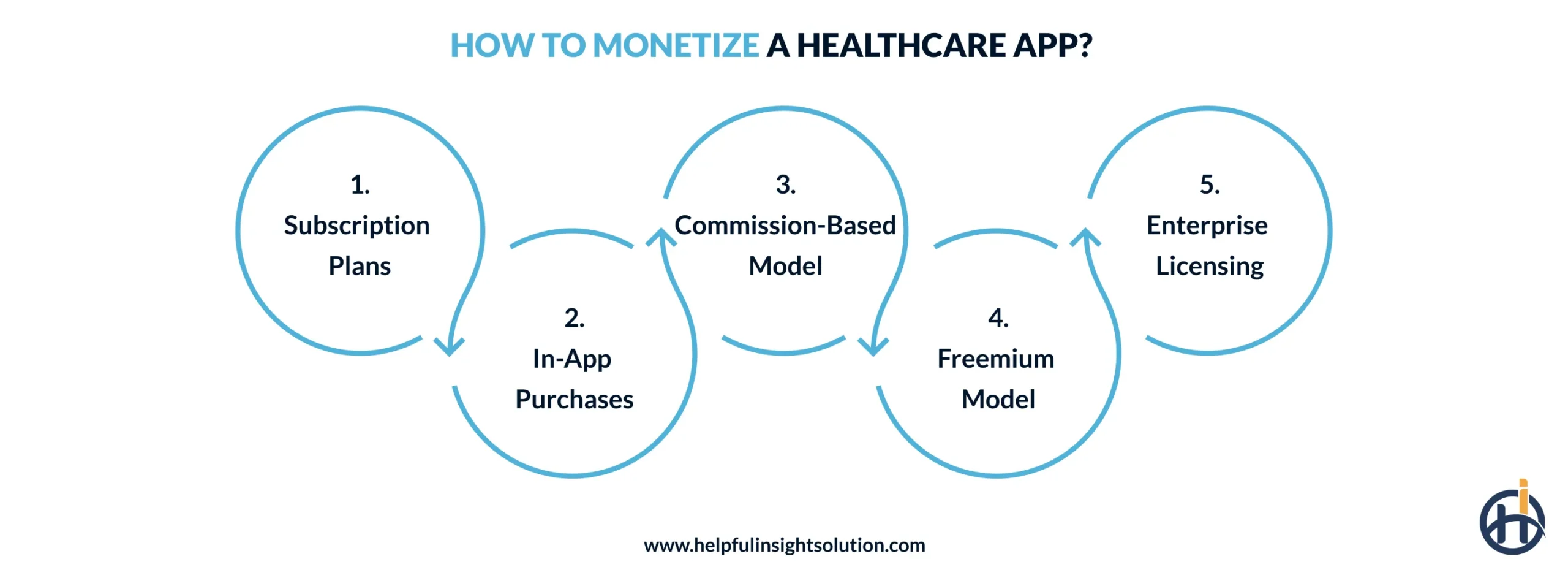
Monetization is a plus point for an entrepreneur through which they can easily balance the cost of developing a health app. Some of the major healthcare revenue models are discussed in this section:
1. Subscription Plans
Users pay monthly or annual fees to access premium healthcare app features such as virtual consultations, personal health insights, or advanced tracking tools. This model ensures predictable revenue and long-term user engagement, balancing the healthcare mobile application development cost.
2. In-App Purchases
Healthcare apps can offer paid add-ons like one-time consultations, wellness programs, diet plans, or AI-based health reports. This allows users to customize their experience while generating incremental revenue and managing the cost of developing a healthcare mobile app.
3. Commission-Based Model
The commission model is among the best monetization strategies for health apps, allowing users to connect with doctors or insurance providers for bookings and transactions. The generated revenue helps entrepreneurs to easily balance the healthcare app development price.
4. Freemium Model
Basic healthcare features are offered for free, while advanced functionalities such as detailed analytics, specialist access, or ad-free usage require an upgrade. This model attracts a large user base and converts them into paying customers, controlling the cost to build a healthcare app.
5. Enterprise Licensing
Healthcare organizations, hospitals, or corporates purchase licenses to use the app for employee wellness or patient management. This B2B approach helps to manage the healthcare mobile app development cost, providing high-value contracts with stable and scalable revenue streams.
Why Choose Helpful Insight to Create Affordable Healthcare Applications?
You can rank this blog at the top whenever you find it difficult to estimate how much does healthcare app development cost. Additionally, it is highly recommended to approach a reliable mobile app development services provider who can provide an affordable business ecosystem.
Our expert app developers help entrepreneurs to identify important features and the tech stack, managing the overall cost to make a healthcare app.
Additionally, we also assist in choosing the right development model with maintenance, enhancing the future of healthcare app development costs. Being a business investor, knowing the accurate medical application development cost is your right.
This helps in defining your overall industrial growth, increasing brand visibility, and supporting income generation.
FAQs
Making a mobile healthcare application with a short development process requires an overall time between 2 months and 5 months. There are various factors, like complexity and costs, that affect the total duration of mobile app development. The average time may increase to 8 months or more as the business requirements and user needs increase.
There is not only a single feature that influences the cost of building healthcare applications, but many. Let’s focus on some crucial features, which are discussed as follows:
- Core Features: Telemedicine, appointment scheduling, EHR integration, and notifications.
- Advanced Features: AI diagnostics, wearable integration, IoT connectivity, and data analytics.
- Security Features: HIPAA/GDPR compliance, data encryption, secure logins, and audit trails.
Business investors must follow different compliance standards, like HIPAA and GDPR, while developing healthcare applications. This factor also influences the overall health app development cost, ranging from $5,000 to $20,000 based on different regions. In the USA, the cost may increase to $25,000, as the medical standards are complex.
To build mobile healthcare apps with advanced IoT-enabled features, the average cost ranges from $10,000 to $30,000 based on integration capabilities. For low-bandwidth sensors and devices, the prices are low because of easily available resources. But, as the hardware complexity increases, the overall integration cost also rises.
MVP is one of the most important methods for reducing the cost to develop a healthcare app. Its cost management roles are described in the following manner:
- Focuses on essential features by avoiding unnecessary functionalities.
- Enables early user feedback to validate ideas and prevent costly rework.
- Speeds up market reach, allowing faster ROI by minimizing risks and budget.