


In this digital age, the online hotel booking app development industry is undergoing a speedy change with property booking apps being an important cornerstone of convenience for tourists everywhere.
To turn a hotel booking app into a thriving business, the balance of user-centered design, sophisticated technology, and the ability to work without glitches is critical.
In this extensive guide, you get insight into all the stages involved in the process of creating a hotel booking app development. From conceptualizing to the deployment, we will go through milestones such as the definition of the target groups, user-friendly interfaces, integration of the main features like real-time and secure payment gateways, back-end support systems, cross-platform compatibility, testing, and continuous improvement strategies. Before you proceed with an app like Airbnb, look at the positive statistics of the hotel industry provided by Site Minder.
- Hotel occupancy will increase by 2.5%globally next year.
- Hotel average daily rate (ADR) is projected to grow by 4.9% in the next 12 months.
- RevPAR is also expected to grow, reaching an average of $93.
- Online sales in the hotel segment will generate 80% of total revenue in 3 years.
- Room demand is set to reach an all-time high as of 2023 and continue growing in the following years.
Whether you’re an entrepreneur or a developer, this blog will provide the essential insights needed to navigate the complexities of hotel booking app development services and help you build a world-class product in today’s highly competitive market.
What are Hotel Booking Mobile Apps?
Hotel booking mobile apps are digital tools that provide ease of accessing the best deals on your traveling accommodation through a smartphone or a tablet without moving even an inch out of your house.
Such travel and tourism apps like booking.com give us buttons to select from the thousands of hotels, hostels, and vacation houses, according to the filters provided, for example, location, budget, facilities, and rating, in the name of user reviews.
Through the app, it is possible to book your preferred accommodation directly with security and frequently the real-time availability and instant confirmatory response.
What are the Benefits of Developing a Hotel Booking App?
Business Investors must create a hotel booking app, as there is a lot of scope in this domain. We will observe some major industrial advantages in this section:
1. Increased Tourism
An online accommodation app will encourage people to travel more in different countries and states. This will increase the overall tourism of a particular region, attracting more people towards the platform.
2. Revenue Opportunities
This industry will create multiple chances for income generation for hotel and flight owners. They can implement various revenue models like subscriptions, advertisements, and in-app purchases for profit-making.
3. Rise in Employment
Multiple people may have a chance to take a job in food delivery, taxi booking, or hotel management. Additionally, handyman and event management jobs are also available for people who want to generate income.
4. Economy Boost
As the hotel booking industry is connected with multiple domains, it gives a boost to the overall economy. This can benefit several investors, people, and local merchants through market listing that ensures a consistent income flow.
Explore More: How to Develop an AI Trip Planner App: Benefits, Features, and Cost
Discover Top Hotel Booking Mobile Apps & Services Providers
Travel booking applications do provide a convenient reservation process thus allowing travelers the option of making their hotel bookings at the convenience of their location and enabling hoteliers to expand their audiences and manage their bookings more efficiently.
Mentioned below are the apps that are thriving in the business of hospitality and hotels by being top-notch in features, app engineering, and visually appealing UI/UX.
#1 Booking.com
The global distribution network of Booking.com is regarded by many as a great plus due to its user-friendly interface and comprehensive offering of choices to its clients which are hotels, apartments, and resorts.
For instance, it provides all facilities including flight booking and other tour/travel associated services. Apps like booking.com include real-time availability, flexible cancellation policies, and secure payment options, which allow travelers with different preferences to have a wonderful time.

2. Expedia:
Expedia is a one-stop travel site that hosts a range of hotel reservations in both flights, cars, and holiday packages. The main features of the brand are its competitive pricing, rewards for loyalty, and usability problems. When you go to Expedia, the abundance of options, from the budget-friendly to the most luxurious to the style, cater to all types of travelers.

3. Airbnb:
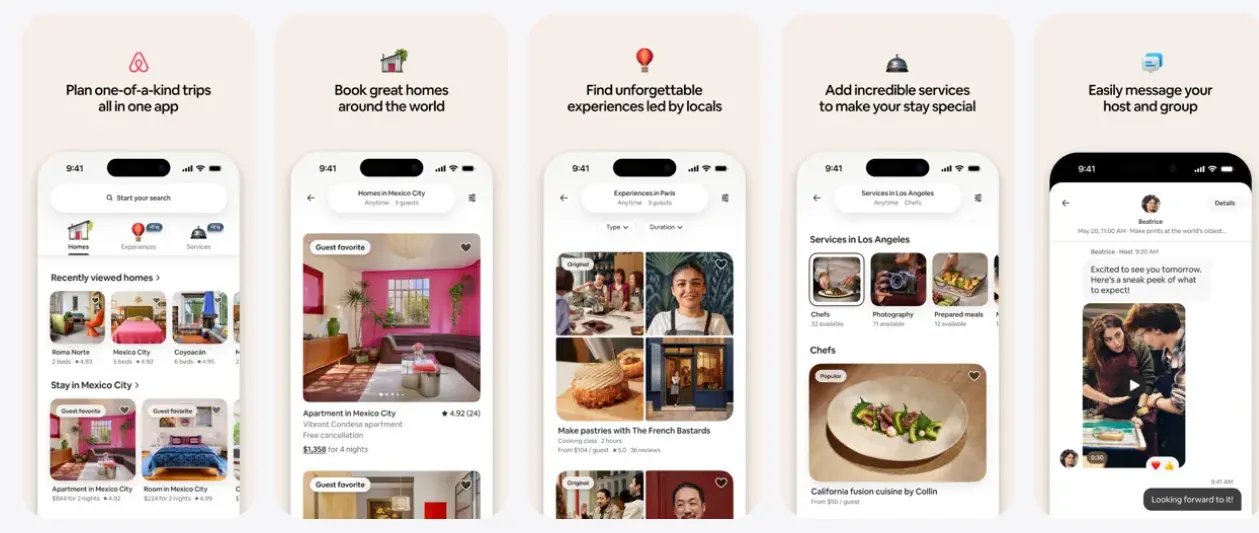
Apps like Airbnb changed the rate of development for the travel and tourism sector with a basis for made-to-order booking with private bedrooms, villas, and apartments among others.
Travelers can search for hotel listings all over the world, contact their preferred hosts, and secure a spot in amazing homes. Airbnb’s guest-hosted concept and unique listings excite budgeted travelers who are keen on discovering new cultures.
4. Agoda:
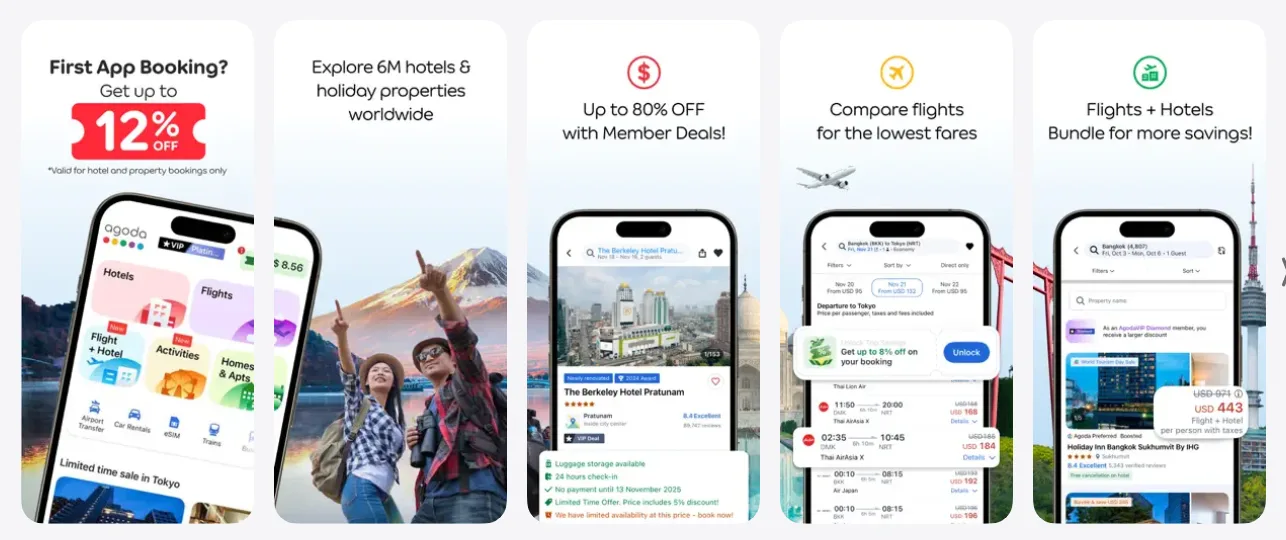
Agoda targets an offering of accommodations in India Asia and throughout the world that are highly competitive and provide special deals for their guests. It consists of a user-friendly interface, comprehensive search filters, and a rewards program for regular or permanent travelers.
Small yet big exercise can make a huge difference to your health and wellness. The benefits of these exercises are vast, and they contribute positively to our health. From improving moods to increasing flexibility, there is no doubt that a small exercise can improve your health.
5. Hotels.com:
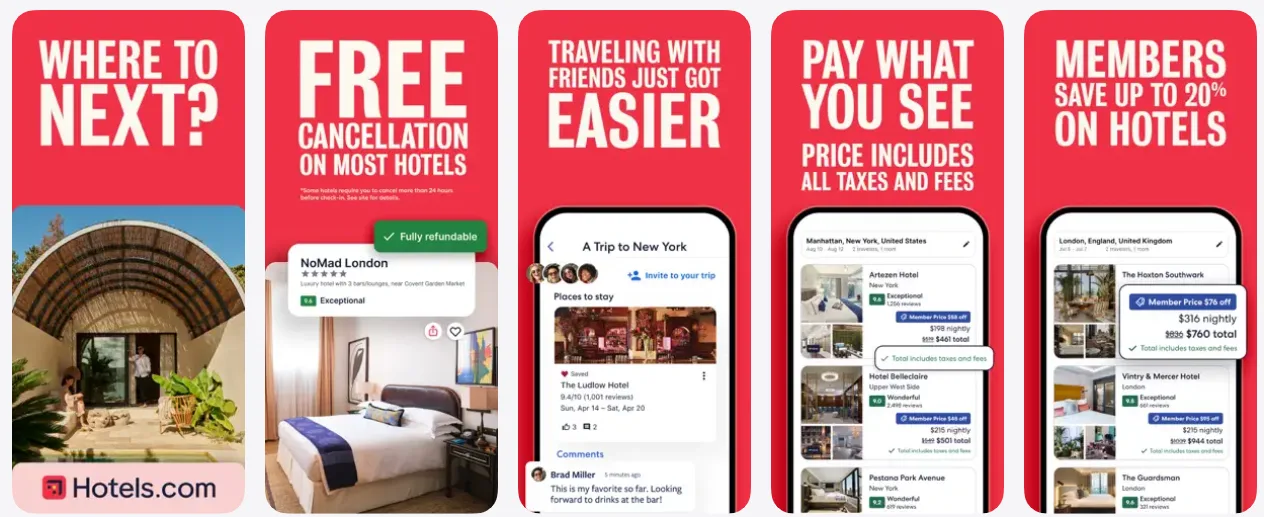
Simplicity and at the same time effectiveness are what make the Hotels.com portal attractive – one can choose from a great choice of hotels all over the world from luxury accommodations to the most modest offerings.
It brings classes, special deals, offers, and a price match guarantee, and therefore, they know that they are getting the best value for their money. Hotels.com has get simple application and service for customers that makes for the best travelers who look for the no-tedious process of accommodation booking.
#6 MakeMyTrip
MakeMyTrip offers a seamless hotel booking solution designed to cater to every traveler’s needs. With an extensive database of hotels worldwide, users can easily find accommodations that suit their preferences and budget.
The platform features user-friendly filters to refine searches by location, price, amenities, and guest ratings, ensuring personalized results. Detailed hotel descriptions, high-quality images, and verified reviews provide transparency and help users make informed decisions.

Types of Hotel Booking Apps
By understanding the different types of hotel booking mobile apps, users can choose the platform that best aligns with their travel preferences and meets all the requirements. Read the major types of apps classified into the following sections:
1. Aggregator Apps: These apps like Airbnb utilize hotel listings from many resources such as hotel chains, independent properties, and online travel agencies (OTAs). Aggregator apps provide a wide alternative of hostels, giving the users a choice to compare between multiple options, read reviews, and book without even leaving the active screen.
2. Branded Hotel Chains: Hotel chains have their booking apps to offer users privileges like discounted exclusive offers, loyalty rewards, and a seamless booking process. The core objective for such apps is to increase their properties which in turn builds brand loyalty with the customers.
3. Vacation Rental Platforms: The holiday apps market includes booking.com and others, which offer a wide range of accommodations including apartments, homes, and vacation rentals. This technology has a specialized application that connects hosts with travelers to arrange for personalized rentals and allow for local hospitality enjoyment.
4. Last-Minute Booking Apps: Created for elite travelers or the ones who need last-minute deals, these apps allow you to book conventionally sold-out rooms in hotels that have unsold rooms for immediate booking. These apps like Oyo benefit from pricing models changing dynamically and encourage people to take on spontaneous travel.
5. Niche Market Apps: Such apps may focus on a specific category, for example, affluent travelers those who save money, or business travelers. Customized to the expectations of their major customers, these apps tailor their features and offerings to provide a wide range of services and personalized recommendations.
Must-have Features of Online Hotel Booking App
Hotel booking apps typically offer a range of features to make the booking process convenient and efficient for users. Some essential features look like
1. Search and Filters: The online booking site should provide its clients with an option of searching for housing places based on the location, and booking a room for certain dates, prices, and features of the accommodation. Filters with advanced functionalities help the users to get the selection done as per their taste parameters e.g., rental rating, room type, and guest review types.
2. Real-time Availability: By constantly providing the current availability of rooms, this feature ensures that potential customers can make their own booking decisions and volunteers from getting overloaded.
3. Secure Payment Gateway: Integrated with secure payment gateways, the app enables users to pay transactions most securely and conveniently. Of course, this is what makes it reliable and safe functionally.
4. User Profiles and Accounts: The user option of customized user profiles makes it easy for the users to book, check the bookings, or redeem the loyalty rewards or deals.
5. Reviews and Ratings: To a greater extent now, the guests tend to rely on the user-generated reviews from other guests. This is crucial, as it fills the transparency gap and for the guests, they can make more informed decisions.
6. Push Notifications: Reservation confirmations, future trip reminders, upgrade notifications, and fresh updates on users’ devices are the ways by which they are reminded and updated.
7. Geolocation and Maps Integration: Maps integration feature that allows guests to locate their companions easily, view neighborhood attractions, and design their stay more efficiently. App like Make My Trip is the perfect example of this feature.
8. Multi-language and Currency Support: Supporting a global community becomes possible as the presence of additional languages and currencies is required. It redefines how the service is accessible and the experience for the users.
9. Customer Support: Customer support via chat, email, or phone reduces the need for customers to ask for help through logistics as they may easily sort out their issues or inquiries.
10. Integration with Loyalty Programs: Integration of loyalty programs into your system will mean that your clients get to buy tickets for a course package and that your loyal customer gets bonus points or a discount.
By incorporating these essential features, hotel booking apps can offer a seamless and user-friendly experience, satisfying the diverse needs of travelers and enhancing customer satisfaction.
Innovative solutions for efficient hotel booking and management.
Online Hotel Booking App Development Process
The hotel booking app development process typically involves several stages, each with its own set of tasks and considerations. You can hire a mobile app development company or hire app developers for the project for an unmatchable experience. Here’s an overview of what’s included in the hotel booking website development process:
- Research and Planning: Identify your target users, market conditions, and opponents to find the product differences and features that will make your app unique. Devise a comprehensive plan for the project covering desired results, deadlines, and resources.
- Technical expertise: Choosing the best hotel booking app development company involves evaluating several key factors, including expertise, portfolio, client reviews, and overall reputation. You can hire dedicated developers if you have small projects or changes that can be done in a short time.
- Design: Develop wireframes and prototypes to illustrate the app’s layout, and menu structure and to model every aspect of the interface. Make an easy-to-use and engaging site that aligns the brand identity with the user’s experience.
- Development: Use frameworks like React Native or Flutter for cross-platform development, or Swift and Kotlin for native development on iOS and Android respectively.
- Testing: Conducting in-depth testing helps to find bugs, and compatibility issues of operating systems and platforms, and validate the app’s function, performance, and security. Conduct user testing as a continuous feedback mechanism that will be used to make adjustments.
- Deployment: Deploy the iOS and Android app to app stores including the Apple App Store and Google Play Store complying with their corresponding policies and procedures. Monitor the application’s efficiency and correct any issues that occur during the initial implementation stage.
- Maintenance and Updates: Regularly watch and keep the program going so that its operation, security, and compatibility with future technologies will be well. Get user feedback and analyze data to determine the problem areas and plan for implementing the changes accordingly.
By following a structured development process, the best hotel booking sites can be built effectively, delivering a seamless and engaging experience for users while achieving business objectives.
How Much Does It Cost to Develop An Online Hotel Booking Application?
The custom hotel booking app development cost in the USA may range from a little too much due to factors such as functionality, the level of complexity, the platform where it will be run (it might be iOS, Android, or both simultaneously), the location of the dedicated development team, and a few more services that will have to be included.
| Project Complexity | Average Cost (USD) | Timestamp |
| Simple | $6,000-$10,000 | 2 to 3 months |
| Intermediate | $10,000-$50,000 | 4 to 8 months |
| Complex | $50,000-$150,000 | 8 to 12 months |
| Advanced | $150,000-$250,000 | 12 to 24 months |
Create a seamless platform for users to book their stays easily.
How Does Hotel Booking App Make Money?
The remarkable success stories of industry giants like Airbnb and Booking.com have propelled the travel sector, driving unprecedented growth. As a result, it’s not just hospitality experts, but also startups and entrepreneurs across different domains, pondering over how to create a hotel booking app. In this section, we’ll walk you through the crucial aspects of hotel booking app development.
1. Booking Fees: Agents of hotel booking apps collect commission or booking fee charged on every reservation that users deem to make using their websites. Increasingly, this fee is a portion of the full booking cost and the hotel or the client pays it.
2. Premium Listings: Hotels have the opportunity to buy additional visibility within the application, for instance being front-and-center in the search results or with the big photos and more extensive descriptions. These premium listings contribute to the app’s additional income thereby increasing its profits.
3. Advertisement Revenue: Hotel mobile apps usually have marketing materials for companies that have services related to vacation, tourism, and hospitality. Used in various forms, these ads provide revenue based on pay-per-click or pay-per-impression models.
4. Subscription Services: Hotel booking apps offer subscription-based services to users, through which they get attractive deals, offers, and other services based on their choice. Subscriptions fuel the app’s steady money earnings.
5. Partnerships and Affiliates: Hotel booking apps might be able to reach a deal with airlines or car hires to offer mutual promotions or bundled deals. Partnerships with such businesses commonly include affiliate marketing agreements that compensate for sending customers who convert to their websites.
6. Data Monetization: Hotel booking apps accumulate very important data on user choices, travel dynamics, and booking habits. By doing so, the data becomes monetizable by selling anonymized insights to hotels, tourism boards, and additional travel industry stakeholders.
7. Cancellation and Change Fees: Hotel booking apps can also hold the provision of charge for cancellation or changes to bookings; these represent other kinds of income for the apps out of the booking fee. These fees motivate users to scale up their plans and minimize the incidents that lead to disruptions
8. Value-Added Services: Along with the basic hotel booking apps other services like travel insurance, airport transfers, guided tours, etc. can be offered by some of the hotel booking apps. These added-value services can help generate extra revenue and increase user satisfaction which are the aim of any business.
In a Nutshell
Finally, now we have arrived at a stage where you can start with your dream project and target the desired audience. Following a step-by-step development process is necessary to create an efficient and user-friendly hotel booking app. It is highly recommended to approach an experienced and reliable mobile app development company that can deliver expert solutions.
Additionally, they can help in branding and marketing of the platform in different regions. It is beneficial to integrate other domains, such as food delivery and booking services, including taxis, flights, and events. With this, you can easily enhance the brand value of the app and unlock resources for users.
FAQ’s about Hotel Booking App Development
Ans. Creating the booking app is simple with the right partner with you. Generally, the following steps are taken to develop a successful app:
- Market Research: Identify your target audience and competitors.
- Define Features: Decide on essential features like search, booking, user profiles, and payment integration.
- Design UI/UX: Create intuitive and visually appealing interfaces for easy navigation.
- Development: Build the app using appropriate technologies (native or cross-platform).
- Testing: Thoroughly test the app for functionality, usability, and security.
- Launch: Release the app on app stores and promote it through various channels.
- Iterate: Gather user feedback and continuously improve the app.
Ans. Developing the hotel booking app has costs that change depending on factors such as features, complexity, platform, and app development team rates. A basic app may cost around $10,000- $50,000, while a very advanced app with additional features will cost $50,000- $150,000 or more. The complexity of design, consumers, outside integrations, and support form the main reasons for cost implication. Personalization, scalability, and quality control make their specific contributions by defining the overall expenses of a hotel application.
Ans. The best hotel booking application depends on individual preferences and requirements. Here we have ranked topmost based on maximum downloads, support, interactive design, and popularity among the categories. However, some widely acclaimed options include:
- Booking.com: Renowned for its extensive hotel listings, user-friendly interface, and competitive pricing.
- Expedia: Offers a wide range of accommodations, flights, and vacation packages with loyalty program benefits.
- Airbnb: Popular for its diverse range of unique accommodations, including homes, apartments, and experiences.
- Agoda: Known for its extensive coverage in Asia and competitive prices.
- Hotels.com: Offers a straightforward booking process and rewards program for frequent travelers.
Ans. A hotel booking app functions as an interface that enables users to drill down into available options in terms of location and dates as well as their budget. Guests can go through listings, check for details and photos of the hotels, and also read reviews from other hotels or guests. Visitors can then continue to the booking step of their stay by providing details such as the method of payment. The app approves the reservation and delivers the confirmation to both the user and the hotel. Users can track their reservations, and manage access to extra services via an app.
Ans. Customer Relationship Management (CRM) software by hotels is rather widely spread to help out with guests’ interactions, likes, and bookings. CRM systems are an asset to hotels to assist in personalizing experiences, streamlining communication, and monitoring guest feedback. With these channels, hotels can keep guest relations profiles, practice tailored marketing campaigns, and analyze guest data to enhance services. CRM software also enables other departments to work together, to boost the performance of productivity and customer satisfaction. Using CRM, a hotel can create stronger interactions with its guests in such a way that the guests will be loyal to them with the result of generating increased revenue and repeat business.
Ans. The advantages of a hotel booking app include:
- Convenience: Users can book accommodations anytime, anywhere, using their mobile devices.
- Accessibility: Access to a wide range of hotels and accommodations worldwide.
- Real-Time Updates: Instant availability and pricing updates ensure accurate booking information.
- User Reviews: Access to user reviews and ratings helps in making informed booking decisions.
- Exclusive Deals: Users can access exclusive discounts and promotions offered through the app.
- Personalization: Tailored recommendations and personalized offers enhance the user experience.