

Key Takeaways:
- The average cost of developing grocery delivery apps like Coles ranges from AUD 10,000 to AUD 70,000 based on features and platform choice.
- The overall price is affected by multiple factors, but mobile app features, such as payment gateways and mapping, are the primary elements.
- Businesses must start with a minimum viable prototype to identify the core features and the necessary technology stack.
- The maintenance cost adds to the total investment and is 15-20% of the overall development cost due to various parameters.
The grocery industry has advanced itself from physical stores to online supermarkets, delivering a wide range of household commodities. People in Australia can easily observe this change, as Coles is still maintaining its 112-year-old legacy through online deliveries and increased sales. A grocery app like Coles is a frontrunner in the Australian market among other brands with thousands of outlets, pickup or delivery models, and loyalty reward programs.
As a fact, the market value of the Australian grocery market was AUD 148.3 billion in 2025, which is rapidly growing at a 5.4% CAGR rate. Additionally, there are multiple Coles alternatives available that are the big competitors for modern entrepreneurs and startups. The most important thing is to understand the market expenses that are the biggest problem in the development process.
So, this blog provides complete information on the cost to build an app like Coles, covering different factors. You will also study some important methods to reduce the development costs with monetization strategies. Let’s move forward and get familiar with this industry.
A Look at the Current Australian Grocery Market
Before knowing the cost to create a Coles-like grocery delivery app, first understand the present market situation in Australia. Here you will study the growth rate, current & future revenue, regional share, and other important stats with key figures.
- The grocery market revenue in Australia will reach AUD 250.1 billion by the end of 2035, with Western Australia having a 16.3% market share.
- Between 2026 and 2035, snacks and beverages will grow at 6.2% CAGR, with online channels rising to a 12.1% CAGR rate in the region.
- In 2025, supermarket stores have a market share of 48.9%, whereas the Australian Capital Territory and New South Wales have a 33.4% share in the market.
- Convenience stores have a market share of 15.8% due to limited demand, which is less than online deliveries with 19.6% overall share.
- Victoria and Queensland are experiencing an exponential trajectory with market shares of 25.1% and 18.7%, respectively.
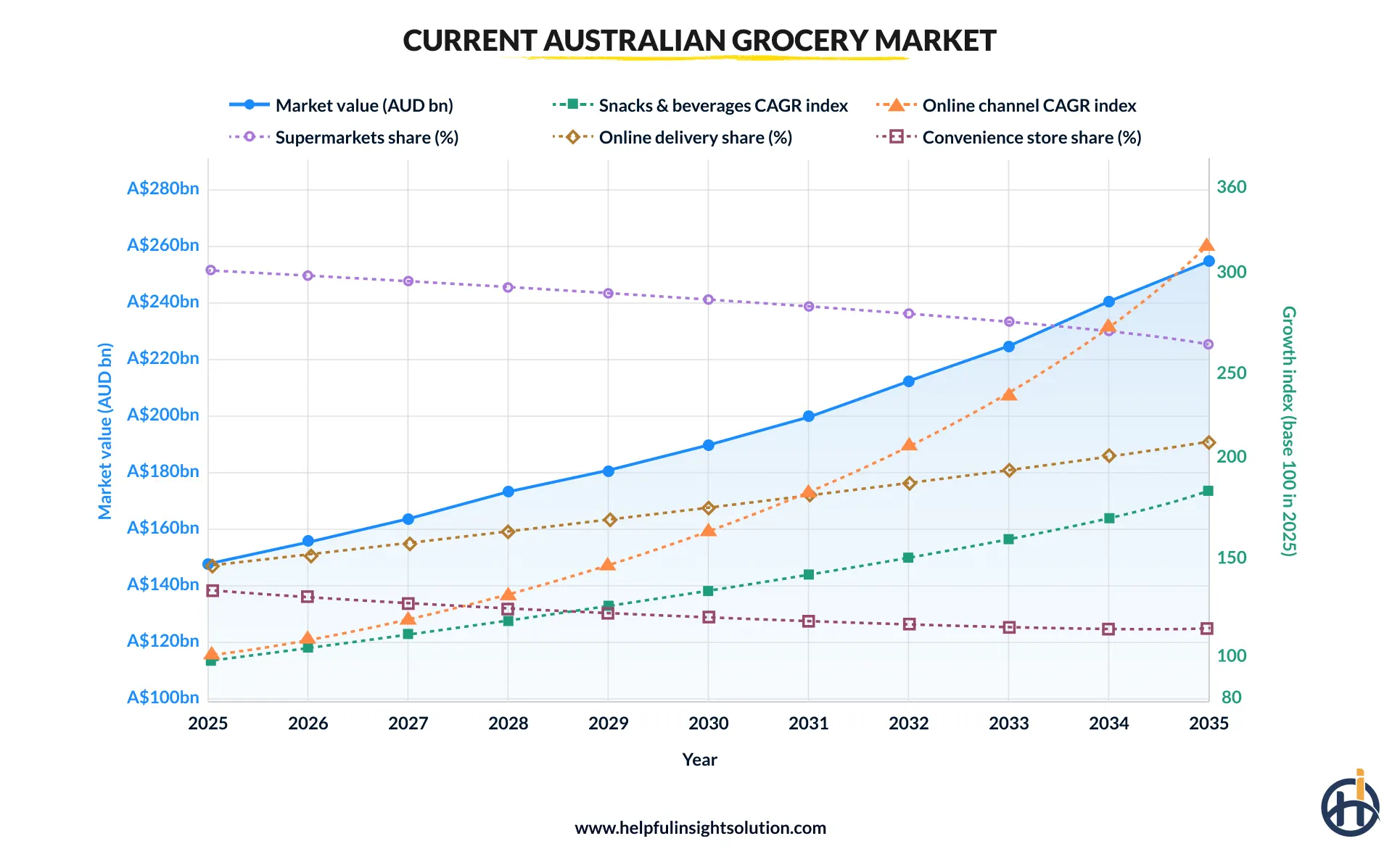
Various trends in grocery shopping, like AI-powered chatbots and user personalization, are fueling this market growth in a positive direction. Additionally, it will grow more, allowing enterprises to target different delivery models and local vending areas.
What is Coles and How Does it Work?
Coles Supermarkets is one of the largest grocery and retail chains in Australia, which has now expanded its services online. The Coles grocery app provides a user-friendly interface, dynamic order tracking features, varied grocery items, and instant checkout services.
Users can link their payment cards to the grocery delivery and get multiple reward points on every purchase. The app allows people in Australia to pick up grocery items from nearby stores or vending zones with the BOPIS model.
Whether you are a business investor or a consumer, it is important to understand how Coles-like grocery delivery applications work. Here is a general process that all must know.
Create an Account: Users download the app, fill in important details, link their Flybuys card, and start browsing the items.
Set Preferences: Now they can choose from grocery delivery or pickup services and set timings according to their needs.
Add Items: There is an integrated cart or bucket list that helps users to easily add products and scan barcodes through mobile cameras.
Place Order: A confirmation page verifies quantity and quality, allowing people to make payments through credit cards or PayPal.
Track Delivery: Buyers can track their deliveries through built-in mapping features and provide feedback after receiving orders.
Average Cost Breakdown of Creating a Grocery App Like Coles
Australia offers various resources for creating advanced grocery delivery platforms that can target millions of users and consistent profits. The cost to build a mobile app for grocery delivery is highly dependent on the platform complexity, such as basic, intermediate, or advanced.
Additionally, the rate of developing mobile apps is also influenced by other factors, which we will see in the next section. On average, the cost to build a grocery app like Coles ranges from AUD 10,000 to AUD 70,000 and may increase with additional requirements.
The development cost is divided into different categories based on the business model, budget, and enterprise needs. For simple applications with MVP features, the price is lower and increases as the specifications change. Here, we will discuss the breakdown of costs to create grocery applications with the following table.
| Complexity Level | Estimated Development Time | Estimated Cost (AUD) |
| Basic | 2–3 months | AUD 10,000 – AUD 20,000 |
| Intermediate | 3–5 months | AUD 20,000 – AUD 35,000 |
| Advanced | 5–7 months | AUD 35,000 – AUD 55,000 |
| Professional | 7–12 months | AUD 55,000 – AUD 70,000+ |
What Factors Affect the Coles-Like App Development Cost?
This section helps you to understand the cost to build an app like Coles based on multiple factors. You will study all the major cost-affecting aspects, like security and design, with their respective tables.
1. Mobile App Features
The number and complexity of features significantly influence the cost of developing grocery apps like Coles. Basic functionalities such as product browsing and checkout require less effort, while advanced capabilities like real-time tracking increase development time. More features, like AI recommendations and loyalty programs, demand additional testing and maintenance resources.
| Feature Component | Estimated Cost Impact (AUD) |
| User Registration & Profile Management | 10,000 – 18,000 |
| Product Catalog & Smart Search | 12,000 – 22,000 |
| Shopping Cart & Secure Checkout | 15,000 – 25,000 |
| Real-Time Order Tracking | 18,000 – 35,000 |
| Loyalty Programs & Personalized Recommendations | 25,000 – 45,000 |
2. UI/UX Design Complexity
A well-designed user interface enhances customer engagement and shopping convenience for users. Simple layouts with standard design elements are more affordable, whereas custom designs and interactive animations require greater design expertise. You can make a similar platform like Coles with limited complexity that leads to decreased project costs.
| Design Component | Estimated Cost Impact (AUD) |
| Basic UI Templates & Standard Navigation | 10,000 – 15,000 |
| Custom UI/UX Design with Interactive Elements | 15,000 – 30,000 |
| Premium User Experience with Advanced Animations | 30,000 – 50,000 |
3. Platform Selection
The choice between Android, iOS, or cross-platform development directly impacts the overall budget. Building separate native apps for each platform requires additional grocery app development resources, testing, and budget. Cross-platform frameworks, like Flutter, can reduce costs while still delivering a consistent experience across devices.
| Platform Option | Estimated Cost Impact (AUD) |
| Android App Development | 10,000 – 25,000 |
| iOS App Development | 12,000 – 28,000 |
| Cross-Platform (iOS + Android) | 20,000 – 45,000 |
4. Backend Infrastructure Cost
The backend is the foundation for managing products, orders, payments, and user data in real-time. The Coles app development cost rises due to scalable cloud hosting, real-time inventory synchronization, and advanced database systems. A robust backend architecture is essential to support growing user traffic and ensure reliable performance.
| Infrastructure Component | Estimated Cost Impact (AUD) |
| Database Management System | 10,000 – 18,000 |
| Cloud Hosting & Storage | 12,000 – 22,000 |
| Inventory & Order Management Backend | 18,000 – 35,000 |
| Scalable Microservices Architecture | 30,000 – 55,000 |
5. Third-Party Integrations
Grocery delivery apps often rely on external services for payments, maps, notifications, analytics, and customer support. The integration of advanced tools requires additional development time, licensing fees, and ongoing maintenance. An increase in the use of third-party tools for notifications and payments may lead to a higher development cost.
| Integration Component | Estimated Cost Impact (AUD) |
| Payment Gateway Integration | 10,000 – 18,000 |
| GPS & Delivery Tracking Services | 12,000 – 25,000 |
| CRM, Marketing, and Analytics Tools | 15,000 – 30,000 |
6. Team Hiring Model
The development team hiring model plays a major role in determining project expenses. Freelancers generally offer lower rates, while in-house teams and specialized app development companies provide broader expertise at a higher cost. The cost to develop an app like Coles is affected by the chosen hiring model and is dependent on both budget and project management efficiency.
| Hiring Model | Estimated Cost Impact (AUD) |
| Freelance Development Team | 10,000 – 25,000 |
| In-House Development Team | 30,000 – 60,000 |
| Dedicated App Development Company | 40,000 – 70,000 |
7. Developers’ Experience
You can hire experienced developers who charge higher rates but deliver better code quality, performance, and scalability. Senior professionals can easily identify potential issues at early stages and implement best practices more effectively. It is beneficial to invest in skilled developers, which often reduces long-term maintenance and optimization costs.
| Experience Level | Estimated Cost Impact (AUD) |
| Junior Developers | 10,000 – 20,000 |
| Mid-Level Developers | 20,000 – 35,000 |
| Senior Developers | 35,000 – 55,000 |
| Expert Grocery App Specialists | 50,000 – 70,000 |
8. Maintenance & Security Charges
Mobile application maintenance is essential for keeping the app updated, secure, and compatible with new devices and operating systems. Regular updates, bug fixes, performance monitoring, and cybersecurity measures require ongoing investment. It is necessary to implement strong security practices that protect customer data and ensure regulatory compliance.
| Maintenance/Security Component | Estimated Cost Impact (AUD) |
| Bug Fixes & Performance Optimization | 10,000 – 15,000 |
| Regular Feature Updates | 12,000 – 22,000 |
| Security Audits & Data Protection | 15,000 – 30,000 |
| 24/7 Monitoring & Ongoing Support | 20,000 – 40,000 |
How to Optimize the Cost to Make Grocery Delivery Apps Like Coles?
If you want to make an app like Coles, then it is necessary to know various cost-reducing methods. They help businesses to make proper arrangements and set a budget before starting the development process.
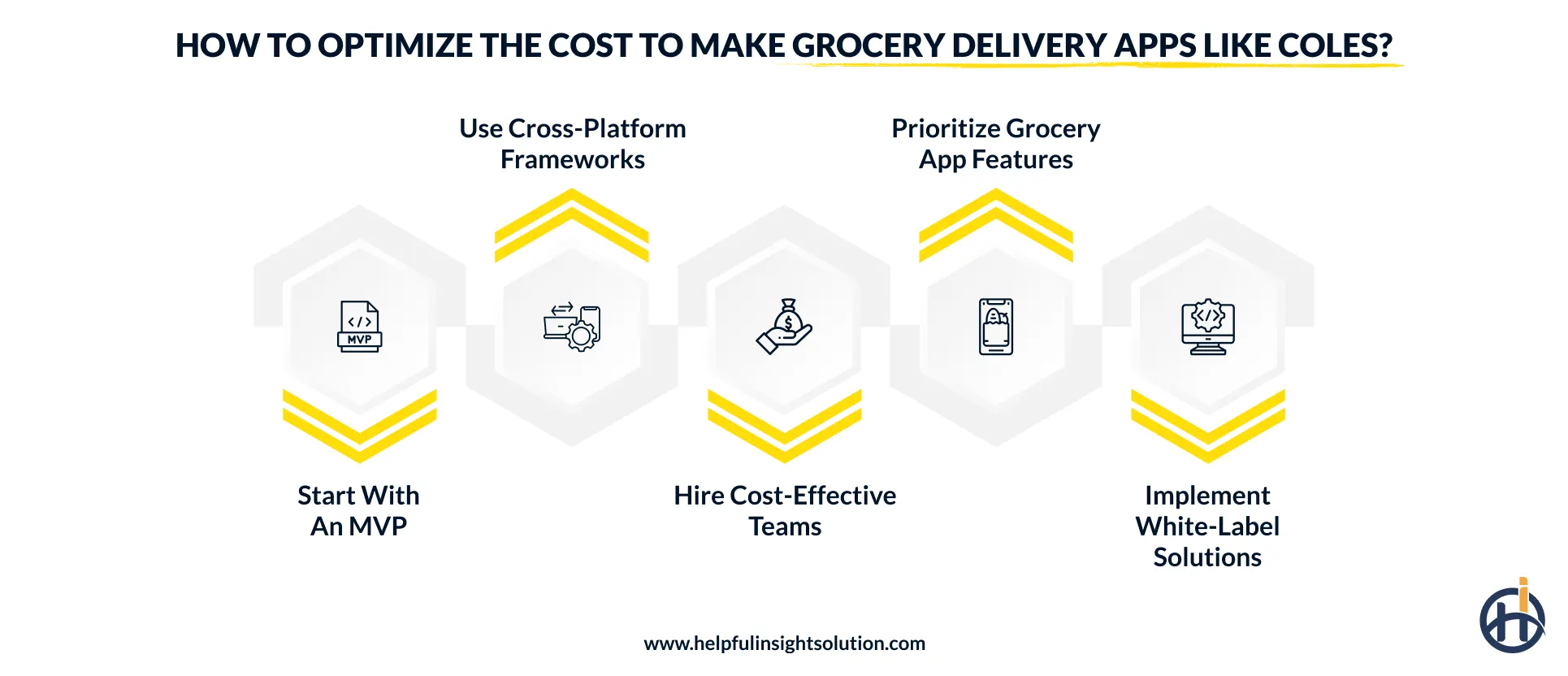
1. Start with an MVP
You can launch a Minimum Viable Product (MVP), which allows businesses to focus on essential grocery delivery features instead of investing in a full-featured app. This approach reduces initial development cost to make a supermarket app like Coles and validates market demand before scaling.
2. Use Cross-Platform Frameworks
It is beneficial to use various cross-platform technologies such as Flutter or React Native that enable developers to build a single codebase for both Android and iOS. This helps to lower development time, maintenance efforts, and overall project expenses with a real-time architecture.
3. Hire Cost-Effective Teams
Businesses must choose experienced offshore or dedicated development teams to reduce the mobile app development cost in Australia, ensuring quality standards. A strategic and affordable hiring approach ensures efficient resource utilization and better budget management.
4. Prioritize Grocery App Features
You should focus on high-impact features such as product search, cart management, secure payments, and order tracking to prevent unnecessary spending. It is better to implement Coles app development services that ensure increased customer satisfaction and business growth.
5. Adopt Cloud-Based Models
The use of cloud infrastructure eliminates the need for expensive on-premises servers and provides scalable resources with on-demand features. Businesses only pay for the services they use, making it a cost-efficient solution for growing grocery delivery applications.
6. Implement White-Label Solutions
Entrepreneurs must use white-label grocery app solutions that provide pre-built modules and ready-to-use functionalities, enhancing the development process. Additionally, this also reduces custom coding requirements, increases market reach, and lowers overall development costs.
Best Features of Coles-Like Grocery Delivery Applications
Various delivery apps like Coles offer exciting features, such as order tracking, secure payments, and advanced filters. They improve user experiences, increase engagement, and ensure trust in the long term. Here is a table showing the best features of the Coles application.
| Feature | Description |
| User Profile Management | Allows users to create accounts, manage personal details, and save delivery preferences. |
| Advanced Product Search & Filters | Helps shoppers quickly find products using categories, keywords, brands, and filters. |
| Smart Shopping Cart | Enables users to add, remove, and modify items before checkout. |
| Multiple Payment Options | Supports secure payments through cards, digital wallets, net banking, and buy-now-pay-later services. |
| Real-Time Order Tracking | Provides live updates on order status and delivery progress. |
| Personalized Recommendations | Suggests products based on browsing history, purchase behavior, and preferences. |
| Scheduled Deliveries | Allows customers to select convenient delivery dates and time slots. |
| Loyalty Programs & Rewards | Encourages repeat purchases through points, discounts, and exclusive offers. |
| Push Notifications & Alerts | Keeps users informed about order updates, promotions, and special deals. |
| In-App Customer Support | Offers instant assistance through live chat, FAQs, or support ticket systems. |
5 Steps to Build a Grocery Mobile Application Like Coles
With the cost, you must know the process to make a grocery app like Coles before going forward. In this section, we have discussed major development steps, from ideation to support, ensuring consistency.
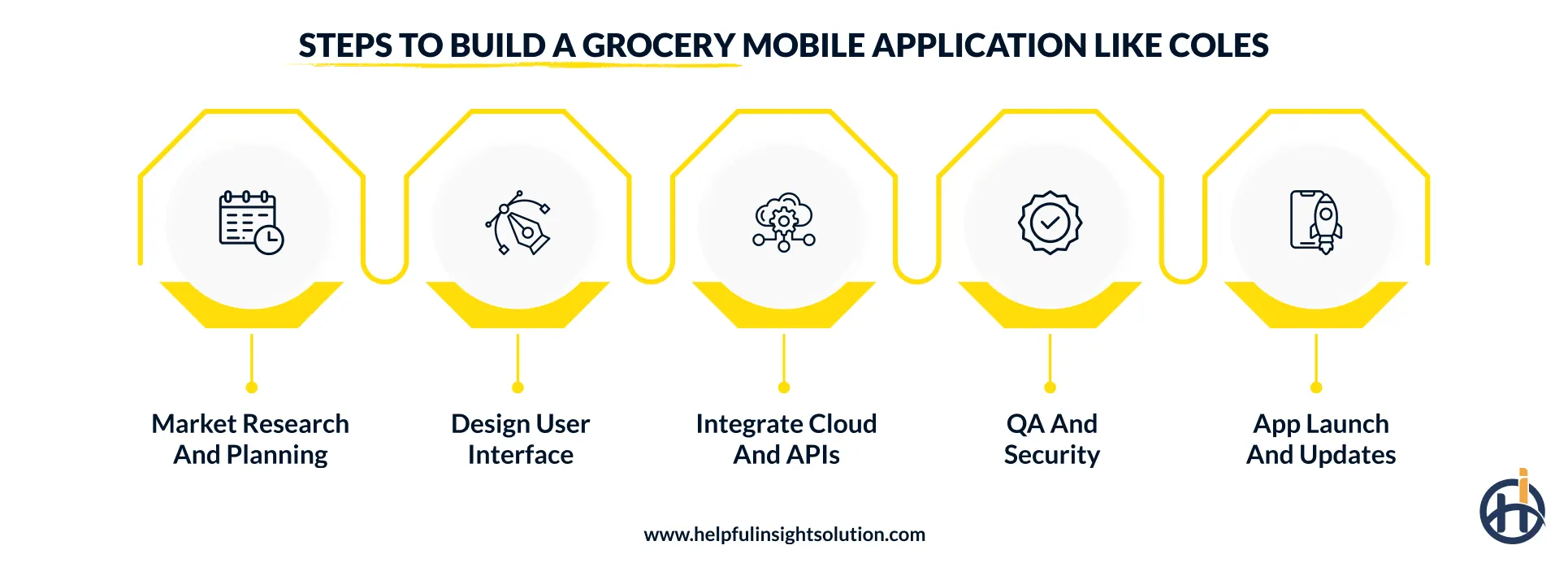
1. Market Research and Planning
For a business investor, the first step is to understand the current market situation, user pain points, target audience, and emerging grocery app trends. They must know about the alternatives to Coles app that have a large user base and deliver exclusive retail services. This helps them to make the right decisions on budget, app features, tech stack, and revenue models.
2. Design User Interface
In this stage, the designers create a static user interface, which includes sections and navigation tabs through automated tools like Figma. Flutter is the most common cross-platform framework that is used to code various features, such as a search bar and product images. For separate platforms, like Android or iOS, the developers use Kotlin and Swift programming languages.
3. Integrate Cloud & APIs
Now you can easily build a strong backend architecture by integrating dynamic databases, RESTful APIs, and cloud-based platforms, such as AWS. It is beneficial to hire a Coles clone grocery app development company that ensures complete assistance by providing the latest tools and technologies. It helps you to build PHP-based or Node-based applications according to the project needs.
4. QA and Security
To perform mobile app testing, you can hire app developers who are familiar with load, functional, usability, and penetration testing methods. Additionally, they must know how to implement security standards, such as MFA, RBAC, and biometrics. Various testing models, like white box and black box, help you to understand the threat level and take action accordingly.
5. App Launch & Updates
After development, businesses can launch their grocery app on various public platforms through app optimization, branding, and market listing. Additionally, it is important to provide regular updates that enhance features, reduce bugs, and improve security. This may affect the overall investment, but it is an important task to ensure efficiency and productivity.
Ways to Monetize an App similar to Coles
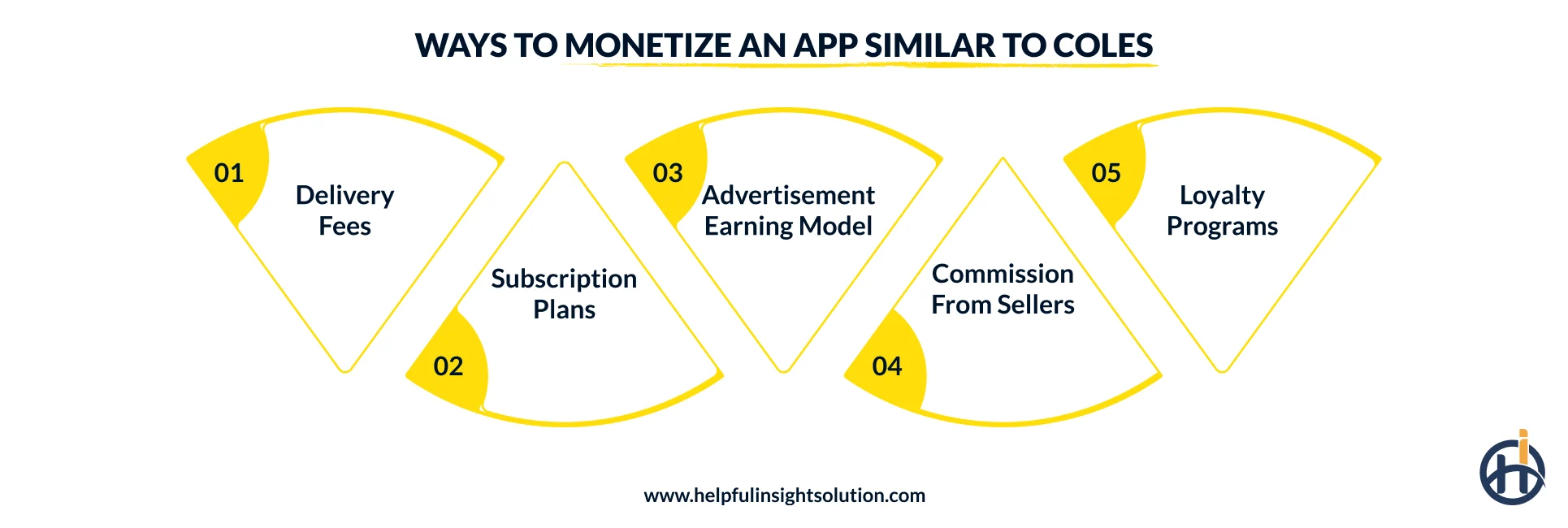
You can create an app like Coles to generate revenue through various money-making methods. They include user membership, rewards, and commission, enhancing business growth and customer trust.
1. Delivery Fees
Businesses can make profits by applying charges on delivery models based on distance, order size, service type, and delayed deliveries. The app automatically adds extra value to the total amount according to the product category and environmental conditions.
2. Subscription Plans
The Coles online shopping app provides multiple membership schemes, such as monthly or annual, that ensure free deliveries and discounts in real-time. Users can select from the standard or premium models according to their requirements and budget.
3. Advertisement Earning Model
You can make your brand a retail media network, allowing other businesses to run their ad campaigns and digital banners by paying a particular amount. They can allow weekly discounts to gather more customers, which can increase visibility across regions.
4. Commission from Sellers
Entrepreneurs can allow local vendors and small retailers to keep their stocks safe in warehouses by asking for a fixed commission charge. Additionally, during high demand and limited supply, you can increase the cost based on the commodities.
5. Loyalty Programs
By creating applications like Coles grocery delivery, you can generate revenue through loyalty programs, like discounts, coupons, and offers. This ensures user trust, increases platform engagement, builds consistent profit, and enhances brand value.
Why Choose Helpful Insight to Make User-Friendly Grocery Delivery Apps?
It is a great opportunity for businesses in Australia to start providing online grocery delivery services, as the market is growing rapidly. You must hire the best mobile app development companies in Australia that can provide affordable services and resources.
We understand client preferences and work with them in a business-friendly environment, ensuring security and transparency. Our skilled experts are available for constant support and deliver the best retail solutions at reasonable prices.
You have already understood the cost to develop an app like Coles by knowing various factors, such as design, security, and experience level. Now, it is the right time to invest in this business and become a market leader in Australia. With a grocery app like Coles, you can increase brand value, user engagement, and overall revenue growth.
FAQs
In Australia, Coles is a famous, premium, and trusted grocery delivery brand that provides a reliable shopping experience to users. It has 800 stores that offer instant delivery and curbside services, promoting user preferences with real-time features. The app is affordable and helps household members to easily manage daily products through online services.
For making grocery delivery platforms like Coles with basic mobile features, the average time ranges from 2 months to 5 months. With AI-powered features, like automated product search, the overall duration may increase to 8 months. The timeline may extend to 12 months based on the complete development process and budget requirements.
Several hidden factors, like regulatory compliance, performance checks, and data analytics, affect the overall development cost. The management of inventories, delivery, and commissions is also responsible for influencing the total charges. Testing of mobile applications is another factor that involves multiple methods, which increases the cost.
ALDI, Woolworths, and Costco are the best online grocery delivery platforms that deliver exclusive features similar to Coles. Additionally, they offer advanced services that target every person, from supermarkets to households. Users can buy thousands of commodities within a single platform by getting online discounts, coupons, and offers.
A business investor must know the challenges that affect the development of grocery apps like Coles. You will understand the key security and maintenance risks through the following points:
- Supply Chain: It needs advanced AI algorithms that can map routes and track drivers.
- Legacy Systems: Grocery businesses require multiple platforms that are hard to integrate with older systems.
- Data Privacy: Different regions have varied security compliance that restricts business flow.