

Key takeaways
- Duolingo is a language-learning app that helps users learn over 40 languages through short, interactive lessons and game-based activities.
- Businesses should consider developing apps and websites like Duolingo, as demand for such apps is growing worldwide. These platforms have the potential to reach a wide audience and provide multiple revenue opportunities.
- Easy sign-up, bite-sized lessons, progress tracking, speech recognition and push notification are the core features of apps similar to Duolingo.
- The cost to create a simple language learning app like Duolingo is around $20,000 to $50,000, while an enterprise-level app can cost $150,000 to $400,000+.
Learning a new language is no longer limited to classrooms or traditional learning methods. Mobile apps have also become a common way to practise new words, improve vocabulary, and become more comfortable with another language. Apps like Duolingo follow this approach by breaking lessons into short activities that users can fit into their daily routine.
Few apps in this category match Duolingo’s reach. As per Business of Apps, the platform has recorded over one billion downloads since its launch, with 128 million people accessing it each month. Numbers like these are a big reason businesses in the education sector are taking language learning apps seriously as a product to invest in.
For entrepreneurs planning to enter this space, there is room to build something beyond a basic lesson-based app. AI-powered language learning apps can offer personalized practice, which helps you stand out from competitors and give users something different from what existing apps offer.
This blog explains how to build a language learning app like Duolingo. We’ll go through why it’s worth building, which features you need, the steps involved, and what it costs.
What is Duolingo and how does it work?
Duolingo is a free to use language-learning platform and app that helps users study different languages through short, interactive lessons and game-based activities.
Its courses now go past languages into math, music, and chess. The app is available on both the Apple App Store and Google Play Store, where it has a 4.6-star rating.
How Does Duolingo app work
To begin, users have to download the app and create their profile. Then they choose a language and a daily goal. Lessons then mix word matching, translation, listening, and speaking tasks.
Each one earns XP, and streaks and rewards bring users back day after day. A progress view shows how much they have covered, which helps them stay on track.
Why invest in developing a language learning app like Duolingo?
Duolingo has made language learning apps familiar to millions of users, and its popularity has brought more attention to this market. In this section, let’s have a look at the key reasons to create language apps like Duolingo for education businesses.
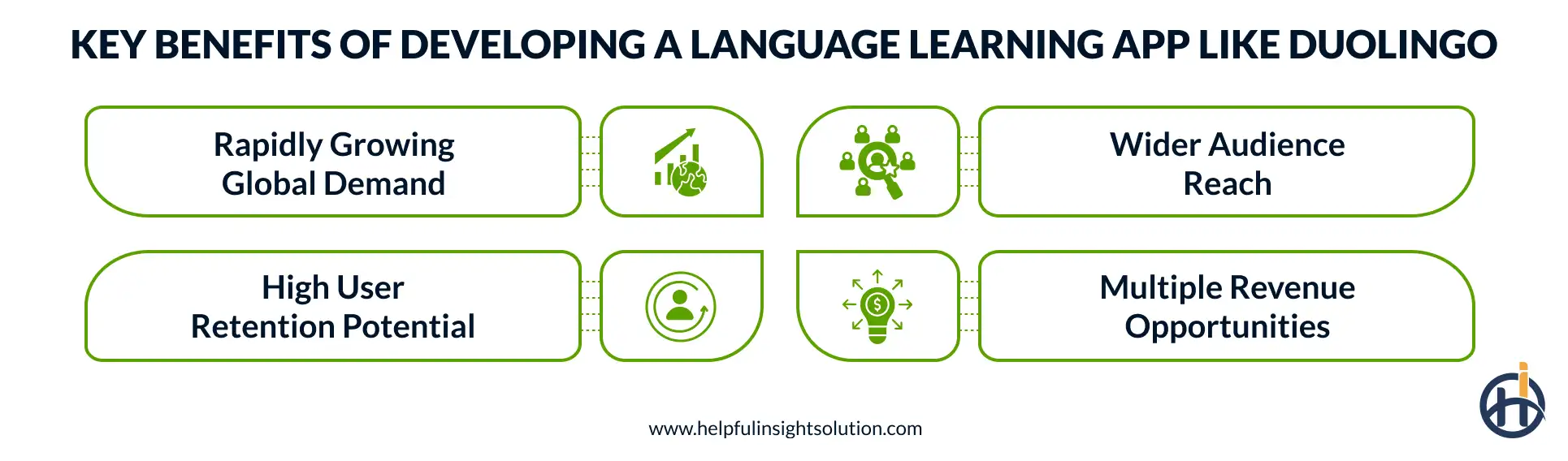
1. Rapidly growing global demand
Language skills are becoming useful in more areas of life, from finding work overseas to communicating with international clients. As a result, more people are looking for ways to learn languages online. Market.us estimates that the global language learning app market will reach around $16.2 billion by 2033, showing the scale this industry could reach.
2. Wider audience reach
A language learning app is not limited to one type of learner. Students may use it to improve their language skills, while working professionals may need another language for their jobs. Travellers and people living abroad may have different reasons to learn, too.
This gives edtech companies the chance to serve all of them from a single app, and some of them may be learners whose needs other online learning platforms don’t meet.
3. High user retention potential
Getting people to download an app is only the first step. What counts is whether someone opens the app again the next day. Language learning apps like Duolingo work on this with features such as daily streaks, points, and short challenges.
Learners can see how far they’ve come and always have a small goal waiting. For a business, that means more users who stay and fewer who try it once and drop off.
4. Multiple revenue opportunities
Creating a language learning platform helps earn money in more than one way. Paid plans can give subscribers an ad-free app and access to advanced lessons.
People who stay on the free plan can still bring in money through ads. Small in-app purchases add another source. This gives businesses different options to generate income from the same platform.
Must-have features of an online language learning app like Duolingo
A language learning app can have plenty of features and still fail to hold users’ interest. What matters is how useful they are during learning. A dedicated development team can help you choose the right features for apps similar to Duolingo.
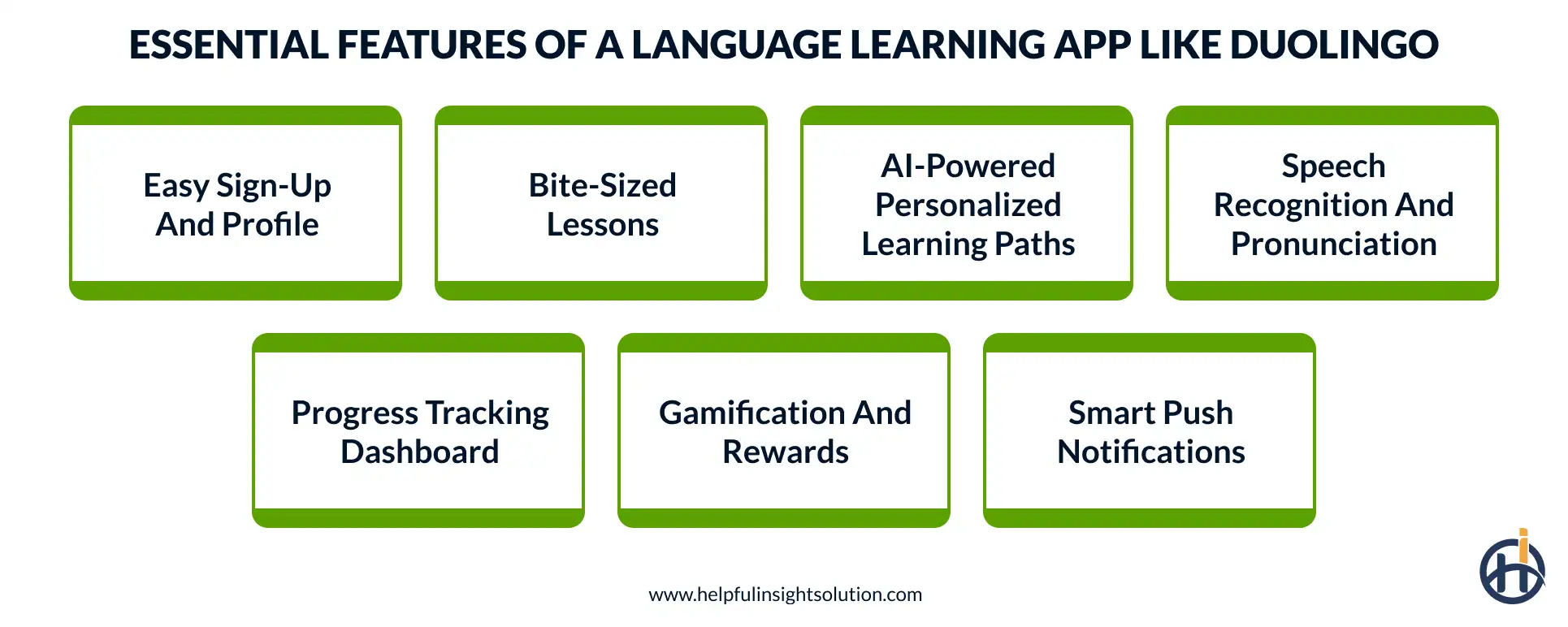
1. Easy sign-up and profile
Add a simple registration flow that supports email, Google, and Apple sign-in, so users can start without filling out a long form. Once inside, they set a language, daily goal, and level. Each learner’s profile saves their XP, completed lessons, and progress, so it’s all there when they return.
2. Bite-sized lessons
Instead of putting too much information into one lesson, split the course into 5 to 10 minute sessions. This makes it easier to practise a little during the day instead of waiting until they have enough time for a full study session.
3. AI-powered personalized learning paths
A user may understand new words but still struggle to use them in sentences. AI can help your app pick up on this and give them more sentence practice. Language apps like Duolingo can use these learning patterns to decide what a user should practise next.
4. Speech recognition and pronunciation
A learner might recognize a word when reading but struggle to say it. A speech recognition feature handles this well. Users speak into their phone, and the app checks their pronunciation. If they get a word wrong, they can hear it again and give it another try.
5. Progress tracking dashboard
A dashboard gives users a clear view of how they are doing in the course. It lists finished lessons, new words, test scores, and streak days in one place, so users can look back and see what they’ve already got through.
6. Gamification and rewards
Let each completed lesson earn points, and hand out badges when the user hits a goal. A streak counter keeps score of their practice days, and leaderboards let them see how they compare with other learners.
7. Smart push notifications
Give users timely reminders about their learning activity. Tell users when a streak is about to end, when they’ve missed a day, or when a lesson is still waiting to be finished. Skip the constant notification, because people mute apps that send too many.
How to develop a language learning app like Duolingo: Step by step
Building apps similar to Duolingo takes more than a good idea. It needs a structured approach, where each stage leads into the next. If you plan to develop a mobile app in this space, following a clear order helps you avoid costly rework. Let’s have a look at the key steps involved in creating one.
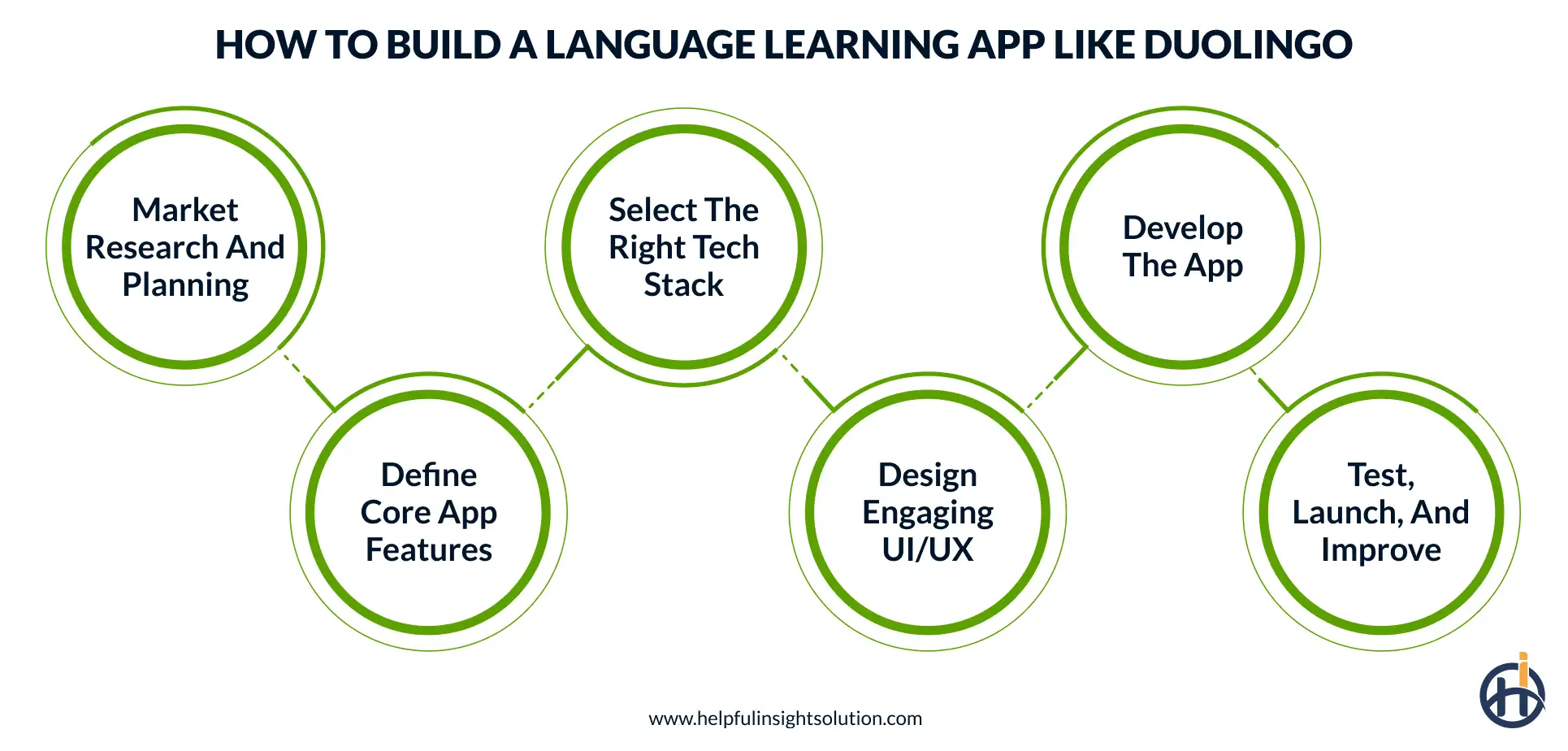
1. Market research and planning
First, decide why you want to create the app and pick your target audience. Then study what is already out there in the market. Try using the Duolingo app and a few other language learning apps like Babbel and Memrise.
Check the lesson order, the sign-up flow, and the price of a paid plan. Once you’ve done this, it becomes easier to choose functionality, monetization models and set a realistic budget for your project.
2. Define core app features
Before development starts, list the features your app will have. Some are essential, like lessons, sign-up, and progress tracking while others are advanced which uses emerging technologies like AI and machine learning. Learning apps need both as basics keep people using an app, while AI features give them a reason to pick yours over competitors.
3. Select the right tech stack
Your app’s performance will depend partly on the technologies used to build it. Start by deciding whether you want separate native apps for iOS and Android or a cross-platform solution using Flutter or React Native.
You will also need suitable backend and database technologies. Choose a stack that can support the functions planned for your language learning app as it grows.
4. Design engaging UI/UX
The way your app looks and feels can affect how comfortable people are while learning. Take inspiration from learning apps like Duolingo, but plan a layout that suits your own product.
Use clear text, simple menus, and easy-to-follow screens. Good UI/UX design should make it easy for users to find lessons, complete exercises, and move between different parts of the app.
5. Develop the app
The approved design goes to the mobile app developers, who turn it into a working product. One part is the front end, which covers every screen.
The other is the back end, with a database for courses and learner records. They also link the APIs, add speech recognition for speaking practice, and code how points, rewards, and streaks work.
6. Test, launch, and improve
Before launch, the QA team goes through the app, looking for bugs and other issues with its performance and features. Whatever they find gets fixed, and only then is the app released. The work doesn’t stop there. Monitor how the app performs, read user feedback, and fix issues as they come up.
How much does it cost to develop an app like Duolingo?
Not every language learning app costs the same to build. An MVP version of an app like Duolingo can cost $20,000 to $50,000, while a mid-level app can cost $50,000 to $150,000. A complex platform can cost $150,000 to $400,000 or more. These figures are approximate, and your own quote may land above or below them.
The final number depends on a handful of factors, which are covered in the list below.
- Number and complexity of features
- Platform choice: iOS, Android, or both
- UI/UX design quality and detail
- AI and speech recognition integration
- Back-end and database setup
- Development team size and location
Once you understand what drives the price, you can estimate your mobile app development cost more clearly and decide what to build first.
How Helpful Insight helps you develop a language learning app like Duolingo
Language learning apps like Duolingo have changed how people approach learning a new language. A lesson now takes a few minutes, the exercises are quick, and AI features can adjust practice to each learner.
As the craze for learning new languages is growing worldwide, building such an app for an educational institution can be really beneficial. It can help them reach learners of different ages and from different regions.
Our education app development company can help you build a secure, scalable language learning platform that competes with established apps like Duolingo. We identify the features that suit your audience, rather than simply adding functions to the app.
Our team then takes it from the first plan through design, development, and launch, with your requirements and your plans for growth in mind.
Some businesses begin with a small MVP, and others come with a full platform in mind. We have experience of working on language learning app development, so we can help with both and help move your idea ahead.
Connect with our team today to share your project requirements.
FAQs
Developing Duolingo-like apps usually takes 2 to 5 months for an MVP. A complex app can take 8 to 12 months or more, depending on factors such as project scope, feature complexity, UI/UX design, third-party integration and app testing.
It depends on your goal. Templates work for a fast, low-budget start. If you want unique features and full control as your user base grows, a custom app is the better choice.
Language learning apps like Duolingo mostly earn through a freemium model. Basic lessons are free, while paid subscriptions remove ads and unlock extra features. Ads shown to free users and small in-app purchases add more income.
Some of the top Duolingo alternatives are Babbel, Busuu, Memrise, and Mondly. They differ in lesson style, price, and how much speaking practice they include.