

Key takeaways:
- The best music streaming apps are Spotify, Apple Music, Amazon Music, YouTube Music, Tidal, and others, each built for different listener priorities.
- AI and machine learning have changed how people find music. Platforms now learn taste patterns and build playlists around them automatically over time
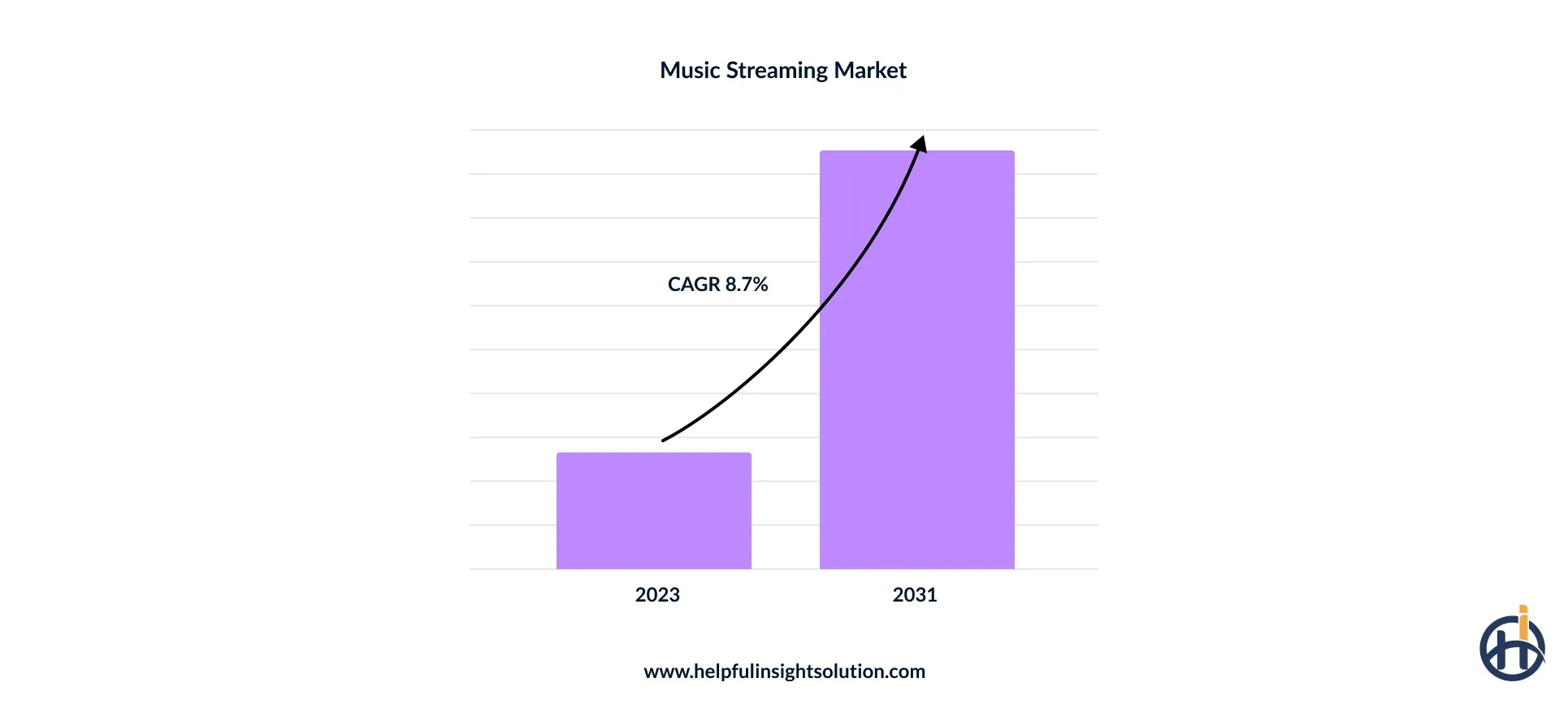
- The global music streaming market is expected to reach $71.32 billion by 2031, a number that tells you exactly why new platforms keep entering this space.
- Free tiers vary significantly across platforms, with restrictions ranging from shuffle only mode to limited skips and mandatory screen on playback.
Music has always been personal. What changed is how people access it. Over a billion listeners now discover, experience, and connect with music daily through a handful of powerful platforms. Spotify, Apple Music, Amazon Music, YouTube Music, and Tidal are some of the top music streaming apps dominating the market right now, each built around different priorities, each serving a different kind of listener.
According to Persistence Market Research, mobile devices account for nearly 82% of all streaming sessions globally. It clearly shows music follows people on commutes, at the gym, through earbuds at 2AM.
The global music streaming market is expected to reach $71.32 billion by 2031. That kind of growth means new players are entering and existing platforms are expanding. With so many popular music apps evolving simultaneously, the differences between them are growing and choosing the wrong one means paying for features that never quite fit how you actually listen.
If you are a listener trying to figure out which platform fits your habits, budget, and sound quality, you will find a clear answer in this blog. And if you are building something in the music space, these are the platforms that set the benchmark every new product gets measured against.
Top music streaming apps leading the music industry
Billions of streams happen every single day. The best music apps are not just competing on price or library size anymore. Audio experience, device compatibility, and artist support have become the real differentiators.
1. Spotify
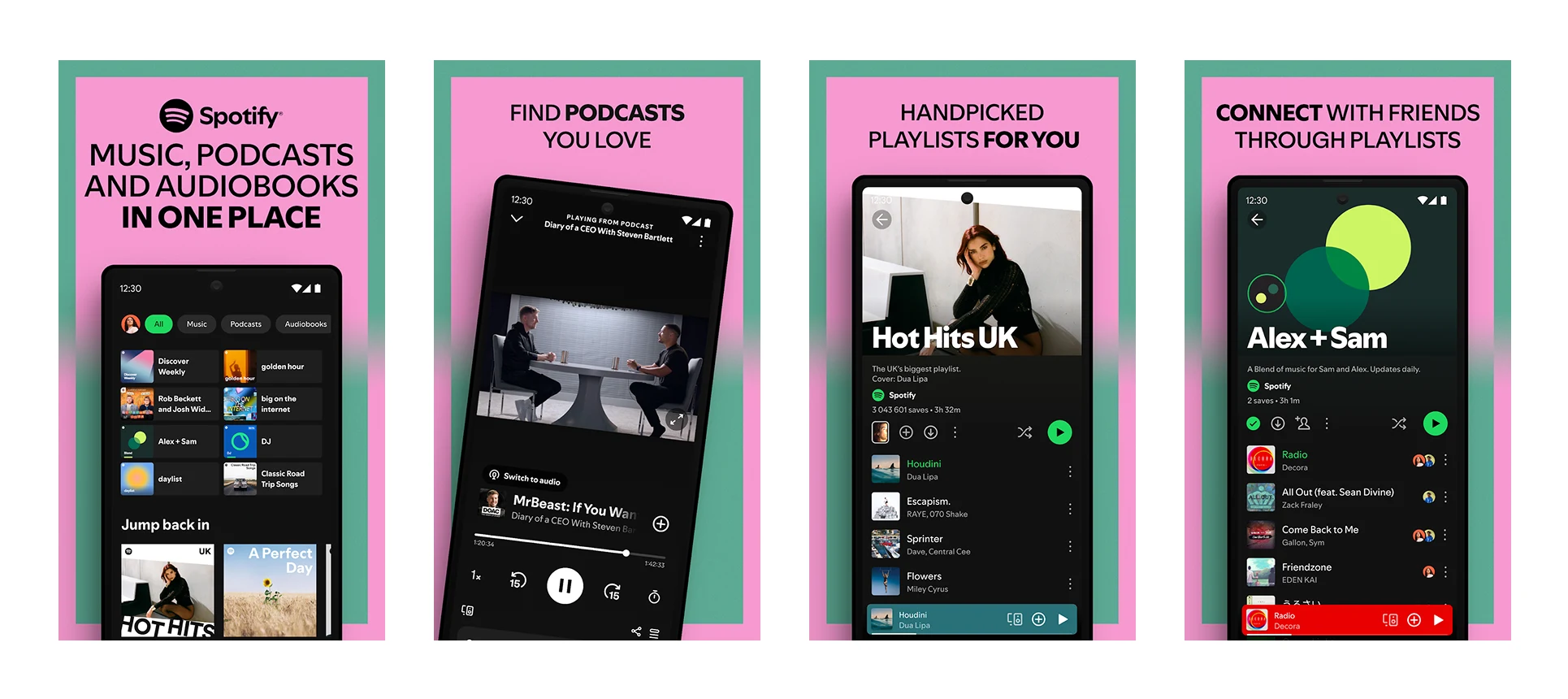
Spotify is one of the leading apps for music streaming and has been for good reason. 80 million+ songs, 4 million podcasts, and 300,000 plus audiobook titles explain part of why.
The recommendation engine is where casual listeners become loyal users. It picks up on listening patterns quickly and starts surfacing music that feels personal rather than popular.
Spotify HiFi now brings lossless, CD quality audio to the platform, closing the gap that audiophiles pointed to for years. Spotify Connect lets users switch between phone, laptop, smart TV, or speaker mid session. Free accounts have ads and shuffle limits. Premium removes both and adds offline listening with full playback control.
Key features
- AI-powered music discovery
- Spotify Connect cross-device playback
- Collaborative playlist creation
- Concerts Near You playlist
Pros
- Largest podcast library available
- Free tier accessible globally
- Seamless device switching experience
- Available in 180+ markets
Cons
- Audiobook hours limited monthly
- Student plan one device only
2. Apple Music
Apple Music is the right call and the best music streaming app if you are already in the Apple ecosystem. iPhone, Mac, iPad, everything connects without any setup.
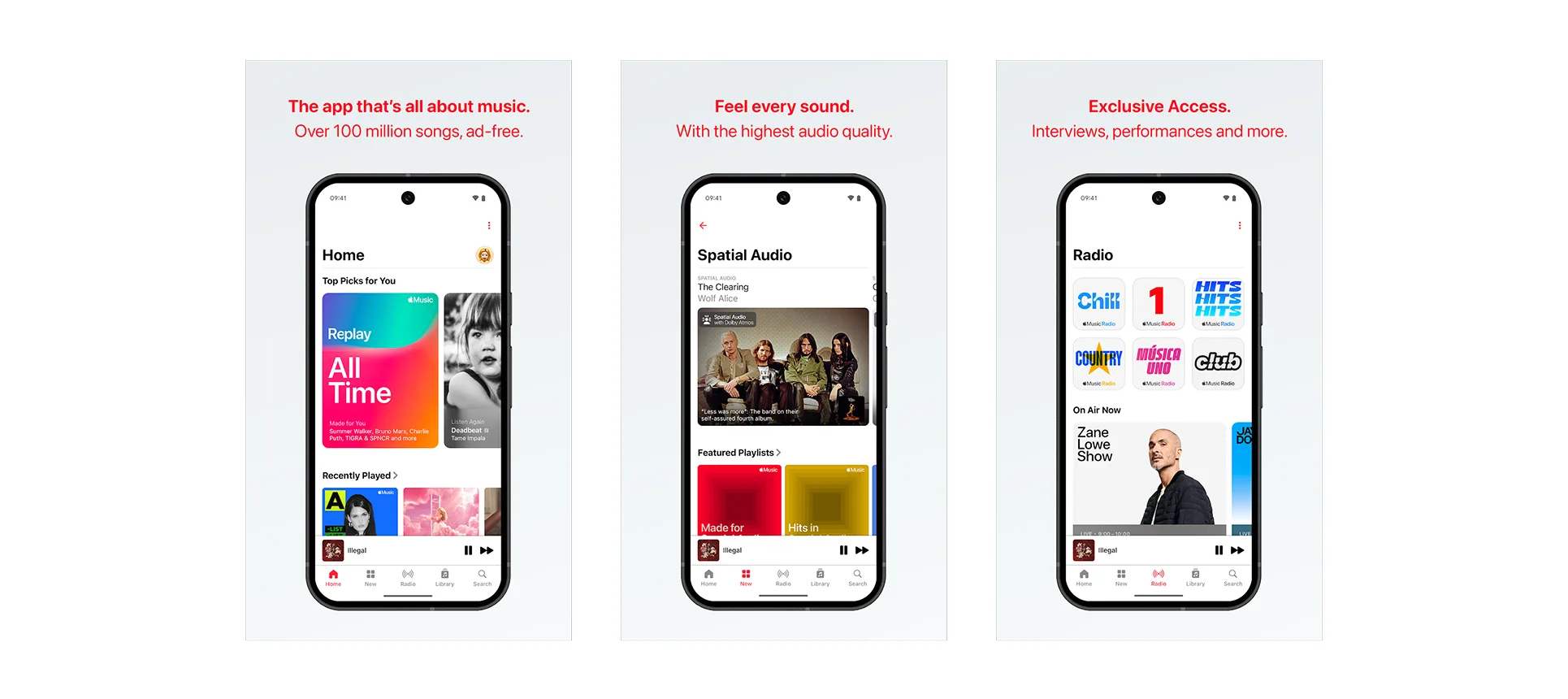
With 100 million plus songs, all completely ad-free, it gives listeners access to Lossless Audio up to 24-bit/192 kHz along with Spatial Audio and Dolby Atmos on supported devices at no extra cost. That alone separates it from most platforms charging extra for the same thing.
No shuffle restrictions, no audio quality locked behind higher tiers. Apple added Playlist Playground which builds playlists from text prompts, and AutoMix handles smooth transitions between tracks automatically.
For entrepreneurs and audio tech companies looking to enter the digital music space, building an app like Apple Music is one of the most compelling opportunities in the industry right now. The premium audio experience Apple has built sets the benchmark every new entrant aspires to reach.
Key features
- iCloud Music Library sync
- Apple Music Sing karaoke feature
- Shared playlist collaboration
- Classical music dedicated section
Pros
- Seamless Apple ecosystem integration
- No shuffle restrictions on any tier
- Student plan affordable pricing
- Works across TV and gaming consoles
Cons
- Android experience feels limited
- No free tier available
- Social sharing features very basic
3. Amazon Music
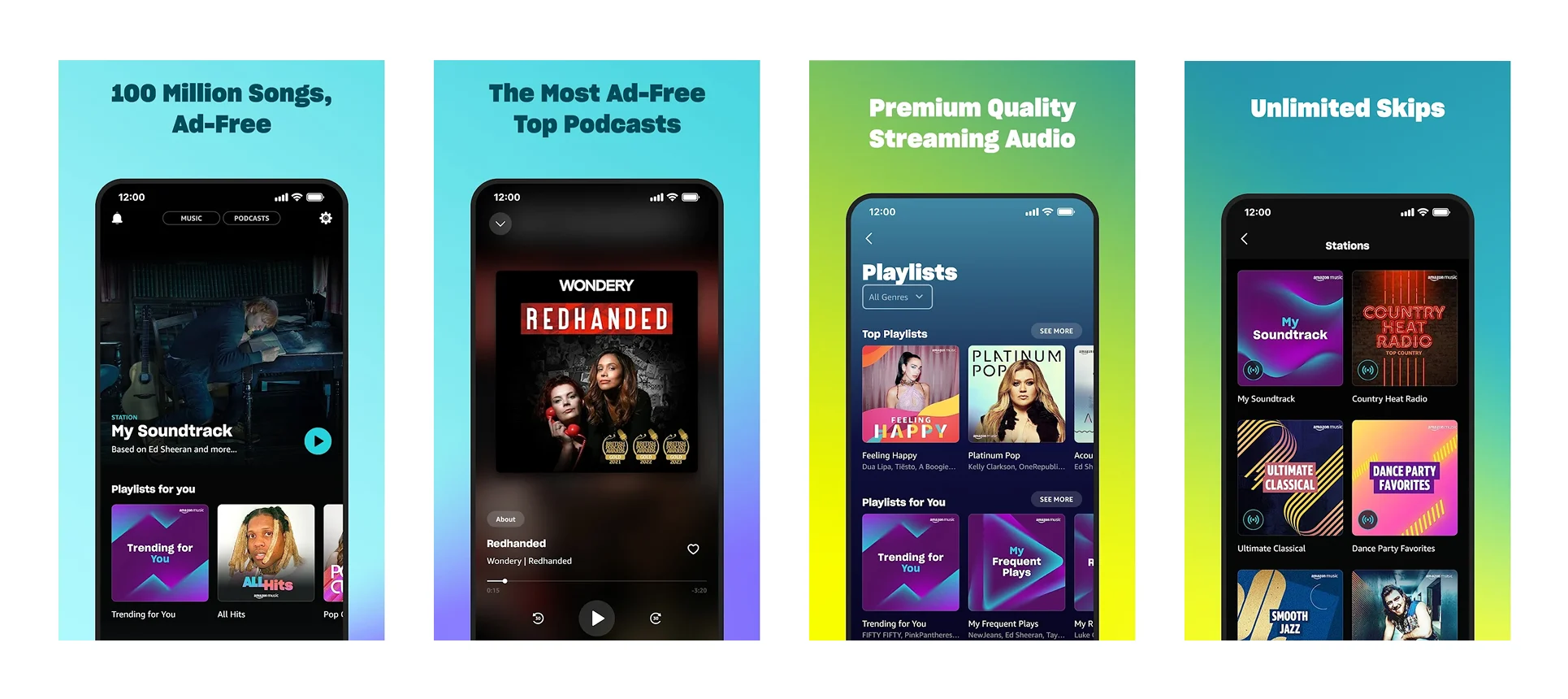
When it comes to top rated music streaming services, Amazon Music earns its place with affordable pricing, high quality streaming, and a massive collection of songs. Prime members get the best deal here. Ad free music, podcast access, and shuffle play come included with an existing Prime subscription at no additional cost.
Amazon Music Unlimited has a catalog of over 100 million songs with lossless audio quality. Alexa integration works better here than on any competing platform, which matters more than it sounds if Amazon devices are already part of your home setup. The recommendation engine is not as sharp as Spotify but the library depth and audio quality make up ground quickly.
Key features
- Millions of podcast episodes available
- One free audiobook every month
- Thousands of curated stations and playlists
- Personalized music and podcast discovery
Pros
- Audiobook access built into subscription
- Unlimited skips on all tracks
- Full offline listening support
- Student and family plans available
Cons
- Interface feels cluttered
- Ads in free version
- Limited social features
4. YouTube Music
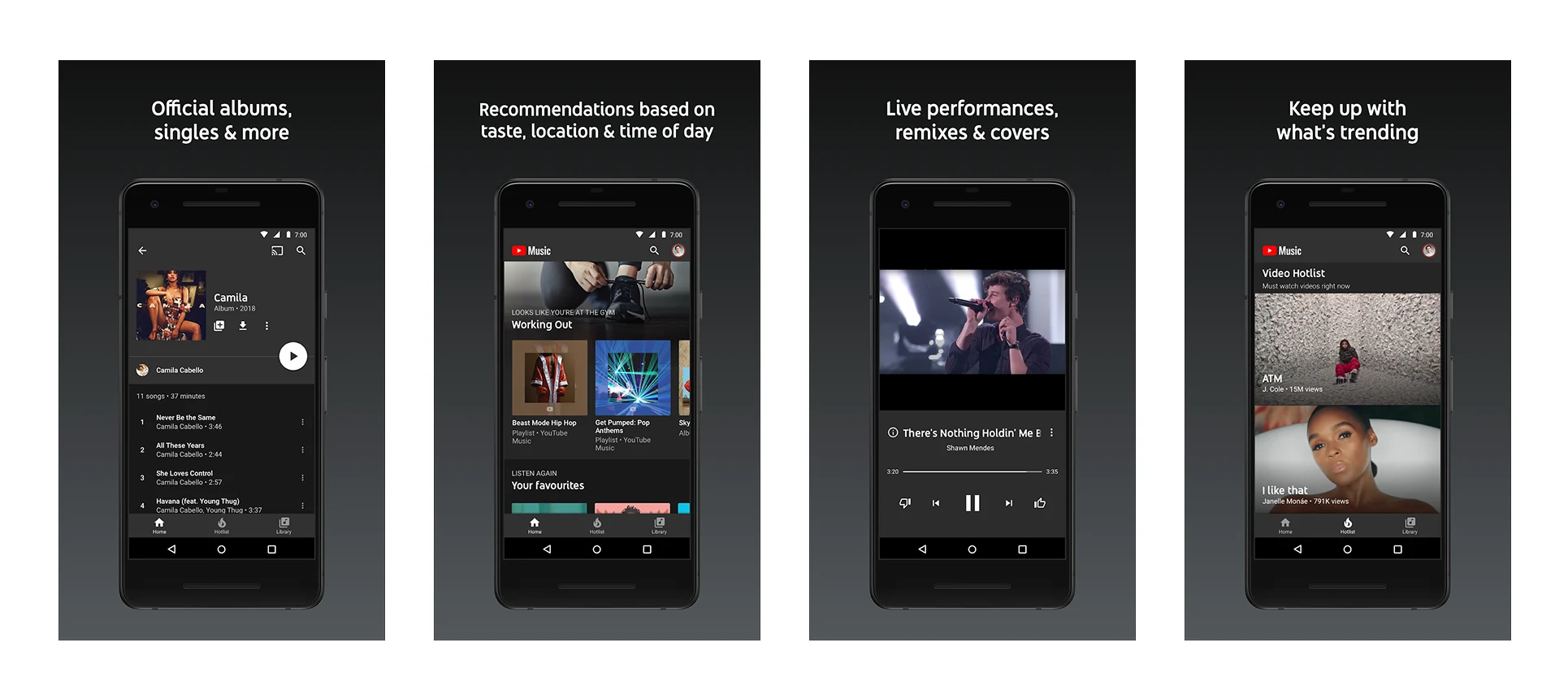
YouTube Music has a library advantage no other platform can replicate. Live performances, covers, remixes, and regional content pulled straight from YouTube means if a track exists anywhere online, it is almost certainly here.
One of the best music app features YouTube Music offers free users is on-demand streaming. Screen off playback is the catch though. Lock your phone and the music stops, that is a Premium only feature and a genuine frustration for daily commuters.
For listeners already watching YouTube daily, upgrading bundles ad free viewing into the same subscription. Two problems solved in one price.
Key features
- Huge audio and video library
- Offline downloads
- Personalized recommendations
- Lyrics with playback
Pros
- Available on all major platforms
- Largest catalog of live content
- Free tier accessible without credit card
Cons
- Ads on free plan
- No background playback
- Limited desktop features
5. Pandora
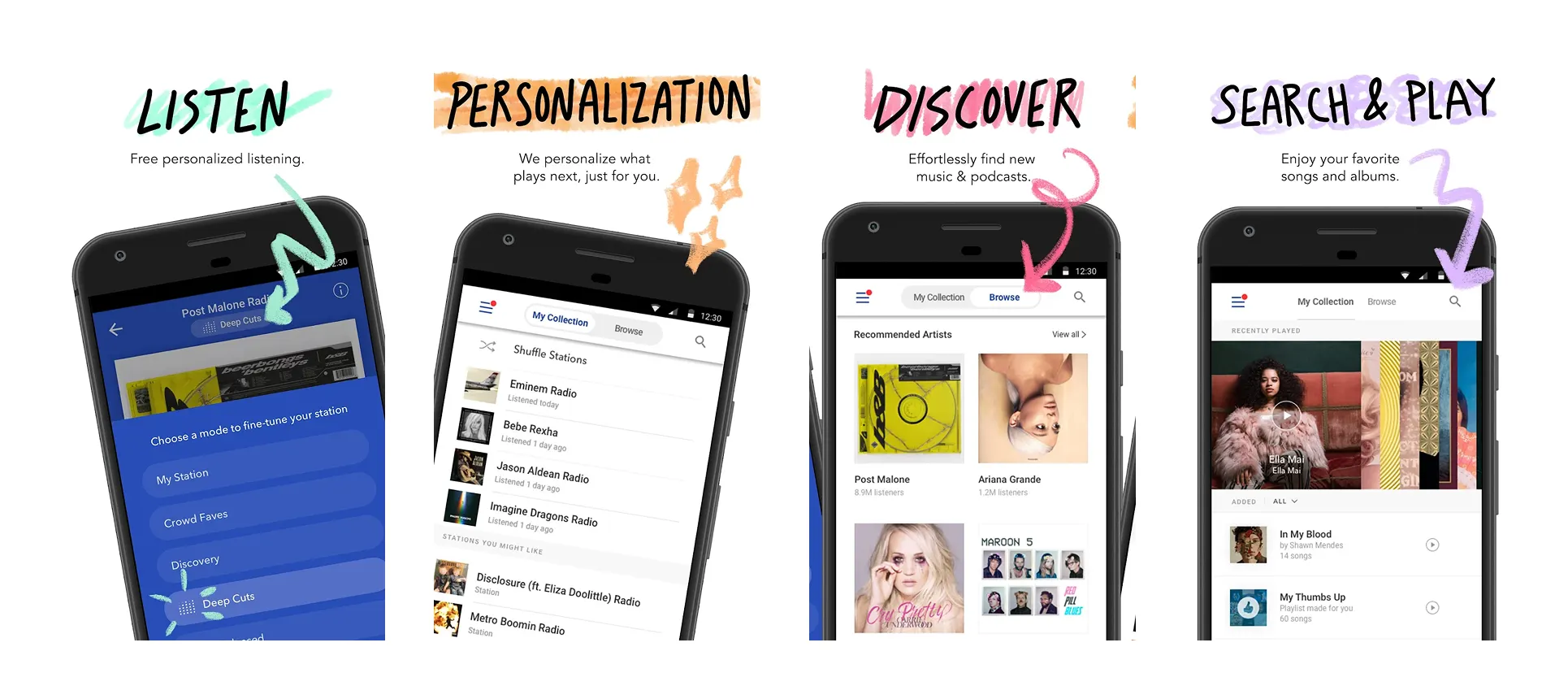
Pandora is named among the most popular music streaming platforms built entirely around radio style listening, and it does that better than anyone else. Most streaming apps treat radio as an afterthought. Pandora built its entire product around it.
The reason it works comes down to the Music Genome Project, where music experts analyzed every song across nearly 500 musical traits. That is not an algorithm guessing what you might like based on plays. It is a genuinely different approach to music discovery that passive listeners will notice immediately.
Key features
- Personalized radio stations
- On-demand music streaming
- Offline music downloads
- Voice mode support
Pros
- Easy-to-use interface
- Free ad-supported plan
- Podcast listening support
- Curated stations available
Cons
- Limited global availability
- Ads on free plan
- Lower audio quality
6. Tidal
Tidal made a different bet than every other platform on this list. Sound quality first, everything else second. With 180 million songs in HiRes lossless quality up to 24-bit/192 kHz and Dolby Atmos standard on every paid plan, no tier upgrades needed.
It also stands out as the top music streaming service for artists. Royalty payouts are structured differently here, and that matters to listeners who think about where their subscription money actually goes.
The library is deep and the experience feels premium without being complicated. Casual listeners may not feel the price difference over Spotify is worth it. Anyone who has ever noticed the difference between compressed and uncompressed audio will.
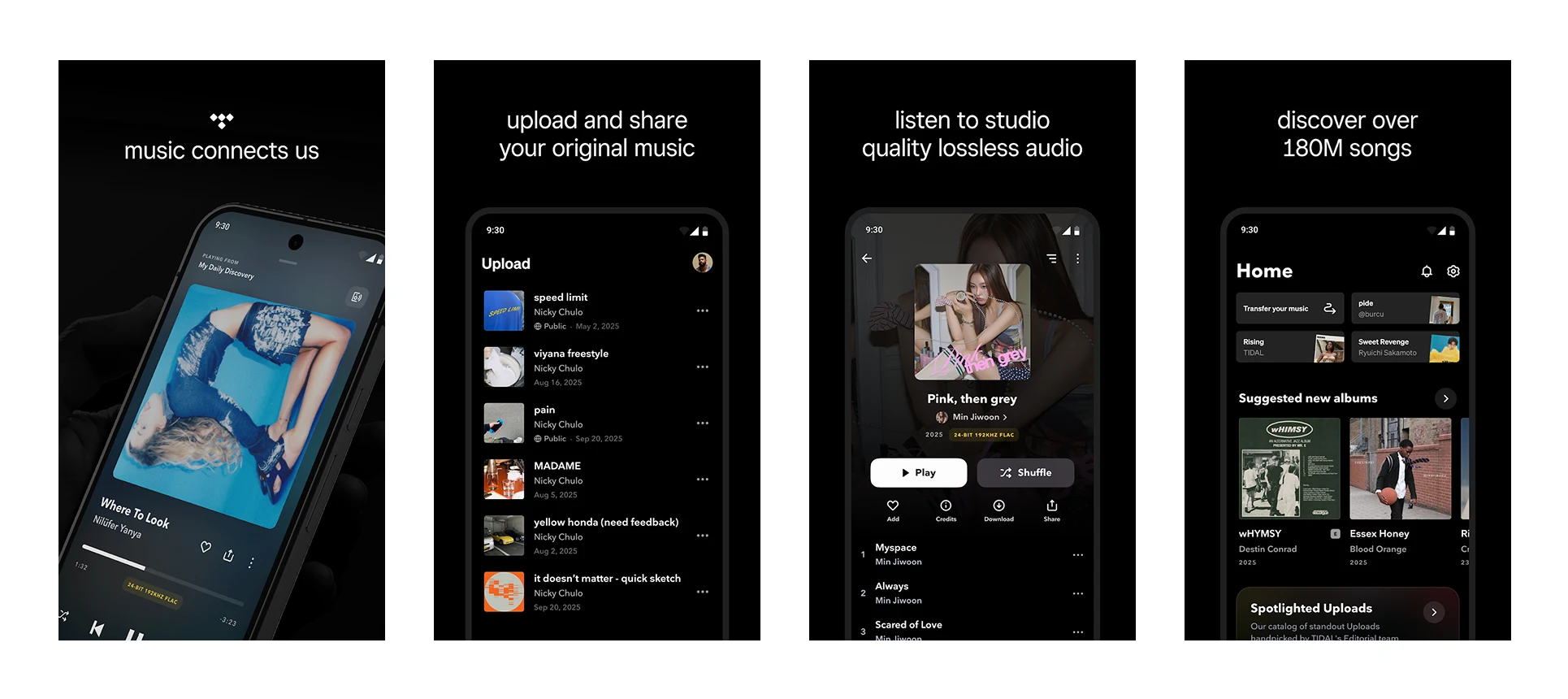
Key features
- Large music video library
- High-resolution FLAC streaming
- Offline song downloads
- Cross-device syncing
Pros
- Exceptional audio quality
- Artist-focused platform
- Exclusive music content
- Clean user interface
Cons
- No free plan
- Higher subscription cost
- Less video content
7. SoundCloud
SoundCloud has 400 million+ tracks from 30 million plus artists across 193 countries, and most of that content exists nowhere else. That alone makes it the best online music app for listeners who have outgrown what mainstream platforms serve them.
The catalog is not just big. It is different. Unreleased tracks, bedroom productions, early releases from artists who now headline festivals. The kind of music that disappears once a label gets involved.
Uploading is open to anyone. That openness is both the platform’s biggest strength and its most honest limitation. Discovery requires more effort here than on platforms driven by algorithms. But for listeners who genuinely enjoy finding music before everyone else does, that effort is exactly the appeal.
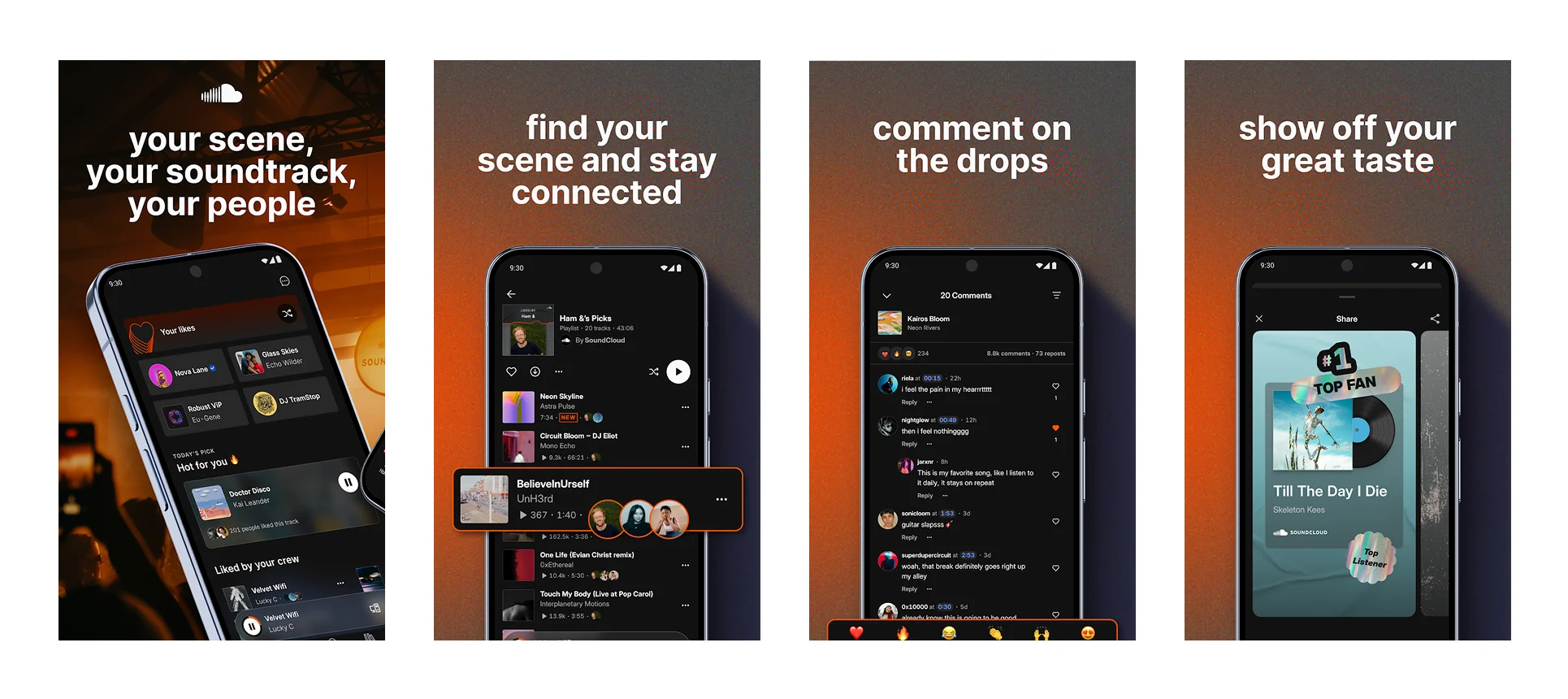
Key features
- Independent artist discovery
- Music sharing tools
- Playlist creation options
- Repost and likes feature
Pros
- Large indie music library
- Unique remix collection
- Strong creator community
- Diverse music genres
Cons
- Ads on free plan
- Copyright removals happen
- Interface can feel cluttered
8. Qobuz
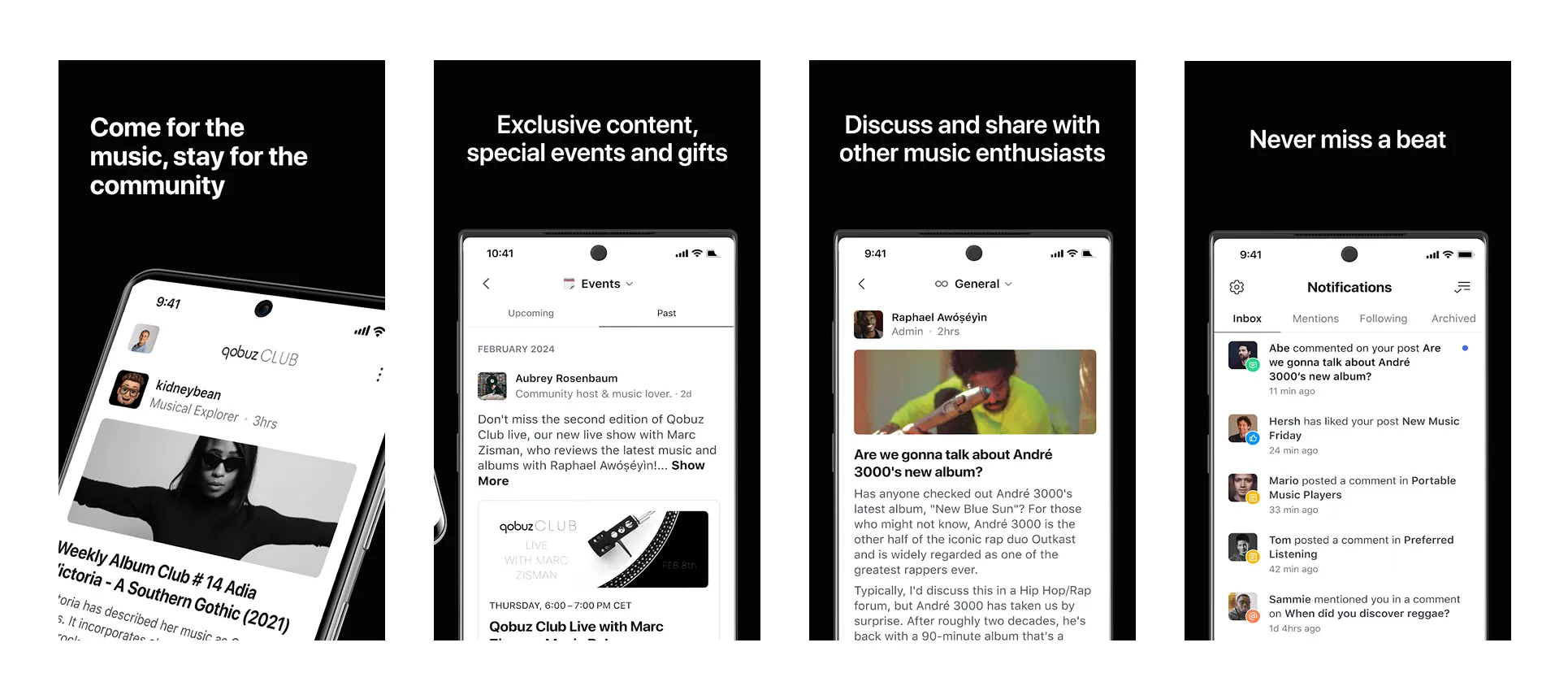
Since 2007, Qobuz has built its entire product around one type of listener someone who genuinely cares about how music sounds, not just what is playing. Among the best music streaming services for pure audio quality, it stands alone in one specific way.
It is the only platform that offers both streaming and downloads in Hi-Res audio under the same subscription. Buy an album in lossless quality and keep it permanently, regardless of what happens to your subscription.
The editorial side sets it apart from every other platform on this list. Over 500,000 original articles written by music experts, human curated playlists across rock, classical, jazz, electronic, and more. Discovery here feels less like an algorithm serving suggestions and more like a knowledgeable friend pointing you toward something worth hearing.
Key features
- Hi-Res streaming quality
- Lossless audio playback
- FLAC music library
- Artist biographies include
Pros
- Exceptional sound quality
- Detailed album information
- Extensive classical catalog
- Digital music store
Cons
- Higher subscription pricing
- Limited mainstream content
- No music videos
- Not widely available
Most popular music streaming platform: Comparison table
We have covered the best music streaming apps in detail above. But sometimes the clearest way to compare platforms is to see everything side by side. The table below makes that decision easier.
| Music App | Platform Compatibility | Ratings | Number of Downloads | Pricing | Best For | |
| Android | iOS | |||||
| Spotify | Both Android and iOS | 4.3 | 4.8 | 1B+ | Free, monthly plan starts at $12.99 | Music discovery and podcasts |
| Apple Music | Both Android and iOS | 4.2 | 4.9 | 100M+ | Free, 1 month trial, monthly plan starts at $10.99 | Lossless and spatial audio listening |
| Amazon Music | Both Android and iOS | 3.9 | 4.7 | 100M+ | Free for Prime members, monthly plan starts at $11.99 | Offline and on demand streaming |
| YouTube Music | Both Android and iOS | 4.5 | 4.8 | 5B+ | Free, monthly plan starts at $11.99 | Covers remixes and live sessions |
| Pandora | Both Android and iOS | 3.9 | 4.8 | 100M+ | Free, monthly plan starts at $4.99 | Radio style passive listening |
| Tidal | Both Android and iOS | 4.1 | 4.7 | 10M+ | 30 day free trial, monthly plan starts at $10.99 | Artist supported music listening |
| SoundCloud | Both Android and iOS | 4.7 | 4.8 | 100M+ | Free, monthly plan starts at $10.99 | Independent artist discovery and uploading music |
| Qobuz | Both Android and iOS | 4.4 | 4.6 | 1M+ | 1 month free trial, monthly plan starts at $10.83 | Editorial curated music discovery |
How to choose the right music streaming app
Still confused about which app fits you best? That is normal. The leading apps for streaming music we discussed above are all genuinely good products built for different kinds of listeners. The right one comes down to a few practical questions worth asking before committing to a subscription.
In this section, we will equip you with valuable tips to choose the right and best quality music streaming platform.
- Start with the device you listen on most. If you are deep in the Apple ecosystem, one platform connects everything. Android users have a different set of options that work more naturally with their setup.
- Discovery algorithms work differently on every platform. App like Spotify learns taste patterns over time and gets sharper with every session. Others rely more on editorial curation. How you prefer finding new music should factor into this decision more than most people think it does.
- Look at what you already pay for before adding another subscription. Amazon Music comes included with Prime. Apple Music bundles into Apple One. Paying separately for the best music streaming services something already sitting in your account rarely makes sense.
- Some subscriptions go beyond music. Podcasts, audiobooks, live radio, all bundled into one monthly price on certain platforms. If those are things you already pay for separately, consolidating into one app is a decision that pays for itself quickly.
Conclusion
Music streaming is not a growing industry anymore. It is a dominant one. Every platform on this list does something genuinely well. Spotify leads on discovery, Apple Music on sound quality within a mainstream price, Tidal for listeners who refuse to compromise on audio.
Choosing among the best on-demand music streaming services is a personal decision, and the right answer looks different for every listener. We hope this guide helped narrow it down to the one that actually fits how you listen.
For music companies, record labels, and independent artists looking to build their own platform, the apps covered in this guide have set the bar high. But a high bar is not a closed door.
Helpful Insight is a leading music streaming app development company with 10+ years of hands on experience building feature rich and high performance music platforms. Podcast apps, on demand streaming services, independent music platforms, we have built across every format. Our app developers understand what makes these products successful and work at scale, not just at launch.
Get in touch with our team today and share your music app idea.
FAQs
Spotify, Apple Music, Tidal, Amazon Music, and Qobuz are the best online music app available in the market. The right choice depends on your budget, audio quality preference, and device ecosystem.
Spotify, YouTube Music, Pandora, and SoundCloud are the best free music streaming apps. Each offers ad supported streaming with decent catalogs without requiring a paid subscription.
Tidal and Qobuz are the best audio streaming services for sound quality. Both offer Hi-Res lossless audio that exceeds standard streaming. Apple Music is the strongest mainstream alternative.
Apple Music and Spotify are the strongest paid options for offline listening. For free offline access, SoundCloud and YouTube Music allow limited downloads without a subscription. Paid plans across most platforms offer significantly more download flexibility.