

In the past few years, we have seen a shift in how medical services are delivered with the introduction of digital transformation in the healthcare industry. Medical apps for doctors and patients have made a significant contribution, as they have made healthcare more accessible.
These apps offer much more than convenience, they help people of all ages take better care of their health. Over 60% of patients now use mobile health apps to manage their health. No more calling hospitals for appointments or waiting in long lines for medicine. It’s a win for both patients and healthcare providers.
Medical apps help doctors improve care services, better manage patient data, and simplify their operations. That is the reason why care providers prefer using these apps and demand for them is growing.
If you run a hospital or are a private practitioner, having your own medical app is essential, as many patients now prefer searching for an app or website to access care.
In this blog, we’ll walk you through everything you need to know to develop medical apps for doctors.
Key Market Insights of the Medical App
Do you have doubts about whether to invest in medical app development or not? Take this doubt away, as the demand for such apps is huge and the market is growing. Here are the statistics that prove it:
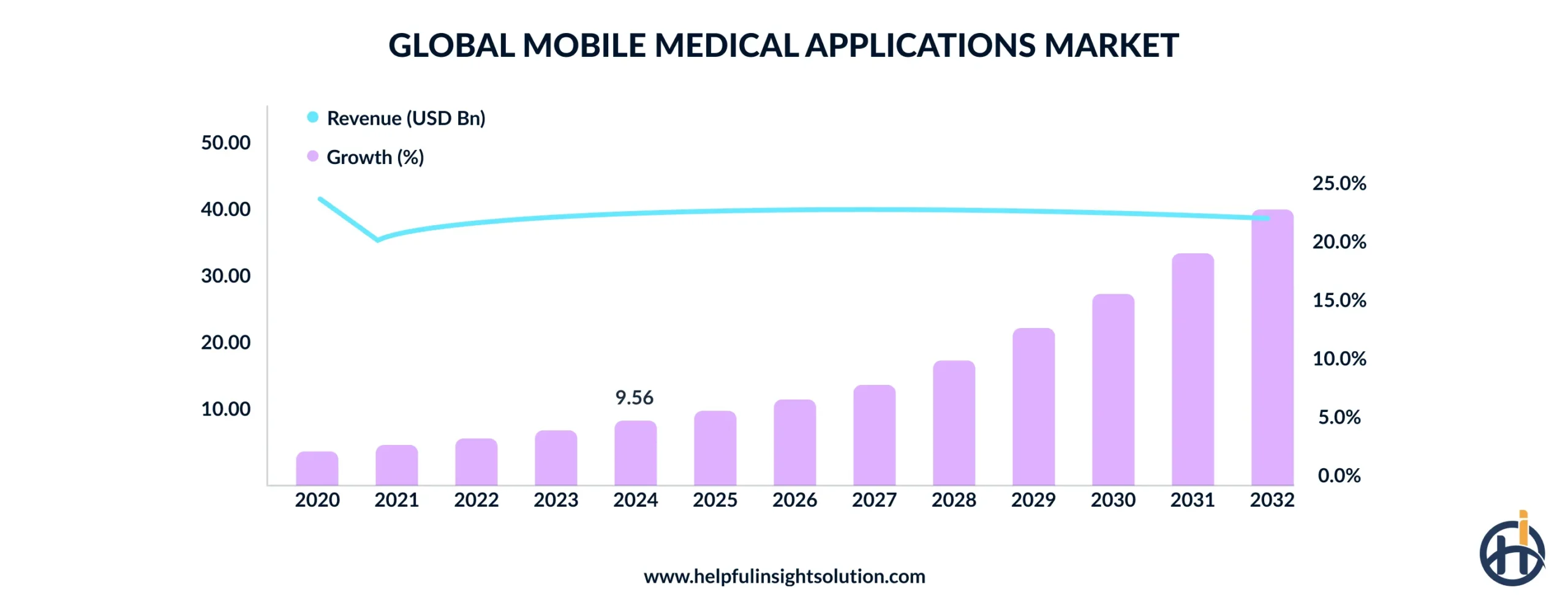
- You will be amazed to know that the global mobile medical app market is expected to reach $45.06 billion by 2032.
- By 2030, the worldwide medical reference apps market is projected to reach $3.10 billion.
- North America holds approx 45% of the global market share of mHealth apps.
- The mHealth app market is expected to grow from $79.85 billion in 2026 to $307.23 billion by 2035.
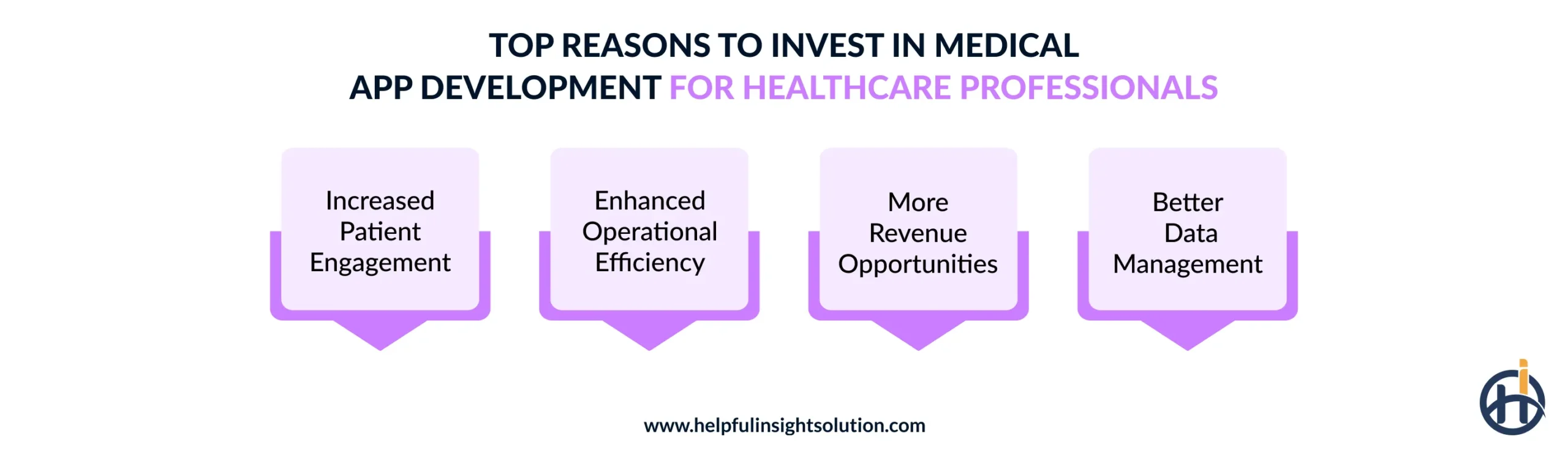
Top Reasons to Invest in Medical App Development for Healthcare Professionals
Nowadays, with everything going digital, having an app for doctors is essential to bridge the gap between patients and providers, making care more convenient. Medical apps for doctors offer many benefits. Let’s take a look at some of them:
1. Increased Patient Engagement
Many hospitals struggle with low patient participation, and staff often lack the time to build meaningful connections with patients. Medical apps help doctors stay connected with patients beyond OPD hours. When patients feel more engaged, they are more likely to stick to their treatment plans and are generally happier with their care.
2. Enhanced Operational Efficiency
There are so many operational activities to manage in a clinic or hospital, which sometimes can burden the staff and lower their productivity. Mobile health apps for doctors automate tasks like scheduling appointments, handling patient forms, and sending bills. With everything digital, staff can work more efficiently and make fewer errors.
3. More Revenue Opportunities
Healthcare apps for doctors offer the chance to grow their revenue by expanding beyond in-person clinic visits. With these platforms, doctors can provide services like virtual consultations and remote check-ups, which help increase their reach and income.
Additionally, medical apps ensure all services are billed accurately and promptly, so no payments are missed, and everything is charged correctly.
4. Better Data Management
Healthcare providers manage a large amount of data like patient details, test results, prescriptions, and more. Keeping track of everything on paper can be difficult and time-consuming.
Medical mobile apps for doctors solve this problem by storing all records in one secure, easy-to-access place. Doctors can instantly get the information they need, helping them make faster and better decisions.
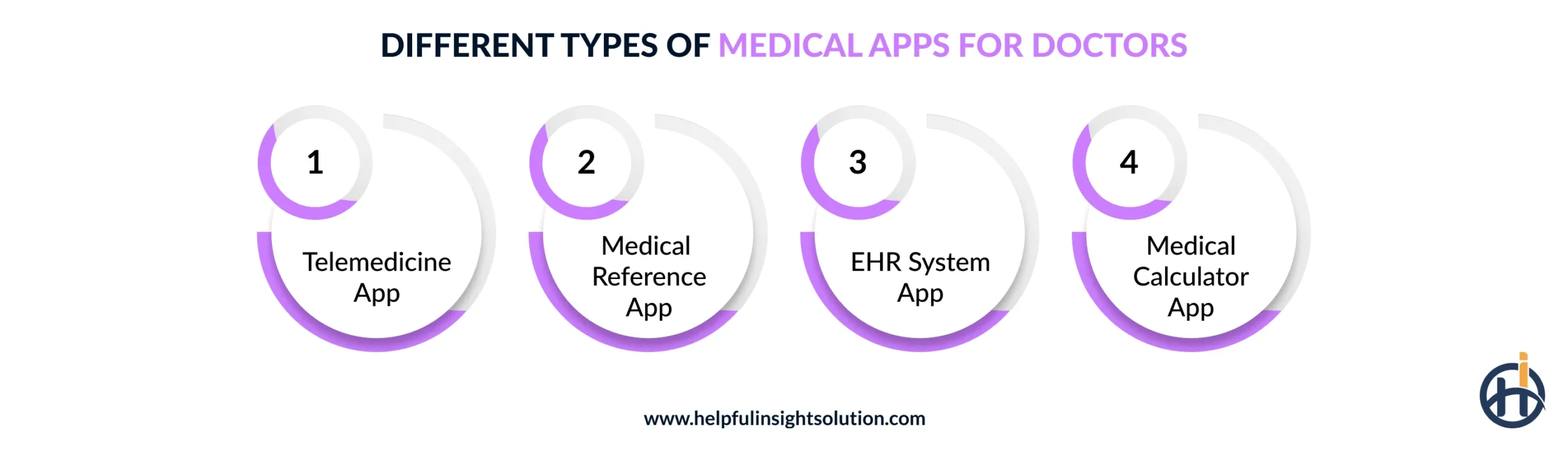
Different Types of Medical Apps for Doctors
Before we understand how to build medical applications for doctors, it is crucial to have clarity on their types. As a business in the healthcare sector, this will help you make decisions about what type of app you want to develop according to the specific needs.
1. Telemedicine App
These types of apps help doctors connect with patients from anywhere using video or voice calls. Patients can get care from home without visiting the clinic for minor health issues or follow-ups. With telemedicine apps, care providers can even reach people in remote areas, making quality care accessible to everyone.
Teladoc Health and Doctor on Demand are prominent telemedicine apps for doctors.
2. Medical Reference App
It is important for doctors to always stay updated with the latest healthcare technology and medical knowledge. With medical reference apps, healthcare professionals can quickly access information about medicines, diseases, and treatments right through their smartphones.
Whatever details they want, they can search for them without depending on heavy books or searching for information elsewhere.
Epocrates and Medscape are considered the best medical reference apps.
3. EHR System App
Electronic Health Record apps allow doctors to store and access patient records on their phones anytime. They can quickly check medical history, test results, and reports.
This makes it easier to treat patients, especially during hospital rounds. Medical record app for doctors helps share information safely, improving teamwork and ensuring patients get the right care.
DrChrono is one of the top EHR system apps.
Read Also: AI in EHR Systems: Use Cases, Integration, and Challenges
4. Medical Calculator App
If your healthcare business is involved in making drugs or conducting research on new treatments, then you should build a medical calculator app. Basically, it helps solve complex medical calculations, find correct medication doses, and check health scores to make treatment decisions.
MDCalc and MedCalX are popular real-life examples of medical calculator apps.
Must-Have Features of Medical Apps for Healthcare Professionals
Selecting the right set of features for medical apps for doctors is very crucial, as your platform’s success is highly dependent on it. Not adding the required features can result in poor adoption and low engagement rates.
If you are confused about what functionalities to add, then take help from dedicated developers; they are experts and have a strong understanding of what will work best for your app.
Let’s have a look at the essential features of medical apps for doctors.
| Feature | Description |
| Personalized Dashboard | With this feature, doctors can view and manage their schedules, patient lists, and important tasks to stay organized. |
| EHR/EMR Integration | View and update patient records securely in the medical app, keeping information accurate and readily available. |
| In-App Chat | It allows encrypted messaging between doctors, staff, and patients to safely share patient data without risking privacy breaches. |
| Appointment Management | This feature in mobile health for doctors helps manage or reschedule appointments, while sending automatic reminders to patients. |
| Telemedicine | Enables online video consultations, letting doctors treat patients remotely, without needing clinic visits. |
| ePrescription | Healthcare prescription apps for doctors help send prescriptions directly to patients or pharmacies, so patients can take their medications on time. |
| Medical Calculators | Provides instant medical calculations like dosage, BMI, or risk scores, helping doctors make accurate decisions quickly. |
| Push Notifications | The app sends important reminders for follow-ups, medication, or urgent tasks, keeping doctors and patients informed. |
Steps to Build a Medical Application for Doctors
Developing medical apps requires following a multifaceted approach while ensuring they are built to meet all the necessary compliance requirements. Therefore, it’s best to work with a trusted mobile app development firm because they are experts in this field.
In this section, we will explore the steps to create a medical app for doctors.
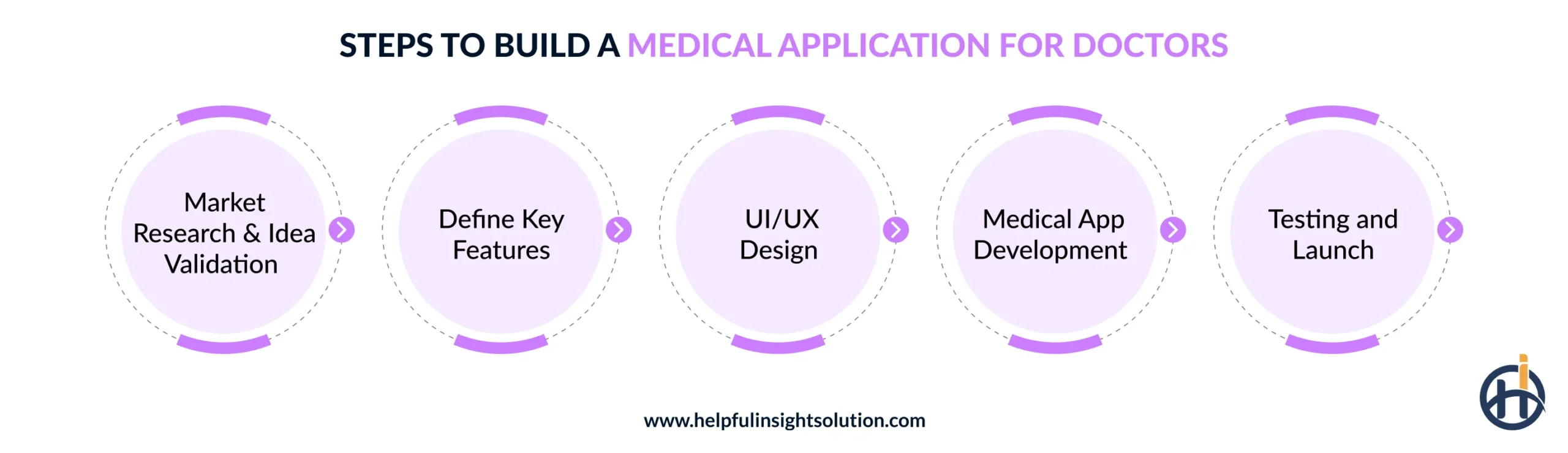
1. Market Research and Idea Validation
First, begin by understanding why you want to build an app and what problem it will solve, such as helping with remote care or managing appointments. Once you have this clarity, conduct market research to identify your target audience and decide on a business model.
Also, analyze competitors, check what features they are offering, why they succeeded and where they lack. This stage will create a strong foundation for further development process.
2. Define Key Features
Decide on the features you want to include in the digital health apps for doctors. When selecting the features, make sure to include both the necessary ones required for the smooth functioning of the app and the advanced ones that make your platform stand out, like AI-assisted diagnoses.
Avoid overloading the application with too many features, as this can make the platform complex and difficult to navigate.
3. UI/UX Design
In this phase, UI/UX designers create visually appealing and user-friendly interfaces, ensuring the application delivers a seamless experience with both strong usability and design.
Interactive prototypes are also developed to visualize the app flow and key elements like buttons, allowing necessary changes to be made before development begins.
4. Medical App Development
Here, the development team will start writing code to build the frontend and backend of your app. For frontend generally Angular, ReactJS, and Flutter are used, while on the other hand for backend Java, NodeJS and Python.
To boost the functionality of the medical app for doctors, custom APIs are also developed and integrated.
5. Testing and Launch
QA team will test the medical mobile application to identify bugs and glitches. If any issues are found, the testers will immediately fix them. Once a green signal is received from the testing team, the app is deployed on the relevant platforms.
What is the Cost to Develop Medical and Clinical Apps for Doctors
Medical app development for doctors requires a significant investment, so it is quite natural for healthcare businesses and startups to be concerned about the pricing.
Well, the cost to develop a medical app for doctor is affected by multiple factors, including the app’s scope, project complexity, platform selected, number of features, UI/UX design, and location of medical app developers.
Because of these variables, it’s hard to give an exact cost to develop a healthcare app. However, a simple medical app can start at around $20,000, while a more advanced app can cost $180,000 or more.
The final price depends on the app type and complexity. To make it clearer, the table below breaks down costs based on different complexity levels.
| Complexity Level | Estimated Cost Range |
| Simple App | $20,000 to $60,000 |
| Mid-Level App | $60,000 to $180,000 |
| Advanced App | $180,000+ |
To get a custom quote, please share your project requirements with us. You can also try using our free cost calculator for an instant estimate.
Partner with Helpful Insight to Build Secure and Scalable Medical Apps
Medical apps have completely revolutionized the way doctors deliver care, manage, and run everyday activities for the smooth functioning. Having these apps is no longer an option but has become a necessity in this digital-first world.
From small clinics to large hospital networks, many are planning to develop medical apps for doctors, and some have already launched their own.
Creating an app is no small feat; to achieve success and high ROI, it is important to partner with our reputable healthcare app development company. We have a decade of experience in building high-quality, secure, and scalable healthcare applications of different types.
Our team comprises certified app developers who understand the healthcare sector well, including its needs, challenges, and legal compliance. This allows them to create digital solutions that truly help care providers meet their specific needs and support them in modernizing their workflow and improving patient outcomes.
Get in touch with our team today to share your medical app idea. We would love to help you.
FAQs
The cost to build medical and healthcare applications for doctors is influenced by a wide range of factors. It includes project scope, platform selected, features, UI/UX design, developer’s location and many more. On average, developing an MVP starts at $20,000, while a more complex app can cost $60,000 or more.
The timeline to create a medical app for healthcare professionals varies based on factors like app scope, feature complexity, design, third-party integrations, and testing. To get an accurate timeline, please share your project requirements with us.
Medical apps can generate revenue through various monetization models, including subscriptions, in-app advertising, paid consultations, and in-app purchases.
Medscape, Doximity, Epocrates, and MDCalc are some ot the best medical apps for doctors.