

Key Takeaways:
- Blockchain is a secure technology that avoids a single point of failure, ensuring authorized access to patients in real-time.
- Various blockchain use cases in healthcare include drug supply chain verification, smart contract-based insurance claims, and more.
- This technology integrates with standard healthcare compliance, such as HIPAA and GDPR, to ensure data security and scalability.
- Healthcare investors must implement interoperability frameworks like HL7 and FHIR for smooth data exchange between medical systems.
As digitization is growing, the number of online attacks in the healthcare industry has also increased in the past few years. According to the HIPAA journal, there were 710 large data breaches in 2025, which rose to a maximum of 772 in 2026.
To resolve this issue, businesses implemented blockchain in healthcare that protects patient and medical data from various cyber threats. It gained popularity after the WannaCry attack in 2017 that affected 200,000 computers across 150 countries.
For a business investor, it is beneficial to use blockchain as a core technology in their healthcare systems, ticking two major boxes, which are security and revenue.
The future of the blockchain-driven healthcare industry is bright, as it is growing at a 50.4% CAGR rate. It will generate $63.6 billion in revenue by the end of 2031 through EHR platforms, remote care, and secure billing.
We are going to explore more aspects, such as blockchain applications for healthcare and their benefits, in this blog. You must focus on the key topics that are crucial for the safety of the clinical business and ensure consistent growth in the upcoming years.
What is Blockchain in Healthcare?
Blockchain is a digital ledger that keeps a record of every transaction, data exchange, and business operation in secure blocks that are linked with encrypted chains.
It ensures protected communication between healthcare providers, tracks the inventory, and streamlines insurance claims. Medical professionals integrate blockchain technology in healthcare to conduct various clinical tasks, such as billing, prescription management, and remote patient care.
All the information is stored on a decentralized cloud server, which is immutable and ensures complete data privacy. This helps patients to easily access their healthcare data and share it with the doctors or hospital staff.
You will know some basics of the blockchain-based healthcare market in this section. The following stats help you to understand the growth rate, revenue share, and regional aspects with detailed information.
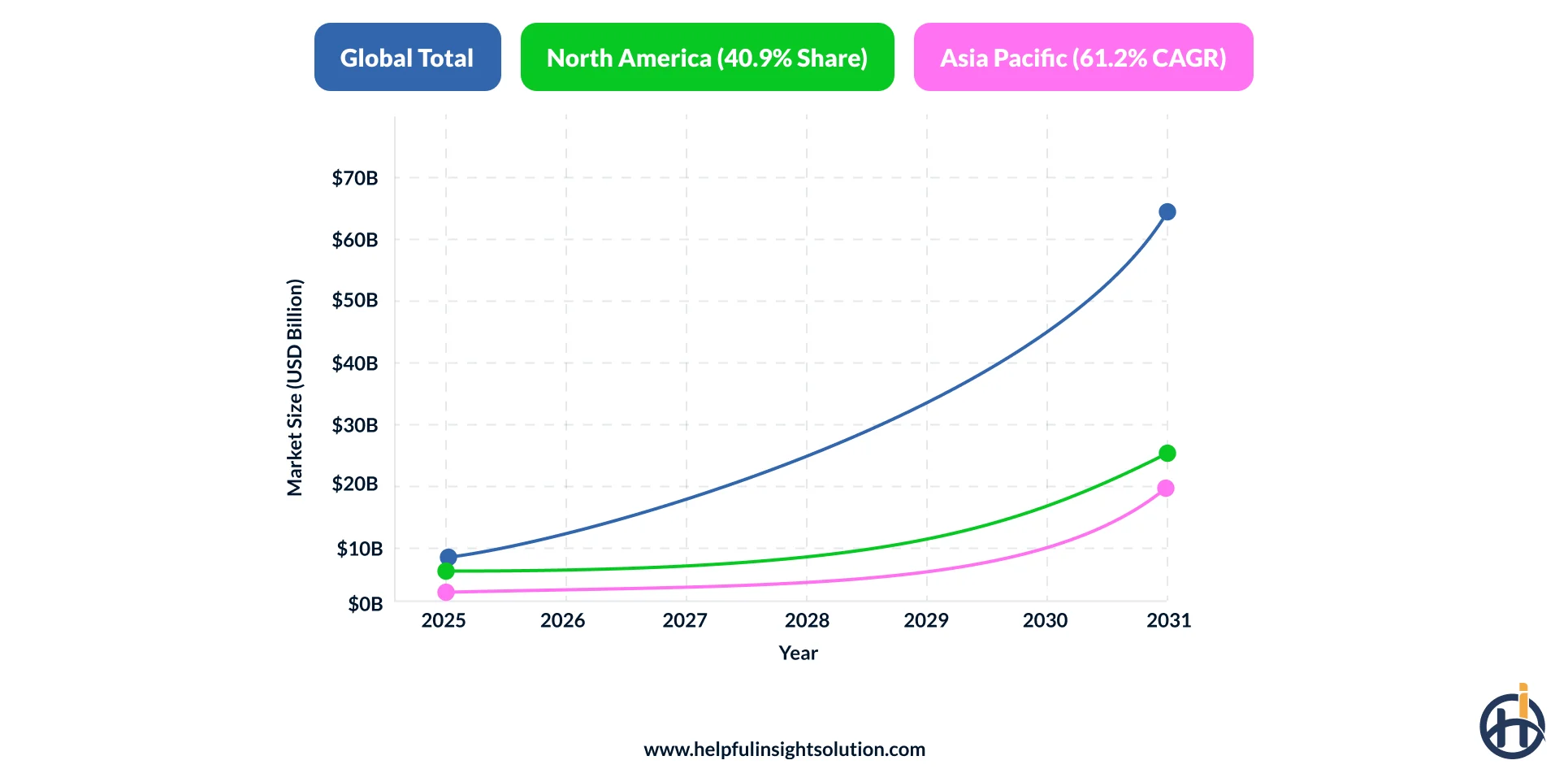
- The current value of the global Blockchain market in healthcare is $8.3 billion in 2026, which was $5.5 billion in 2025.
- In the app segment, clinical data exchange has a share of 45.4%, and in the end-user segment, healthcare providers have a 53.2% market share.
- North America has a share of 40.9% in the market, but the Asia-Pacific region is growing at a 61.2% CAGR until 2031.
Why do your Healthcare Systems Need Blockchain Technology?
The integration of blockchain in healthcare ensures complete transparency in data communication. It also offers other benefits, like secure billing and more, that a business investor must know in advance.
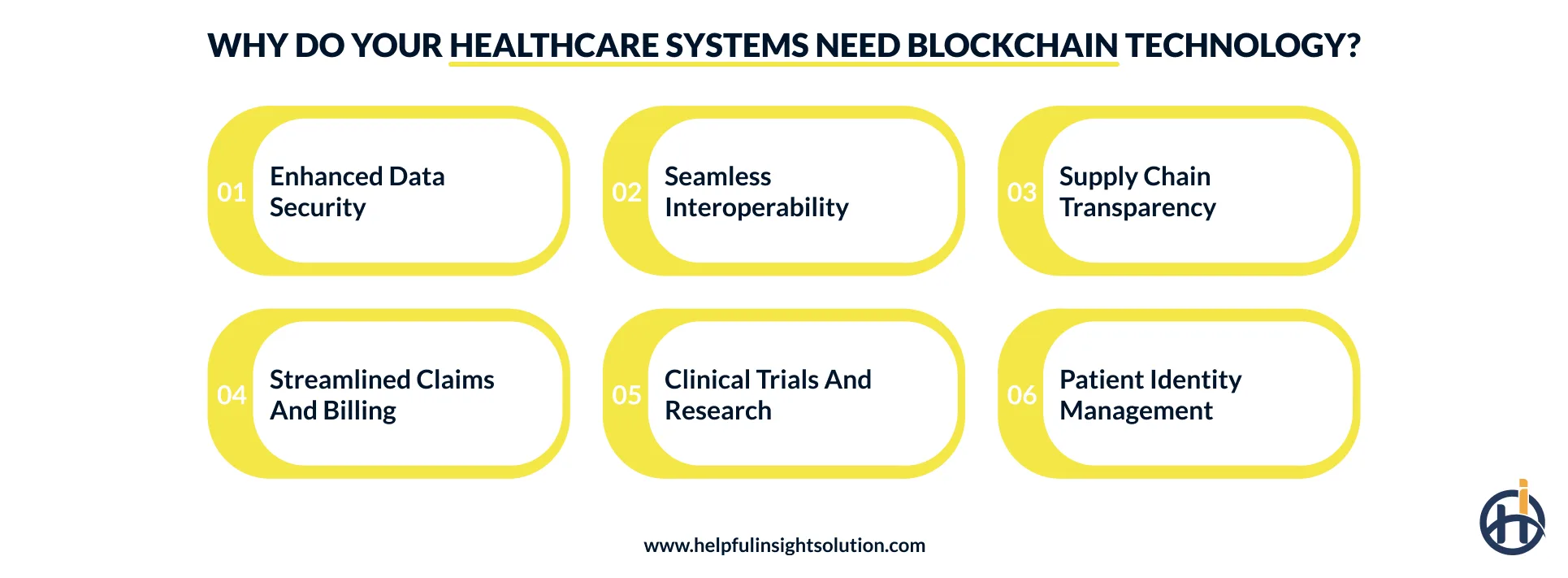
1. Enhanced Data Security
The Blockchain is a way to keep patient information safe. It is like a book that lots of people can use, but nobody can cheat or change things without others knowing. This means that patient information is safer, and people can trust the healthcare system more.
2. Seamless Interoperability
When patients go to doctors or hospitals, their records do not always follow them easily. The Blockchain helps fix this problem by making it easy for healthcare providers to share information with each other. This way, patient records can move easily from one hospital to another.
3. Supply Chain Transparency
Blockchain for healthcare also helps make sure that medicines are real and get to patients safely. It is like a list that shows every time a medicine moves from one place to another. This helps people know that the medicines they take are safe, and it stops people from selling fake medicines.
4. Streamlined Claims and Billing
Sometimes when people make insurance claims, it takes time to get their money back. The Blockchain can help fix this problem by making the process faster and more accurate. It is like a computer that checks everything automatically, so people can get their money back sooner.
5. Clinical Trials and Research
The Blockchain is also very helpful for people who do research. It helps them keep track of their work. Make sure that everything is honest and fair. This means that researchers can trust the information they are using, and they can work together easily.
6. Patient Identity Management
It can be hard for patients to keep track of their medical information when they see lots of different doctors. The Blockchain helps solve this problem by giving patients an easy way to control their own information. This means that patients can easily review their own records.
Top Use Cases of Blockchain Technology in Healthcare
You must know about various blockchain applications in healthcare, from EHR management to remote monitoring. They help hospital staff, doctors, and patients to keep their data safe and secure in a block.
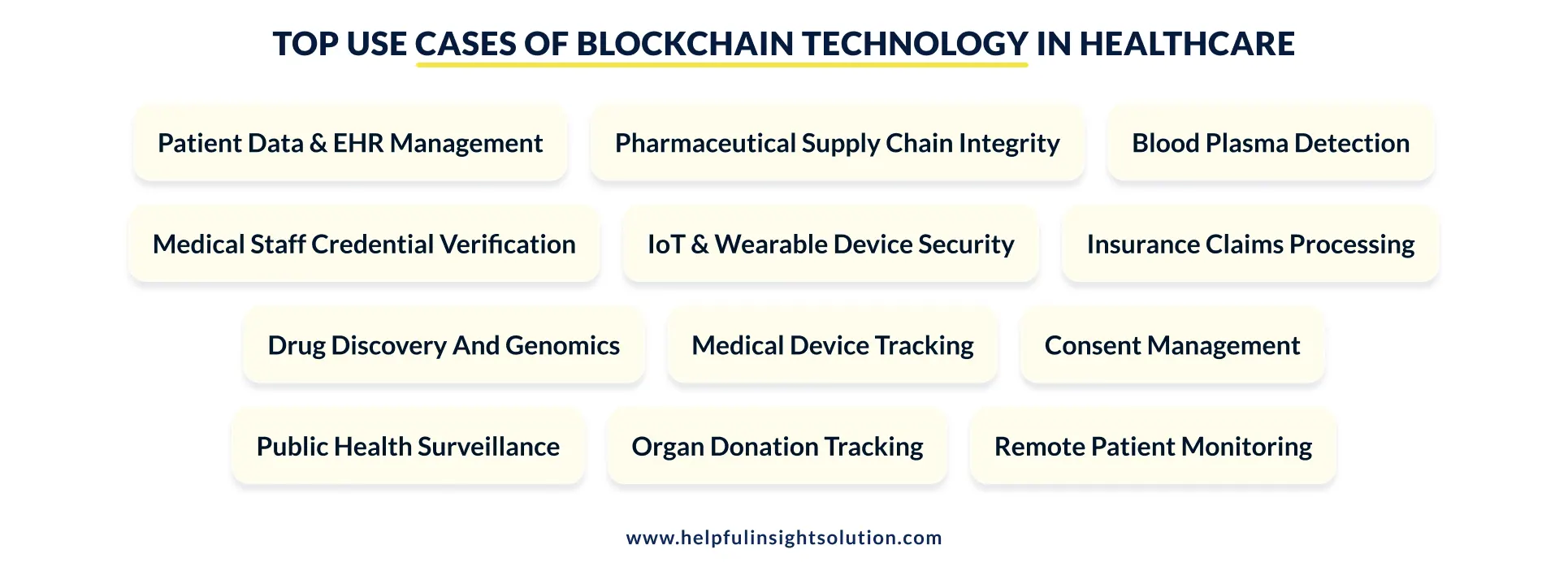
1. Patient Data & EHR Management
Blockchain is really good for keeping Electronic Health Records safe and sharing them with healthcare providers. Patients have control over who sees their information, and they can be sure that it is correct. Blockchain for health records is decentralized, and it is harder for people to change things they should not be changing. This makes it easier for healthcare providers to work together. It makes patients happier.
2. Pharmaceutical Supply Chain Integrity
Blockchain makes a record of everything that happens to medicines from the time they are made to the time they are delivered. This helps healthcare organizations make sure that medicines are real and not fake. They can see everything that is happening in time, which makes things more transparent and helps them follow the rules. So patients get medicines that’re safer and better.
3. Blood Plasma Detection
Healthcare providers can use Blockchain to keep track of blood and plasma donations from the time they are tested to the time they are given to patients. Blockchain makes sure that the records are correct and that nobody can change them. This helps healthcare providers know where everything is, and it reduces the risk of giving patients blood. It also helps patients get care and have better outcomes.
4. Medical Staff Credential Verification
Blockchain is a way to store information about healthcare workers, like their licenses and where they used to work. Hospitals can check this information quickly and easily without having to do a lot of paperwork. This saves time. Reduces the risk of people lying about their qualifications. It also helps hospitals hire people faster and manage their staff better. Blockchain helps keep all of this information safe and secure, which is important for patients and healthcare workers
5. IoT & Wearable Device Security
Medical Internet of Things devices and wearables are always collecting patient data that needs to be kept safe. The Blockchain is a way to keep device communications safe, and it records all the data transactions in a way that everyone can see. This makes it less likely that someone will try to hack in and change the data. When devices are safe, it helps the people who take care of patients make decisions about their care.
6. Insurance Claims Processing
This application of blockchain in healthcare can automatically check insurance claims. Pay them out through a safe and shared list. Smart contracts can check claims against some rules. Pay them automatically. This means paperwork, and it saves time and money. Patients and the people who insure them can get their claims paid faster. It is fairer for patients who want instant claims from the hospitals.
7. Drug Discovery and Genomics
Researchers can use the Blockchain to share research data with other researchers at different places. The Blockchain keeps the data safe. It also protects the patients’ privacy and the researchers’ work. When researchers work together better, it helps us find medicines and make discoveries. This can lead to treatments that are just right for each patient.
8. Medical Device Tracking
The Blockchain helps us keep track of devices from the time they are made to the time they are used. This means hospitals can find out if a device is bad and get it fixed or replaced faster. We can also make sure we are following all the rules. It helps keep patients safe by making sure the devices are working correctly. Medical Internet of Things devices, wearables, and the Blockchain are very important for keeping patients safe.
9. Consent Management
Blockchain technology is really helpful for patients because it lets them control who can see their records. They can say yes or no to people who want to use their data. The Blockchain makes a record of every time someone looks at their records, so patients can see who has been looking at their information. Patients have power over their own medical information. Doctors and hospitals also use the Blockchain to make sure they are following the rules about keeping information private.
10. Public Health Surveillance
Public health agencies can use the Blockchain to collect information about diseases from places. This information is correct and easy to share because of the Blockchain. The Blockchain also helps people see what is happening now. So authorities can find out about outbreaks of diseases quickly. Keep an eye on health trends. When information is managed well, public health agencies can respond to problems quickly.
11. Organ Donation Tracking
It keeps track of who has signed up to be a donor with the Blockchain, which organs are available, and who gets which organ. The Blockchain creates a record of what happens to donated organs from the time they are donated to the time they are transplanted using the Blockchain.
It also increases trust among patients, doctors, and donors when they use organ matching features. Patients can feel more confident that they will get the organ they need because of instant allocation.
12. Remote Patient Monitoring
The Blockchain helps doctors take care of patients who’re not in the hospital. The Blockchain does this by keeping a record of the information that comes from devices that patients use at home and from platforms with the Blockchain. Doctors can see this information now, which means they can take better care of their patients with the Blockchain.
The Blockchain keeps information private, which is very important for people who use the Blockchain. This is especially helpful for patients who have diseases or who need to be monitored after they have been treated using the Blockchain.
Ensuring Healthcare Data Privacy and Compliance with Blockchain
Blockchain is a highly powerful and secure technology that ensures robust data privacy and regulatory compliance. It uses immutable ledgers, decentralized architecture, and cryptographic hashing to prevent unethical patient data access. The integration of blockchain in healthcare supports EHR systems, billing cycles, insurance claims, and remote patient monitoring.
HIPAA and GDPR are the two major healthcare compliances that ensure the safety of protected healthcare information. Most businesses hire a healthcare app development company that uses private or consortium blockchain networks to secure different medical data from unauthorized access. Additionally, administrative protocols and key rotation are also important to access decentralized patient records.
The use of secure EDI healthcare transactions with advanced cryptographic techniques helps hospital staff, pharmacies, doctors, and patients to easily exchange information. The system regularly tracks audit trails through secure off-chain servers, reducing network complexity.
Key Challenges with Blockchain Integration in Healthcare
As an investor, you must know the different challenges in integrating blockchain technology for healthcare. Here, we are going to discuss a few of the major risks with their respective solutions.
1. Connectivity with Legacy Systems
Legacy systems are outdated and are dependent on non-standarized data formats, rigid architectures, and limited APIs. This makes real-time data communication complex for healthcare providers and patients.
Solution: You must deploy API gateways and use HL7 FHIR standards that support various healthcare transactions and data exchange in real-time.
2. Regulatory Compliance
As blockchain is an immutable technology that conflicts with laws like HIPAA and GDPR, which grants the right to change personal data. The use of multiple nodes in data exchange may increase the security risks.
Solution: It is beneficial to implement smart contracts that automate patient data and preferences, allowing instant and secure access to medical records.
3. Data Scalability Constraints
The storage of large healthcare data can affect the transaction throughput, which leads to latency in the system. This also introduces task delays for blockchain networks that are not feasible for time-sensitive clinical decisions.
Solution: The experts must divide the network into subgroups so healthcare providers can perform various tasks, like patient transactions and verifications, in parallel.
4. High Operational Costs
The cost is increased by high computing power, complex data storage, and heavy energy demand for hardware cooling. The shifting of centralized medical systems is also expensive for healthcare providers.
Solution: Businesses must use permissioned blockchain networks, like Hyperledger Fabric, that reduce transaction times and computational costs.
How can Businesses Implement Blockchain in Healthcare Solutions?
Businesses can easily integrate Blockchain technology in healthcare by following a certified process. In this section, you will study some important steps that include crucial information about the tech stack and deployment.
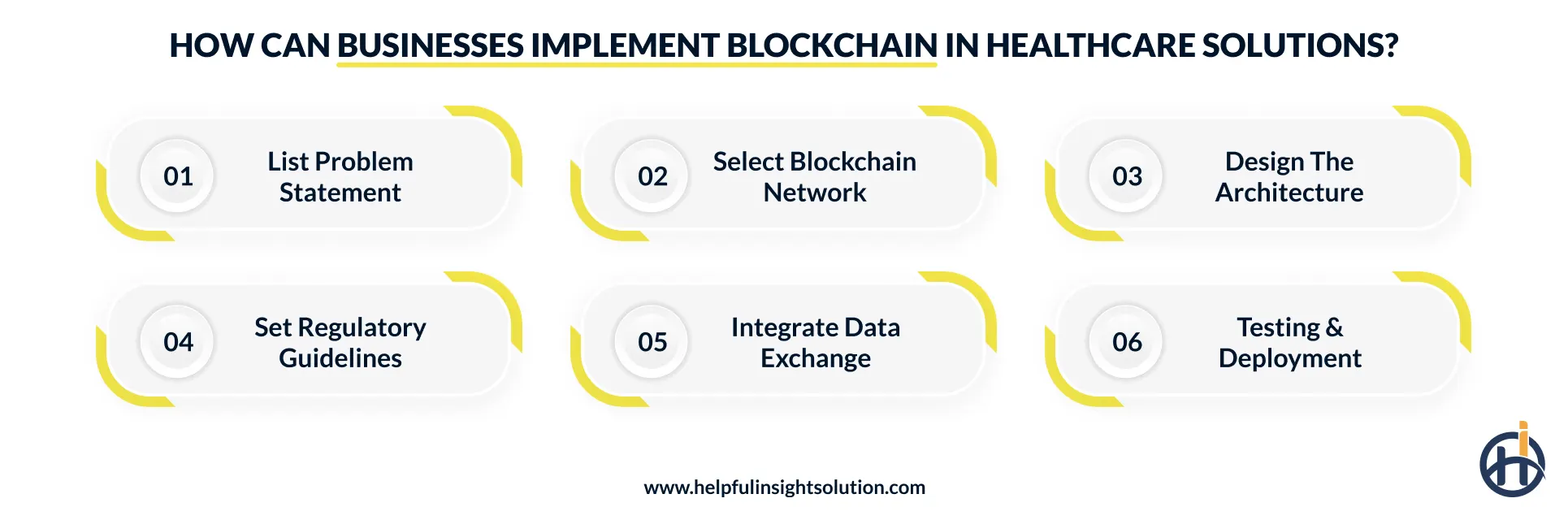
1. List Problem Statement
To start, we need to figure out what specific healthcare problems blockchain can help with. This includes keeping data safe, making sure different systems can work together, managing insurance claims, or tracking drugs. When we know what the problem is, we can set goals for our project and know what we want to achieve. This way, we can make sure our solution is what the business and healthcare people need.
2. Select Blockchain Network
Next, we have to pick the right network to integrate blockchain technology and healthcare. We have to think about how big it needs to be, how safe it is, how fast it works, and if it is private. Companies can choose from private or special blockchains depending on what they want to use them for. The right network is very important for an efficient healthcare solution.
3. Design the Architecture
Then we need to make a plan for our system. This plan should show how data moves, what smart contracts do, what roles people have, and how everything connects. The plan should help us keep records and make sure everyone can talk to each other easily. A good plan makes the system work better. Makes it easier to grow in the future.
4. Set Regulatory Guidelines
Healthcare solutions have to follow rules about keeping information private, protecting data, and sharing information. We need to make rules for how we govern the system and keep it safe, following international healthcare rules. When we follow these rules, people trust us more. We have fewer legal and operational problems.
5. Integrate Data Exchange
We also need to connect our blockchain system to healthcare systems like electronic health records, hospital software, and insurance platforms. When we share data safely, we can make sure everyone has the information. The use of blockchain healthcare application development services helps healthcare providers work together better and take care of patients.
6. Testing & Deployment
Finally, we have to test our system carefully to make sure it works, is safe, and follows the rules before we start using it. When everything is working, we can start using the system. Keep watching it to make sure it keeps working well and does what it is supposed to do. We need to keep checking the blockchain system to make sure it is still working well and helping healthcare people do their jobs better.
Future Trends of Blockchain in the Healthcare Industry
To successfully run healthcare on blockchain in the future, you must follow various trends that focus on innovation. Some of the emerging future trends are discussed in this section that every investor must know.
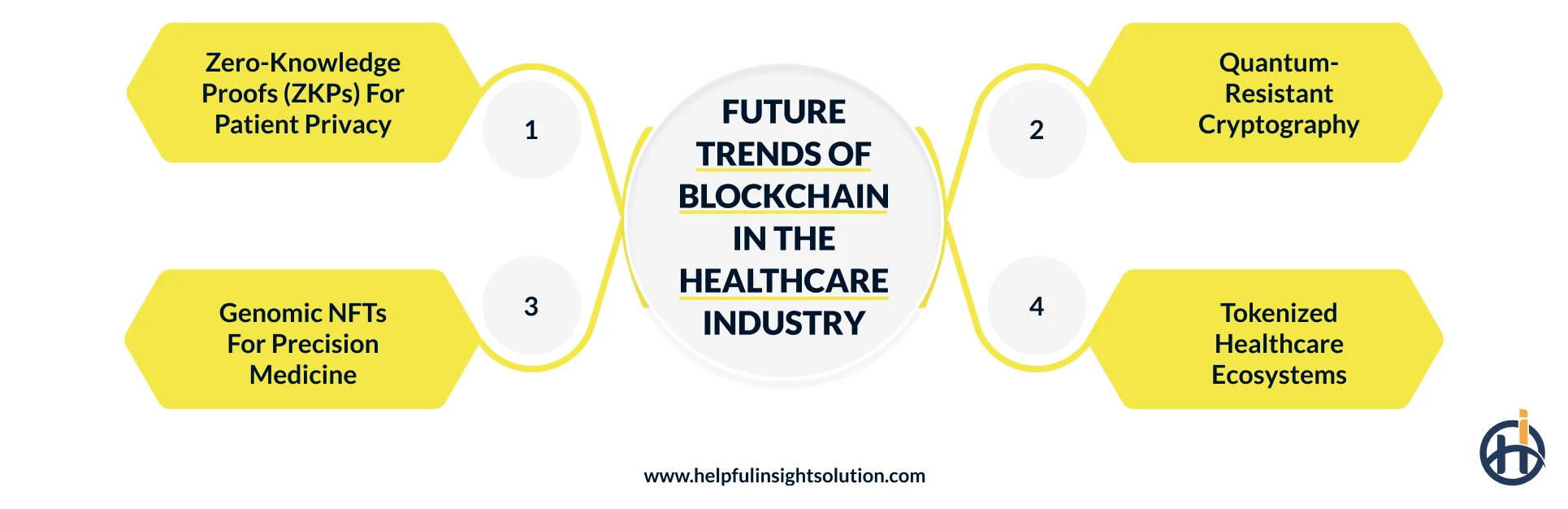
1. Zero-Knowledge Proofs (ZKPs) for Patient Privacy
Zero-Knowledge Proofs help healthcare organizations check information without showing the actual data. This method makes privacy protection stronger for doctors and staff. Allows secure data sharing between providers, insurers, and researchers. As healthcare data rules get stricter, Zero-Knowledge Proofs will play a role in keeping information confidential and following rules.
2. Quantum-Resistant Cryptography
The rise of computers can threaten the encryption methods used in healthcare systems today. To solve this, experts are working on quantum cryptography to protect sensitive medical records and blockchain networks from future cyber threats. This technology will help keep data and healthcare transactions secure for a long time.
3. Genomic NFTs for Precision Medicine
Blockchain-based genomic NFTs could let people own, manage, and share their data with healthcare providers and researchers in a secure way. Patients will have control over who sees their information and will get personalized treatment plans. This trend can speed up precision medicine and genomic research.
4. Tokenized Healthcare Ecosystems
Tokenization can create healthcare systems where patients, providers, insurers, and researchers exchange value using tokens. These tokens can reward behaviors, help with medical research, or make payments easier. Such systems can improve how stakeholders work together, make things transparent, and make the healthcare industry run smoothly.
Partner with Helpful Insight to get Blockchain-Driven Healthcare Services
Your healthcare system needs the best security solutions that can prevent unauthorized access and alert officials regarding branches. Businesses can hire a reliable and experienced partner to integrate blockchain technology in healthcare and reduce overhead costs.
We help our clients to get effective blockchain development services, from consulting to maintenance. Our experts work on the latest innovations, such as smart contracts, that avoid unethical attempts through private keys.
The time is running out for you, as the cyber attackers are getting much smarter through system analysis. The blockchain healthcare applications that we have explored in this content will help to secure all departments in a hospital or clinic.
Now, it’s time to take a step forward and build highly secure healthcare solutions with blockchain technology.
FAQs
Blockchain is a decentralized and tamper-proof technology that securely tracks medical data, enhancing overall security. The information is stored in encrypted blocks, which prevent unauthorized access through immutable audit trails. Patients use private keys to log in to their accounts and provide access to doctors for treatments.
Various healthcare platforms use blockchain to ensure data protection and secure medical operations. Some of the best blockchain-based healthcare solutions are discussed as follows:
- Medicalchain: It is an EHR platform that allows patients to have an immutable health record.
- MediLedger: This platform is used by pharma companies to verify prescription and expiry dates.
- Nebula Genomics: It helps patients to maintain the privacy of their consent and genomics data.
For small clinics, the average cost of a pilot project is between $40,000 and $100,000 due to simple record-sharing features. The cost of a medium healthcare app ranges from $150,000 to $400,000 because of EHR integration. To build an enterprise network for hospitals and insurance companies, the investment may increase to $1M.
For patient data security, you can implement decentralized ledgers, cryptographic hashing, and smart contracts that ensure strict access control. They keep information in a secure block that is immutable and can only be accessed through private keys. Ethereum is also used to maintain the security of various medical platforms, which provide healthcare services.
It is beneficial for small startups to create blockchain-enabled healthcare platforms through modular frameworks and open-source codebases. Additionally, cloud infrastructure helps to integrate secure blocks that include patient data. Small-scale businesses must ensure regulatory compliance, which protects healthcare data, and maintain consistency.