

“Enter the new healthcare arena with modern innovations and technical advancements.”
Over the past few years, the healthcare sector has changed a lot, providing services for online consultation, tracking health vitals, managing clinical resources, and more.
The recent innovations in healthcare have helped patients to easily access prescriptions, monitor various diseases, and get personalized feedback. Additionally, doctors can easily manage their schedules, patient lists, lab reports, and medical equipment in one place.
The surprising part is that, other than AI technology in health, blockchain, AR/VR, IoT, and cloud have also contributed to this sector. According to a report, the global digital health market will grow to $946 billion by 2030 due to various health technology innovations. So, an investor must know about them before entering the market.
From innovation in medical devices to healthcare systems, you will study the best technical advancements in this blog.
Additionally, we will also discuss the future of the healthcare industry with modern technologies. Stay tuned with us to explore more in this write-up.
Technical Growth of the Healthcare Sector
Nowadays, the growth of every sector is dependent on technical advancement and modern innovations. The use of technology in healthcare determines the potential of this industry to grow in the future. We are going to understand the role of technology in industrial success through revenue and other factors.
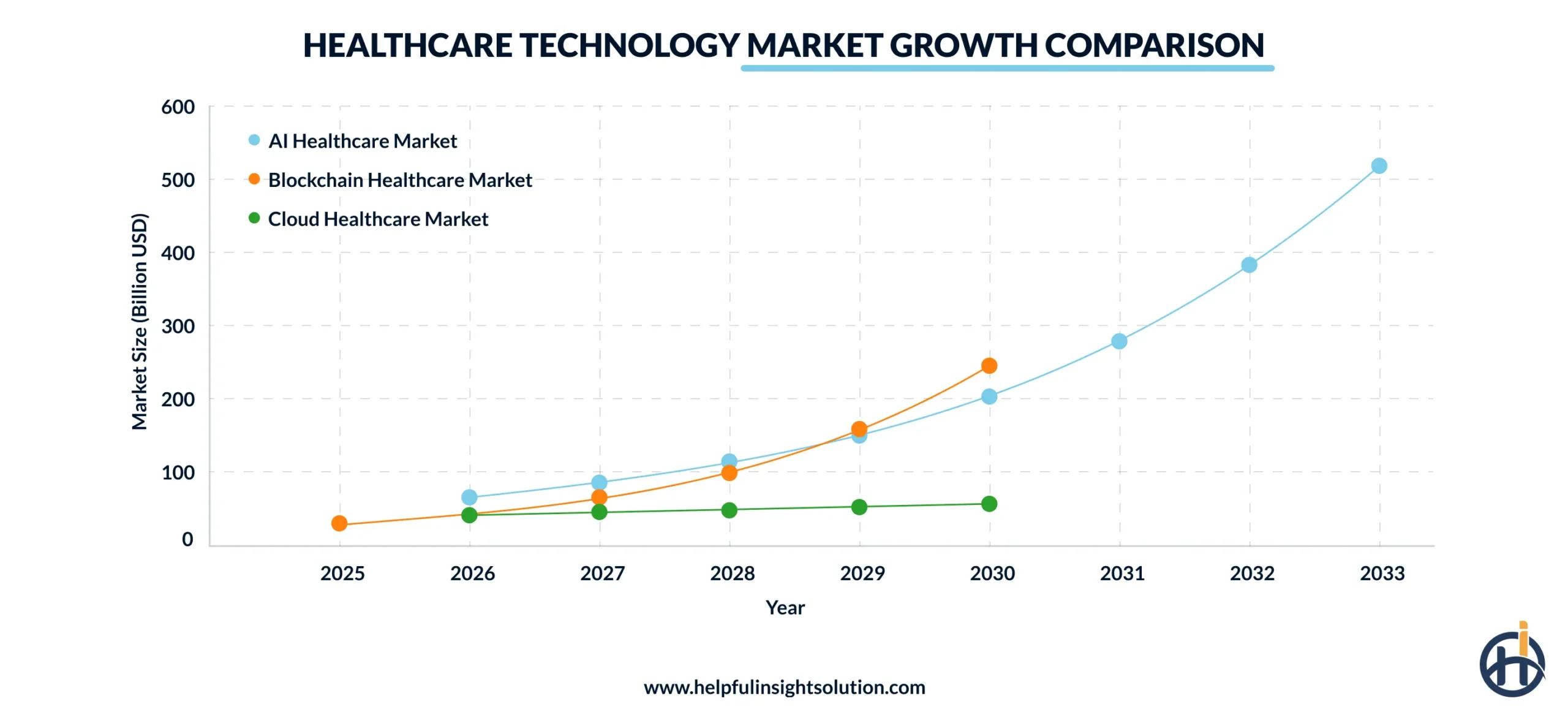
- The AI healthcare market volume is $50.7 billion in 2026, with North America having 54% market share among all regions.
- By 2033, the revenue will increase to 505.6 billion at an increasing rate of 38.9% CAGR between 2026 and 2033.
- The overall market revenue for the blockchain-enabled healthcare market was $18.3 billion in 2025, with Europe having a 34.8% market share.
- This will generate a volume of $214.7 billion by the end of 2030 with a growing rate of 63.3% CAGR between 2025 and 2030.
- The cloud-based healthcare market is generating a revenue of $27.9 billion in 2026, which will reach $45.1 billion by 2030 at a rate of 12.7% CAGR over this tenure.
The rise in medical innovation has created multiple opportunities for business investors to create advanced solutions. With digital innovation in healthcare, they can easily increase user engagement, business profits, and overall brand visibility.
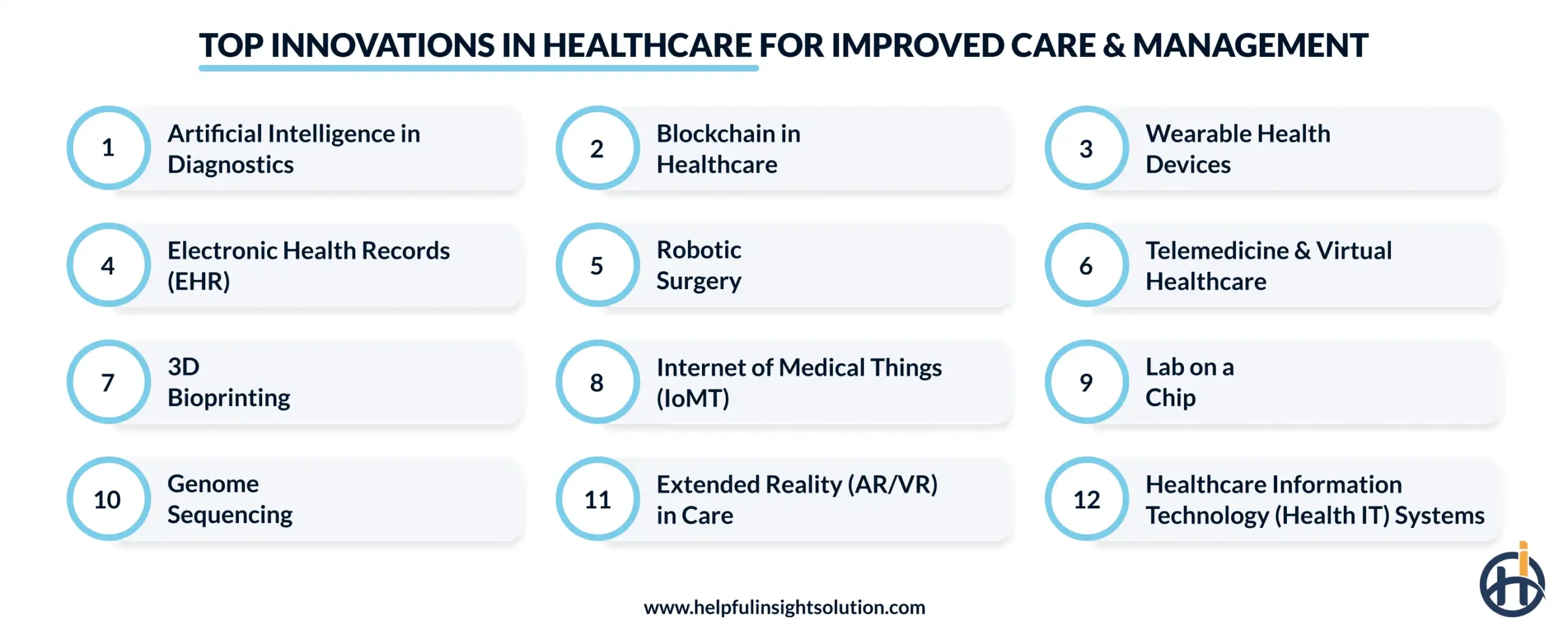
Top Innovations in Healthcare for Improved Care & Management
We are discussing the top innovations in healthcare industry that helped patients, doctors, and hospitals on a larger scale. They improve the complete medical ecosystem, enhance working efficiency, and reduce unnecessary expenses.
1. Artificial Intelligence in Diagnostics
AI is the most commonly used technology to enhance healthcare systems, targeting multiple innovations that improve patient care and medical analysis.
The AI innovation in healthcare can automate clinical tasks, personalize patient treatments, and predict results accurately through diagnosis. Some of the most important innovations are discussed here.
- Medical Imaging
The use of AI in medical imaging improved healthcare scanning for patients, resolving images generated through X-rays, CT scans, and MRI scans.
With new medical technology advancements, hospitals and clinics offer a distributed system that helps patients to identify fractures, cancer, and chemical imbalances.
- Big Data Analytics
The integration of innovations in telehealth helped patients to manage their medical history, prescriptions, and therapies. Additionally, it enables doctors to regularly update their schedules, appointments, and patient recommendations through advanced analytics and data management.
- Nanomedicine
Artificial intelligence, as a technological innovation in medicine, helped pharmaceutical companies to develop drugs for the right disease. This enhanced molecular modeling and compound detection, which are the key operations in creating medicines for cancers, HIV, and other harmful diseases.
2. Blockchain in Healthcare
By using blockchain in healthcare, you can secure and decentralize systems to store patient data and prevent unauthorized access. It enables transparent sharing of medical records across devices, maintaining data integrity.
The development of healthcare innovations improves the supply chain for pharmaceuticals and reduces fraud. This enhances patient trust, treatment efficiency, and security in healthcare systems.
Use Case: It enables secure sharing of patient records between hospitals, maintaining data privacy. This ensures transparent tracking of drug supply chains to eliminate inefficient medications.
3. Wearable Health Devices
This medical device innovation involves smart gadgets that monitor vital health signs like heart rate, sleep patterns, and physical activities. They help people to easily control their health through continuous tracking and early detection of symptoms.
These devices also support remote patient monitoring by healthcare professionals. This helps to improve overall patient care, engagement, and retention.
Use Case: They monitor heart rate and identify various irregularities in heart rate and body form. This enables early detection by sending real-time health alerts to users and doctors.
4. Electronic Health Records (EHR)
They are the digital storage systems of patients’ medical histories that can be easily accessed by doctors. EHRs help to streamline data sharing, reduce paperwork, and minimize medical errors.
They also support enhanced decision-making in remote clinical practice and operations. This integration of innovations in medicine improves coordination among doctors, labs, and hospitals for better patient outcomes.
Use Case: It allows doctors to access complete patient histories, improving diagnosis and treatments. This reduces duplication of tests and enhances coordination between different healthcare systems.
5. Robotic Surgery
It involves the use of advanced robotic systems that are controlled by surgeons to perform precise medical operations. This new technology in healthcare industry includes smaller incisions, reduced pain, and faster recovery for patients.
With this innovation, doctors can enhance surgical accuracy and reduce human error. Patients can experience improved outcomes and limited hospital visits in real-time.
Use Case: These systems are used for minimally invasive healthcare procedures with high precision. This helps doctors perform surgeries accurately without increasing the risk of failure.
6. Telemedicine & Virtual Healthcare
Various telehealth innovations allow patients to easily connect with doctors through video calls and mobile apps. It increases access to multiple healthcare services, especially in rural or underdeveloped areas.
Investment in telemedicine app development may allow businesses to deliver real-time diagnosis and treatment to patients. This improves convenience, reduces costs, and enhances the healthcare system.
Use Case: It is a remote technology that involves online consultations in rural areas, which are away from hospitals. This improves healthcare access while reducing travel time and hospital crowding.
7. 3D Bioprinting
This technology uses advanced printing methods to create tissues, organs, and medical structures using living cells. It is a disruptive technology in healthcare that is preferable for organ transplantation and drug testing.
Additionally, it can reduce dependency on donors and improve personalized treatment care. 3D bioprinting is a revolutionary innovation for medicine and biomedical research.
Use Case: It is easy to create custom organs that are printed for surgical planning or transplantation research. This helps in testing drugs on specific tissues, reducing the risks of adverse reactions.
8. Internet of Medical Things (IoMT)
The Internet of Medical Things (IoMT) refers to a network of connected medical devices that collect and share healthcare data in real time. It enables continuous monitoring and better management of chronic diseases for patients.
The medical technology innovations allow doctors to access accurate patient data for better treatment. It enhances medical efficiency, patient safety, and healthcare delivery for providers.
Use Case: Various devices, like glucose monitors, send data directly to healthcare systems. This enables continuous monitoring and proactive care for managing chronic diseases.
9. Lab on a Chip
It is among the top healthcare innovations that involve laboratory processes on a small microchip for rapid testing and patient analysis. It allows quick diagnosis using minimal samples, making it highly efficient and cost-effective.
This innovation is especially useful in at-home testing and remote locations. The Lab on a Chip technology may speed up medical diagnostics and treatment decisions.
Use Case: A small chip performs multiple lab tests using a tiny sample of blood or human waste. It allows rapid diagnostics for remote patients, which is useful in emergencies.
10. Genome Sequencing
Genome sequencing is a process to determine the complete DNA structure of an individual, enabling personalized medicine. It is one of the best healthcare innovations to identify genetic disorders and predict disease risks.
This technology includes CRISPR-Cas9, which supports advancements in cancer treatment and rare disease diagnosis. It is transforming healthcare by making treatments more precise and effective.
Use Case: It helps doctors to analyze a patient’s DNA to identify disease risks and personalize treatments. This method is used in medication for curing cancer and genetic problems through therapies.
11. Extended Reality (AR/VR) in Care
The combination of virtual and augmented reality helps to enhance medical training and patient care. It allows doctors to replicate surgeries and visualize complex 3D anatomies. Various therapy applications, such as pain management and rehabilitation, help patients recover easily.
This technical revolution in healthcare improves clinical learning, accuracy, and patient experience.
Use Case: VR is used for pain management and rehabilitation through immersive therapy sessions. AR assists surgeons by understanding critical information during various procedures.
12. Healthcare Information Technology (Health IT) Systems
This digital health innovation includes various platforms that manage healthcare data, communication, and workflows. They improve coordination among healthcare providers and enhance patient care quality, and many organizations are now looking into how to build healthcare communication platforms that connect doctors, staff, and patients in one secure system.
Businesses can enhance analytics, decision-making, and administration by investing in healthcare software development. It plays a vital role in modernizing healthcare infrastructure across regions.
Use Case: Multiple hospitals use integrated systems to manage patient data, billing, and workflows. This improves decision-making through analytics and reduces administrative errors.
What Future Transformation will Occur in Healthcare?
The use of advanced technology in health and fitness will shape the future of this industry, delivering undiscovered solutions. Let’s see what medical transformation people will witness through these cutting-edge innovations.
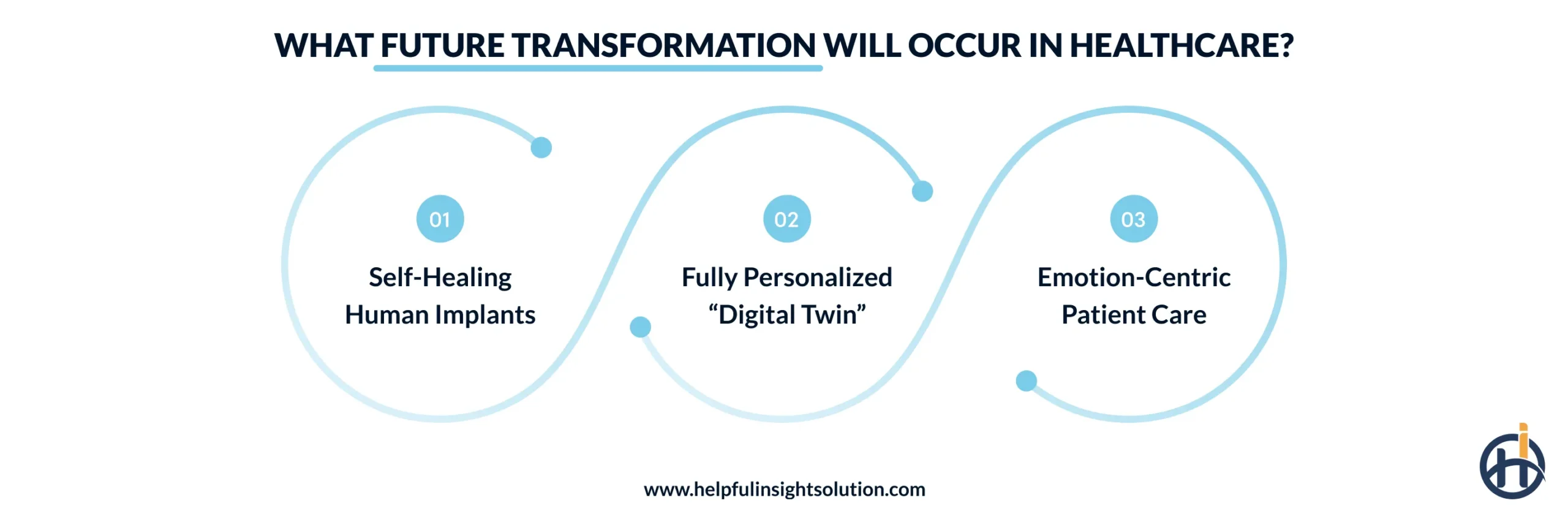
1. Self-Healing Human Implants
Doctors will integrate advanced biomaterials and nanotechnology that can easily repair organ damage. These healthcare innovation trends will use embedded sensors to detect internal injuries or fractures.
Such biological changes can enhance sustainable health, reduce surgical interference, and improve patient outcomes through advanced integration.
2. Fully Personalized “Digital Twin”
It will represent a dynamic and virtual model of a human’s body that will be updated through real-time data. The use of AI in healthcare with predictive analytics will automate disease detection, treatments, and clinical support with high precision.
These future innovations in healthcare will enable proactive patient care based on genetic, environmental, and lifestyle factors.
3. Emotion-Centric Patient Care
These health technology innovations include computing and biometric sensing to monitor patients’ emotions and psychology during treatment. By integrating behavioral data with clinical decision systems, doctors can easily provide healthcare advice accurately.
It can enhance patient engagement and overall well-being by streamlining care delivery for both physical and mental needs.
In a Nutshell!!
The above innovations in healthcare technology have been recognized worldwide by entrepreneurs and are being implemented in various clinical systems. With technological advances in health care, business investors are making profits, gathering more clients, and improving facilities.
The use of various top healthcare apps, such as Teladoc, MyChart, and Healthians, helped patients to connect with doctors easily through a secure channel for consultation and prescriptions.
The integration of technology and innovation in healthcare is the new way for you to become a successful market leader. You have the choice to implement an existing health tech innovation in your systems or develop one.
Only with technological advancement in medical field, entrepreneurs will be able to meet user expectations, enhance their business value, and increase trust.
FAQs
Artificial intelligence is a powerful technology that helps in advanced medical diagnosis with high accuracy and precision. It regularly collects data from users and healthcare providers to create different sets based on the regression model. This improves the analysis of different medical images, drugs, and healthcare vitals, reducing delays.
At present, there are several digital healthcare devices available that enhance remote patient care and improve workflow. The top medical devices are discussed in the following manner:
- Fitbit: This smartwatch enables real-time monitoring of vital signs and activity levels.
- Apple Watch: It tracks chronic conditions such as diabetes, heart disease, and hypertension.
- Garmin Connect: This tool improves accuracy in imaging pathology and disease prediction.
Patients use telemedicine services to get online doctor consultations that reduce regular visits and waiting time. Some of the best healthcare innovations, offering exclusive telehealth features, are as follows:
- Teladoc: It provides smart symptom checking, virtual consultations, and personalized care.
- Doxy.me: This cloud-based system enables data sharing between patients and doctors.
- Amwell: This app supports video consultations, e-prescriptions, and remote care.
Various digital healthcare services allow patients to easily test for genetic diseases or syndromes, ensuring medical standards. Nebula Genomics, InsideTracker, CircleDNA, and NIH Genetic Testing Registry are the best platforms in the USA that provide genome testing facilities. They ensure complete assistance, security, and a clean environment for testing.